Micro-Climates and Solar Output
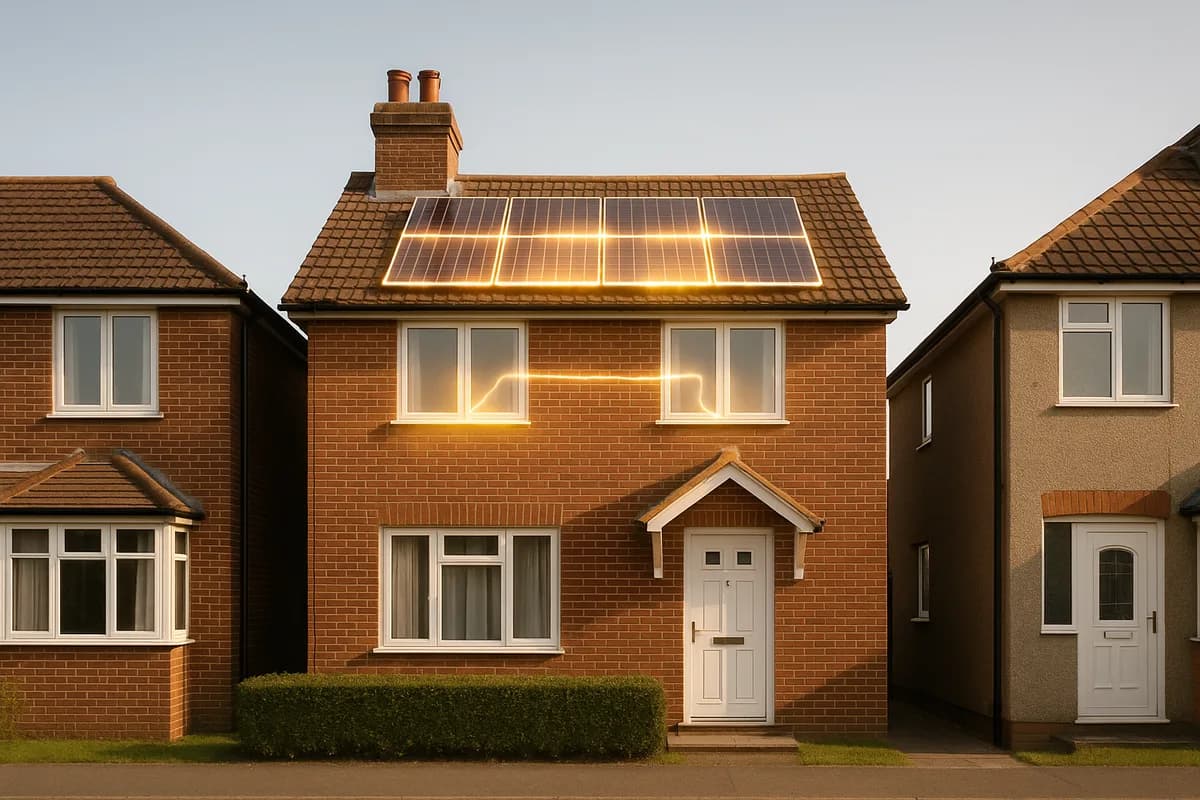
Find the right system size for your roof
Panel count depends on your electricity use, roof space and direction — not on a rule of thumb. Get a recommended size and what it should cost.
Size My SystemFree calculator. No contact details required to see your result.
Find the right system size for your roof
Panel count depends on your electricity use, roof space and direction — not on a rule of thumb. Get a recommended size and what it should cost.
Size My SystemWhy do neighbours' solar panels perform differently?
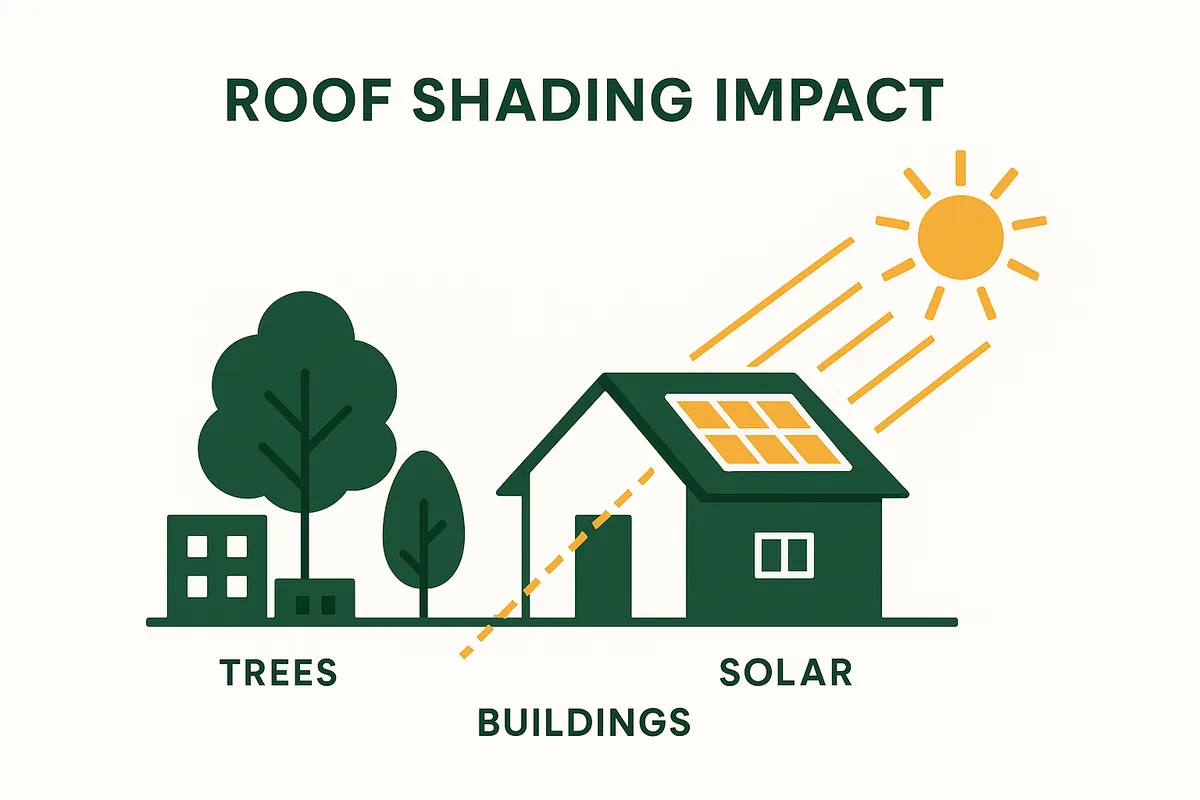
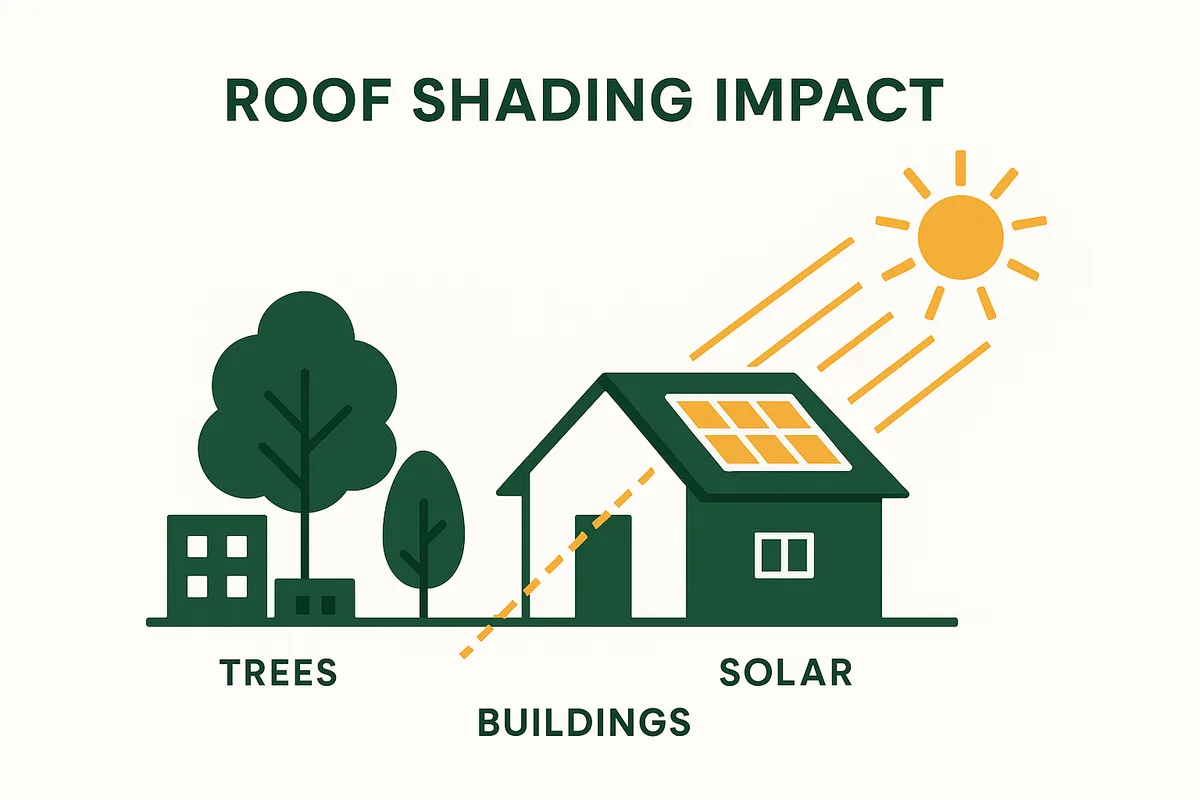
Why your neighbour's identical system outperforms yours — micro-climate factors: (1) ALTITUDE: Every 100m elevation = 0.6°C cooler = panels 0.3% more efficient (cooler = better). But also more cloud. Net: marginal. (2) LOCAL SHADING: Trees, buildings, hills cast shadows at different times. Even slight morning shade reduces total output 5-10%. (3) URBAN HEAT ISLAND: City centres are 1-3°C warmer than suburbs. Warmer panels = slightly lower efficiency (0.3-0.5%/°C). Net: city panels 1-3% less efficient but more sunshine hours (less fog). (4) FOG VALLEYS: River valleys and low-lying areas experience more fog, reducing output 3-8% vs hilltop locations. (5) COASTAL EFFECT: Coastal areas often have more sunshine than inland at the same latitude (less fog, sea breeze clears cloud). TOTAL VARIATION: Micro-climate effects can cause 10-20% output difference between systems in the same postcode. Your installer's shading analysis accounts for site-specific factors. Source: PVGIS, Met Office micro-climate data.
Frequently Asked Questions
Related: Home Heating Systems
Solar panels are most powerful when combined with an efficient heating system. Heat pumps use solar-generated electricity to heat your home at 300-400% efficiency — making them the ideal partner for solar.
A heat pump converts 1kWh of electricity into 3-4kWh of heat.
From our sister site Home Heat Pump Guide
You might also like
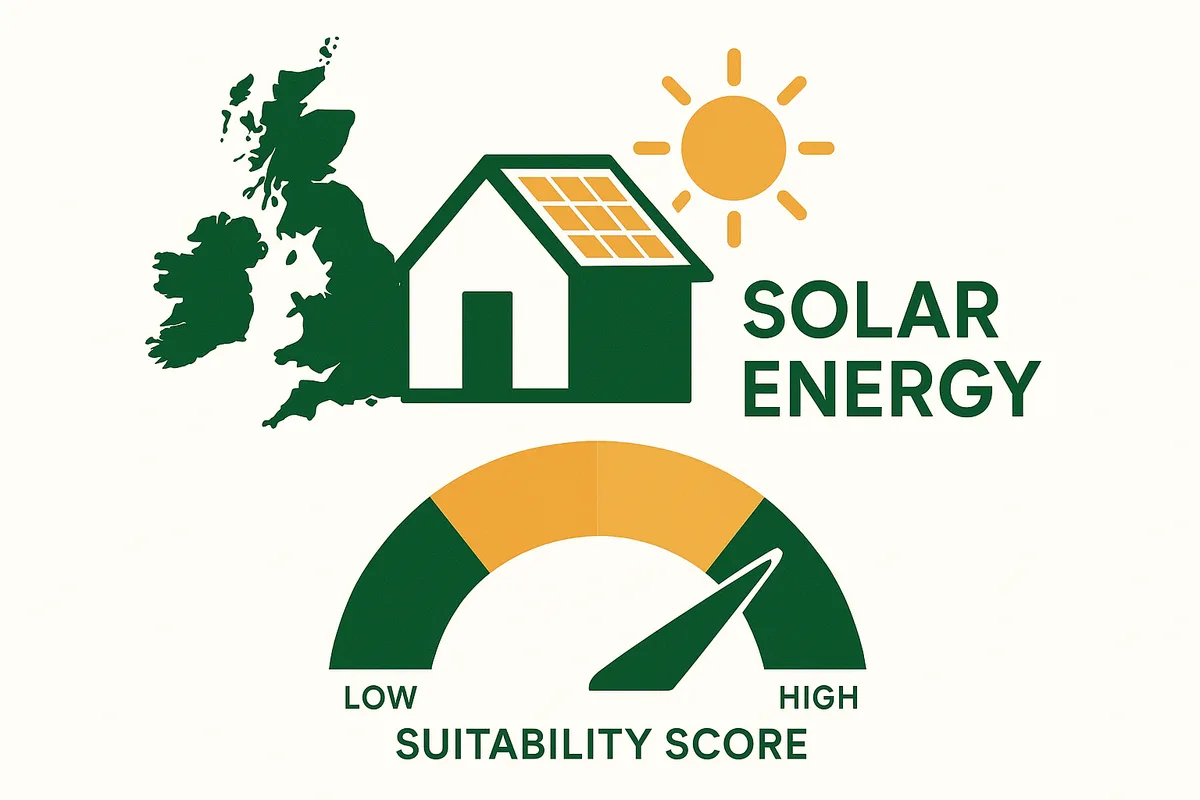
Find the right system size for your roof
Panel count depends on your electricity use, roof space and direction — not on a rule of thumb. Get a recommended size and what it should cost.
Size My SystemFree calculator. No contact details required to see your result.