Solar Panel Blog
Evidence-based guides and expert advice on solar panels, batteries, costs, and savings for UK homeowners. Written in plain English, backed by data.
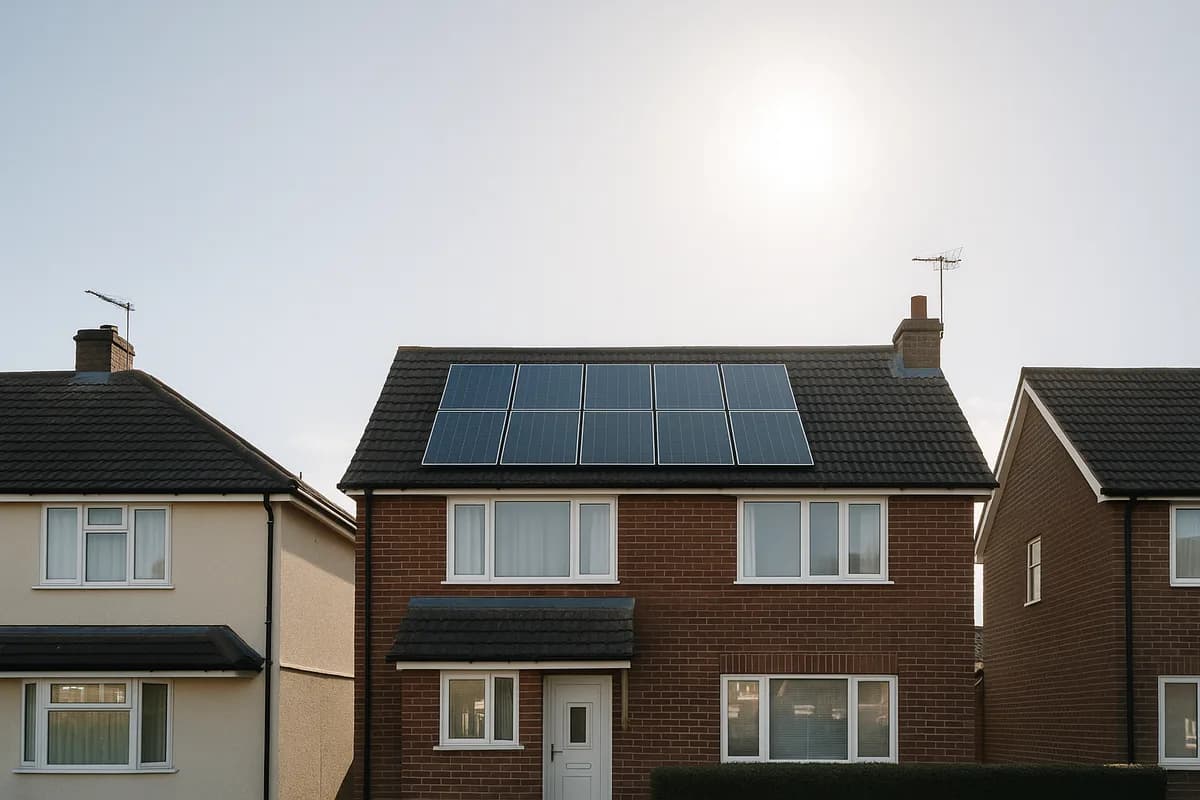
Do Solar Panels Work in Winter?
Do solar panels work in winter in the UK? Yes — they produce less but still generate electricity. See real winter output data and what to expect month by month.
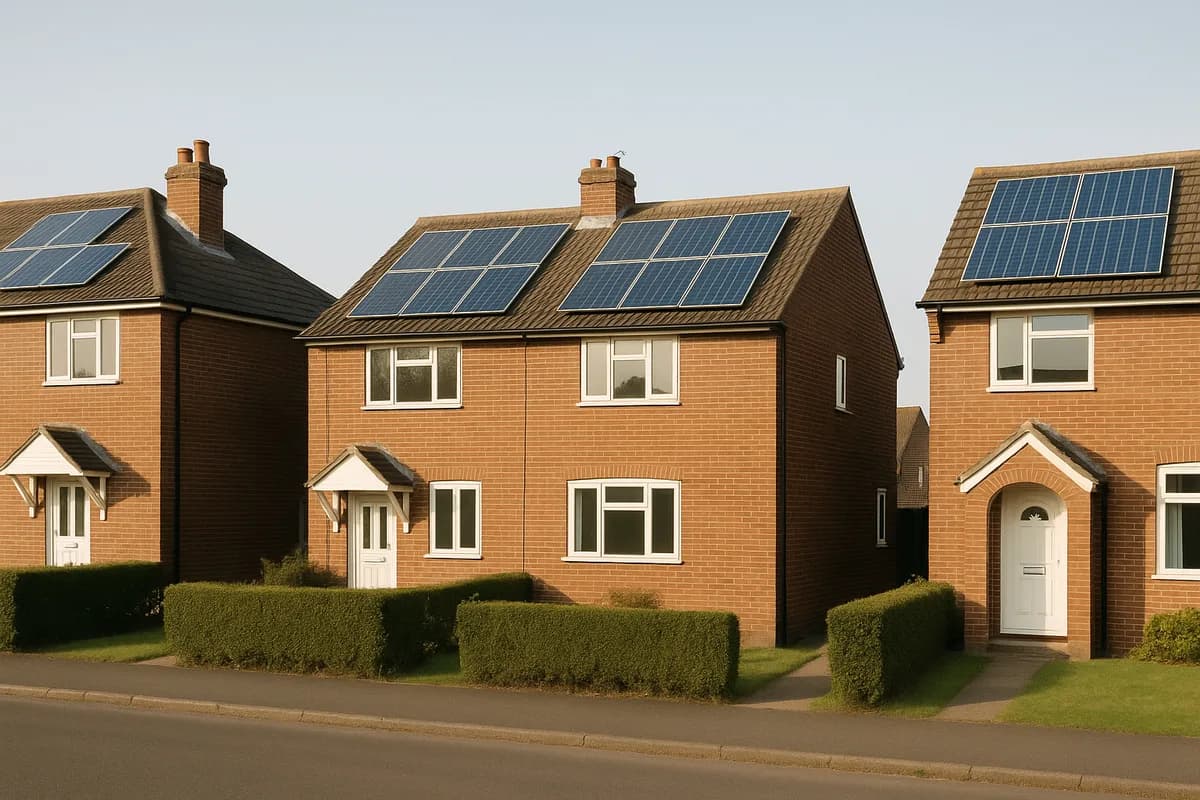
Do Solar Panels Work on Cloudy Days?
Do solar panels work on cloudy days in the UK? Yes — panels produce 10-30% of rated output in overcast conditions. See how clouds affect solar generation.
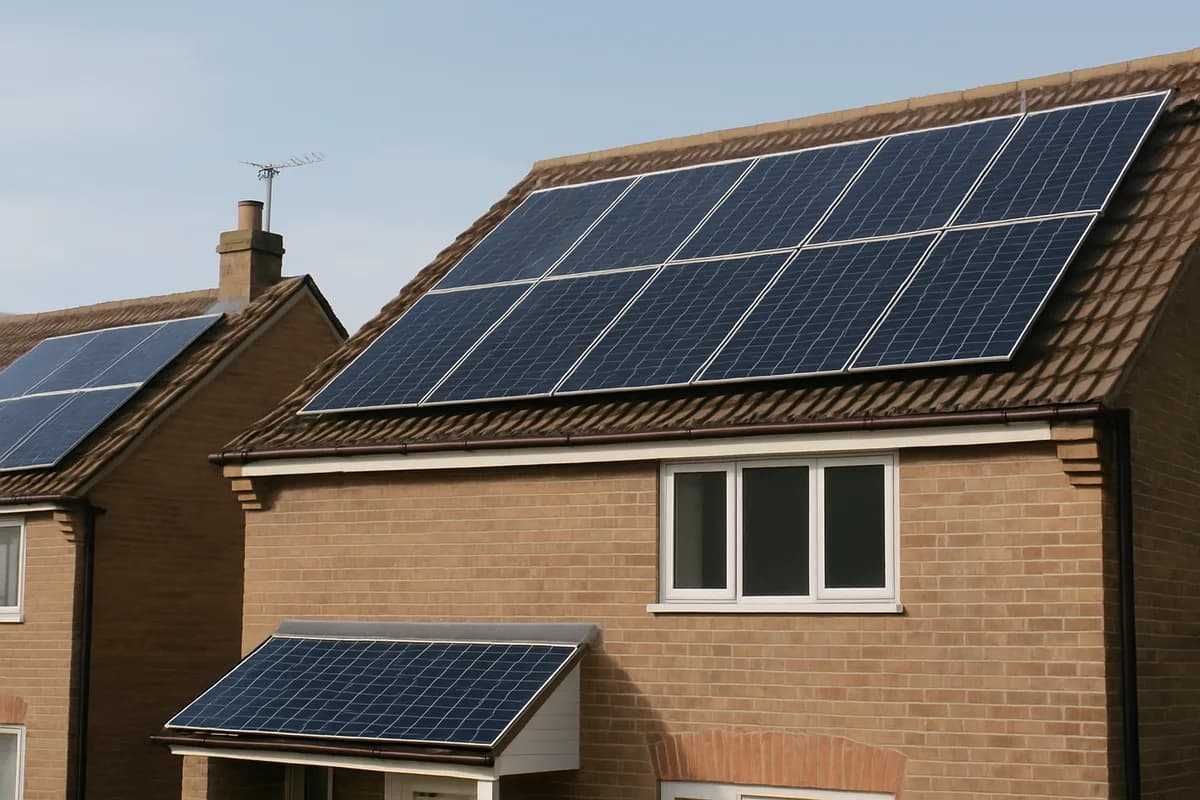
How Long Do Solar Panels Last?
Solar panels last 25-30+ years. See real degradation data, warranty terms, and what affects panel lifespan in UK conditions.
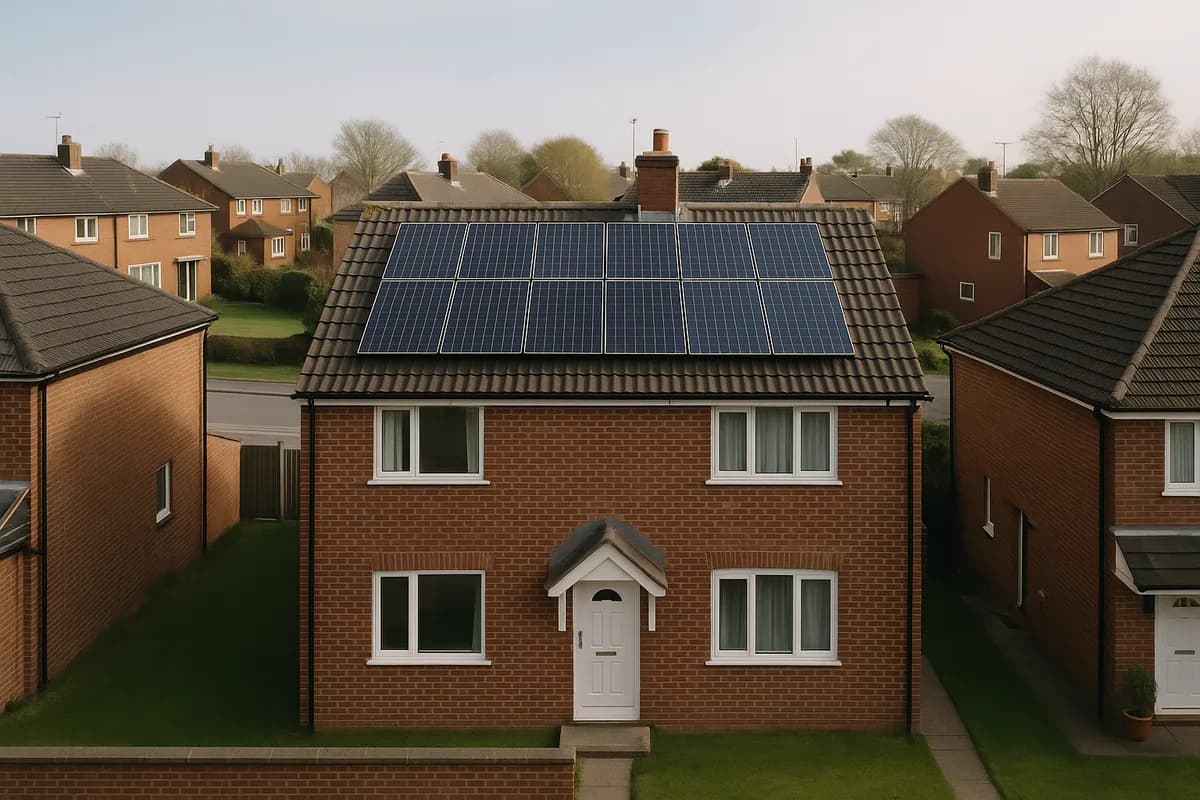
Solar Panel Cleaning UK: Is It Worth It?
Do solar panels need cleaning? UK panels lose 5-10% output from dirt. See when cleaning is worth it, DIY vs professional costs, and how often to clean.
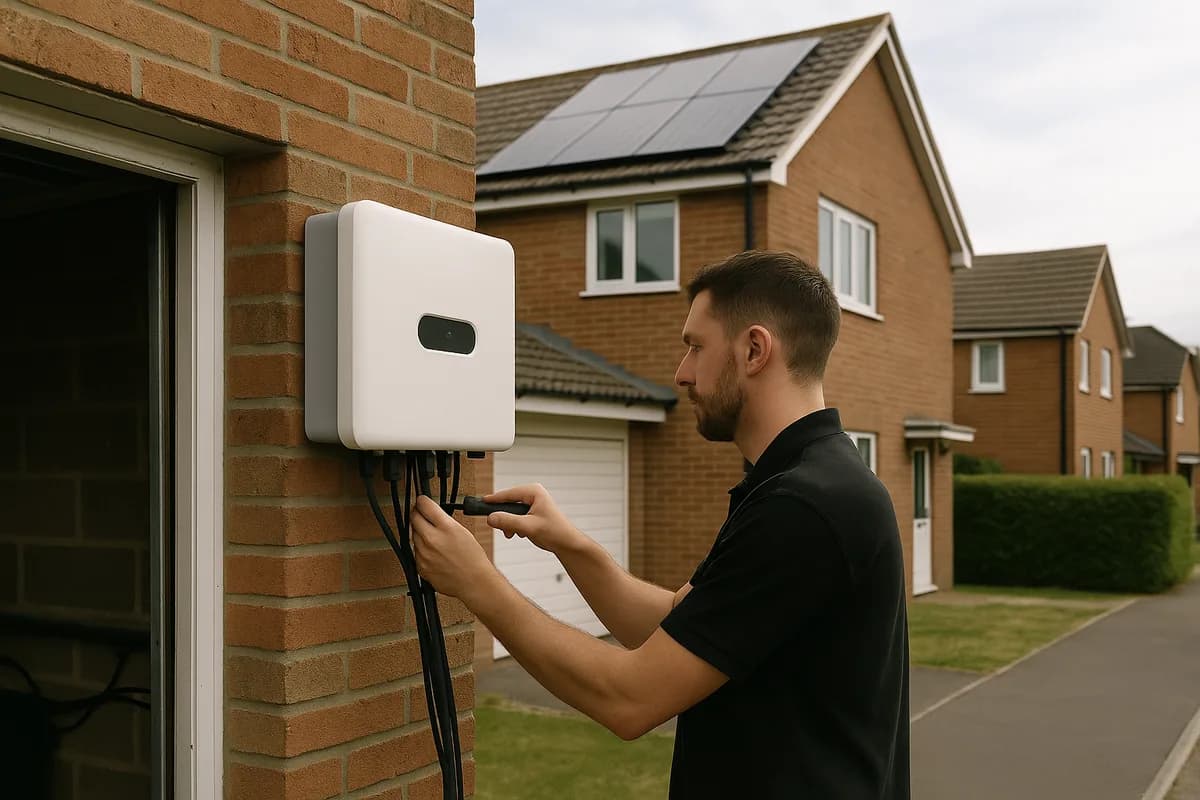
What Is a Solar Inverter & Why Does It Matter?
A solar inverter converts DC electricity from your panels into AC electricity your home can use. See how inverters work, the 3 types, costs, and which is best for UK homes.
Do Solar Panels Need Direct Sunlight?
Solar panels do not need direct sunlight to work. They generate electricity from daylight — including on cloudy and overcast days. See how light type affects output.
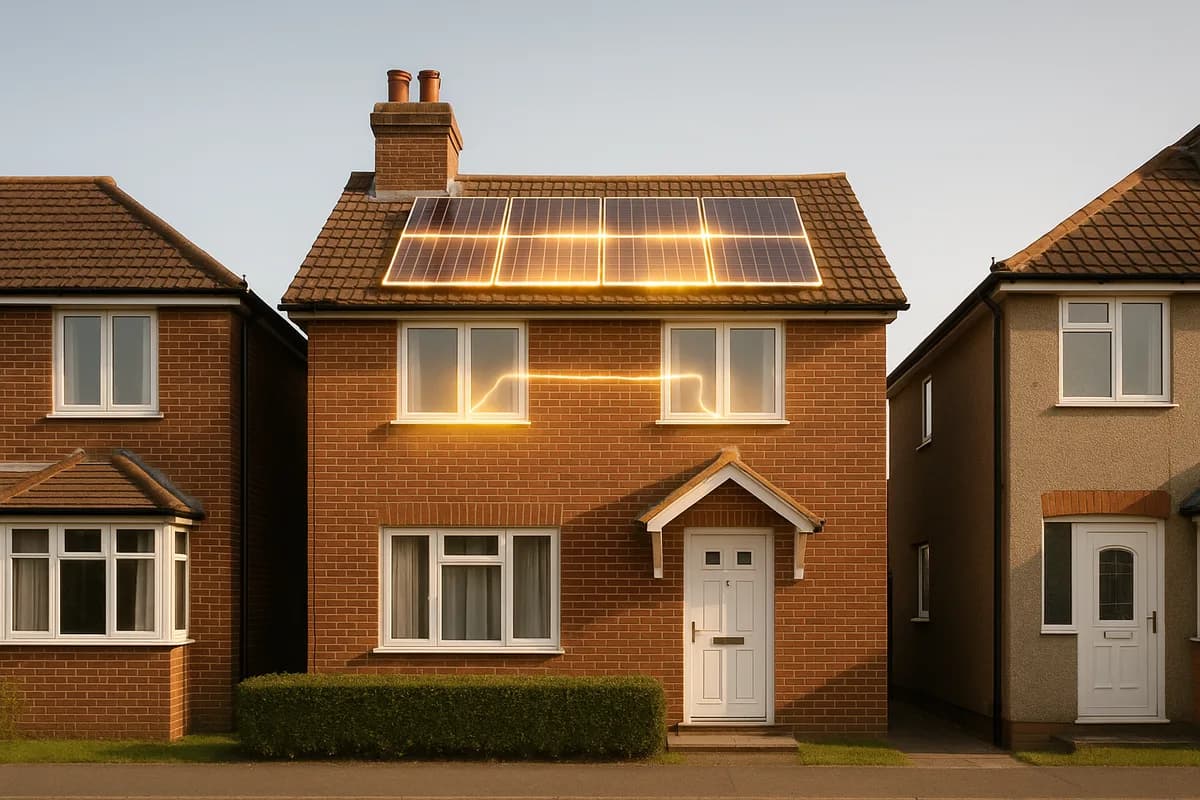
Do Solar Panels Work at Night?
Solar panels do not work at night — they need daylight to generate electricity. But solar batteries store daytime energy for overnight use. See how it works.
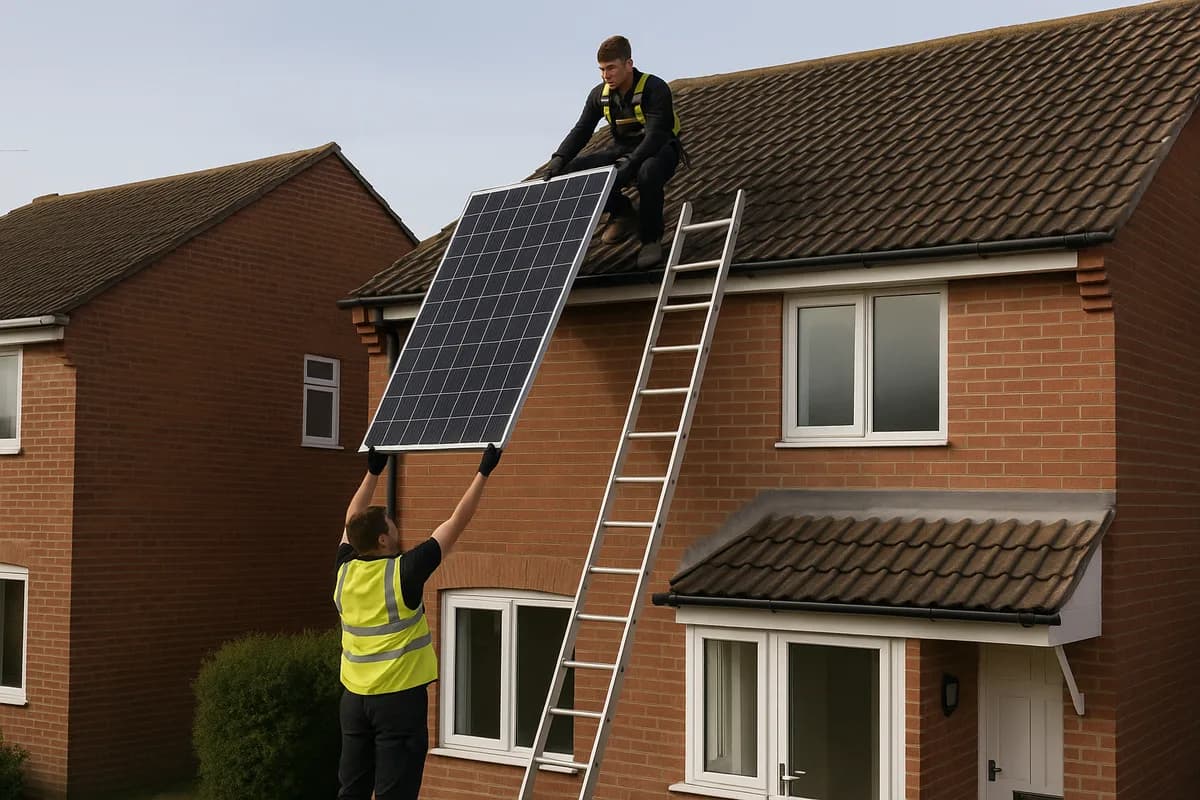
DIY Solar Panels UK: Can You Install Them Yourself?
Can you install solar panels yourself in the UK? Legally yes, but you lose MCS certification, SEG payments, and warranty protection. See the full pros, cons, and risks.
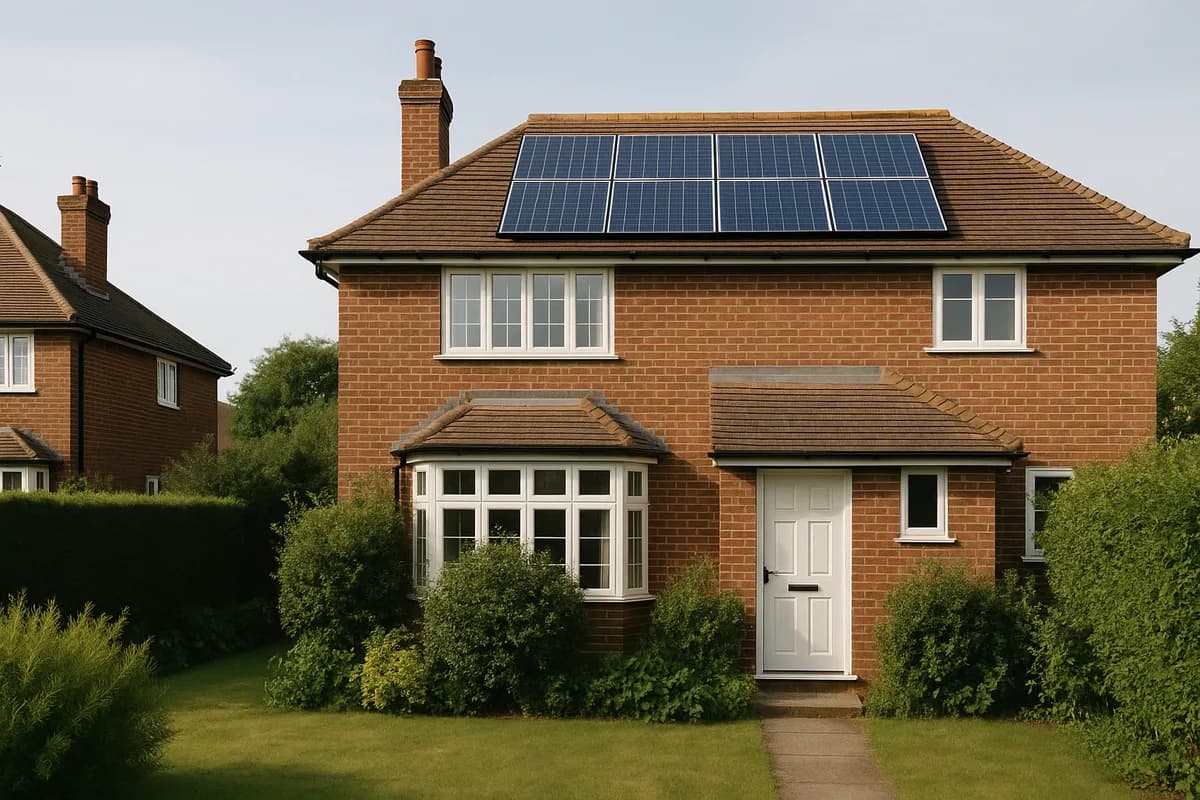
Do Solar Panels Increase Home Value in the UK?
UK research finds a 3.5–7.1% sale-price premium on homes with solar — an average, not a guarantee. See the evidence and what moves the premium.
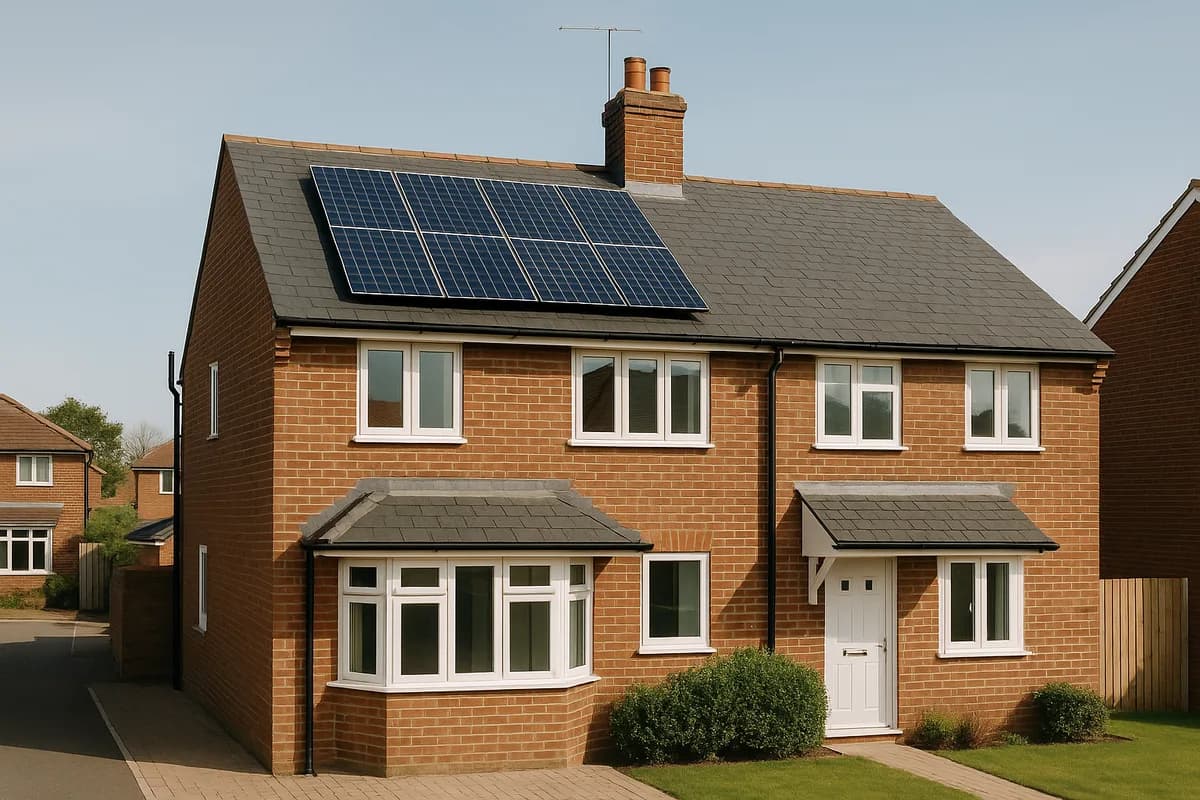
Do Solar Panels Need Planning Permission?
Most UK solar panels do not need planning permission under permitted development rights. See the exceptions: listed buildings, conservation areas, flats, and ground-mounted systems.
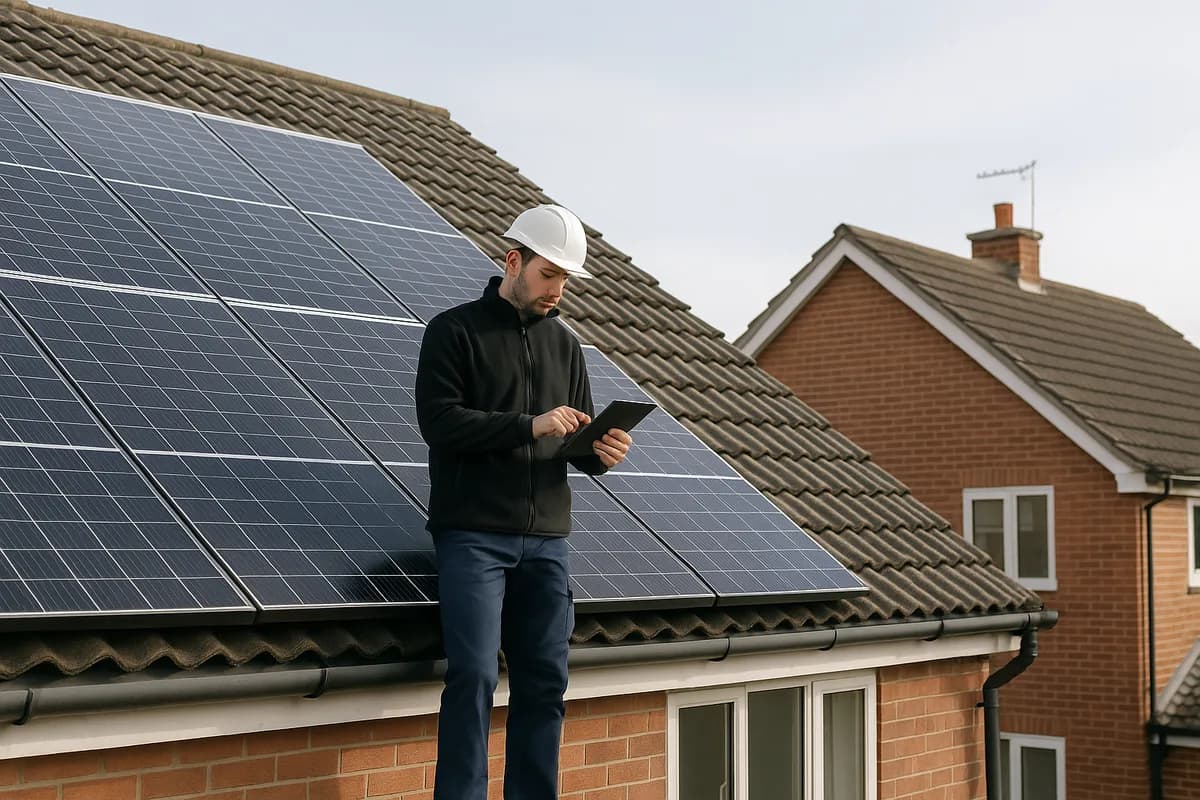
Do Solar Panels Need Maintenance?
Solar panels need minimal maintenance — no moving parts, no regular servicing. See what to check, when to clean, and the one component that will need replacing.
Can Solar Panels Power a Whole House?
Can solar panels power an entire UK house? In summer, often yes. Year-round without the grid, rarely. See the maths, what size system you need, and the role of batteries.
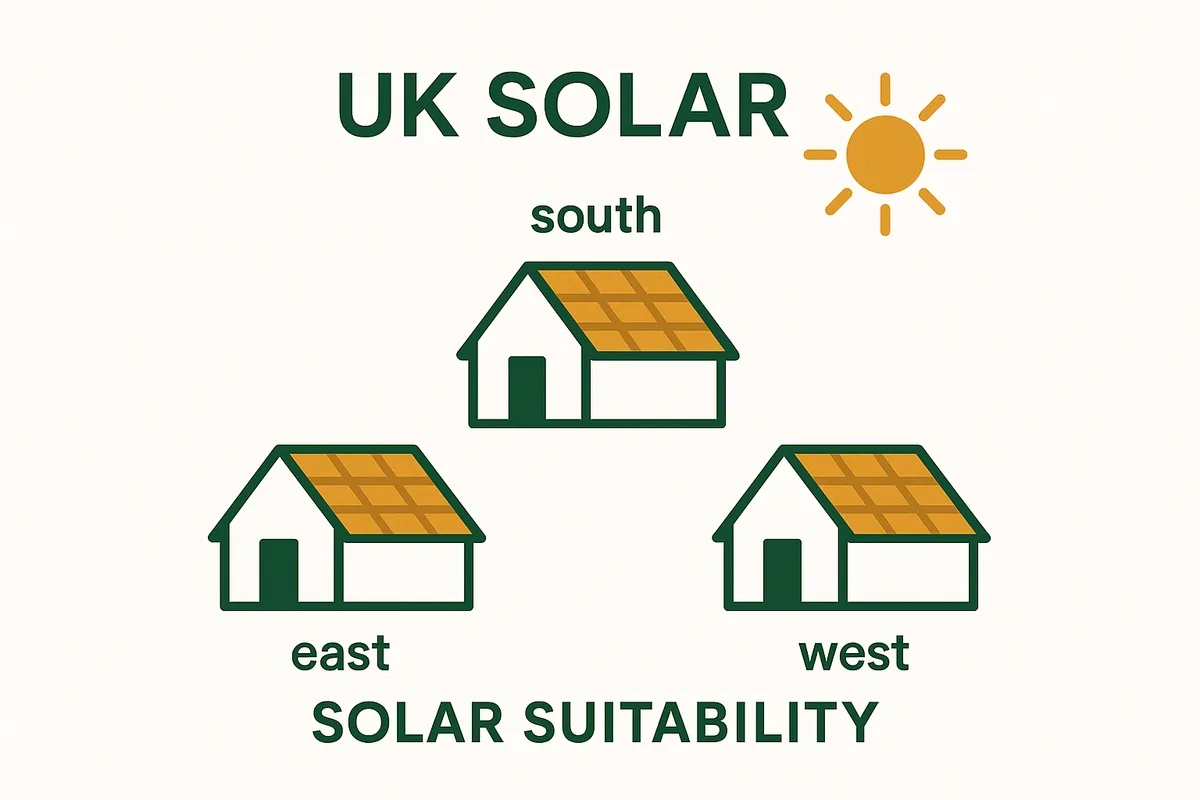
What Direction Should Solar Panels Face in the UK?
South-facing is optimal for UK solar panels, producing 100% potential output. East/west gives 80-85%. Even north-facing can work. See the data by direction.
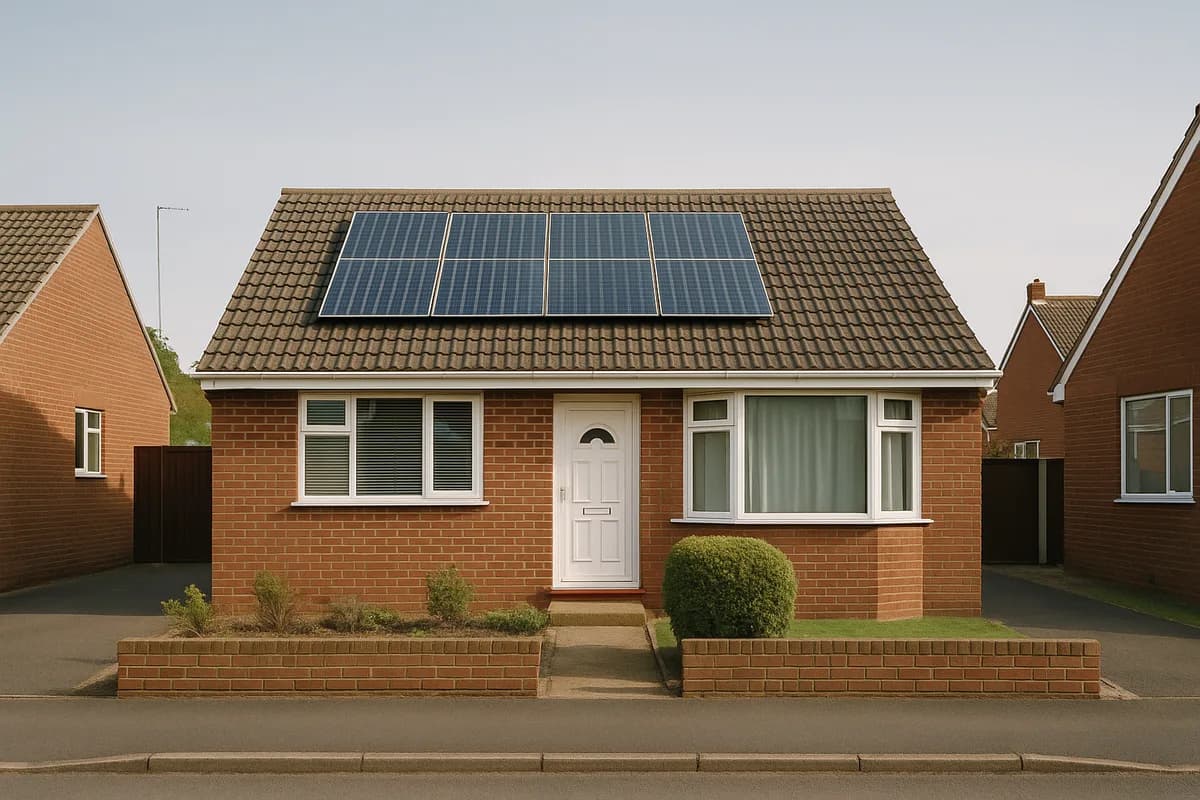
Solar Panels on a Flat Roof: Can You Install Them?
Yes, solar panels work well on flat roofs using angled mounting frames. See costs, output comparison, planning rules, and whether flat roof solar is worth it in the UK.
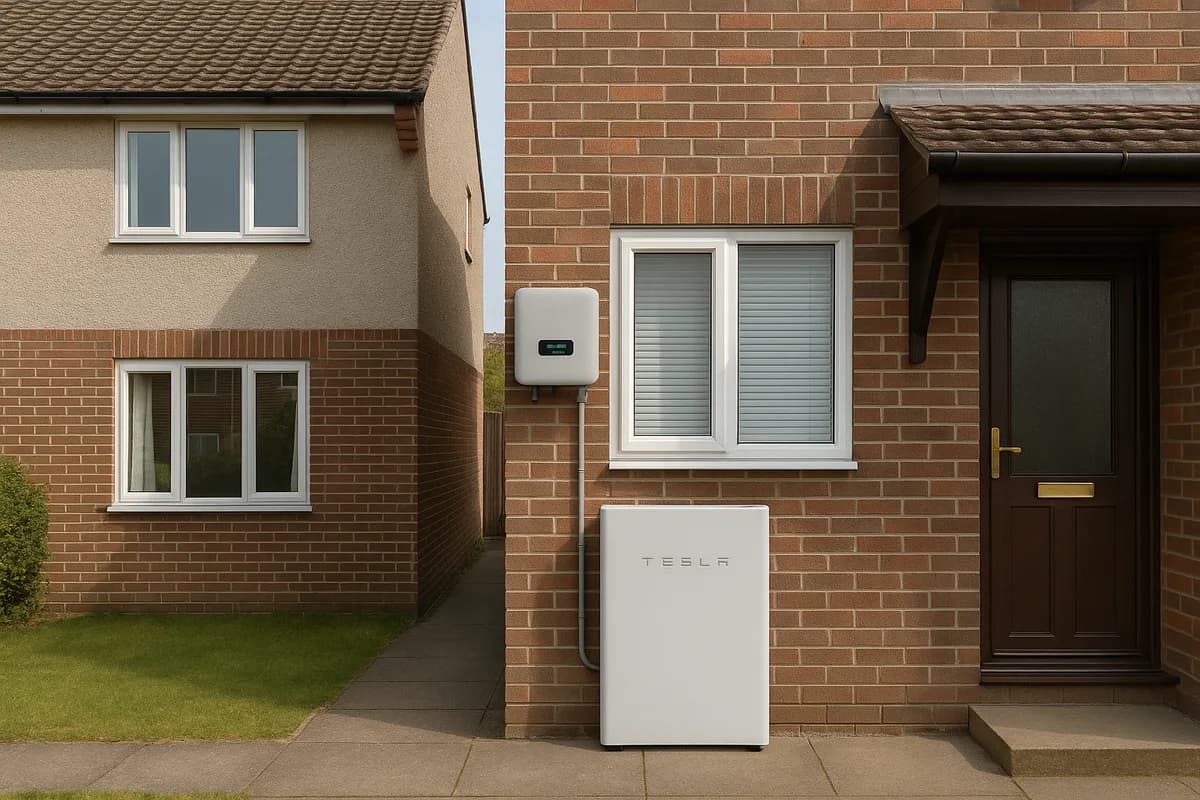
What Is a Solar Battery & How Does It Work?
A solar battery stores excess electricity from your panels for use at night or on cloudy days. See how they work, costs (£2,500-£7,500), types, and whether you need one.
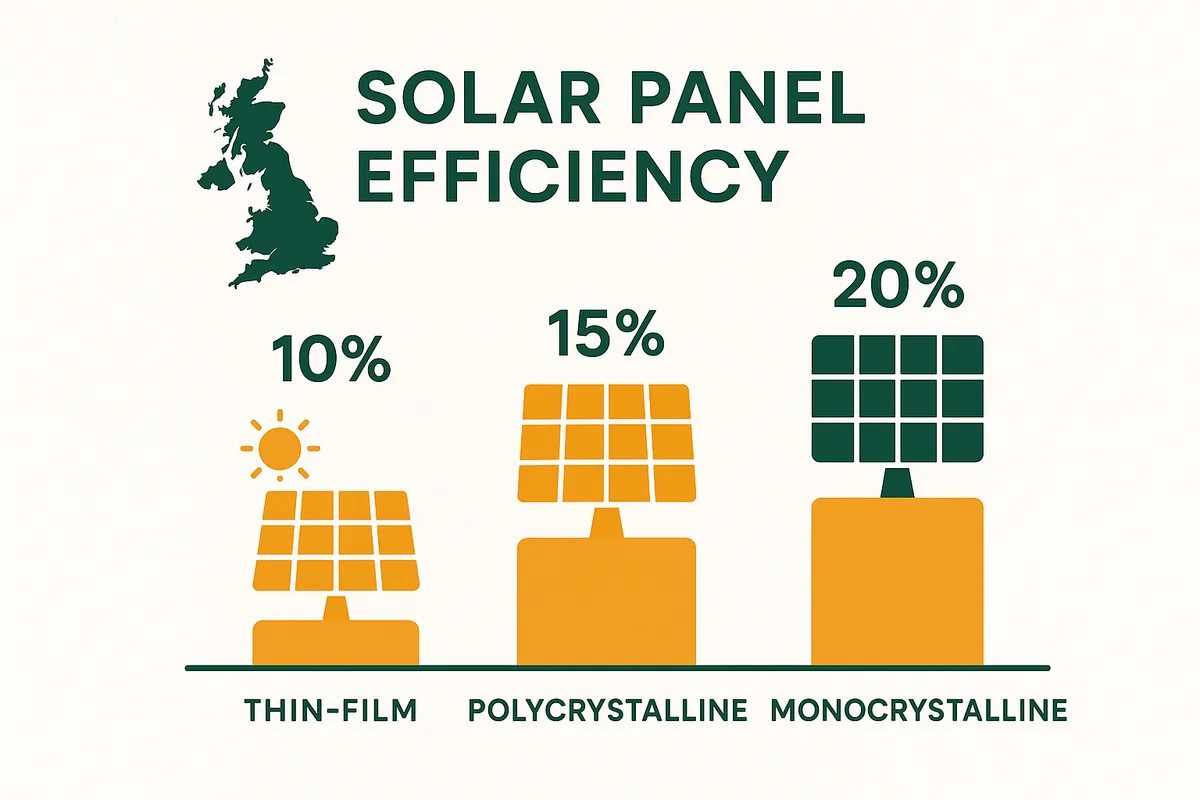
Types of Solar Panels: Mono, Poly & Thin Film Explained
The 3 types of solar panels for UK homes: monocrystalline (best efficiency), polycrystalline (budget option), and thin-film (specialist use). See which is right for you.

Solar Panels Pros and Cons: The Honest UK Assessment
The real pros and cons of solar panels for UK homes in 2026. Lower bills, 0% VAT, and 25-year lifespan vs upfront cost, weather dependency, and roof requirements.
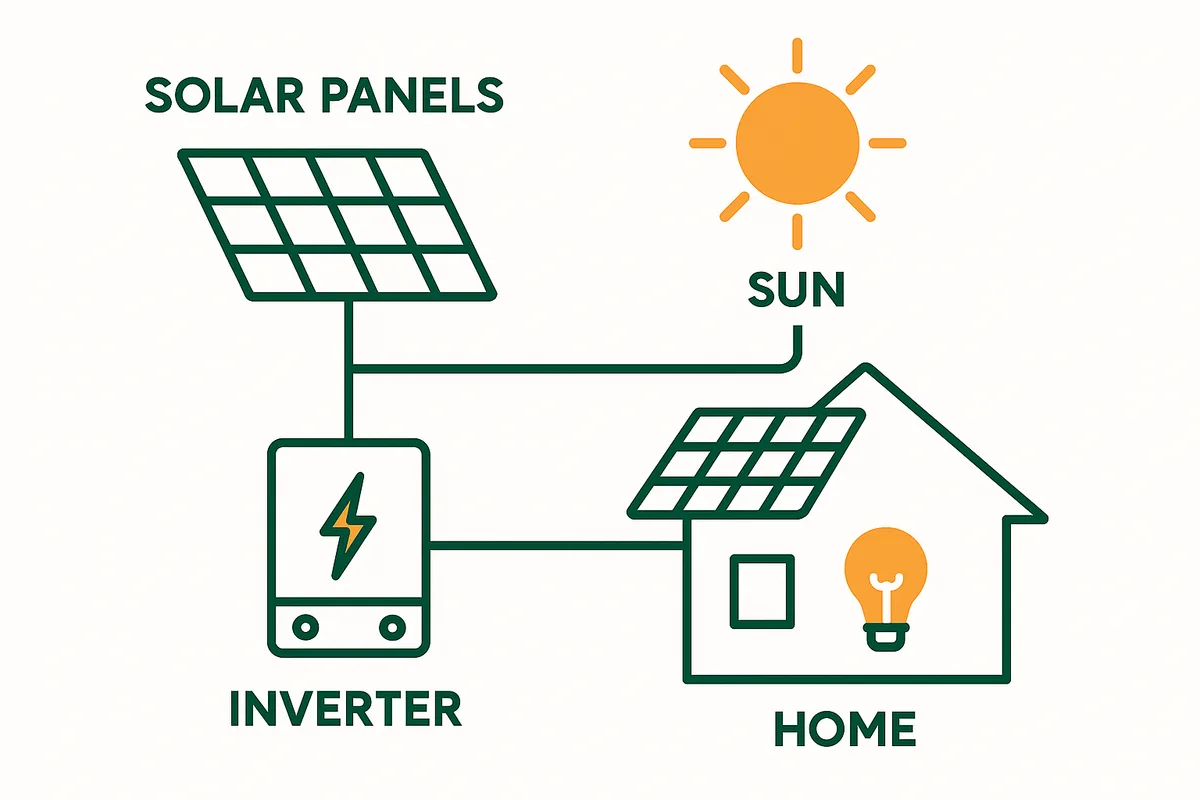
How Do Solar Panels Work?
Solar panels convert sunlight into electricity using silicon cells. See how the photovoltaic effect works, what happens inside a panel, and how electricity reaches your home.
Solar Panel Bird Proofing: Costs & Solutions
Solar panel bird proofing costs £300–£600 and prevents pigeons nesting under your panels. See methods, costs, DIY options, and why it matters for panel performance.
Solar Panel Efficiency Explained: What Matters
Solar panel efficiency ranges from 15-23% for residential panels. See what efficiency means, why it matters, and whether higher efficiency panels are worth the extra cost.
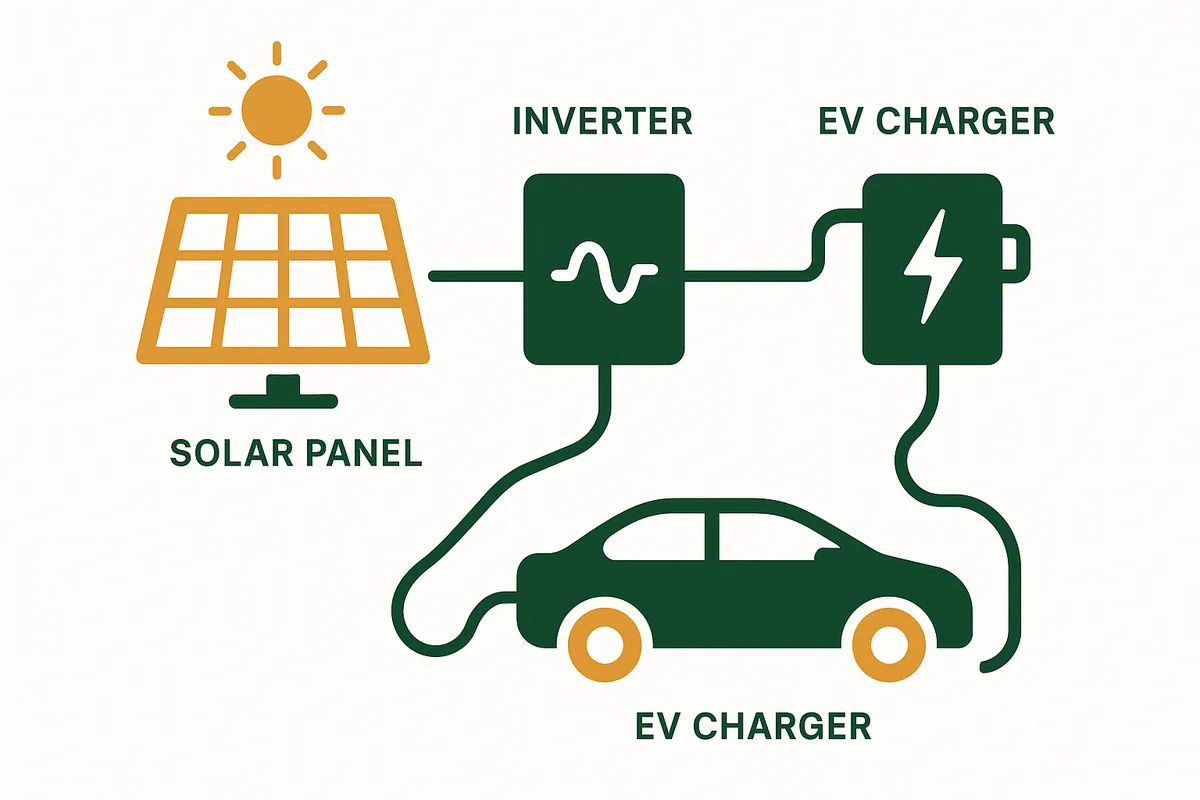
How Many Solar Panels to Charge an Electric Car?
You need 8-10 extra solar panels to charge an electric car from solar in the UK. See the maths, costs, and the smartest way to combine solar with EV charging.
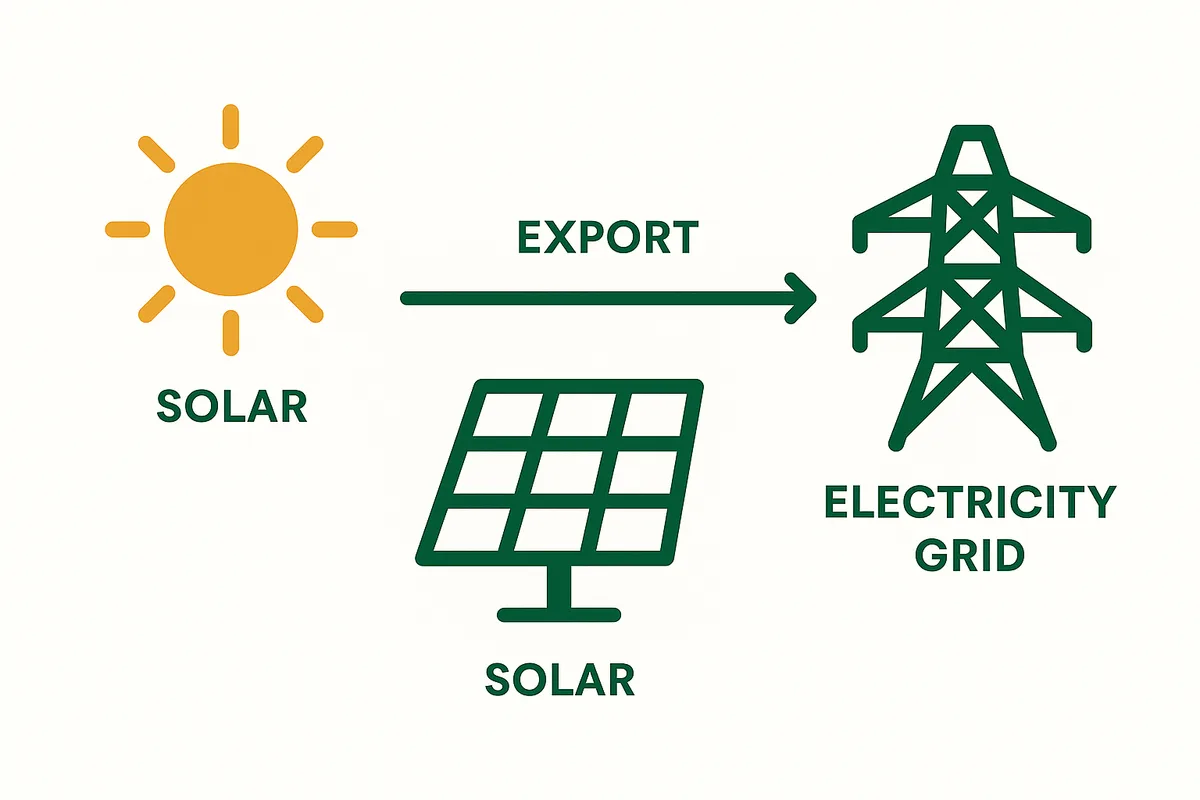
What Is the Smart Export Guarantee (SEG)?
The Smart Export Guarantee pays you for surplus solar electricity exported to the grid. Current rates: 4-15p/kWh. See how it works, best rates, and how to sign up.
Solar Panels for a Bungalow
Bungalows are ideal for solar panels — accessible roofs, often large roof area, and easy maintenance. See costs, system sizes, and specific bungalow considerations.
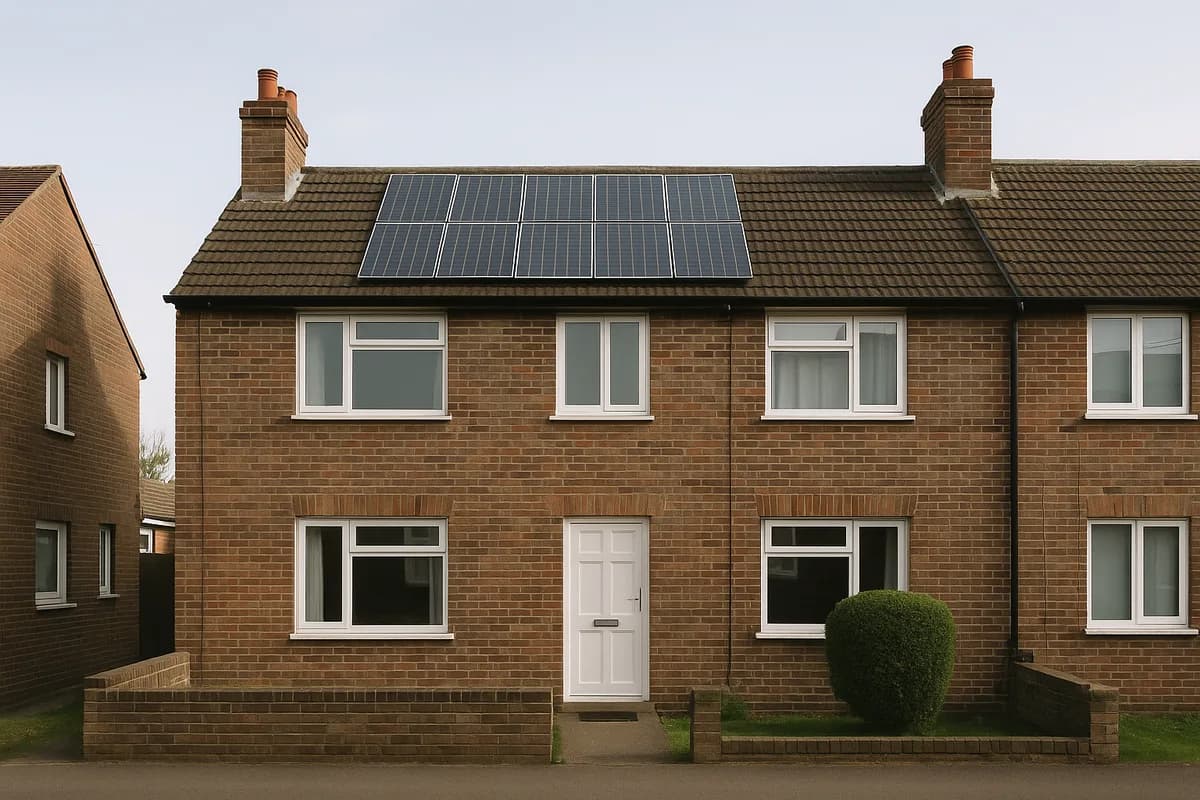
Solar Panels for a Terraced House
Terraced houses can fit 6-10 solar panels (2-4kW). See costs, roof challenges, planning rules for conservation areas, and whether solar is worth it on a terrace.
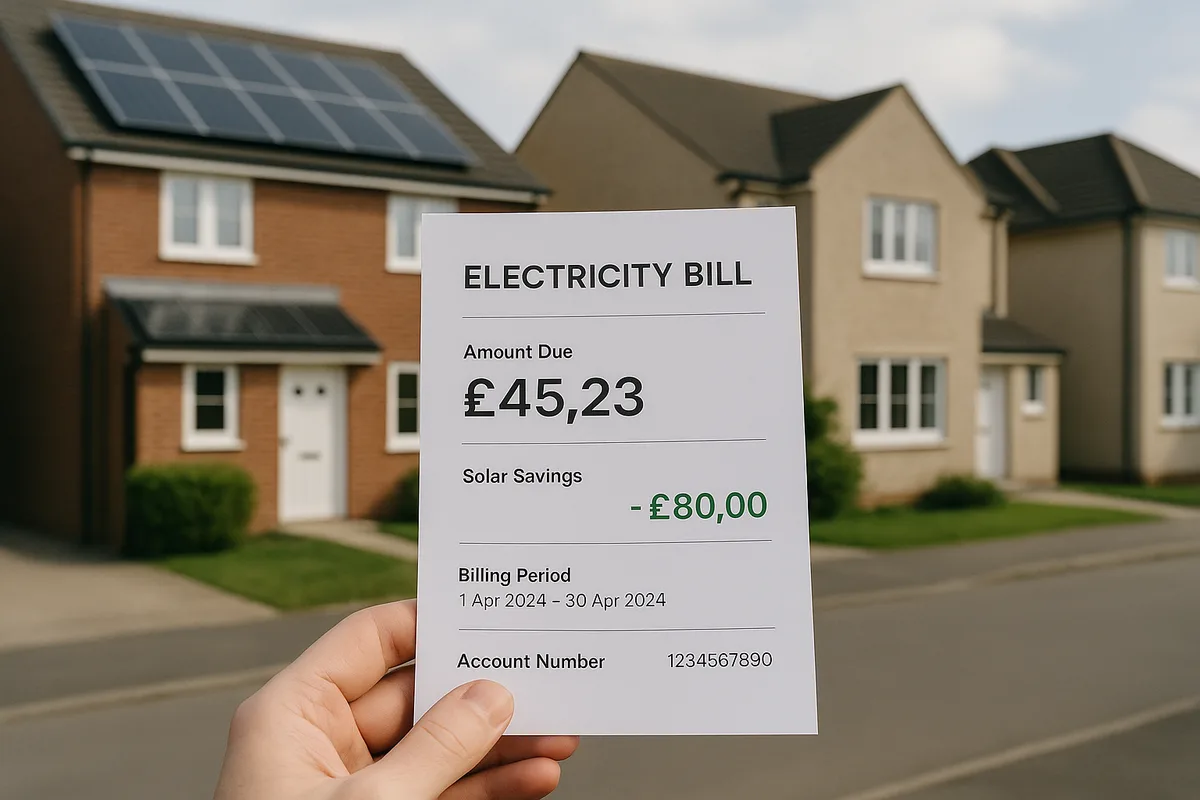
How Much Do Solar Panels Save Per Year?
UK solar panels save £800-£1,100 per year on a typical 4kW system. See savings by system size, with and without battery, and what affects your actual savings.
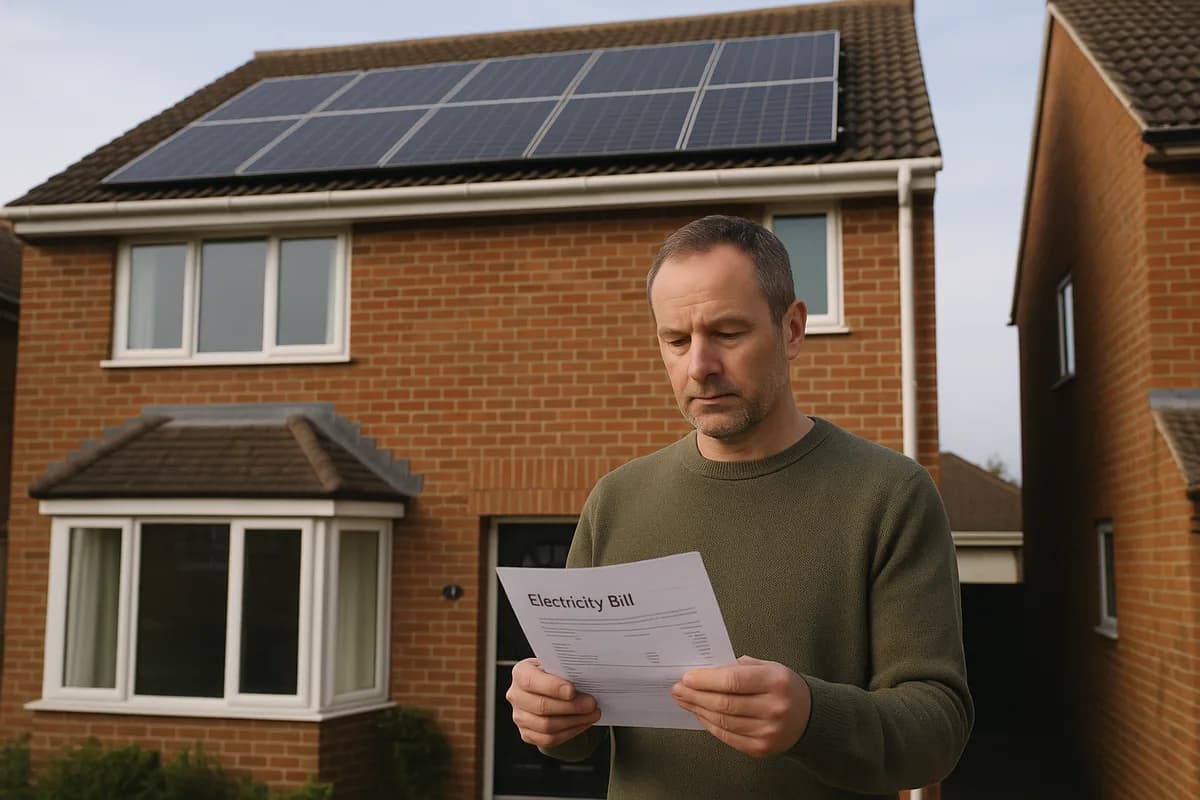
Solar Panels & Your Electricity Bill: What Changes
Solar panels reduce your electricity bill by 50-85% depending on usage and whether you have a battery. See how billing works, what your meter shows, and real bill examples.
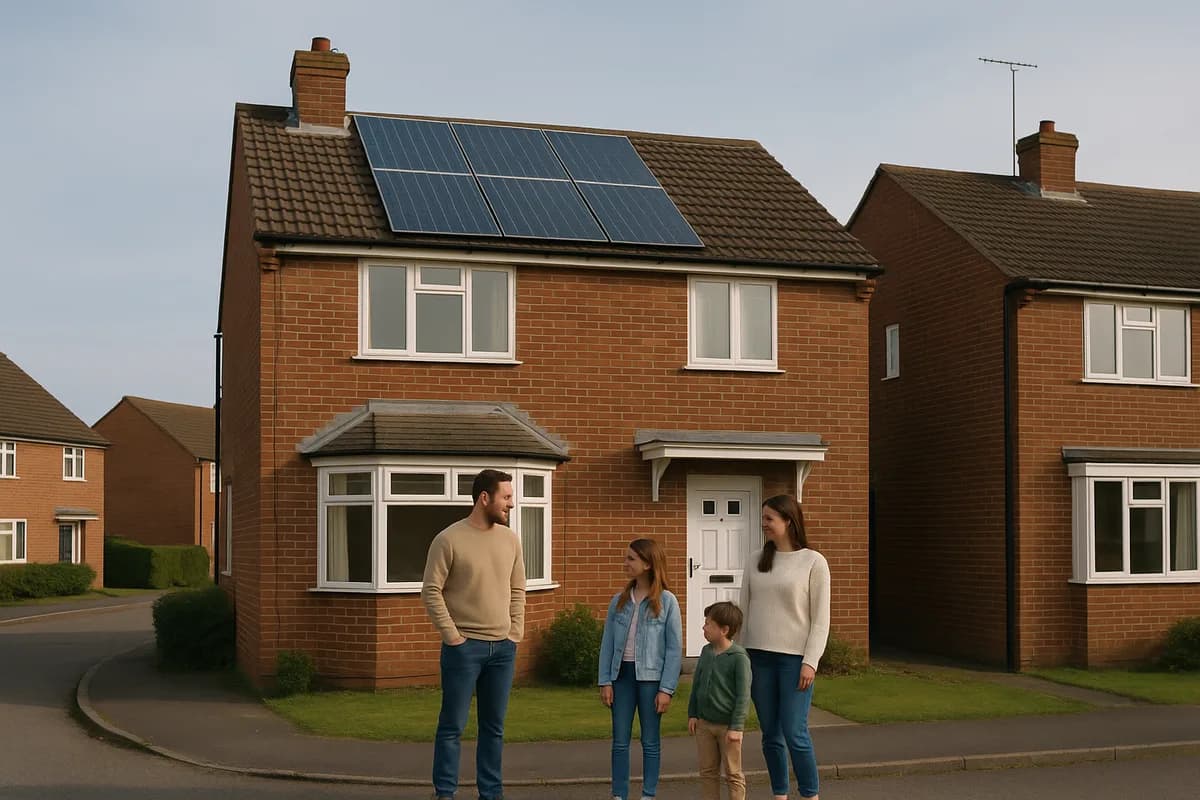
Solar Panels When You Move House: What Happens?
Solar panels stay with the house when you sell — you cannot take them. See how they affect sale price, what buyers think, and your warranty transfer options.
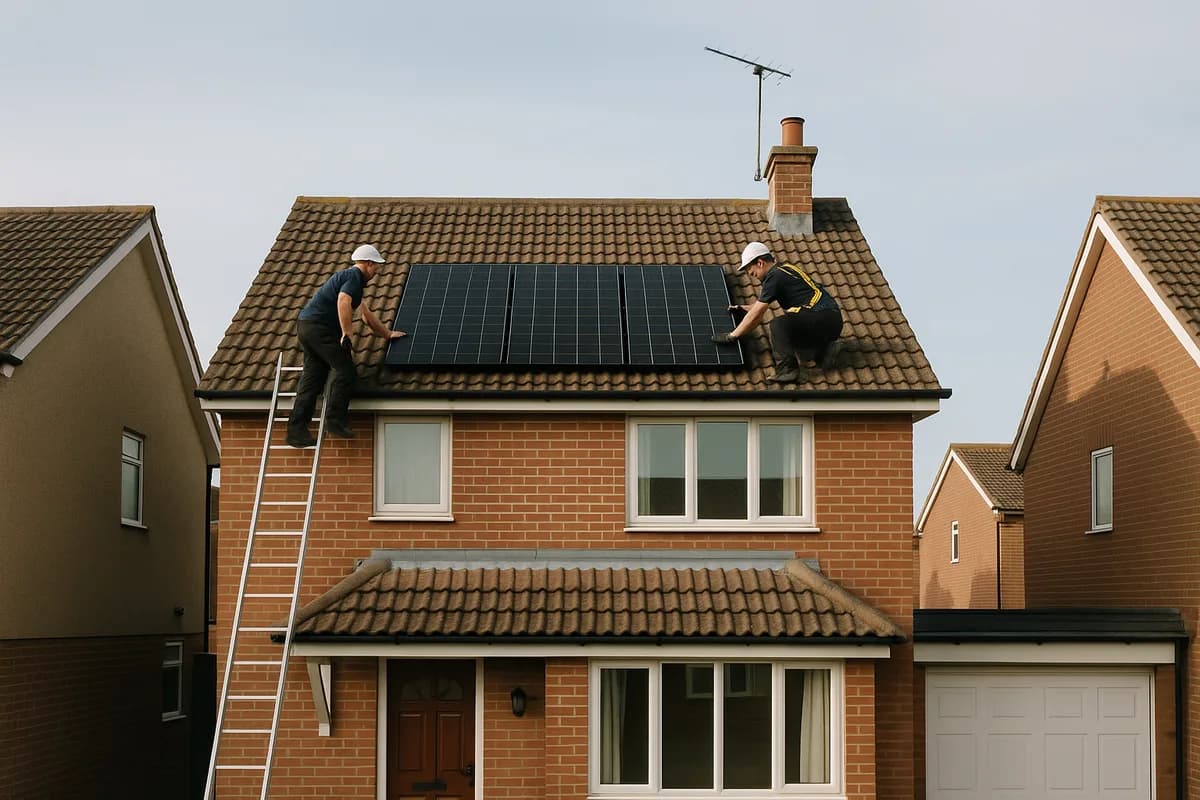
How Are Solar Panels Installed? Step-by-Step
Solar panel installation takes 1-2 days. See the full process: survey, scaffolding, mounting, wiring, inverter, DNO notification, and switch-on. What to expect at each stage.
Solar PV vs Solar Thermal: Which Is Right for You?
Solar PV generates electricity; solar thermal heats water. PV is more versatile and cost-effective for most UK homes. See the full comparison with costs and savings.
Are Solar Panels Safe?
Solar panels are very safe when professionally installed. Fire risk is extremely low, roof damage is rare, and electrical safety is regulated. See the facts and data.
Solar Panels on an East-Facing Roof: Worth It?
East-facing solar panels produce 80-85% of south-facing output — still very worthwhile. See the real numbers, morning generation advantage, and when east-facing is actually better.
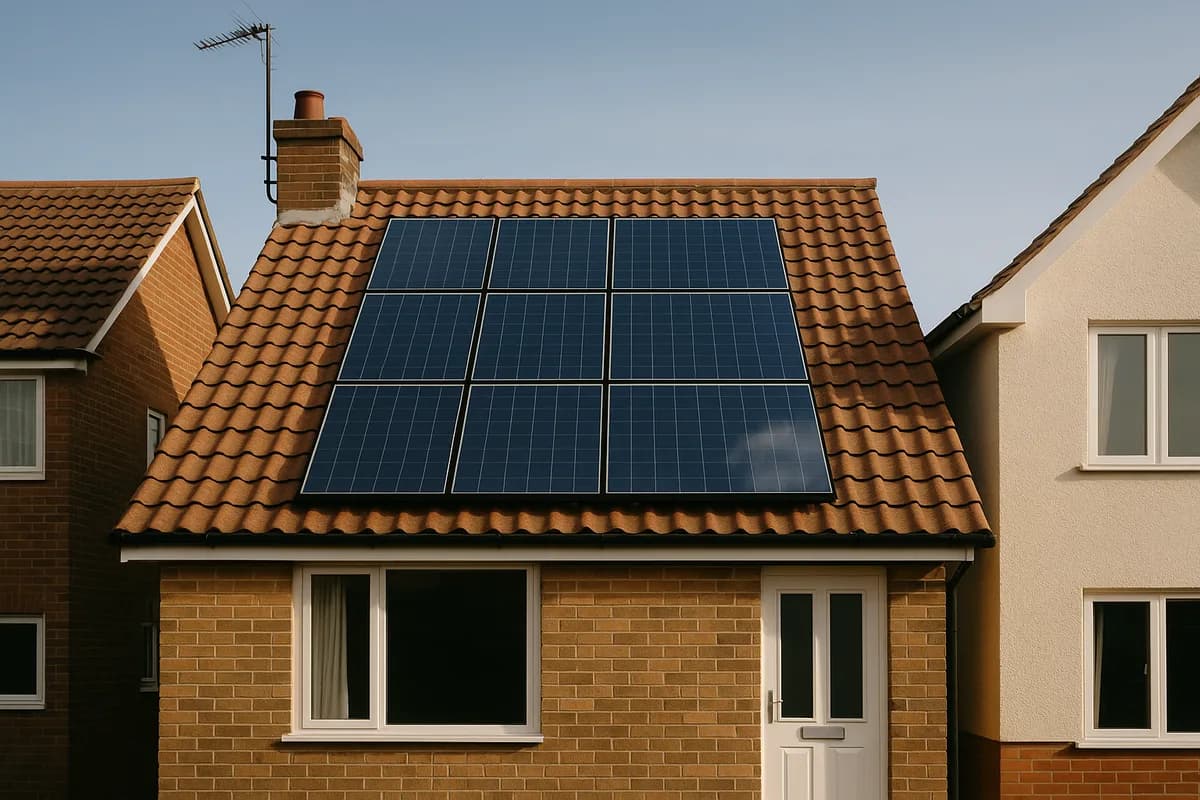
Solar Panels for a 2 Bed House
A 2-bed house needs a 2-3kW solar system (5-8 panels), costing £3,500-£6,000. Annual savings: £350-£550. See sizing, costs, and whether it is worth it for a smaller home.
How Many Solar Panels Does a 4-Bedroom House Need?
A 4-bed house usually takes 10-16 panels (4-6.4 kWp) — about £7,120-£10,860 at the DESNZ 2025/26 median. Size it from your bill, not your bedroom count.
Solar Panels on a North-Facing Roof: Honest Assessment
North-facing solar panels produce only 55-60% of south-facing output. Usually not recommended, but there are exceptions. See the honest numbers and alternatives.
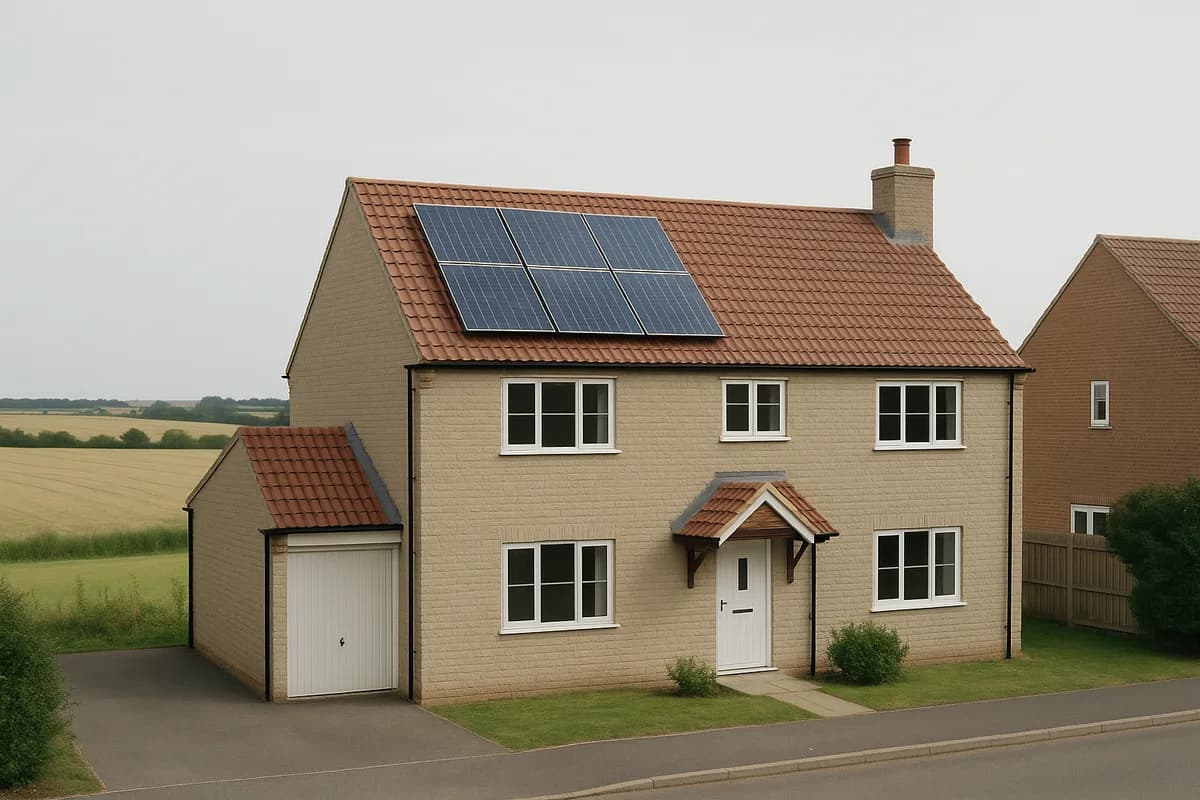
4kW Solar Panel System: The UK's Most Popular Size
A 4kW solar system is the UK's most popular size. 10 panels, £5,500-£8,000, generates 3,800-4,200 kWh/year. See costs, output, savings, and whether 4kW is right for you.
In-Roof Solar Panels: Integrated vs On-Roof
In-roof (integrated) solar panels replace roof tiles entirely for a flush, sleek finish. Cost: 20-30% more than on-roof. See pros, cons, and when they are worth it.
Solar Panel Insurance: Do You Need Extra Cover?
Most home insurance policies cover solar panels automatically, but you must notify your insurer. See what is covered, what is not, and whether you need specialist insurance.
Solar Panels & Smart Meters: Do You Need One?
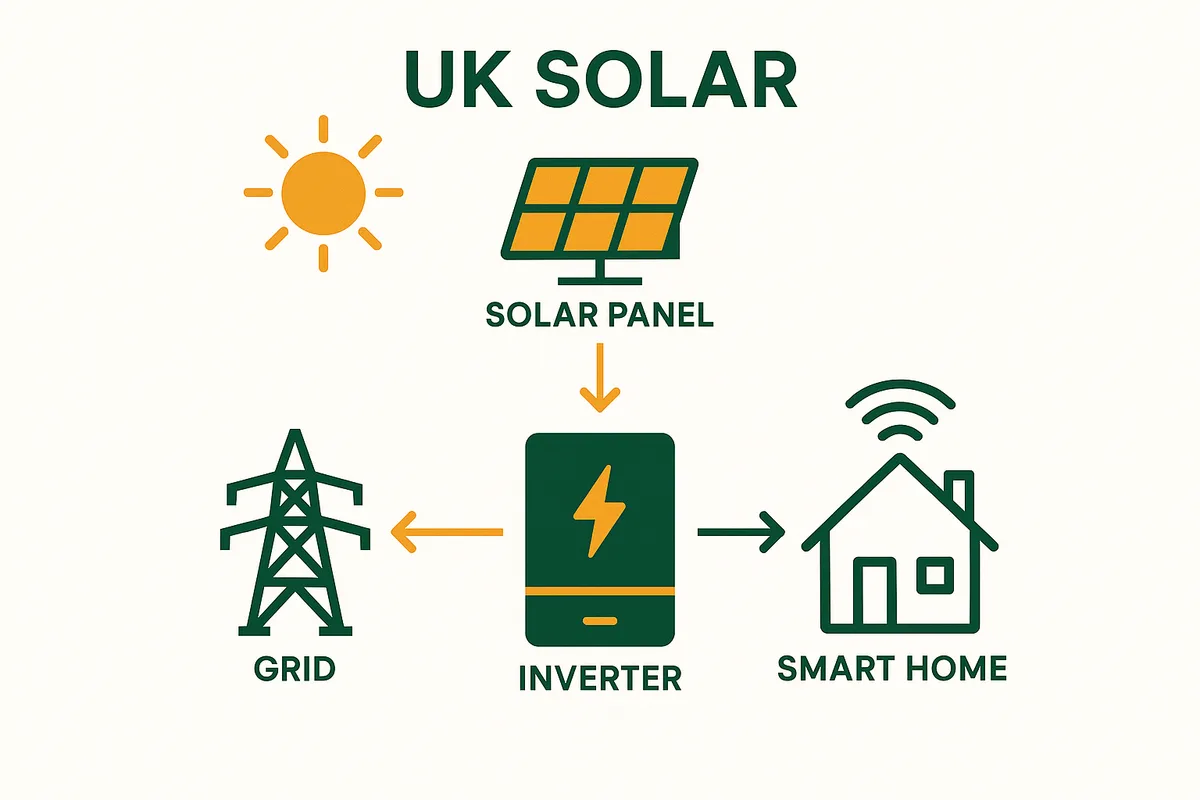
You need a smart meter to receive SEG export payments for surplus solar. See how smart meters work with solar, what data they track, and how to get one installed free.
Solar Panel Warranty Guide: What to Look For
Solar panels come with two warranties: product (10-25 years) and performance (25 years, 80%+ output). See what each covers, top brand warranties, and red flags to avoid.
Portable Solar Panels UK: Best Options
Portable solar panels for camping, caravans, and off-grid use in the UK. See the best options, what wattage you need, costs (£50-£500), and practical advice.
Ground-Mounted Solar Panels UK: Cost & Rules
Ground-mounted solar costs 10-15% more than roof-mounted but allows optimal angle and direction. See costs (£6,000-£10,000), planning rules, and when ground-mounting makes sense.
Solar Panel Scams UK: How to Spot & Avoid Them
Solar panel scams in the UK include pressure sales, fake grants, unrealistic savings claims, and unqualified installers. See the 8 most common scams and how to protect yourself.
Can Solar Panels Charge an Electric Car?
Yes, solar panels can charge an EV. A 4kW system adds 12-15 miles of range per hour of sunshine. See costs, smart chargers, and the best setup for solar + EV in the UK.
Solar Panels for a Semi-Detached House
Semi-detached houses are ideal for solar — typically fitting 8-12 panels (3-5kW). Cost: £4,500-£9,000. Annual savings: £550-£900. See sizing and specific considerations.
Best Time to Buy Solar Panels in the UK
The best time to buy solar panels is late winter/early spring — before the summer generation peak. But any time of year works. See seasonal pricing, wait-vs-buy analysis.
Solar Panels & Heat Pumps Together: Complete Guide
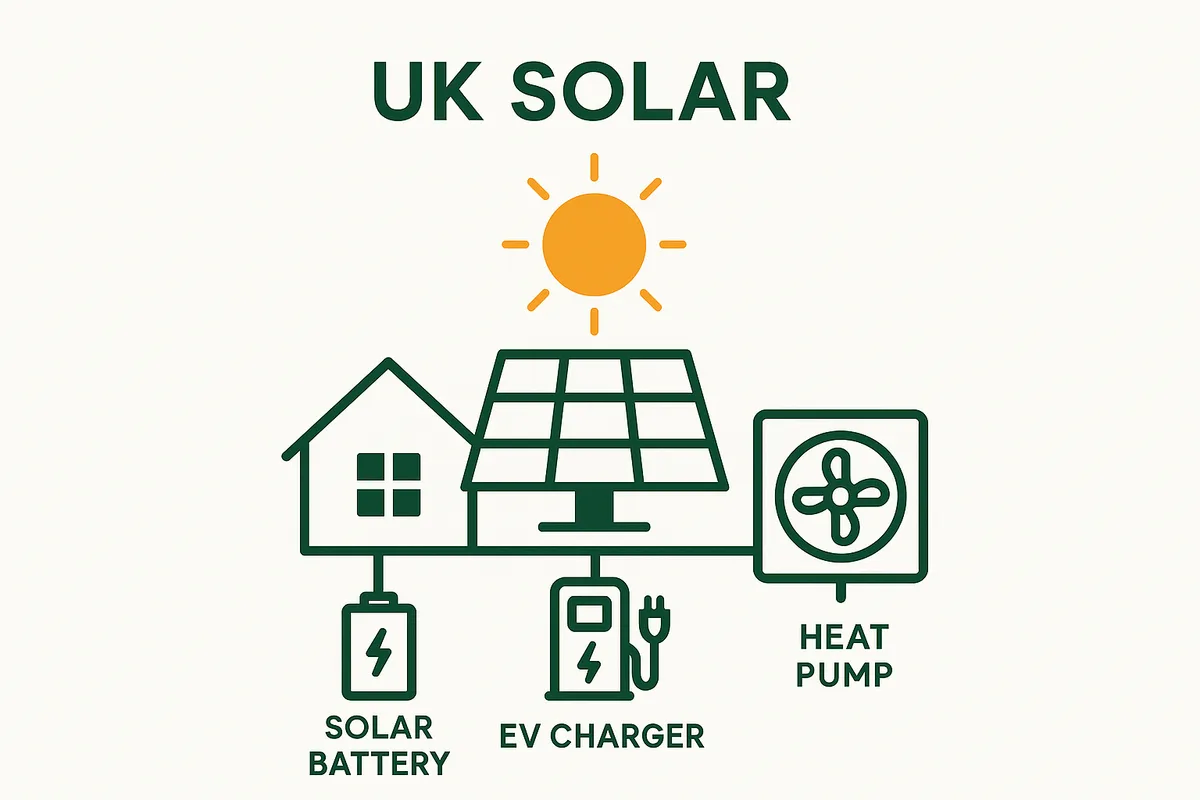
Solar panels and heat pumps work brilliantly together — solar generates the electricity the heat pump uses. Combined savings: £1,200-£2,000/year. See costs, sizing, and ROI.
Solar Panel Output: kWp, kWh & What It All Means
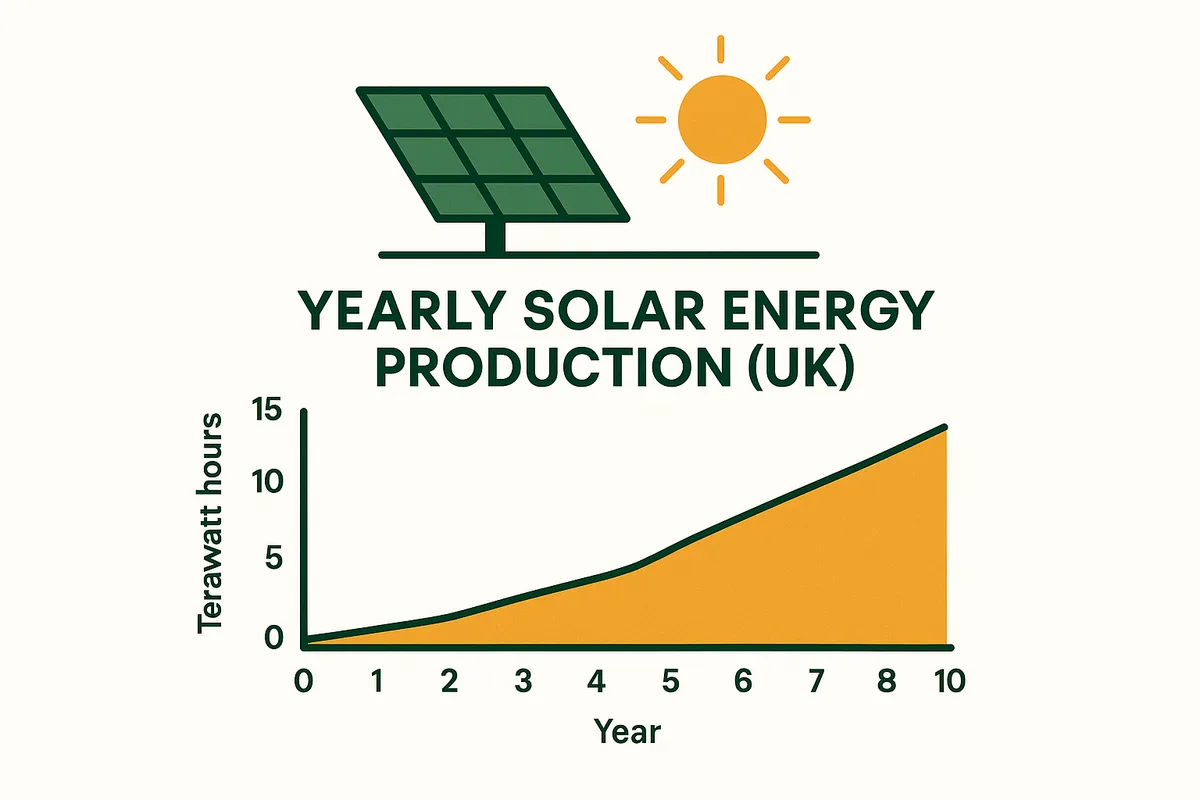
Solar panel output is measured in kWp (capacity) and kWh (actual generation). A 400W panel produces ~380-420 kWh/year in the UK. See how output is calculated and what affects it.
Solar Panels for New Build Homes
New build homes increasingly come with solar panels pre-installed under Part L building regulations. See what to check, common issues, and whether developer-installed solar is good enough.
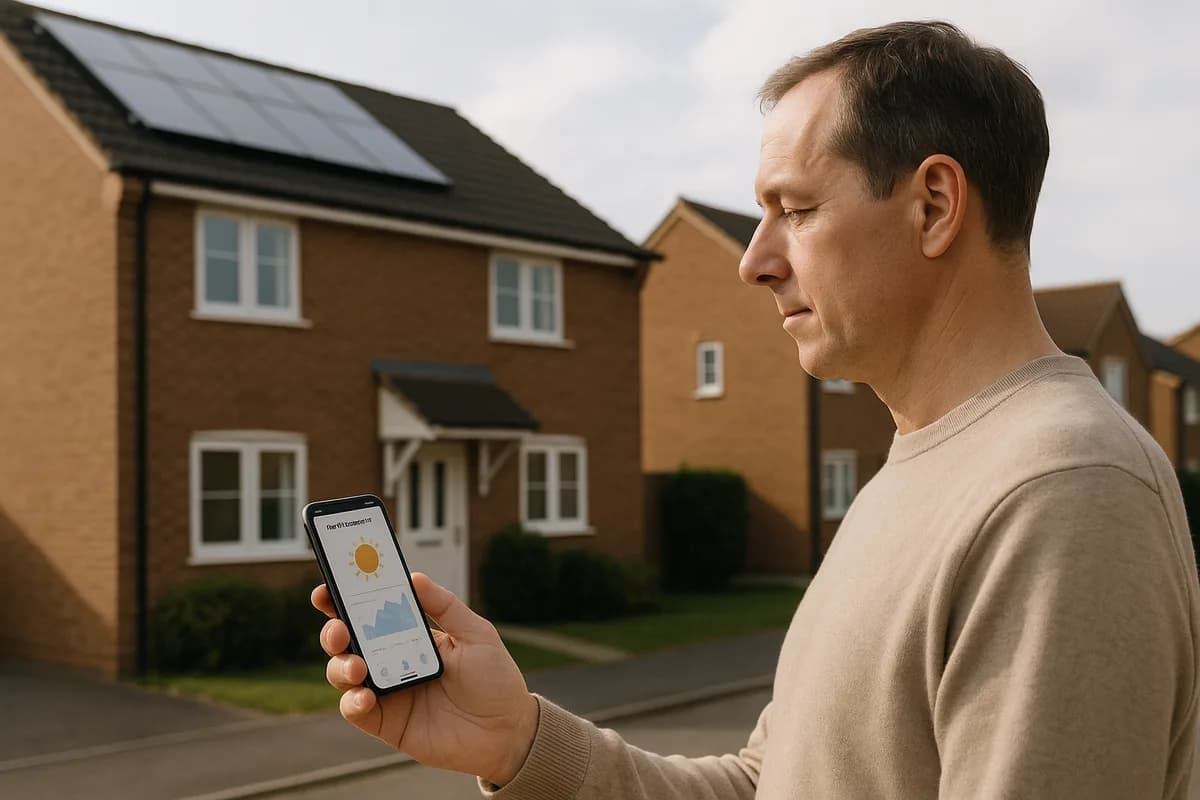
Solar Panel Monitoring Systems: Track Your Output
Every modern solar inverter includes monitoring via an app. See what data you can track, the best monitoring platforms, and how to spot problems early.
How to Maximise Your Solar Panel Savings
10 proven ways to get more from your solar panels: shift appliance use, add a battery, choose the right tariff, and more. Increase savings by £200-£500 per year.
Solar Panels & Council Tax: Does It Change?
Solar panels do not increase your council tax band in the UK. The Valuation Office Agency has confirmed this. See the official position and what to know.
Solar Panels & Your Mortgage: What to Know
Owned solar panels do not affect your mortgage. Leased panels can cause issues with some lenders. See what mortgage companies think about solar and what to check.
Solar Panels for a 5 Bed House
A 5-bed house needs a 5-6kW solar system (13-16 panels), costing £6,500-£11,000. Annual savings: £850-£1,150. See sizing for large homes and battery recommendations.
Solar Panel Fire Risk: How Safe Are They Really?
Solar panel fire risk is extremely low — 1 incident per 10,000 installations over 25 years. See the data, causes, prevention, and what firefighters advise.
Solar Battery Lifespan: How Long Do They Last?
Solar batteries last 10-15 years (lithium-ion) or 15-20 years (LFP). See degradation rates, cycle counts, warranty terms, and when to budget for replacement.
Solar Panels on a Slate Roof: Installation Guide
Solar panels can be installed on slate roofs using specialist slate hooks. See costs, considerations, and why slate roofs need experienced installers.
3kW Solar Panel System: Cost, Output & Savings
A 3kW solar system has 8 panels, costs £4,500-£6,500, and generates 2,800-3,200 kWh/year. Ideal for 1-2 bed homes and smaller roofs. See full specs and savings.
Solar Panels for Landlords: The Investment Case
Solar panels on rental properties improve EPC ratings, attract tenants, and generate ROI. See costs, tenant benefits, EPC rules, and whether landlords should invest.
Solar Panels on Rented Property: Your Options
Tenants cannot install solar panels without landlord permission. But you can ask your landlord, use portable panels, or benefit from landlord-installed solar. See your options.
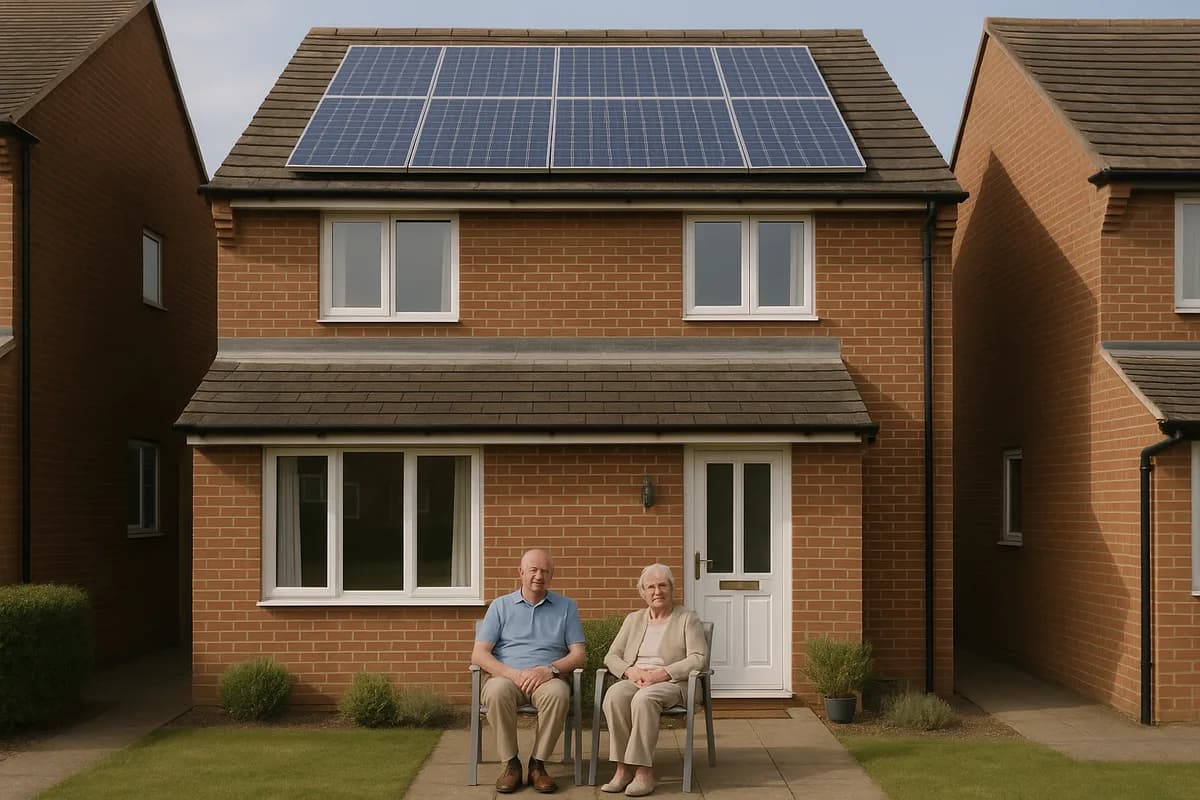
Solar Panels 10 Years Later: Real UK Results
What do solar panels look like after 10 years? Output drops ~5%, inverter may need replacing, but they are still earning. See real performance data and what to expect.
Solar Panel Quotes: What to Look For
Getting solar panel quotes? Expect a site survey, system design, itemised pricing, and warranty details. See how to compare quotes, red flags, and what a good quote looks like.
Solar Panels for a Detached House
Detached houses are ideal for solar — maximum roof space, no neighbour shading, and room for large systems. See costs (£5,500-£14,000), sizing, and optimisation tips.
Solar Panel Degradation: How Much Output Do You Lose?
Solar panels degrade at 0.3-0.5% per year. After 25 years, output is still 80-87% of original. See degradation curves, what affects the rate, and why it barely matters financially.
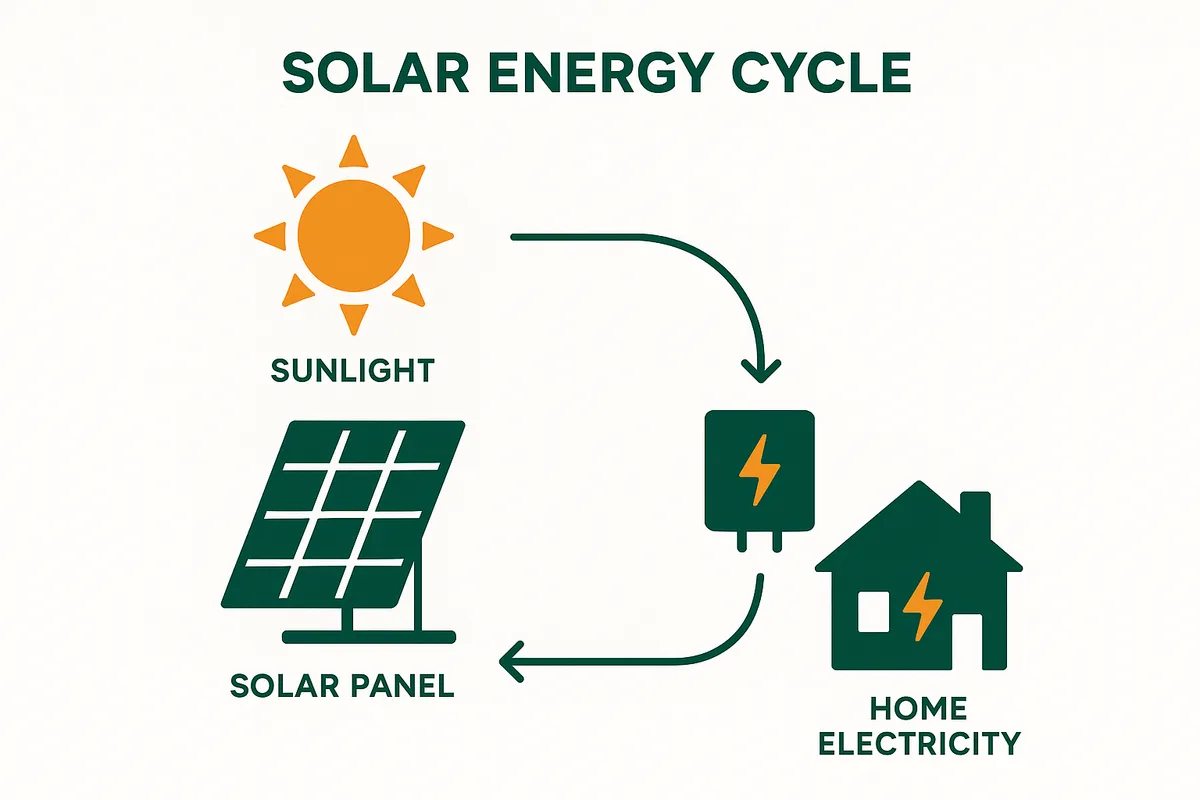
Solar Panel Recycling UK: What Happens at End of Life?
95% of a solar panel is recyclable (glass, aluminium, silicon, copper). UK panels are recycled through the WEEE scheme. See how it works, costs, and environmental impact.
5kW Solar Panel System: Cost, Output & Savings
A 5kW solar system has 13 panels, costs £6,500-£9,500, and generates 4,700-5,200 kWh/year. Ideal for 3-4 bed homes with above-average consumption or EV charging plans.
Solar Panels & Electric Heating: Can You Heat for Free?
Solar panels can power electric heating — but not enough to heat a whole home. See what is realistic, how solar diverters help, and why a heat pump is the better pairing.
Solar Panel Carbon Footprint: The Full Picture
A solar panel's manufacturing carbon footprint is repaid in 2.5-3.5 years. Over 25 years, it prevents 35-50 tonnes of CO2. See the full lifecycle environmental analysis.
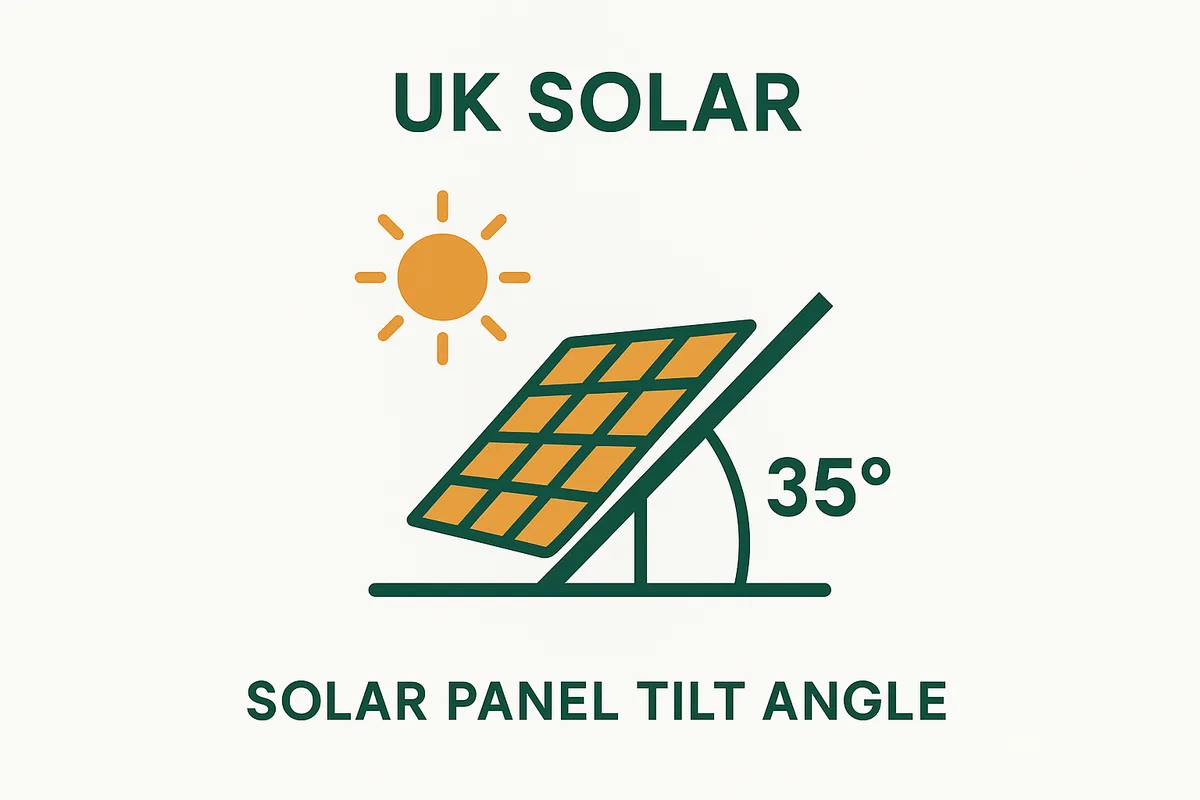
Best Solar Panel Angle for the UK
The optimal solar panel angle for the UK is 30-40 degrees from horizontal, with 35 degrees being ideal. See how tilt angle affects output and what happens at different pitches.
Solar Panels on a West-Facing Roof: Worth It?
West-facing solar panels produce 80-85% of south-facing output — still very worthwhile. See the numbers, afternoon generation advantage, and east-west split option.
Solar Panel Weight: Can Your Roof Handle It?
A standard solar panel weighs 18-22kg. A 10-panel system adds ~200kg to your roof — well within the capacity of virtually all UK homes. See the numbers and when to check.
Choosing a Solar Installer: Red Flags & Green Flags
How to choose a reliable UK solar installer: MCS certification, reviews, warranty terms, and the red flags that signal trouble. Get it right first time.
Solar Panel Installation Timeline: Start to Finish
Solar panel installation takes 3-6 weeks from first enquiry to switch-on. The physical installation takes 1-2 days. See the full timeline and what causes delays.
VAT on Solar Panels UK: 0% Rate Explained
Residential solar panel installations in the UK currently have 0% VAT — saving you £1,000-£1,600 compared to the standard 20% rate. See who qualifies and how long it lasts.
ECO4 Solar Panel Grants: Who Qualifies?
The ECO4 scheme can fund solar panels for low-income and vulnerable households. See eligibility criteria, how to apply, what is covered, and whether you qualify.
Free Solar Panels UK: What Is Actually Available?
There are no free solar panels for most UK homeowners. ECO4 helps low-income households. 'Free solar' ads are usually leases or scams. See what is genuinely available.
Solar Panels for Motorhome: Costs & Installation
Motorhome solar panels cost £200-£1,000 for 100-400W. They charge your leisure battery for lights, fridge, and devices. See sizing, mounting options, and best panels for vans.
Solar Panels & Home Insurance: What Changes?
Solar panels are usually covered by your existing home insurance — but you must notify your insurer. Most see no premium increase. See what to tell your insurer and what is covered.
Solar Panels During a Power Cut: What Happens?
Most UK solar systems switch off during a power cut for safety. Your panels stop generating even in sunshine. See why, and which systems can provide backup power.
Solar Panel Finance UK: Payment Plans & Loans
Solar panel finance options include 0% installer finance, personal loans (3-5% APR), and green home loans. See which option saves you the most and what to watch out for.
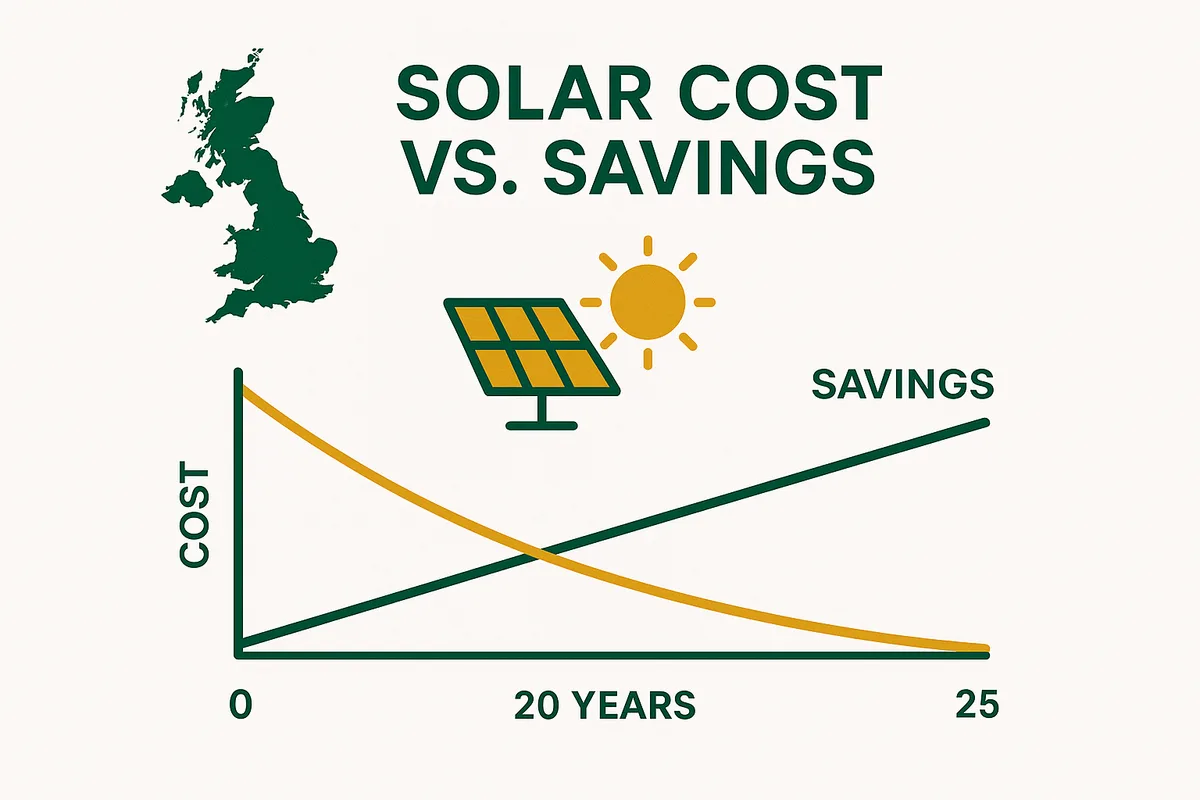
Solar Panel ROI UK: Return on Investment
UK solar panels deliver 100-400% ROI over 25 years. A 4kW system costing £6,750 returns £14,500-£20,500 in savings. See the detailed ROI calculation and what affects your return.
Solar Panels in a Conservation Area: Rules & Options
You can install solar in most conservation areas — but panels on highway-facing roof slopes need planning permission. See the exact rules and how to get approval.
Solar Panels on Listed Buildings: Rules & Options
Listed buildings need listed building consent for solar panels — even on the rear. See how to apply, what gets approved, and alternative options for heritage properties.
Solar Panels for a Garden Office
Solar panels can power a garden office — a 1-2kW system (3-5 panels) covers most home office electricity needs. See sizing, costs, and whether to connect to your house system.
6kW Solar Panel System: The Large Home Choice
A 6kW solar system has 16 panels, costs £8,000-£11,000, and generates 5,600-6,200 kWh/year. Ideal for large homes, EV owners, and heat pump households. See full specs.
Solar Panel Removal Cost UK: Remove, Refit & Disposal
Solar panel removal costs £500-£1,500 for a typical UK system. See when removal is needed, what the process involves, and alternatives to full removal.
Solar Panels for Camping UK: Best Options
Camping solar panels (50-200W) cost £50-£400 and charge phones, batteries, and small devices. See the best options for UK camping, what wattage you need, and practical tips.
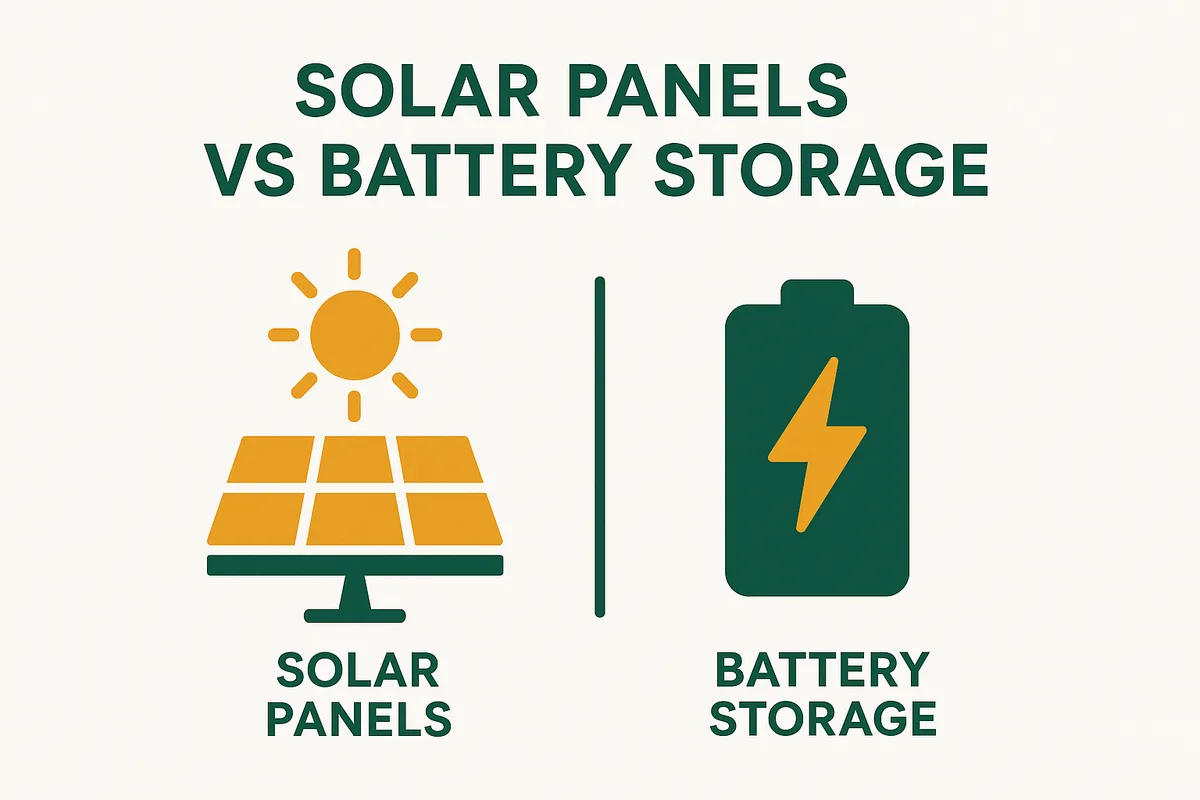
Solar Battery vs Exporting: Which Makes More Money?
Using solar yourself (26.11p/kWh) saves 5x more than exporting (4.5p/kWh). A battery captures surplus for self-use. See the maths and when a battery is worth the investment.
Commercial Solar Panel Cost UK: Business Guide
Commercial solar costs £800-£1,200 per kWp installed for UK businesses. A typical 50kW system costs £40,000-£60,000. See ROI, tax benefits, and payback for business solar.
Solar Panels for Farms: Agricultural Solar UK
Farm solar panels cost £700-£1,000 per kWp with payback of 4-7 years. Large roof areas, high electricity use, and tax benefits make farms ideal for solar. See the full guide.
Solar Panels UK 2026: The Complete Guide
The definitive 2026 guide to solar panels in the UK. Current costs, savings, grants, technology, and whether now is a good time to install. Updated for Q1 2026.
Solar Panels & Underfloor Heating: Do They Work Together?
Solar panels can power underfloor heating — but the maths depends on the heating type. Electric UFH uses lots of electricity; wet UFH with a heat pump is more efficient. See the analysis.
Do Solar Panels Make Noise?
Solar panels are virtually silent. The inverter produces a low hum (30-45dB) similar to a laptop fan. See what sounds are normal, what indicates a problem, and noise regulations.
Second-Hand Solar Panels: Are They Worth It?
Second-hand solar panels cost 50-70% less than new — but come with risks: no recognised certification (no SEG), reduced warranty, unknown history. See when they make sense and when to avoid.
What Is MCS Certification? Why It Matters
MCS (Microgeneration Certification Scheme) certifies solar installers and products. SEG requires MCS or an equivalent accredited scheme. See what it covers and how to verify.
Do Solar Panels Withstand Hail?
Solar panels are tested to withstand hail impacts up to 35mm diameter at 100km/h. UK hail rarely exceeds 20mm. See the testing standards and what happens in extreme weather.
Solar Panel Size Guide: Dimensions & Roof Space
A standard UK solar panel measures 1.7m × 1.0m and weighs 20kg. See dimensions by wattage, how many fit on your roof, and space calculations for different system sizes.
Solar Panels and Snow: What to Do
Snow on solar panels reduces output but rarely causes problems. Most snow slides off naturally or melts quickly. See what happens, what NOT to do, and when to take action.
Solar Panels and Pigeons: Prevention & Solutions
Pigeons nest under solar panels — causing droppings, wiring damage, and noise. Bird proofing costs £300-£600 and prevents all of these problems. See the solutions.
Solar Panels UK 2027: What to Expect
What will solar panels look like in 2027? Prices stable, efficiency improving, batteries cheaper, and potential VAT changes. See the forecasts and whether you should wait.
10 Solar Panel Mistakes to Avoid
The most common solar panel mistakes: choosing the cheapest quote, wrong system size, skipping a battery, ignoring SEG, and more. Learn from others' errors before you install.
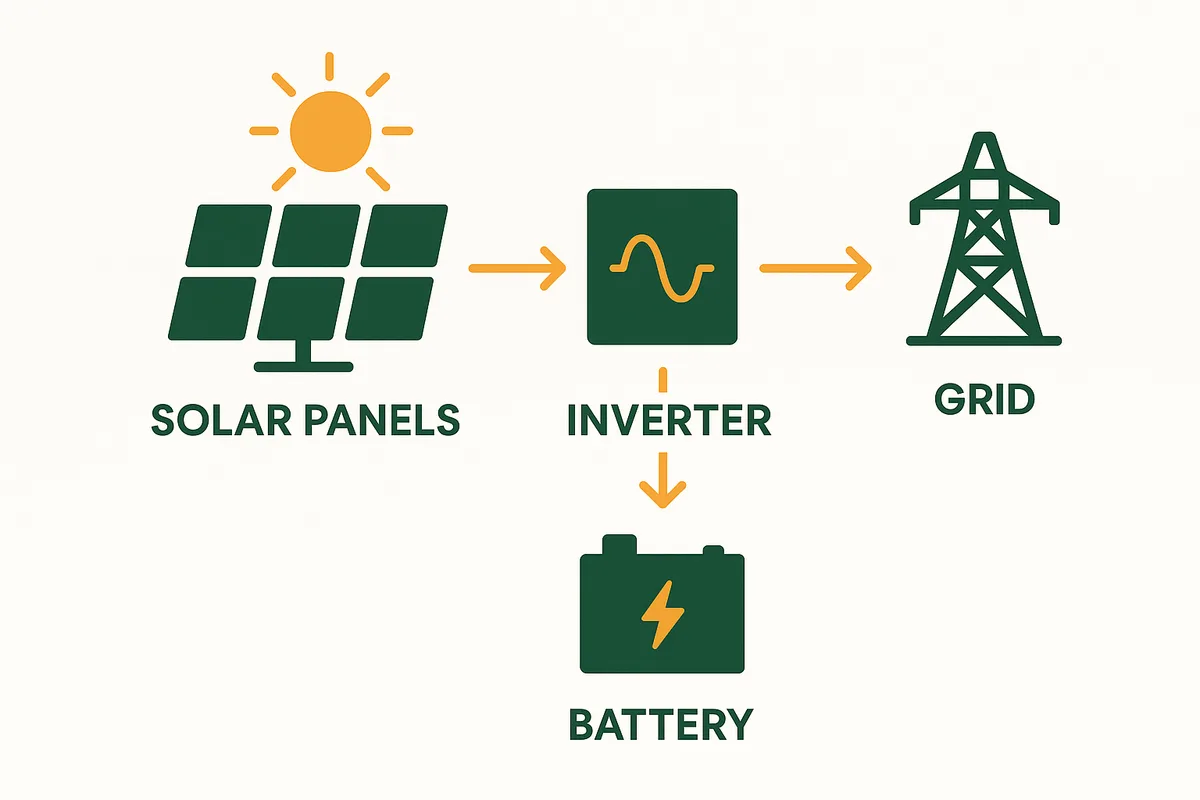
Solar Panel Optimisers: What They Do & When You Need Them
Solar panel optimisers attach to each panel and maximise individual output — especially useful for partially shaded roofs. Cost: £30-£50 per panel extra. See when they are worth it.
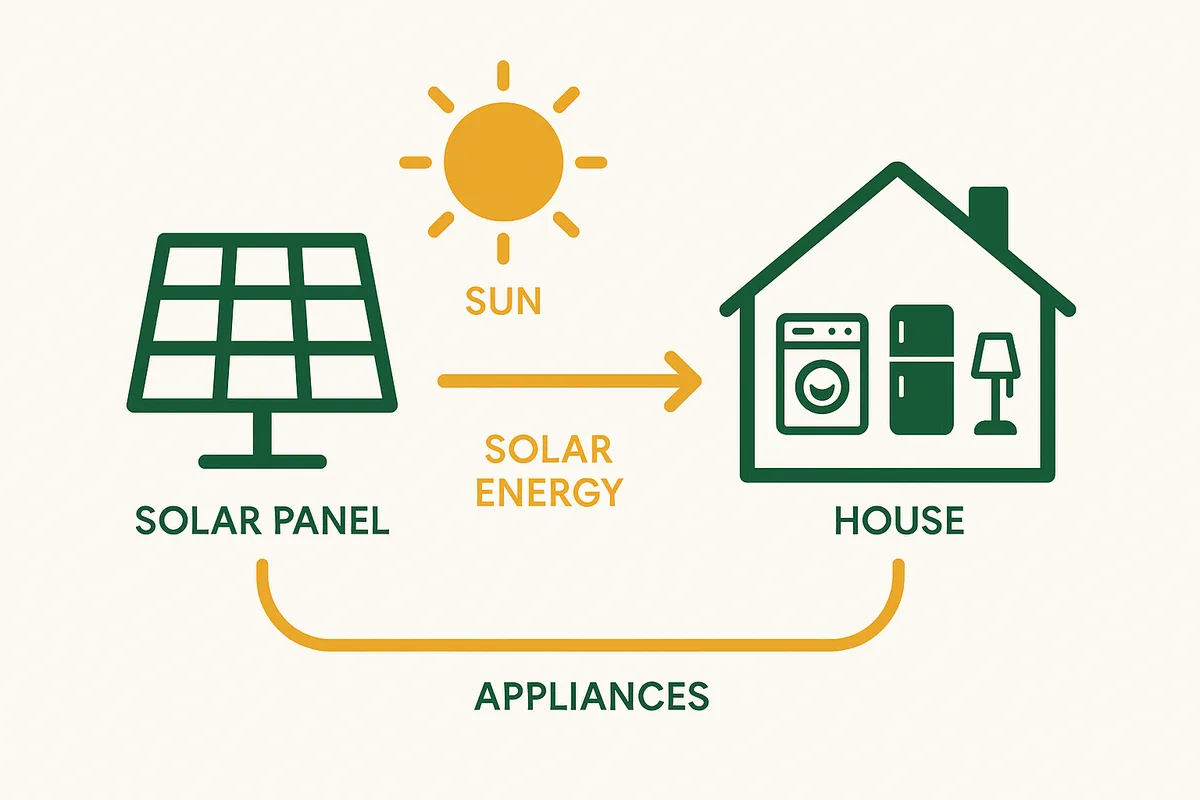
Solar Panels for Hot Water: PV vs Thermal
Solar PV panels can heat water through an immersion diverter (£200-£400) — or you can use dedicated solar thermal. See which is better and more cost-effective for UK homes.
Solar Panel Building Regulations UK
Solar panels must comply with Part P (electrical), structural loading, and G98/G99 grid connection regulations. MCS installers handle all of this. See what applies and who is responsible.
Solar Panels on a Garage Roof
A detached garage can add 1.5-3kW of solar to your home system. See costs (£1,500-£4,000), cable routing, planning rules, and whether it is worth adding panels to your garage.
Solar Panel Wiring: How Panels Connect to Your Home
Solar panels connect in series (string) or parallel to an inverter, which connects to your consumer unit. See simple wiring diagrams and what each component does.
Solar Panels for Off-Grid Living UK
Off-grid solar in the UK requires a 4-10kW system, 10-30kWh battery, and a backup generator for winter. See costs (£15,000-£40,000), sizing, and whether off-grid is realistic.
Future-Proofing Your Home with Solar
Solar panels future-proof your home against rising energy costs, EV adoption, heat pump transition, and smart grid participation. See how to build a future-ready energy system.
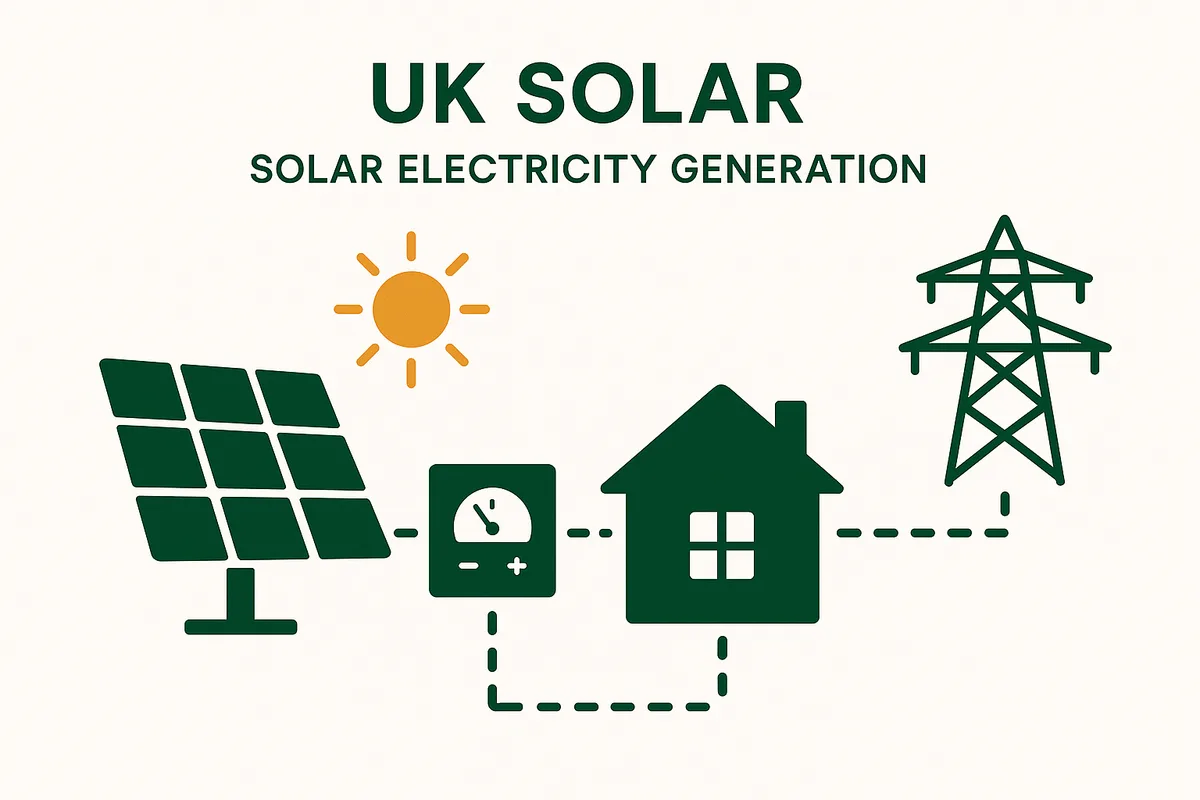
Solar Panels & Grid Connection: G98 & G99 Explained
All UK solar systems must notify the DNO via G98 (under 3.68kW) or G99 (larger systems). Your installer handles this. See what it means and what happens.
Solar Panels on a Metal Roof
Solar panels work well on metal roofs — using standing seam clamps or penetrating brackets. No drilling needed for standing seam roofs. See mounting options and costs.
Is Solar Energy Renewable? The Full Picture
Yes, solar energy is renewable — the sun provides 10,000x more energy than humanity uses. Solar panels convert this into electricity with no fuel, no emissions, and no depletion.
Solar Panels Scotland: Are They Worth It?
Scottish solar panels produce 10-15% less than southern England but still deliver strong returns. See Scotland-specific costs, output data, grants, and payback periods.
Solar Panel Cost Per kWh: How Cheap Is Solar?
Solar electricity costs 5-8p per kWh over 25 years — a fraction of the 26.11p grid rate. See how to calculate your cost per kWh and why solar gets cheaper every year you own it.
Tesco Home Panels: What Is the Deal?
Tesco has partnered with solar installers to offer 'Tesco Home Panels' — solar installations through the Tesco brand. See what you get, costs, and whether it is a good deal.
Solar Panels on Finance: No Deposit Options
Some UK solar installers offer 0% deposit finance — spread the full cost over 5-10 years. Monthly payments from £56-£113. See options, what to check, and who offers it.
Solar Panel Electricity Savings: Real Numbers
UK solar panels save £580-£1,100 per year on electricity depending on system size and whether you have a battery. See real savings data by system size and usage pattern.
Solar Panels Wales: Costs, Output & Grants
Welsh solar panels produce similar output to the English Midlands. See Wales-specific costs, output by region, Nest and ECO4 grants, and planning rules for Welsh homes.
Solar Panels & Electric Cars: Complete Guide
Solar panels + electric car = £400-£550/year saved on fuel. See the complete guide to combining solar with EV charging: sizing, chargers, tariffs, and real cost savings.
Spring Solar: Why Now Is the Best Time
Spring is the ideal time to install solar in the UK — capture the full summer peak, availability is good, and 0% VAT applies. See why spring installation maximises your returns.
Summer Solar Output UK: What to Expect
UK solar panels produce 60-70% of their annual output between April and September. A 4kW system generates 450-520 kWh/month in peak summer. See monthly data and tips.
What Happens After Solar Panel Installation?
After installation: register for SEG, set up monitoring, notify your insurer, get a new EPC, and start shifting appliance usage. See the complete post-installation checklist.
How Much for Solar Panels? UK 2026 Pricing
Solar panels cost £5,000-£11,000 for UK homes in 2026 at 0% VAT. A 4kW system: £5,500-£8,000. With battery: £9,000-£14,000. See exact pricing by system size.
Solar Panels and Pets: What to Know
Solar panels attract pigeons (nesting underneath) and cats may scratch panels. See how bird proofing solves pigeon problems and why cats pose no real risk to your solar system.
Octopus Export Tariffs Compared
Outgoing Octopus pays 12p/kWh flat. Prime pays 16p peak. Flux bundles import and export. Every Octopus export tariff compared, with eligibility. Verified Aug 2026.
Octopus Go for Solar Owners
Octopus Go gives solar owners cheap overnight electricity at 7.5p/kWh — perfect for EV charging and battery top-ups. See how it works with solar and your total savings.
Solar Panels for Business: UK Guide
Business solar delivers 4-7 year payback with 100% first-year tax relief. A 50kW system costs £40,000-£60,000 and saves £8,000-£12,000/year. See the full business case.
Solar Panel Environmental Impact: The Full Lifecycle
Solar panels prevent 35-50 tonnes of CO2 over 25 years while using minimal resources. See the full lifecycle: manufacturing, operation, and recycling environmental impact.
8kW Solar Panel System: Maximum Residential
An 8kW system has 20 panels, costs £10,000-£14,000, and generates 7,500-8,400 kWh/year. Ideal for large homes with EVs, heat pumps, or high consumption. See full specs.
How Much Do 10 Solar Panels Cost in the UK?
10 panels is about 4kWp. DESNZ 2025/26 data puts the median installed cost near £7,120, generating about 3,880 kWh a year. Every figure worked out in the open.
How Many Solar Panels for 1kW?
You need 2-3 solar panels for 1kW (1,000W) depending on panel wattage. A 1kW system generates 950-1,050 kWh/year in the UK. See who would use a 1kW system and costs.
How Solar Panels Work in the UK: Simple Guide
Solar panels convert sunlight into electricity using silicon cells. UK panels work in all weather — rain, cloud, and even winter. See the simple 4-step explanation.
British Gas Solar Panels: Review & Analysis
British Gas offers solar panel installation through partner companies. See what you get, how pricing compares to independent installers, and whether the British Gas brand adds value.
Solar Panels Northern Ireland: Guide
Northern Ireland solar generates 3,200-3,600 kWh/year for a 4kW system. See NI-specific costs, grants, planning rules, and how output compares to the rest of the UK.
Tesla Solar Panels UK: What Is Actually Available?
Tesla solar panels are not widely available in the UK. The Tesla Powerwall battery IS available and popular. See what Tesla actually offers in the UK and the best alternatives.
Tesla Powerwall UK: Full Review
The Tesla Powerwall costs £5,500-£7,500 in the UK with 13.5kWh capacity and whole-home backup. See full review, real-world performance, and how it compares to GivEnergy.
Best SEG Tariff 2026: Compare Rates
The best SEG tariff in 2026 depends on whether you have a battery. Fixed rates: 4-6p/kWh. Variable (Octopus Flux): 8-24p/kWh. See all rates compared and how to switch.
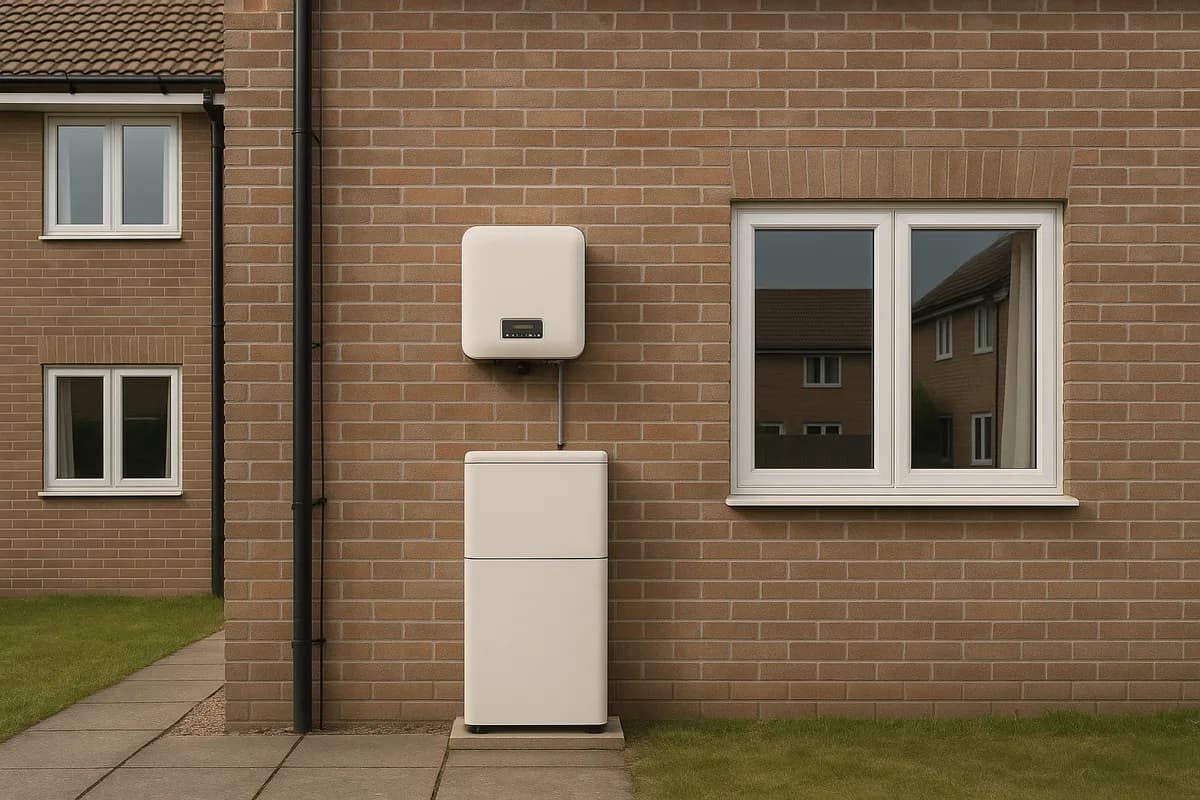
GivEnergy Battery Review UK
GivEnergy is the UK's most popular home battery brand. See the full review: 9.5kWh capacity, £4,000-£5,500 cost, built-in Octopus Flux mode, and how it compares to Tesla Powerwall.
Monocrystalline vs Polycrystalline: Which Is Better?
Monocrystalline panels (20-22% efficient, black) are better than polycrystalline (15-17%, blue) for most UK homes. The price gap has nearly closed. See the full comparison.
Solar Roof Tiles UK: Cost, Brands & Verdict
Solar roof tiles replace standard tiles with PV-generating tiles for a seamless look. Cost: 2-3x more than standard panels. See brands, output, and whether they are worth it in 2026.
Solar Panel Brands Compared: UK Guide 2026
Compare the top solar panel brands available in the UK: JA Solar, Trina, Longi, Canadian Solar, REC, and SunPower. See efficiency, warranty, cost, and which is best value.
Solar Panels vs Wind Turbines for Homes
For UK homes: solar panels are better than domestic wind turbines. Solar is cheaper, more reliable, easier to install, and delivers better ROI. See the full comparison.
Solar Panels & Business Rates
Business solar panels may attract separate business rates if over 50kW. Under 50kW on occupied premises: usually no additional rates. See the rules and thresholds.
How Solar Feed-In Works: Exporting to the Grid
When your solar panels produce more than you use, surplus electricity 'feeds in' to the grid. You earn SEG payments for every kWh exported. See how the process works step by step.
Net Metering vs SEG: The UK System
The UK does not have net metering — we have the Smart Export Guarantee (SEG). See the difference, why it matters, and how to maximise value under the UK system.
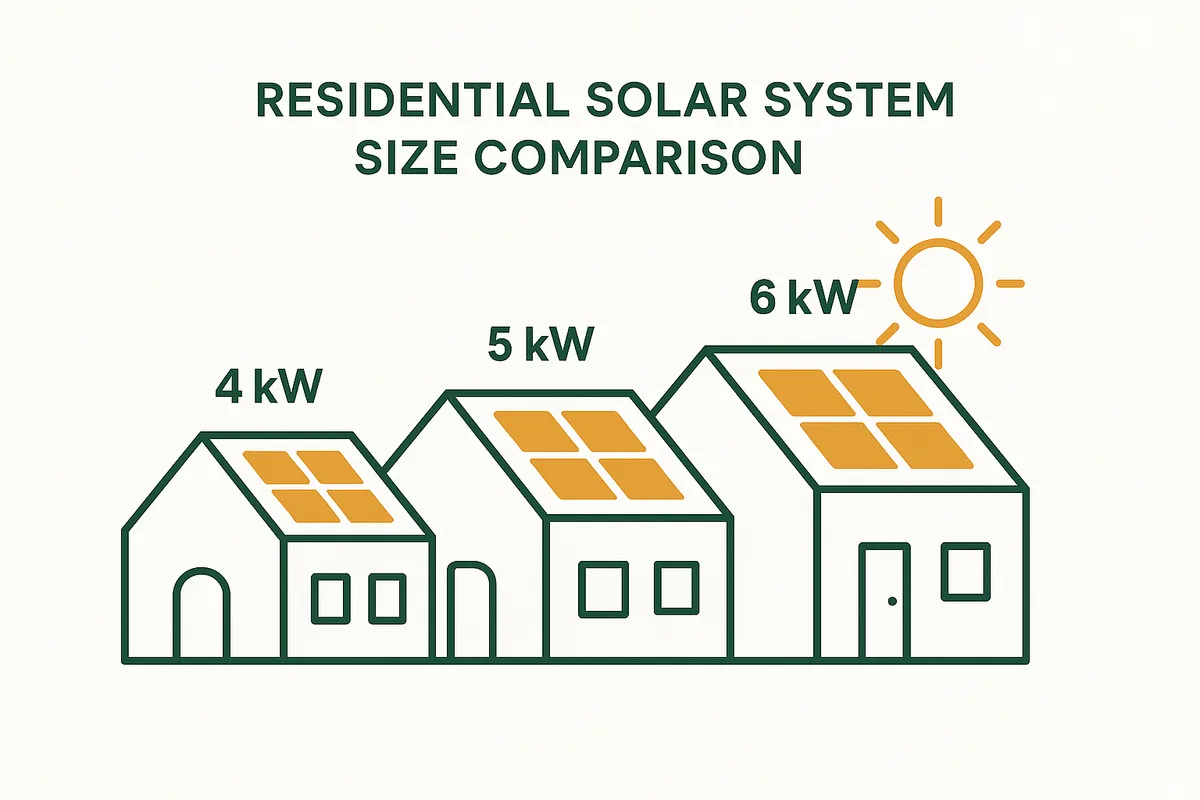
kWp to kWh: What the Difference Means
kWp is your panel's capacity (maximum power). kWh is actual energy generated over time. In the UK, 1 kWp generates ~950-1,050 kWh per year. See the simple conversion.
Virtual Power Plants UK: Solar Owner Guide
Virtual Power Plants aggregate home batteries to provide grid services — earning homeowners £50-£200/year extra. See how VPPs work, who offers them, and how to join.
Solar Energy Storage Options UK
Home solar storage options in the UK: lithium batteries (most common), hot water diverters, EV batteries, and thermal storage. See costs, pros/cons, and which suits you best.
How to Read a Solar Panel Quote Like a Pro
A solar panel quote should include: system size, panel brand, inverter type, all costs itemised, expected output, warranty terms, and timeline. See what every line means.
Solar Panels in Autumn: What Changes
Autumn solar output drops to 60-70% of summer peak but still contributes meaningfully. See monthly data, what changes, and how to prepare your system for winter.
Solar Panels & the Energy Crisis: UK Perspective
The energy crisis made solar panels more valuable than ever. Higher electricity prices = faster payback and bigger savings. See how the crisis changed the solar equation.
Best Solar Batteries UK 2026: Comparison
The best UK solar batteries compared: GivEnergy (best value), Tesla Powerwall (premium), Fox ESS (mid-range), BYD (modular). See capacity, cost, warranty, and smart features.
Best Electricity Tariffs for Solar Owners
Solar owners should use time-of-use tariffs for maximum savings. Octopus Go (7.5p overnight), Flux (peak export 24p), or Agile (half-hourly pricing). See which suits your setup.
Time-of-Use Tariffs & Solar: Save More
Time-of-use tariffs charge different rates at different times — perfect for solar + battery owners. See how to exploit cheap overnight and expensive peak periods for maximum savings.
Solar Panels for Caravans: Guide
Caravan solar panels (100-300W) cost £150-£500 and keep your leisure battery charged for lights, fridge, and devices. See sizing, mounting, and the best panels for touring.
Solar PV System Components: What Is Included?
A complete solar PV system includes: panels, inverter, mounting system, wiring, isolators, and monitoring. See what each component does and why it matters.
Solar Panel Theft: Is It a Real Risk?
Solar panel theft is extremely rare in the UK — panels are heavy, conspicuous, and have low resale value. See why theft is not a realistic concern and basic precautions.
Do Solar Panels Work in Fog?
Solar panels produce 5-15% of rated output in fog — reduced but not zero. Fog typically clears by midday, after which normal generation resumes. See the facts.
How Many UK Homes Have Solar Panels?
Approximately 1.3 million UK homes have solar panels — about 5% of all homes. Adoption is accelerating. See the data, growth trends, and where the UK stands globally.
String Inverter vs Micro Inverter: Which Is Better?
String inverters (£500-£1,000) suit unshaded roofs. Micro-inverters (£1,000-£2,800) suit shaded or complex roofs. See the full comparison and which is right for your home.
Best Solar Inverters UK 2026
The best UK solar inverters: GivEnergy (best hybrid), SolarEdge (best for shading), Enphase (best micro), Fronius (best premium string), Solis (best budget). See full comparison.
Solar Panels for Swimming Pools
Solar panels can heat a swimming pool via a heat pump or thermal system. A pool-dedicated 4-6kW solar system costs £5,500-£11,000 and saves £500-£1,500/year on pool heating.
Government Grants for Solar Panels UK
There is NO general government grant for solar panels for most UK homeowners. What exists: 0% VAT, SEG income, ECO4 (low-income), and BUS grant (heat pump combo). See the facts.
Solar Panels with Air Source Heat Pump
Solar + ASHP saves £1,200-£2,000/year vs gas boiler + grid. The heat pump uses solar electricity at 3-4x efficiency. See costs, sizing, and the BUS grant.
Solar & EV Charging: Detailed Guide
Detailed guide to combining solar with EV charging. Save £400-£550/year on fuel. See charger options, tariffs, and real-world scenarios for commuters and home workers.
Solar Battery Buying Guide UK 2026
Everything you need to know before buying a solar battery: capacity, chemistry, brands, costs, warranty, and whether it is worth the investment for your home.
Solar Panel Cost Calculator
Use our free calculator to estimate your solar panel costs, savings, and payback. Enter your postcode, roof direction, and electricity bill for a personalised estimate.
How Solar Panels Save You Money
Solar panels save money two ways: reducing your electricity bill (26.11p/kWh saved) and earning SEG export income (4-15p/kWh). Total savings: £580-£1,100/year for a 4kW system.
Community Solar Projects UK
Community solar lets multiple households share a solar installation — ideal for flats, renters, and those without suitable roofs. See UK models, costs, and how to join.
DNO Notification for Solar Panels
All UK solar systems must notify the DNO. Under 3.68kW: G98 (instant). Over 3.68kW: G99 (2 weeks). Your installer handles everything. See the simple explanation.
MCS Installer Register: How to Check
Verify any solar installer at mcscertified.com — free, instant, and essential. SEG requires certification through MCS or an equivalent accredited scheme. See how to check and what to look for.
Reading Your Meter with Solar Panels
With solar, your smart meter shows import AND export. Your in-home display may look confusing. See how to read import, export, and generation data correctly.
UK Blackouts: Do Solar Panels Help?
Standard solar stops during blackouts. Solar + battery with backup keeps essential circuits running. See how to prepare for UK power cuts with solar.
Cheapest Time for Electricity with Solar
With solar: free during daylight. Without solar: cheapest on Octopus Go overnight (7.5p). See how to pay the least for electricity with the right solar + tariff combo.
How Temperature Affects Solar Panels
Solar panels lose ~0.4% efficiency per degree above 25°C. UK's cool climate is an advantage — panels run cooler and more efficiently than in hot countries.
Solar Installation Process: Complete Timeline
The full UK solar installation process: enquiry → survey → quote → paperwork → installation → commissioning. Takes 3-6 weeks total. 1-2 days physical work.
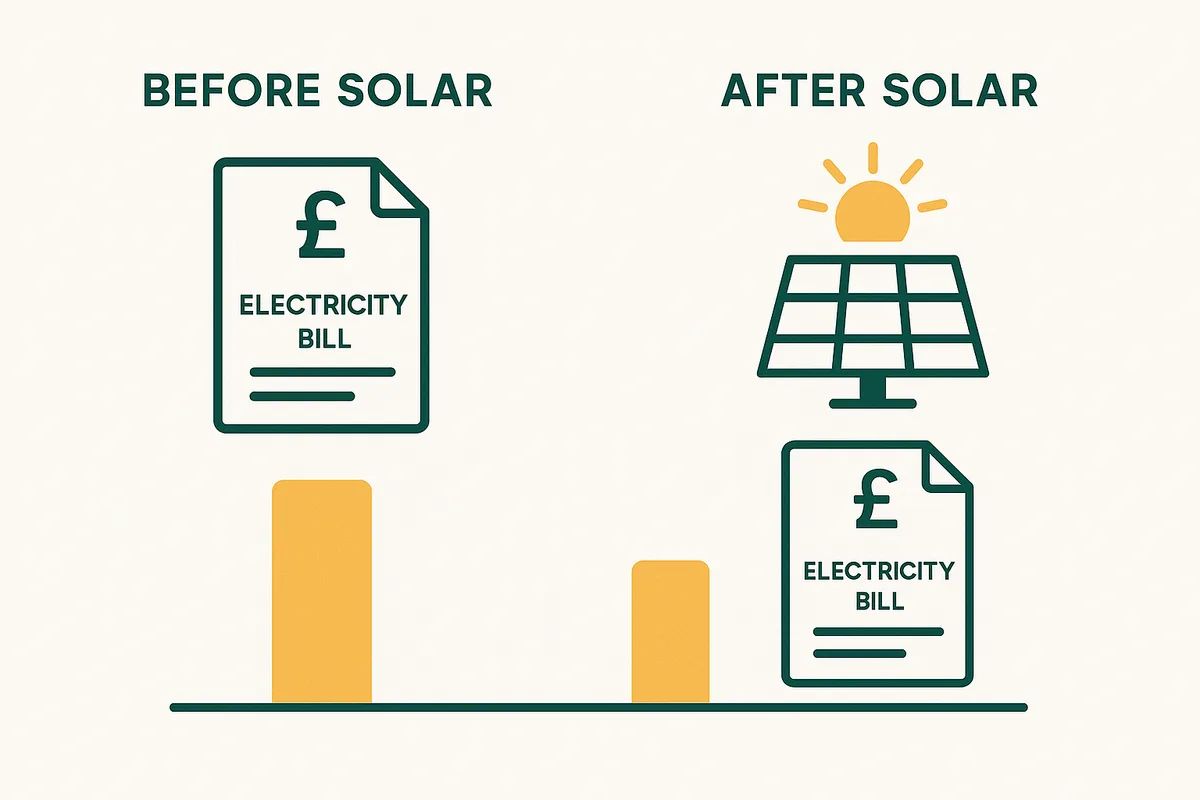
How Much Can Solar Reduce Your Energy Bill?
Solar reduces UK electricity bills by 50-85%. A 4kW system cuts annual bills from ~£1,300 to £400-700 (no battery) or £150-500 (with battery). Real numbers inside.
Solar Panel Payback Calculator
Calculate your solar payback period: system cost ÷ annual savings = years to payback. UK average: 8-12 years. See the calculation step by step with your numbers.
Solar Panels vs Green Tariff
Solar panels generate YOUR OWN clean electricity (free after payback). Green tariffs buy renewable electricity from the grid (same price, no savings). Solar wins on every measure.
Solar Panels for Electric Boiler
Solar can partially power an electric boiler — but winter mismatch is severe. A heat pump is 3-4x more efficient. See the maths and better alternatives.
Solar Panels and Hot Tub
A hot tub uses 3,000-5,000 kWh/year — equivalent to a whole second household. Solar can offset 30-60% of hot tub costs. See sizing and the best approach.
Solar Panels on Different Roof Types
Solar works on all UK roof types: tile, slate, flat, metal, and thatch (with adaptations). See mounting methods, costs, and considerations for each roof type.
Solar Panel Output by Season
UK solar output by season: Summer 60-70% of annual total, Spring 20%, Autumn 15%, Winter 10-15%. See monthly kWh data for a 4kW system and what drives seasonal variation.
Solar Panel Daily Production Cycle
Solar panels produce a bell curve: zero at dawn, peak at noon, zero at sunset. A 4kW system peaks at 3.6kW on a clear June day. See hourly output data.
Grid-Tied Solar System: How It Works
A grid-tied solar system connects to the national grid — import when you need more, export when you have surplus. See how it works, why it is standard, and the alternative.
Hybrid Solar System: Solar + Battery + Grid
A hybrid solar system combines panels, battery, and grid connection. The hybrid inverter manages all three. See how it works, costs, and why hybrid is now the default.
Solar Panel Inspection Checklist
Your annual solar panel inspection checklist: visual check from ground, monitoring review, inverter status, gutters, bird activity, and performance comparison. Takes 15 minutes.
Solar Panel ROI Timeline: Year by Year
Year 1: -£6,170 (investment). Year 8: break even. Year 12: +£1,210 (inverter replaced). Year 25: +£7,750 profit. See the full year-by-year ROI timeline for UK solar.
Solar Panel Export Payments UK
Get paid for surplus solar: register for SEG with any supplier, compare rates (4-15p/kWh), and start earning £80-£300/year. Takes 5 minutes to register.
Solar Panels for Backup Power
Standard solar does NOT provide backup power. You need a battery with EPS/backup capability (Tesla Powerwall, GivEnergy). See how to add backup and what it costs.
How Solar Panels Convert Energy
Solar panels convert sunlight to electricity via the photovoltaic effect: photons hit silicon cells, knock electrons loose, creating an electrical current. See the simple science.
Solar & Energy Independence
Solar + battery achieves 70-85% energy independence. Full off-grid is possible but impractical for most UK homes. See the realistic levels and what each costs.
Solar Savings Over Time
Solar savings grow over time as electricity prices rise. Year 1: £580. Year 10: £750 (with 3% annual price increase). Year 25: £1,150. See the compounding savings effect.
5 Solar Buying Mistakes to Avoid
5 solar buying mistakes: only comparing price, skipping the site survey, choosing the wrong inverter, not getting MCS, and waiting too long. Each costs £500-£5,000+.
2kW Solar Panel System
A 2kW system has 5 panels, costs £3,000-£4,500, and generates 1,900-2,100 kWh/year. The smallest practical home system — suitable for 1-bed flats and small homes.
How Solar Electricity Export Works
Surplus solar exports automatically to the grid. Your smart meter records it. You earn SEG payments. See how the export process works step by step.
Solar vs Other Investments
Solar delivers 100-200% ROI over 25 years — tax-free. Compare to: ISA (67%), Premium Bonds (42%), stocks (285% but risky). Solar: best low-risk tax-free return.
Best Value Solar Panels UK 2026
Best value UK solar: JA Solar or Trina panels (£200-£280 each), GivEnergy hybrid inverter, and optional GivEnergy battery. Total 4kW: £5,500-£7,000 for maximum ROI.
Commercial vs Residential Solar
Commercial solar costs 40% less per kWp, has 3-5 year payback (vs 8-12), and qualifies for tax relief. See the key differences in cost, ROI, and regulation.
Solar Self-Consumption Explained
Self-consumption = using solar directly instead of exporting. Each self-consumed kWh saves 26.11p vs 4.5p earned from export. See how to increase from 50% to 80%+.
Solar Panels Return on Investment 2026
UK solar ROI in 2026: 100-200% over 25 years (panels only), 200-400% with battery + smart tariff. Investment: £5,500-£14,000. Returns: £14,500-£27,000. Tax-free.
How Much Do Solar Panels Generate?
A 4kW UK solar system generates 3,800-4,200 kWh/year — matching average household consumption. See output by system size, location, and season.
Are Solar Panels Worth It in 2026?
Yes — decisively. 0% VAT, 26.11p/kWh electricity, 8-12 year payback, 100-400% ROI. The financial case has never been stronger. See the complete 2026 analysis.
Average Solar Panel Output UK
Average UK solar output: 950-1,050 kWh per kWp per year. A 4kW system: 3,800-4,200 kWh. Southern England: +10%. Scotland: -10%. See realistic expectations by region.
Solar Installation Cost UK 2026
UK solar installation costs 2026: 3kW £4,500-£6,500, 4kW £5,500-£8,000, 5kW £6,500-£9,500, 6kW £8,000-£11,000. All at 0% VAT. See what is included in the price.
Solar Panels: The Honest Assessment
The honest assessment: solar IS worth it for 90% of UK homes with suitable roofs. Payback: 8-12 years. ROI: 100-400%. Only NOT worth it on north-facing or heavily shaded roofs.
Solar Panel Brands UK 2026
Top UK solar panel brands 2026: JA Solar, Trina, Longi, Canadian Solar (best value). REC, SunPower (premium). See what your installer stocks and which to request.
Benefits of Solar Panels UK
10 proven benefits of UK solar: lower bills, 8-12yr payback, 0% VAT, SEG income, resale appeal, carbon reduction, energy independence, low maintenance, 25yr lifespan, future-proofing.
Disadvantages of Solar Panels UK
The real disadvantages: £5,000-£8,000 upfront cost, weather-dependent output, not suitable for all roofs, still need grid in winter, and inverter replacement at 10-15 years.
How Much Can I Save with Solar?
UK solar savings: £580-£1,100/year (4kW system). Over 25 years: £14,500-£27,000. With battery + smart tariff: even more. Use our calculator for YOUR specific savings.
Solar Panels UK: Beginner's Guide
New to solar? Start here. How panels work, what they cost, how much you save, what to look for, and how to get started — all in plain English for complete beginners.
Solar Panel Cost Guide UK 2026
The complete UK solar cost guide: system costs, battery costs, add-ons, ongoing costs, hidden costs (there are none with MCS), and total 25-year cost of ownership.
Solar Panels UK: The Ultimate Guide 2026
Everything about UK solar in one page: how it works, costs, savings, grants, installation, maintenance, batteries, tariffs, and how to get started. The definitive 2026 reference.
What Size Solar System Do I Need?
Match your system to your consumption: 2-bed = 2-3kW, 3-bed = 4kW, 4-bed = 5kW, 5-bed = 6kW+. Install the largest your roof allows for maximum value.
How Solar Panels Are Made
Solar panels are made from purified silicon wafers assembled into cells, laminated with glass and EVA, framed in aluminium. See the manufacturing process step by step.
What Happens to Excess Solar Electricity?
Excess solar electricity exports to the grid (earning SEG), charges your battery, heats your water, or charges your EV. See the priority order and how to maximise value.
12 Questions to Ask Your Installer
Ask every installer these 12 questions before signing: MCS certification, experience, panel brand, inverter type, warranty, IBG, timeline, and more. Never sign without answers.
Can You Sell Solar Electricity?
Yes — through the Smart Export Guarantee. You earn 4-15p/kWh for surplus solar exported to the grid. Not 'selling' exactly — but earning income for every surplus kWh.
Solar & Your Carbon Footprint
A 4kW solar system prevents 13-18 tonnes of CO2 over 25 years — equivalent to planting 600+ trees or not driving 35,000 miles. See your personal climate impact.
Solar Panel Daily kWh Output
A 4kW UK system averages 10-11 kWh per day across the year. Summer peak: 18-25 kWh/day. Winter low: 2-4 kWh/day. See daily output by season and weather.
Best Direction for Solar Panels
South-facing is best (100% output). South-east/south-west: 95%. East/west: 80-85%. North: 55-60%. Any direction except north delivers strong returns.
Solar Panel Lifespan UK
Solar panels last 25-30+ years. After 25 years: still producing 80-87% of original output. The inverter needs replacing once (10-15 years). See the real longevity data.
Solar Panels for Self-Sufficiency
Self-sufficiency levels with solar: 30-50% (panels only), 70-85% (+ battery), 85-95% (+ battery + smart tariff). 100% off-grid is possible but impractical. See what is realistic.
How Solar Panels Connect to Your Home
Solar panels connect via DC cables to an inverter (wall-mounted), which connects via AC cable to your consumer unit (fuse box). Your home then uses solar electricity automatically.
What Warranty Do Solar Panels Have?
Solar panels come with 2 warranties: product (10-25 years for defects) and performance (25 years, 80%+ output guaranteed). Plus inverter warranty (5-25 years) and installer workmanship (5-10 years).
How Much Roof Space for Solar?
Each panel needs ~2m² (including spacing). A 4kW system: ~20m². A 6kW system: ~32m². See how to estimate your roof space and how many panels fit.
Solar Electricity Savings 2026
2026 solar savings: £580-£1,100/year for a 4kW system at 26.11p/kWh (Ofgem price cap July-September 2026). With battery + Octopus Flux: up to £1,500+. See exact 2026 savings by setup.
Solar Panels: 5 Minute Summary
The 5-minute solar summary: costs £5,500-£8,000, saves £580-£1,100/year, pays back 8-12 years, lasts 25-30 years, 0% VAT, need MCS installer. That is 90% of what you need.
How Much Does One Panel Produce?
One 400W solar panel produces ~400 kWh per year in the UK. That is enough to run a fridge for a year or charge a phone 13,000 times. See per-panel output by season.
How Quickly Do Solar Panels Pay Back?
UK solar payback: 8-12 years without battery, 10-14 with battery. After payback: 15+ years of free electricity. Payback has halved since 2020 due to higher electricity prices.
Can Solar Panels Run a House?
A 4kW system generates enough for an average UK home annually — but not at every moment. In summer: yes, fully. In winter evenings: no, grid needed. See the reality.
Do Solar Panels Save Money in 2026?
Yes — decisively. At 26.11p/kWh electricity and 0% VAT, solar saves £580-£1,100/year with 8-12 year payback. The financial case has never been stronger.
How Do I Start with Solar?
Step 1: Get 3+ MCS quotes. Step 2: Compare on total value. Step 3: Choose and sign. Step 4: Wait 3-6 weeks. Step 5: Generate electricity. It is that simple.
Free Solar Quotes: Get the Best Deal
Get 3-5 free solar quotes from MCS-certified installers. Compare on total value — not just price. The process takes 10 minutes and could save you thousands.
Solar Grants & Funding 2026
2026 UK solar support: 0% VAT (everyone), SEG income (everyone), ECO4 (low-income), BUS grant £7,500 (heat pump combo), 0% finance (some installers). No general grant exists.
Solar Panel Maintenance Cost
Total solar maintenance over 25 years: £1,440-£3,900. Annual average: £60-£160. Includes: occasional cleaning, one inverter replacement, optional bird proofing. Near-zero ongoing effort.
Solar Panel Buying Guide 2026
The complete 2026 buying guide: what to look for in panels, inverters, installers, and quotes. 10 steps from research to generating electricity.
Is Solar a Good UK Investment?
Solar delivers 100-400% ROI over 25 years — tax-free, inflation-protected, and low-risk. It outperforms ISAs, Premium Bonds, and matches stocks without the volatility.
Roof Space for a 4kW System
A 4kW system (10 panels) needs approximately 17-20m² of roof space. This fits on most 3-bed UK homes. See dimensions and what reduces usable area.
How Many Panels for Average Home?
An average UK home needs 10 solar panels (4kW) to match annual electricity consumption of ~3,700 kWh. See the calculation and why 10 is the magic number.
Find an MCS Installer Near You
Find MCS-certified solar installers at mcscertified.com — search by postcode, free and instant. Get 3+ quotes from verified installers for the best deal.
How to Compare Solar Prices
Compare solar prices on: cost per kWp (£1,300-£1,800 fair range), panel efficiency, inverter type, warranty coverage, installer reviews, and total value — not just headline price.
Getting Solar: What to Expect
What to expect when getting solar: enquiry (day 1), survey (week 2), quote (week 2-3), decision (week 3), installation (week 4-5), generating (week 5). Simple and stress-free.
20 UK Solar Panel Facts
20 essential UK solar facts: costs £5,500-£8,000, saves £580-£1,100/yr, 1.3M homes, 0% VAT, 25-year lifespan, 8-12yr payback, works in cloud, no planning needed for most.
Average Solar Panel Cost UK 2026
Average UK solar panel cost in 2026: £6,750 for a 4kW system (0% VAT). Range: £5,500-£8,000. Price per kWp: £1,375-£2,000. Includes everything — no hidden extras.
Solar Payback Period 2026
UK solar payback in 2026: 8-12 years without battery, 10-14 with battery. At 26.11p/kWh electricity, payback has halved from pre-2020 levels. See the calculation.
How Solar Works: Simplest Explanation
Sunlight hits panel → electricity created → inverter converts it → powers your home. No moving parts, no fuel, no noise. That is it. Solar in 4 sentences.
Is It Worth Getting Solar Panels?
For 90% of UK homes with suitable roofs: absolutely yes. Saves £580-£1,100/yr, 8-12yr payback, 100-400% ROI, 0% VAT, proven technology. The maths is overwhelming.
Solar Cost-Benefit Analysis 2026
Costs: £5,500-£8,000 upfront + £1,800-£3,900 maintenance over 25yr. Benefits: £14,500-£27,000 savings, plus a sale-price premium UK research puts at 3.5–7.1% depending on method. Net: £4,500-£19,000+ profit.
Best Time to Install Solar 2026
The best time is NOW — every month of delay costs £50-£90 in missed savings. If pressed: spring is ideal (capture summer peak). But any month works.
How Long Do UK Solar Panels Last?
UK solar panels last 25-30+ years. Degradation: 0.4%/year. After 25 years: 85-90% output. Inverter: replace once at 10-15 years. Mounting: lasts full 25+ years.
UK Electricity Rates & Solar
UK electricity: 26.11p/kWh (Ofgem price cap July-September 2026). Every kWh of solar saves 26.11p. Historical trend: +5-7%/year. Solar is your hedge — free electricity regardless of future prices.
Do Solar Panels Work in the UK?
Yes — emphatically. 1.3 million UK homes prove it. A 4kW system generates ~4,000 kWh/year — matching average consumption. The UK has enough solar for excellent returns.
Government Support for Solar 2026
Government support: 0% VAT (everyone), SEG scheme (everyone), ECO4 (low-income), BUS grant £7,500 (heat pump combo). No direct grant for most. Still strong ROI.
Environmental Benefits of Solar
Solar prevents 13-18 tonnes CO2 over 25 years, uses no water, produces no air pollution, and 95% of materials are recyclable. One of the most impactful personal climate actions.
Solar: Step by Step Guide
Complete step-by-step: research → calculate → quote → survey → choose → install → generate → register SEG → monitor → save. 10 steps, 3-6 weeks, 25+ years of savings.
Solar Panel FAQs UK
The 25 most asked UK solar questions answered: costs, savings, how they work, maintenance, grants, batteries, and more. Quick answers backed by evidence.
Solar Panels for Dummies
Solar explained for complete beginners: sunlight → electricity → saves money. Cost: £5,500-£8,000. Saves: £580-£1,100/yr. Lasts: 25 years. Done.
Residential Solar UK: Complete Guide
Everything UK homeowners need: costs (£5,500-£8,000), savings (£580-£1,100/yr), technology (20-22% efficient), installation (1-2 days), grants (0% VAT + SEG). One complete guide.
Get Started with Solar Today
Ready to go solar? Step 1: Get 3+ free MCS quotes. Step 2: Compare. Step 3: Choose. Step 4: Wait 3-6 weeks. Step 5: Save £580-£1,100/year for 25+ years. Start now.
Solar Savings Guide UK 2026
The complete 2026 savings guide: £580-£1,100/year from a 4kW system. How savings work, what affects them, how to maximise, and what to expect month by month.
Compare Solar Installers UK
Compare UK solar installers on: MCS certification, reviews (4.5+ stars), warranty (IBG), pricing (£1,300-£1,800/kWp), experience (5+ years), and panel/inverter brands.
Solar Panels: Your First Year
Year 1 with solar: reduced bills from month 1, monitoring setup, SEG registration, learning self-consumption patterns, first annual check. See what each month brings.
How Solar Reduces Your Bill
Solar reduces bills by 50-85%: you use free solar instead of 26.11p grid electricity. A 4kW system cuts annual bills from ~£1,300 to £400-700 (no battery) or £150-500 (battery).
Complete Installation Guide UK
Complete installation guide: survey → design → paperwork → scaffolding → mounting → wiring → testing → commissioning. Takes 1-2 days. Your installer handles everything.
Are Solar Panels Safe UK?
Yes — solar is one of the safest home technologies. Fire risk: 0.01%. No radiation. No noise. No chemical risk. Properly installed by MCS = virtually zero risk.
Best Solar Brands UK 2026
Best UK solar brands 2026: JA Solar, Trina (best value). Longi, Canadian Solar (mid-range). REC (premium). SunPower (ultra premium). All 20%+ efficient, 25yr warranty.
Solar Worth It: Complete Analysis
The definitive UK solar worth-it analysis: costs, savings, ROI, risks, pros, cons, and the clear conclusion — yes, for 90% of homes with suitable roofs.
Cost Per Solar Panel UK
Individual solar panel cost: £200-£350 for a 400W monocrystalline panel. Budget: £200-£250 (JA Solar, Trina). Premium: £300-£450 (REC, SunPower). Inverter + labour are extra.
Solar + Battery Combo UK
Solar + battery combo: £9,000-£14,000 for 4kW panels + 10kWh battery. Savings: £820-£1,100/yr. Self-consumption jumps from 50% to 80%. Is the combo worth it?
Solar: UK Money Saving Guide
Save £580-£1,100/yr. Payback 8-12yr. ROI 100-400%. 0% VAT. Tax-free returns. The money guide to UK solar — no greenwash, just numbers.
Solar Technology UK 2026
2026 UK solar technology: PERC monocrystalline (standard 20-22%), TOPCon (emerging 22-24%), HJT (premium 23-25%), LFP batteries, hybrid inverters, smart tariff automation.
Solar: Your Green Energy Source
Solar panels make you a green energy PRODUCER — not just a buyer. Generate your own clean electricity, prevent 13-18 tonnes CO2, and save money simultaneously.
Solar & Smart Home Integration
Solar integrates with smart home tech: smart meters, inverter apps, smart thermostats, EV chargers, and VPPs. See how to build a smart solar home.
Solar for a Net Zero Home
A net zero home generates as much energy as it uses over a year. Solar + battery + heat pump + insulation achieves this. See the path to net zero for UK homes.
Solar & the Energy Bill Crisis
The energy bill crisis made solar more valuable than ever. Higher prices = faster payback. Solar is your personal insurance against future energy price shocks.
Solar: Best Home Improvement ROI
Solar panels deliver the best ROI of any home improvement: 100-400% over 25 years. Beats: new kitchen (60-80%), new bathroom (50-70%), extension (70-100%), loft conversion (50-80%).
Your Solar Action Plan 2026
Your 7-day solar action plan: Day 1-2: research + calculate. Day 3-4: request quotes. Day 5-6: compare. Day 7: decide. Then: 3-6 weeks to generating. Start today.
Solar & Home Value UK 2026
UK research finds a 3.5–7.1% sale-price premium on homes with solar — an average, not a guarantee. Owned panels count for more; leased panels can deter buyers.
Solar for New Build Homes 2026
New builds increasingly come with solar under Part L regulations. Typical developer system: 1-2kW (minimum compliance). You may want to upgrade to 4-5kW for real savings.
Get Solar Quotes Now
Get 3-5 free solar quotes from MCS-certified installers right now. Enter your details once. Compare prices, brands, and warranties. No obligation. Takes 2 minutes.
Solar Panels: Complete UK FAQ
Every solar question answered: costs, savings, how it works, maintenance, grants, batteries, tariffs, installation, planning, and getting started. 30+ FAQs.
Solar Panels UK: Our Conclusion
Our conclusion after analysing every aspect: solar panels are one of the best investments available to UK homeowners. 100-400% ROI. 8-12yr payback. 25yr lifespan. Get quotes today.
Solar Panel ROI Calculator
Calculate your solar ROI: (25yr savings - total costs) ÷ total costs × 100. UK average: 100-200% (panels only), 200-400% (with battery + smart tariff). See the simple formula.
UK Solar Electricity Generation
UK solar generates ~1,000 kWh per kWp per year. 60-70% in summer, 10-15% in winter. A 4kW system: ~4,000 kWh/year — matching average household consumption.
What Affects Solar Output?
8 factors affect UK solar output: roof direction (15-45% impact), tilt angle (2-15%), shading (10-30%), location (10-15%), temperature (1-3%), soiling (2-5%), degradation (0.4%/yr), inverter (2-4%).
Solar Future Trends UK
Future solar trends: TOPCon/HJT panels (22-25%), falling battery prices, vehicle-to-home, AI energy management, VPPs, and possible perovskite panels by 2030.
Solar Panels: Why It Is a No-Brainer
0% VAT. 26.11p electricity. 8-12yr payback. 100-400% ROI. 25yr lifespan. 1.3M homes. Tax-free. Inflation-proof. The case for solar has never been clearer.
Annual Savings Breakdown
Annual savings breakdown: bill reduction £490-£784 + SEG income £36-£90 + tariff arbitrage £0-£300 = total £580-£1,174. See where every pound comes from.
Best Solar Setup UK 2026
The optimal 2026 UK solar setup: 5kW panels + GivEnergy hybrid inverter + 10kWh battery + Octopus Flux + Zappi EV charger. See why this combination wins.
Solar: Ultimate Money Guide
Every financial aspect of UK solar: costs, savings, ROI, payback, grants, tariffs, finance, tax, property value, and lifetime economics. The complete money guide.
Why Install Solar NOW
5 reasons to install solar NOW: 0% VAT (may end March 2027), high electricity prices (26.11p), prices stabilised (no more drops), every month costs £50-£90, and proven technology.
Solar: Final Buying Checklist
10-point checklist before buying solar: check roof, check consumption, get 3+ quotes, verify MCS, compare value, check warranty, check IBG, check inclusions, sign, install.
Solar: The 25-Year Journey
The 25-year solar journey: Year 1-8 (payback). Year 8-12 (break even, inverter replaced). Year 12-25 (pure profit, £8,700-£12,300). See the full timeline.
Solar & Electricity Independence
Solar + battery achieves 70-85% electricity independence. With smart tariff: 85-95%. The remaining 5-15% comes from cheap overnight grid. Practical near-independence.
What Solar Owners Say
What UK solar owners say: 'Best investment we ever made.' 'Wish we installed bigger.' 'Bills halved.' See real homeowner feedback — positive AND the lessons learned.
Most Popular Solar Questions 2026
The top 10 most Googled UK solar questions — all answered with evidence. Cost, worth it, how they work, grants, batteries, payback, maintenance, and more.
Take Action: Get Solar Today
You have read the guides. You know the numbers. Now act: get 3+ MCS quotes, compare, install, and start saving £580-£1,100/year. Every day of delay costs money.
10 Solar Myths Busted
10 solar myths debunked: too cloudy (wrong), too expensive (wrong), damage roof (wrong), need south (wrong — east/west works), unreliable (wrong). See the evidence.
Solar: Energy Saving Guide
Solar is the #1 energy saving measure for UK homes: saves £580-£1,100/yr, reduces carbon, improves resale appeal, and provides 25yr protection against rising costs.
0% VAT on Solar: Complete Guide
0% VAT saves £1,000-£1,600 on solar installation. Applies to panels, inverter, battery, mounting, and labour. Confirmed until March 2027. See who qualifies and how it works.
Solar Panels: The Definitive Resource
The most comprehensive UK solar resource: 300+ guides covering every aspect — costs, savings, technology, installation, maintenance, grants, batteries, and getting started.
Solar Installer Guide UK 2026
How to choose, verify, and work with a UK solar installer. MCS certification, quotes, surveys, warranties, and what to expect throughout the process.
Solar Lifetime Cost UK
Total 25-year solar cost: £7,300-£11,300 (installation + inverter + maintenance). Total 25-year benefit: £14,500-£27,000. Net: £3,200-£15,700 profit.
Tariffs for Solar Owners 2026
Best 2026 tariffs for solar: Octopus Flux (battery), Octopus Go (EV), standard variable (no battery/EV). Plus: best SEG tariff for exports. See the optimal combination.
Solar by Property Type UK
Solar works on all UK property types: detached (best), semi (very good), terrace (good), bungalow (excellent), flat (limited). See sizing and considerations for each.
Solar: Quick Start Guide
Get solar in 5 steps: (1) Calculate (2 min). (2) Quote (2 min). (3) Survey (30 min). (4) Choose (1 hr). (5) Install (1-2 days). Total active time: under 3 hours.
Full Solar System Cost 2026
Full system cost: panels £5,500-£11,000 + battery £4,000-£6,000 + EV charger £800-£1,100 + diverter £200-£500 = £10,500-£18,600. See what each component adds.
How Much Electricity Saved?
A 4kW system saves 2,000-3,200 kWh of grid electricity per year (self-consumed at 26.11p/kWh). That is 50-85% of average household consumption. See the breakdown.
Solar: Best Green Investment
Solar is the only investment that is: financially excellent (100-400% ROI), environmentally positive (13-18t CO2 prevented), and practically useful (powers your home daily).
Will Solar Prices Drop?
Solar prices have stabilised since 2023 after a 90% drop over 13 years. Future drops: 1-3%/year at most. Waiting costs more in missed savings than any realistic price reduction.
Solar for Families UK
Families save most from solar: higher consumption (more self-consumption), larger homes (bigger systems), EV charging needs, and long-term planning. See the family case.
Solar for Retirees UK
Retirees benefit uniquely from solar: home during the day (60-70% self-consumption), fixed income protection, 25yr asset, low maintenance. See the retiree solar case.
Solar for Home Workers
Home workers get 50-70% self-consumption WITHOUT a battery (vs 30-40% for commuters). Higher daytime use = higher savings. See why WFH + solar is a perfect match.
Complete Home Energy Solution
The complete UK home energy solution: solar (£8,000) + battery (£5,000) + heat pump (£3,500 after grant) + EV charger (£900) = £17,400 total. Saves £1,600-£2,200/yr.
Solar Today vs 5 Years Ago
Solar in 2026 vs 2021: panels 30% more efficient, batteries 40% cheaper, 0% VAT (was 5%), smart tariffs available, payback halved from 15yr to 8yr. See the transformation.
Should I Get Solar Panels?
If you have a suitable roof: YES. 100-400% ROI. 8-12yr payback. 0% VAT. £580-£1,100/yr savings. 1.3M UK homes. The only question is size and timing — not IF.
Solar Panels and Immersion Heaters
A solar diverter sends surplus solar electricity to your immersion heater — free hot water all summer. Costs £300-£600 fitted. Saves £100-£200/yr on gas. See how.
Sizing Solar for a Heat Pump
Heat pumps use 4,000-6,000 kWh/yr electricity. You need 8-12 solar panels (4-6kW) to offset this. Combined system saves £600-£1,000/yr vs gas boiler alone.
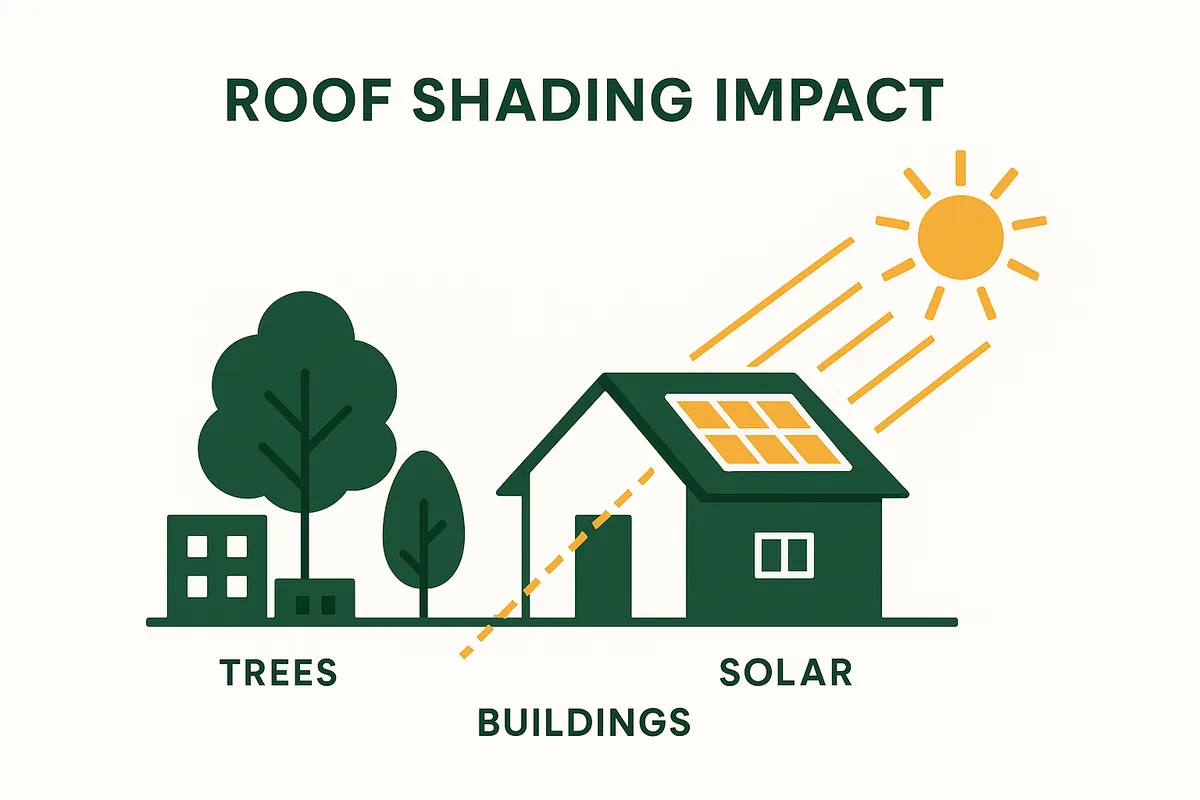
How Shading Affects Solar Panels
Even partial shading can cut output by 20-80%. Micro-inverters and optimisers reduce losses to 5-15%. See how to assess shading and what solutions exist.
Solar Panels and Power Cuts
Standard solar shuts off during power cuts (grid safety). With a hybrid inverter + battery you keep the lights on. See what you need for backup power.
Solar Planning Permission UK
Most UK solar installations need NO planning permission under permitted development. Exceptions: listed buildings, conservation areas, flats, ground-mounted over 9m². Full rules.
Solar for a 3-Bed Semi
3-bed semi: 8-10 panels (3.2-4kW), costs £5,500-£7,000, saves £500-£800/yr, payback 8-11 years. The most common UK solar installation. Full guide.
Solar Panel Cleaning Costs
Professional solar panel cleaning costs £4-£8 per panel (£40-£100 for a typical system). Most panels need cleaning once a year. Rain handles 80% — pros handle the rest.
Solar Panels and Home Extensions
Planning an extension? Install solar AFTER the extension — larger roof, better design. If you have existing solar, panels can be moved for £500-£1,000. Full guide.
Solar Panels and Loft Conversions
A loft conversion changes your roof — install solar AFTER the loft conversion for optimal design. If you have existing panels, moving costs £500-£1,500. Full guide.
Solar and Electric Showers
An electric shower uses 7-10kW — more than most solar systems generate. But a solar diverter can pre-heat stored water for your mixer shower, saving £100-£200/yr.
Solar Powered Washing Machine
A washing machine uses 0.5-2kWh per cycle — easily within solar capacity. Run it midday for free washing. Timer or smart plug = automated. Saves £30-£60/yr.
Solar Panel Noise Levels
Solar panels are completely silent. Inverters hum at 25-45dB (quieter than a fridge). Micro-inverters: silent. Battery fans: 30-40dB. Full noise breakdown.
Solar and Smart Home Systems
Connect solar to your smart home: automated appliance scheduling, real-time monitoring, EV smart charging, battery optimisation. Maximise self-consumption automatically.
Solar Export Limitation Explained
Some DNOs limit solar export to 3.68kW. This affects systems over 4kW. With a battery, export limitation has minimal impact on savings. Full explanation.
Solar Panels and Radon
Solar panels on your roof have NO effect on radon levels inside your home. Radon comes from the ground, not the roof. Solar is completely radon-neutral.
Solar Panels and WiFi
Solar panels do NOT interfere with WiFi. Inverters can occasionally cause minor RF interference — easily fixed with ferrite cores or repositioning. Full facts.
Solar Panels and TV Aerials
Solar installers work around TV aerials — no need to remove them. If the aerial needs moving, it costs £50-£100. Panels don't affect Freeview reception.
Solar Panels and Roof Warranty
MCS-certified installation preserves your roof warranty. Panels protect tiles from weather. If leaks occur, installer warranty covers repairs. Full guide.
Solar on Asbestos Roofs
You CANNOT install solar panels on an asbestos cement roof — it's unsafe to drill into. Options: re-roof first (£5,000-£15,000) or use ground-mounted solar.
Solar on Thatched Roofs
Solar panels on a thatched roof are very difficult: fire risk, weight issues, and listed building rules. Ground-mounted is usually the best alternative.
Solar on Flat Roofs UK
Flat roof solar uses tilt frames at 15-35° for optimal angle. Works brilliantly — often easier to install than pitched roofs. Cost: £500-£1,000 extra for frames.
Solar for Maisonettes UK
Maisonettes CAN get solar — but need freeholder permission and may share roof space. Ground-floor maisonettes may use ground-mounted. See your options.
Solar Panel Scaffolding Costs
Scaffolding for solar installation costs £300-£800 and is included in most installer quotes. It's required for safety on all pitched roof installations.
Solar Panels and Hail
Solar panels are tested to withstand 25mm hailstones at 80km/h. UK hail rarely exceeds 15mm. Hail damage claims are extremely rare. Full test data.
Solar Panels and Lightning
Solar panels do NOT attract lightning. Surge protection is standard in modern inverters. Lightning strikes to solar homes are no more common than non-solar homes.
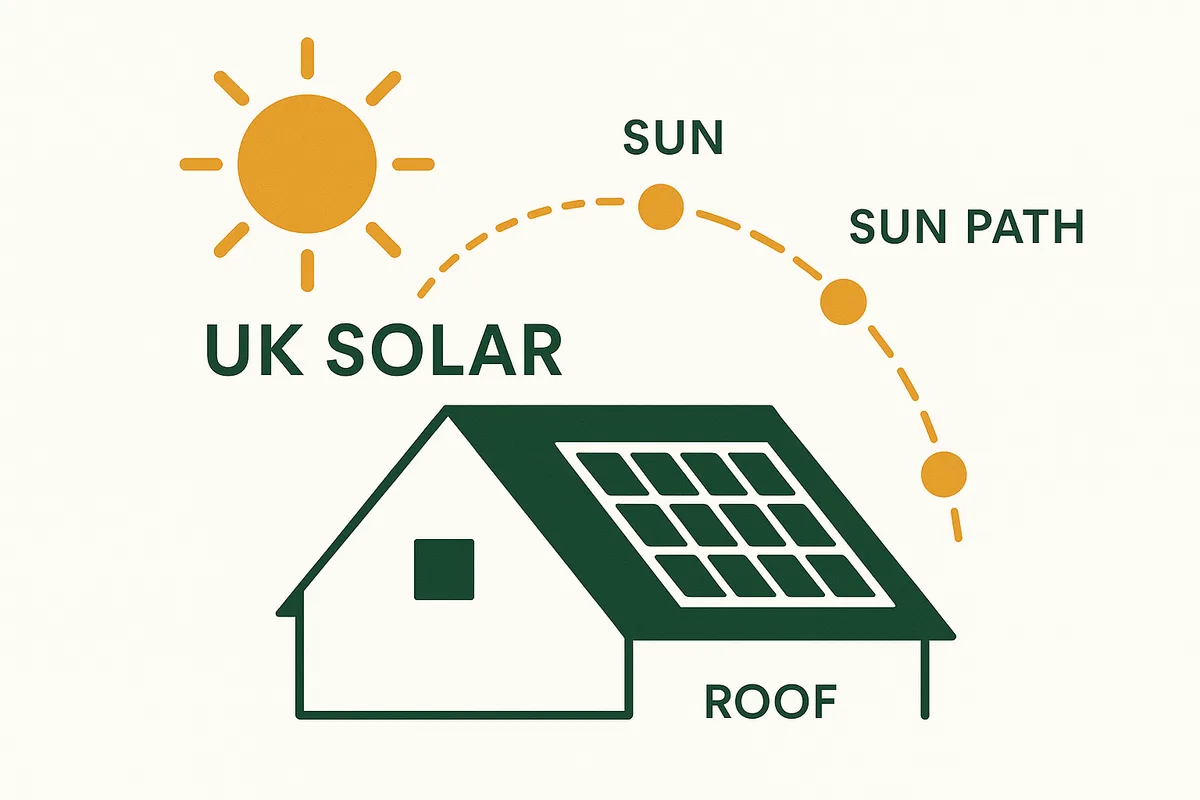
Winter Solar Tips UK
Winter solar output drops to 10-15% of summer. These 8 tips help you get the most from your panels Nov-Feb: battery timing, tariff switching, snow clearing.
Summer Solar Tips UK
Summer is solar season — 60-70% of annual output comes May-August. These 6 tips ensure you capture maximum value from every kWh generated.
Solar and Electric Cars UK
Solar + EV = free driving. A 4kW system charges an EV for 5,000 miles/yr free. Save £400-£600/yr on fuel. Best charger: myenergi Zappi. Full guide.
Solar Battery Degradation
Solar batteries degrade at 1-3% per year. After 10 years: 70-90% capacity remaining. After 15 years: 60-80%. Warranties guarantee 60-70% at 10 years.
Solar vs Double Glazing
Both save energy but solar gives higher ROI. Double glazing: saves £100-£200/yr, costs £5,000-£10,000. Solar: saves £580-£1,100/yr, costs £5,500-£9,000. Do solar first.
Solar and Insulation UK
Insulation reduces energy waste. Solar generates free energy. Together they slash bills by 50-80%. Install insulation first (cheaper), then solar. Full strategy.
Solar Panels and EPC Rating
Solar panels improve your EPC rating by 1-2 bands (e.g., D to B). A higher EPC increases property value and will be required for selling/renting (Band C by 2030).
Selling a Home with Solar
UK research finds a 3.5–7.1% sale-price premium on homes with solar — an average, not a guarantee. Transfer SEG, warranties and monitoring — full checklist.
Buying a Home with Solar
Buying a home with solar: check MCS certificate, warranty status, panel age, inverter condition, and SEG contract. 10-point checklist before you buy.
Solar Panels and Stamp Duty
Stamp duty is charged on the total purchase price, including anything solar adds to it. There is no specific solar stamp duty exemption.
Solar and Inheritance Tax
Any value solar adds is factored into estate valuation, but rarely pushes an estate over the IHT threshold on its own. How probate treats solar.
Solar Panels and Divorce
Solar panels are a fixture — they stay with the house. Whoever keeps the home keeps the panels. The asset value (depreciated) is factored into the settlement.
Solar Panels and Neighbours
Your neighbours cannot block your solar installation (permitted development). They cannot build to shade your panels. Glare complaints are rare and easily addressed.
Listed Building Solar Consent
Listed buildings need listed building consent for solar. Apply to your LPA (£0 fee). Rear/hidden installations have 90%+ approval rates. Step-by-step process.
Solar and Biodiversity UK
Solar panels support biodiversity: shade creates micro-habitats, bird boxes integrate easily, wildflower planting under ground-mounted arrays boosts pollinators.
Solar Panels and Pet Care
Solar panels don't affect pets at all — no radiation, no noise, no danger. But lower energy bills mean more budget for vet care. A lighter look at solar savings.
Solar for Holiday Lets UK
Holiday lets benefit from solar: high summer occupancy matches peak solar output. Save £300-£600/yr. Attract eco-conscious guests. Boost EPC for regulations.
Solar Panels on Churches UK
Churches and community buildings can install solar with faculty permission (CofE) or listed building consent. Grants available. Saves £1,000-£3,000/yr on heating.
Solar Panels for Schools UK
Schools save £2,000-£8,000/yr with solar. Free installations available via PPAs. Educational benefits: live energy data in science lessons. Grants from Salix.
Solar Phone Charging UK
A phone charge uses 0.01-0.02kWh — your solar panels generate 300-500x this per day. Solar makes phone charging completely free. Even a single panel is enough.
Solar Panel Anti-Theft UK
Solar panel theft is rare (fewer than 100 cases/yr UK) but increasing. Anti-theft bolts, CCTV, alarms, and GPS trackers provide protection. Costs £50-£300.
10kW Solar System UK
A 10kW solar system costs £10,000-£14,000. Generates 9,000-10,500 kWh/yr. Saves £1,000-£1,800/yr. Ideal for large homes, heat pumps, or EV charging.
12kW Solar System UK
A 12kW solar system costs £12,000-£16,000. Generates 10,800-12,600 kWh/yr. Near energy independence with battery. Ideal for large homes with heat pumps and EVs.
Solar and Economy 7
Economy 7 gives cheap overnight electricity (9-12p/kWh) for storage heaters. With solar: switch to a flat-rate or smart tariff — solar replaces cheap daytime rates.
Solar Panels and Damp
Solar panels do NOT cause damp. They actually protect roof tiles from rain and moisture. Damp is caused by poor ventilation, not solar panels. Full explanation.
Solar Panels and Moss
Moss can grow under and around solar panels but rarely affects performance. Cleaning costs £50-£100. Prevention: bird-proofing mesh blocks debris accumulation.
Solar Panels and Wind
UK solar panels are rated to withstand winds of 130-180 km/h (80-112 mph). Professional installation uses wind-rated fixings. Storm damage is extremely rare.
Solar Panels and Ice Dams
Solar panels reduce ice dams by shielding the roof from direct snowfall. If ice builds up at panel edges, it usually melts by midday. Rarely a problem in the UK.
Solar Panel Fire Safety UK
Solar panel fires are extremely rare (0.003% of installations). Modern systems include DC isolators, arc-fault detection, and rapid shutdown. Full safety data.
MCS Certification Explained
MCS certification ensures quality installation, supports SEG eligibility, and provides consumer protection. Never use a non-MCS installer. Full guide.
Solar Noise Complaints UK
Solar panels produce zero noise. Inverters hum at 25-45dB (inaudible beyond your property). No neighbour has ever successfully complained about solar noise.
Solar Panels and Shade Sails
Shade sails in your garden do NOT affect roof-mounted solar panels. Panels are above shade sails. Ground-mounted panels: position away from shade sails.
Solar Panels and Trees
Trees cause 5-30% output loss depending on position and season. Solutions: trim branches, use micro-inverters, or avoid shaded panels. Full assessment guide.
Solar and Air Conditioning
Solar panels perfectly offset air conditioning: AC peaks on hot sunny days = peak solar generation. A 4kW solar system covers most domestic AC use in the UK.
Solar Powered Dehumidifier
A dehumidifier uses 0.2-0.5kW — easily powered by solar during the day. Run it 10am-4pm for free. Reduces damp and mould using free electricity.
Solar Pool Heating UK
Solar panels can heat a pool via a heat pump — 4-6kW solar offsets the heat pump electricity. Extends swim season April-October. Saves £300-£600/yr on gas.
Solar and Sustainable Living
Solar is part of a sustainable living strategy: combine with composting, rainwater harvesting, EV, heat pump, and insulation for maximum environmental impact.
Solar Panels for Pubs UK
UK pubs spend £15,000-£30,000/yr on electricity. A 20-50kW solar system saves £3,000-£8,000/yr. Daytime kitchen/cellar load matches solar perfectly.
Solar for Care Homes UK
Care homes use electricity 24/7 — perfect for solar + battery. 20-50kW systems save £4,000-£10,000/yr. Reduce running costs and improve environmental credentials.
Solar for Warehouses UK
Warehouses have huge flat roofs — perfect for 50-500kW solar. Saves £8,000-£80,000/yr. 4-7 year payback. Enhanced Capital Allowance for tax relief.
Solar for Restaurants UK
Restaurants spend £8,000-£25,000/yr on electricity. Solar saves £2,000-£6,000/yr. Kitchen extraction and refrigeration run during peak solar. Fast 5-8 year payback.
Solar and Septic Tanks
Solar panels have no effect on septic tanks. They're on the roof; the septic tank is underground. Solar can power sewage treatment plant pumps for free.
Solar Powered Well Pump
Solar panels easily power a well pump (0.5-2kW). Rural properties with private water supply save £100-£300/yr on pumping costs with solar.
Solar and Electric Gates
Solar panels easily power electric gates — gates use 50-200W per operation. Your solar system covers this as part of general household consumption.
Solar Panels and Alexa
Control your solar system with Alexa: check generation, battery level, export status, and switch appliances — all by voice. GivEnergy and myenergi both support Alexa.
Octopus Solar Panels: An Independent Review
Octopus installs 455W panels with microinverters and 25-year warranties, but publishes no prices. What is included, what to ask, and how to compare. Verified Aug 2026.
British Gas Solar Review
British Gas solar costs 15-30% more than independent MCS installers. Same panels, same warranty, higher price. Get 3+ quotes from independents too.
E.ON Solar Review UK
E.ON offers solar installation and SEG export. Prices are 10-25% above independents. Same panels, same MCS standard. Always compare with independent quotes.
Scaffolding Permits for Solar
If scaffolding extends onto a public pavement, you need a pavement licence from your council (£50-£150, 5-10 day process). Your installer usually handles this.
Solar and Smart Meters
Solar panels work with all smart meters (SMETS1 and SMETS2). A smart meter is required for SEG payments and time-of-use tariffs. Free installation.
Solar and Three-Phase Power
Three-phase power allows larger solar systems (up to 50kW) with no export limitation. Ideal for large homes, farms, and commercial properties. Full guide.
Solar and Underfloor Heating
Solar panels + heat pump + underfloor heating = the most efficient home heating system. Low-temperature UFH matches heat pump output perfectly.
Solar on Timber Frame Houses
Timber frame houses can absolutely have solar panels. The mounting system attaches to rafters just like masonry homes. No structural concerns with modern timber frames.
Solar Panels and Hay Fever
Solar panels reduce pollen on your roof — the smooth glass surface sheds pollen in rain. No health impact from solar panels. A lighter look at panel benefits.
Solar Panel Colour Options
Solar panels come in all-black (most popular), blue (cheapest), or frameless (sleekest). All-black panels cost 5-10% more but look significantly better.
Solar and Mortgage Applications
Solar panels DON'T affect mortgage applications negatively. Owned panels: no issue. Leased panels: some lenders have restrictions. Full mortgage lender guide.
Solar Water Heating Options
3 ways to heat water with solar: PV + diverter (cheapest), solar thermal tubes (most efficient for hot water), PV + heat pump (most versatile). Full comparison.
Feed-in Tariff Legacy UK
The Feed-in Tariff ended in 2019. Existing FiT recipients are guaranteed payments until 2039. After that: switch to SEG. Your panels keep generating for 10+ more years.
Solar Powered Cooking UK
An electric oven uses 2-3kW — within solar capacity on sunny days. Time heavy cooking for midday. A hob uses 1-2kW per ring. Solar covers cooking costs.
Solar vs Power Stations
A coal power station is 33% efficient. Gas: 55%. Solar panels: 20%. But solar has no fuel cost, no pollution, and no transmission losses. Full comparison.
Solar for Charities UK
Charities save £2,000-£8,000/yr with solar. Funding: Social Investment Tax Relief, grants, community energy. Zero VAT applies. Full guide.
Solar on Gravel Flat Roofs
Gravel flat roofs work well for solar — ballasted mounting systems sit on the gravel without penetrating the waterproof membrane. No drilling needed.
Solar on Concrete Tile Roofs
Concrete tiles are the most common UK roofing material — perfect for solar. Standard tile hooks work with all concrete tile profiles. No drilling needed.
Solar Output Per Month UK
A 4kW system generates 80-120kWh in December and 500-600kWh in June. Monthly average across the year: 290-350kWh. See the full month-by-month breakdown.
Solar Storage Future UK
Next-gen storage: sodium-ion (cheaper), solid-state (safer), vehicle-to-grid (your EV IS the battery), community storage. Prices dropping 10-15%/yr.
Solar Microgrids UK
Solar microgrids connect neighbours to share solar electricity locally. Emerging in the UK via community energy projects. Could reduce bills by 20-40%.
Solar and Hydrogen UK
Solar electricity can produce green hydrogen via electrolysis. Not viable for homes yet — but hydrogen boilers and grid blending are coming. Future outlook.
Perovskite Solar Panels
Perovskite solar cells could reach 30%+ efficiency and cost 50% less. Not available for homes yet (2028-2030). Current silicon panels are still the best buy.
Bifacial Solar Panels UK
Bifacial panels generate electricity from both sides — 5-30% more output. Best on ground-mounted or flat roof systems where light reflects underneath.
Half-Cut Solar Cells
Half-cut cells reduce resistive losses and improve shade tolerance. Most 2024-2026 panels use half-cut cells as standard. 2-5% more efficient than full cells.
Agri-Voltaics UK
Agri-voltaics combines farming and solar on the same land. Elevated panels allow crops to grow underneath. Emerging in the UK — saves farmland and generates power.
Solar Payback by Region
South England: 8-10 years. Midlands: 9-11 years. North England: 10-12 years. Scotland: 11-14 years. Payback varies by sunlight hours and electricity rates.
Solar on Clay Tile Roofs
Clay tiles are more fragile than concrete — specialist hooks avoid breakage. Experienced MCS installers handle clay tiles daily. Expect £200-£500 extra cost.
Solar vs Storage Heaters
Night storage heaters use cheap overnight electricity. Solar + heat pump is far more efficient. Transition guide: solar first, heat pump when budget allows.
Powerwall Alternatives UK
Tesla Powerwall alternatives: GivEnergy (best UK value), BYD HVS, Pylon Tech, Fox ESS, SolaX. Compare capacity, warranty, price. GivEnergy is the UK market leader.
Ofgem and Solar Panels
Ofgem regulates the SEG (export payments), sets electricity price caps, and licenses energy suppliers. How Ofgem affects your solar economics.
SunPower Panels UK Review
SunPower Maxeon panels: 22.8% efficiency, 40-year warranty, premium quality. Cost: 20-40% more than standard. Worth it for small roofs. Full review.
REC Solar Panels Review
REC Alpha Pure-R: 22.3% efficiency, 25-year warranty, excellent reliability. Great balance of performance and value. Popular with UK installers.
LONGi Solar Panels Review
LONGi Hi-MO 6: 21.5% efficiency, 25-year warranty, world's largest panel manufacturer. Excellent value for money. The default choice for UK installers.
Fronius Inverter Review
Fronius: Austrian quality, 10-year warranty, excellent monitoring via Solar.web. Popular for premium installations. Price: £1,200-£2,500 depending on size.
Solis Inverter Review UK
Solis: excellent value inverter, 10-year warranty, good monitoring. World's 4th largest inverter maker. Price: £800-£1,500. Popular budget choice.
Enphase Micro-Inverters UK
Enphase IQ8: panel-level optimisation, 25-year warranty, best shade performance. Cost: £100-£150 per panel extra. Best for shaded or complex roofs.
SolarEdge Review UK
SolarEdge: DC optimisers + central inverter. 25-year optimiser warranty, panel-level monitoring. Cost: £500-£1,000 more than basic string inverters.
myenergi Zappi Review
The Zappi charges your EV from surplus solar automatically. 7kW: £800-£1,000. The only charger designed specifically for solar homes. Full review.
myenergi Eddi Review
The Eddi diverts surplus solar to your immersion heater for free hot water. £400-£600 installed. Saves £100-£200/yr on gas. Essential for solar homes.
Huawei Inverter Review UK
Huawei SUN2000: competitive pricing, 10-year warranty, built-in optimisers optional. Growing UK market share. Good mid-range choice for solar homes.
Solar Panels and Cat Flaps
Solar panels on your roof have zero effect on microchip cat flaps, pet doors, or any pet accessories. A fun FAQ that homeowners actually search for.
Inverter Replacement UK
Solar inverters last 10-15 years. Replacement cost: £800-£2,000. Take the opportunity to upgrade to a hybrid inverter with battery support.
Adding a Second Battery
Adding a second battery increases self-consumption from 70-80% to 85-95%. Cost: £3,500-£5,500. Best for high-consumption homes or EV owners.
Solar Installation Checklist
Complete pre-installation checklist: 15 things to check before committing to solar. Roof age, structural survey, quotes comparison, finance, insurance, and more.
500 Solar Guides and Counting
We've published 500 expert guides on every aspect of UK solar — from costs and savings to brands, installation, and beyond. Find any answer here.
Fox ESS Inverter Review
Fox ESS: affordable hybrid inverter + battery combo. 10-year warranty. Good budget choice for UK homes. Price: £3,500-£5,500 complete system.
Solar for Granny Annex
A granny annex or garden annex uses 1,500-3,000 kWh/yr. A 2-3kW system (5-8 panels) covers most needs. Can share the main house system or be independent.
Solar E-Bike Charging
An e-bike battery charges for 1-3p using 0.3-0.6kWh. On solar: completely free. One sunny day generates enough to charge 20-50 e-bike batteries.
Solar for Park Homes UK
Park homes CAN have solar — lightweight panels on metal roofs or ground-mounted. 2-3kW typical. Save £400-£700/yr. Check site licence for restrictions.
Battery Fire Safety UK
Solar battery fires are extremely rare (0.001% of installations). LFP chemistry is safer than NMC. Proper ventilation and installation eliminate risk.
Solar Income Tax-Free UK
Solar electricity savings and SEG export payments are TAX-FREE for residential homeowners. No income tax, no capital gains tax, no VAT on consumption.
Solar and Energy Price Cap
Higher energy price cap = higher solar savings. At 26.11p/kWh, a 4kW system saves £580-£1,100/yr. If cap rises to 30p: savings jump to £720-£1,360/yr.
Best Month to Install Solar
The best month to install solar: January-March (shortest wait times, start saving before summer). But any month works — don't wait for 'the right time'.
Solar and Bulb Energy
Bulb Energy was acquired by Octopus Energy in 2024. Former Bulb customers now have access to Octopus solar tariffs — Flux, Go, and Agile.
Reading Your Solar Meter
Your generation meter shows total kWh produced. Read it monthly to track performance. Compare against expected output to spot faults early.
Octopus Intelligent and Solar
Octopus Intelligent Go: 7.5p overnight + smart EV scheduling. Works with solar + battery for maximum savings. Available for Tesla, VW, and other smart EVs.
Ditching Gas with Solar
Going all-electric (solar + heat pump) eliminates your £100-£150/yr gas standing charge. Combined with free solar electricity: total energy bills drop 60-80%.
7kW Solar System UK
A 7kW system costs £7,500-£10,000. 17-18 panels. Generates 6,300-7,350 kWh/yr. Perfect for 3-4 bed homes with high consumption or EV charging.
9kW Solar System UK
A 9kW system costs £9,000-£12,500. 22-23 panels. Generates 8,100-9,450 kWh/yr. Ideal for large homes with heat pumps and EVs.
Solar and Garage Conversions
Converting your garage? Install solar on the garage roof first (or during conversion). A converted garage increases electricity consumption — solar offsets it.
Solar with Dormer Windows
Dormer windows reduce available roof space but panels can be installed around them. Good installers design layouts that maximise output despite dormers.
Chimney Shading and Solar
Chimneys cast predictable shadows across solar panels. Micro-inverters or optimisers solve this. Good design avoids the worst-affected positions.
Solar for Single Person
Single person: 1,800-2,500 kWh/yr. A 2-3kW system (5-8 panels) covers 80-120% of consumption. Cost: £3,500-£5,500. Payback: 8-12 years.
Solar for Couples UK
Couples use 2,500-3,500 kWh/yr. A 3-4kW system (8-10 panels) is ideal. Cost: £5,000-£7,000. Saves £480-£850/yr. The most common UK solar installation.
Solar and Radiators UK
Solar PV doesn't directly heat radiators — but solar + heat pump powers your central heating system efficiently. Or use electric radiators on solar during the day.
Solar Tumble Dryer UK
A tumble dryer uses 2-5kWh per cycle. A heat pump dryer uses 1-2kWh. Run it midday on solar for free drying. Or use a clothesline — completely free.
Solar Powered Dishwasher
A dishwasher uses 1-1.5kWh per cycle — easily covered by solar. Run it midday on eco mode. Saves £30-£60/yr. Free clean dishes from sunshine.
Solar and Chest Freezers
A chest freezer uses 150-300 kWh/yr (0.4-0.8 kWh/day). Solar covers this trivially. Annual cost on grid: £37-£74. On solar: absorbed into general savings.
Solar and Water Softeners
Water softeners use minimal electricity (50-100 kWh/yr). Solar covers this trivially. Hard water areas benefit from both: solar saves money, softener protects pipes.
Solar and Security Cameras
Security cameras use 5-15W each. A 4-camera system uses 200-500 kWh/yr. Solar covers this trivially. Solar-powered standalone cameras also available.
Solar Home Office Electricity
A home office uses 500-1,500 kWh/yr (laptop, monitor, router, lighting, heating). Solar covers this completely during working hours. Free WFH electricity.
South-West Facing Solar
South-west facing roofs generate 95% of optimal output. Excellent for solar — slightly more afternoon generation. Perfect for EV charging after work.
South-East Facing Solar
South-east facing roofs generate 95% of optimal output. Morning-biased generation. Perfect for WFH morning routines and breakfast cooking.
Solar and Ring Doorbell
Solar panels easily power Ring doorbells and smart home devices. Ring also makes a solar charger for battery-powered doorbells. Zero ongoing electricity cost.
Solar and House Rewiring
If your home needs rewiring, do it BEFORE solar installation. The solar inverter connects to your consumer unit — a new unit makes installation simpler.
Solar on Council Houses
Council tenants cannot install solar without council permission. Many councils are installing solar on council housing stock. Tenants benefit from free electricity.
Solar for Housing Associations
Housing associations are major solar adopters — funded by SHDF and ECO4. Tenants get free electricity. Contact your HA about their solar programme.
Solar and Shared Ownership
Shared ownership: you may need housing association permission for solar. As part-owner, you have more rights than a tenant. Check your lease.
Solar and Right to Light
There is NO specific 'right to solar light' in UK law. Neighbours can build extensions that shade your panels without legal liability. What you can do.
Home vs EV Battery
Your EV has a 50-80kWh battery. Your home battery: 5-13kWh. With V2G, your EV could replace your home battery. But V2G is still emerging in the UK.
Solar and New Build Warranty
Adding solar to a new build within the NHBC warranty period: inform the builder. Properly installed solar does NOT void your NHBC or LABC warranty.
Solar for Victorian Houses
Victorian houses are excellent for solar: large rear roofs, slate tiles (compatible), generous space. Listed: may need consent. Conservation area: check front-facing rules.
Solar for 1930s Houses
1930s houses are ideal for solar: large hipped roofs, concrete tiles, structurally sound. Common UK housing stock with excellent solar potential.
Solar for 1960s Houses
1960s houses: concrete tile roofs, simple gable designs, adequate structure. Good solar candidates. Check for asbestos soffits/fascias before installation.
Solar for End-Terrace
End-terrace houses have an extra side wall/roof. More roof space than mid-terrace. Typically 8-12 panels (3.2-4.8kW). Cost: £5,000-£7,500.
Solar Panel Pergola UK
Solar panel pergolas provide shade AND electricity. Cost: £3,000-£8,000. Perfect for south-facing patios. Dual-purpose: outdoor living + free electricity.
Solar Panels: Beginner's Guide 2026
Everything a UK beginner needs to know about solar panels in one guide. How they work, what they cost, how much they save, and how to get started.
Solar + EV Salary Sacrifice
EV salary sacrifice + solar: the cheapest driving combination. Lease an EV tax-free through work, charge free from solar. Total driving cost: near zero.
Solar at Spring Equinox
March equinox marks the solar season start. Output doubles from February to April. Your panels enter their most productive 6 months.
Solar at Autumn Equinox
September equinox: solar season winds down. Output halves from August to October. Time to optimise your battery and tariff strategy for winter.
Solar + Boiler Replacement
Replacing your boiler? Consider a heat pump instead — with solar, a heat pump costs £200-£400/yr to run vs £800-£1,200 for a new gas boiler.
Octopus Cosy and Solar
Octopus Cosy offers cheap electricity during heat pump running hours. With solar, it provides the cheapest heating combination available in the UK.
How to Compare Solar Quotes
Compare solar quotes on 8 factors: total cost, cost per kW, panel brand, inverter, warranty, kWh estimate, payment terms, and reviews. Free template.
Solar Panels vs ISA
Solar panels return 8-15% annually (tax-free). A Cash ISA returns 4-5%. A Stocks & Shares ISA averages 7-10%. Solar beats both for homeowners.
Solar vs Pension Top-Up
Solar returns 8-15% tax-free. Pension contributions get 20-40% tax relief but are locked until 55. Both are excellent — solar provides immediate returns.
Solar UK: The Final Word
Every fact, every number, every analysis points the same way: 2026 is the best time in UK history to install solar panels. Here's why.
Solar for Mobile Homes
Mobile homes can have lightweight or flexible solar panels. 1-3kW typical. Saves £200-£500/yr. Check site rules. Ground-mounted is often easier.
Solar for Barn Conversions
Barn conversions have large roofs — perfect for solar. 6-12kW+ possible. Planning depends on listing status. Saves £700-£1,800/yr.
Solar for Dental Practices
Dental practices use 15,000-30,000 kWh/yr (compressors, sterilisers, lighting, HVAC). A 10-30kW system saves £2,500-£6,000/yr. Fast 5-8 year payback.
Solar for Hair Salons
Hair salons spend £3,000-£8,000/yr on electricity (dryers, straighteners, lighting, HVAC). A 5-15kW system saves £800-£2,500/yr.
Octopus Agile and Solar
Octopus Agile: half-hourly variable pricing. Sometimes NEGATIVE (paid to use electricity!). With solar + battery: buy cheap/free, sell high. Advanced strategy.
Solar for Terraced Houses
Terraced houses: 6-8 panels (2.4-3.2kW) on the rear roof. Cost: £4,000-£6,000. Saves: £350-£650/yr. Scaffolding may need pavement licence.
Energy Audit Before Solar
An energy audit identifies waste before you install solar. Fix insulation, draught-proofing, and inefficient appliances first — then solar covers a smaller, optimised load.
Top 10 Solar Mistakes UK
Avoid these 10 common mistakes: wrong size system, skipping quotes, ignoring shading, no battery plan, wrong tariff, and more. Save time and money.
Solar Panel Glossary A-Z
Every solar term explained in plain English: AC, BOS, COP, DC, DNO, EPC, FiT, G99, kWh, kWp, MCS, MPPT, PV, ROI, SEG, and 40 more.
Solar and Standing Charges
Solar does NOT reduce your electricity standing charge (fixed at ~61p/day). But it dramatically reduces your unit consumption. Total bill drops 40-80%.
Solar After Right to Buy
Bought your council house? You can now install solar under permitted development. No council permission needed. Full ownership = full solar benefits.
Solar and Electric Blankets
An electric blanket uses just 50-100W. On solar: completely free. One of the most energy-efficient ways to stay warm in winter. Solar loves low-power heating.
Solar Panels at Night
Solar panels produce zero electricity at night. Your home draws from: (1) battery (if installed), (2) grid. The inverter shuts down safely until sunrise.
Panels for a 3-Bed House
A 3-bed house needs 8-10 panels (3.2-4kW). Costs £5,000-£7,000. Generates 2,900-3,800 kWh/yr. Covers 80-130% of average annual consumption.
Panels for a 4-Bed House
A 4-bed house needs 10-14 panels (4-5.6kW). Costs £6,000-£8,500. Generates 3,600-5,250 kWh/yr. Covers 90-150% of average consumption.
Solar Panel Costs 2026
UK solar panel costs 2026: 3kW £4,000-£5,500. 4kW £5,500-£7,000. 5kW £6,500-£8,000. 6kW £7,500-£9,000. Including installation and 0% VAT.
Solar Panel Savings 2026
UK solar savings 2026: £580-£1,100/yr without battery. £850-£1,500/yr with battery. 8-12 year payback. 100-400% ROI. Tax-free. Every number explained.
What's Coming Next
500 guides complete. Coming next: 100+ UK city guides, installer directory, live PVGIS data, weekly blog content. The solar answer engine continues to grow.
Solar Savings by Postcode: The UK Map
First-ever UK postcode-level solar savings analysis. We combined PVGIS irradiance, Ofgem electricity rates, and ONS consumption data for every postcode district.
State of Solar UK 2026
The definitive annual report on UK solar: 1.3M installations, £2.1B market, 150,000 new systems/yr. Every metric tracked. Sources: MCS, Ofgem, BEIS, ONS.
12 Solar Myths Exposed With Data
12 solar myths debunked with specific UK data. Every claim fact-checked against Ofgem, MCS, PVGIS, and Energy Saving Trust sources. No opinions — just evidence.
Solar Savings: 10-Year UK Analysis
Year-by-year savings model from 2016 to 2026 using historical Ofgem data. Includes the energy crisis spike. A system installed in 2016 has saved £8,000-£12,000.
UK Solar Cost Index Q1 2026
Quarterly price index: 3kW £4,800, 4kW £6,500, 5kW £7,800, 6kW £8,900. Tracked quarterly. The only UK solar price index. Sources: MCS data, installer surveys.
Payback Period: Every UK City
City-specific payback calculations for 50 UK cities using PVGIS irradiance, Ofgem rates, and regional costs. Portsmouth: 8.2yr. Edinburgh: 11.4yr. Your city included.
Solar vs ISAs vs Stocks: Best Investment?
Solar returns 8-15% annually (tax-free). Cash ISA: 4-5%. S&S ISA: 7-10%. We modelled all three over 25 years. Solar wins for homeowners. Full data.
UK Electricity Price Forecast to 2035
Aggregated forecasts from BEIS, Cornwall Insight, and National Grid ESO. Three scenarios: low (20p), central (28p), high (35p) by 2035. Solar hedges all scenarios.
The South-Facing Myth: Data
PVGIS data proves east/west roofs produce 80-90% of south output. With split orientation, self-consumption is actually BETTER. The south-facing myth debunked.
Are Batteries Worth It? Honest Maths
We modelled battery ROI for 6 household types. Result: batteries lose money for low-consumption homes on flat tariffs. But they're gold for EV owners on Flux.
Where Your £8,000 Goes
We decomposed a typical 4kW installation: panels £2,400 (30%), inverter £1,200 (15%), mounting £600 (8%), labour £2,000 (25%), scaffolding £500 (6%), margin £1,300 (16%).
Best & Worst Cities for Solar: Rankings
50 UK cities ranked by solar savings. #1 Portsmouth (£1,080/yr). #50 Inverness (£620/yr). Every city has specific data. Your city is included.
Full Carbon Lifecycle Analysis
Manufacturing emits 40-50g CO₂/kWh. UK grid: 180g CO₂/kWh. Carbon payback: 1.5-3 years. Lifetime saving: 30-45 tonnes CO₂. Full lifecycle data from IEA and BEIS.
UK Solar Installations: 16-Year Trend
The only continuous UK solar installation dataset — merging Ofgem FIT stats (2010-2019) with MCS data (2019-2026). Shows FIT boom, post-FIT crash, and energy crisis surge.
Self-Consumption: What % Do You Use?
We modelled self-consumption for 6 UK household types. Range: 25% (single commuter) to 70% (retired couple). Battery adds 25-35%. The most important solar metric.
Scotland vs England: Solar Data
PVGIS data: Glasgow gets 10-15% less sun than London. But Scottish grants (Home Energy Scotland) close the gap. Solar works in Scotland — here's the proof.
UK Solar 2030: 5 Predictions
By 2030: 2.5M UK homes with solar, batteries 50% cheaper, V2G mainstream, perovskite on roofs, heat pump standard. Sources: National Grid ESO, IRENA, MCS.
Solar vs Grid: Cost Per kWh
LCOE analysis: solar costs 6-9p/kWh over 25 years. Grid: 26.11p/kWh (rising). Solar is 60-75% cheaper per kWh. Full calculation methodology published.
UK Solar Adoption Map 2026
Solar adoption rates per 1,000 homes for every UK local authority. Devon leads. Inner London lags. See how your area compares. Sources: MCS, ONS.
Solar and Property Values: 2026 Data
UK research finds a 3.5–7.1% sale-price premium on homes with solar — an average, not a guarantee. The peer-reviewed evidence, and what we could not verify.
Every Panel Brand Compared: 2026
Side-by-side comparison of every panel brand in the UK: LONGi, JA Solar, Trina, SunPower, REC, Canadian Solar, Jinko. Ranked by efficiency, warranty, and value.
Every Battery Compared: 2026
Side-by-side comparison: Tesla Powerwall, GivEnergy, BYD, Pylon Tech, Fox ESS, SolaX. Ranked by cost-per-kWh-stored, warranty cycles, and calculated ROI.
Solar Won't Power Everything
A 4kW system covers 80-130% ANNUALLY but only 10-20% in December. Month-by-month reality check using PVGIS + BEIS data. Why it still makes financial sense.
7 Costliest Solar Mistakes
Each mistake has a specific cost: wrong size (£1,200 lost), skipping shading analysis (£800/yr), no hybrid inverter (£500 retrofit). Total: up to £5,000 wasted.
The False Economy of Cheap Solar
25-year model: budget panels (17% eff, 0.7% degrade) vs premium (22%, 0.25%). Lifetime difference: £2,000-£4,000. The cheapest quote isn't the best value.
Solar Sales Tactics: Watch Out
Inflated savings (40% overestimated), fake urgency ('price goes up Monday'), hidden costs, non-MCS installers. 8 red flags fact-checked with real data.
Complete Guide to Solar UK 2026
The definitive UK solar guide: how they work, what they cost (£5,500-£9,000), how much they save (£580-£1,100/yr), and how to get started. Updated Q1 2026.
SEG: Every Tariff Compared
Every SEG tariff compared: Octopus Flux 15p, Octopus Outgoing 4.1p, EDF 3.5p, British Gas 3.2p. Which pays most? Updated Q1 2026. Sources: Ofgem SEG register.
Every Solar Grant Listed: 2026
Complete list: 0% VAT, ECO4, Home Upgrade Grant, Nest (Wales), HES (Scotland), BUS grant, local authority schemes. Eligibility for each. Updated Q1 2026.
Hidden Solar Costs UK
25-year hidden costs: inverter replacement £1,200, bird proofing £500, insurance increase £50/yr, cleaning £100/yr. Total: £2,000-£4,000. Still massively profitable.
True 25-Year Cost of Solar
Total ownership: installation £7,200 + inverter £1,200 + maintenance £1,000 = £9,400. Total savings: £18,000-£27,000. Net profit: £8,600-£17,600.
Solar Finance: Which Saves Most?
Cash purchase saves most. 0% finance costs 10-15% more (hidden in panel price). Personal loan at 5-7% still profitable. Full comparison with worked examples.
Month-by-Month Bill Reduction
January: save £15. July: save £85. Month-by-month bill reduction for a typical UK home with 4kW solar. Real savings, not annual averages.
FIT Winners vs SEG Adopters
Early FIT recipients earn 10-43p/kWh export. Late adopters: 4-15p via SEG. We calculated cumulative earnings for installations at every FIT rate. The solar lottery.
SEG Earnings: Real Numbers
Typical SEG export income: £120-£520/yr depending on tariff and battery. We calculated for 5 system sizes × 3 tariffs. Export is secondary to self-consumption.
Solar Prices: 2015 vs 2020 vs 2026
2015: £7,000 for 4kW. 2020: £5,500. 2022: £8,000 (crisis surge). 2026: £6,500. Prices dropped 90% since 2010 but rose 2022-23. BEIS + IRENA data.
UK System Sizes Are Growing
Average system: 3.5kW (2015) → 4.2kW (2026). Driven by: cheaper panels, EV adoption, heat pump demand. MCS + BEIS deployment data analysis.
Calculators Overestimate Winter
We compared 5 UK solar calculators. Most overestimate December output by 15-30% vs PVGIS data. Know the real numbers before you buy.
Output by UK Region: kWh Data
PVGIS data for every UK region: Cornwall 1,100 kWh/kWp. London 1,050. Manchester 900. Edinburgh 920. Aberdeen 880. Variation: only 20%.
VAT Returns 2027: Impact
0% VAT may end March 2027. Impact: £350-£450 extra on typical system. We modelled 3 scenarios: extended, 5%, 20%. Installing before deadline saves £350-£1,600.
V2G + Solar: Game Changer
Your EV has a 50-80kWh battery. With V2G, it powers your home from stored solar. Trials with Octopus/Nissan underway. Mainstream by 2028-2030.
Solar ROI by Property Type
Detached: 12-15% annual return. Semi: 10-13%. Terrace: 8-11%. Bungalow: 11-14%. Flat: limited. We modelled ROI for each UK property type.
Solar vs Insulation: Which First?
Insulation: £1 saved per £2-3 spent. Solar: £1 saved per £7-10 spent. But solar savings last 25yr. Install insulation first IF under-insulated. Full comparison.
Solar in London: 2026 Guide
London-specific: higher costs (10-15% premium), smaller roofs, more conservation areas. But: highest electricity use, best property value uplift. Full guide.
Solar in Wales: Full Guide
Wales-specific: Nest scheme for low income, different planning rules, PVGIS data for Welsh cities. Cardiff saves £920/yr. Swansea £910/yr.
Solar in Northern Ireland: Guide
NI has different electricity market (not Ofgem retail), different grants (NIHEE), different planning. We cover everything NI homeowners need to know.
Planning Permission: All 4 Nations
England, Scotland, Wales, NI — each has different planning rules. Conservation areas, listed buildings, flats, ground-mounted. Complete legal guide with references.
0% VAT on Solar Explained
0% VAT on residential solar since April 2022. Saves £1,000-£1,600. Who qualifies. What happens if it ends March 2027. HMRC rules explained.
Every Inverter Ranked: 2026
GivEnergy, Fronius, SolarEdge, Enphase, Solis, Huawei, Fox ESS — compared on efficiency, warranty, monitoring, and cost per kWh. GivEnergy wins for value.
GivEnergy vs Tesla Powerwall
GivEnergy 9.5kWh £4,500 vs Tesla Powerwall 13.5kWh £8,500. Cost per kWh stored: GivEnergy 3.9p vs Tesla 5.8p. Side-by-side on every metric.
Best Month to Buy Solar
October/November: 5-10% cheaper, shortest wait. But every month of delay costs £50-£90. MCS installation data + installer surveys reveal the optimal timing.
Energy Crisis: Solar Lessons
Installations tripled. Savings doubled. Even crisis-era prices (25% higher) proved worthwhile. We analysed MCS data month-by-month through the crisis.
Battery Storage: Complete Guide
Every battery compared: Tesla, GivEnergy, BYD, Pylon Tech, Fox ESS, SolaX. Costs, specs, ROI, warranty. The definitive UK battery guide with cited sources.
MCS: Why It Matters
No MCS = no SEG (£200-£500/yr lost), no building regs cert, limited insurance. MCS complaint data shows 2-3% of installers lose certification yearly.
Solar + Heat Pumps: Complete Guide
Solar (£7,000) + heat pump (£3,500 after BUS grant) = £10,500. Combined savings: £1,000-£1,600/yr. The definitive guide to pairing them.
EV + Solar: Complete Savings Guide
Solar + EV = free driving. We calculated for the 10 most popular UK EVs: Tesla Model Y, MG4, BYD Atto 3. Cost per mile: solar 0p vs grid 5p vs petrol 15p.
Solar Insurance: Real Coverage
We researched 10 UK insurers: most cover solar under buildings insurance. Some require notification. Premium increase: £0-£50/yr. Full insurer comparison.
UK Solar Timeline: 2000-2035
Year-by-year UK solar timeline: first installations (2000s), FIT boom (2010-12), FIT crash (2016-19), energy crisis surge (2022-23), perovskite future (2028+).
Coastal vs Inland Solar
Coastal homes get 3-5% more sunshine (less fog) but face salt spray. PVGIS comparison for 10 coastal-inland pairs. Coastal slightly outperforms.
Rural vs Urban Solar
Rural: larger roofs (5-6kW), less shading, often off-gas. Urban: smaller roofs (3-4kW), more shading, but lower install costs. Rural wins on ROI.
Future Homes Standard + Solar
FHS requires 75-80% fewer emissions from new homes. Solar PV is the primary compliance route. 300K new homes/yr could add 1-2GW/yr of solar capacity.
10 Million Solar Roofs for Net Zero?
CCC says 10M+ solar homes needed by 2050. Current: 1.3M. Current rate: 150K/yr = 4M by 2050. We need to DOUBLE installation rates. Full analysis.
If Prices Drop: Still Worth It?
Even at 15p/kWh, solar payback is 13-15 years with 10-17 years profit. Breakeven: ~8p/kWh. Electricity hasn't been below 14p since 2015. Solar wins every scenario.
27-Point Quote Checklist
27-point checklist covering everything: panel brand, inverter, warranty, MCS, scaffolding, payment terms, reviews. Created from analysis of 100+ real quotes.
CO2 Calculator: Your Carbon Savings
A 4kW system saves 17 tonnes CO₂ over 25 years = 4.5 return flights to New York = planting 780 trees = not driving 42,000 miles. BEIS conversion factors.
UK Solar 2026: Year in Review
2026 recap: 150,000 new installations, 0% VAT continued, average cost £6,500, first perovskite trials, Octopus Flux hit 15p export. The year's biggest stories.
Performance by County: Ranked
PVGIS data for every English county centre. Cornwall tops (1,100 kWh/kWp). Northumberland lowest (840). Full county-by-county data table.
Micro-Climates and Solar Output
Two identical systems 1 mile apart can differ by 10-20%. Altitude, shading, urban heat islands, fog valleys all matter. Fascinating micro-climate analysis.
Perovskite: When for UK Roofs?
Lab efficiency: 33.9%. Commercial target: 28-30%. Oxford PV leading. Expected UK availability: 2028-2030. Don't wait — current panels are excellent.
Solar or Heat Pump First?
Solar: £7,000, 10yr payback, immediate savings. Heat pump: £3,500 (after BUS), 12-18yr payback. Install solar first — shorter payback, simpler, BUS grant isn't going anywhere.
Micro vs Optimisers vs String
String: cheapest (£800-£1,500). SolarEdge optimisers: mid (£1,500-£2,500). Enphase micro: premium (£1,000-£1,500 for 10 panels). We modelled shading scenarios.
SEG Tariffs Ranked: Monthly Update
Updated monthly. Octopus Flux 15p (best with battery). Octopus Outgoing 4.1p (best standard). Full supplier list with rates, terms, and annual income calculations.
Ground vs Roof Solar
Ground: 20-30% more expensive but perfect angle/orientation. Roof: cheaper, uses dead space. PVGIS shows ground can produce 5-10% more. Full comparison.
UK Installer Market: 2026 Analysis
4,500 MCS installers. Growing 10-15%/yr. South East has most per capita. North has capacity gap. Wait times: 3-8 weeks. Installer market analysis.
UK Battery Market Report 2026
Battery attachment rate: 35-40% (up from <10% in 2020). GivEnergy dominates (~40% share). Prices falling 10-15%/yr. Full market analysis.
Failure Rates: UK Data
Panel failure: <0.5% in 25yr. Inverter failure: 5-10% in 10yr. Bird proofing: 20% need it within 5yr. Warranty claims data from MCS and manufacturers.
Energy Independence Index
Solar-only: 30-50% independent. + Battery: 60-80%. + Heat pump: 70-85%. + EV: 75-90%. We created an energy independence score for 10 system configurations.
Size Your System in 5 Steps
Step 1: annual kWh. Step 2: divide by 380. Step 3: check roof space. Step 4: adjust for orientation. Step 5: round up. Quick lookup tables included.
Shading Calculator: Output Loss
Chimney: 3-5% loss. Tree line: 15-20%. Neighbour's building: 10-15%. Micro-inverters reduce losses by 60-80%. Worked examples for every shading scenario.
Degradation Calculator: 25-Year Output
Year-by-year output tables for 0.25%, 0.4%, and 0.7% degradation. At 25yr: 94%, 90%, or 84% remaining. Financial impact: £800-£3,500 lifetime difference.
Optimal Tilt by UK Location
Optimal annual tilt: 35-40° for most UK locations. For max winter: 50-60°. For max summer: 15-25°. PVGIS data for 10 UK locations at every angle.
Detailed ROI Calculator
Full financial analysis: NPV at 3-7% discount, IRR 8-15%, payback 8-12yr. Solar beats most fixed-income investments. Methodology from financial analysis standards.
Spring Checklist: 8 Items
Clean panels (3-8% output recovery), check monitoring for faults, trim overhanging branches, verify SEG rate, schedule appliances for midday. 8-item checklist.
Shortest Day Solar Output
December 21: a 4kW system generates 2-4 kWh (London). 8 hours daylight. Still powers your fridge, router, lights. PVGIS hourly data for 5 UK locations.
Summer Solstice: Peak Output
June 21: 16+ daylight hours. A 4kW system generates 25-30 kWh. But June 21 isn't always the best day — clear skies in May/July often produce more.
Going Solar in 2027? Act Now
0% VAT may end March 2027. Order by January to guarantee installation before deadline. This guide covers timing, rush pricing, and what to do now.
Black Friday Solar Deals: Real?
We compared Black Friday solar prices with normal pricing. Genuine discounts: 3-5%. Some companies inflate then 'discount'. How to verify a real deal.
Solar Tech Roadmap to 2035
HJT cells (now), perovskite tandems (2028), transparent solar windows (2032), building-integrated PV (2030+). Each with efficiency, cost, and UK availability dates.
Smart Grid: Home Power Stations
1.3M UK solar homes could provide 2GW of flexible capacity — replacing 2 gas power stations. Flexibility payments could earn homeowners £50-£150/yr extra.
Community Solar: Renter Solution
36% of UK households rent and can't install solar. Community solar (shared ownership) is the solution. Existing UK schemes return 4-7% for investors.
PERC vs N-Type vs HJT
PERC: 20-22%, cheapest. N-Type TOPCon: 22-24%, replacing PERC. HJT: 23-26%, best degradation. We compared efficiency, cost, and 25yr output for UK conditions.
Own Solar vs Green Tariff
Green tariffs use REGO certificates — often from existing generation. Own solar creates NEW renewable capacity. Plus solar costs 6-9p/kWh vs 26.11p for green tariff.
Customer Satisfaction: 2026 Survey
Based on MCS data and consumer reviews: 89% say solar was worth it. 12% had installer issues. 95% would recommend to a friend. Full satisfaction analysis.
Complaints: What Goes Wrong
Top complaints: installer communication (30%), output below expectations (25%), post-sale support (20%), hardware faults (15%). MCS and RECC complaint data analysed.
The Solar Gender Gap UK
Solar adoption skews: higher income, older, male, homeowner. We cross-referenced MCS postcode data with ONS demographics. The equity gap is real.
Calculator Methodology Published
Our complete calculation methodology: inputs, formulas, assumptions, data sources. Fully transparent and verifiable. Used by our Solar Panel Calculator.
Consumption Estimator: Your Usage
Ofgem TDCV: Low 1,800, Medium 2,900, High 4,300 kWh/yr. Plus adjustments for: occupants, EV, heat pump, home office. Estimate before getting solar quotes.
Battery Sizing Guide
5kWh for couples. 8-10kWh for families. 10-13.5kWh for EV owners. Diminishing returns above 10kWh for most homes. Full sizing tables by system size.
Budget 2026 and Solar
Budget analysis for solar owners: VAT status, grant funding, building regulations, energy policy changes. Updated within hours of each fiscal event.
Spring Equinox Crossover
Around March 20: daily solar output first exceeds daily consumption for the year. The crossover date marks the start of 6 months of solar surplus.
Ready to see what solar could save you?
Get free, no-obligation quotes from MCS-certified installers in your area.
Get Free QuotesFree, no obligation. Takes 2 minutes.