Solar Panels & Electric Heating: Can You Heat for Free?
Ready to see what solar could save you?
Get free, no-obligation quotes from MCS-certified installers in your area.
Get Free QuotesFree, no obligation. Takes 2 minutes.
Can solar panels power electric heating?
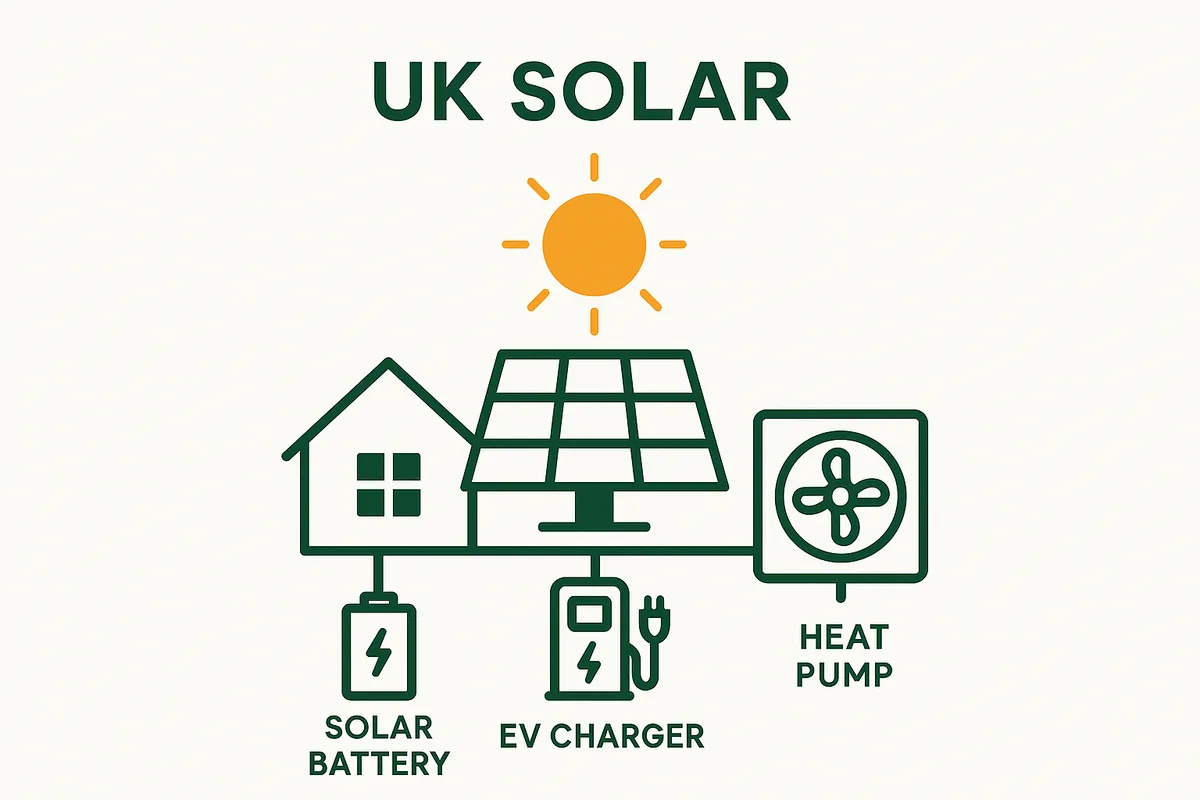
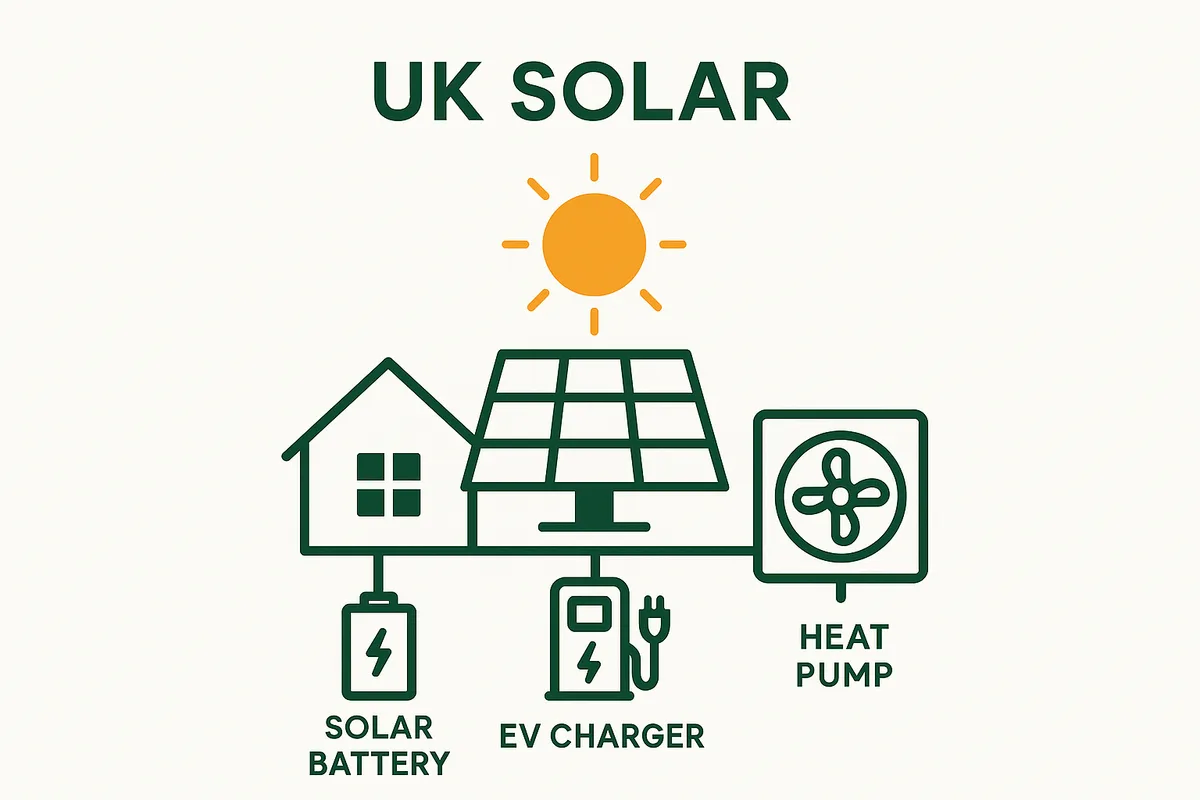
Solar panels can power electric heating, but the mismatch is significant: you need the most heating in winter when solar produces the least. A 4kW system generates ~100 kWh in December — enough to run a 2kW electric heater for about 50 hours (2 hours per day). For meaningful heating, combine solar with a battery, a solar diverter for hot water, and ideally an air source heat pump which converts 1kWh of electricity into 3–4kWh of heat.
The Winter Mismatch Problem
The fundamental challenge: heating demand peaks in winter, solar generation peaks in summer.
4kW system monthly generation vs heating demand:
| Month | Solar Output | Heating Need | Gap |
|---|---|---|---|
| January | 100 kWh | 1,200 kWh | –1,100 kWh |
| February | 150 kWh | 1,000 kWh | –850 kWh |
| March | 300 kWh | 800 kWh | –500 kWh |
| April | 420 kWh | 400 kWh | +20 kWh |
| May | 500 kWh | 100 kWh | +400 kWh |
| October | 220 kWh | 500 kWh | –280 kWh |
| November | 120 kWh | 900 kWh | –780 kWh |
| December | 80 kWh | 1,200 kWh | –1,120 kWh |
*Heating demand based on average 3-bed home with electric heating (~8,000 kWh/year)*
In the 6 coldest months, solar covers approximately 10–15% of heating electricity demand. The remaining 85–90% must come from the grid.
Key insight: Solar is excellent for electricity (lighting, appliances, devices). For heating, it is a supplement, not a replacement — unless paired with a heat pump.
Source: PVGIS; Energy Saving Trust heating demand data.
Solar Diverters: Free Hot Water from Surplus Solar
If you have a hot water cylinder (common with electric heating systems), a solar diverter is an excellent investment:
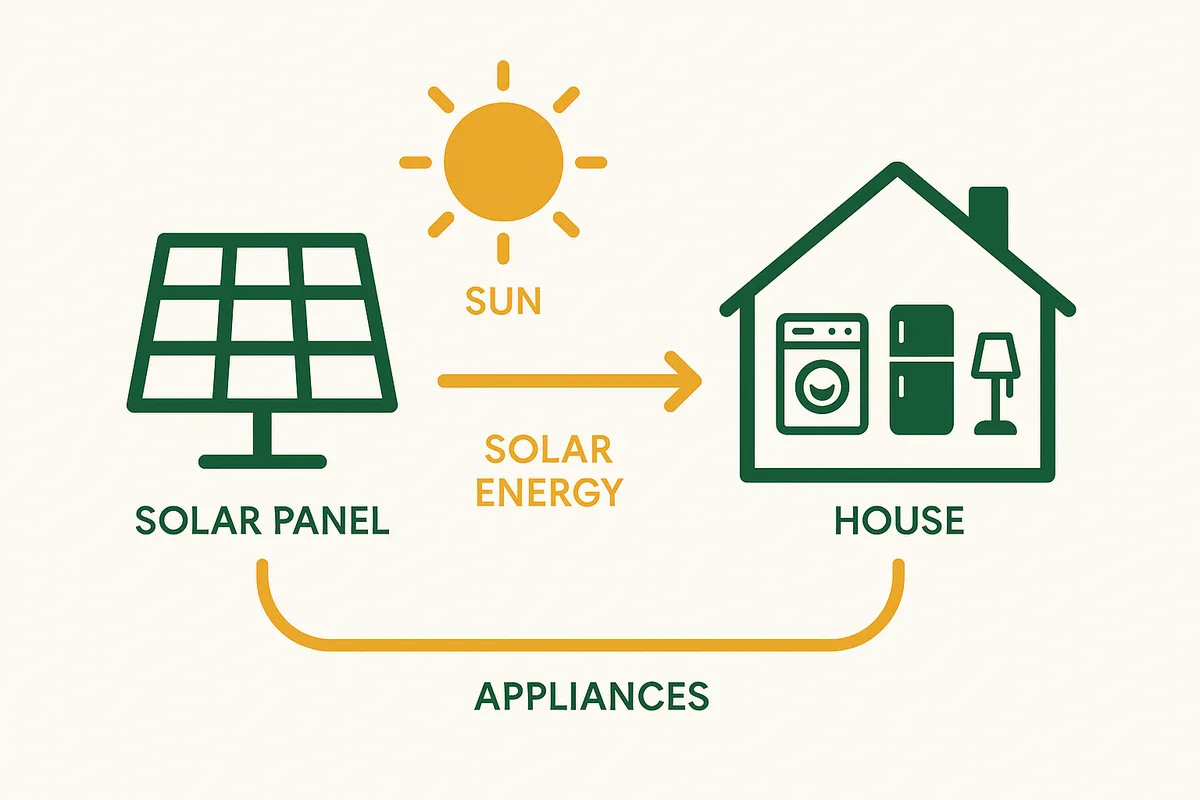
What it does: Automatically routes surplus solar electricity to your immersion heater, heating your hot water for free instead of exporting to the grid.
Products: - iBoost+ (£200–£350 installed) - Eddi by Myenergi (£350–£500 installed)
Value: Hot water heating costs approximately £200–£400/year for an electrically heated home. A solar diverter can reduce this by 40–60% in summer and 10–20% in winter.
Payback: 1–2 years for the diverter itself. One of the fastest-payback solar accessories.
This does not heat your rooms — but it does reduce your hot water bill significantly.
Source: Product manufacturer data; installer pricing.
Ready to see what solar could save you?
Get free, no-obligation quotes from MCS-certified installers in your area.
Get Free Quotes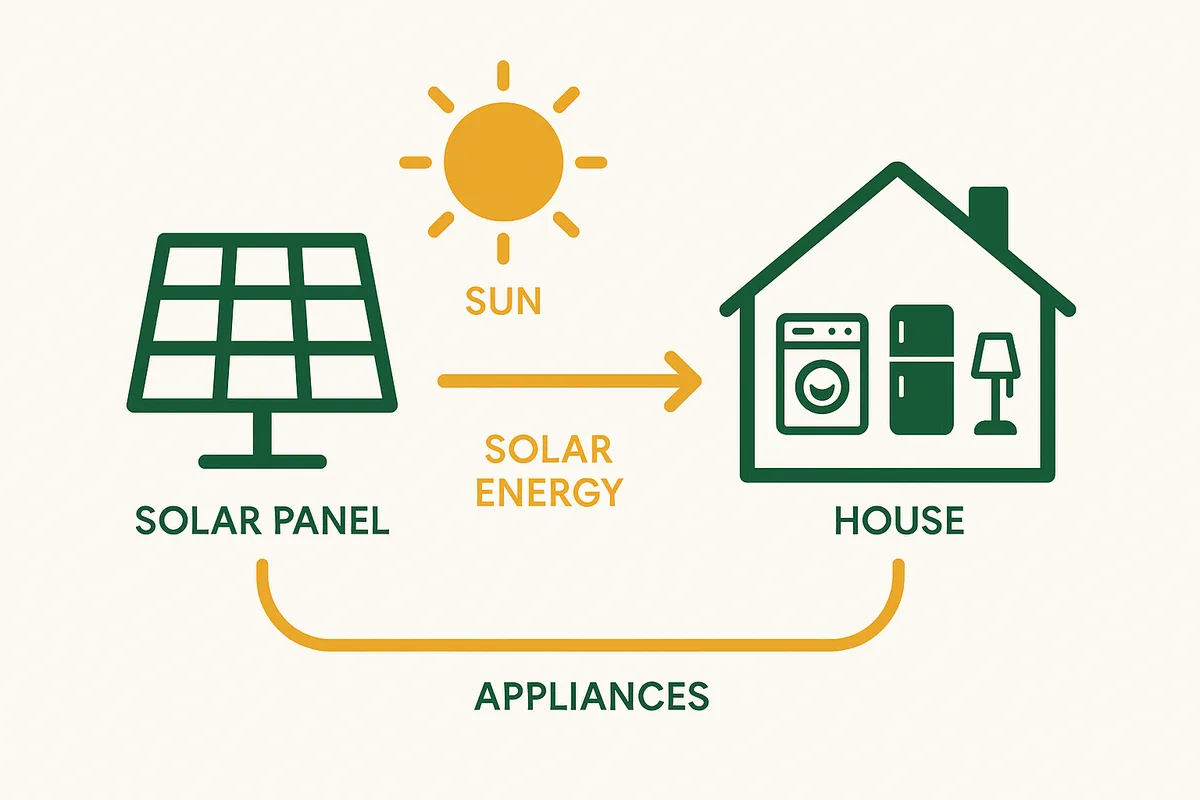
The Better Solution: Solar + Heat Pump
If you currently heat with direct electric (storage heaters, panel heaters, or electric boiler), the most impactful upgrade is:
Solar panels + air source heat pump:
- A heat pump converts 1 kWh of electricity into 3–4 kWh of heat (COP 3–4)
- This means your solar panels effectively produce 3–4x more heating than direct electric
- In December, 100 kWh of solar powers 300–400 kWh of heat from the pump
- The £7,500 BUS grant reduces heat pump cost significantly
Direct electric heating vs heat pump comparison:
| System | Annual Heating Cost | with Solar Reduction |
|---|---|---|
| Direct electric (storage heaters) | £2,000–£2,500 | £1,700–£2,200 |
| Direct electric + solar diverter | £1,800–£2,300 | £1,500–£2,000 |
| Air source heat pump (grid) | £600–£900 | N/A |
| Air source heat pump + solar | £300–£600 | Best option |
Solar + heat pump costs £300–£600/year for heating vs £2,000–£2,500 for direct electric. The savings are transformational.
Source: Energy Saving Trust; BUS grant terms; Ofgem price cap July-September 2026.
What If You Cannot Get a Heat Pump?
If a heat pump is not feasible (listed building, space constraints, budget), here is how to maximise solar for electric heating:
1. Install the largest solar system your roof allows — more panels = more winter generation 2. Add a battery (10kWh+) — store daytime solar for evening heating 3. Install a solar diverter — free hot water from surplus solar 4. Use time-of-use tariffs — charge battery at 7.5p/kWh overnight (Octopus Go), use for heating during expensive peak hours 5. Improve insulation — reduce heat loss so less electricity is needed. Loft insulation, draught-proofing, and double glazing have the biggest impact. 6. Use infrared panels where possible — they heat objects directly (more efficient than convection heaters for spot heating)
The combination of solar + battery + smart tariff + insulation can reduce electric heating costs by 30–50%, even without a heat pump.
Source: Energy Saving Trust; installer recommendations.
Frequently Asked Questions
Related guides
Related: Home Heating Systems
Solar panels are most powerful when combined with an efficient heating system. Heat pumps use solar-generated electricity to heat your home at 300-400% efficiency — making them the ideal partner for solar.
Learn more about how air source heat pumps work alongside solar panels.
From our sister site Home Heat Pump Guide
You might also like
Ready to see what solar could save you?
Get free, no-obligation quotes from MCS-certified installers in your area.
Get Free QuotesFree, no obligation. Takes 2 minutes.