How to Read a Solar Panel Quote Like a Pro

What would this actually cost at your home?
Installed prices vary widely by roof, access and region. Get an installed price for your property from MCS-certified installers.
Get an Installed PriceFree, no obligation. Takes about 2 minutes.
What should I look for in a solar panel quote?
A good solar quote should clearly state: system size (kWp), panel brand and model (with efficiency), inverter type, total price (0% VAT for residential), itemised cost breakdown, expected annual generation (kWh), estimated annual savings (£), warranty terms (panel, inverter, workmanship), MCS certification confirmation, and installation timeline. If any of these are missing, ask for them before signing. Comparing 3+ quotes on these criteria ensures you get the best value.
Line-by-Line Guide to Your Solar Quote
1. System Size (kWp)
What it says: '4.0 kWp system' or '10 × 400W panels = 4.0 kWp'
What to check: - Does the kWp match your needs? (3kW for small homes, 4kW for average, 5–6kW for larger homes) - Is the number of panels specified? (kWp ÷ panel wattage = number of panels) - Does it match what the surveyor discussed during the site visit?
Red flag: Quote does not specify kWp or number of panels — just says 'solar panel system'. Demand specifics.
2. Panel Specification
What it says: 'JA Solar DeepBlue 4.0, 425W, 21.8% efficiency'
What to check: - Is it a recognised brand? (JA Solar, Trina, Longi, Canadian Solar, REC, SunPower) - What is the efficiency? (20%+ is good for monocrystalline) - What is the product warranty? (25 years is standard) - What is the performance warranty? (80%+ at 25 years is standard)
Red flag: Unknown brand, no model number, efficiency below 18%, product warranty under 12 years.
3. Inverter Specification
What it says: 'GivEnergy 3.6kW Hybrid Inverter' or 'Solis 4kW String Inverter'
What to check: - String inverter, hybrid, or micro-inverters? (Hybrid is best if you might want a battery) - Is it a recognised brand? (GivEnergy, SolarEdge, Enphase, Fronius, Solis, Huawei) - What is the warranty? (5–10 years standard. Can it be extended?) - Does the inverter capacity match the panel capacity? (Slight undersizing is normal: 3.6kW inverter for 4kW panels is fine)
Red flag: Unknown inverter brand, no model specified, warranty under 5 years with no extension option.
4. Price and Cost Breakdown
What it says: Total: £6,750 (0% VAT)
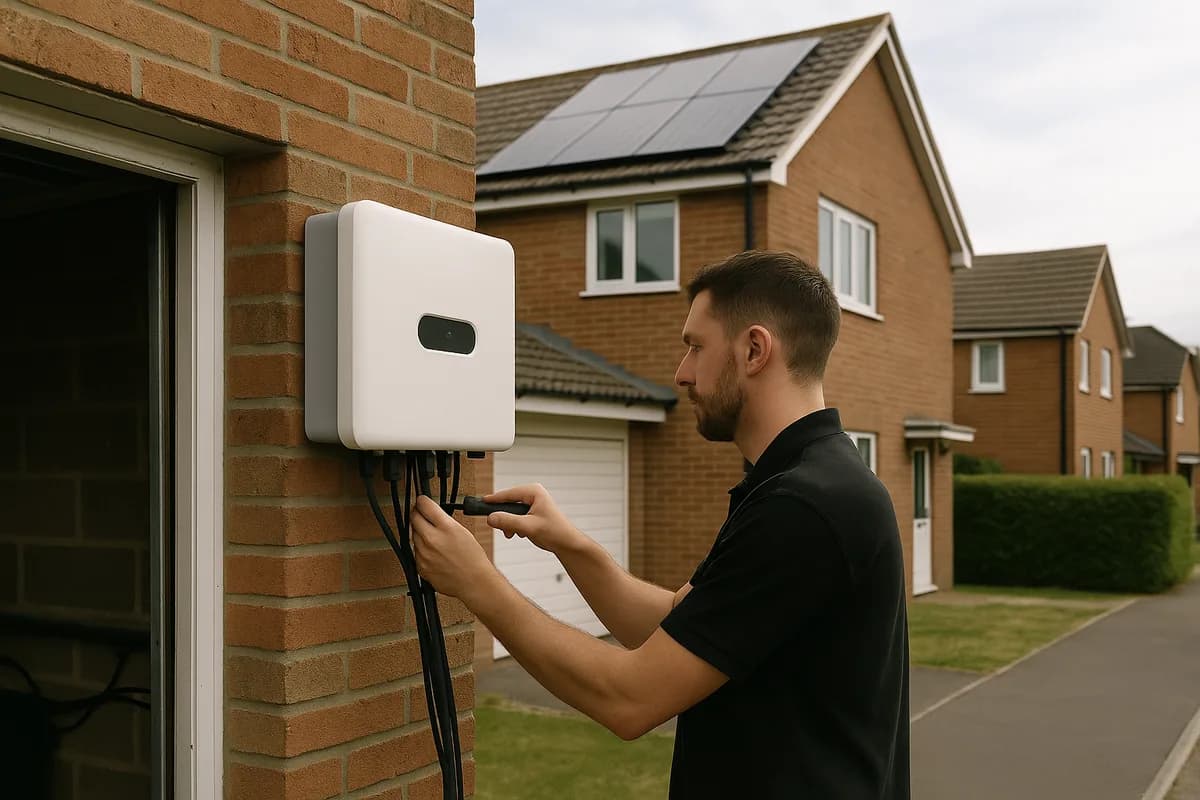
What to check: - Is the total inclusive of EVERYTHING? (panels, inverter, mounting, wiring, scaffolding, labour, certification) - Is VAT shown as 0%? (Residential should be 0%. If 20%, question it.) - Is there an itemised breakdown? (panels, inverter, mounting, scaffolding, labour, overheads) - Are there any exclusions? ('Scaffolding not included', 'DNO notification charged separately')
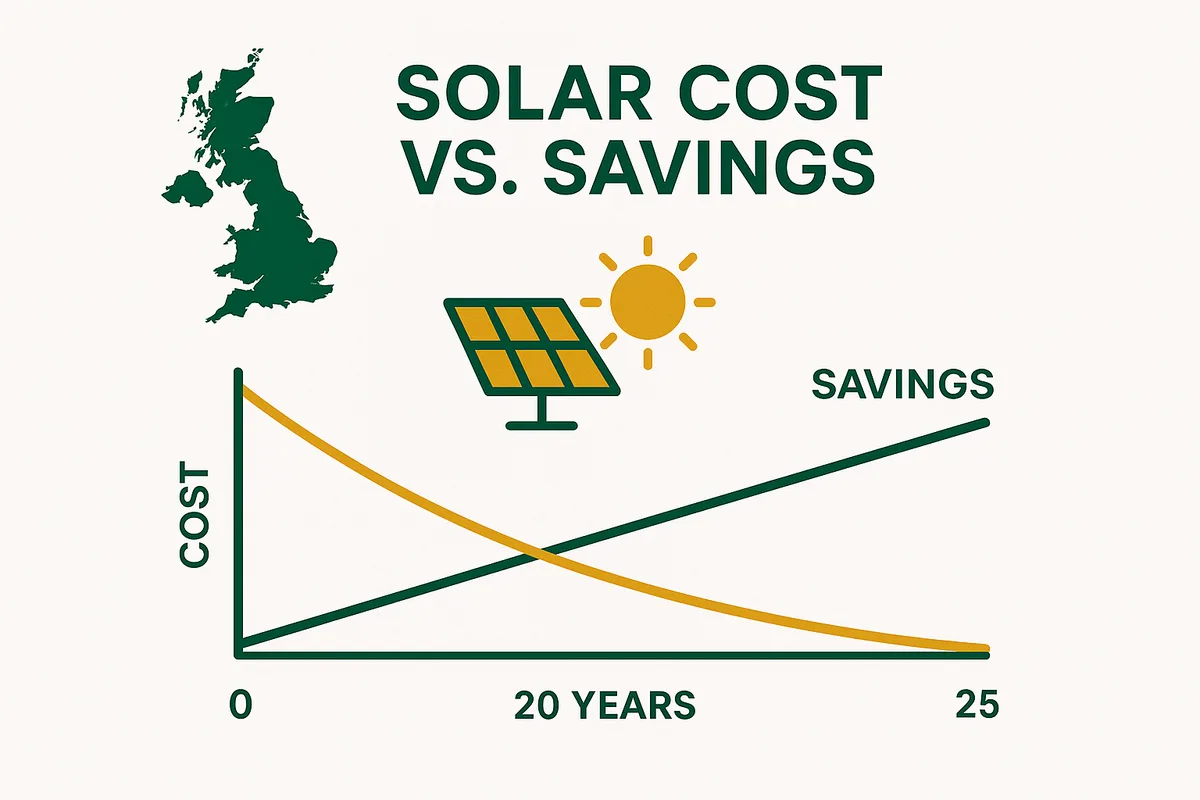
Red flag: Single total with no breakdown. 20% VAT on residential. Hidden extras ('scaffolding £500 additional'). Price significantly above or below £1,300–£1,800 per kWp.
5. Expected Performance

What would this actually cost at your home?
Installed prices vary widely by roof, access and region. Get an installed price for your property from MCS-certified installers.
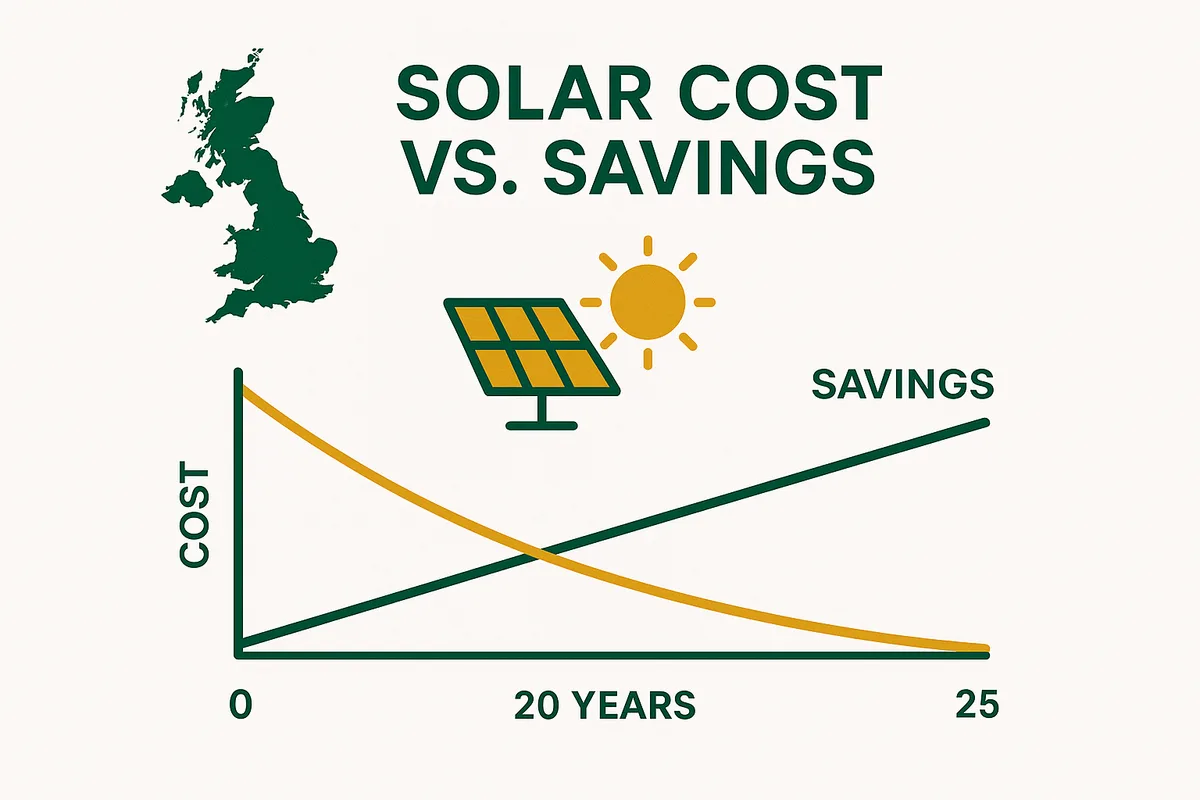
Get an Installed PriceWhat it says: 'Expected annual generation: 4,100 kWh. Estimated annual savings: £594.'
What to check: - Is the kWh estimate realistic? (multiply kWp × 1,000 for a south-facing UK system) - What assumptions are used? (electricity rate, self-consumption %, SEG rate) - Are the assumptions stated? (good quotes show their working) - Does the savings estimate match your actual electricity bill?
Red flag: Savings claims above £1,200/year for a 4kW system. No assumptions stated. Generation estimate significantly above kWp × 1,050 for south-facing.
6. Warranty Terms
What it says: - 'Panel product warranty: 25 years' - 'Panel performance warranty: 84.8% at 25 years' - 'Inverter warranty: 5 years (extendable to 10 years for £200)' - 'Installer workmanship warranty: 10 years (Insurance-Backed Guarantee included)'
What to check: - Panel product warranty: 25 years minimum - Panel performance warranty: 80%+ at 25 years - Inverter warranty: 5 years minimum (consider extending to 10) - Workmanship warranty: 5 years minimum (10 is better) - Insurance-Backed Guarantee (IBG): protects you if the installer ceases trading
Red flag: Panel warranty under 12 years. No performance warranty specified. Inverter warranty under 5 years. No IBG. Vague warranty language ('guaranteed for the life of the product').
7. What Is Included
A complete quote should confirm these are INCLUDED:
- Scaffolding erection and removal
- All wiring, connectors, and isolator switches
- DNO notification (G98 or G99)
- MCS certification (certificate provided)
- Electrical Installation Certificate (Part P compliance)
- System commissioning and testing
- WiFi monitoring setup
- Handover documentation (all warranties, user guides)
If ANY of these are listed as 'additional' or 'not included', factor the extra cost into your comparison. Some quotes appear cheaper but exclude scaffolding (£200–£500) or DNO notification.
Source: MCS consumer guidance; quote comparison methodology.
8. Timeline
What it says: 'Installation within 3–4 weeks of order confirmation'
What to check: - Is the timeline realistic? (3–6 weeks is typical) - Does it account for G99 notification? (add 2 weeks for systems over 3.68kW) - When does the quote expire? (30–90 days is standard) - What is the deposit? (10–25% is normal. Avoid paying 100% upfront.)
Red flag: 'Install next week' (too fast — may skip proper process). Quote valid for only 7 days (pressure tactic). 50%+ deposit required upfront.
Quick Comparison Checklist
Use this when comparing 3+ quotes side by side:
- Total price (like-for-like specification)
- Price per kWp (£1,300–£1,800 is the UK fair range)
- Panel brand + efficiency + warranty
- Inverter brand + type (string/hybrid/micro) + warranty
- Expected kWh/year (realistic?)
- Estimated savings/year (realistic?)
- What is included vs excluded
- Installer reviews (Trustpilot + Google, 10+ reviews minimum)
- Insurance-Backed Guarantee (yes/no)
- Timeline and deposit terms
Frequently Asked Questions
Related guides
Related: Home Heating Systems
Solar panels are most powerful when combined with an efficient heating system. Heat pumps use solar-generated electricity to heat your home at 300-400% efficiency — making them the ideal partner for solar.
Heat pumps use electricity at 300-400% efficiency, making them ideal partners for solar.
A heat pump converts 1kWh of electricity into 3-4kWh of heat.
Heat pump installation typically takes 2-3 days and is best planned alongside solar.
From our sister site Home Heat Pump Guide
You might also like
What would this actually cost at your home?
Installed prices vary widely by roof, access and region. Get an installed price for your property from MCS-certified installers.
Get an Installed PriceFree, no obligation. Takes about 2 minutes.