Solar Panel Scams UK: How to Spot & Avoid Them
Ready to see what solar could save you?
Get free, no-obligation quotes from MCS-certified installers in your area.
Get Free QuotesFree, no obligation. Takes 2 minutes.
What are the common solar panel scams in the UK?
The most common solar panel scams in the UK are: pressure selling with 'today only' discounts, fake government grant schemes, unrealistic savings claims, unqualified installers posing as MCS-certified, and rent-a-roof schemes with unfavourable terms. Protect yourself by always checking MCS certification, getting 3 quotes, and never signing on the doorstep.
The 8 Most Common Solar Scams
1. Pressure Sales ('Today Only' Discounts)
How it works: A salesperson visits your home (often uninvited) and offers a heavily discounted price that is only available 'if you sign today.' They create urgency to prevent you from comparing quotes or doing research.
Red flags: - Uninvited door-to-door sales - 'Today only' or 'limited offer' pricing - Refuses to leave a written quote for you to consider - Discourages you from getting other quotes - High-pressure closing tactics
Protection: Under the Consumer Contracts Regulations 2013, you have a 14-day cooling-off period for any contract signed at your home. No legitimate installer pressures you to sign immediately. Always get at least 3 written quotes.
Source: Citizens Advice; Consumer Rights Act 2015.
2. Fake Government Grants
How it works: Companies advertise 'free solar panels through government grants' or claim you qualify for a special subsidy that covers most of the cost. In reality, no such grant exists for most homeowners.
The truth: There is no general government grant for solar panels in the UK. What does exist: - 0% VAT on installation (saves £1,000–£1,600 vs 20% rate) - Smart Export Guarantee (earn 4–15p/kWh for surplus) - ECO4 scheme (only for low-income or vulnerable households in qualifying properties)
If someone tells you the government will pay for your solar panels, they are either lying or signing you up for a lease agreement where you do not own the panels.
Source: Ofgem; UK Government energy schemes.
3. Unrealistic Savings Claims
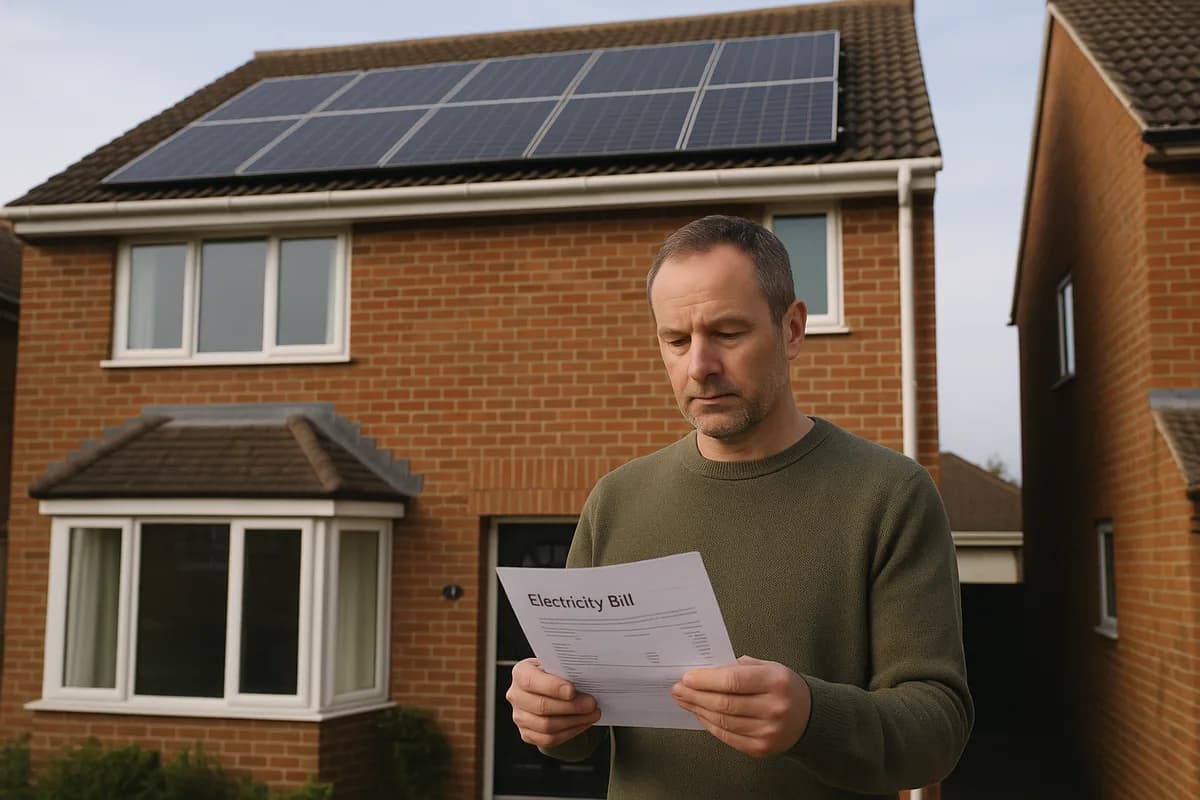
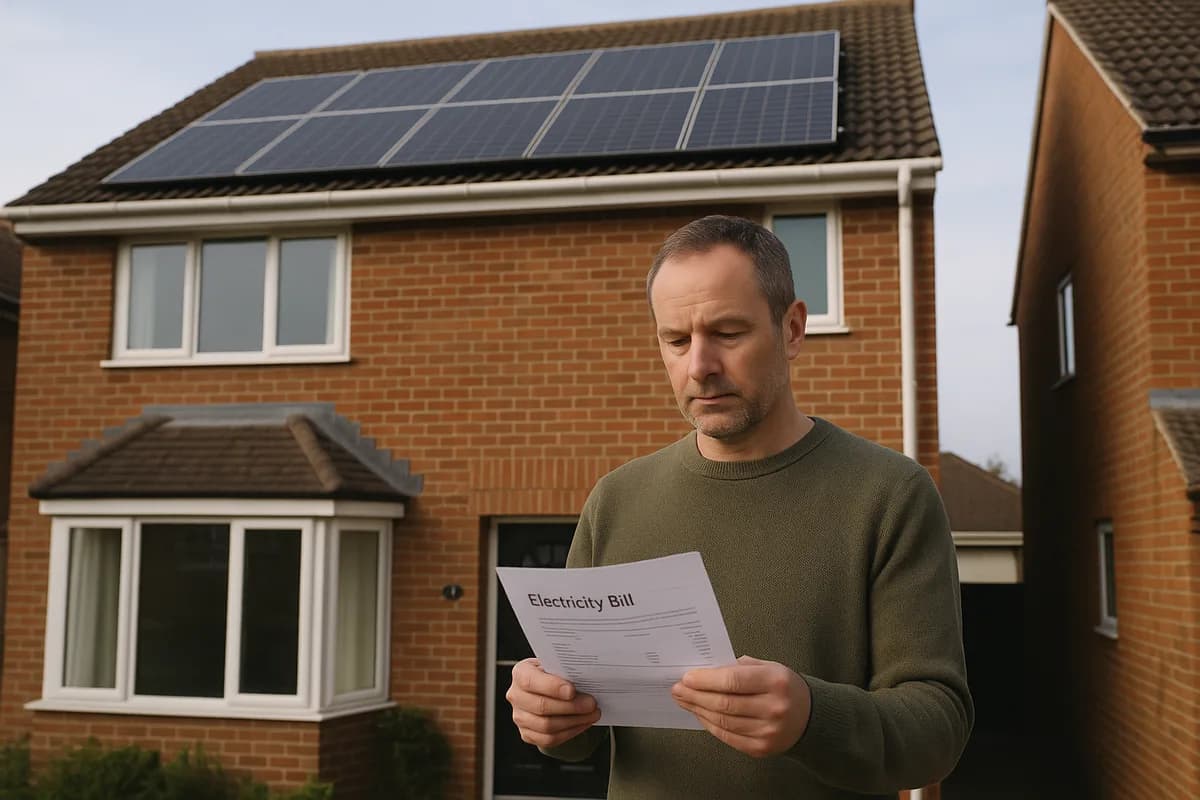
How it works: A company claims your solar panels will 'eliminate your electricity bill entirely' or save you '£2,000+ per year' on a standard home.
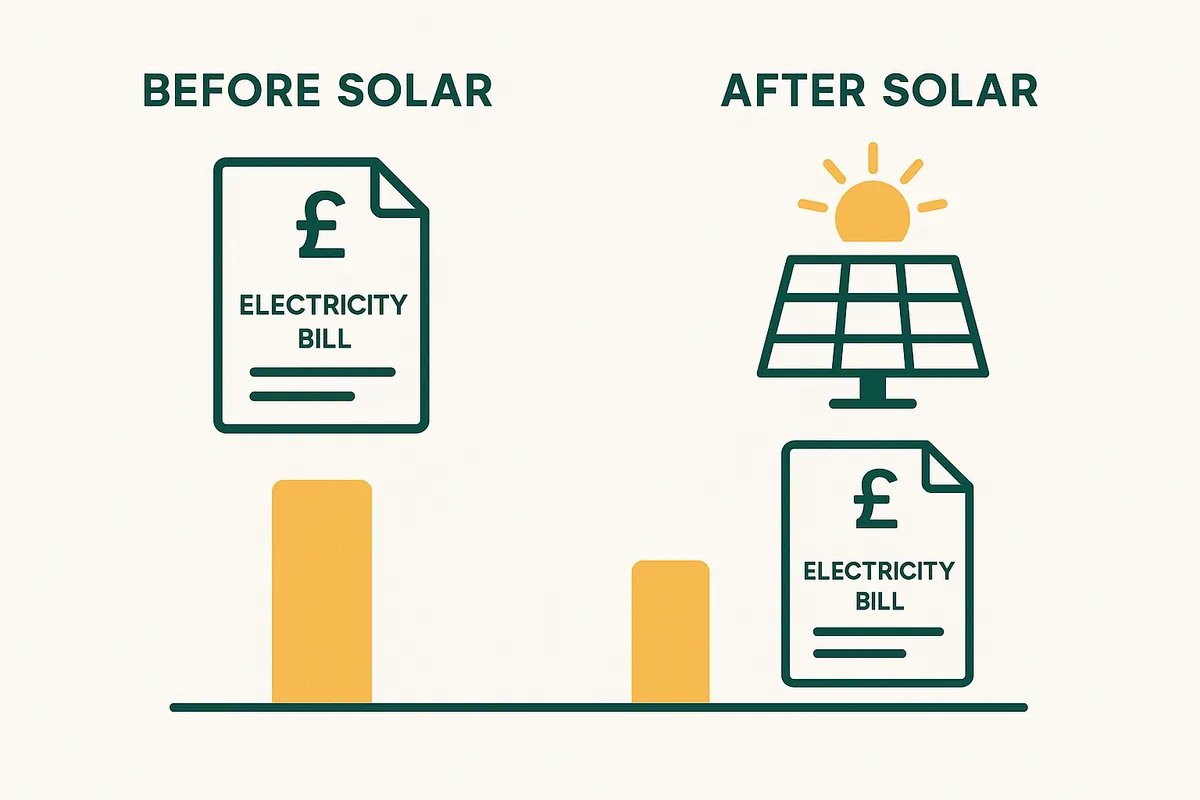
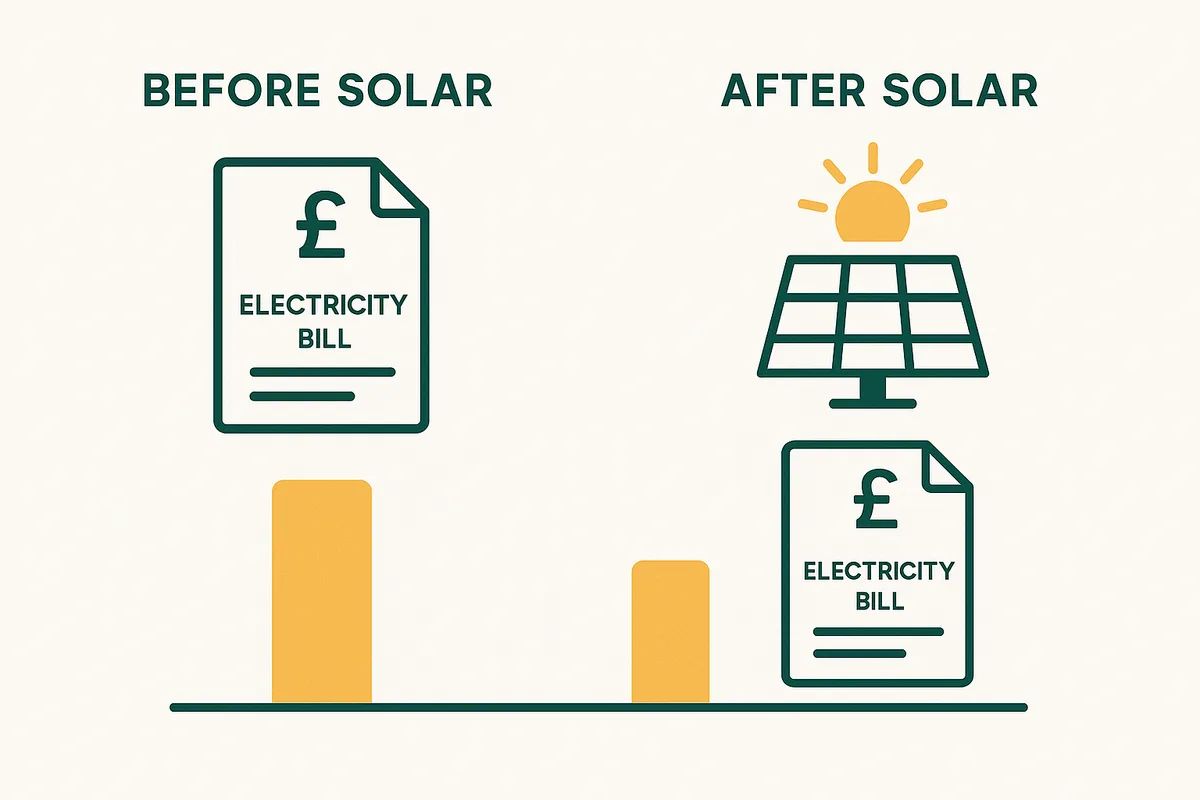
The reality: - A 4kW system saves £580–£820/year (depending on battery) - No residential system eliminates electricity bills completely (you still use grid at night/winter) - Claims of £1,500–£2,000+ savings on a standard home are inflated
Protection: Use our calculator to estimate realistic savings. Compare any company's claims against independent sources (Energy Saving Trust, Ofgem). If the numbers seem too good to be true, they are.
4. Unqualified 'MCS-Certified' Installers
How it works: A company claims to be MCS-certified but is not. Without genuine certification - MCS or an accredited equivalent - you cannot claim SEG payments, and your installation may not meet safety standards.
Protection: Verify MCS certification at mcscertified.com before signing anything. Search by company name or certificate number. The MCS register is public and free to check.
Also check: - Company registration on Companies House - Reviews on Trustpilot, Google, and Which? Trusted Traders - Whether they carry public liability insurance - Whether they offer an Insurance-Backed Guarantee
Ready to see what solar could save you?
Get free, no-obligation quotes from MCS-certified installers in your area.
Get Free Quotes5. Rent-a-Roof / Free Panel Schemes
How it works: A company installs panels on your roof for 'free' but retains ownership. They earn the electricity income; you get some free daytime electricity. The contract lasts 20–25 years.
Problems: - You do not own the panels - You receive a fraction of the financial benefit - The contract transfers to any future buyer of your home - Some mortgage lenders will not lend on properties with roof leases - Removing the panels early incurs penalties
Better option: Buy panels outright (or on 0% finance from a reputable installer). You keep 100% of the savings and SEG income. The payback period is 8–12 years, after which everything is profit.
Source: Citizens Advice; UK Finance mortgage guidance.
6. Overpriced Systems (Hidden Margins)
How it works: A company quotes £12,000–£15,000 for a standard 4kW system that should cost £5,500–£8,000. They may use premium branding, fancy presentations, or celebrity endorsements to justify the inflated price.
Protection: A 4kW system in 2026 should cost £5,500–£8,000 installed (0% VAT). Get at least 3 quotes from different MCS-certified installers. If any quote is more than 30% above the others, question why.
Source: MCS industry average pricing.
7. Finance Scams (Hidden Interest)
How it works: A company offers 'interest-free' finance but the system price is inflated to cover the finance cost. Or they offer low monthly payments but the total repayable amount far exceeds the cash price.
Protection: - Always compare the finance total cost against the cash price - Check the APR (Annual Percentage Rate) - True 0% interest means total repayable = cash price - If the finance total is higher than the cash price, you are paying hidden interest - Check the finance provider is FCA-regulated
8. 'Smart Export Guarantee' Scams
How it works: A company promises 'high SEG rates' of 20–30p/kWh as part of their sales pitch. In reality, the best fixed SEG rate is around 5–6p/kWh. Variable rates (Octopus Agile/Flux) can briefly reach higher levels, but average much lower.
Protection: Check current SEG rates yourself at your supplier's website. Do not rely on a salesperson's projections. Use conservative SEG rates (4–6p/kWh fixed) in your savings calculations.
How to Protect Yourself
- Always get 3 written quotes from different MCS-certified installers
- Verify MCS certification at mcscertified.com before signing
- Never sign on the doorstep — take time to research and compare
- Use the 14-day cooling-off period if you signed at home
- Check reviews on Trustpilot, Google, and Which? Trusted Traders
- Verify the company is registered on Companies House
- Ask for an Insurance-Backed Guarantee (IBG)
- Use independent calculators (like ours) to check savings claims
- If a grant or subsidy sounds too good to be true, verify with Ofgem or gov.uk directly
- Report suspicious companies to Trading Standards or Action Fraud
Frequently Asked Questions
Related guides
Related: Home Heating Systems
Solar panels are most powerful when combined with an efficient heating system. Heat pumps use solar-generated electricity to heat your home at 300-400% efficiency — making them the ideal partner for solar.
Heat pumps use electricity at 300-400% efficiency, making them ideal partners for solar.
From our sister site Home Heat Pump Guide
You might also like
Ready to see what solar could save you?
Get free, no-obligation quotes from MCS-certified installers in your area.
Get Free QuotesFree, no obligation. Takes 2 minutes.