Solar Panel Degradation: How Much Output Do You Lose?
Find the right system size for your roof
Panel count depends on your electricity use, roof space and direction — not on a rule of thumb. Get a recommended size and what it should cost.
Size My SystemFree calculator. No contact details required to see your result.
How much do solar panels degrade over time?
Solar panels degrade at approximately 0.3–0.5% per year after an initial 2–3% drop in year one. After 25 years, a well-made panel still produces 80–87% of its original output. This means a 4kW system producing 4,000 kWh in year 1 still produces 3,200–3,480 kWh in year 25 — enough to save hundreds of pounds annually. Degradation is factored into every reputable savings estimate.
The Degradation Timeline
Year-by-year output for a 4kW system (1,000 kWh/kWp starting):
| Year | Degradation | Output | % of Original |
|---|---|---|---|
| 0 (new) | — | 4,000 kWh | 100% |
| 1 | –2.5% (initial) | 3,900 kWh | 97.5% |
| 5 | –0.4%/yr | 3,838 kWh | 95.9% |
| 10 | –0.4%/yr | 3,762 kWh | 94.1% |
| 15 | –0.4%/yr | 3,688 kWh | 92.2% |
| 20 | –0.4%/yr | 3,615 kWh | 90.4% |
| 25 | –0.4%/yr | 3,544 kWh | 88.6% |
| 30 | –0.4%/yr | 3,475 kWh | 86.9% |
Key insight: The year 1 to year 25 drop is only 456 kWh — worth approximately £112 per year at current rates. Your panels lose roughly £4.50 per year in output value. This is negligible compared to the £500–£900/year you save.
NREL study data (2,000+ systems worldwide): - Median degradation rate: 0.5% per year - Best panels: 0.2–0.3% per year - Worst panels: 0.7–0.8% per year - Panels from reputable manufacturers consistently fall in the 0.3–0.5% range
Source: National Renewable Energy Laboratory (NREL) PV degradation meta-study; IEC 61215 testing standards.
What Causes Degradation?
Solar panel degradation has several causes:
1. Light-Induced Degradation (LID) — Year 1 only: - Occurs in the first 24–72 hours of sun exposure - Causes the initial 2–3% drop - A one-time event — does not recur - Normal and expected for all silicon solar cells
2. UV exposure: - Prolonged UV light causes microscopic changes in the silicon crystal structure - The anti-reflective coating gradually degrades - Responsible for approximately half of the ongoing 0.3–0.5%/year degradation
3. Thermal cycling: - Daily temperature changes cause microscopic expansion and contraction - Over thousands of cycles, this creates hairline micro-cracks in cells - UK's moderate climate causes less thermal cycling than desert environments
4. Moisture ingress: - Trace amounts of moisture can penetrate panel lamination over decades - Causes cell corrosion and reduces electrical conductivity - Quality lamination and edge sealing minimise this
5. Mechanical stress: - Wind loading, snow loads, and vibration cause gradual fatigue - UK wind speeds are well within panel design limits - Not a significant degradation factor for properly installed panels
Source: NREL PV module reliability workshop; IEC 61215/61730 durability testing.
Find the right system size for your roof
Panel count depends on your electricity use, roof space and direction — not on a rule of thumb. Get a recommended size and what it should cost.
Size My System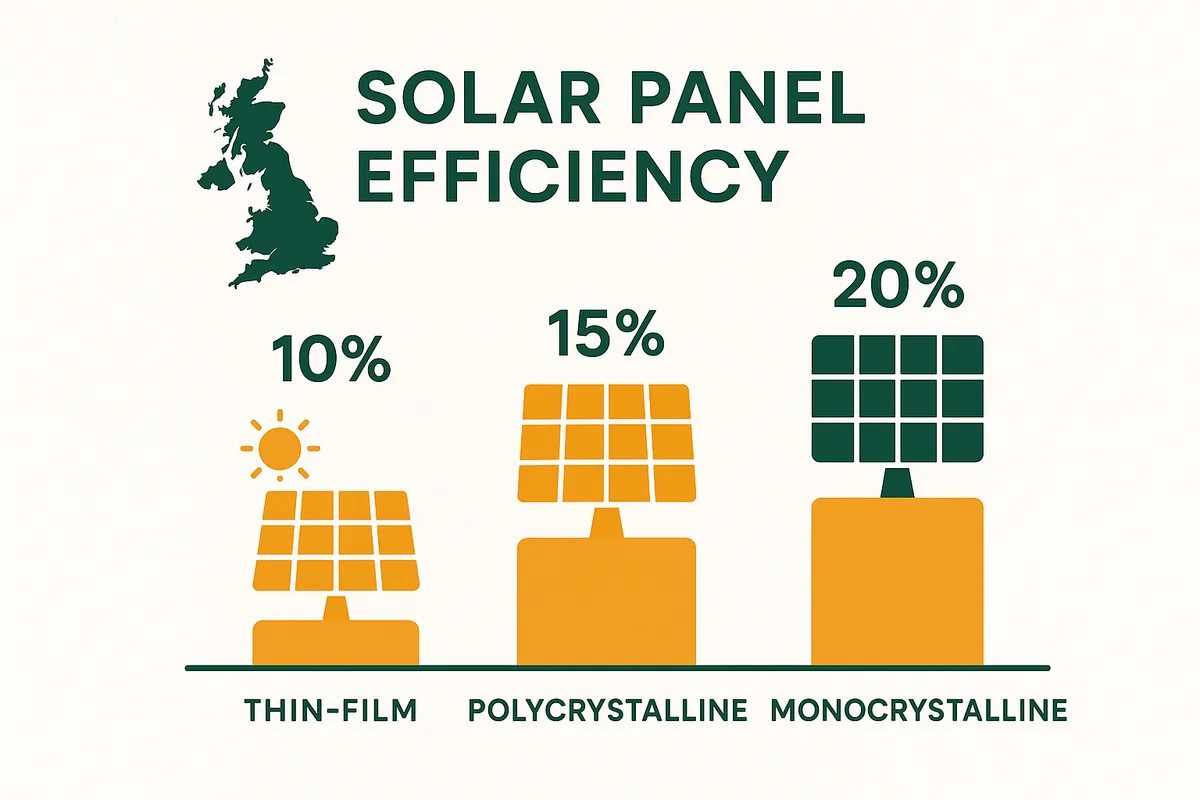
Degradation by Panel Type
Not all panels degrade at the same rate:
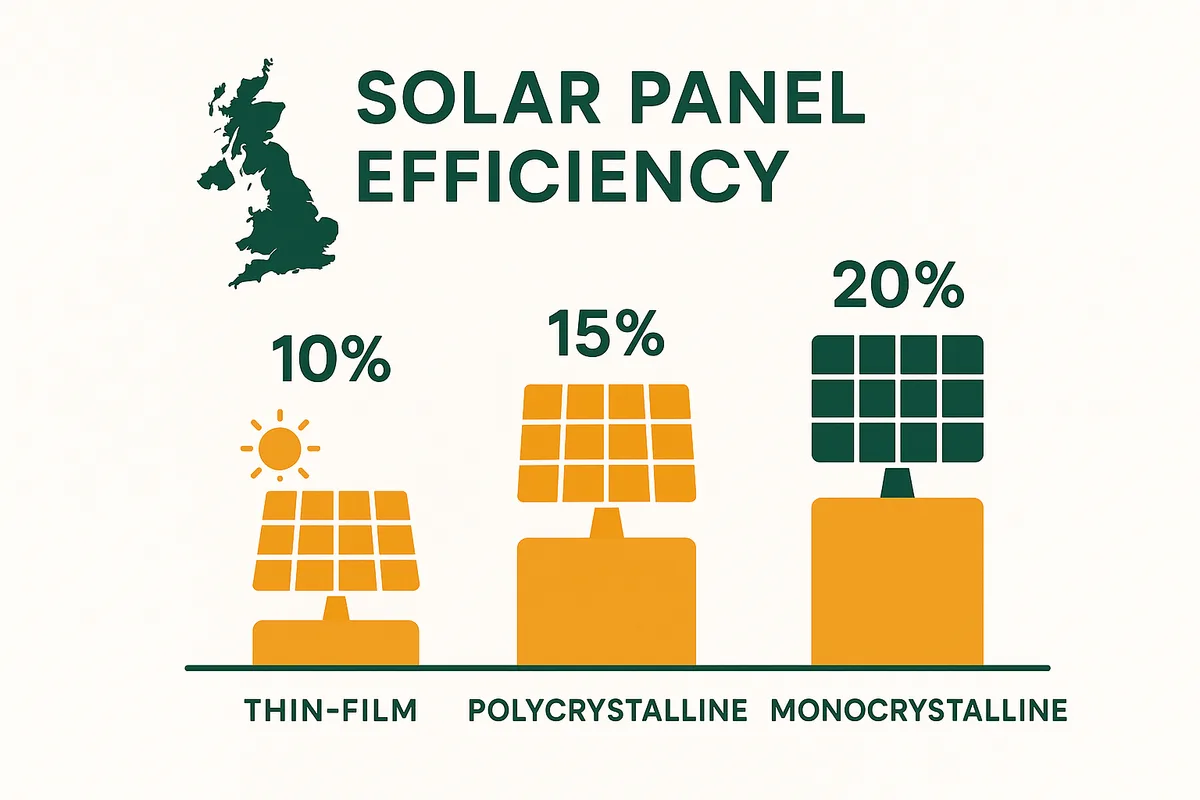
Monocrystalline (PERC/TOPCon): - Degradation: 0.3–0.5% per year - Year 25 output: 85–88% of original - Performance warranty: typically 84–86% at 25 years
Monocrystalline (HJT — heterojunction): - Degradation: 0.25–0.35% per year - Year 25 output: 87–91% of original - Performance warranty: typically 86–90% at 25 years - Lower LID (initial drop is smaller)
Polycrystalline: - Degradation: 0.5–0.7% per year - Year 25 output: 80–83% of original - Performance warranty: typically 80% at 25 years
Thin-film (CdTe/CIGS): - Degradation: 0.5–0.8% per year - Year 25 output: 75–80% of original - Shorter lifespan overall (15–20 years typical)
Premium panels (SunPower Maxeon): - Degradation: 0.2–0.25% per year - Year 25 output: 92%+ of original (industry-leading) - Performance warranty: 92% at 25 years
Source: Manufacturer datasheets; NREL degradation data by technology.
Does Degradation Affect the Financial Case?
Barely. Here is why:
4kW system, 25-year financial summary accounting for degradation:
| Year | Annual Output | Annual Savings | Cumulative Savings |
|---|---|---|---|
| 1 | 3,900 kWh | £580 | £580 |
| 5 | 3,838 kWh | £571 | £2,878 |
| 10 | 3,762 kWh | £560 | £5,706 |
| 15 | 3,688 kWh | £549 | £8,480 |
| 20 | 3,615 kWh | £538 | £11,197 |
| 25 | 3,544 kWh | £527 | £13,855 |
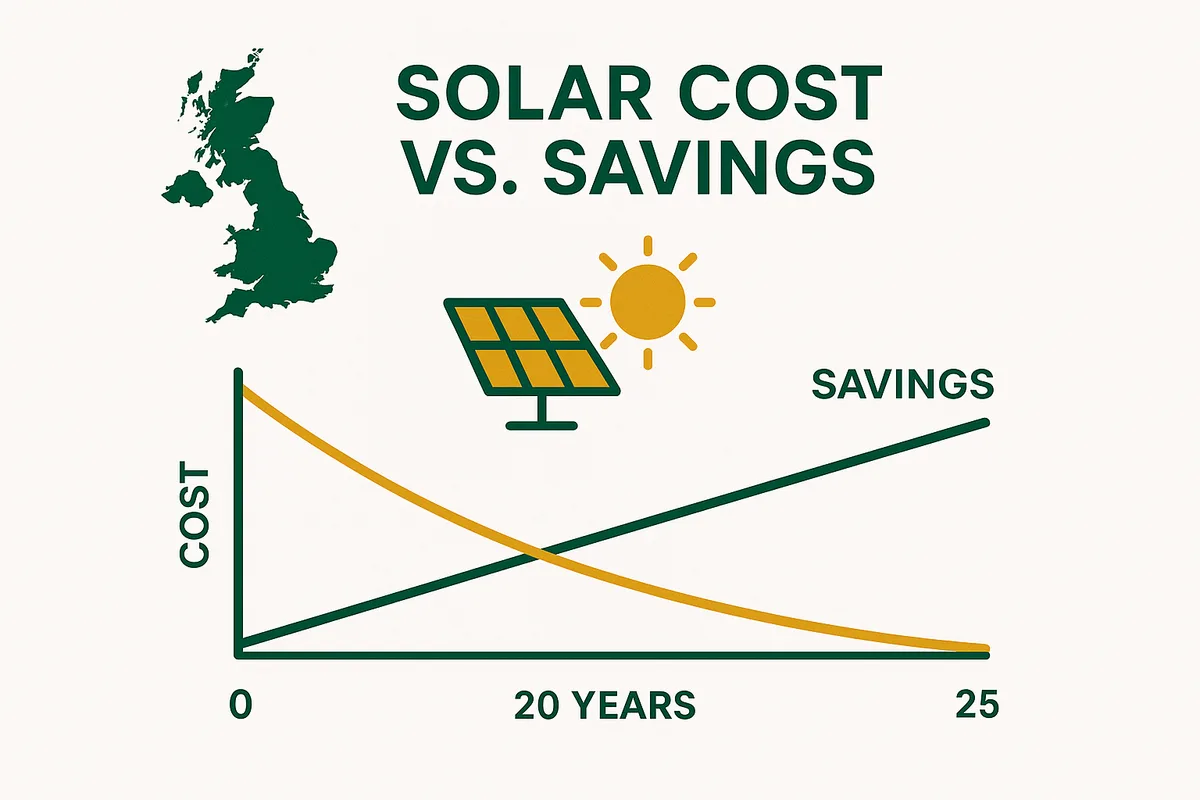
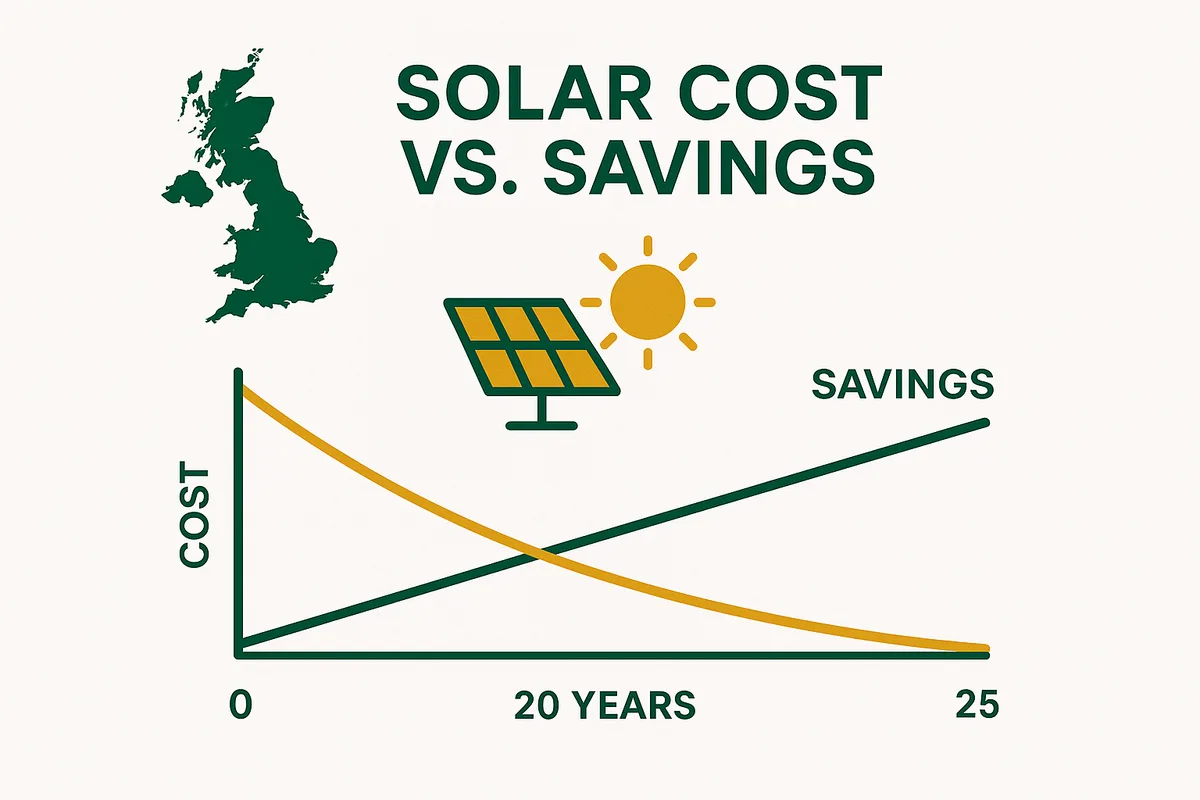
Without degradation: 25-year total would be £14,500 With degradation: 25-year total is £13,855 Difference: £645 over 25 years = £26/year
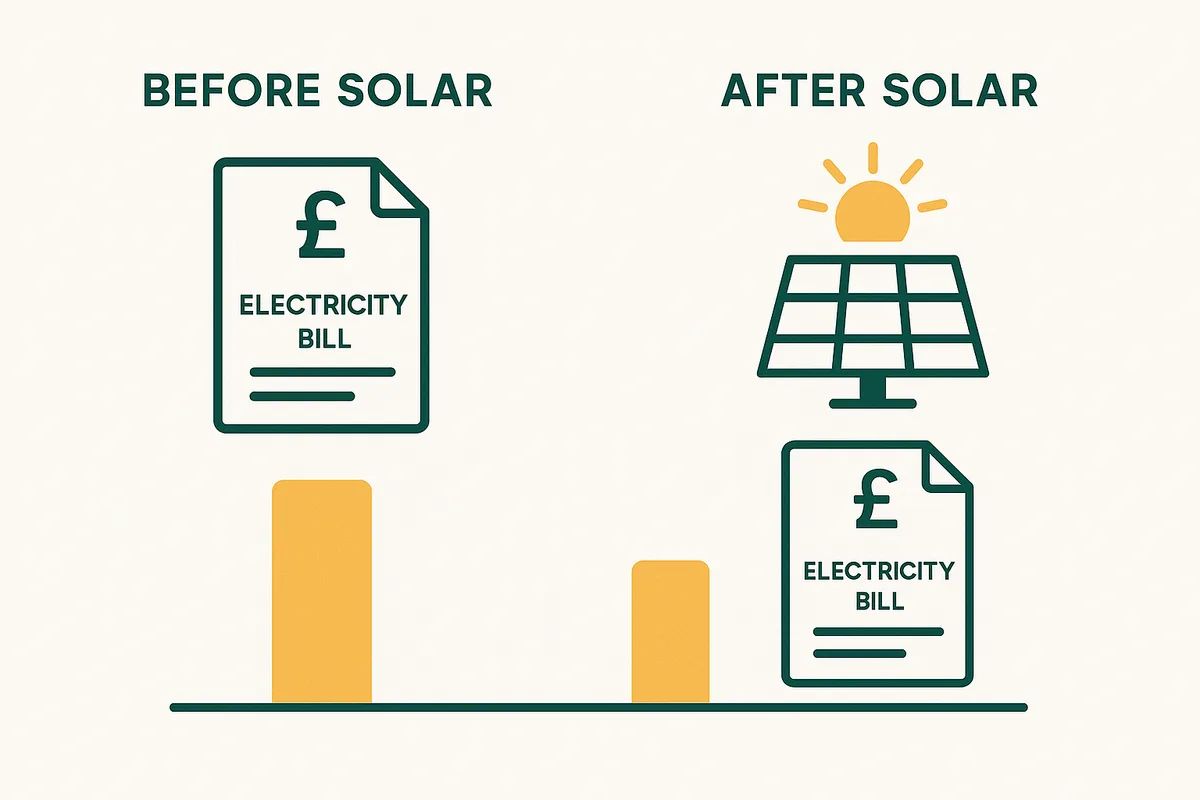
Degradation costs you approximately £26 per year in reduced savings. This is far less than the £500–£600 per year you save. The financial case is overwhelmingly positive despite degradation.
All reputable savings estimates already account for degradation. If our calculator says you will save £14,000 over 25 years, degradation is already included.
Source: Calculations using 0.4% annual degradation; Ofgem price cap July-September 2026 rates.
Frequently Asked Questions
Related guides
Related: Home Heating Systems
Solar panels are most powerful when combined with an efficient heating system. Heat pumps use solar-generated electricity to heat your home at 300-400% efficiency — making them the ideal partner for solar.
Heat pumps use electricity at 300-400% efficiency, making them ideal partners for solar.
From our sister site Home Heat Pump Guide
You might also like
Find the right system size for your roof
Panel count depends on your electricity use, roof space and direction — not on a rule of thumb. Get a recommended size and what it should cost.
Size My SystemFree calculator. No contact details required to see your result.