Do Solar Panels Work at Night?
Ready to see what solar could save you?
Get free, no-obligation quotes from MCS-certified installers in your area.
Get Free QuotesFree, no obligation. Takes 2 minutes.
Do solar panels generate electricity at night?
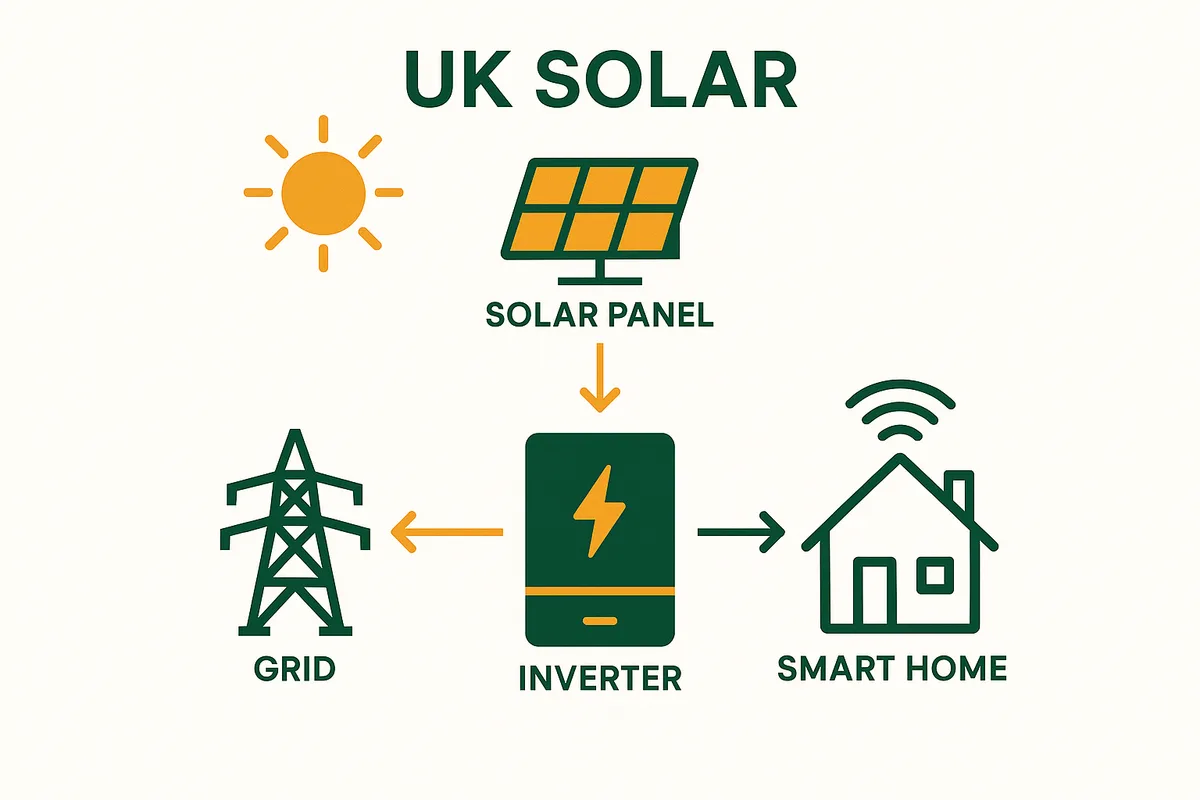
No, solar panels do not work at night. They need light to generate electricity, and there is no usable light after dark. However, a solar battery stores electricity generated during the day for use at night. Without a battery, your home switches to grid electricity after sunset.
Why Solar Panels Stop at Night
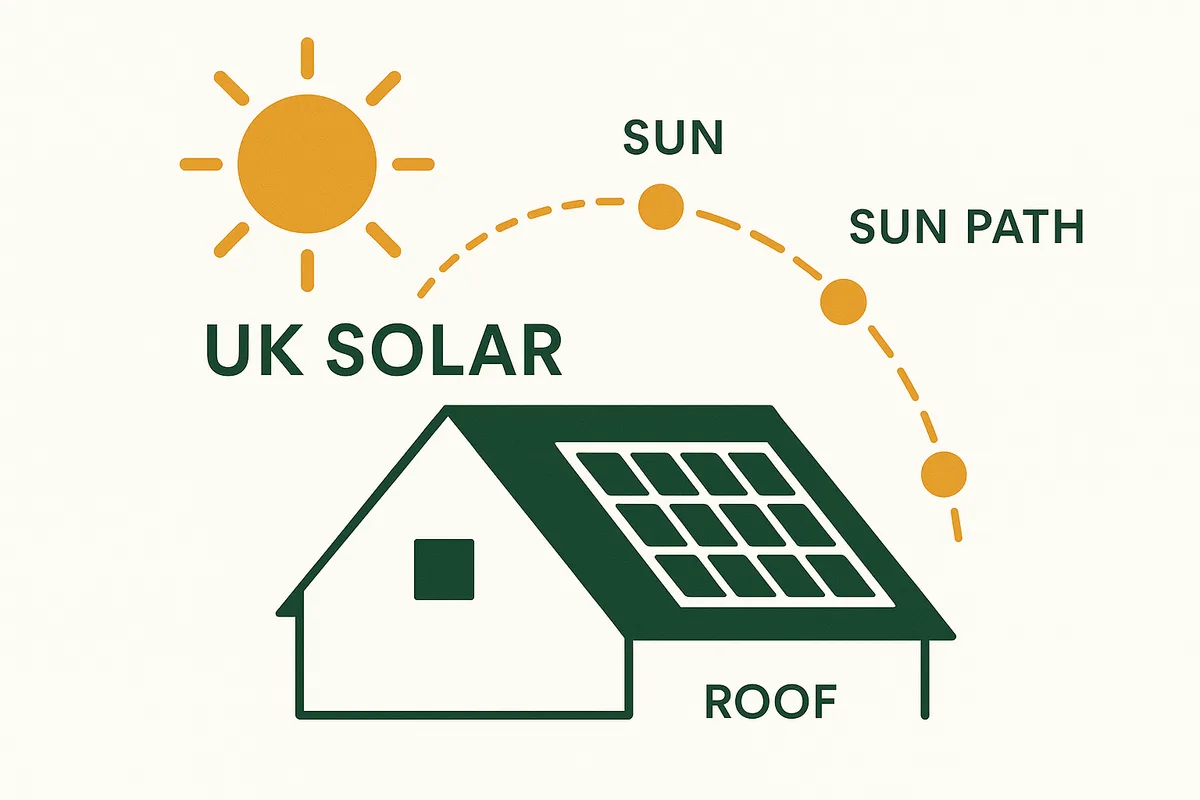
Solar panels work through the photovoltaic effect — photons (light particles) hitting silicon cells knock electrons loose, creating an electrical current. No photons, no current. Moonlight is reflected sunlight, but it is roughly 500,000 times weaker than direct sunlight — far too faint to generate any meaningful electricity.
Your inverter detects when light levels drop below a usable threshold and enters standby mode. It draws a tiny amount of power (1–5 watts) to stay connected but produces zero output. At sunrise, it wakes up and begins generating again.
This is completely normal and expected. Every solar savings estimate accounts for the fact that panels produce nothing for roughly 8–16 hours per day depending on the season.
What Happens to Your Electricity at Night?
Without a battery, your home automatically switches to grid electricity when the panels stop producing. You pay your normal electricity rate (approximately 26.11p/kWh under the Ofgem price cap, July-September 2026) for all overnight consumption.
During the day, your panels reduce or eliminate your grid usage. Any excess solar electricity is exported to the grid and earns you the Smart Export Guarantee (SEG) rate — currently around 4–15p/kWh depending on your supplier and tariff.
The maths without a battery: - Daytime: panels power your home for free + export surplus at 4–15p/kWh - Night: you buy grid electricity at 26.11p/kWh - Typical self-consumption rate: 30–50% (the rest is exported)
The maths with a battery: - Daytime: panels power your home + charge the battery + export any remaining surplus - Night: battery powers your home with stored solar energy - Typical self-consumption rate: 70–85%
Source: Ofgem price cap, July-September 2026; SEG tariff comparison data.
How Solar Batteries Solve the Night Problem
Ready to see what solar could save you?
Get free, no-obligation quotes from MCS-certified installers in your area.
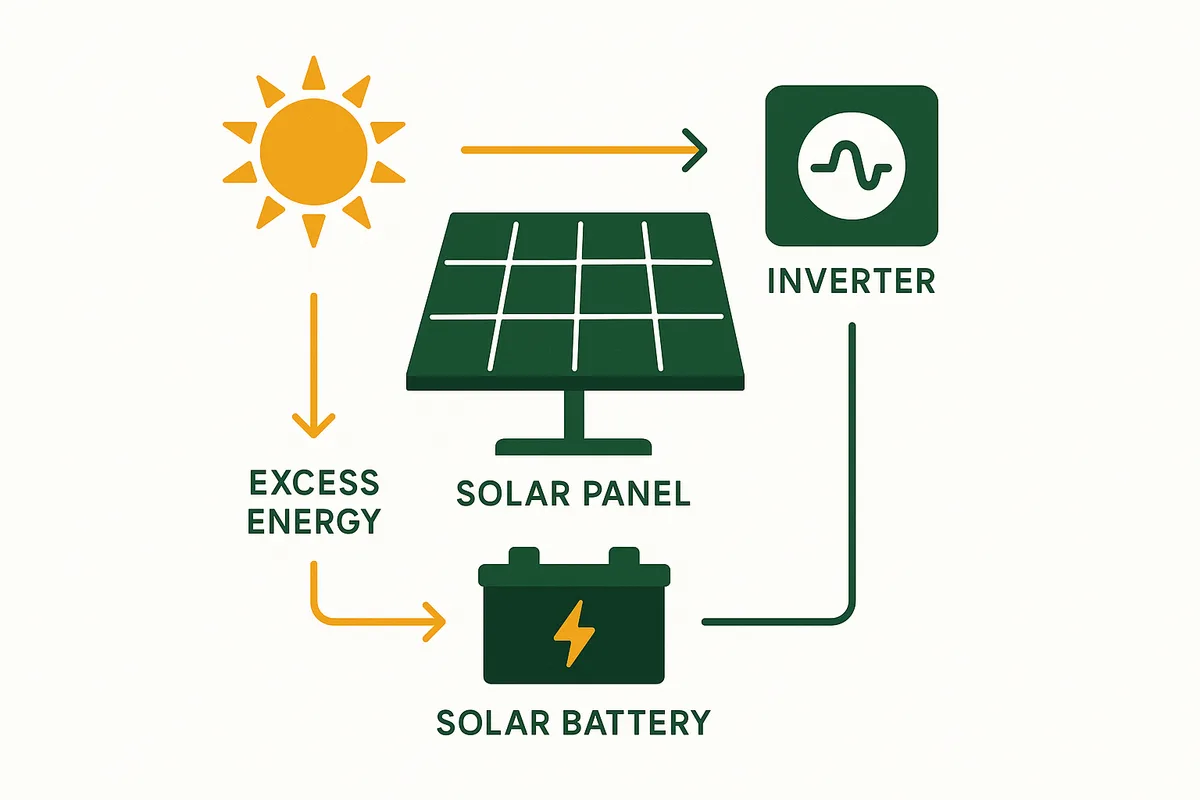
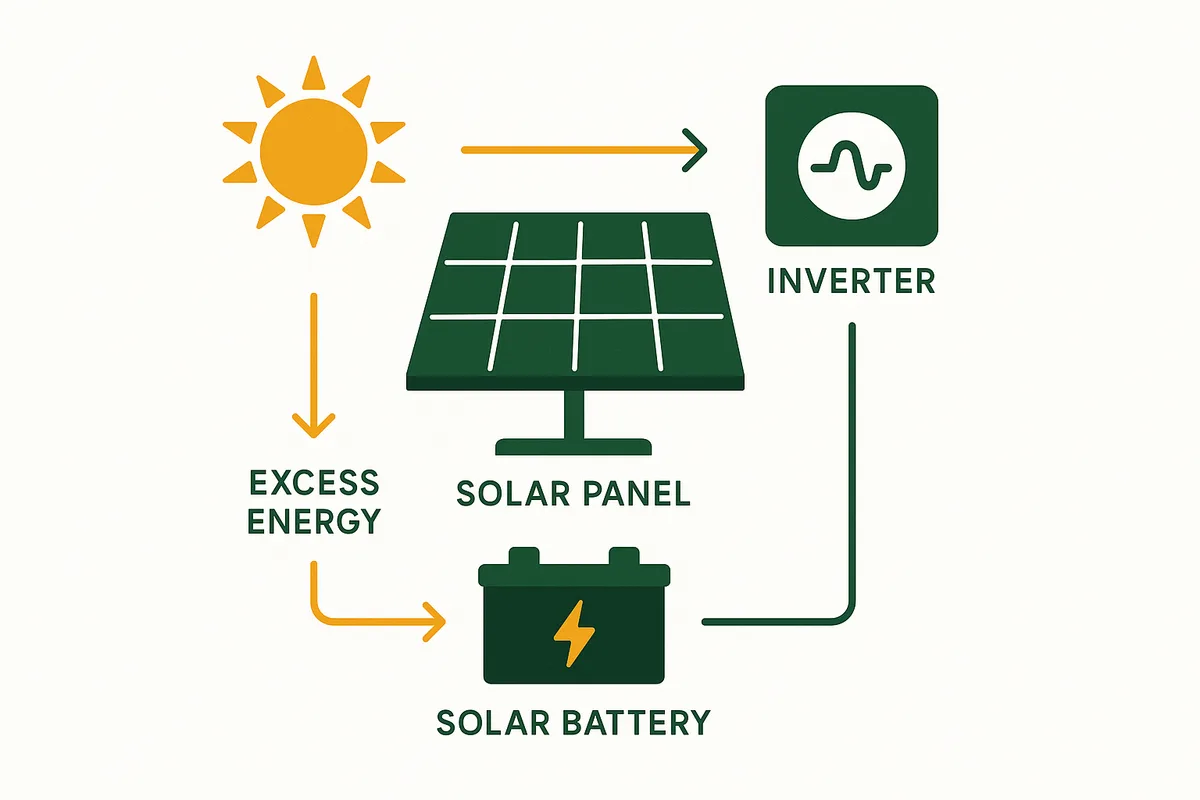
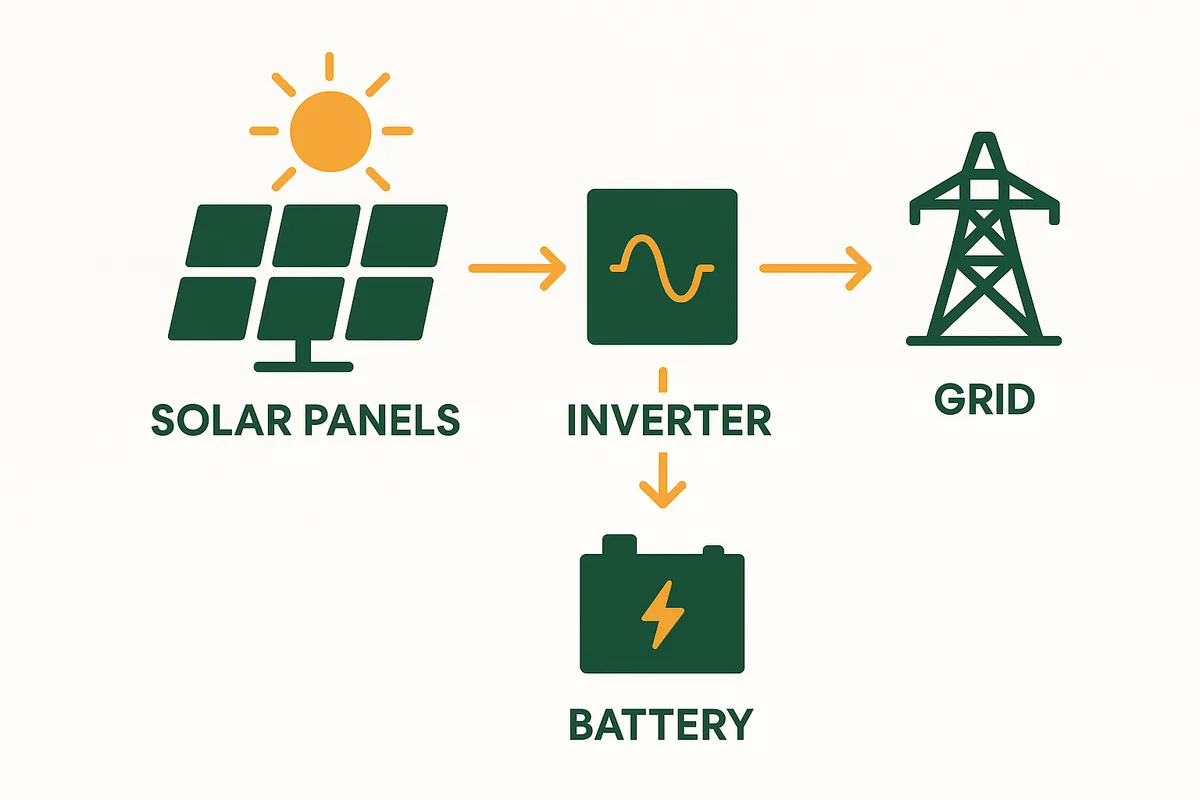
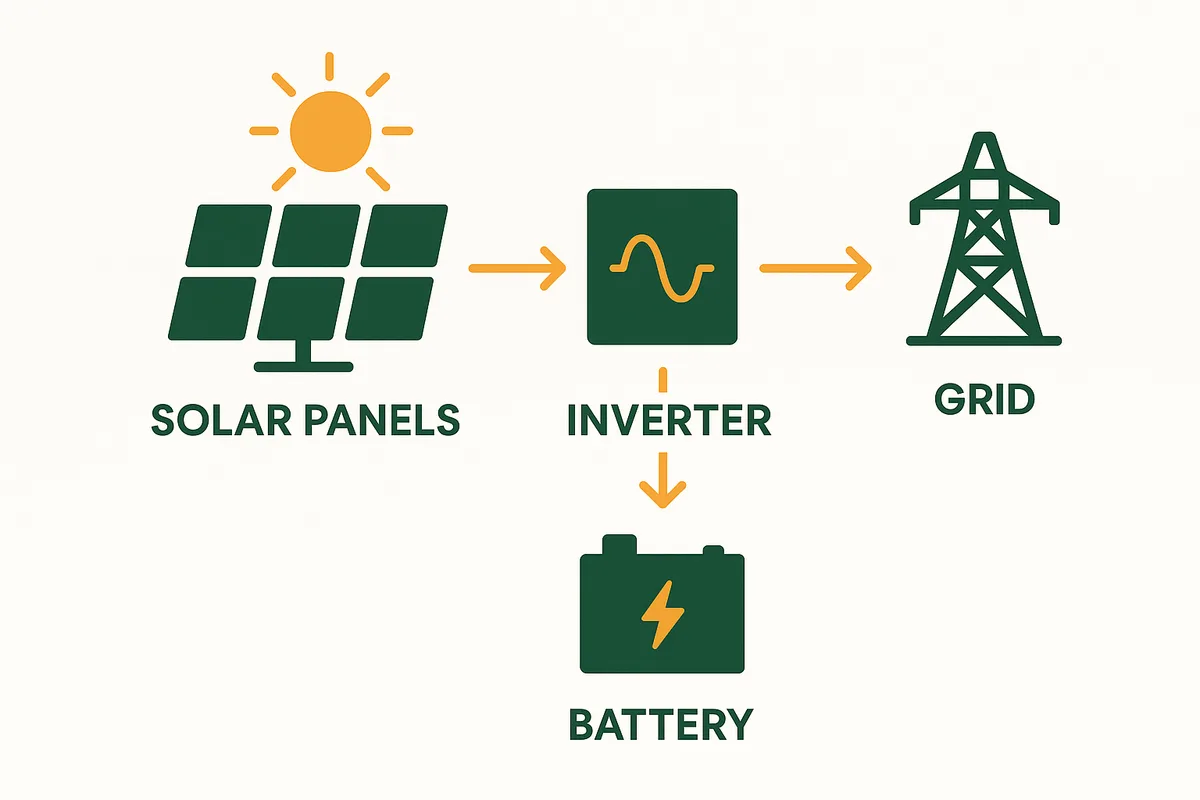
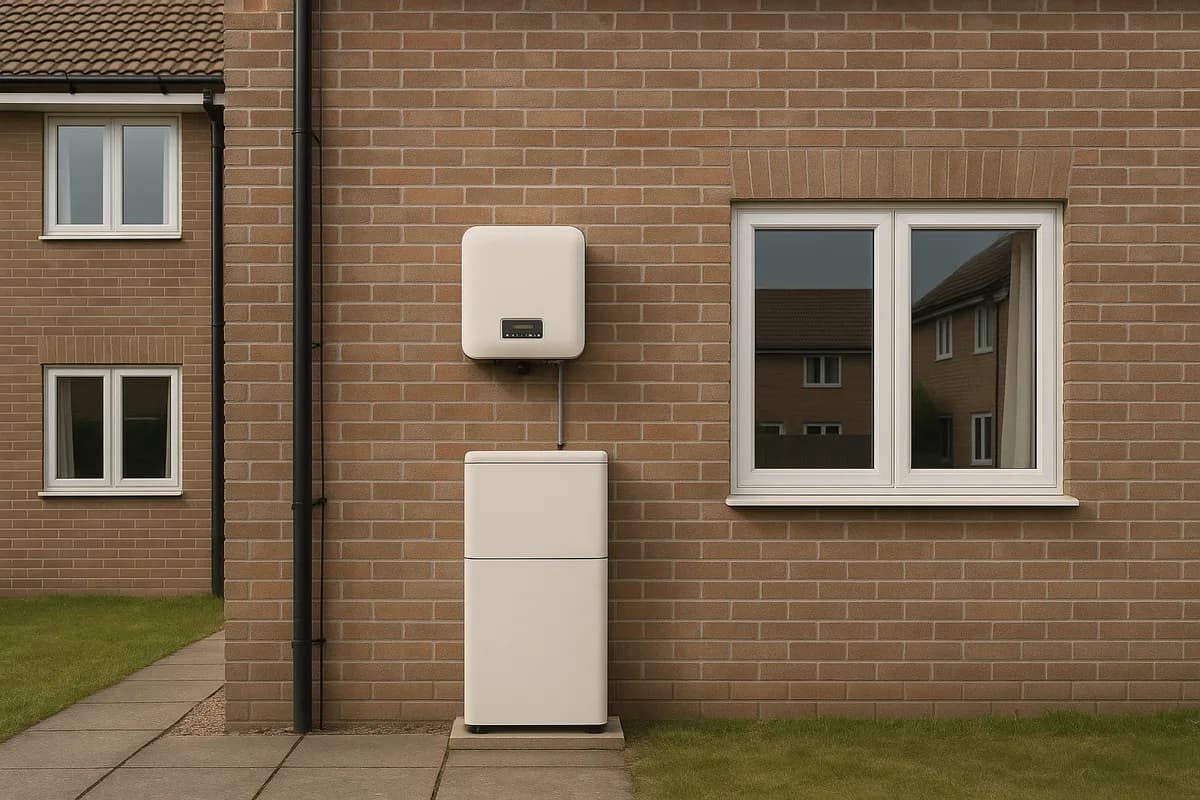
Get Free QuotesA solar battery (typically lithium-ion, 5–13 kWh capacity) stores electricity generated during the day and releases it when your panels stop producing.
How it works: 1. Morning to afternoon: panels generate electricity, powering your home directly 2. When generation exceeds consumption: surplus charges the battery 3. When the battery is full: remaining surplus exports to the grid (earning SEG income) 4. Evening and night: battery discharges to power your home 5. When the battery is empty: home switches to grid electricity
A typical UK household uses 8–10 kWh per day. A 10 kWh battery can cover most or all of your overnight consumption from stored solar energy.
Battery costs: - 5 kWh battery: £2,500–£3,500 installed - 10 kWh battery: £4,000–£6,000 installed - 13.5 kWh (Tesla Powerwall): £5,500–£7,500 installed
Source: MCS installer pricing data 2026.
Is a Battery Worth It Just for Overnight Use?
It depends on your usage pattern and electricity tariff.
A battery is worth it if: - You are home mainly in the evenings (common for working households) - You are on a time-of-use tariff like Octopus Go (cheap overnight rate for charging) - You want to maximise self-consumption and minimise grid dependence - You want backup power during grid outages
A battery may not be worth it if: - You work from home and consume most electricity during the day (panels cover this already) - Your electricity usage is very low (under 6 kWh/day) - You cannot afford the £3,000–£7,000 upfront cost right now
The payback period on a battery alone is typically 8–12 years. Combined with solar panels, the total system payback is 10–14 years with a battery versus 8–11 years without.
Source: Energy Saving Trust battery storage analysis.
What About Time-of-Use Tariffs?
Even without a battery, you can optimise for nighttime costs using smart tariffs:
- Octopus Go: 7.5p/kWh from 00:30–05:30 (vs ~26.11p standard rate) — charge a battery cheaply overnight, use it during the day
- Octopus Flux: pays more for export during peak hours (15:00–19:00) and charges less overnight
- Intelligent Octopus Go: extends the cheap overnight rate to 6 hours and includes smart EV charging
With solar panels + a battery + a time-of-use tariff, you can potentially cover 90%+ of your electricity needs without paying full grid price.
Source: Octopus Energy published tariff rates, March 2026.
Frequently Asked Questions
Related guides
You might also like
Ready to see what solar could save you?
Get free, no-obligation quotes from MCS-certified installers in your area.
Get Free QuotesFree, no obligation. Takes 2 minutes.