What Is a Solar Inverter & Why Does It Matter?
Ready to see what solar could save you?
Get free, no-obligation quotes from MCS-certified installers in your area.
Get Free QuotesFree, no obligation. Takes 2 minutes.
What is a solar inverter?
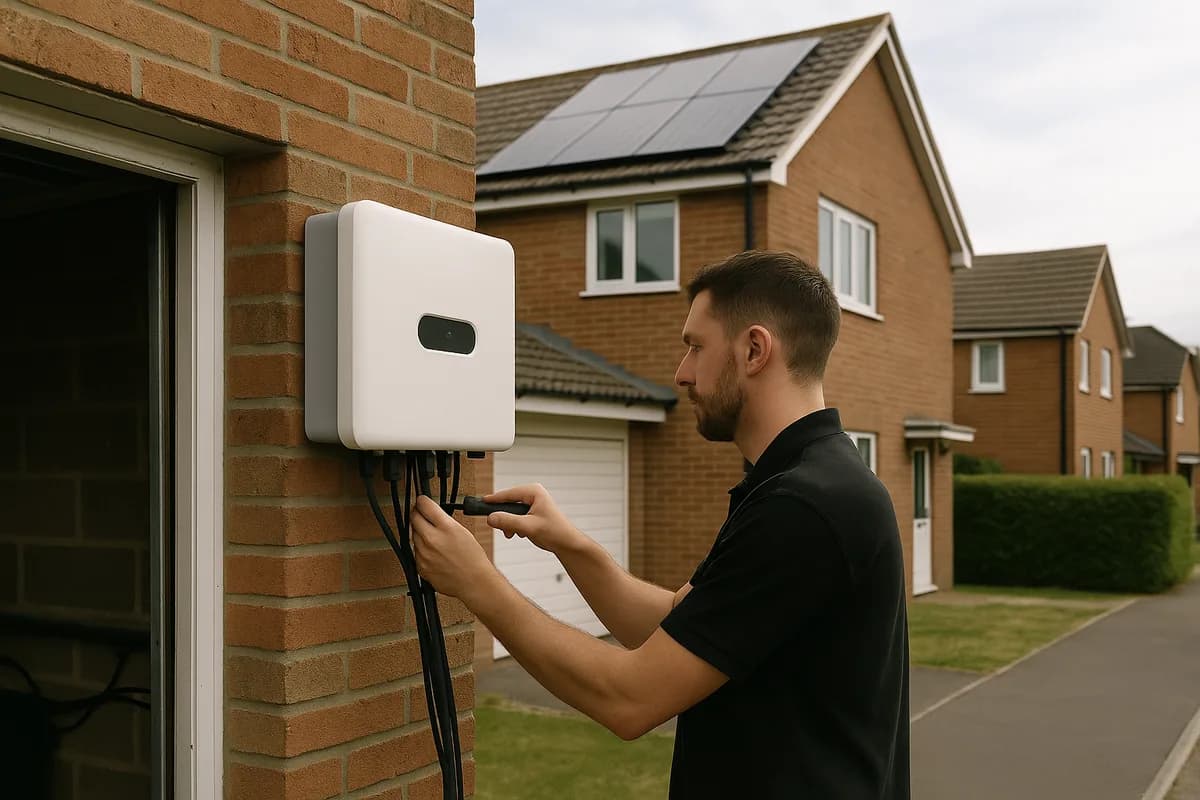
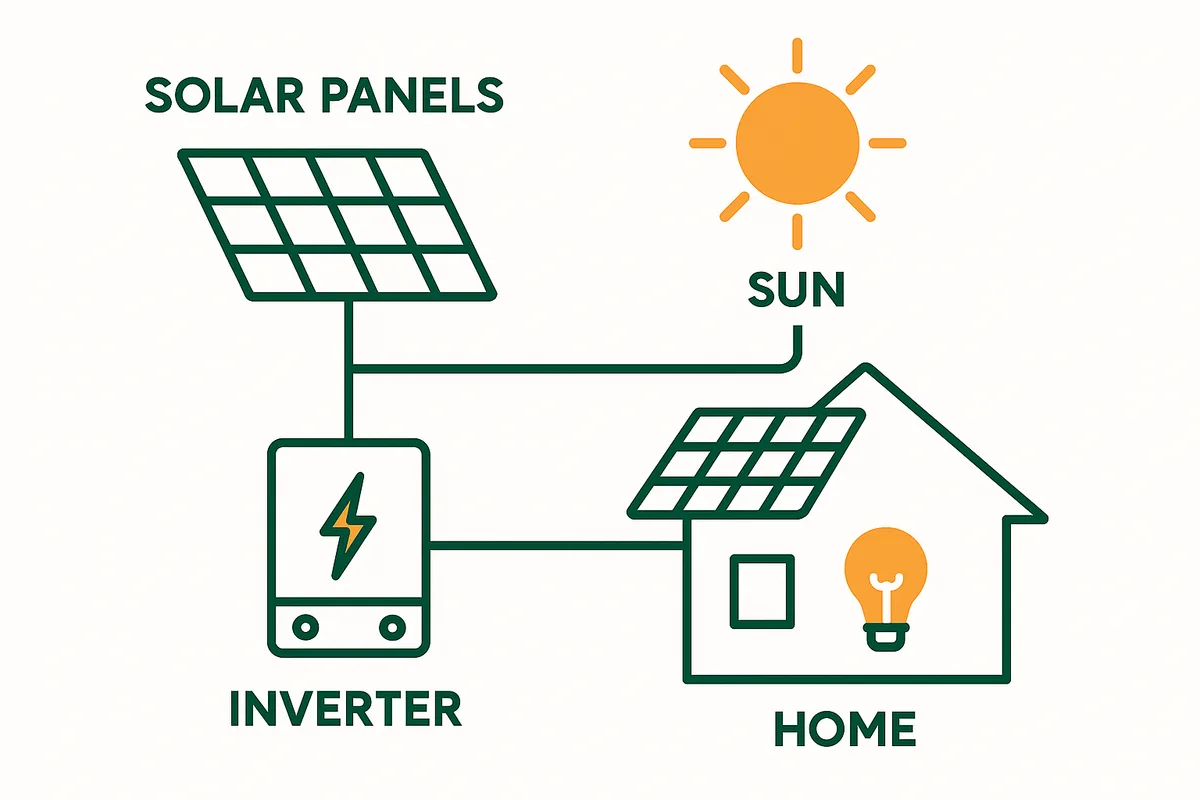
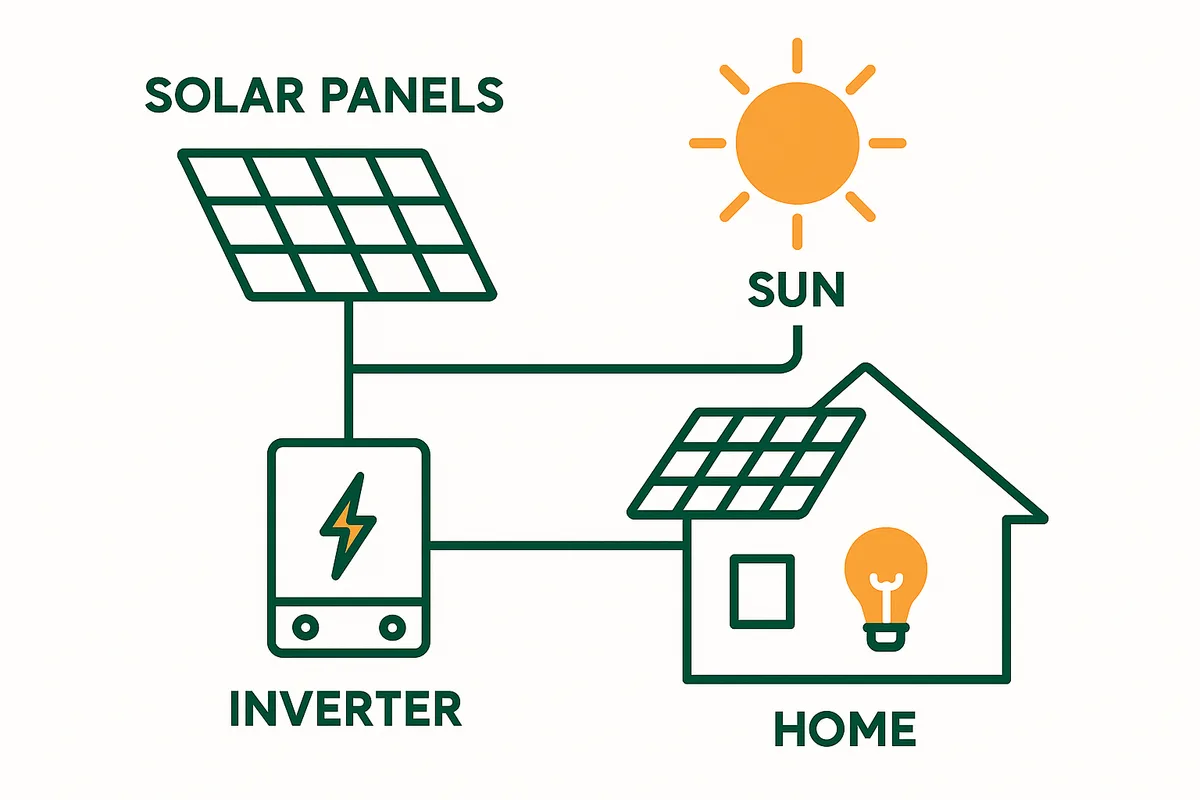
A solar inverter converts the direct current (DC) electricity produced by your solar panels into alternating current (AC) electricity that your home appliances use. Without an inverter, your solar panels would generate electricity you cannot use. It is the single most important component after the panels themselves.
How Does a Solar Inverter Work?
Solar panels produce DC (direct current) electricity — a steady flow of electrons in one direction. Your home, the national grid, and almost every appliance in your house runs on AC (alternating current) — where the flow of electrons switches direction 50 times per second (50 Hz in the UK).
The inverter sits between your panels and your consumer unit (fuse box). It takes the variable DC voltage from the panels (which changes depending on sunlight intensity) and converts it into a stable 230V AC supply that matches the grid.
Modern inverters also perform several critical functions beyond simple conversion: - Maximum Power Point Tracking (MPPT) — continuously adjusts to extract the maximum energy from your panels as conditions change - Grid synchronisation — ensures the AC output matches the grid's frequency and voltage exactly - Safety shutdown — disconnects from the grid instantly during a power cut (required by UK regulations G98/G99) - Performance monitoring — tracks energy production and reports via WiFi to your monitoring app
Source: MCS Technical Guide; IET Wiring Regulations BS 7671.
The 3 Types of Solar Inverter
There are three main types of solar inverter used in UK residential installations. Each has different strengths, and the right choice depends on your roof, your budget, and whether you have shading issues.
What is a string inverter?
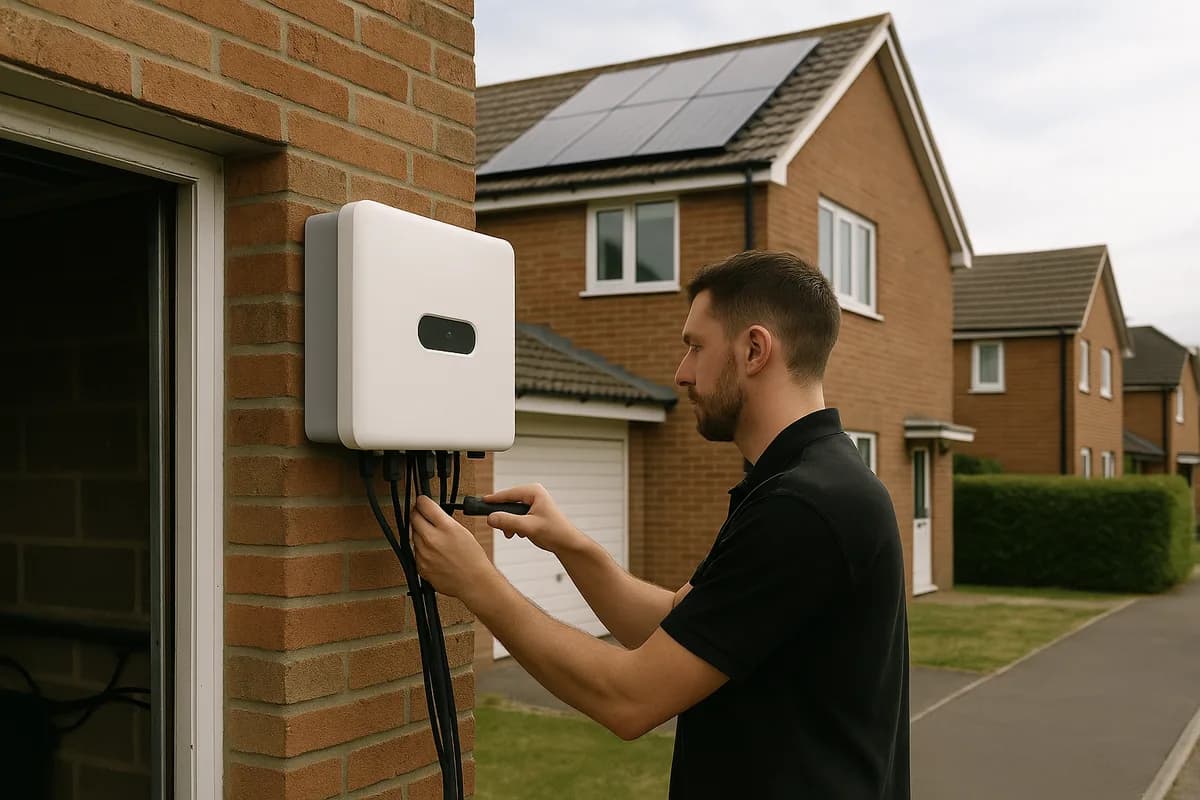
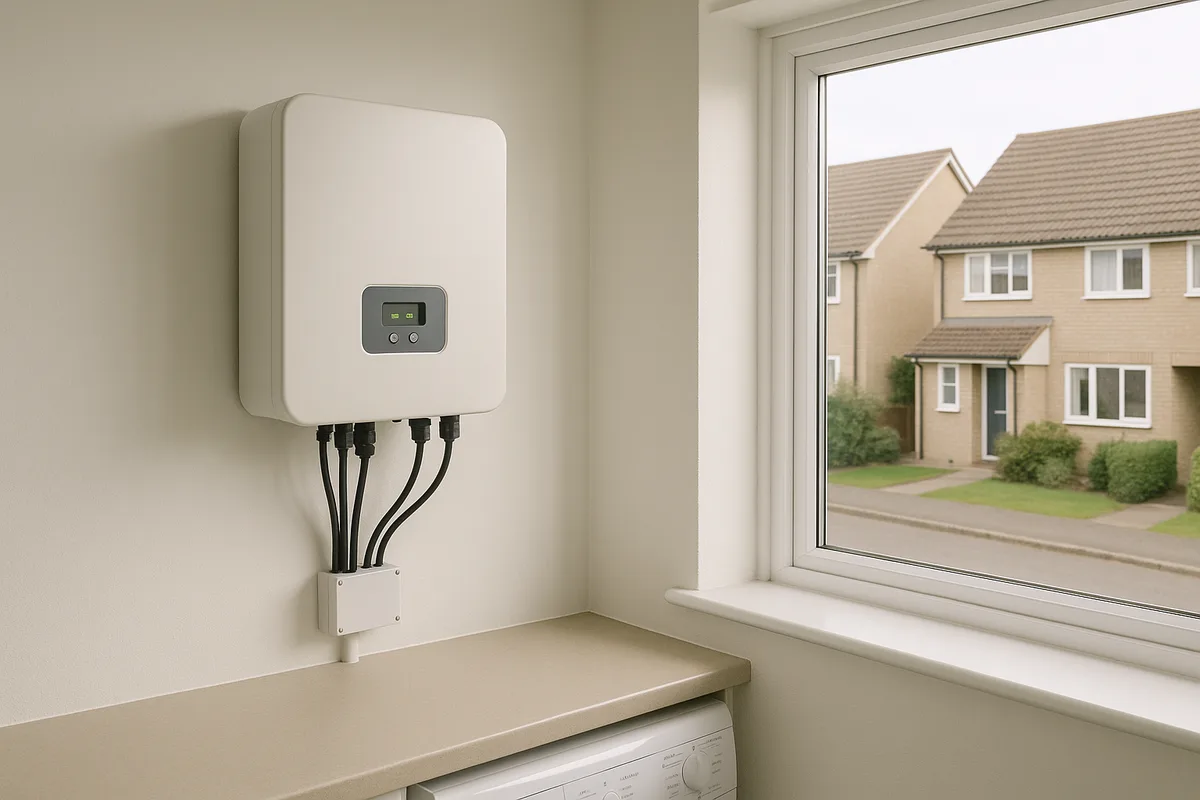
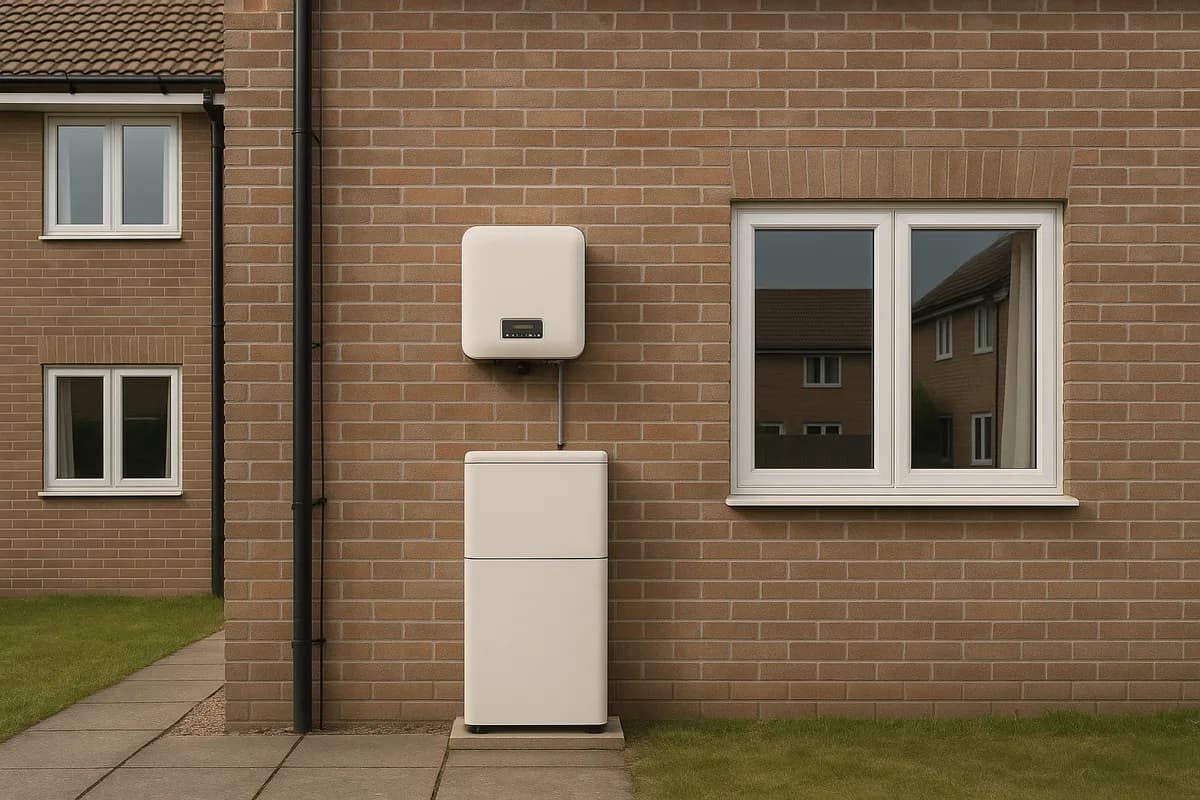
A string inverter is the most common and affordable type. All your panels connect in a 'string' (a series circuit) and feed into a single inverter box, usually mounted on a wall in your garage or outside. Cost: £500–£1,000. Lifespan: 10–15 years. Best for: unshaded roofs where all panels face the same direction.
Advantages of string inverters: - Lowest cost option - Proven, reliable technology - Easy to service or replace (one unit) - Most UK installations use string inverters
Disadvantages: - One shaded or dirty panel reduces the output of the entire string - Less flexible for complex roof layouts (multiple orientations) - Single point of failure — if the inverter fails, the whole system stops
Best brands: SolarEdge (with optimisers), Fronius, GivEnergy, Solis, Huawei.
What is a micro-inverter?
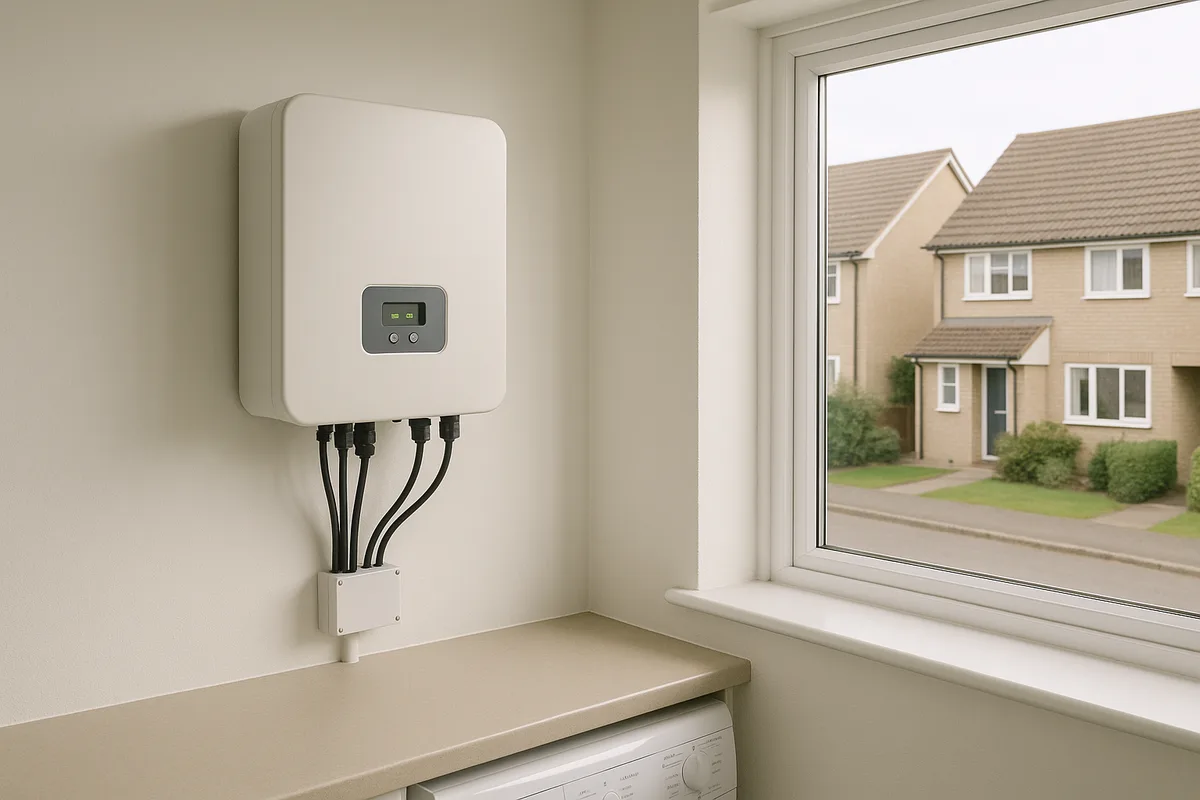
A micro-inverter is a small inverter attached to the back of each individual solar panel. Each panel converts its own DC to AC independently. Cost: £100–£180 per panel (£1,000–£2,800 for a typical system). Lifespan: 20–25 years. Best for: partially shaded roofs or complex multi-direction layouts.
Advantages of micro-inverters: - Each panel operates independently — one shaded panel does not affect the others - Better performance on complex roofs (panels facing different directions) - Longer lifespan than string inverters (20–25 years vs 10–15) - Panel-level monitoring shows exact output per panel - No single point of failure
Disadvantages: - Higher upfront cost (roughly 2x a string inverter) - More components on the roof = more potential maintenance points - Harder to service (requires roof access)
Best brands: Enphase (market leader), AP Systems.
What is a hybrid inverter?
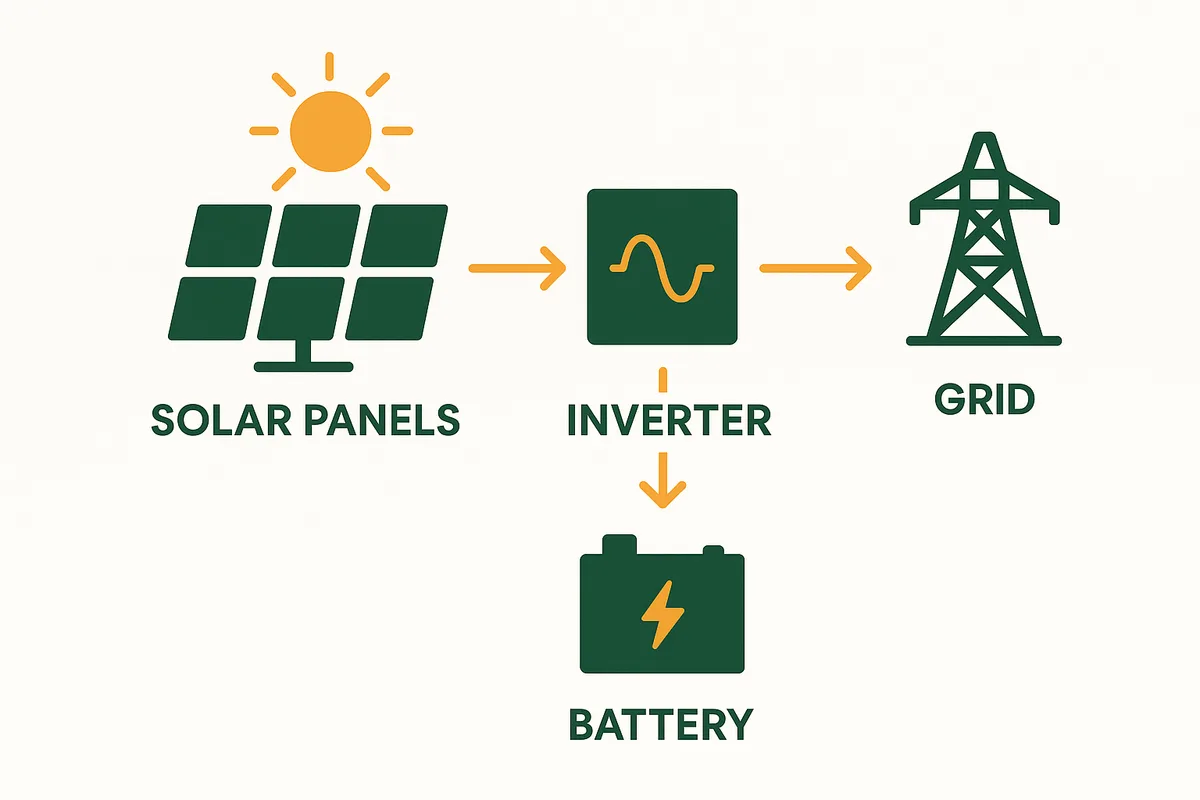
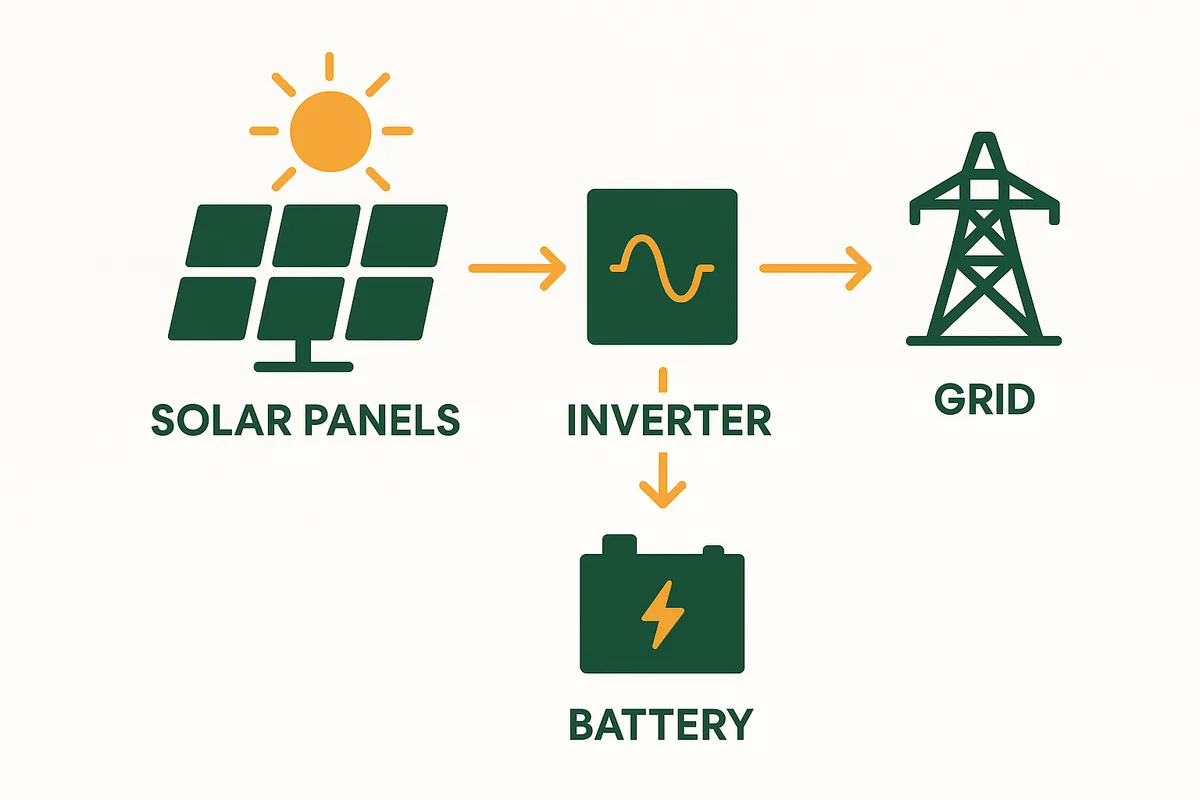
A hybrid inverter (also called a battery inverter) combines a solar inverter and battery charger in one unit. It manages solar panels, battery storage, grid import, and grid export all from a single device. Cost: £1,200–£2,000 (excluding battery). Best for: anyone planning to add a solar battery now or in the future.
Ready to see what solar could save you?
Get free, no-obligation quotes from MCS-certified installers in your area.
Get Free QuotesAdvantages of hybrid inverters: - One device manages everything — simpler installation - Ready for battery storage immediately or later - Can provide backup power during grid outages (with battery) - Often includes smart energy management — decides when to use solar, battery, or grid power
Disadvantages: - More expensive than a basic string inverter - If it fails, both solar and battery systems are affected - Some models have lower efficiency than dedicated single-purpose inverters
Best brands: GivEnergy (UK market leader for hybrid), SolarEdge, Huawei, Fox ESS.
Source: MCS certified product listings; manufacturer specifications.
Which Inverter Type Is Best for Your Home?
The right inverter depends on three factors: your roof, your budget, and whether you want a battery.
Choose a string inverter if: - Your roof is unshaded and panels all face the same direction - You want the lowest upfront cost - You do not plan to add a battery
Choose micro-inverters if: - Your roof has partial shading (trees, chimney, neighbouring buildings) - Panels will face different directions (e.g. some east, some west) - You want panel-level monitoring and maximum per-panel output - You value the longer 25-year warranty
Choose a hybrid inverter if: - You want to add a solar battery now or in the next few years - You want backup power during grid outages - You want one device managing everything
Most UK installations use either a string inverter (for simple, unshaded roofs) or a hybrid inverter (for anyone considering battery storage). Micro-inverters are growing in popularity but still represent a minority of UK installations.
How Much Does a Solar Inverter Cost?
Inverter costs depend on the type, brand, and system size:
String inverters: - 3–4 kW system: £400–£700 - 5–6 kW system: £600–£1,000 - Replacement cost (after 10–15 years): same as above
Micro-inverters: - Per panel: £100–£180 - 10-panel system: £1,000–£1,800 - 16-panel system: £1,600–£2,800 - Rarely need replacement within 25 years
Hybrid inverters: - 3.6 kW: £1,000–£1,500 - 5 kW: £1,200–£2,000 - Does not include battery cost (add £2,500–£5,000 for battery)
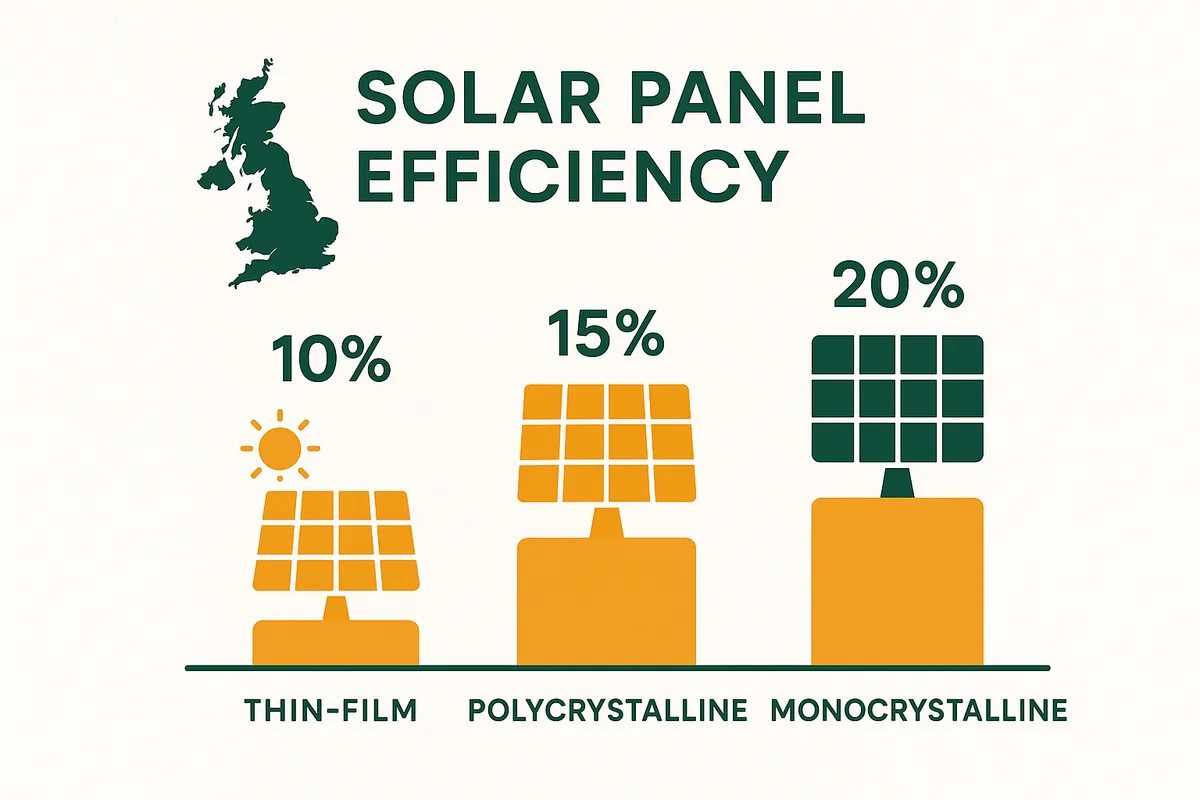
The inverter is typically 10–15% of your total solar installation cost. It is also the component most likely to need replacing during the 25-year panel lifespan — so factor in one replacement when calculating long-term costs.
Source: MCS installer quotes; UK solar industry pricing data 2026.
Common Solar Inverter Problems
Issues to watch for with your inverter:
- Red or amber warning light — usually indicates a grid fault, overheating, or internal error. Check the monitoring app and contact your installer if it persists.
- Zero output on a sunny day — the inverter may have tripped. Try turning it off and on. If it recurs, call your installer.
- Buzzing or humming noise — some noise is normal, but loud buzzing can indicate a failing component.
- WiFi disconnection — does not affect performance, only monitoring. Check your router or the inverter's WiFi settings.
- Reduced output over time — may indicate inverter degradation. Compare current output to historical data in your monitoring app.
- Error codes — every brand has specific error codes. Check the manufacturer's manual or their support app.
Most inverter problems can be diagnosed remotely through the manufacturer's monitoring platform. GivEnergy, SolarEdge, and Enphase all offer installer-accessible remote diagnostics. If your installer is MCS-certified, they should be able to identify and resolve most issues without a site visit.
Solar Inverter: The Key Takeaways
- The inverter converts DC from your panels to AC for your home — without it, solar panels are useless
- String inverters are cheapest (£500–£1,000) and suit simple, unshaded roofs
- Micro-inverters cost more (£1,000–£2,800) but handle shading and complex roofs better, and last 25 years
- Hybrid inverters (£1,200–£2,000) are best if you want or plan to add battery storage
- Budget for one string inverter replacement at 10–15 years; micro-inverters and hybrids typically last longer
- Always use an MCS-certified installer — inverter installation involves high-voltage electrical work
Frequently Asked Questions
Related guides
You might also like
Ready to see what solar could save you?
Get free, no-obligation quotes from MCS-certified installers in your area.
Get Free QuotesFree, no obligation. Takes 2 minutes.