How Are Solar Panels Installed? Step-by-Step
Ready to see what solar could save you?
Get free, no-obligation quotes from MCS-certified installers in your area.
Get Free QuotesFree, no obligation. Takes 2 minutes.
How long does solar panel installation take?
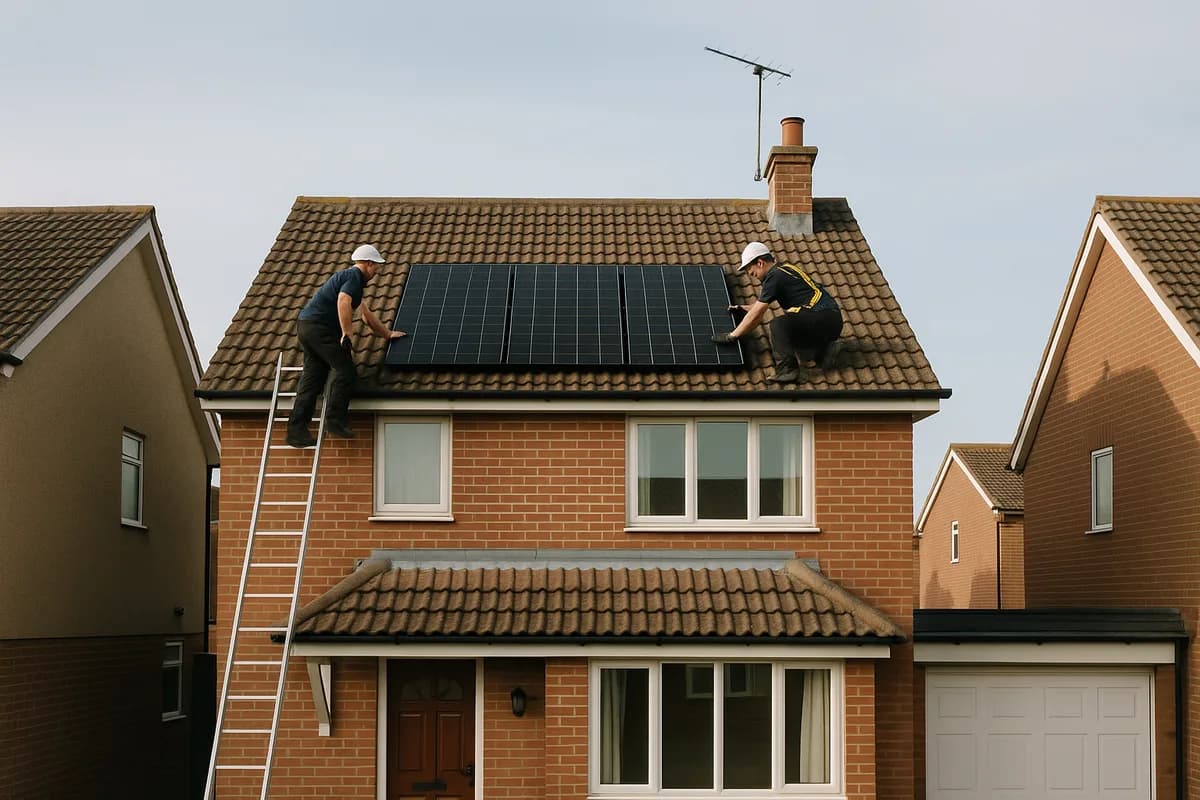
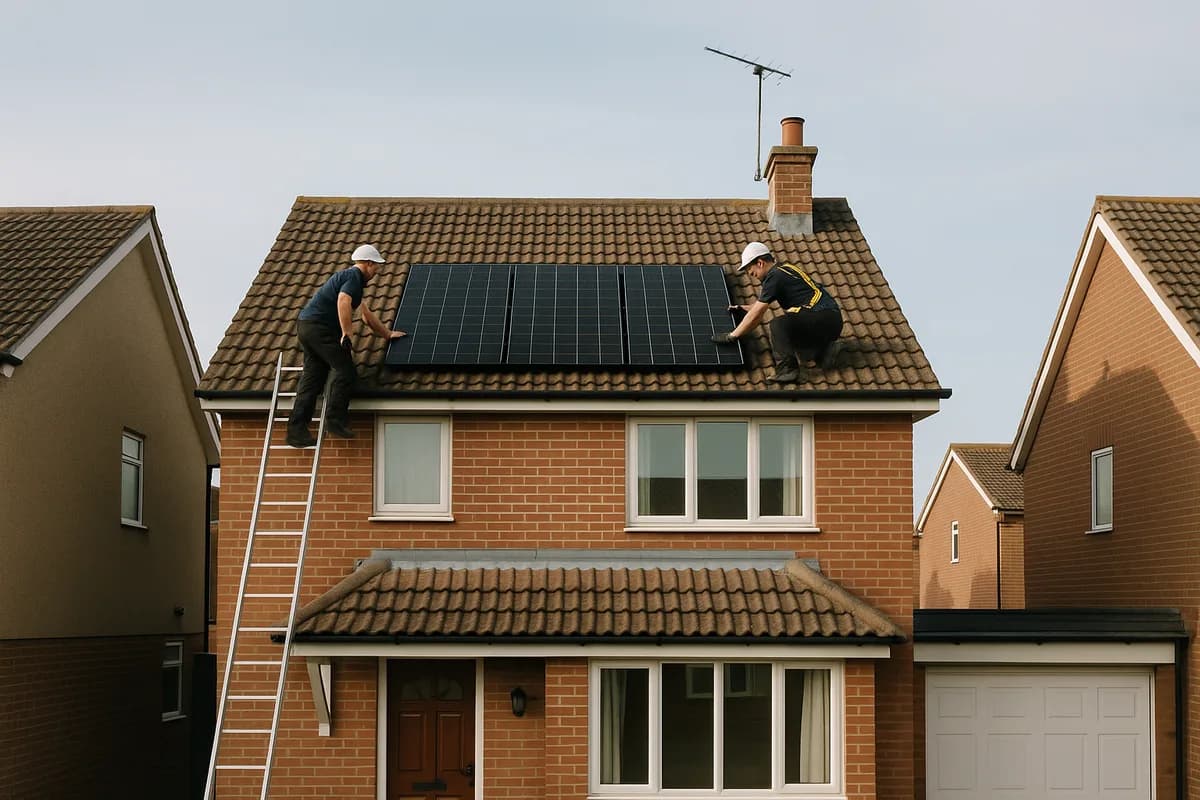
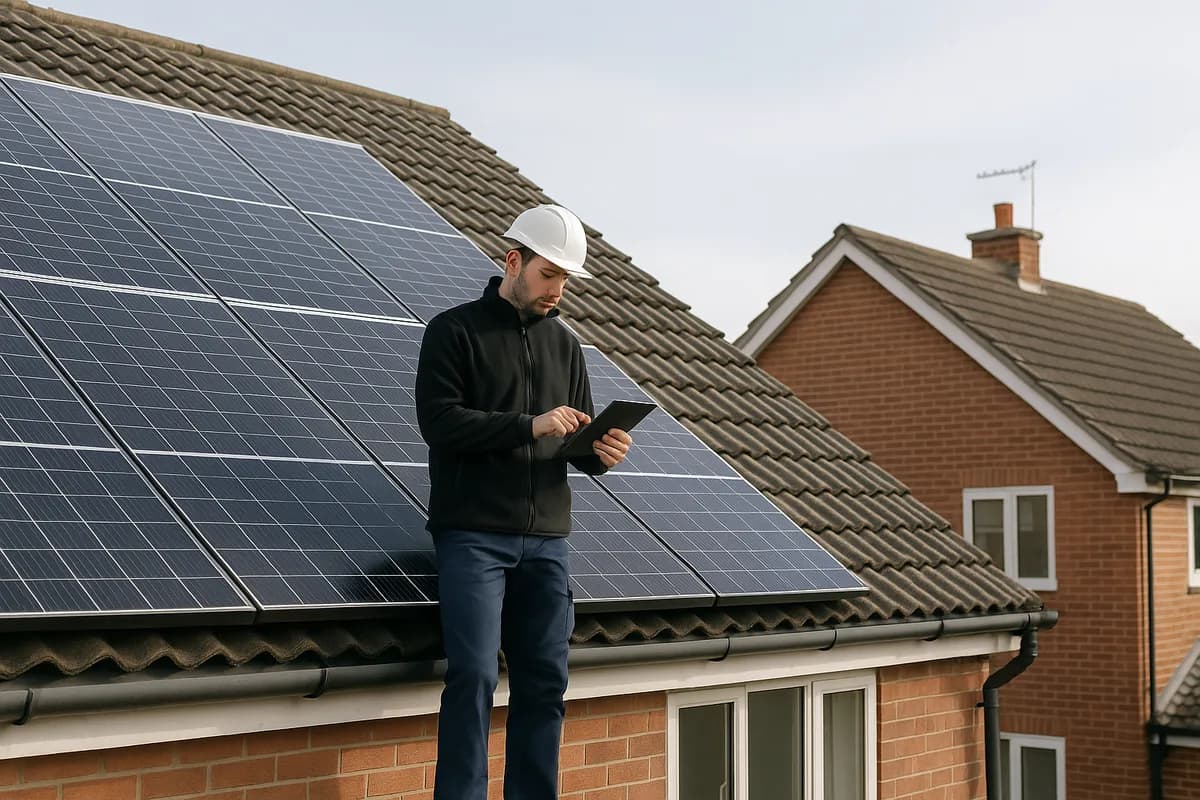
Solar panel installation on a UK home takes 1–2 days for the physical work, plus 2–4 weeks beforehand for survey, design, and paperwork. The process involves: scaffolding erection, roof bracket mounting, rail attachment, panel fitting, DC wiring, inverter installation, AC connection to your consumer unit, and DNO notification. An MCS-certified installer handles everything.
The Full Installation Timeline
Week 1–2: Survey and Design - Free site survey (30–60 minutes at your property) - Installer assesses: roof condition, structure, orientation, shading, electrical setup - System design: panel layout, inverter sizing, wiring route - Quote provided with expected generation and savings
Week 2–3: Paperwork - DNO notification submitted (G98 for systems under 3.68kW, G99 for larger) - Building control notification (if required — MCS installers can self-certify) - Scaffolding booked
Week 3–4: Installation Day(s) - Day 1 morning: Scaffolding erected - Day 1: Roof mounting, rails, and panels installed - Day 1–2: DC wiring from panels to inverter location - Day 2: Inverter mounted and wired, AC connection to consumer unit - Day 2: System testing and commissioning - Day 2 afternoon: Scaffolding removed (sometimes day 3)
After installation: - MCS certificate issued within 2 weeks - You register for SEG with your chosen energy supplier - System begins generating immediately after switch-on
Source: MCS installation process standards.
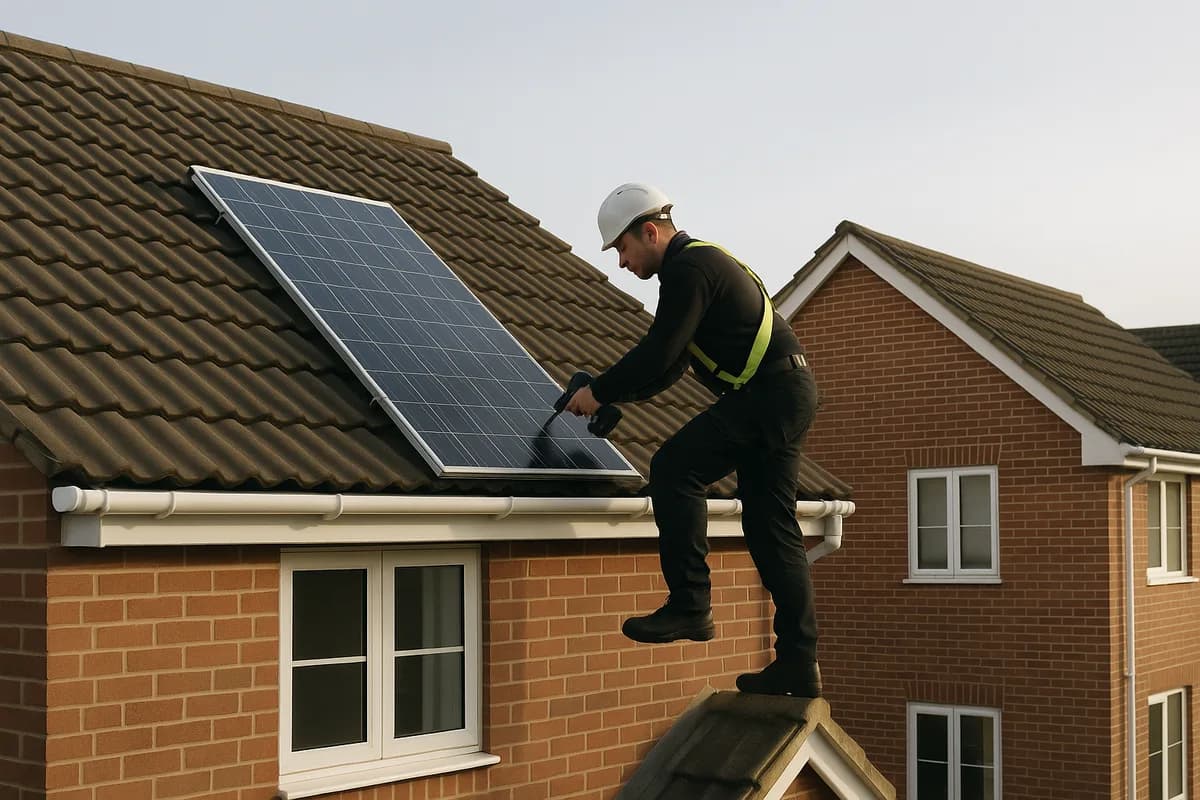
Step 1: Scaffolding
Scaffolding is erected around the section of roof where panels will be installed. This typically takes 1–2 hours.
- Cost: Usually included in the installation quote (£200–£500 if charged separately)
- Duration: Stays up for 1–3 days
- Access needed: The scaffolding company needs access to the side of your house. Inform neighbours if scaffolding affects their property.
- Bungalows: May use mobile platforms instead of full scaffolding, reducing cost.
Some installers use roof ladders instead of scaffolding for simpler jobs, but scaffolding is standard for most installations.
Step 2: Roof Mounting System
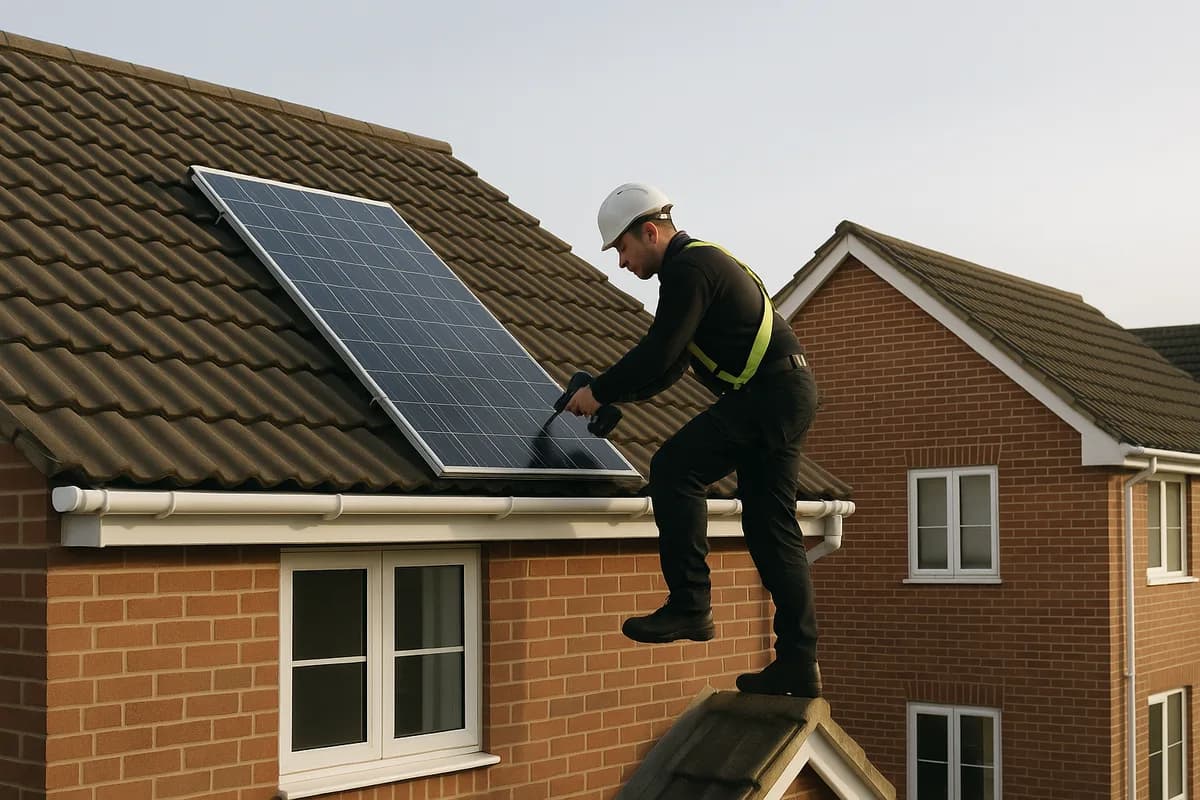
The mounting system consists of roof hooks (or brackets) and aluminium rails that the panels sit on.
Process: 1. Roof tiles are carefully lifted at planned hook positions 2. Stainless steel hooks are bolted to the roof rafters (the structural timber underneath) 3. Tiles are replaced around the hooks — the hook end protrudes between tiles 4. Aluminium rails are attached to the hooks, running horizontally across the roof 5. The rail spacing is set to match the panel dimensions
Key points: - No tiles are drilled through — hooks go under the tiles and fix to rafters - Weatherproofing is maintained — tiles reseat around the hooks - The mounting system is designed to withstand wind speeds up to 140 mph - Total mounting weight: approximately 3–5kg per square metre
Source: MCS mounting system standards; manufacturer load testing data.
Step 3: Panel Installation
Ready to see what solar could save you?
Get free, no-obligation quotes from MCS-certified installers in your area.
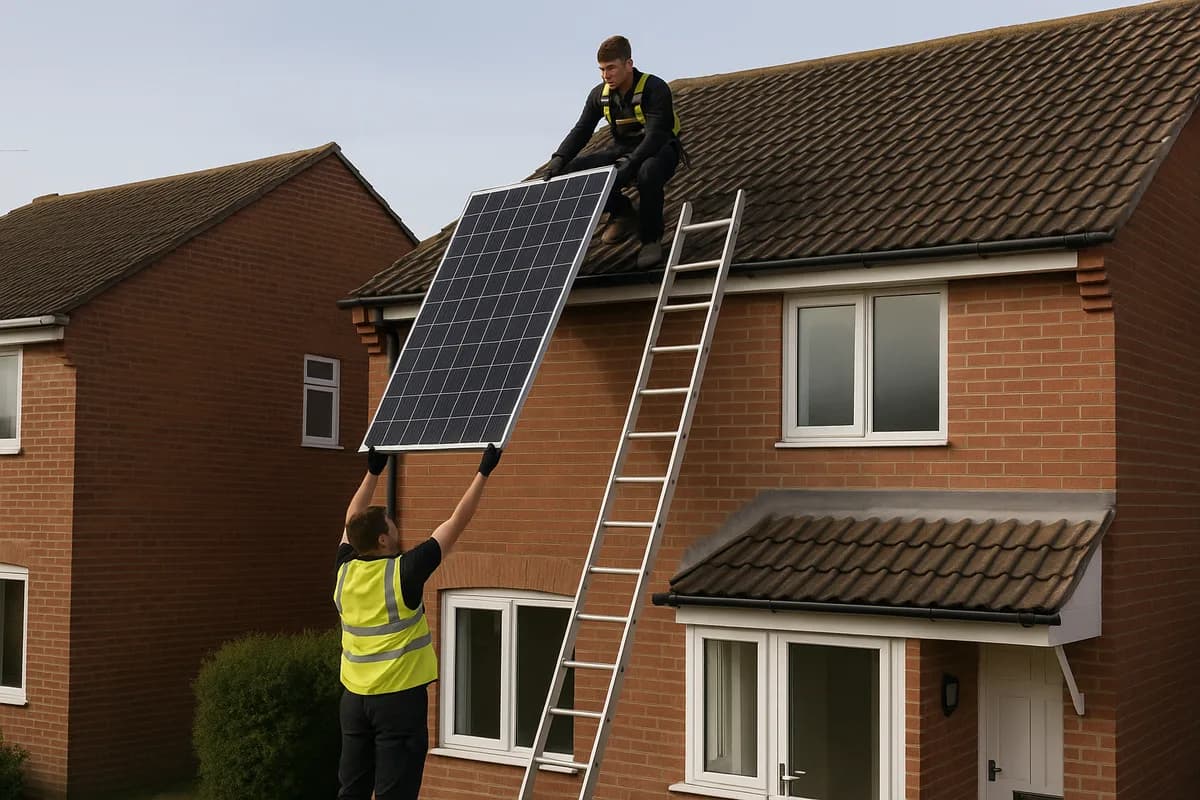
Get Free QuotesOnce the rails are in place, panels are lifted onto the roof and secured.
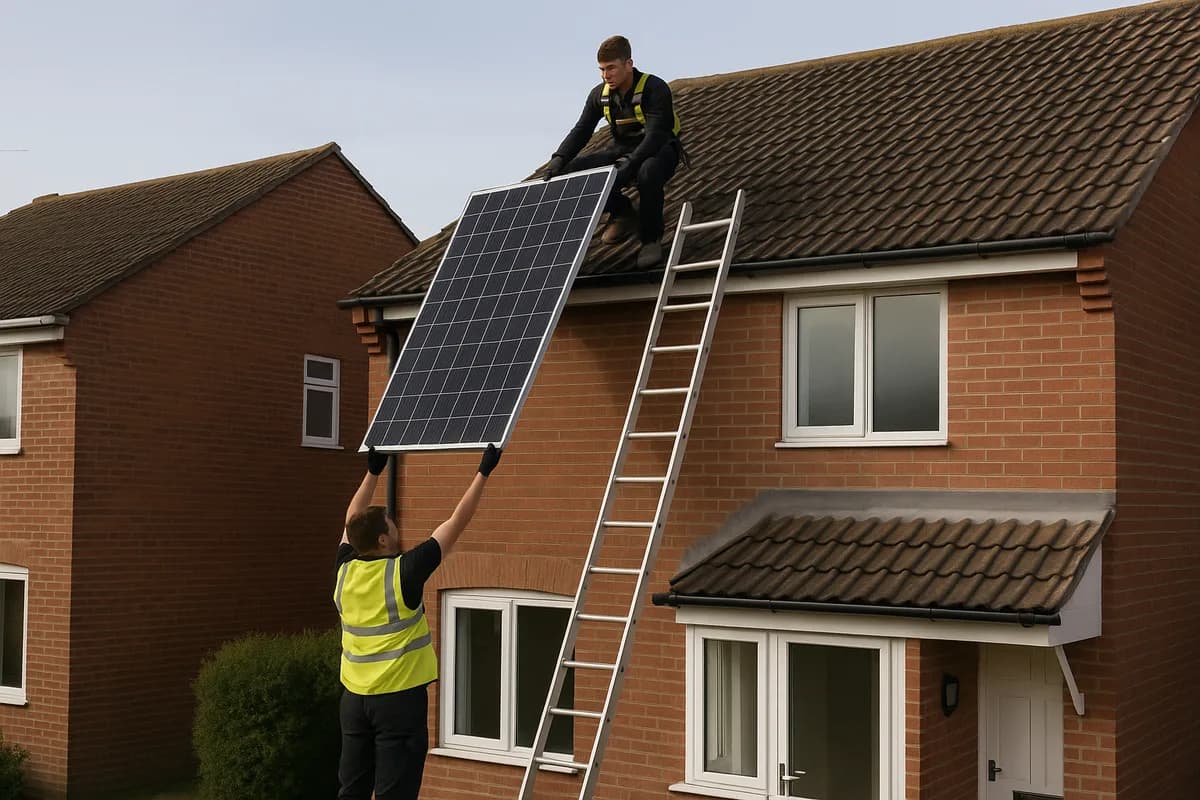
Process: 1. Panels are lifted one at a time (each weighs approximately 20kg) 2. Each panel slides into position on the rails 3. Clamps secure each panel to the rails — mid-clamps between panels, end-clamps at the edges 4. MC4 connectors link each panel to the next (series wiring for string inverters) 5. DC cables are routed down from the roof to the inverter location
Time: Fitting 10 panels typically takes 2–3 hours for a two-person team.
The panels are now physically installed. The remaining work is electrical.
Step 4: Inverter and Electrical Work
This is the most technical part and must be done by a qualified electrician.
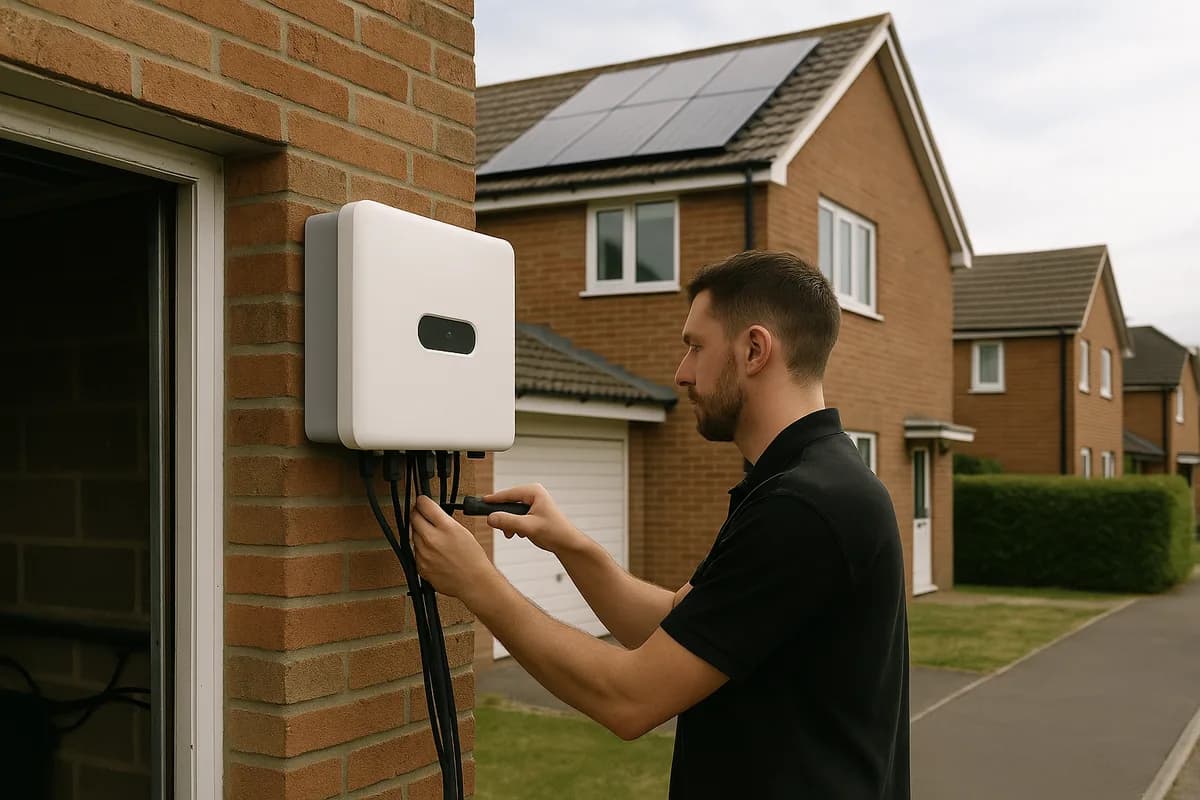
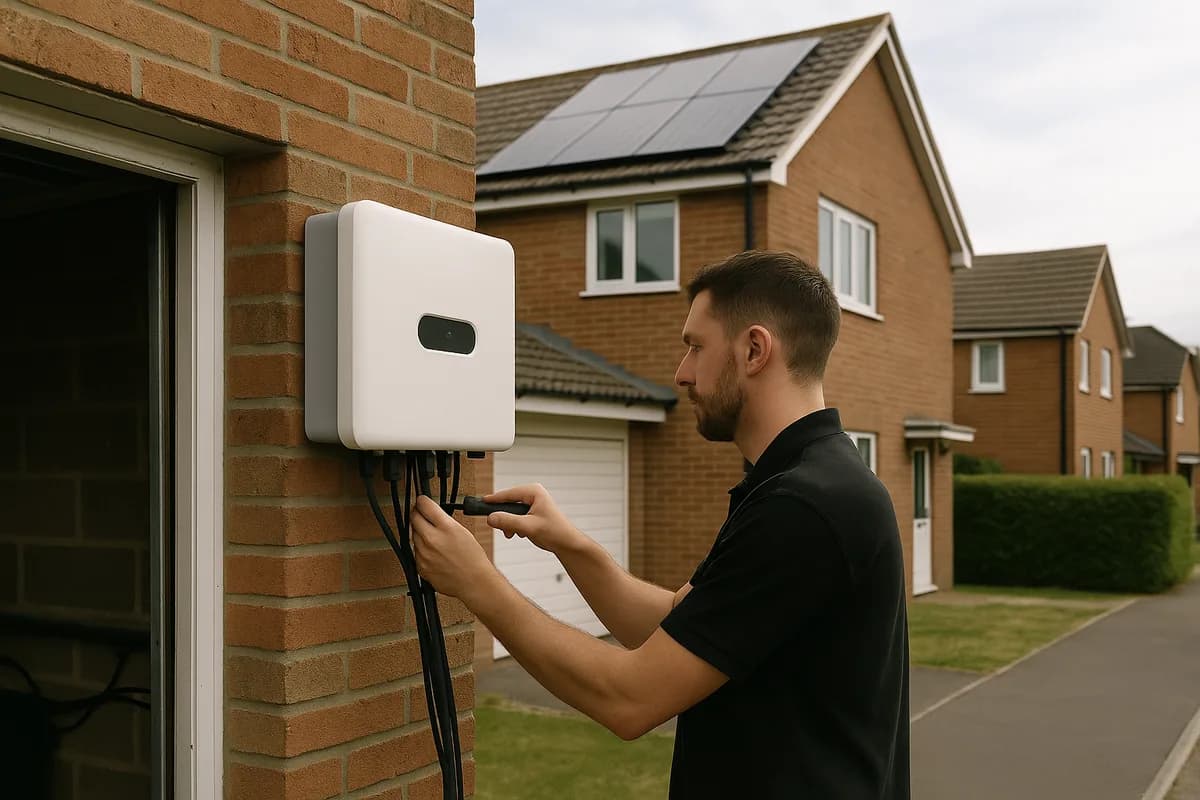
Process: 1. Inverter is mounted on the wall (garage, utility room, or exterior) 2. DC isolator switch installed between panels and inverter 3. DC cables from the roof connected to the inverter 4. AC output from inverter connected to a new dedicated circuit in your consumer unit 5. AC isolator switch installed between inverter and consumer unit 6. Generation meter installed (if required by your DNO) 7. System earthing checked and tested
If adding a battery: - Battery unit mounted (usually near the inverter) - DC or AC connection between inverter and battery - Battery management system configured
Testing: - Insulation resistance test - Earth continuity test - Polarity check - Functional test — system switched on and generation verified
Source: IET Wiring Regulations BS 7671; MCS electrical installation standards.
Step 5: Commissioning and Handover
After installation and testing:
1. System is switched on — you will see the inverter display showing real-time generation 2. Monitoring set up — the installer connects the inverter to your WiFi and helps you download the monitoring app 3. Documentation provided: - MCS certificate (issued within 2 weeks) - Electrical installation certificate - Panel and inverter warranty registration - User guide for the inverter and monitoring system 4. DNO notification confirmed — your Distribution Network Operator is informed of the new generation connection 5. SEG registration — you can now register with your chosen SEG supplier to start earning export payments
The system begins generating electricity immediately. Your first full month of data will appear in your monitoring app after 30 days.
Source: MCS handover standards.
What to Do Before Installation Day
- Clear access to the side of your house for scaffolding
- Clear the area inside where the inverter will be mounted (garage, utility room)
- Ensure your loft hatch is accessible if cables route through the loft
- Inform neighbours about scaffolding — especially if it affects shared access
- Check your home insurance — most policies cover solar, but notify your insurer
- Be home on installation day — the electrician will need access to your consumer unit
- Have your WiFi password ready — the installer will connect the inverter for monitoring
Frequently Asked Questions
Related guides
Related: Home Heating Systems
Solar panels are most powerful when combined with an efficient heating system. Heat pumps use solar-generated electricity to heat your home at 300-400% efficiency — making them the ideal partner for solar.
Heat pump installation typically takes 2-3 days and is best planned alongside solar.
From our sister site Home Heat Pump Guide
You might also like
Ready to see what solar could save you?
Get free, no-obligation quotes from MCS-certified installers in your area.
Get Free QuotesFree, no obligation. Takes 2 minutes.