How Do Solar Panels Work?
Ready to see what solar could save you?
Get free, no-obligation quotes from MCS-certified installers in your area.
Get Free QuotesFree, no obligation. Takes 2 minutes.
How do solar panels generate electricity?
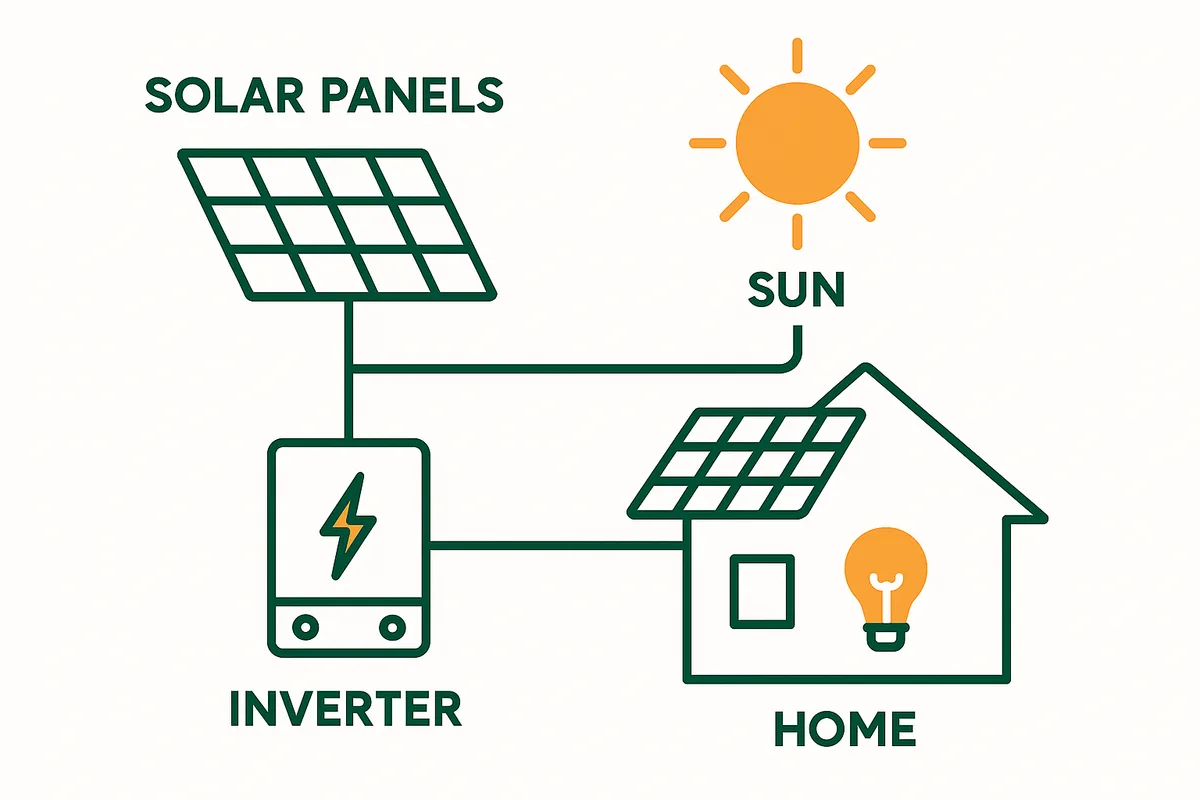
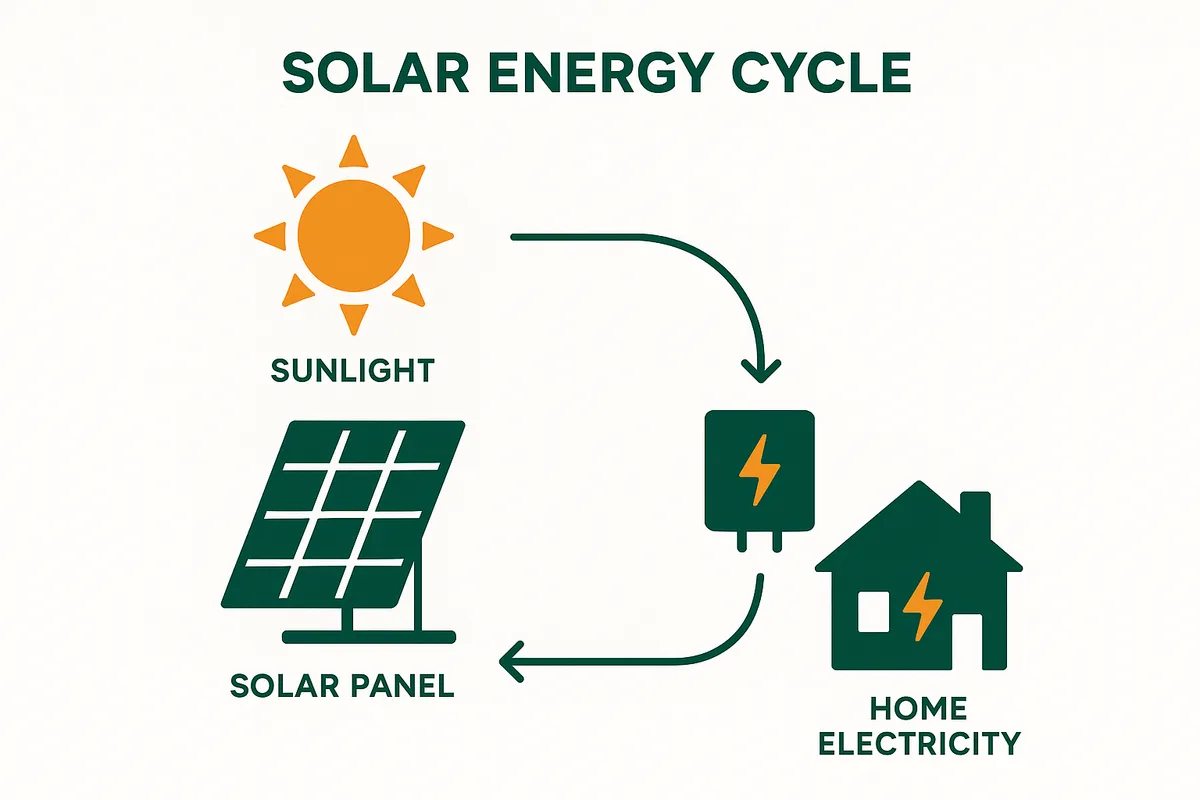
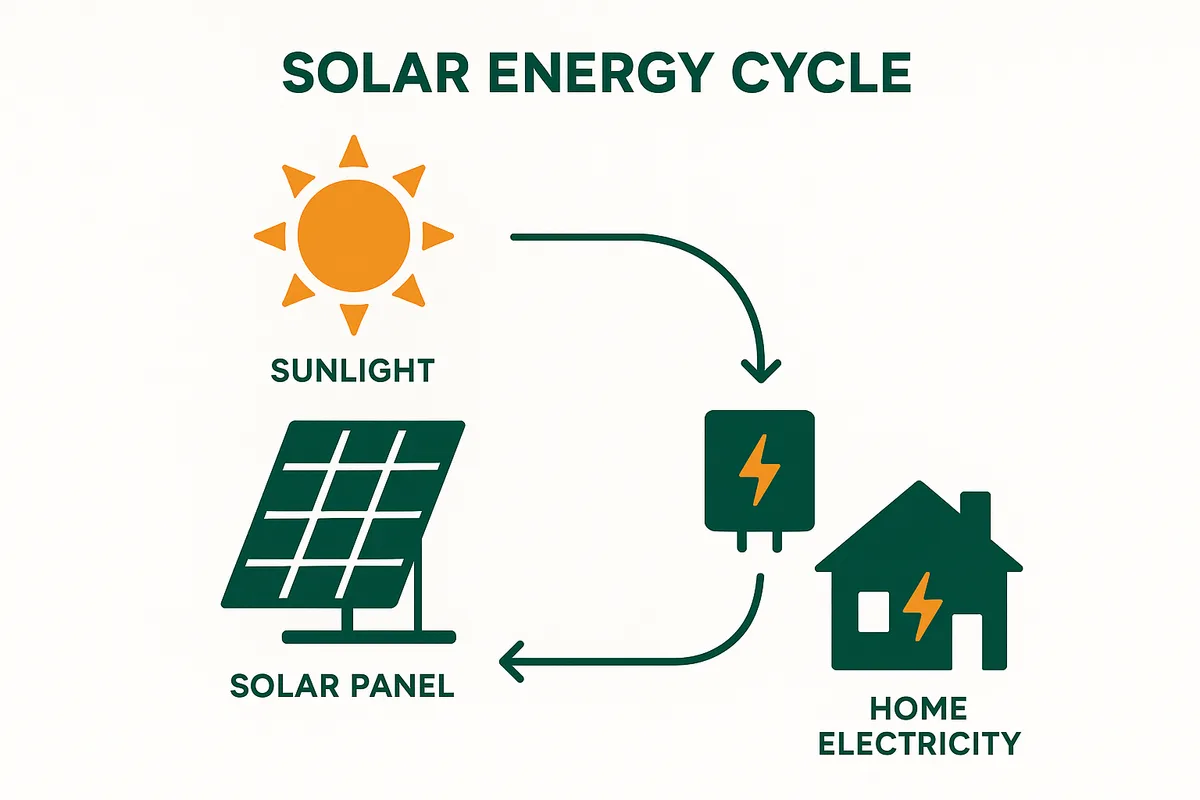
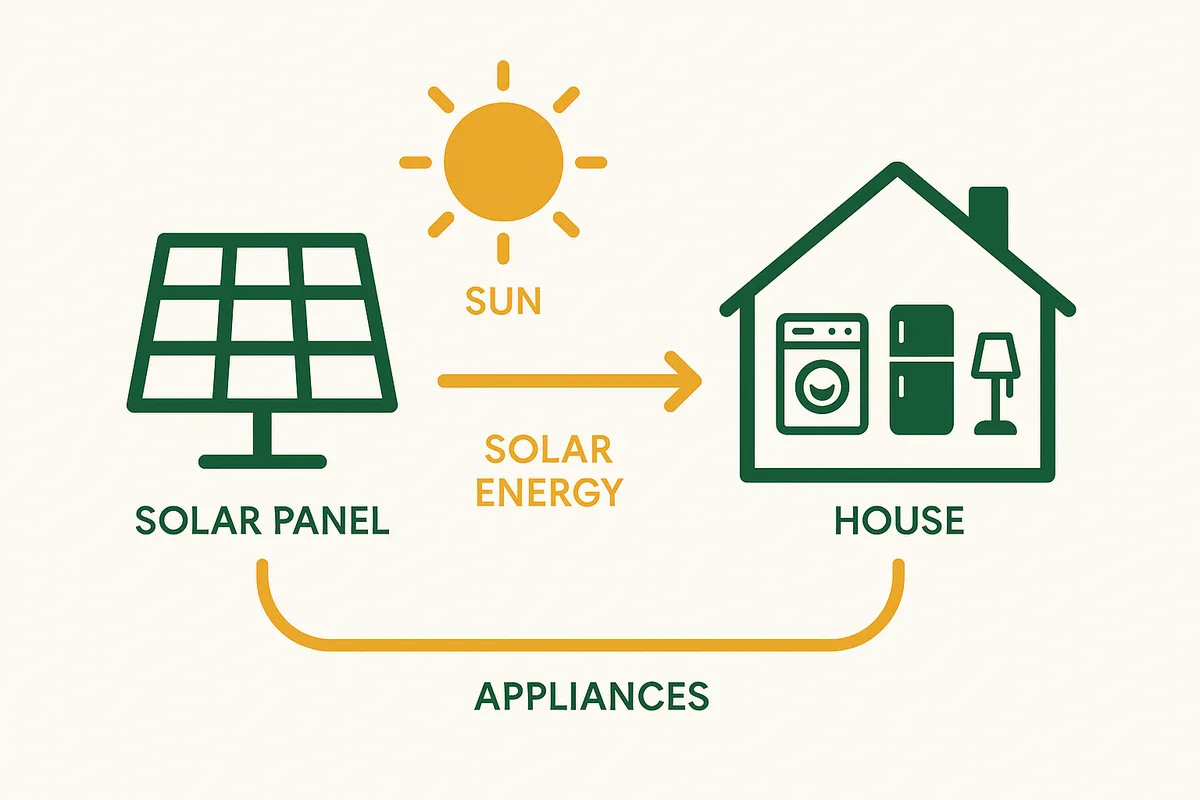
Solar panels work by converting sunlight into electricity using the photovoltaic effect. When photons (light particles) hit the silicon cells in a solar panel, they knock electrons loose from their atoms. This flow of electrons creates an electrical current. An inverter then converts this direct current (DC) into alternating current (AC) that your home appliances can use.
Step 1: Sunlight Hits the Panel
A solar panel is made up of many individual solar cells — typically 60 or 72 cells per panel. Each cell is a thin wafer of silicon, a semiconductor material.
Silicon is treated (or 'doped') with other elements to create two layers: - N-type layer (top): Has extra electrons (negative charge) - P-type layer (bottom): Has 'holes' where electrons are missing (positive charge)
The boundary between these two layers is called the P-N junction. This is where the magic happens.
When sunlight (photons) strikes the silicon cell, it transfers energy to the electrons. This energy is enough to knock electrons loose from their atoms, creating free-moving electrons.
Source: National Renewable Energy Laboratory (NREL); IET solar PV fundamentals.
Step 2: Electrons Flow (Creating DC Electricity)
The P-N junction creates an electric field that pushes free electrons in one direction — from the N-type layer through an external circuit and back to the P-type layer. This one-directional flow of electrons is direct current (DC) electricity.
Each solar cell produces approximately 0.5–0.6 volts. By connecting 60 cells in series within a panel, the voltage adds up to 30–40 volts. Multiple panels connected together (a 'string') produce the voltage needed for your inverter — typically 300–600 volts DC.
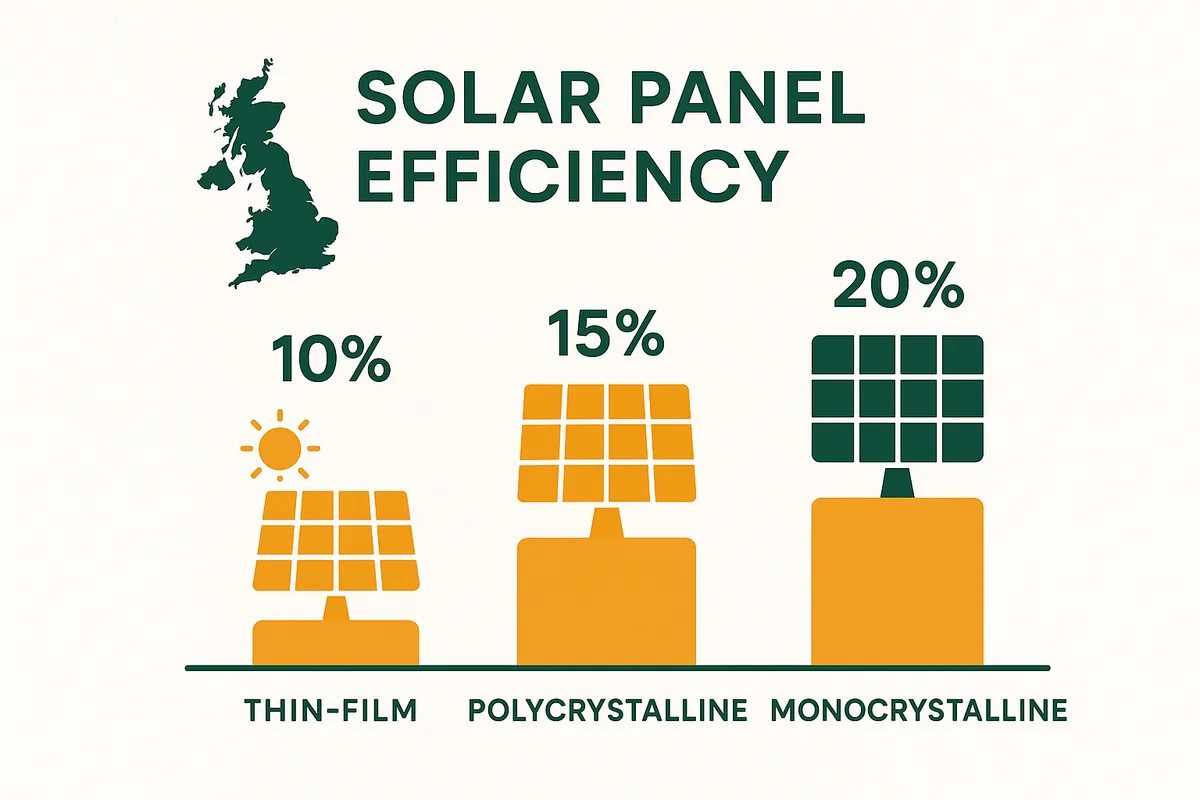
The amount of electricity generated depends on: - Light intensity — more photons = more electrons knocked loose = more current - Cell area — larger cells capture more photons - Cell efficiency — how much of the light energy is converted to electrical energy (20–22% for monocrystalline)
The remaining 78–80% of light energy is lost as heat — which is why panels get warm in the sun.
Step 3: The Inverter Converts DC to AC
Ready to see what solar could save you?
Get free, no-obligation quotes from MCS-certified installers in your area.
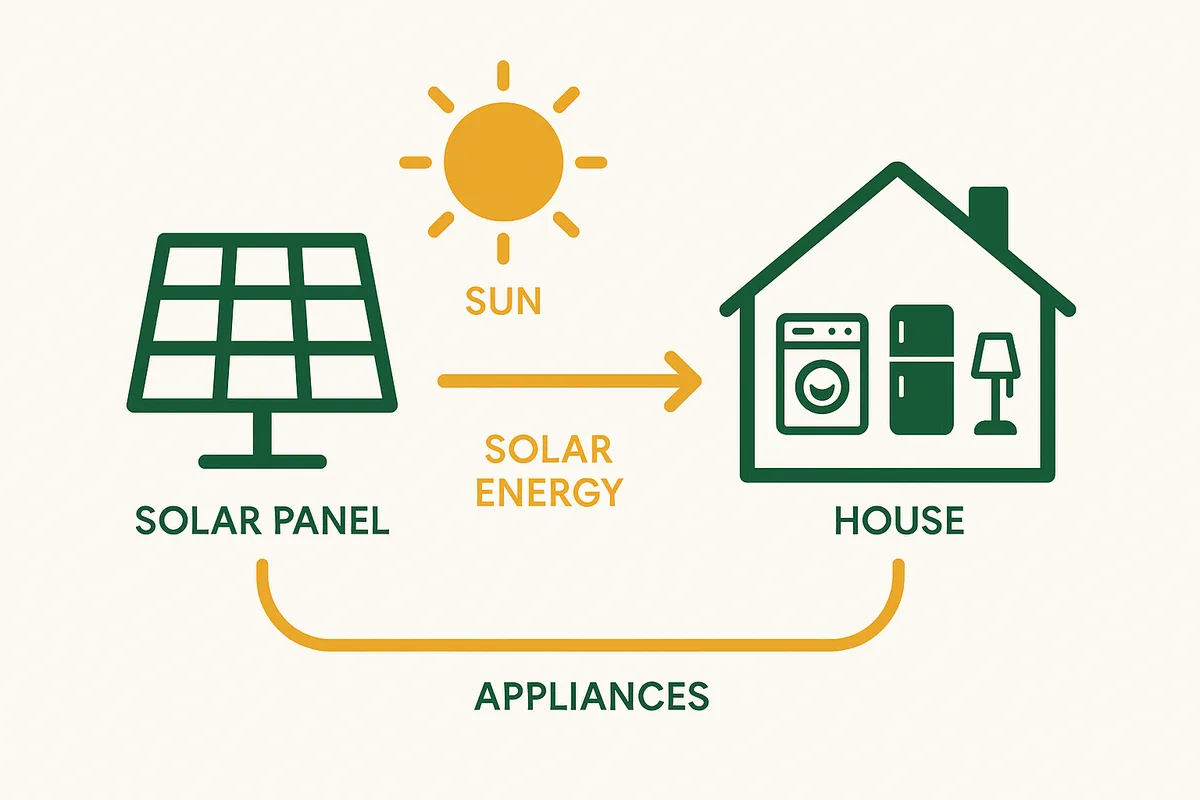
Get Free QuotesYour home runs on alternating current (AC) at 230 volts, 50 Hz — the UK grid standard. Solar panels produce DC. The inverter bridges this gap.
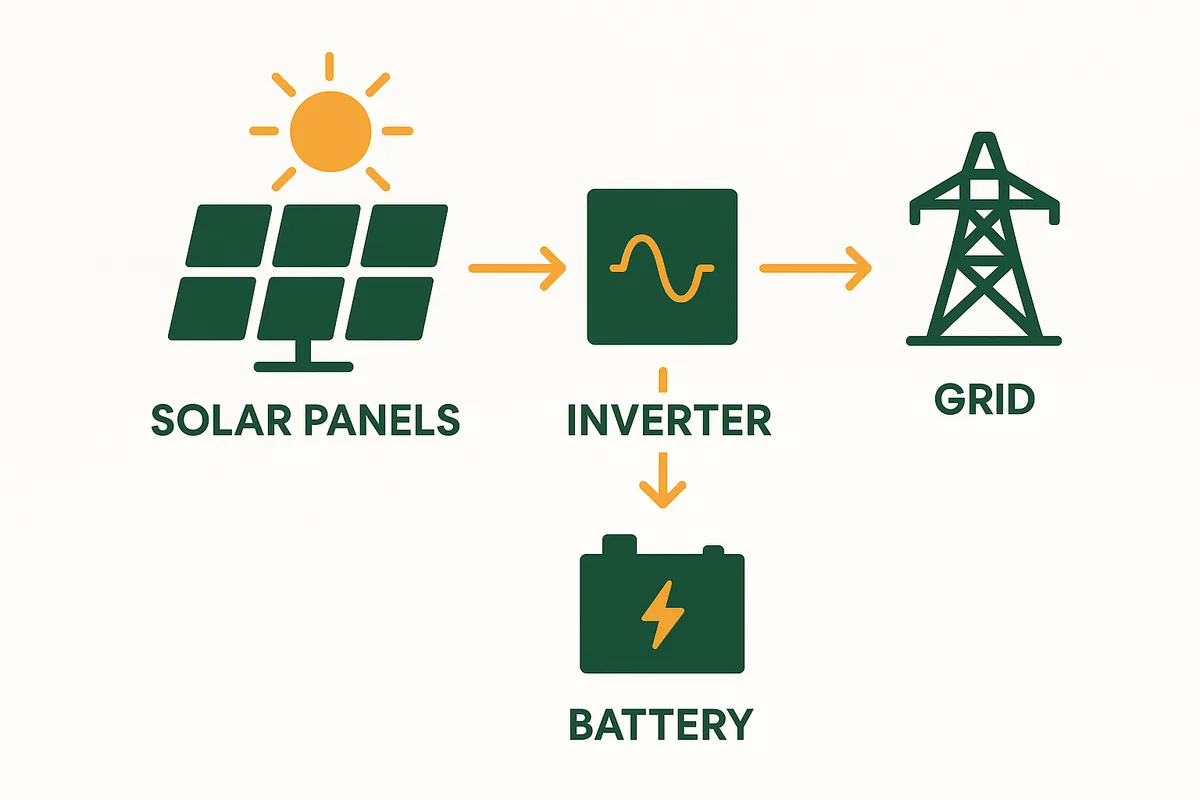
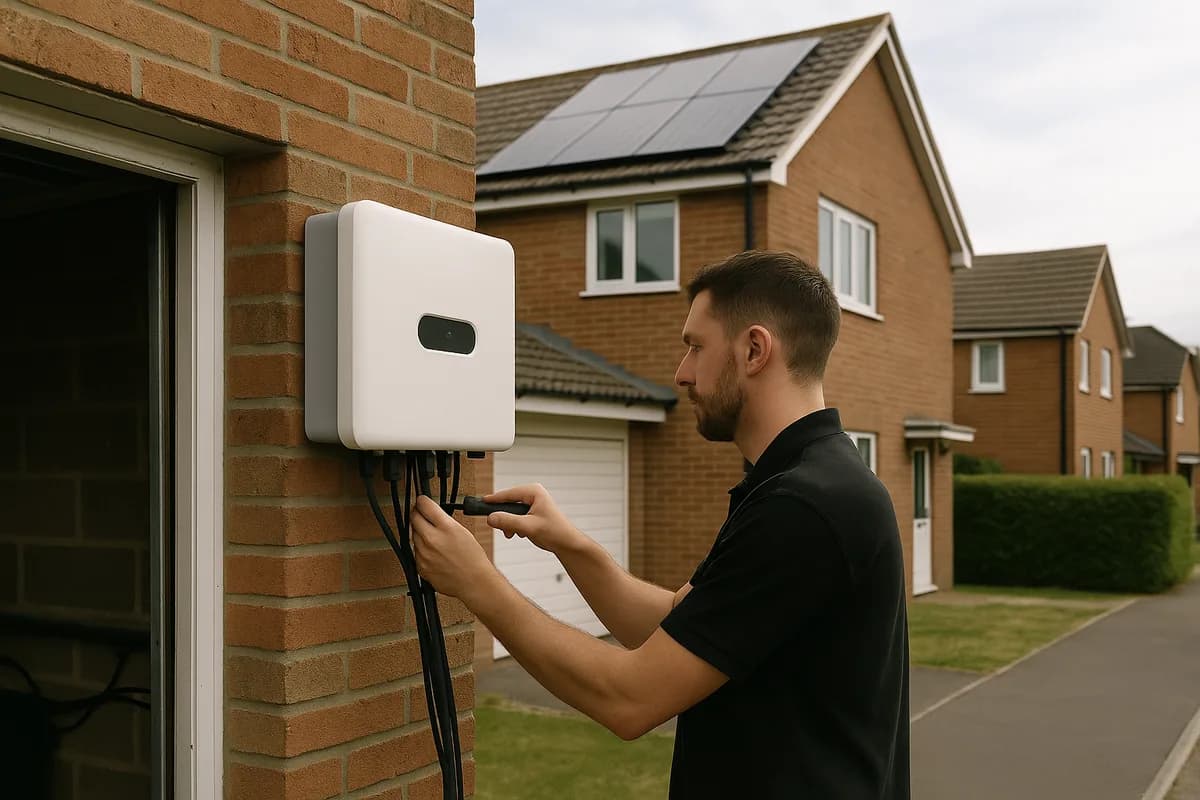
The inverter does several critical jobs: 1. Converts DC to AC — transforms the panel's direct current into alternating current 2. Matches grid voltage and frequency — ensures the output is exactly 230V at 50 Hz 3. Maximum Power Point Tracking (MPPT) — continuously adjusts to extract the most power as conditions change throughout the day 4. Safety shutdown (anti-islanding) — instantly disconnects from the grid during a power cut, preventing your system from feeding electricity into lines that engineers may be working on 5. Monitoring — tracks how much electricity you generate and reports to your monitoring app
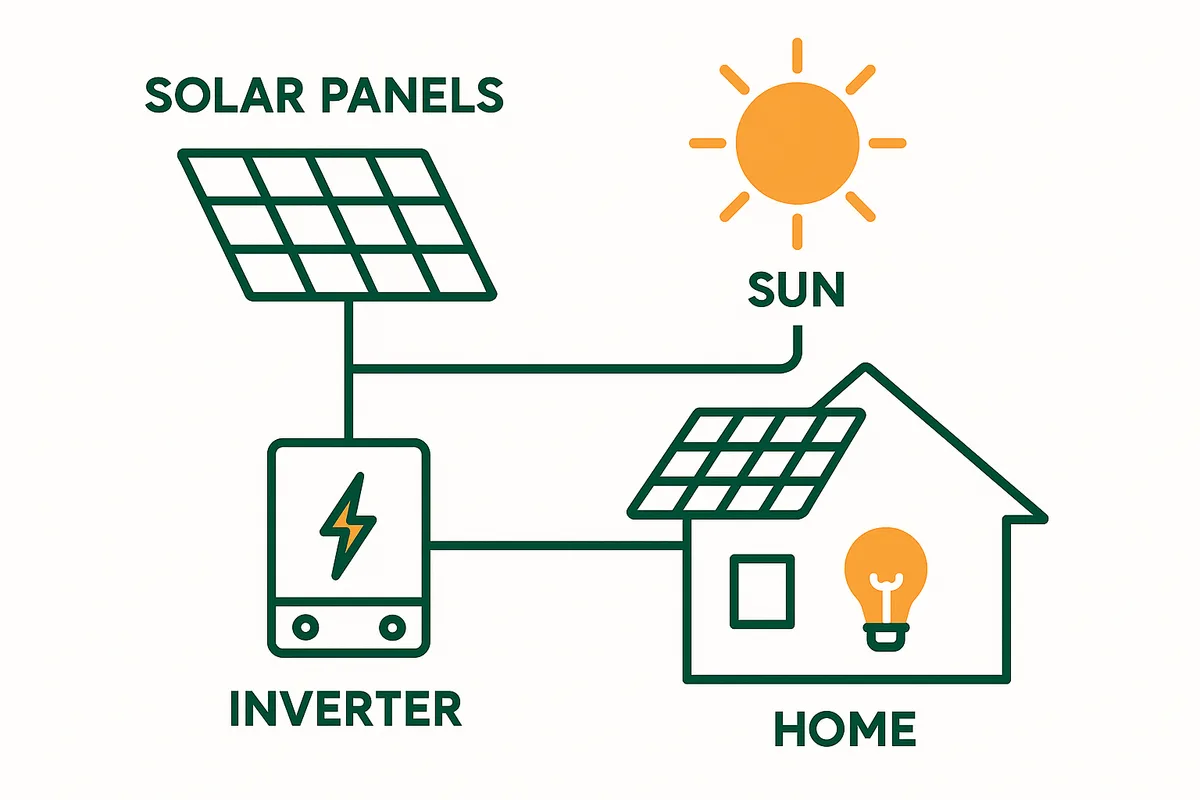
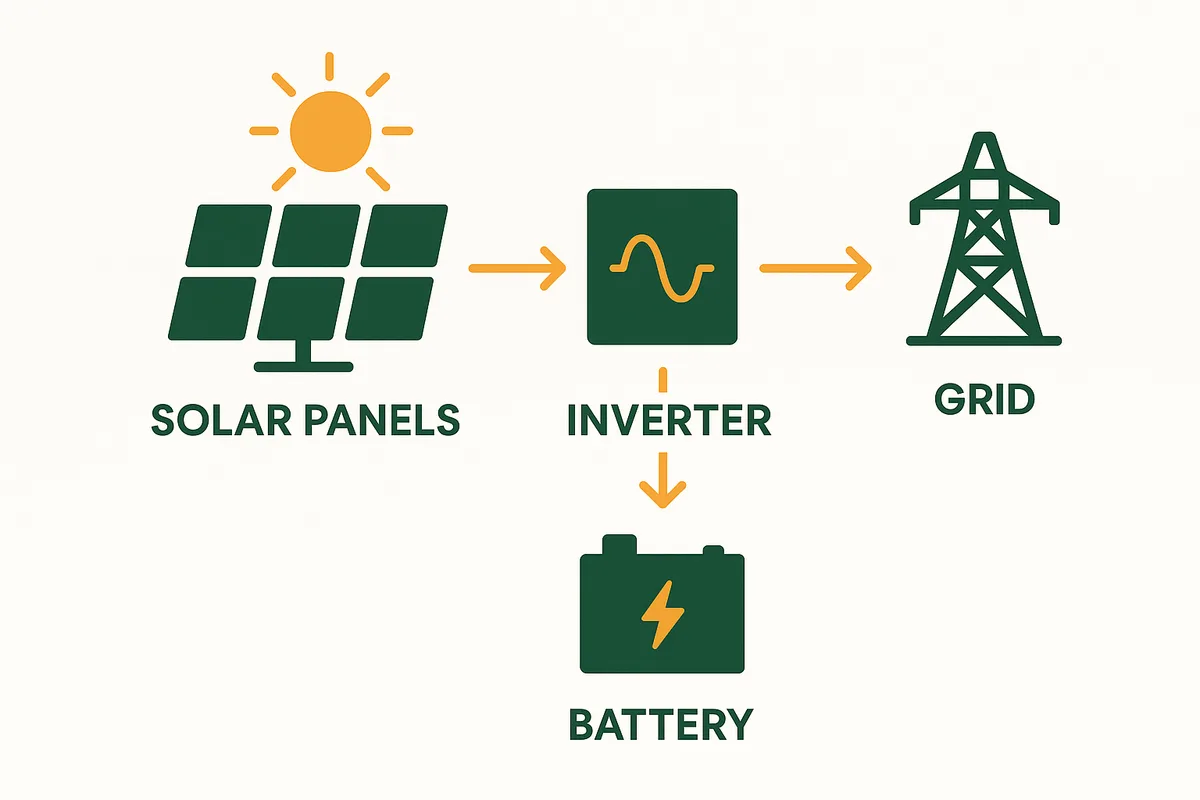
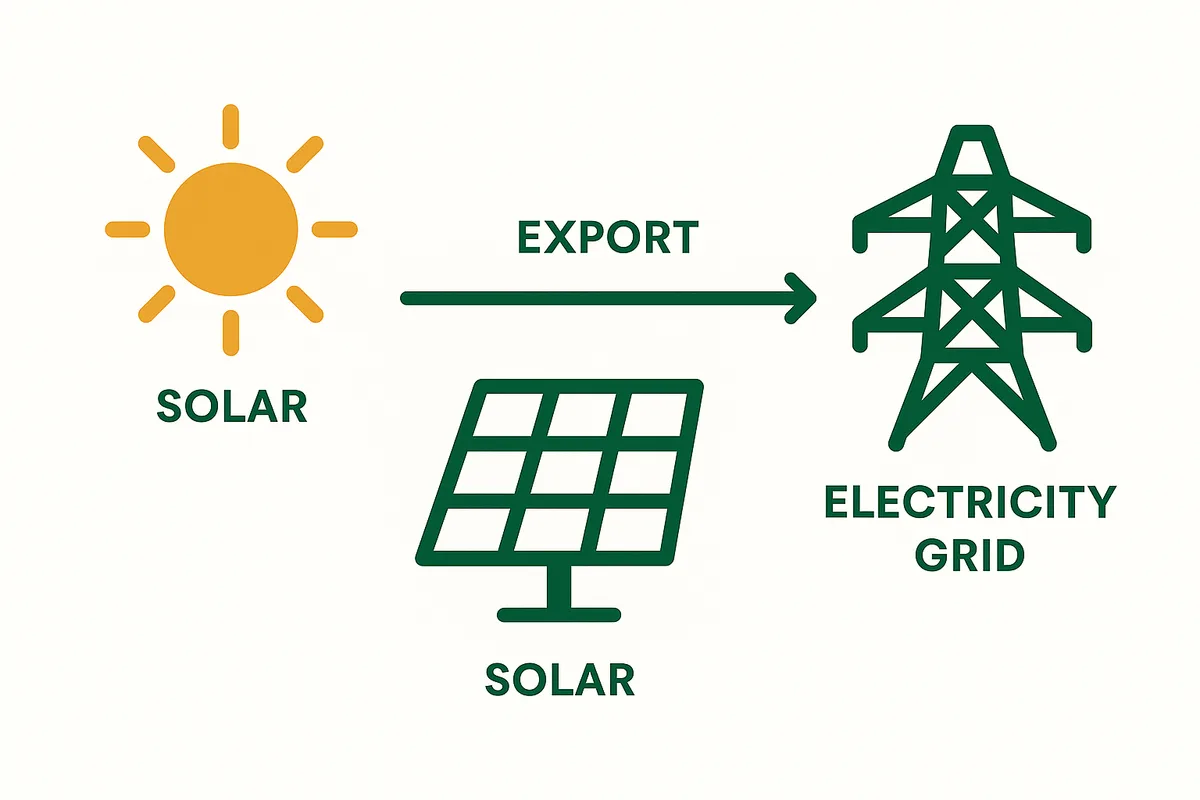
After conversion, the AC electricity flows to your consumer unit (fuse box) and powers your home. Any surplus is exported to the grid.
Source: IET Wiring Regulations BS 7671; MCS technical standards.
Step 4: Electricity Powers Your Home (or Exports to Grid)
Once converted to AC, the electricity flows to your consumer unit where it is distributed to your circuits — lights, sockets, appliances, and everything else.
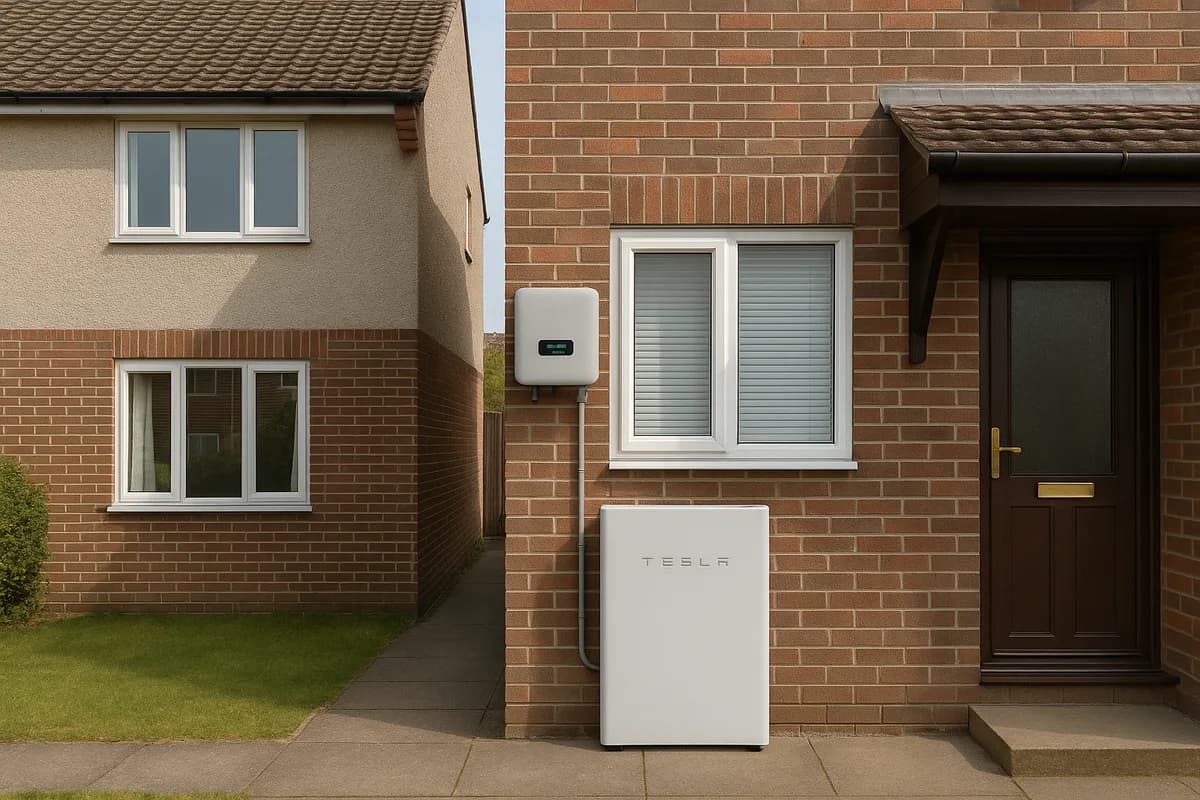
The priority order is: 1. Power your home first — any electricity your home needs right now comes from the panels 2. Charge battery (if installed) — surplus flows to the battery for later use 3. Export to grid — anything left over is sent to the national grid, and you earn SEG payments
Your electricity meter records both what you import from the grid and what you export. You pay for imports at the standard rate (~26.11p/kWh) and earn the SEG rate for exports (4–15p/kWh).
At night or when your panels cannot meet demand, electricity flows from the grid (or your battery) to your home seamlessly. The switch between solar, battery, and grid is instant and automatic.
Source: Ofgem metering standards; SEG participation guidelines.
How Much Electricity Do Solar Panels Produce?
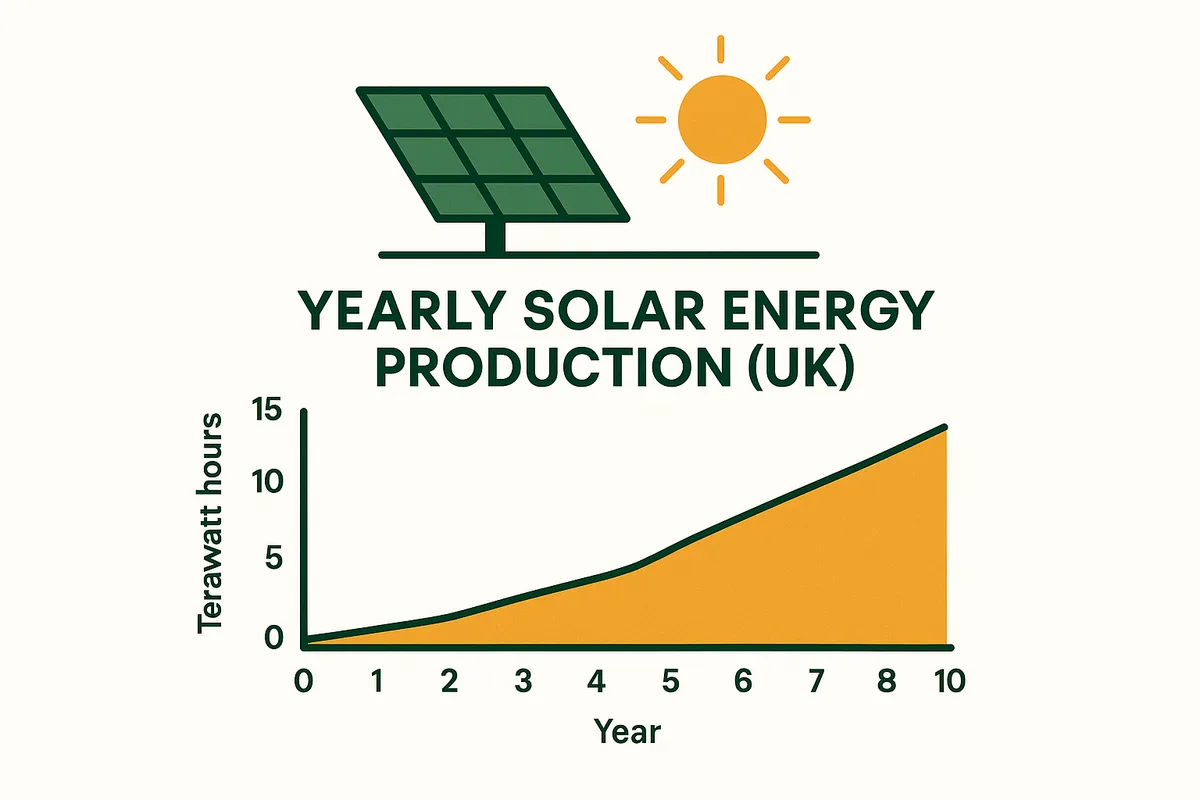
Output depends on system size, location, roof direction, and weather. Here are typical UK annual figures:
- 3kW system (8 panels): 2,800–3,200 kWh/year
- 4kW system (10 panels): 3,800–4,200 kWh/year
- 5kW system (13 panels): 4,700–5,200 kWh/year
- 6kW system (16 panels): 5,600–6,200 kWh/year
The average UK household uses ~3,700 kWh/year (Ofgem). A 4kW system generates roughly enough to match that — though not all of it is used directly due to timing mismatches between generation and consumption.
With a battery, 60–85% of generated electricity is used directly. Without a battery, 30–50% is used and the rest is exported.
Source: PVGIS UK irradiance data; Ofgem typical domestic consumption.
Frequently Asked Questions
Related guides
You might also like
Ready to see what solar could save you?
Get free, no-obligation quotes from MCS-certified installers in your area.
Get Free QuotesFree, no obligation. Takes 2 minutes.