Solar Panel Wiring: How Panels Connect to Your Home
Ready to see what solar could save you?
Get free, no-obligation quotes from MCS-certified installers in your area.
Get Free QuotesFree, no obligation. Takes 2 minutes.
How are solar panels wired to your home?
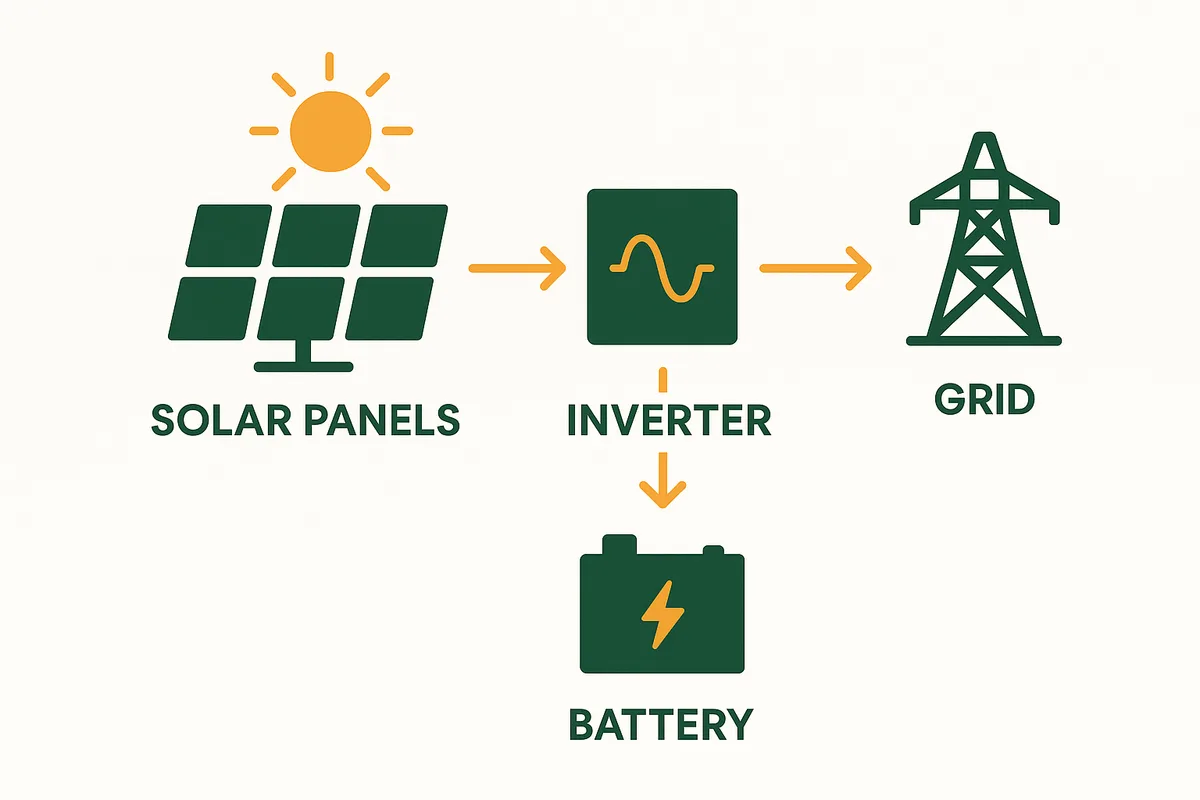
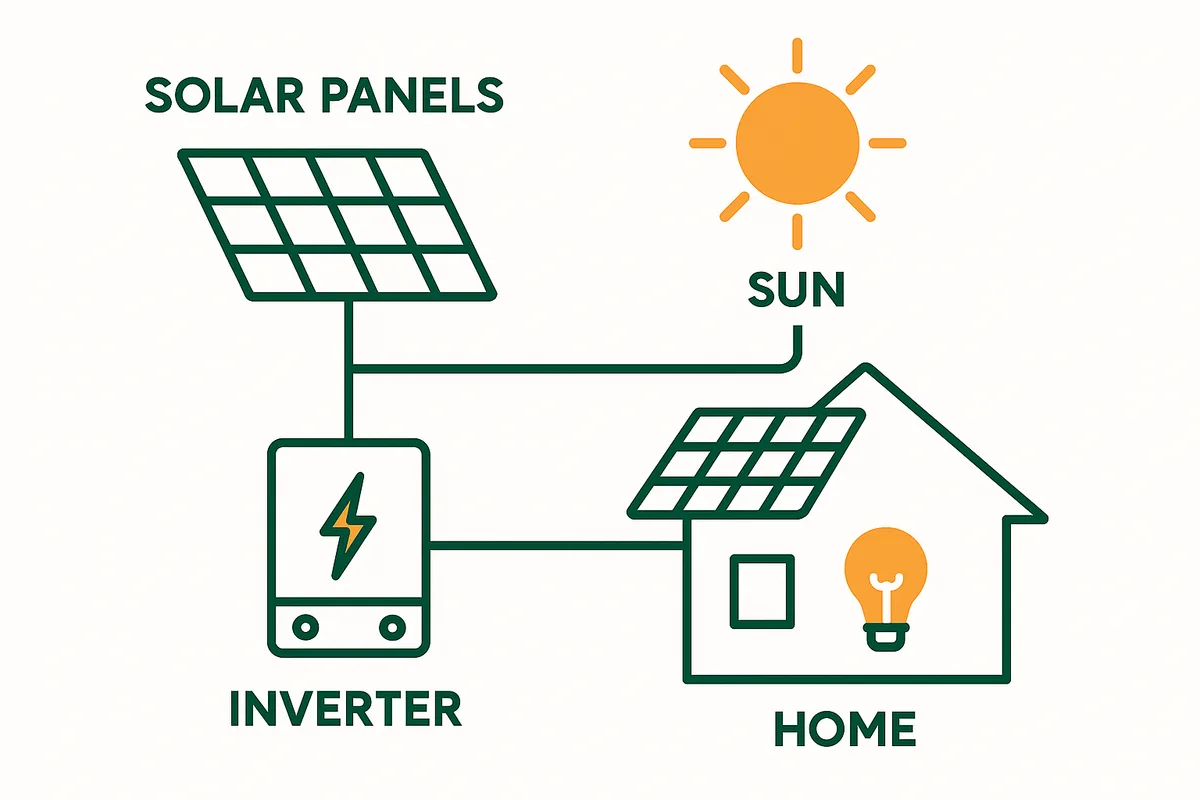
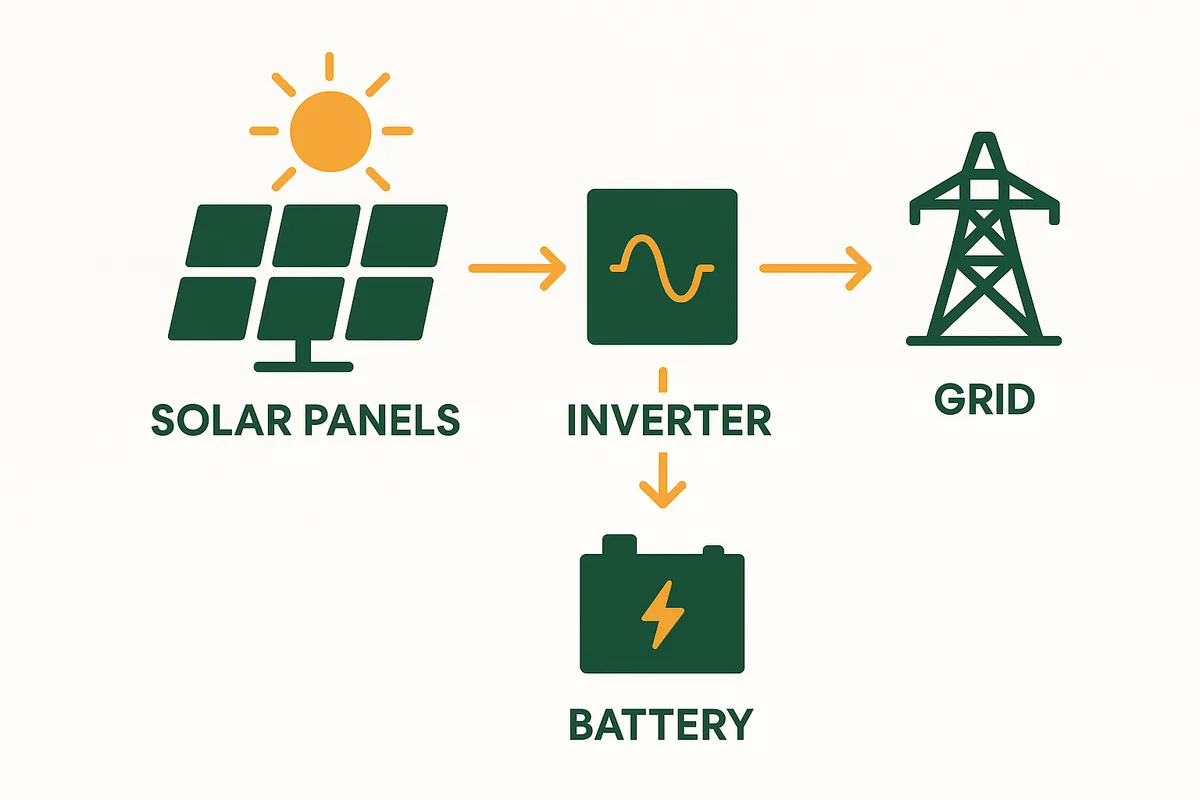
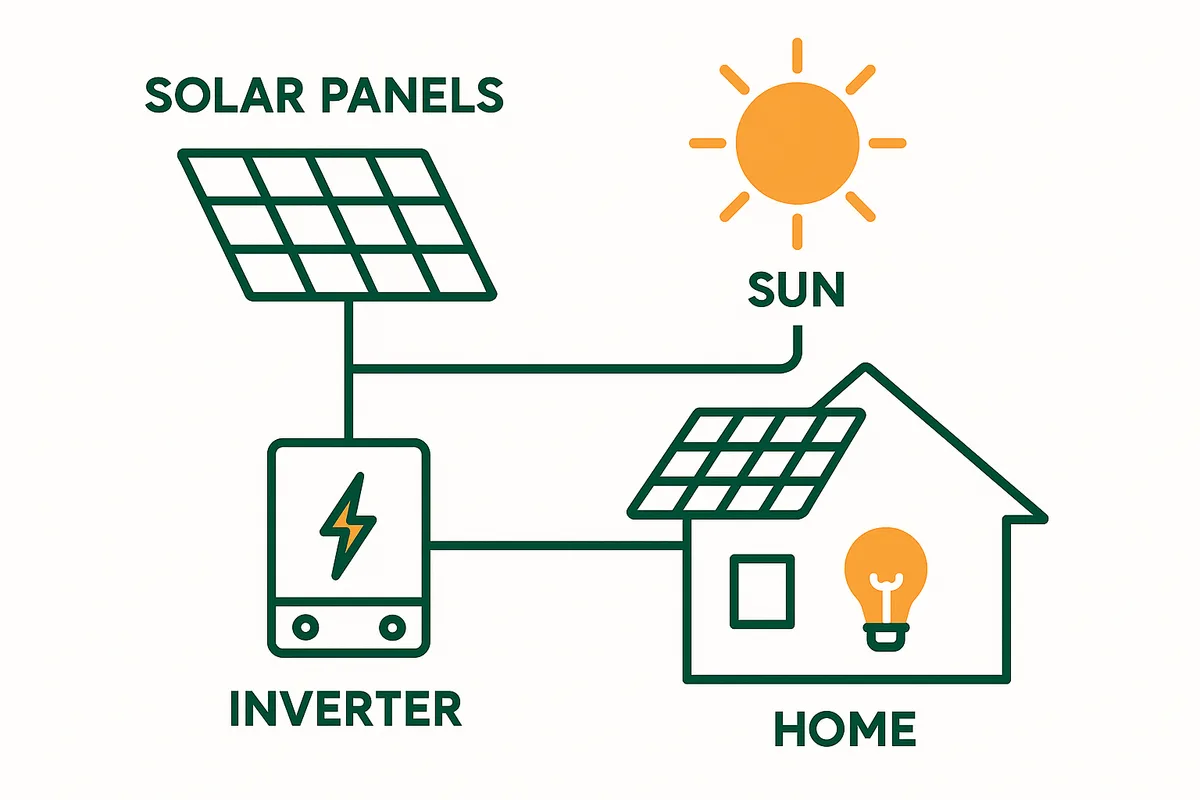
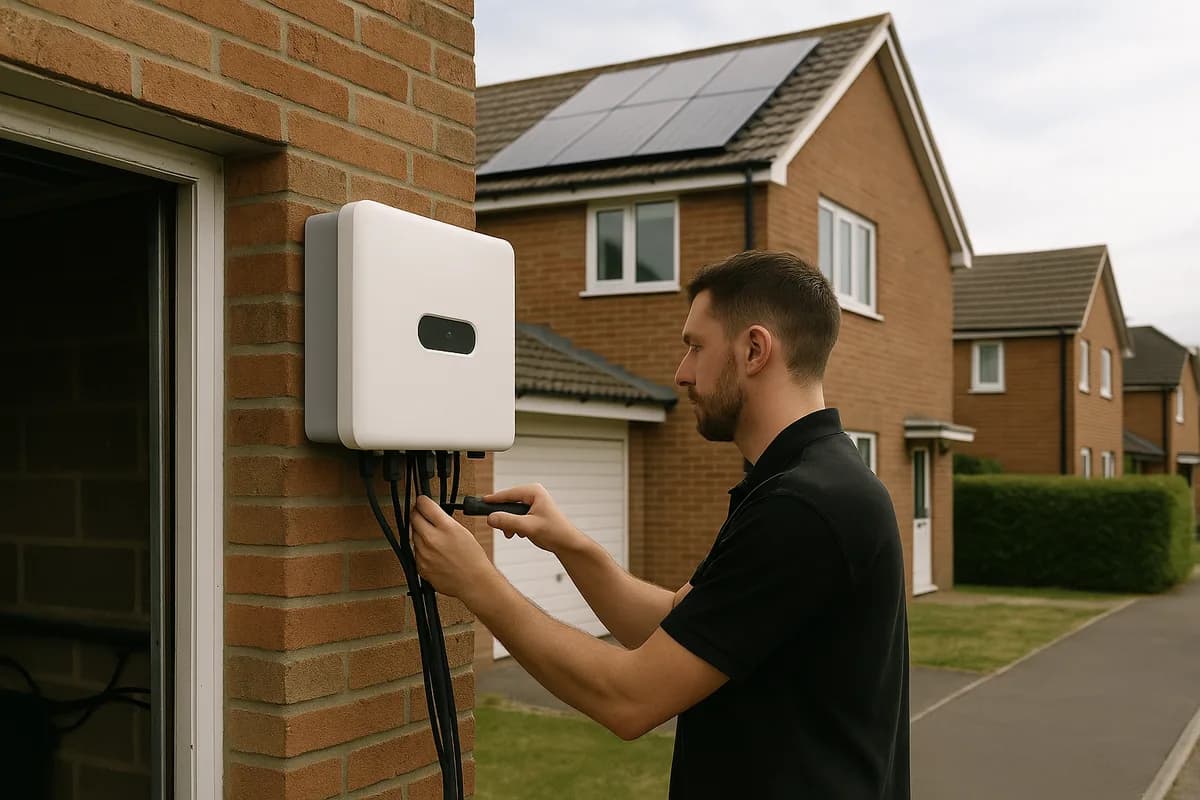
Solar panels connect to each other in series (most common) or parallel, sending DC electricity via cables to an inverter. The inverter converts DC to AC and connects to your consumer unit (fuse box) via a dedicated circuit. From there, solar electricity flows to your home's appliances. Key components in the wiring chain: panels → MC4 connectors → DC cable → DC isolator → inverter → AC isolator → consumer unit → your home.
The Complete Wiring Chain
From roof to appliance, the electricity flows through:
1. Solar panels — generate DC electricity from sunlight 2. MC4 connectors — weatherproof connectors linking panel to panel 3. DC cable — carries DC electricity from panels down to the inverter 4. DC isolator switch — safety disconnect between panels and inverter (accessible from ground level) 5. Inverter — converts DC to AC and manages the system 6. AC isolator switch — safety disconnect between inverter and consumer unit 7. Consumer unit (fuse box) — distributes electricity to your home's circuits 8. Generation meter (if required) — records total electricity generated 9. Smart meter — records import from and export to the grid
If you have a battery: The battery connects to the inverter (or has its own dedicated inverter). The inverter manages charging and discharging automatically.
If you have an EV charger: The charger connects to a dedicated circuit in the consumer unit — it draws from whatever source is available (solar, battery, or grid).
Source: IET Wiring Regulations BS 7671; MCS installation standards.
Series vs Parallel Wiring
Series wiring (most common for string inverters): - Panels connect positive-to-negative in a chain (like batteries in a torch) - Voltage ADDS up: 10 panels at 40V each = 400V DC total - Current stays the same: ~10A - Used with: string inverters, SolarEdge optimisers - Advantage: thinner cables (lower current = less copper needed) - Disadvantage: one underperforming panel affects the entire string
Parallel wiring (less common for residential): - Panels connect positive-to-positive, negative-to-negative - Voltage stays the same: 40V - Current ADDS up: 10 panels at 10A = 100A - Used with: some off-grid systems, charge controllers - Advantage: each panel independent (shading does not affect others) - Disadvantage: requires thicker cables (higher current)
Micro-inverter wiring: - Each panel has its own micro-inverter on the back - DC conversion happens at the panel — only AC flows to the house - Panels connect in parallel on the AC side - Each panel is fully independent - Advantage: best performance in shading, simplest panel expansion - Disadvantage: more components on the roof
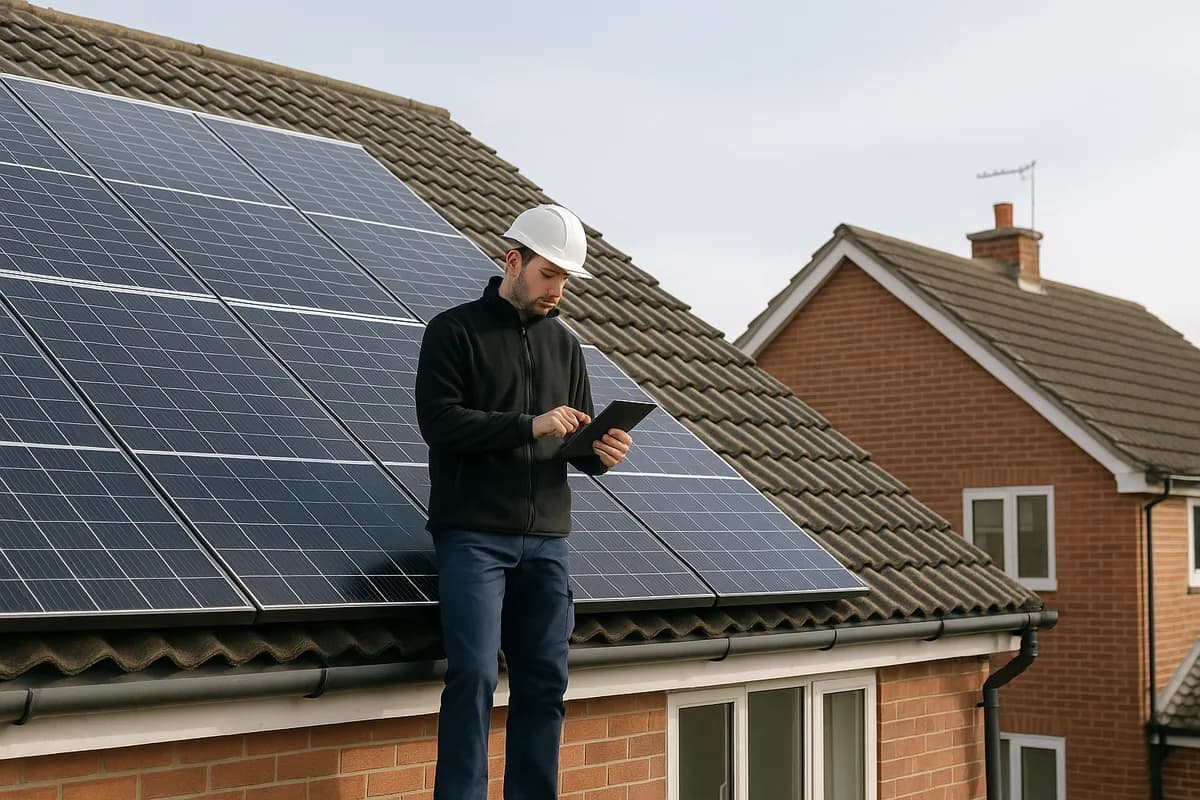
For most UK residential installations: Series wiring with a string inverter is standard. Optimisers or micro-inverters are added for partially shaded or multi-orientation roofs.
Source: Electrical engineering fundamentals; MCS wiring standards.
Ready to see what solar could save you?
Get free, no-obligation quotes from MCS-certified installers in your area.
Get Free Quotes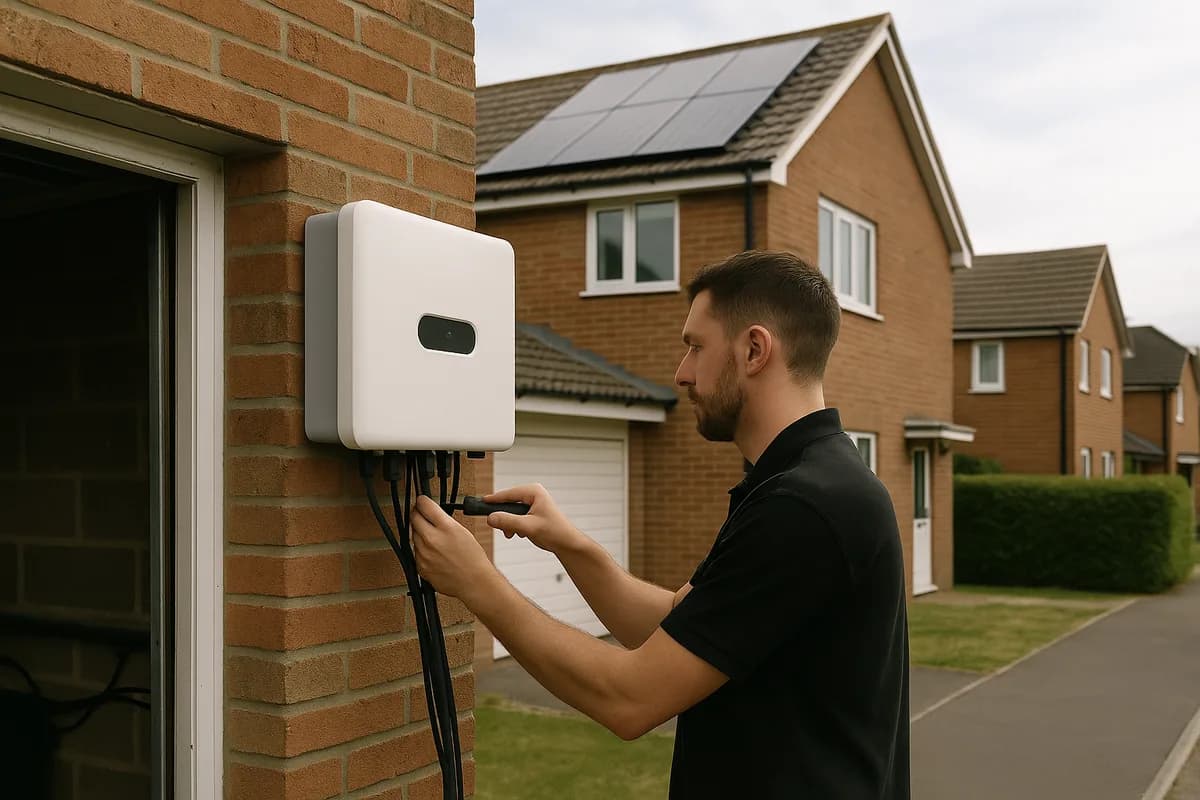
Key Components Explained
- MC4 connectors — weatherproof, locking connectors that join panel cables together. They click into place and cannot accidentally disconnect. Rated for 25+ years outdoor use.
- DC cable — typically 4mm² or 6mm² solar cable with UV-resistant sheathing. Runs from the roof to the inverter, usually through the loft space and down an internal or external wall.
- DC isolator — a switch that disconnects the panel circuit from the inverter for safe maintenance. Must be accessible from ground level. IMPORTANT: even with the DC isolator off, the panel-side cables are still live during daylight.
- AC isolator — a switch between the inverter and consumer unit. Disconnects the solar system from your home's electrical supply. Used during maintenance or emergencies.
- Consumer unit (fuse box) — your home's main electrical distribution board. The solar inverter connects to a dedicated circuit breaker (MCB) in the consumer unit.
- RCD protection — a residual current device protects against earth faults. Required on the solar circuit per IET Wiring Regulations.
- Generation meter — some DNOs require a separate meter to record total generation. Your inverter also tracks this digitally.
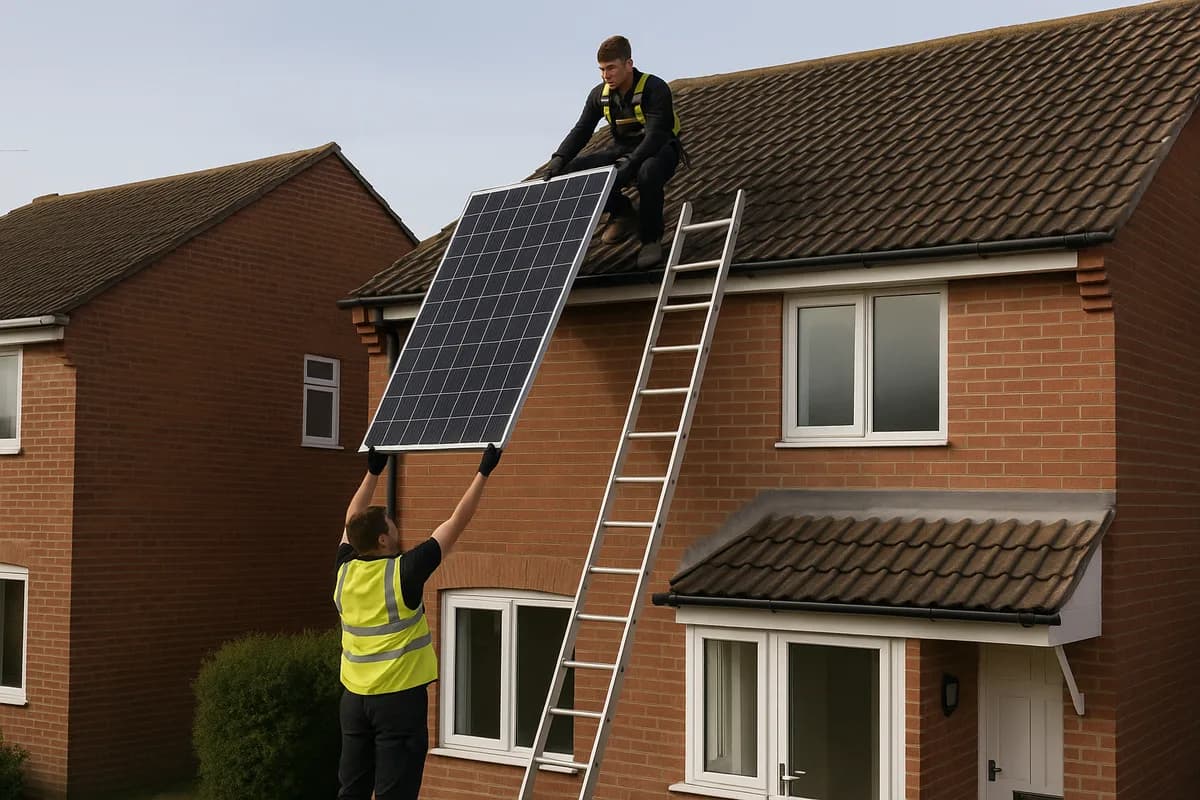
Safety: Why You Should Never DIY Solar Wiring
Solar panel DC circuits carry HIGH VOLTAGE (300–600V DC on a typical 10-panel string) whenever the panels are illuminated. This presents serious risks:
DC is more dangerous than AC at the same voltage: - DC arcs do not self-extinguish (AC arcs extinguish 100 times per second) - DC shocks are harder to let go of (muscle contraction is continuous) - DC arc faults are a fire risk if connectors are improperly crimped
Panels cannot be 'switched off' at the panel level: - Even with all isolators switched off, the cables between panels and the DC isolator are LIVE during daylight - Covering panels with a blanket reduces but does not eliminate voltage - Only qualified electricians should work on DC solar circuits
AC side risks: - The inverter connection to the consumer unit involves 230V AC - This is the same voltage as mains electricity — lethal if contacted - Part P Building Regulations require qualified electricians for this work
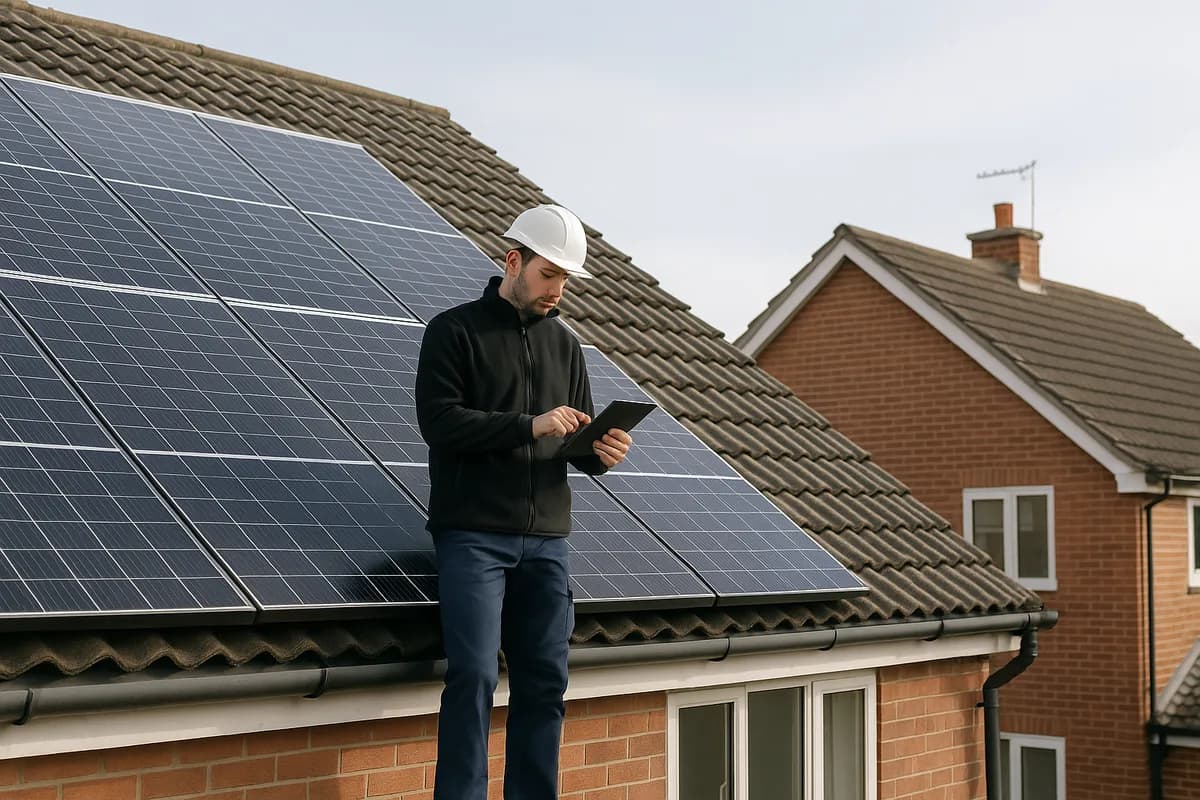
The message: Solar wiring is not a DIY job. The DC side is dangerous and the AC side is legally restricted. Use an MCS-certified installer.
Source: HSE electrical safety guidance; IET Wiring Regulations.
Frequently Asked Questions
Related guides
You might also like
Ready to see what solar could save you?
Get free, no-obligation quotes from MCS-certified installers in your area.
Get Free QuotesFree, no obligation. Takes 2 minutes.