Solar Panel Optimisers: What They Do & When You Need Them
Ready to see what solar could save you?
Get free, no-obligation quotes from MCS-certified installers in your area.
Get Free QuotesFree, no obligation. Takes 2 minutes.
What are solar panel optimisers?
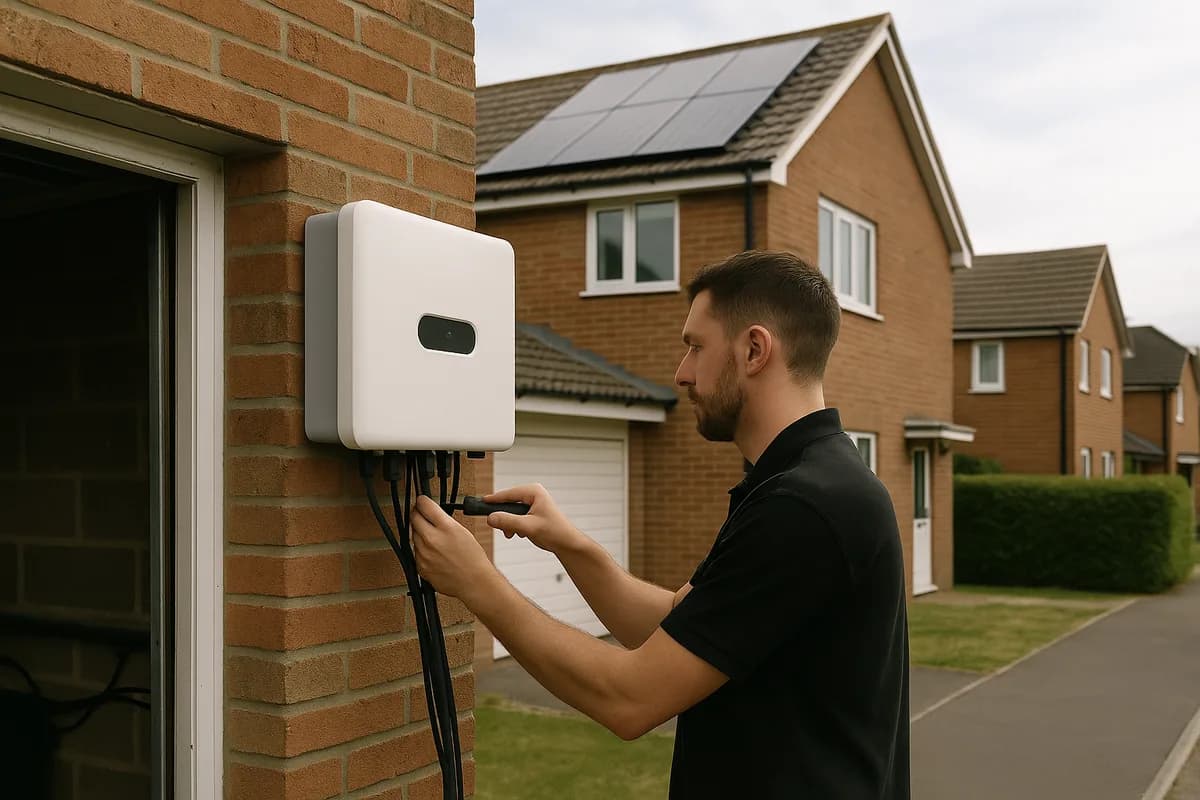
Solar panel optimisers are small electronic devices attached to each individual panel. They perform Maximum Power Point Tracking (MPPT) at the panel level, ensuring each panel operates at its maximum output regardless of what other panels in the string are doing. Cost: £30–£50 per panel extra (£300–£500 for a 10-panel system). They are most valuable on: partially shaded roofs, multi-orientation systems (east-west splits), and roofs with panels at different pitches.
How Optimisers Work
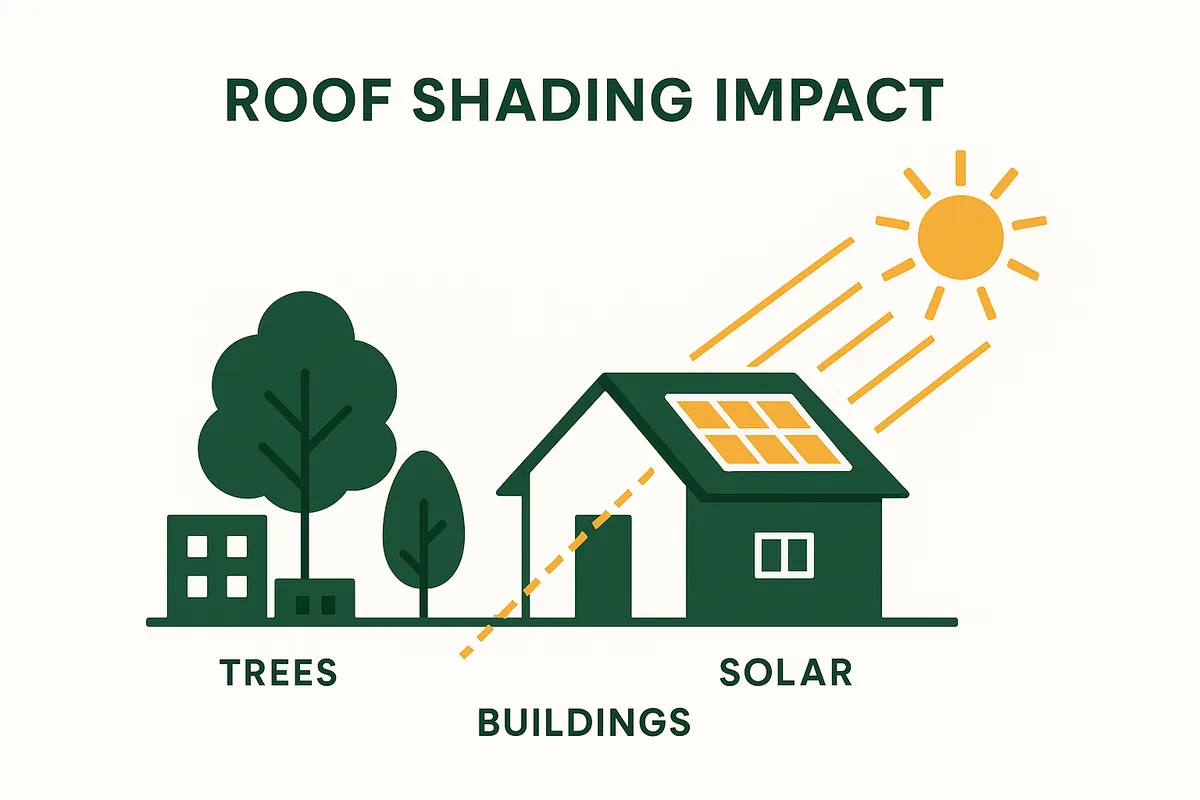
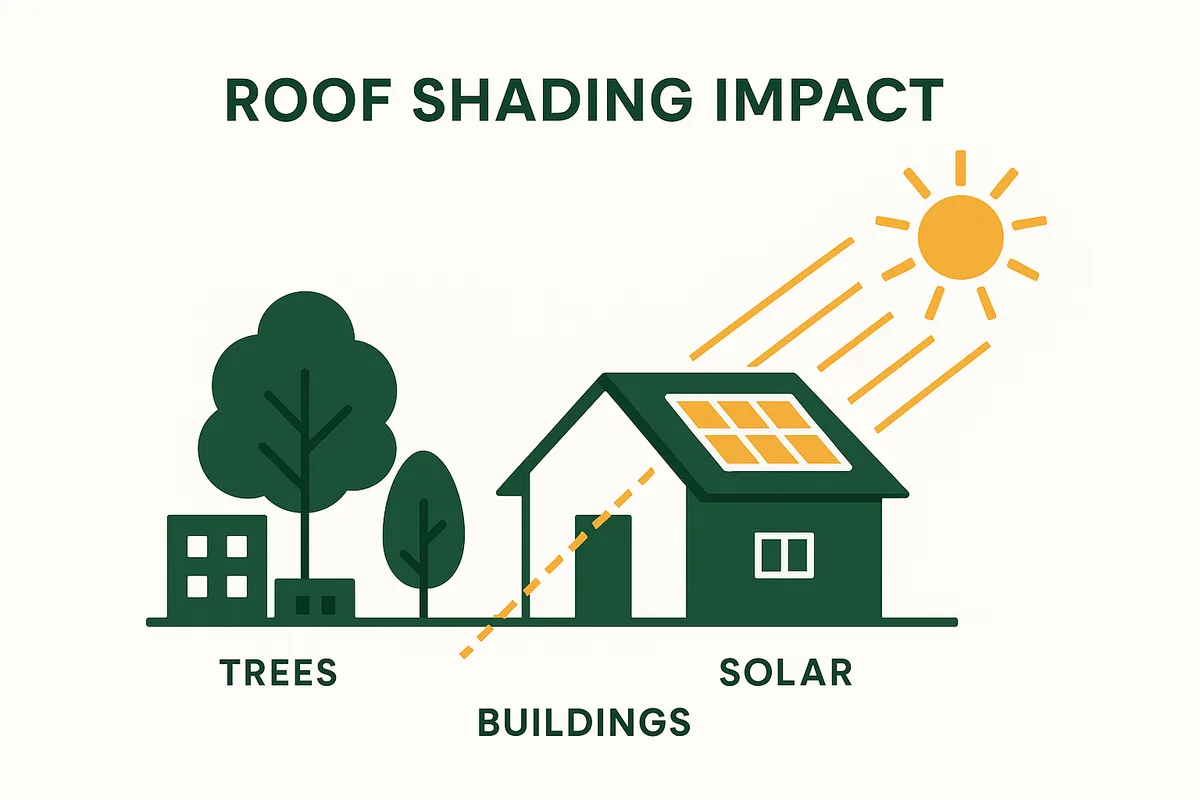
Without optimisers (standard string inverter): - All panels are connected in series (a 'string') - The entire string operates at the level of the weakest panel - If one panel is shaded, dirty, or underperforming — all panels in the string produce less - Example: 1 shaded panel out of 10 can reduce total output by 20–30%
With optimisers (SolarEdge system or add-on): - Each panel has its own optimiser that performs individual MPPT - If one panel is shaded, only that panel's output drops — the rest operate at full capacity - The optimiser converts each panel's output to the optimal voltage for the string - Example: 1 shaded panel out of 10 reduces total output by only 8–10% (just that panel's contribution)
The result: Optimisers recover 10–25% of output that would be lost to shading, mismatch, or uneven soiling in a standard string system.
Source: SolarEdge performance data; NREL panel-level MPPT research.
Optimisers vs Micro-Inverters vs String Inverters
Three approaches to managing panel output:
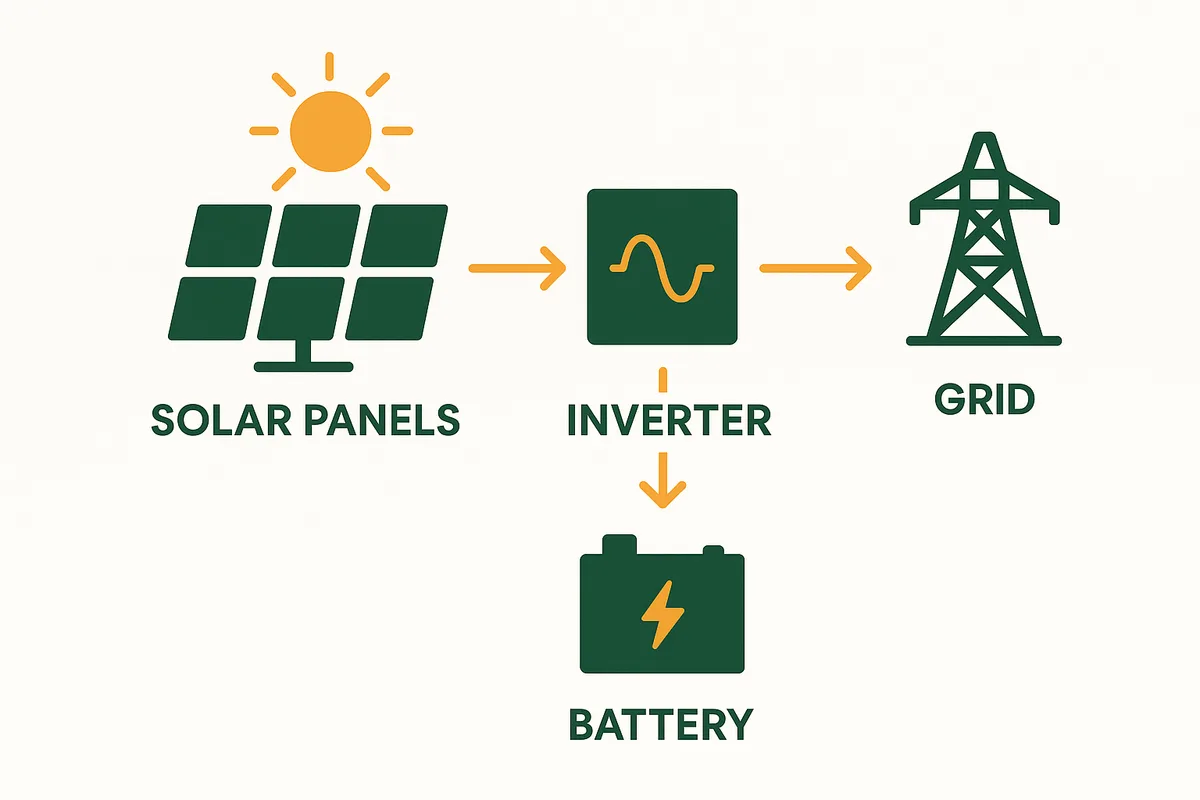
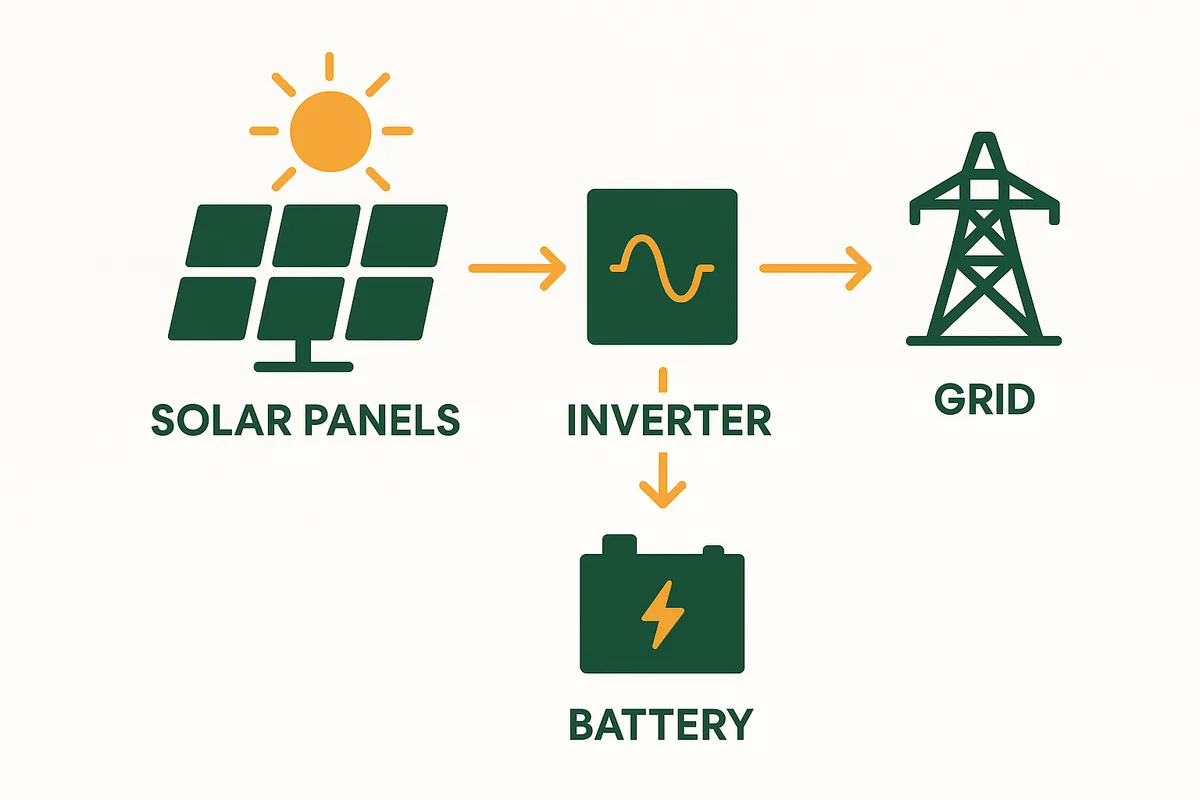
String Inverter (cheapest, simplest): - One central inverter for all panels - No panel-level optimisation - Best for: unshaded roofs where all panels face the same direction - Cost: £500–£1,000
String Inverter + Optimisers (middle ground): - One central inverter + an optimiser on each panel - Panel-level MPPT without replacing the inverter type - Best for: partially shaded roofs or mixed orientations - Cost: £500–£1,000 (inverter) + £300–£500 (optimisers) = £800–£1,500 - SolarEdge is the market leader for this approach
Micro-Inverters (most independent): - Each panel has its own complete DC-to-AC inverter - Full panel independence — no string limitations at all - Best for: complex roofs with significant shading or many orientations - Cost: £1,000–£2,800 for a 10-panel system - Enphase is the market leader
The decision: If your roof is unshaded and single-direction → string inverter. If you have some shading → add optimisers. If you have complex shading on multiple orientations → micro-inverters.
Source: Inverter technology comparisons; installer recommendations.
Ready to see what solar could save you?
Get free, no-obligation quotes from MCS-certified installers in your area.
Get Free QuotesWhen Optimisers ARE Worth It
- Partial shading from chimneys — chimney shadows move across panels throughout the day. Optimisers ensure only the shaded panel loses output.
- Tree shading (seasonal) — trees cast different shadows at different times of year. Optimisers handle this automatically.
- East-west split systems — panels at different orientations have different optimal voltages. Optimisers match each panel to its own optimum.
- Mixed panel pitches — if panels are on roof slopes at different angles (common with extensions or dormers).
- Future monitoring — SolarEdge optimisers provide panel-level monitoring, showing exact output per panel. This helps diagnose issues.
- Safety — SolarEdge optimisers include SafeDC, which reduces panel voltage to a safe level when the inverter shuts off. Important for firefighter safety.
- Long panel strings — in systems with 15+ panels, mismatch losses increase. Optimisers maintain efficiency across the entire string.
When Optimisers Are NOT Worth It
- Unshaded, single-direction roof — if all panels face the same way with no shading, a standard string inverter achieves 95%+ of optimiser performance at lower cost.
- Small system (5–6 panels) — the cost premium per panel has a proportionally larger impact on total system ROI.
- Budget-constrained — the £300–£500 extra could go toward one additional panel, which may produce more extra energy than optimisers recover from mismatch.
- Very simple installation — if the installer confirms zero shading and single orientation, optimisers add cost without benefit.
Cost and ROI of Optimisers
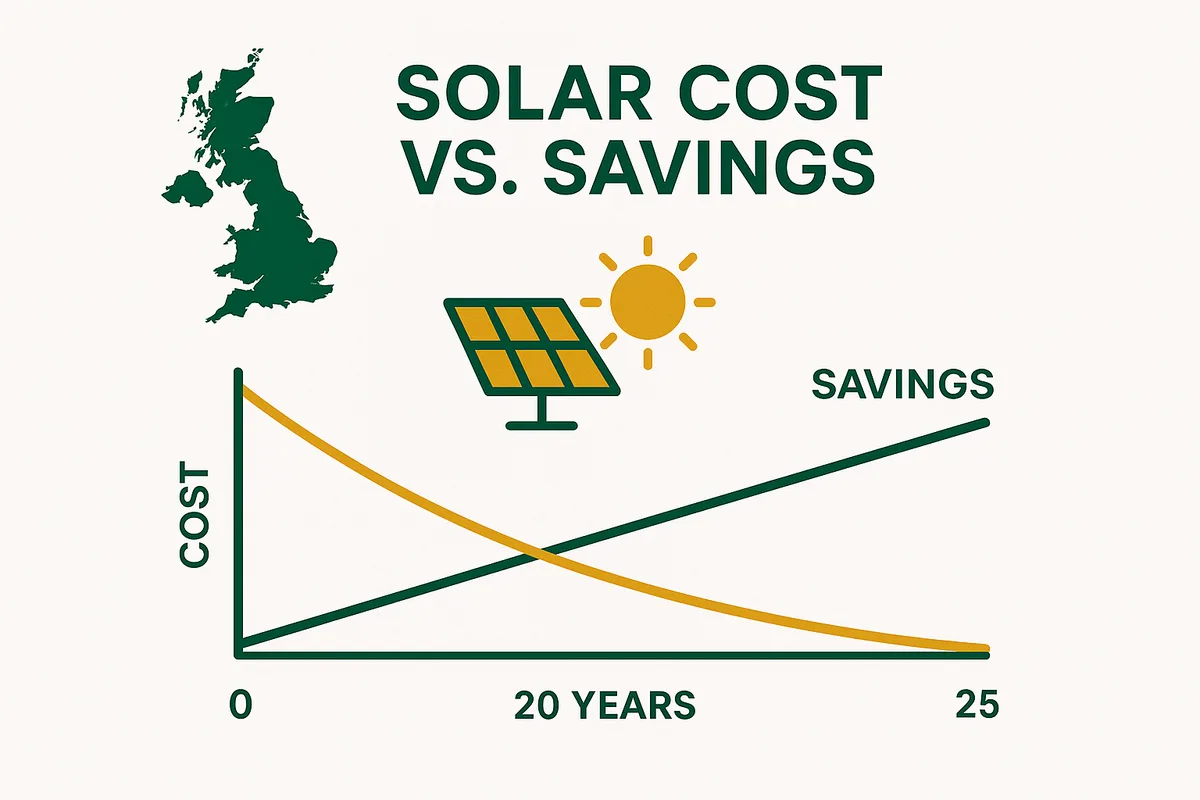
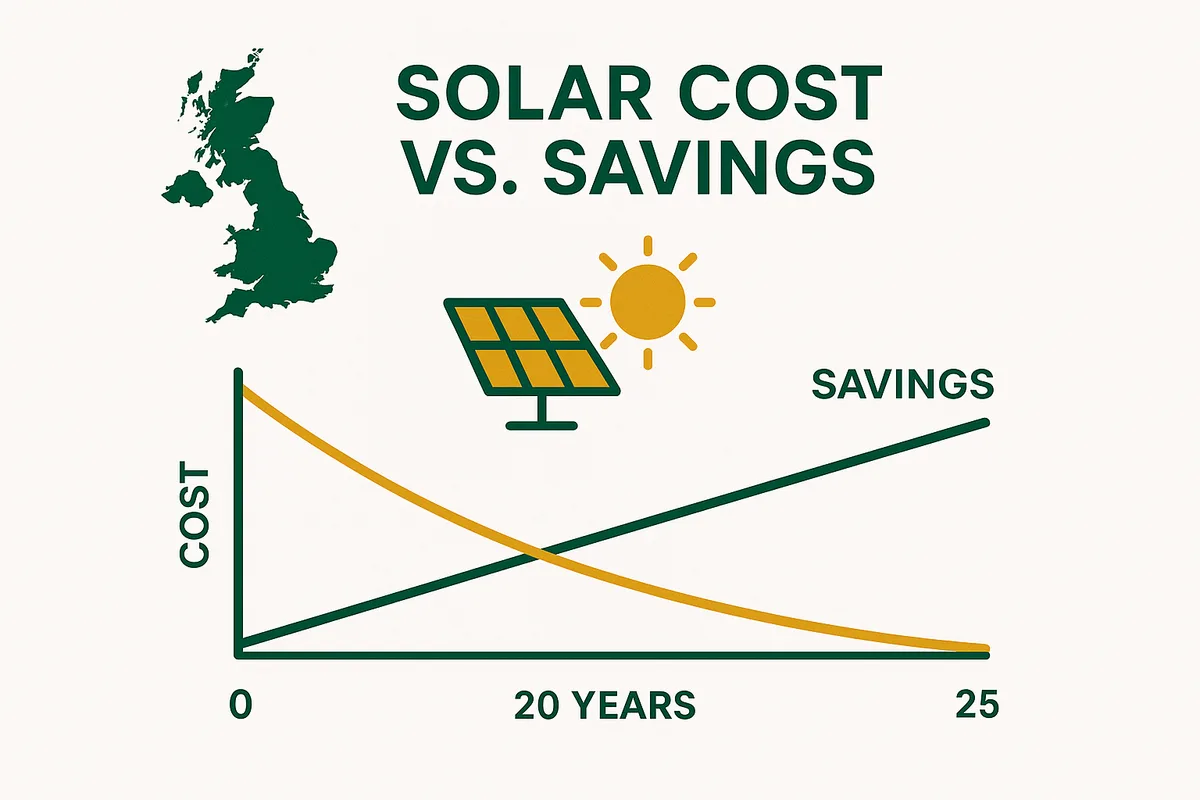
Additional cost: £30–£50 per panel = £300–£500 for a 10-panel system
Energy recovered: - Light shading (chimney shadow 1–2 hours/day): 3–5% more output = £15–£45/year extra - Moderate shading (tree shadow half-day): 8–15% more output = £45–£130/year extra - Heavy shading (multiple sources): 15–25% more output = £90–£200/year extra
Payback: - Light shading: 7–20 years (marginal) - Moderate shading: 3–7 years (worthwhile) - Heavy shading: 2–4 years (strongly worthwhile)
Break-even rule of thumb: If your installer estimates shading losses exceed 8–10% without optimisers, they are worth the investment. Below 8%, a standard string inverter is sufficient.
Source: SolarEdge shading recovery data; installer ROI calculations.
Frequently Asked Questions
Related guides
You might also like
Ready to see what solar could save you?
Get free, no-obligation quotes from MCS-certified installers in your area.
Get Free QuotesFree, no obligation. Takes 2 minutes.