Solar PV System Components: What Is Included?
Ready to see what solar could save you?
Get free, no-obligation quotes from MCS-certified installers in your area.
Get Free QuotesFree, no obligation. Takes 2 minutes.
What components are in a solar PV system?
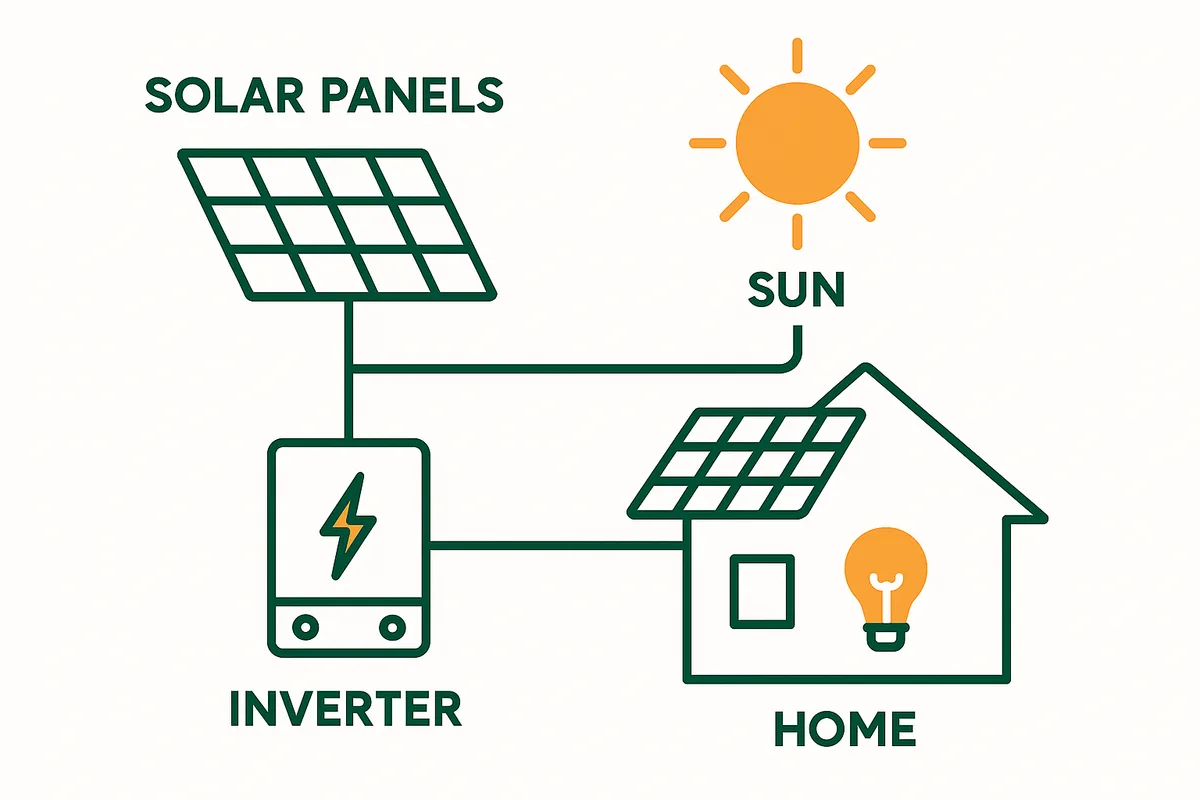
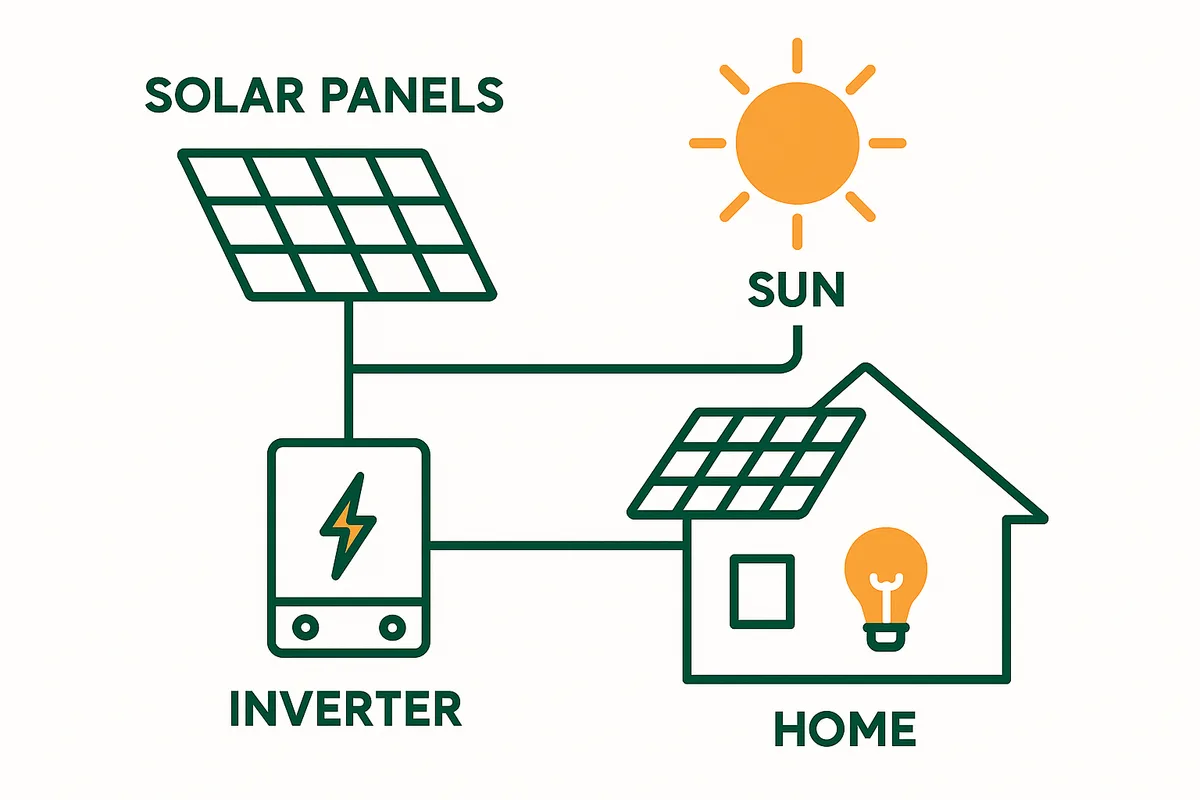
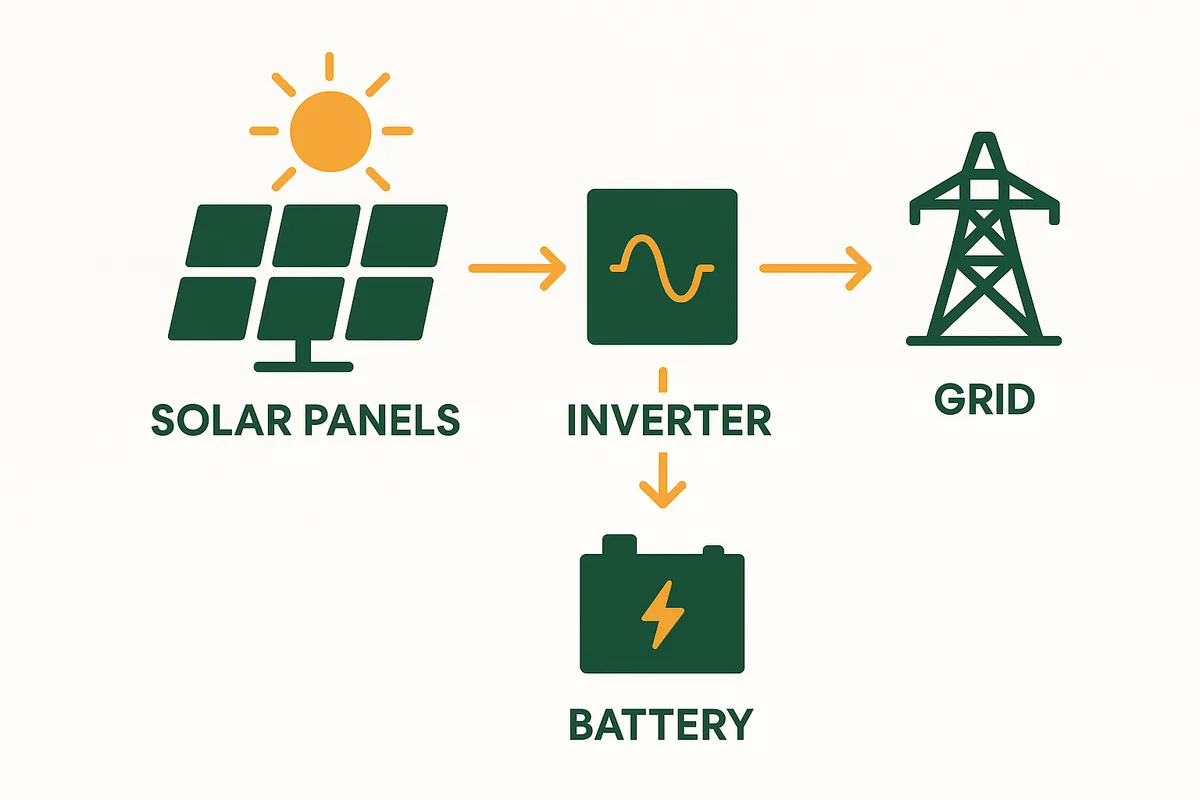
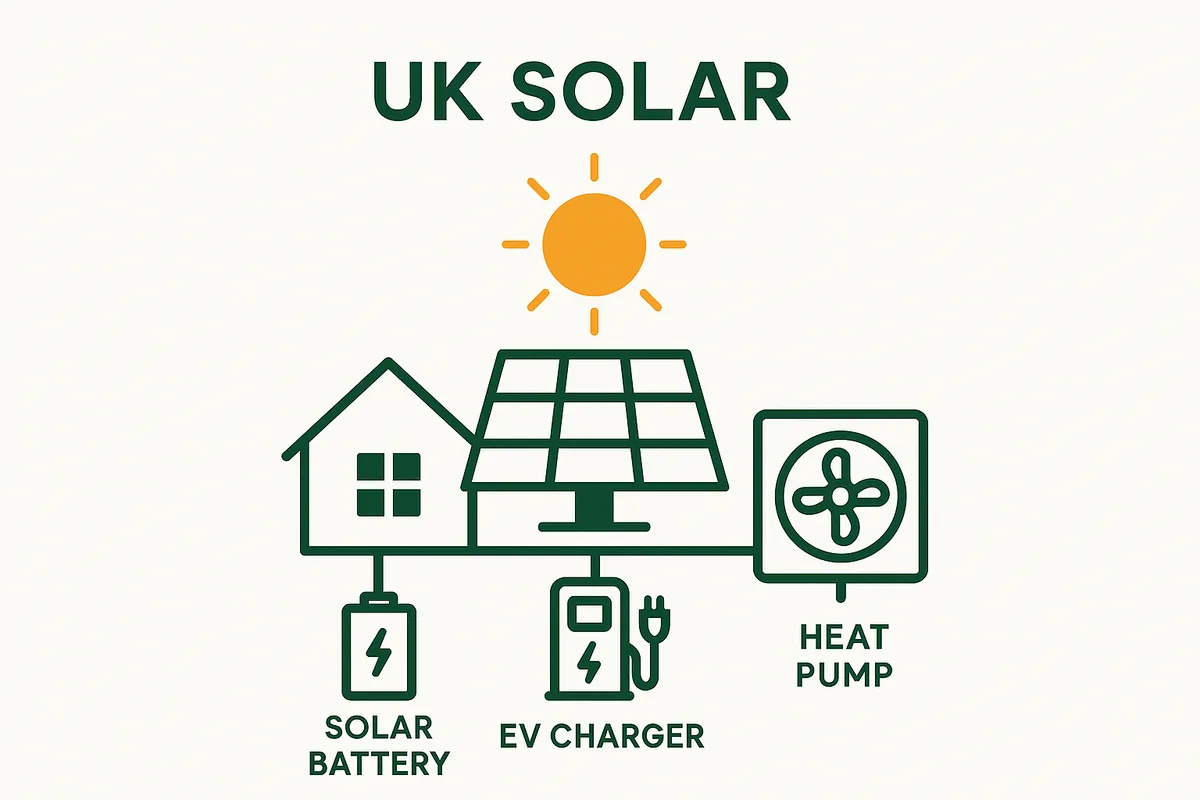
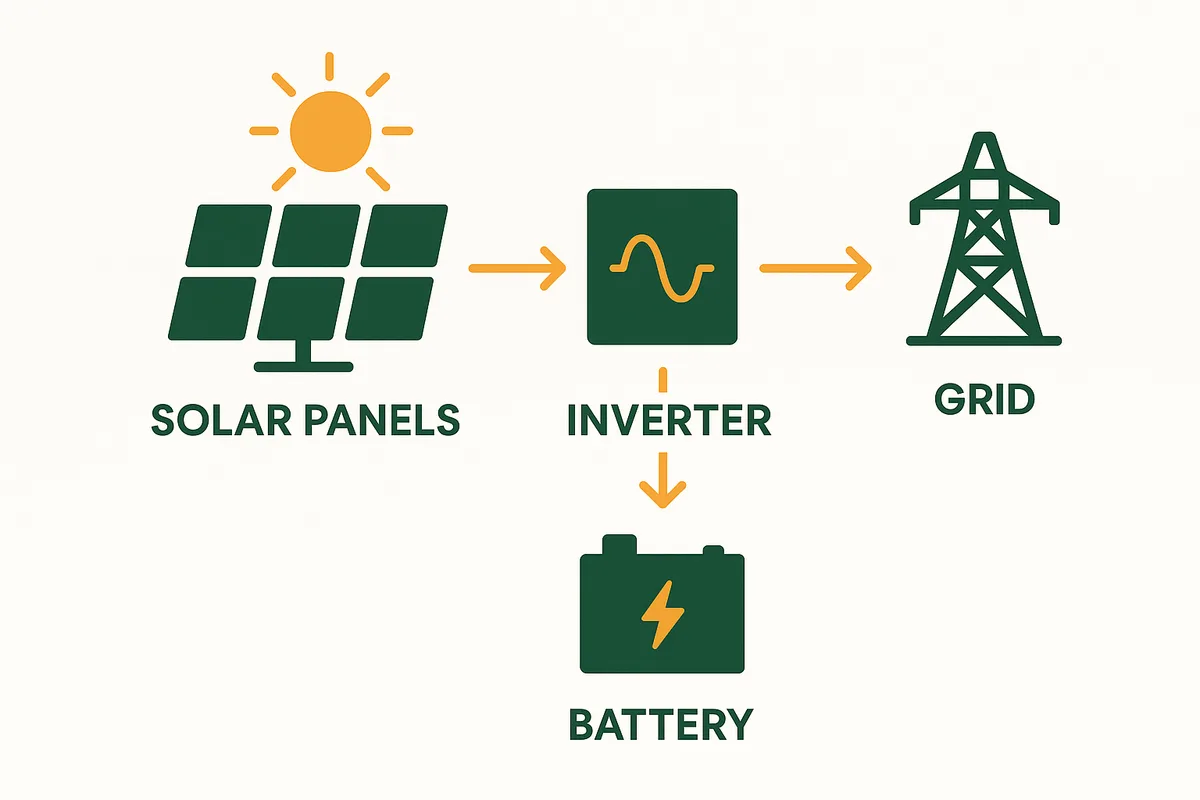
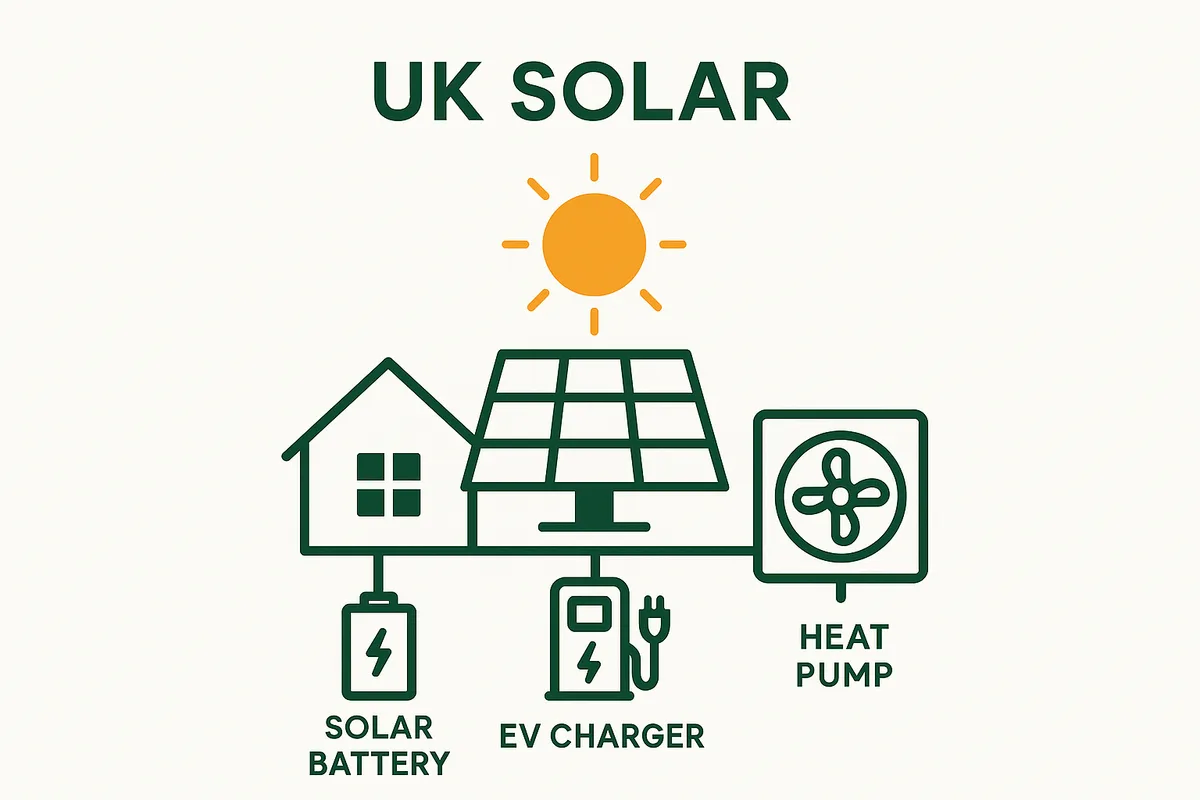
A complete UK solar PV system consists of: (1) solar panels (convert light to DC electricity), (2) inverter (converts DC to AC for your home), (3) mounting system (secures panels to the roof), (4) wiring and connectors (links everything together), (5) isolator switches (safety disconnection points), and (6) monitoring system (tracks performance via app). Optional additions: battery storage, EV charger, solar diverter for hot water. Your MCS installer supplies and installs all components as a complete package.
Component 1: Solar Panels
What they do: Convert sunlight (photons) into DC electricity via the photovoltaic effect.
Key specs: - Wattage: 375–425W per panel (residential) - Efficiency: 20–22% (monocrystalline) - Size: ~1.7m × 1.1m, 20kg per panel - Lifespan: 25–30+ years - Warranty: 25 years product + 25 years performance
What to look for: - Recognised brand (JA Solar, Trina, Longi, REC, SunPower) - Monocrystalline technology (not polycrystalline) - 25-year product warranty minimum - Performance warranty: 80%+ at 25 years
Source: Panel manufacturer specifications.
Component 2: Inverter
What it does: Converts DC electricity from panels into 230V AC electricity for your home.
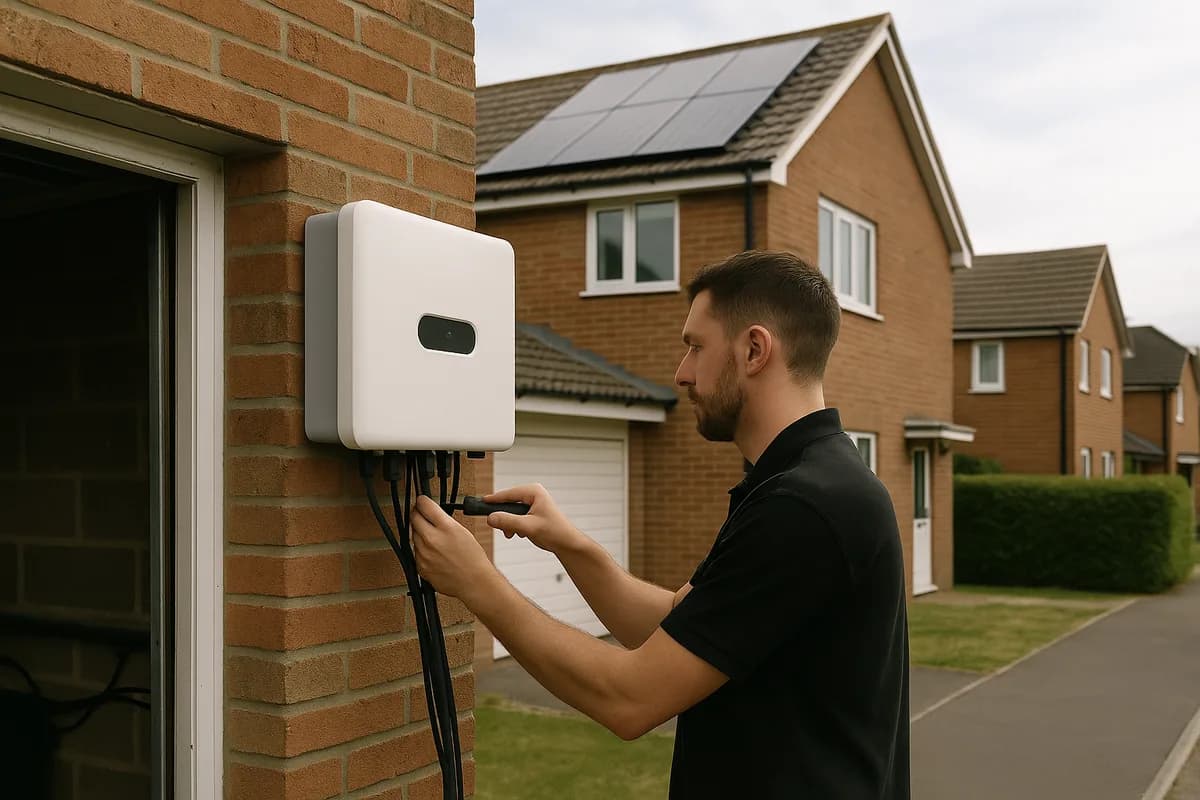
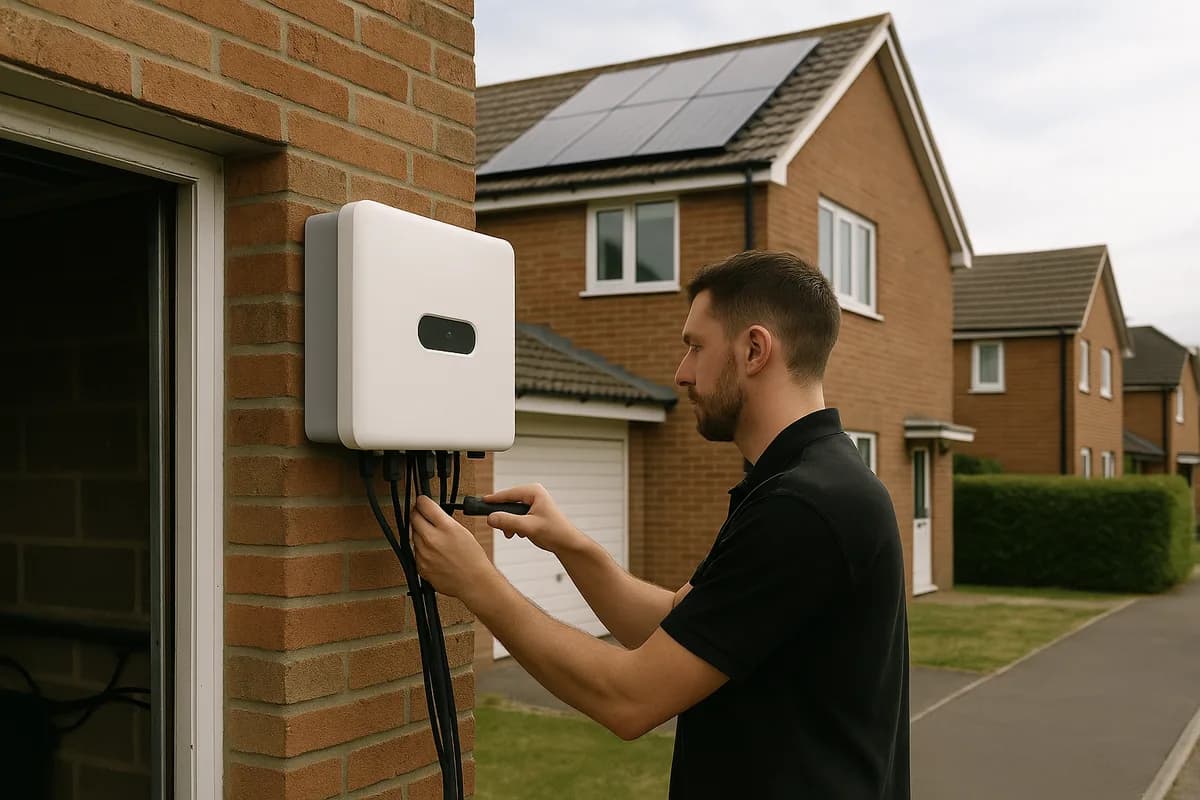
Types: - String inverter: One box on the wall, all panels connected in series. £500–£1,000. - Hybrid inverter: String inverter + battery charger in one unit. £1,000–£2,000. Battery-ready. - Micro-inverters: One small inverter per panel, mounted on the roof. £1,000–£2,800. Best for shading.
Additional functions: - Maximum Power Point Tracking (MPPT) — extracts maximum energy from panels - Grid synchronisation — matches AC output to grid frequency/voltage - Anti-islanding — disconnects during power cuts (safety requirement) - Monitoring — reports performance to your app via WiFi
What to look for: - Reputable brand (GivEnergy, SolarEdge, Enphase, Fronius, Solis) - Choose HYBRID if you might ever want a battery - Warranty: 5 years minimum (extend to 10+ if possible)
Source: Inverter manufacturer specifications.
Component 3: Mounting System
What it does: Secures panels to your roof structure.
Components: - Roof hooks: Stainless steel brackets that bolt to rafters under tiles - Mounting rails: Aluminium rails that run horizontally across the hooks - Panel clamps: Secure each panel to the rails (mid-clamps between panels, end-clamps at edges)
Variations by roof type: - Tile roof: hook-under-tile system (most common) - Slate roof: specialist slate hooks - Flat roof: ballasted or fixed tilt frames - Metal roof: standing seam clamps or corrugated brackets
Key specs: - Wind rated to 140+ mph - Panel weight support: 550 kg/m² - Corrosion resistant (stainless steel hooks, anodised aluminium rails) - Designed for 25+ year outdoor exposure
Source: K2, Schletter, and Van der Valk mounting system specifications.
Component 4: Wiring and Connectors
Ready to see what solar could save you?
Get free, no-obligation quotes from MCS-certified installers in your area.
Get Free QuotesDC side (panels to inverter): - Solar DC cable: 4mm² or 6mm², UV-resistant, double-insulated - MC4 connectors: weatherproof, locking connectors between panels - DC junction box (if needed): combines multiple panel strings
AC side (inverter to consumer unit): - Standard 6mm² twin and earth cable - Connects via a dedicated circuit breaker (MCB) in your consumer unit - RCD (residual current device) protection on the solar circuit
All wiring is installed by your MCS-certified electrician — hidden in conduit or run through the loft space.
Source: IET Wiring Regulations BS 7671.
Component 5: Isolator Switches
DC isolator: Between panels and inverter. Allows safe disconnection of the panel circuit for maintenance. Must be accessible from ground level.
AC isolator: Between inverter and consumer unit. Disconnects the solar system from your home's electrical supply.
Both are mandatory under UK regulations. They provide safe disconnection points for maintenance, emergencies, or firefighter access.
Important: Even with the DC isolator OFF, the panel-side cables are still LIVE during daylight. Only qualified electricians should work on DC solar circuits.
Source: IET Wiring Regulations; MCS installation standards.
Component 6: Monitoring System
What it does: Tracks real-time and historical system performance.
Included with every modern inverter: - WiFi module in the inverter connects to your home network - Manufacturer app (iOS/Android) shows: generation, consumption, export, battery status - Cloud dashboard for web-based monitoring - Alerts for faults, output drops, or connectivity issues
No additional cost — monitoring is built into the inverter and provided free by the manufacturer.
Platforms: GivEnergy Cloud, mySolarEdge, Enphase Enlighten, Solis Cloud, FusionSolar (Huawei)
Source: Inverter monitoring platform documentation.
Optional Components
- Battery storage (£3,000–£7,500) — stores surplus for evening use. GivEnergy, Tesla, Fox ESS.
- EV charger (£800–£1,100) — Zappi diverts surplus solar to your car.
- Solar diverter (£200–£500) — iBoost+ or Eddi routes surplus to hot water cylinder.
- Generation meter — some DNOs require a separate meter recording total generation.
- Bird proofing mesh (£300–£600) — prevents pigeons nesting under panels.
- Scaffolding — required for safe roof access during installation. Usually included in quotes.
Frequently Asked Questions
Related guides
You might also like
Ready to see what solar could save you?
Get free, no-obligation quotes from MCS-certified installers in your area.
Get Free QuotesFree, no obligation. Takes 2 minutes.