Solar Panels on an East-Facing Roof: Worth It?
Find the right system size for your roof
Panel count depends on your electricity use, roof space and direction — not on a rule of thumb. Get a recommended size and what it should cost.
Size My SystemFree calculator. No contact details required to see your result.
Are solar panels worth it on an east-facing roof?
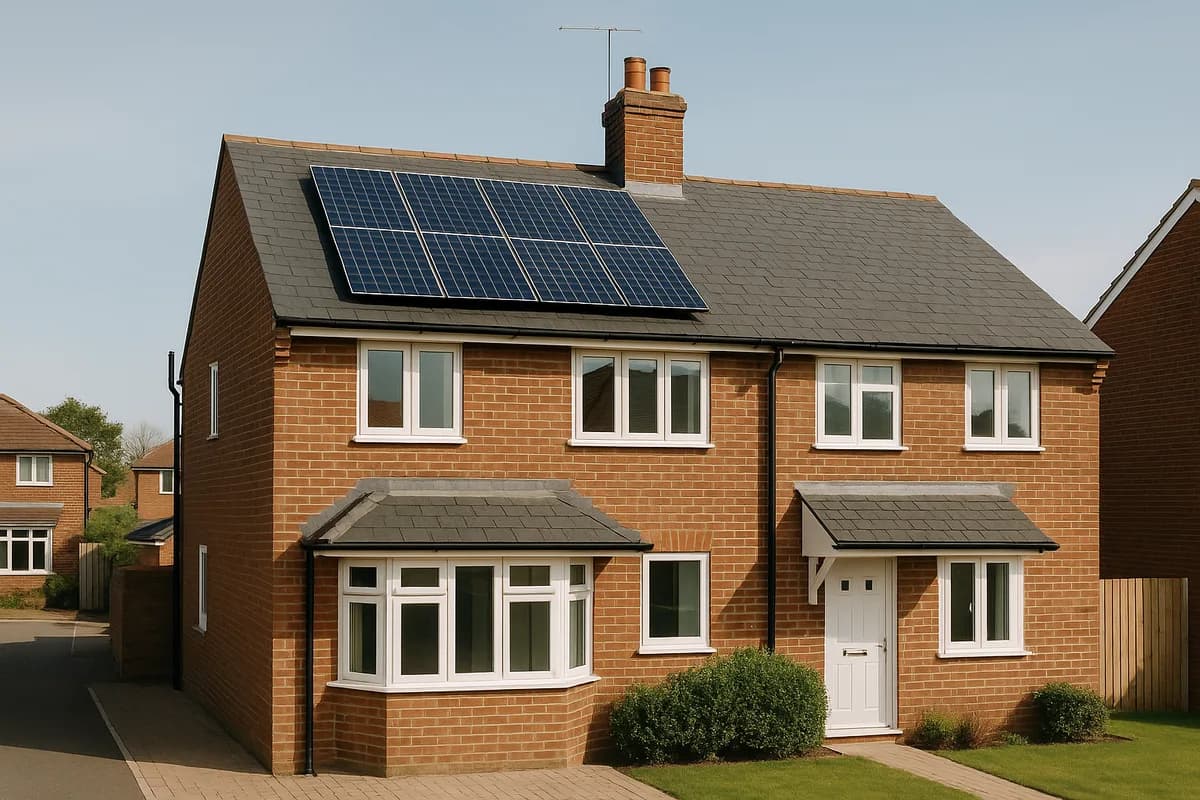
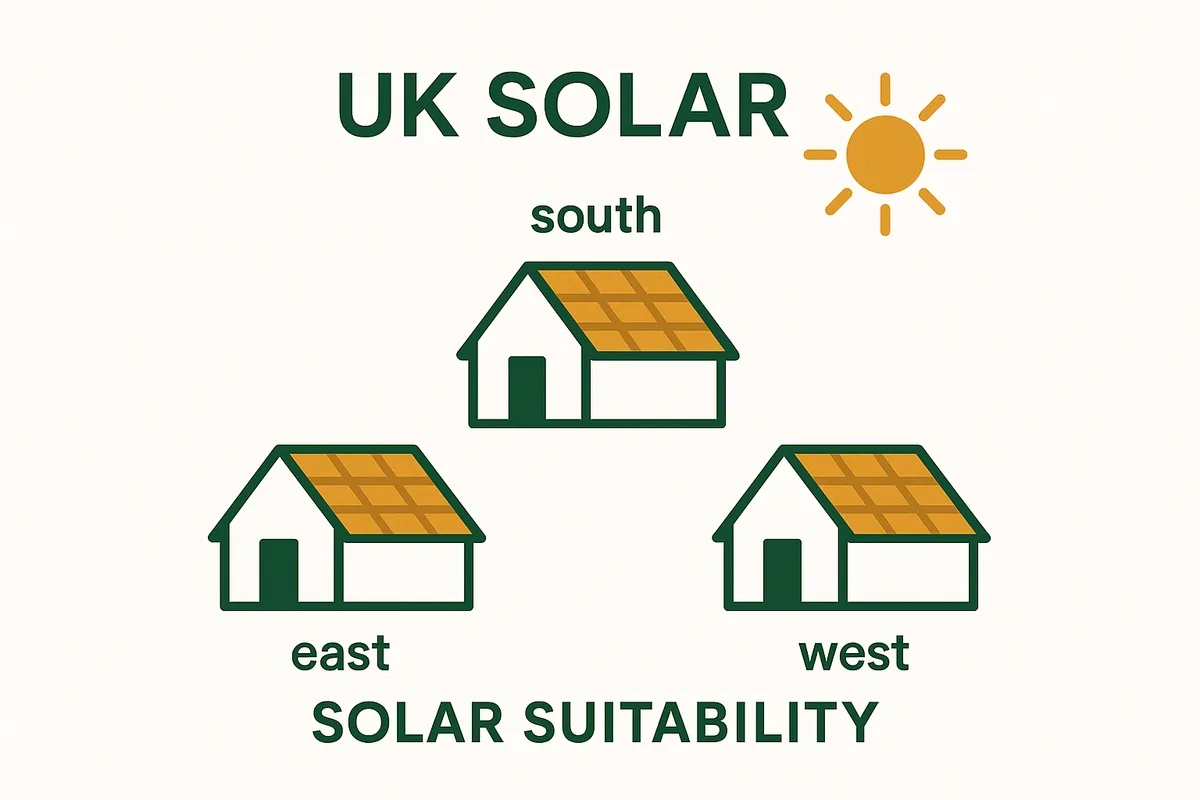
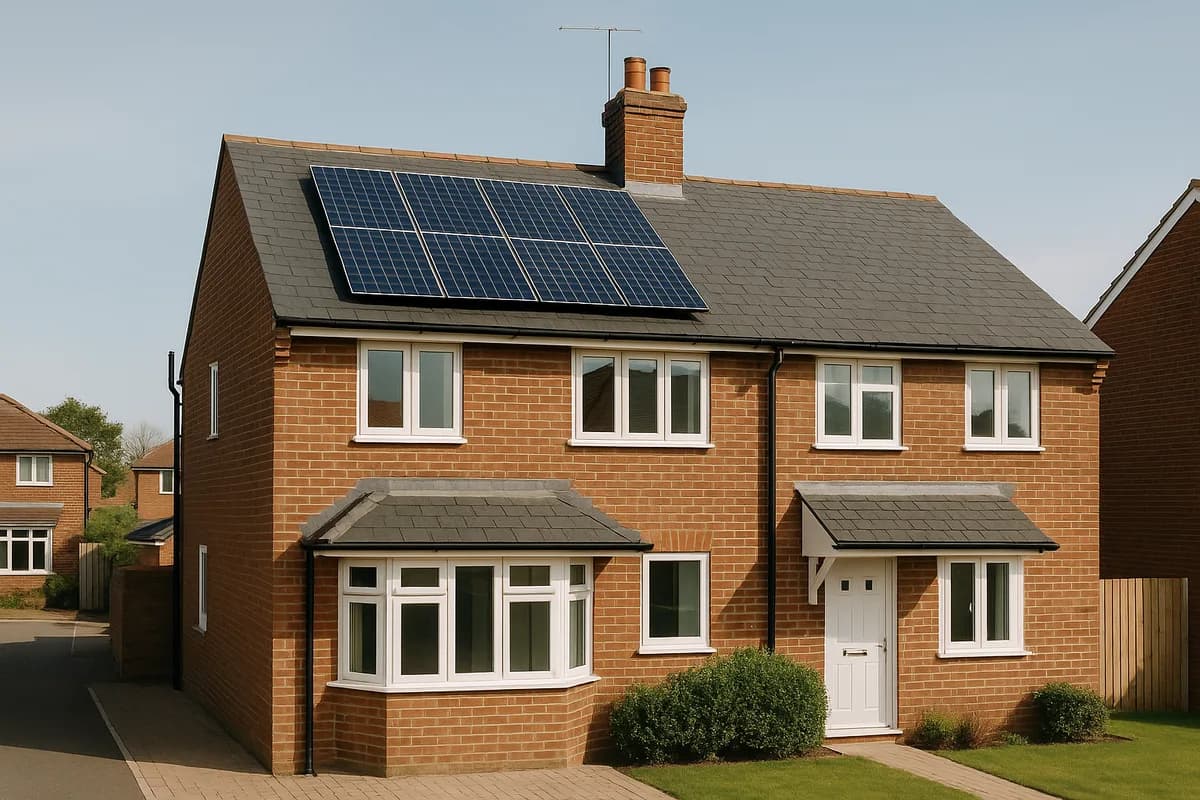
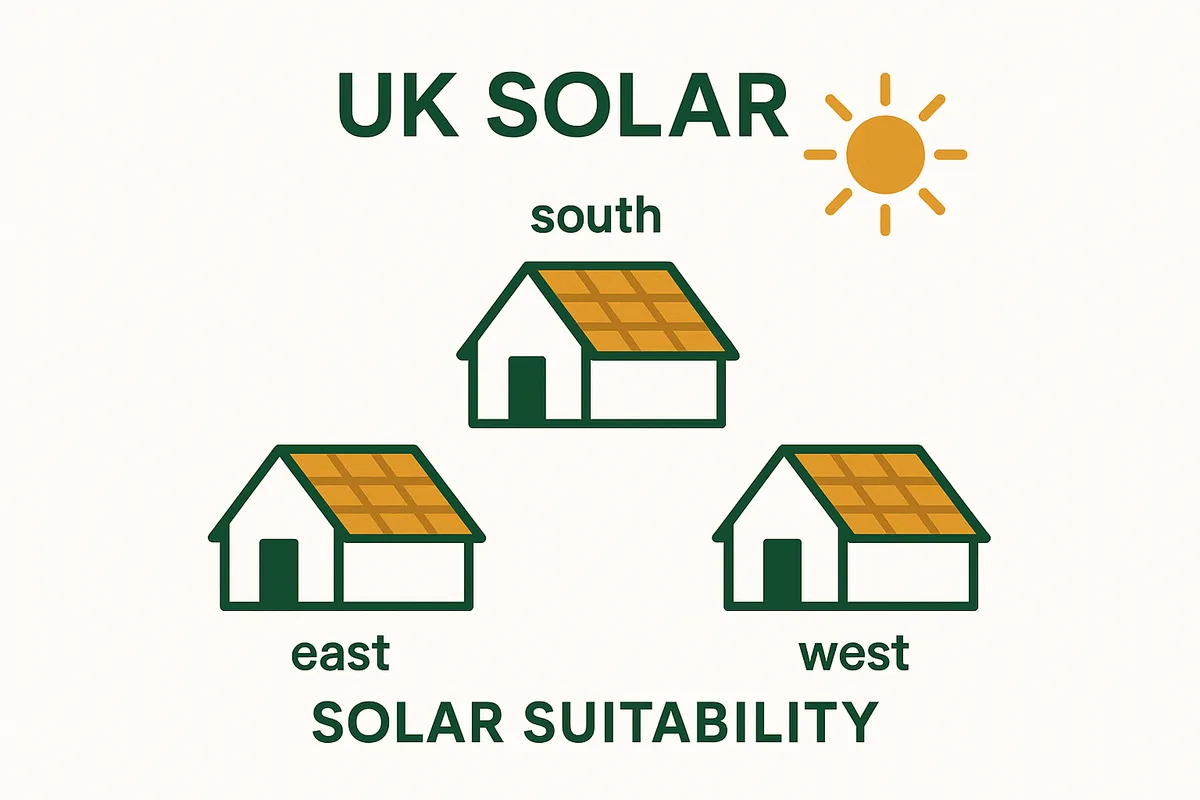
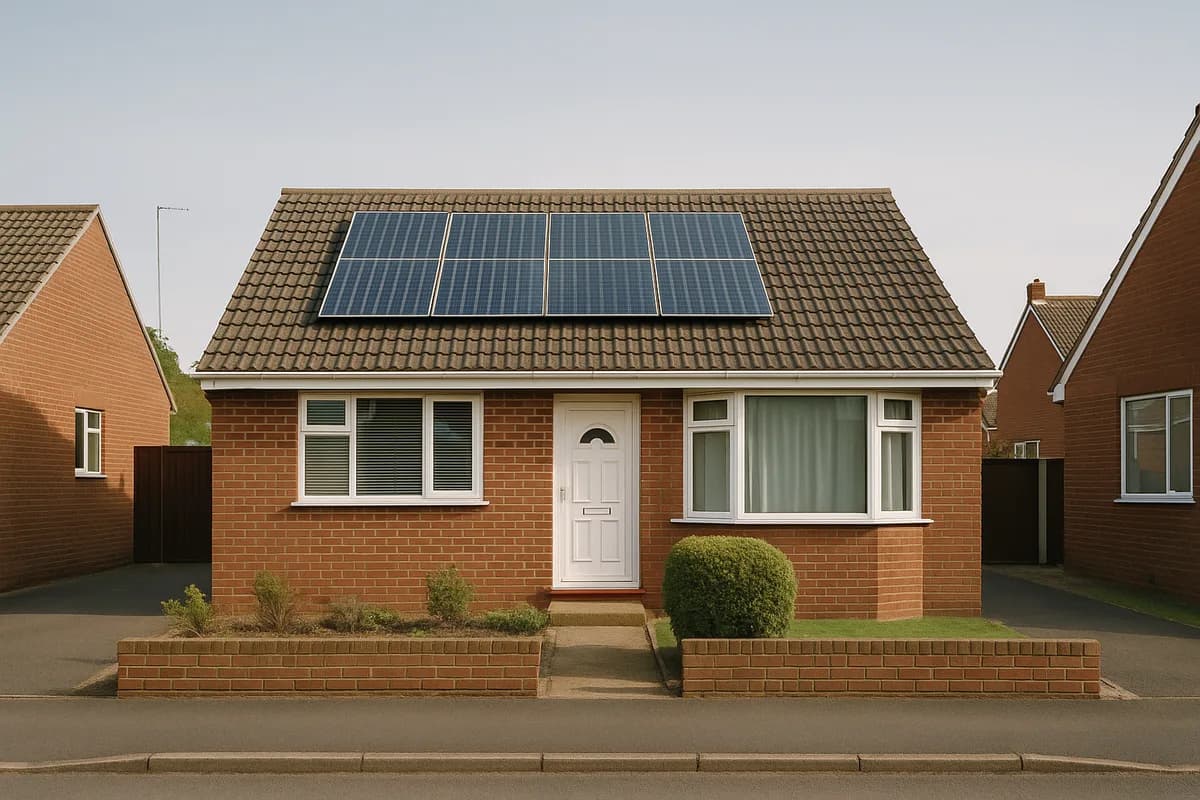
Yes, solar panels on an east-facing roof are worth it. They produce 80–85% of a south-facing roof's output — a 4kW system generates approximately 3,200–3,400 kWh per year instead of 4,000 kWh. Annual savings: £550–£700 instead of £700–£900. The payback period extends by 1–2 years (10–14 years vs 8–12), but the 25-year return is still excellent.
East-Facing Output: The Real Numbers
A south-facing roof is optimal, but east-facing is far from poor:
Output comparison for a 4kW system: - South-facing: 4,000 kWh/year (100%) - South-east: 3,800 kWh/year (95%) - East-facing: 3,200–3,400 kWh/year (80–85%) - North-east: 2,500 kWh/year (62%) - North: 2,200 kWh/year (55%)
The 15–20% reduction from south to east is significant, but not enough to undermine the financial case. You still generate enough to save hundreds of pounds per year and achieve payback well within the panel lifespan.
Financial comparison (4kW, no battery): - South-facing savings: £700–£900/year, payback 8–12 years - East-facing savings: £550–£700/year, payback 10–14 years - Difference: £150–£200/year, 2 extra years to payback
Source: PVGIS orientation data for UK latitudes.
The Morning Generation Advantage
East-facing panels have one advantage over south-facing: they generate more in the morning.
An east-facing array starts producing earlier in the day as the sun rises in the east. Peak generation occurs between 8am and noon, then drops off in the afternoon as the sun moves south and west.
This is actually better for some households: - Morning routines: shower, breakfast, dishwasher, washing machine — heavy usage aligns with peak generation - Households that leave for work by 9am capture the most valuable generation before they leave - Combined with a west-facing array on the opposite slope, east panels create an extended generation window across the full day
South-facing panels peak at midday — which is ideal overall but misses the morning consumption peak that many households have.
Source: Energy Saving Trust consumption patterns research.
Find the right system size for your roof
Panel count depends on your electricity use, roof space and direction — not on a rule of thumb. Get a recommended size and what it should cost.
Size My System
East-West Split: The Best Alternative to South
If your roof has both east and west slopes (common on UK homes), installing panels on both sides creates an east-west split system. This is often better than east-only:
East-west split advantages: - Generation spread across the full day (morning east + afternoon west) - Flatter output curve matches household consumption better - Can fit more total panels (using both roof slopes) - Combined output: approximately 85% of south-facing per panel, but potentially more total kWh if you install more panels
Works best with micro-inverters: Each panel operates independently, so east panels don't drag down west panels. This is the ideal inverter choice for east-west systems.
Example: 5kW east-west split (12 panels total, 6 east + 6 west): - Annual generation: ~4,300 kWh (85% of 5,000 kWh south-facing) - Annual savings: £700–£850 - More than a 4kW south-facing system that only fits 10 panels
Source: MCS system design guidance.
Should You Install on East-Facing or Wait for a South-Facing Home?
Install now. Waiting for a south-facing roof means missing years of savings. The maths:
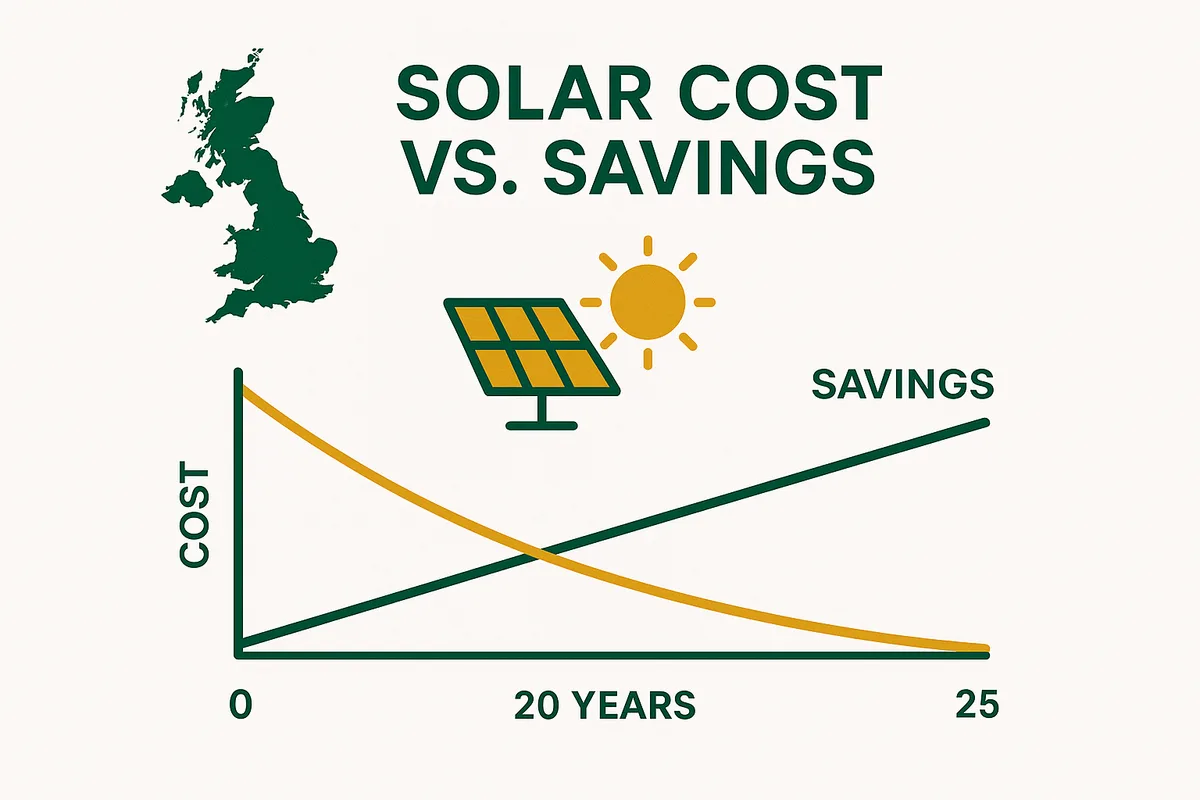
Install now (east-facing): - Year 1 savings: £600 - 25-year total savings: £15,000 - Minus installation cost: £6,750 - Net profit: £8,250
Wait 5 years, then install on a south-facing roof: - 5 years of zero savings: £0 - Year 6–25 savings (south): £16,000 - Minus installation cost (likely higher in 5 years): £8,000 - Net profit: £8,000
The east-facing system installed today produces a similar or better 25-year return than waiting for a south-facing roof — because you start saving immediately.
Electricity prices are also likely to rise, which benefits earlier installation.
Source: Calculation based on Ofgem price cap July-September 2026 rates with 3% annual price inflation assumption.
Frequently Asked Questions
Related guides
Related: Home Heating Systems
Solar panels are most powerful when combined with an efficient heating system. Heat pumps use solar-generated electricity to heat your home at 300-400% efficiency — making them the ideal partner for solar.
Heat pumps use electricity at 300-400% efficiency, making them ideal partners for solar.
From our sister site Home Heat Pump Guide
You might also like
Find the right system size for your roof
Panel count depends on your electricity use, roof space and direction — not on a rule of thumb. Get a recommended size and what it should cost.
Size My SystemFree calculator. No contact details required to see your result.