Solar Panels and Snow: What to Do
Ready to see what solar could save you?
Get free, no-obligation quotes from MCS-certified installers in your area.
Get Free QuotesFree, no obligation. Takes 2 minutes.
What happens when it snows on solar panels?
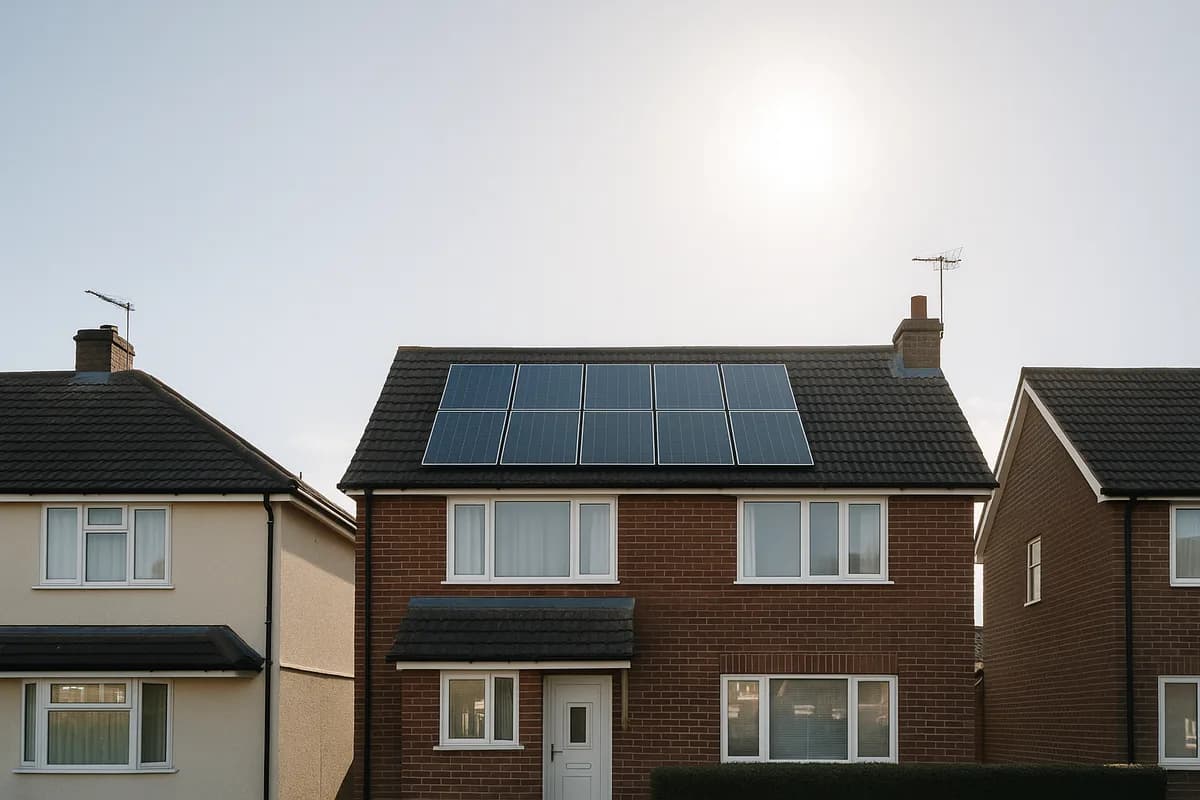
Snow on solar panels temporarily reduces or stops electricity generation. However, UK snowfall is typically light (under 10cm) and brief (1–3 days). Most snow slides off panels naturally because they are angled at 30–40° and the dark surface absorbs heat even through thin snow. Do NOT attempt to clear snow from your panels — the risk of falling from a ladder far exceeds the cost of a few days' lost generation (£2–£5).
How Snow Affects Solar Panel Output
Output by snow coverage:
| Snow Condition | Panel Output |
|---|---|
| No snow | 100% (normal) |
| Light dusting (1–2cm) | 60–80% (some light still gets through) |
| Thin layer (3–5cm) | 10–30% (significantly reduced) |
| Full coverage (5cm+) | 0–5% (effectively zero) |
| Ice/frost (no snow) | 80–95% (minor reduction) |
How long does snow stay on panels? - Light snow (1–3cm): slides off within hours, especially if sun breaks through - Moderate snow (5–10cm): clears within 1–2 days. Dark panel surface absorbs heat and melts from underneath. - Heavy snow (10cm+): may take 2–4 days to clear fully. Panel angle helps — steeper panels shed snow faster.
UK snowfall context: - Average UK home gets 5–15 days of lying snow per year - Most snowfall is under 10cm and lasts 1–3 days - Annual output lost to snow: typically 0.5–2% — negligible
Source: Met Office UK snow statistics; solar panel snow clearance data.
What NOT to Do
Do NOT attempt any of the following:
- Climb on the roof to clear snow — the risk of falling on a snowy, icy roof is severe. A few days of lost solar generation (worth £2–£5) is not worth a broken bone.
- Use a pressure washer or hose — spraying cold water on panels in freezing conditions can cause thermal shock, cracking the glass.
- Use a metal rake or shovel — metal tools will scratch the anti-reflective coating and may crack the glass.
- Pour hot water on the panels — thermal shock will crack the tempered glass.
- Try to scrape ice off panels — ice is firmly bonded and scraping risks glass damage.
- Walk on panels to clear snow — you will crack cells and void the warranty.
Ready to see what solar could save you?
Get free, no-obligation quotes from MCS-certified installers in your area.
Get Free QuotesWhat You CAN Do (If You Really Want To)
If snow is heavy and persistent (more than 3–4 days), and panels are safely accessible from the ground:
- Use a soft-bristled broom on a long pole to gently sweep snow from the bottom edge of the panels. This allows the remaining snow to slide down.
- Only do this from the ground — never from a ladder or the roof itself.
- Use lukewarm water (not hot, not cold) sprayed gently if accessible.
- Wait for sunlight — even weak winter sun warms the dark panel surface enough to melt snow from underneath.
The honest advice: In the UK, snow on panels is such a rare and brief event that doing nothing is almost always the correct response. The panels will clear themselves. The lost generation is worth £2–£10 per snow event — not worth any risk.
Source: Panel manufacturer maintenance guidance.
Does Snow Damage Solar Panels?
No. Solar panels are designed to handle snow loads:
- Weight capacity: Panels are tested to support 5,400 Pa of mechanical load (IEC 61215). This equals approximately 550kg per m² — far more than any realistic UK snow accumulation.
- UK snow weight: 10cm of fresh snow = approximately 30kg/m². Even 30cm of compacted snow = 150kg/m². Both are well within panel capacity.
- Ice formation: Ice on the panel surface does not damage the glass or cells. It temporarily blocks light but causes no permanent harm.
- Freeze-thaw cycles: The glass, frame, and encapsulation are all designed for decades of UK freeze-thaw cycles.
The only snow-related risk: If panels are at a shallow angle (<15°), snow may accumulate and persist longer. At standard UK pitches (25–40°), gravity and solar heating clear snow effectively.
Source: IEC 61215 mechanical load testing; UK Building Standards snow load maps.
Frequently Asked Questions
Related guides
You might also like
Ready to see what solar could save you?
Get free, no-obligation quotes from MCS-certified installers in your area.
Get Free QuotesFree, no obligation. Takes 2 minutes.