How Many Solar Panels to Charge an Electric Car?
Sizing solar around an EV or heat pump?
Both change your consumption profile substantially, which changes the system you need. Get a size and price built around your actual load.
Size a System for My HomeFree calculator. See your result before giving any details.
How many solar panels do I need to charge an electric car?
To charge an average UK electric car entirely from solar, you need approximately 8–10 additional solar panels (3–4kW) on top of your home's existing electricity needs. The average UK EV driver covers 7,400 miles per year, using approximately 2,200 kWh of electricity. A 3.5kW solar addition generates roughly 3,000–3,500 kWh — enough to cover EV charging with some surplus.
The Maths: EV Electricity Consumption
Average UK EV stats: - Average annual mileage: 7,400 miles (Department for Transport, 2024) - Average EV efficiency: 3.0–3.5 miles per kWh - Annual electricity for EV: 7,400 ÷ 3.25 = ~2,280 kWh
What does 2,280 kWh translate to in solar panels? - UK solar yield: ~950–1,050 kWh per kWp per year (varies by region) - Panels needed: 2,280 ÷ 1,000 = ~2.3 kWp = 6 panels (at 400W each)
However, you cannot use 100% of solar generation for EV charging (timing mismatch — car is often away during peak solar hours). With realistic self-consumption: - Without smart charging: 30–40% of solar goes to EV = need ~7–8 panels - With smart charging or battery: 50–70% utilisation = need ~8–10 panels
Practical recommendation: add 8–10 panels (3.2–4kW) for EV charging.
Source: DfT National Travel Survey; EV manufacturer specifications.
Total System Size: Home + EV
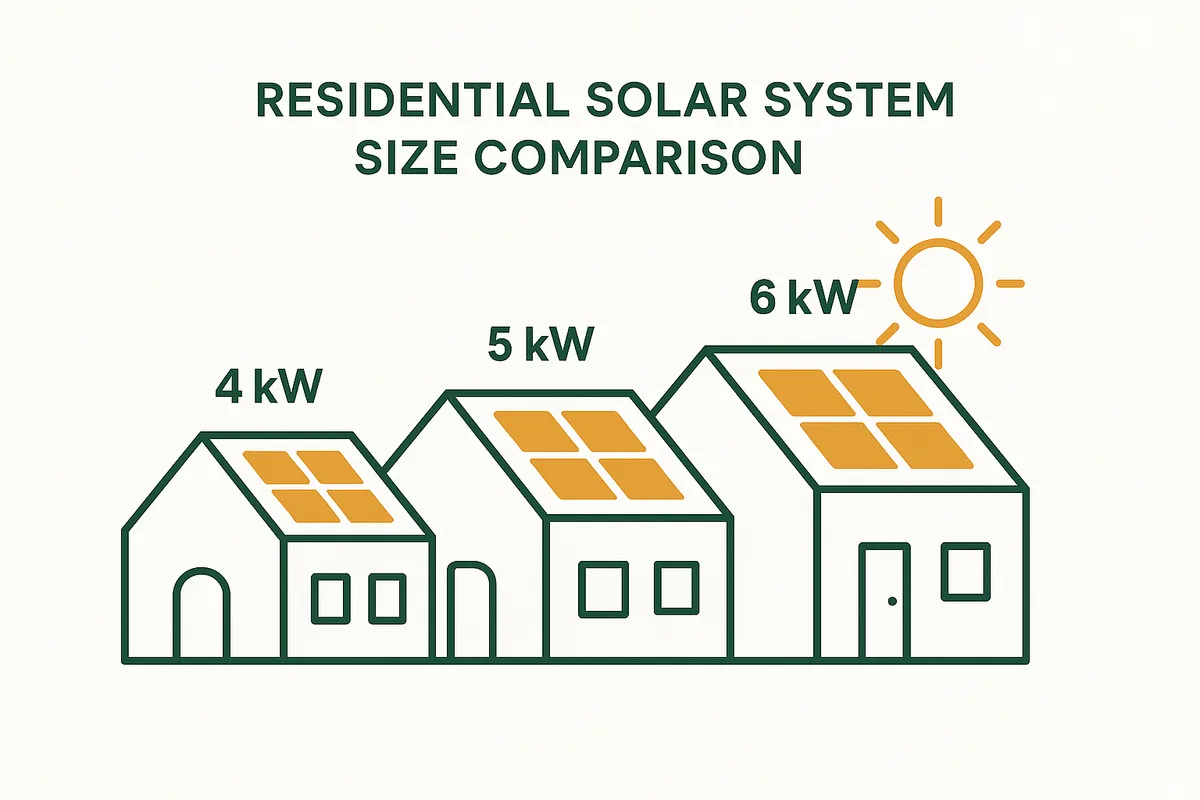
If you want to power both your home and your EV from solar:
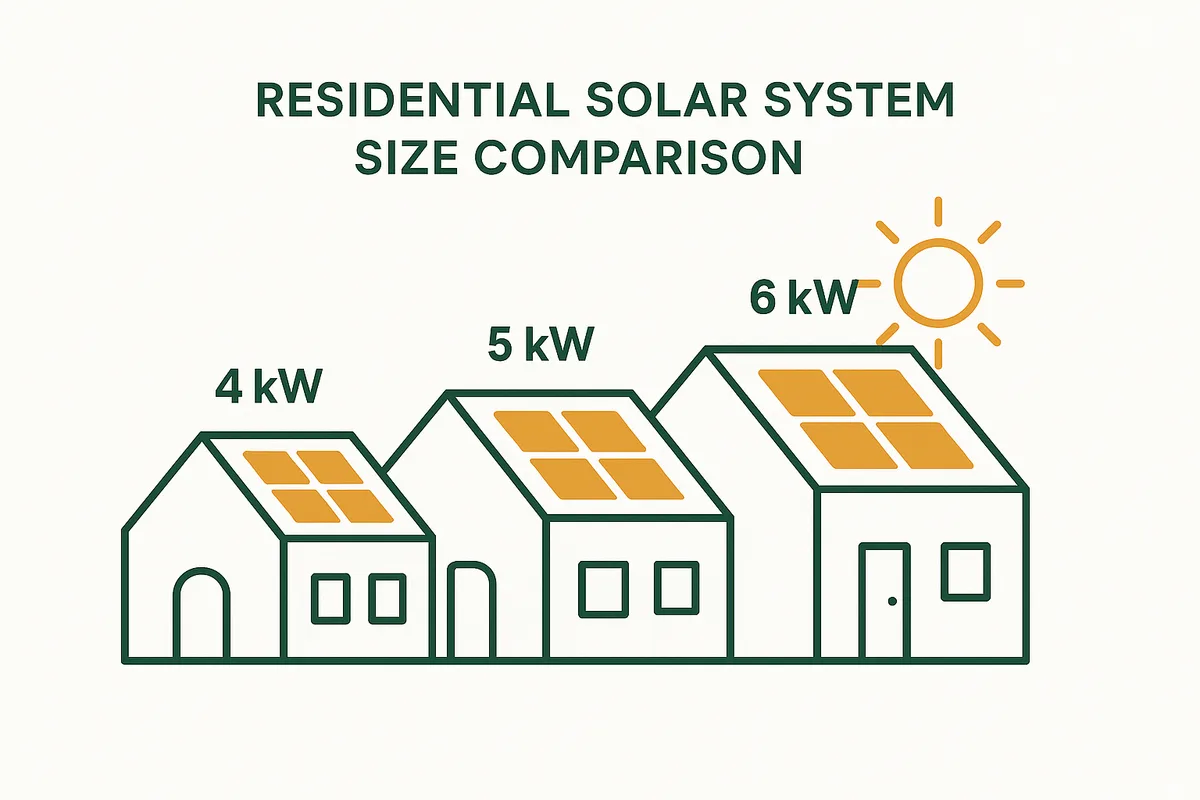
Home electricity (average 3,700 kWh/year): 4kW system = 10 panels EV charging (average 2,280 kWh/year): 3.5kW addition = 8–10 panels Combined total: 7–8kW system = 18–20 panels
This is a large system that requires significant roof space (approximately 30–35 m²). Not every home can fit this many panels — but if yours can, the savings are substantial:
- Annual home electricity saved: £900
- Annual EV charging saved: £560 (vs 26.11p/kWh grid charging)
- Total annual savings: £1,460
- System cost (7kW): £9,000–£12,000
- Payback: 6–8 years
Source: Ofgem price cap, July-September 2026.
The Smart Way: Solar + EV Charger + Time-of-Use Tariff
Sizing solar around an EV or heat pump?
Both change your consumption profile substantially, which changes the system you need. Get a size and price built around your actual load.
Size a System for My HomeYou do not need to charge your EV entirely from solar to save money. The smartest approach combines solar with a time-of-use tariff:
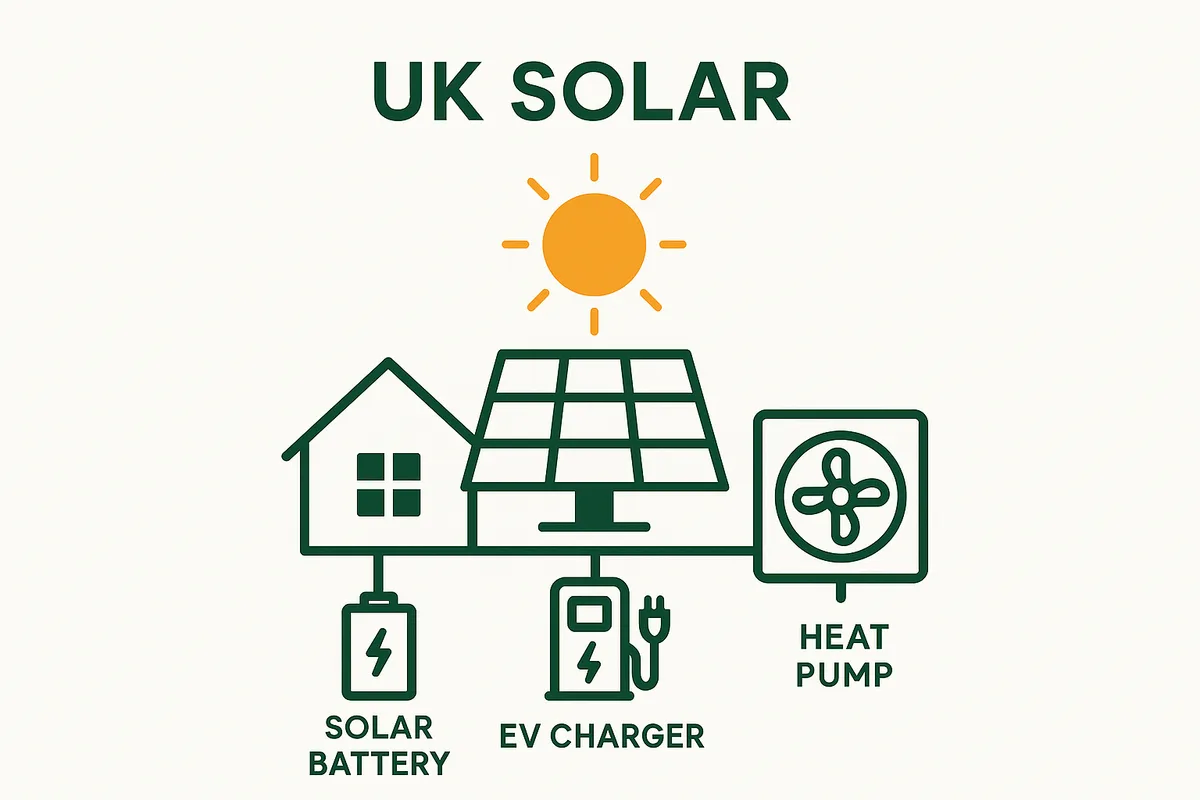
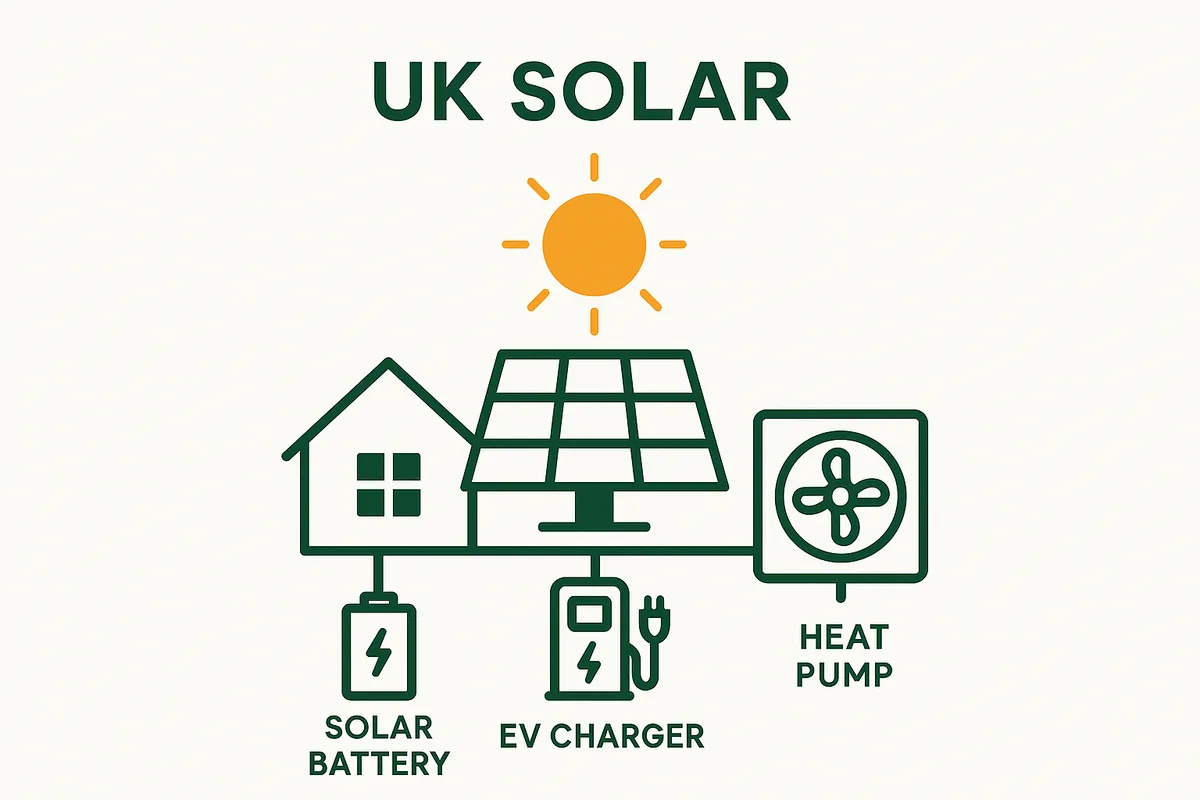
Strategy: 1. Install solar panels sized for your home's needs (4–5kW) 2. Install a smart EV charger (e.g., Ohme, Zappi, or Hypervolt) 3. Sign up for a time-of-use tariff (e.g., Octopus Go at 7.5p/kWh overnight)
How it works: - Daytime: Solar powers your home + charges EV if the car is parked at home - Overnight: EV charges from the grid at 7.5p/kWh (vs 26.11p standard rate)
Annual cost comparison for 2,280 kWh of EV charging: - Standard grid rate (26.11p/kWh): £559/year - Octopus Go overnight (7.5p/kWh): £171/year - 100% solar charged: £0/year (but impractical without a large system) - Solar + Octopus Go hybrid: £50–£100/year (solar covers daytime, cheap rate covers overnight)
The hybrid approach costs £50–£100/year for EV charging — saving £460–£510/year versus standard grid rates. This does not require a massive solar system.
Source: Octopus Energy published tariff rates; solar self-consumption modelling.
Solar Diverters and Smart Chargers
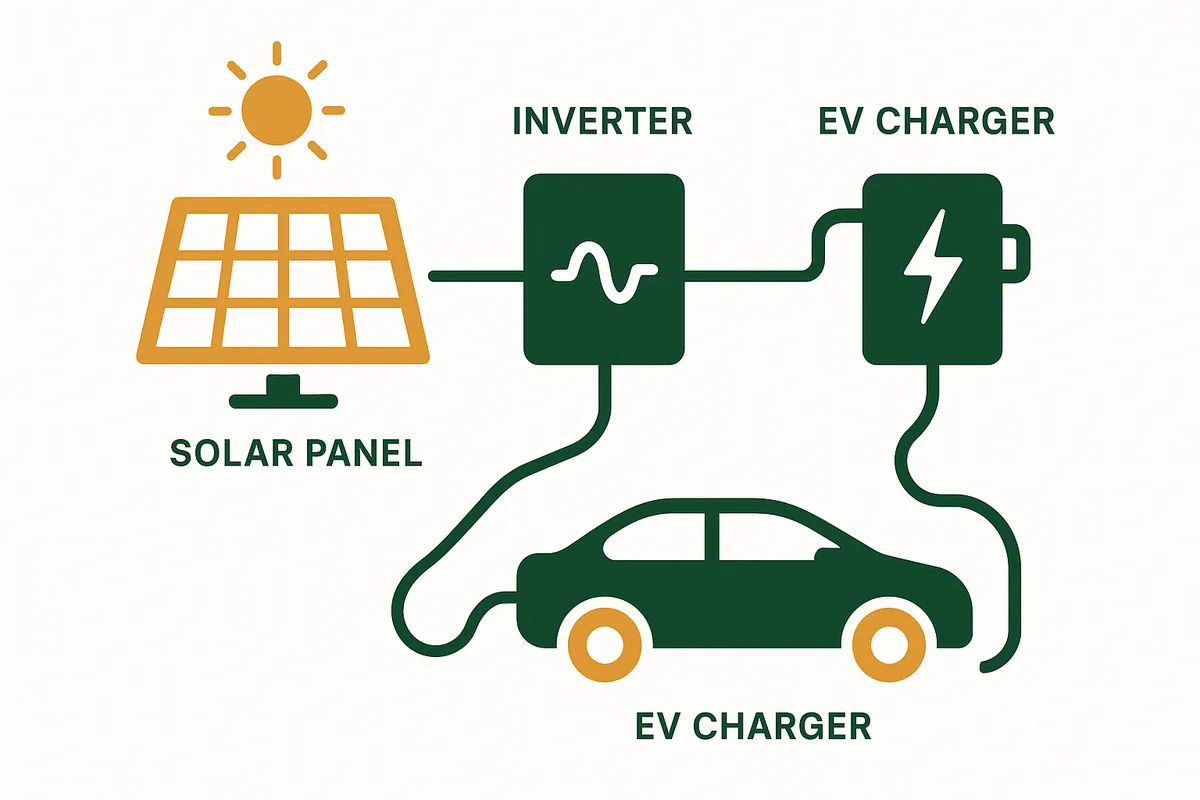
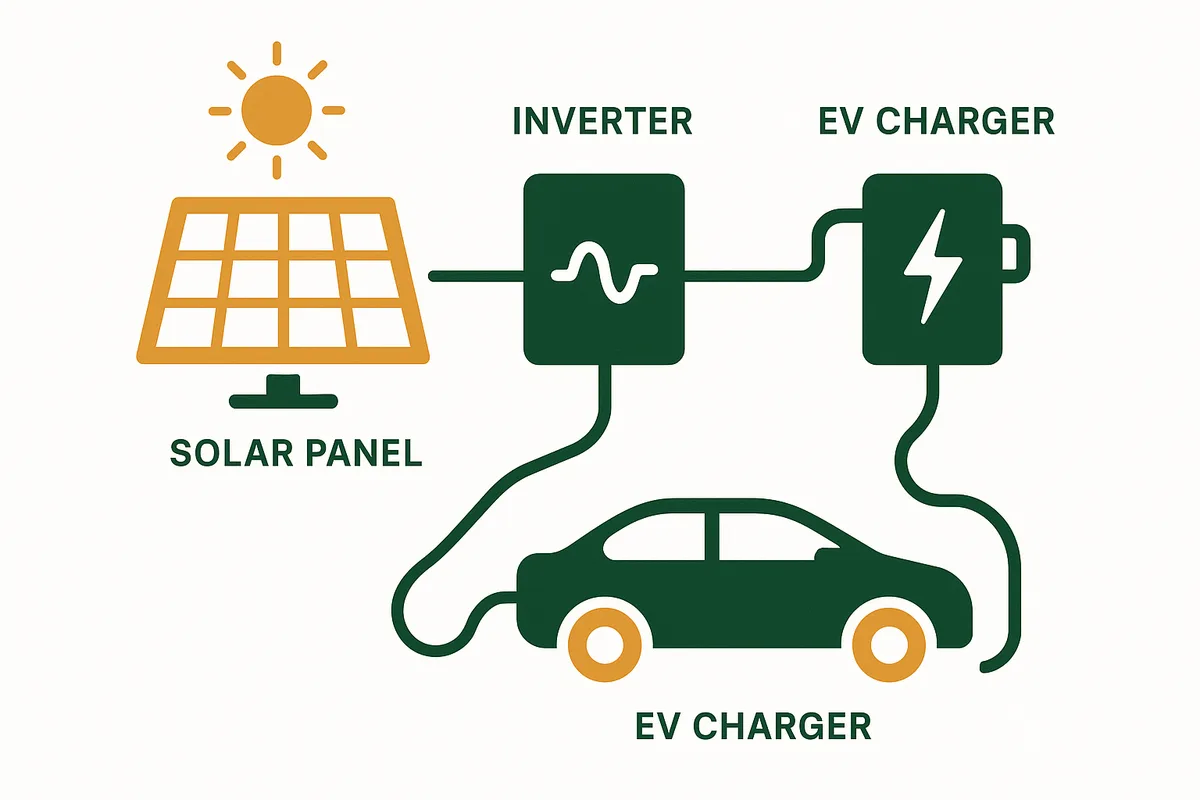
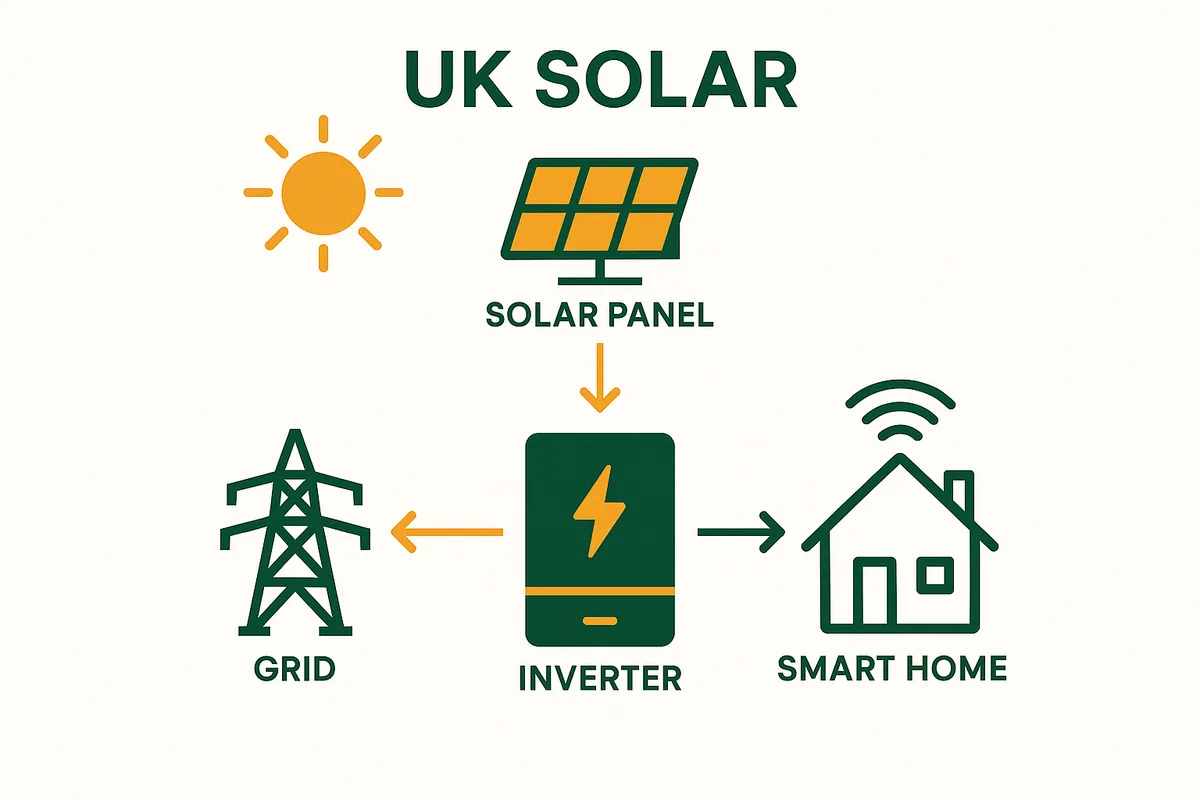
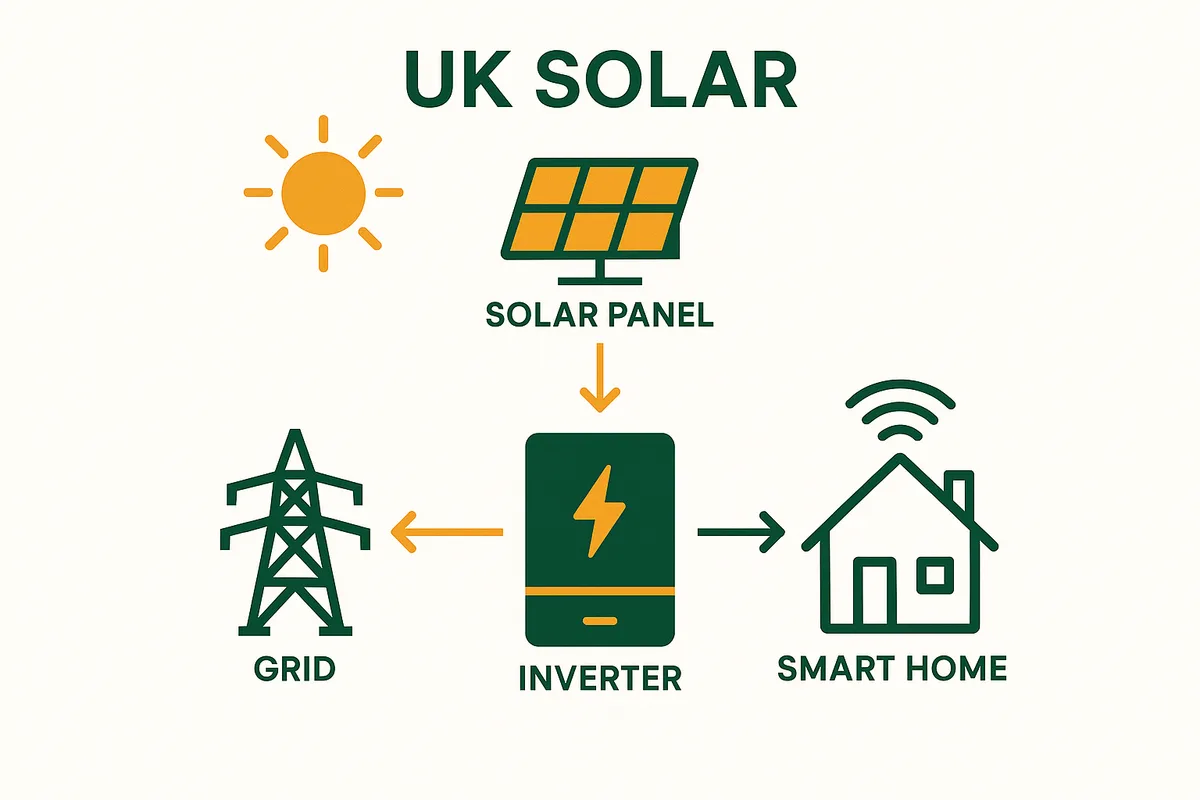
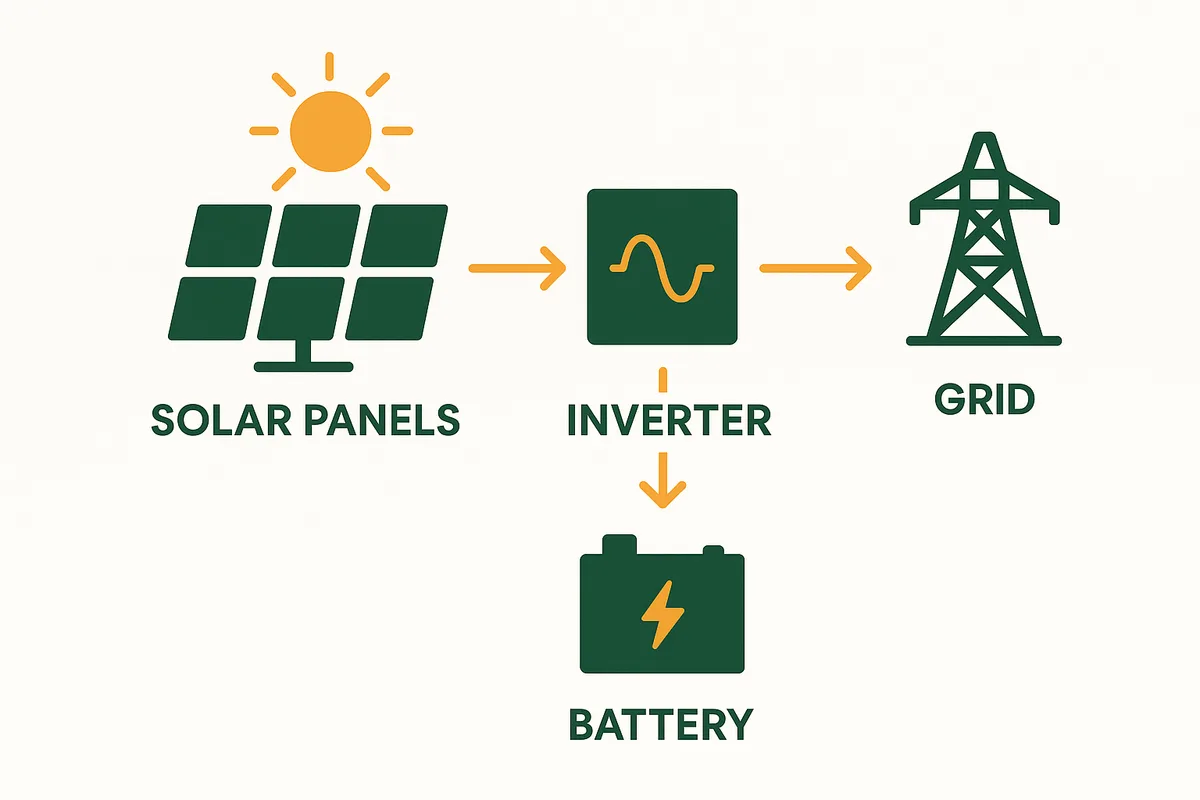
A solar diverter or smart EV charger automatically routes surplus solar electricity to your car instead of exporting it to the grid:
Zappi (by Myenergi): £800–£1,000 installed. Automatically detects surplus solar and diverts it to the car. Can be set to charge only from solar, from grid, or a mix.
Ohme: £500–£700 installed. Smart scheduling + solar integration via API. Works with time-of-use tariffs.
Hypervolt: £600–£900 installed. Solar-aware charging with app control.
The Zappi is the most popular solar-integrated EV charger in the UK because it works directly with your solar system without needing app-based workarounds.
With a smart charger, your EV becomes a flexible load — charging when solar is abundant and pausing when it is not. This maximises your self-consumption without needing a separate battery.
Source: Manufacturer specifications; MCS approved product list.
Is Solar + EV Worth It?
Absolutely. The combined savings from solar + EV are some of the best returns available to UK homeowners:
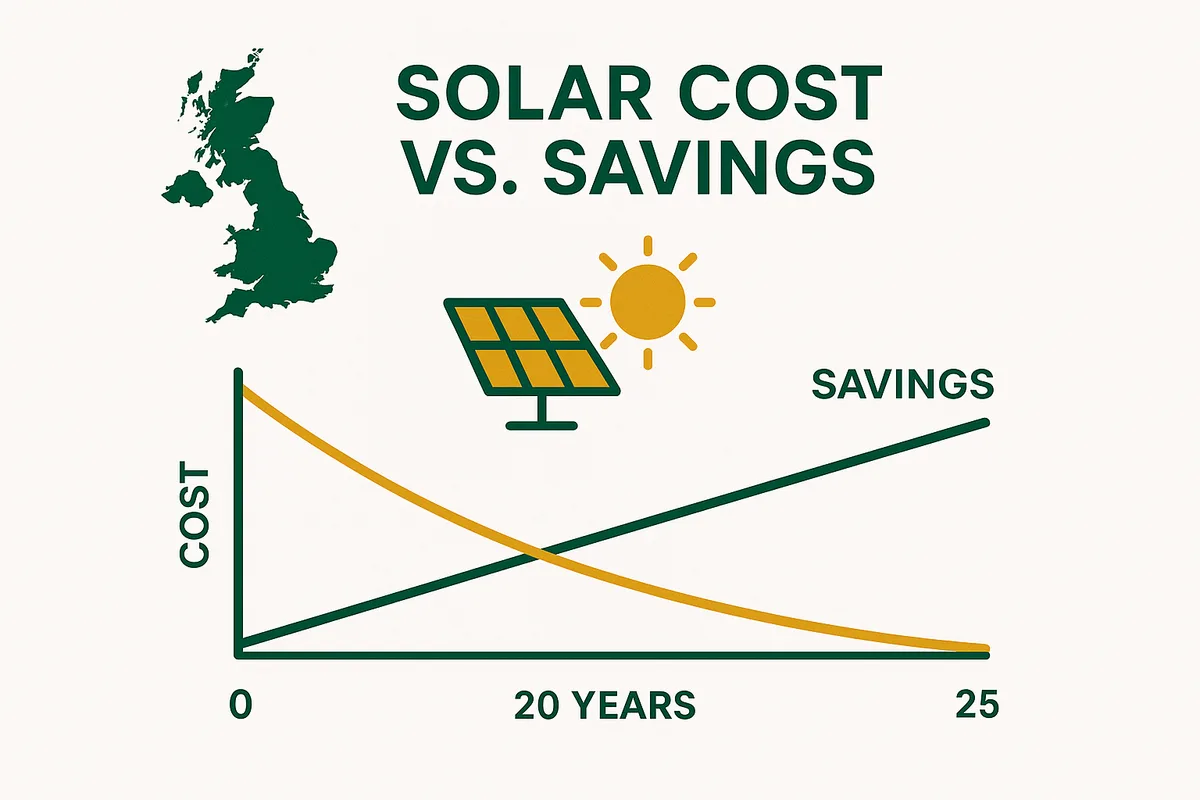
Scenario: 5kW solar + Zappi charger + Octopus Go - System cost: £7,000–£9,000 (solar) + £900 (Zappi) = £8,000–£10,000 - Annual savings: £900 (home) + £460 (EV) = £1,360 - Payback: 6–7 years - 25-year savings: £34,000+
If you already have an EV or plan to get one, solar panels become an even better investment. The EV essentially doubles the value of your solar system by giving you another way to use the electricity you generate.
Source: Energy Saving Trust; Ofgem; manufacturer pricing.
Frequently Asked Questions
Related guides
You might also like
Sizing solar around an EV or heat pump?
Both change your consumption profile substantially, which changes the system you need. Get a size and price built around your actual load.
Size a System for My HomeFree calculator. See your result before giving any details.