How Solar Panels Work in the UK: Simple Guide
Ready to see what solar could save you?
Get free, no-obligation quotes from MCS-certified installers in your area.
Get Free QuotesFree, no obligation. Takes 2 minutes.
How do solar panels work in simple terms?
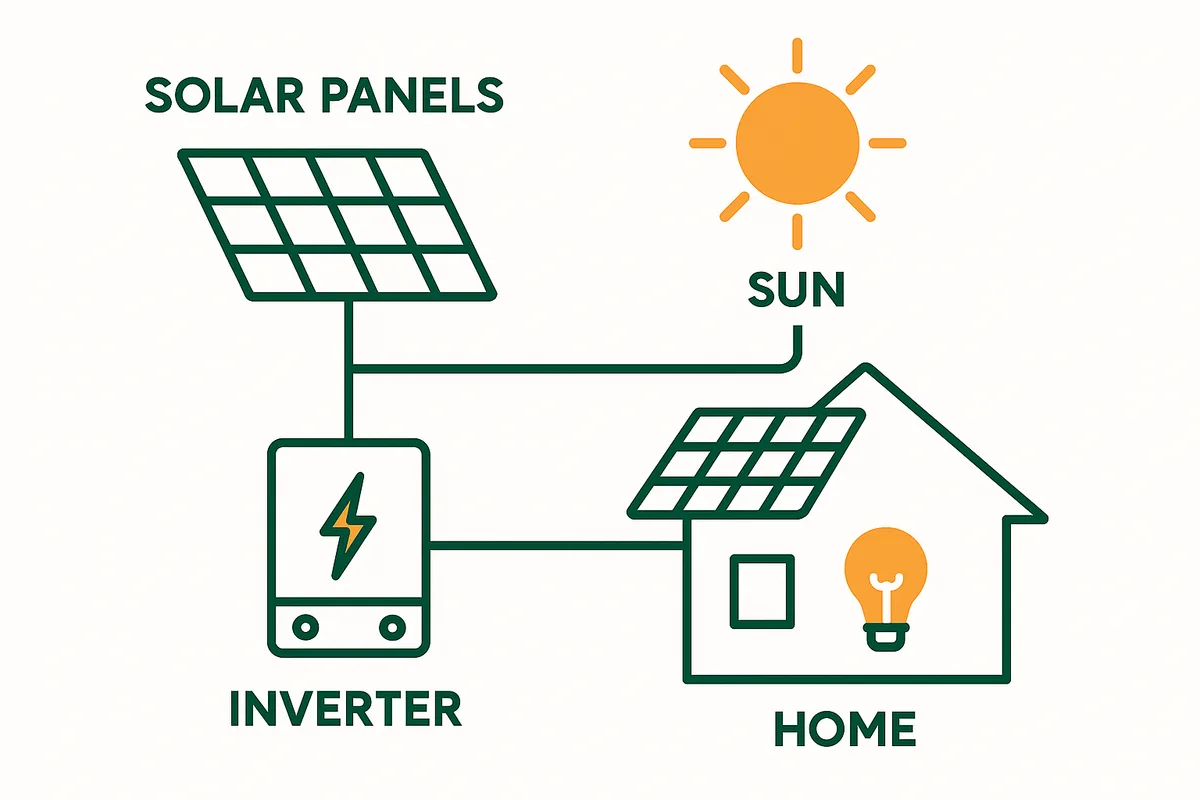
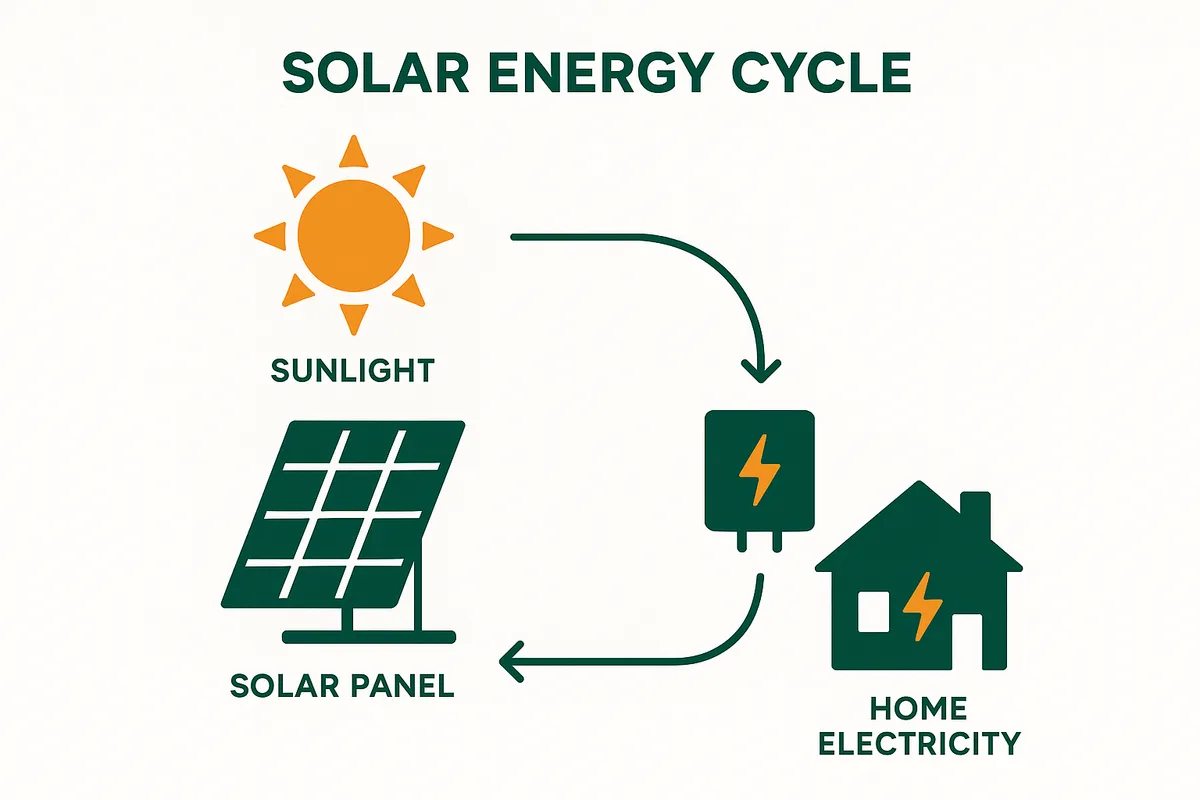
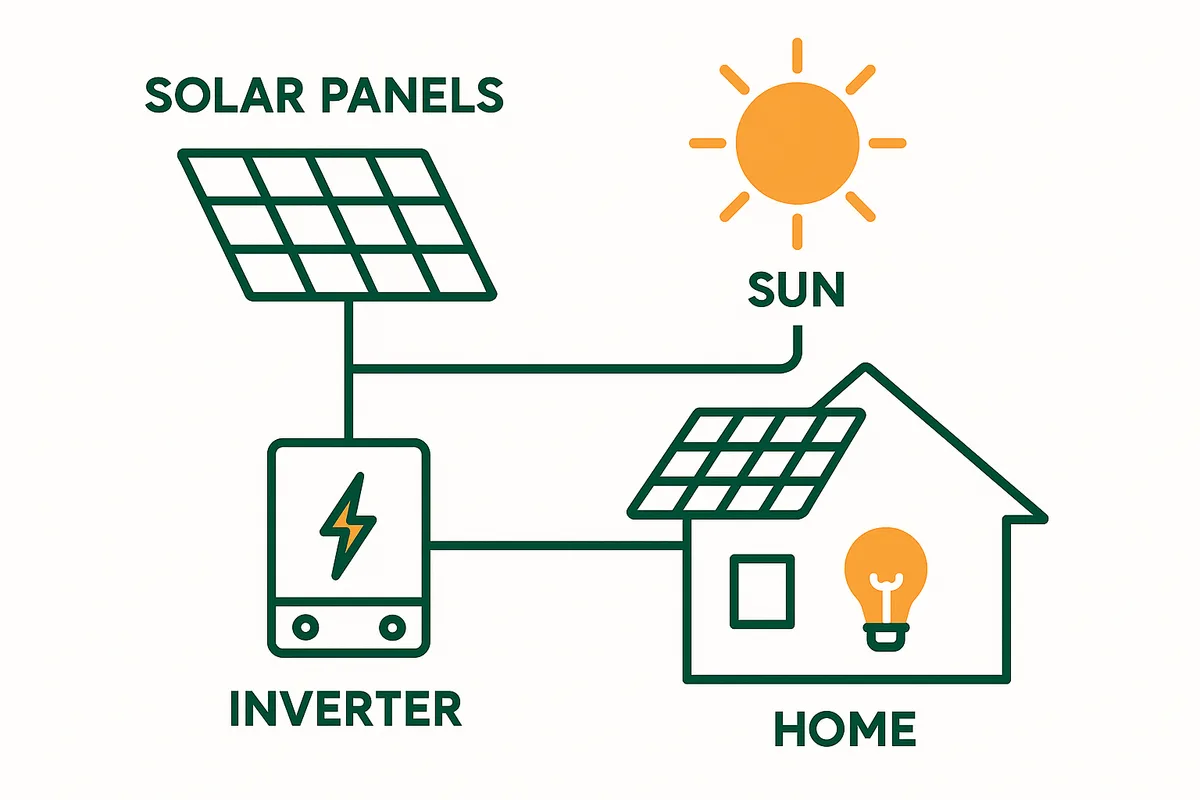
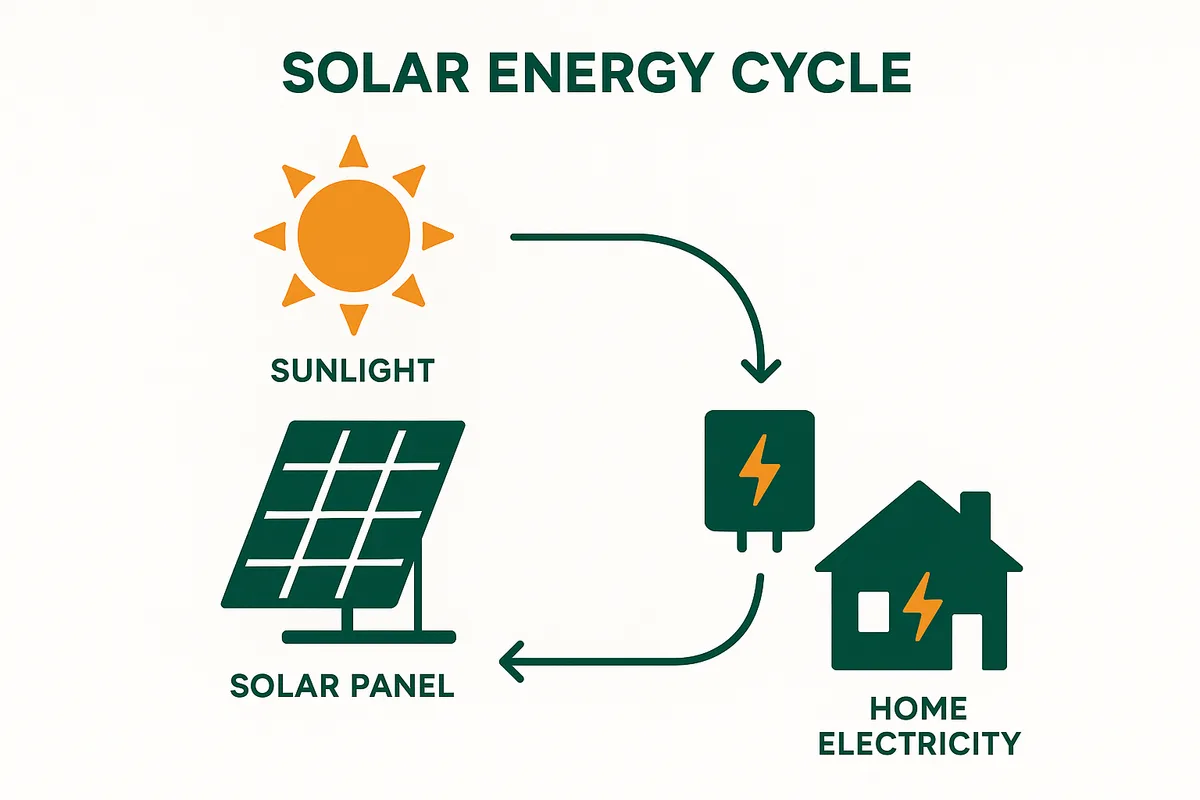
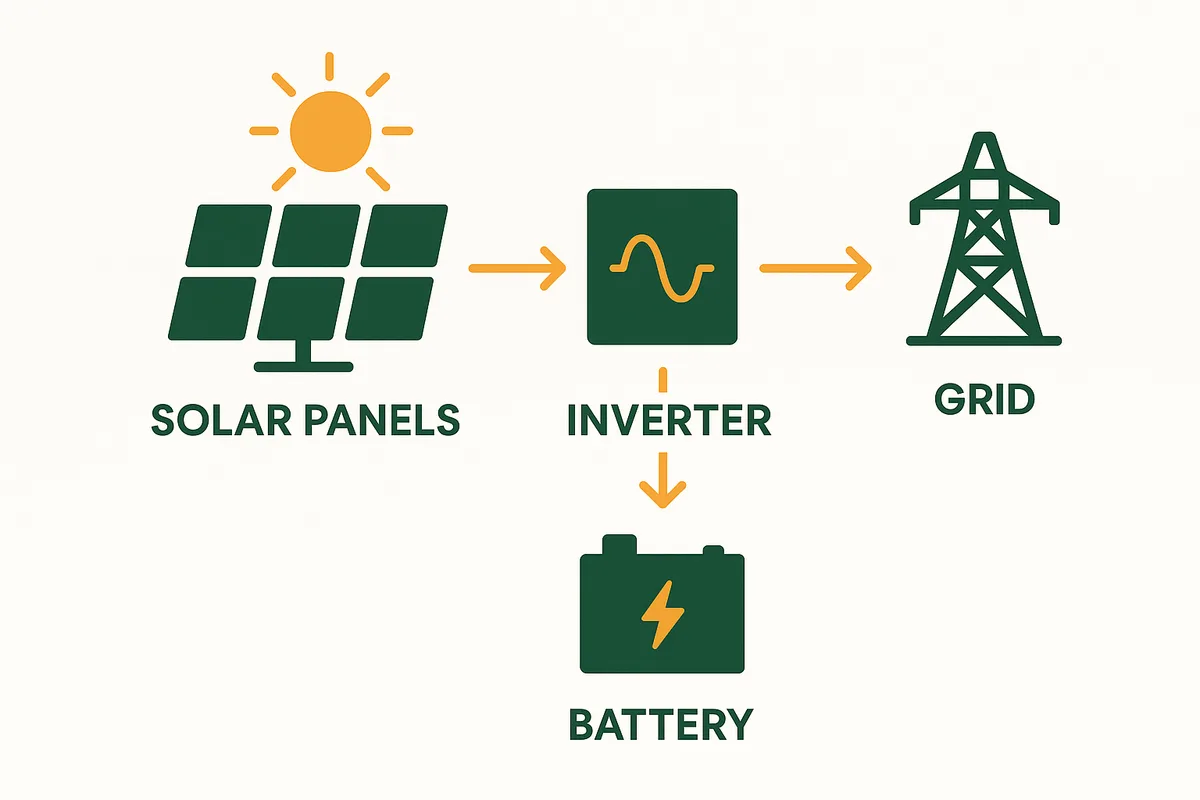
Solar panels work by converting sunlight (photons) into electricity through the photovoltaic effect. Light hits silicon cells, knocking electrons loose to create an electrical current. An inverter converts this into the AC electricity your home uses. The entire process is silent, has no moving parts, uses no fuel, and works in all UK weather conditions — including cloudy and rainy days.
The 4 Steps: From Sunlight to Powering Your Home
Step 1: Light hits the panel Sunlight (made up of tiny particles called photons) hits the silicon cells in your solar panel. Each panel contains 60–66 individual cells, each one a thin slice of specially treated silicon.
Step 2: Electricity is created When photons hit the silicon, they knock electrons loose from their atoms. These free electrons flow through the cell as an electrical current — this is called the photovoltaic effect. Each cell produces about 0.5 volts. Connected together in a panel, they produce 30–40 volts.
Step 3: The inverter converts it The electricity from the panels is direct current (DC) — like a battery. Your home uses alternating current (AC). The inverter converts DC to AC, matching the UK grid standard (230V, 50Hz). It also monitors the system and reports to your app.
Step 4: You use the electricity The AC electricity flows to your consumer unit (fuse box) and powers your home — lights, appliances, devices. Any surplus goes to the grid (you earn SEG payments). At night or in winter, your home draws from the grid as normal.
That is it. No moving parts. No fuel. No noise. No maintenance. Just sunlight → electrons → electricity → your home.
Source: IET solar fundamentals; NREL photovoltaic science.
Does It Work in UK Weather?
Yes — in all UK weather conditions:
| Weather | Panel Output |
|---|---|
| Bright sunshine | 90–100% of capacity |
| Light cloud | 50–70% |
| Overcast | 10–30% |
| Rain | 5–15% |
| Snow covering | 0–5% (until snow melts) |
| Night | 0% |
Solar panels respond to LIGHT, not heat or direct sun. Even on a grey UK winter day, there is enough ambient light for panels to generate some electricity. The UK receives enough solar radiation across the year for a 4kW system to generate 3,800–4,200 kWh — matching average household consumption.
Fun fact: Solar panels are actually slightly MORE efficient in cold weather. They lose efficiency in heat (about 0.4% per degree above 25°C). UK temperatures are ideal — cool and bright spring days produce the most electricity per hour of sunshine.
Source: Met Office UK sunshine data; PVGIS.
Ready to see what solar could save you?
Get free, no-obligation quotes from MCS-certified installers in your area.
Get Free Quotes
Common Questions About How Solar Works
Do panels need direct sunlight? No — they work with any light (direct or diffused through clouds).
Do they work at night? No — there is no light at night. A battery stores daytime electricity for overnight use.
Do they make noise? The panels are silent. The inverter produces a quiet hum (30–45 dB, like a laptop fan).
Do they wear out? Very slowly. Output drops ~0.4% per year. After 25 years: 85–90% of original output.
Can they power my whole house? A 4kW system generates as much as the average home uses annually. But timing mismatches mean you still need some grid electricity (evenings, winter).
Do they work in Scotland? Yes — Scottish output is 10–15% lower than southern England, but still delivers strong financial returns.
What Makes UK Solar Different?
UK solar is different from solar in sunnier countries in a few ways:
- Output is lower — UK panels generate ~1,000 kWh per kWp per year (vs ~1,500 in Spain, ~1,800 in Australia)
- But electricity prices are HIGHER — UK: 26.11p/kWh vs Spain: ~12p equivalent. Higher prices = higher savings per kWh.
- Cool temperatures HELP — UK panels run cooler than desert panels, maintaining higher efficiency.
- Cloud cover is managed — UK yield estimates already account for our weather. No surprises.
- Financial case is STRONG — despite lower output, the combination of high electricity prices + 0% VAT + SEG makes UK solar a great investment.
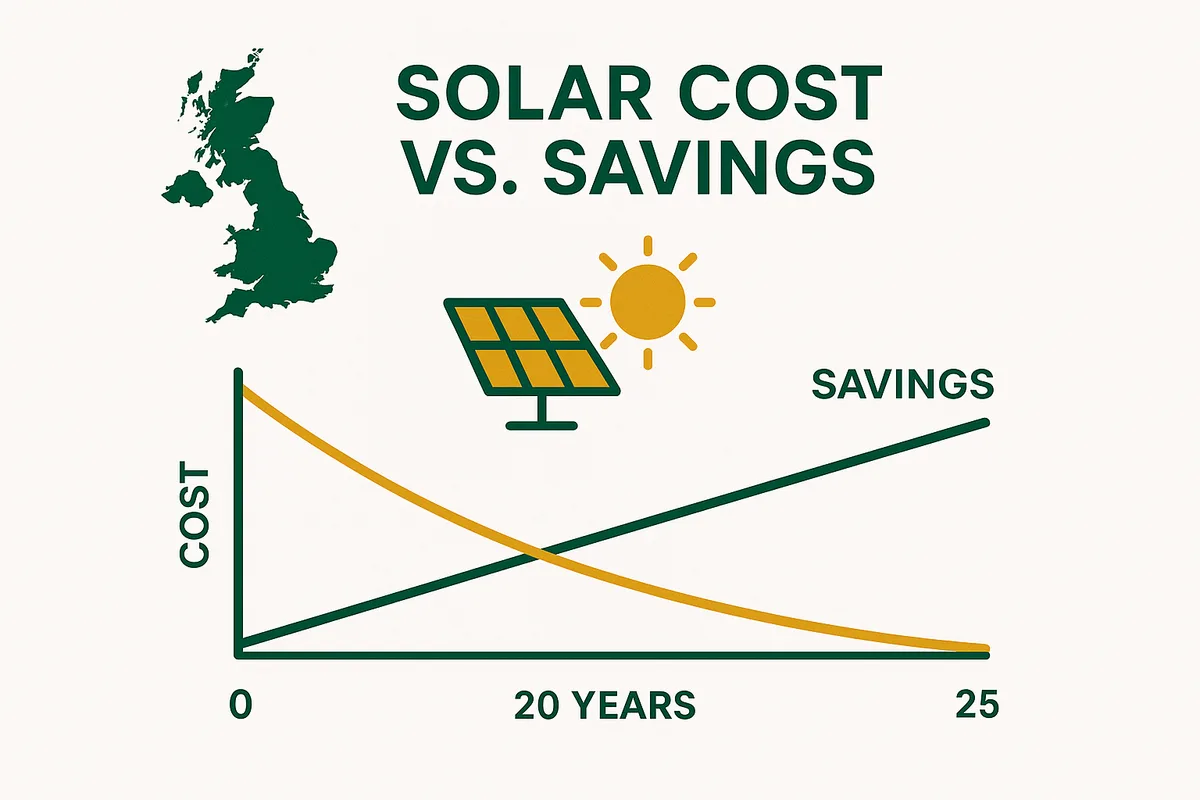
The bottom line: You do not need to live in a sunny country for solar to work. UK solar pays back in 8–12 years and delivers £14,000–£25,000 in 25-year savings. The weather is already factored in.
Source: International solar comparison data; Ofgem.
Frequently Asked Questions
Related guides
You might also like
Ready to see what solar could save you?
Get free, no-obligation quotes from MCS-certified installers in your area.
Get Free QuotesFree, no obligation. Takes 2 minutes.