Solar Battery Lifespan: How Long Do They Last?
Ready to see what solar could save you?
Get free, no-obligation quotes from MCS-certified installers in your area.
Get Free QuotesFree, no obligation. Takes 2 minutes.
How long does a solar battery last?
Most residential solar batteries last 10–15 years. Lithium iron phosphate (LFP) batteries can last 15–20 years. Battery lifespan is measured in charge cycles — most batteries are rated for 6,000–10,000 cycles (one charge-discharge per day = 16–27 years theoretically). In practice, batteries degrade to about 70–80% of original capacity after 10 years, at which point they still work but store less energy.
Battery Lifespan by Chemistry
Lithium NMC (Nickel Manganese Cobalt): - Lifespan: 10–12 years - Cycle rating: 6,000–8,000 cycles - Degradation: ~2–3% per year - After 10 years: ~70–75% capacity remaining - Used in: Some GivEnergy models, Tesla Powerwall 1
Lithium Iron Phosphate (LFP): - Lifespan: 15–20 years - Cycle rating: 8,000–12,000 cycles - Degradation: ~1–2% per year - After 10 years: ~80–85% capacity remaining - Used in: GivEnergy (newer), BYD, Pylontech, Fox ESS, Tesla Powerwall 2+
Lead-acid (outdated): - Lifespan: 3–5 years - Cycle rating: 500–1,500 cycles - Not recommended for new solar installations
LFP is now the dominant chemistry in UK residential solar batteries due to its longer lifespan, better safety profile, and lower degradation. Most new batteries installed in 2026 use LFP.
Source: Manufacturer datasheets; battery cycle testing data.
What Affects Battery Lifespan?
- Depth of discharge (DoD) — regularly draining the battery to 0% shortens lifespan. Most systems limit DoD to 80–90% to protect the battery.
- Temperature — extreme heat accelerates degradation. UK climate is ideal — rarely too hot or too cold. Indoor installation is slightly better than outdoor in this regard.
- Cycle frequency — more cycles per day = shorter lifespan. Typical UK solar use (1 cycle/day) is well within rated limits.
- Charging rate — very fast charging generates more heat and stress. Solar charging is naturally gradual, which is gentle on the battery.
- Quality of BMS — the Battery Management System controls charge/discharge to protect battery health. Quality brands have sophisticated BMS software.
- Manufacturer quality — budget batteries from unknown manufacturers may degrade faster. Stick to established brands with proven track records.
Battery Warranty Comparison
Ready to see what solar could save you?
Get free, no-obligation quotes from MCS-certified installers in your area.
Get Free QuotesUK residential battery warranties (2026):
| Brand | Warranty | Capacity Guarantee | Cycles |
|---|---|---|---|
| Tesla Powerwall 2 | 10 years | 70% at 10 years | Unlimited |
| GivEnergy 5.2/8.2/9.5 | 10 years | 70% at 10 years | 6,000 |
| BYD HVS/HVM | 10 years | 60% at 10 years | 8,000 |
| Pylontech US3000C | 10 years | 60% at 10 years | 6,000 |
| Fox ESS ECS | 10 years | 70% at 10 years | 6,000 |
| Sunsynk | 10 years | 70% at 10 years | 6,000 |
Most batteries carry a 10-year warranty with a guarantee of 60–70% remaining capacity. In practice, well-maintained LFP batteries typically retain 80%+ capacity at 10 years — exceeding the warranty.
Source: Manufacturer warranty terms.
What Happens When a Battery Degrades?
Battery degradation is gradual, not sudden:
Year 1: ~98% capacity (minor initial settling) Year 5: ~90% capacity Year 10: ~80–85% capacity (still very usable) Year 15: ~70–75% capacity (smaller but functional) Year 20: ~60–65% capacity (reduced but still working)
A 10kWh battery at 80% capacity still stores 8kWh — enough to cover most evening consumption for an average UK home. You don't need to replace a battery the moment it degrades; it continues working, just storing less.
When to replace: - When capacity drops below 50–60% of original (practically useless for whole-evening coverage) - When the BMS reports a cell fault - When the warranty expires and a fault develops - When battery replacement costs fall to a level that makes upgrading worthwhile
Source: Battery degradation curves from NREL and manufacturer long-term testing.
Replacement Costs and Planning
Battery replacement is the main long-term cost to plan for:
Current replacement costs (2026): - 5kWh battery: £2,000–£3,000 - 10kWh battery: £3,500–£5,500 - 13.5kWh (Tesla Powerwall): £5,000–£7,000
Expected future costs: Battery prices have been falling 10–15% per year. By the time your battery needs replacing (2036–2041), costs are expected to be 30–50% lower than today. A 10kWh replacement in 2036 might cost £2,000–£3,500.
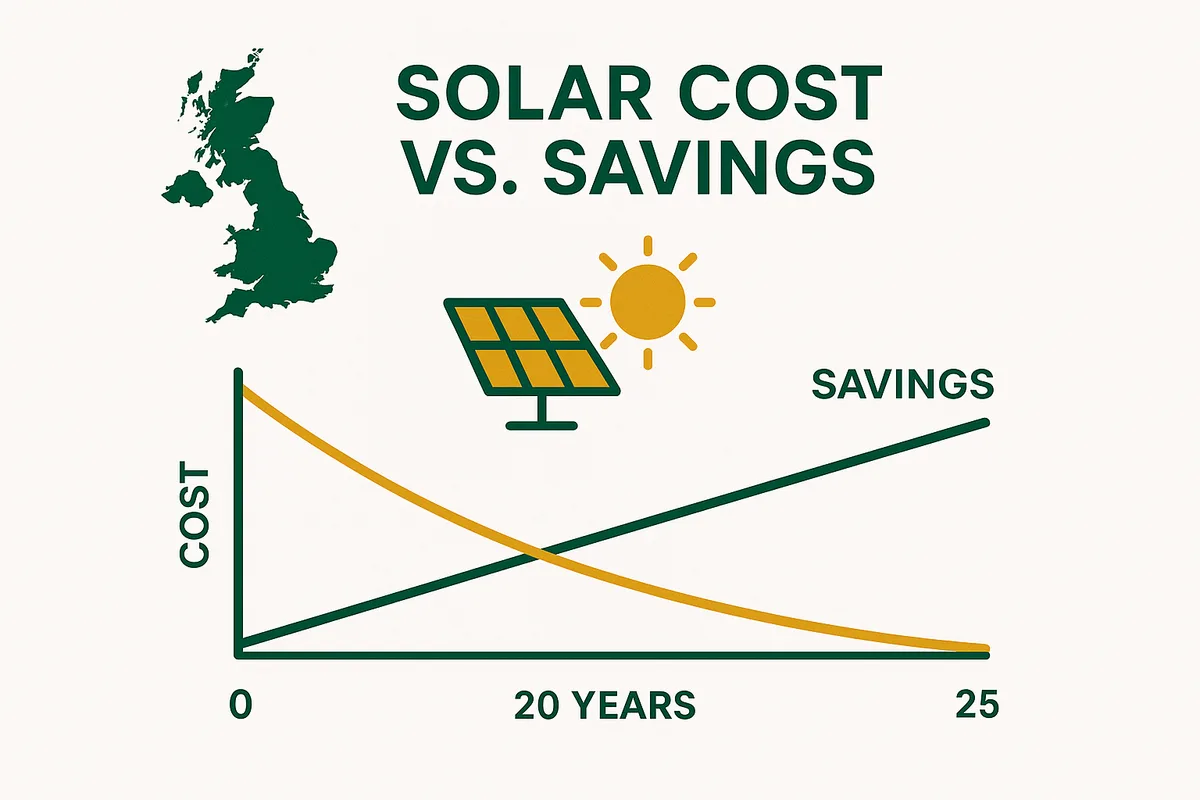
Budget planning: Set aside £200–£300 per year from your solar savings into a 'battery replacement fund.' After 10–15 years, you will have £2,000–£4,500 saved — enough to cover replacement with improved technology at lower prices.
Source: BloombergNEF battery price forecasts; IRENA cost projections.
Frequently Asked Questions
Related guides
You might also like
Ready to see what solar could save you?
Get free, no-obligation quotes from MCS-certified installers in your area.
Get Free QuotesFree, no obligation. Takes 2 minutes.