Solar Panel Recycling UK: What Happens at End of Life?
Ready to see what solar could save you?
Get free, no-obligation quotes from MCS-certified installers in your area.
Get Free QuotesFree, no obligation. Takes 2 minutes.
Can solar panels be recycled?
Solar panels are approximately 95% recyclable by weight. The main materials — glass (75%), aluminium frame (10%), silicon cells (5%), and copper wiring (1%) — are all recoverable. In the UK, end-of-life panels are recycled through the WEEE (Waste Electrical and Electronic Equipment) scheme. Recycling is typically free or low-cost through manufacturer take-back programmes or WEEE-compliant recycling facilities.
What Solar Panels Are Made Of
A typical solar panel contains:
- Glass: ~75% by weight — tempered, high-clarity glass on the front surface. Fully recyclable into new glass products.
- Aluminium frame: ~10% — the structural border. Fully recyclable, high scrap value.
- Polymer backsheet: ~5% — plastic protective layer on the back. Can be recycled into lower-grade plastics or used for energy recovery.
- Silicon cells: ~5% — the photovoltaic material. Can be reclaimed and used in new solar cells or electronics.
- Copper wiring: ~1% — internal conductors. Fully recyclable, high scrap value.
- Encapsulant (EVA): ~3% — plastic film between glass and cells. Currently the hardest part to recycle.
- Solder/contacts: <1% — contains small amounts of tin, lead (in older panels), and silver. Recoverable.
Total recyclability: Approximately 95% by weight. The remaining 5% (mainly encapsulant) is improving as recycling technology advances.
Source: IRENA End-of-Life Management Report; WEEE Directive recycling standards.
How Solar Panel Recycling Works
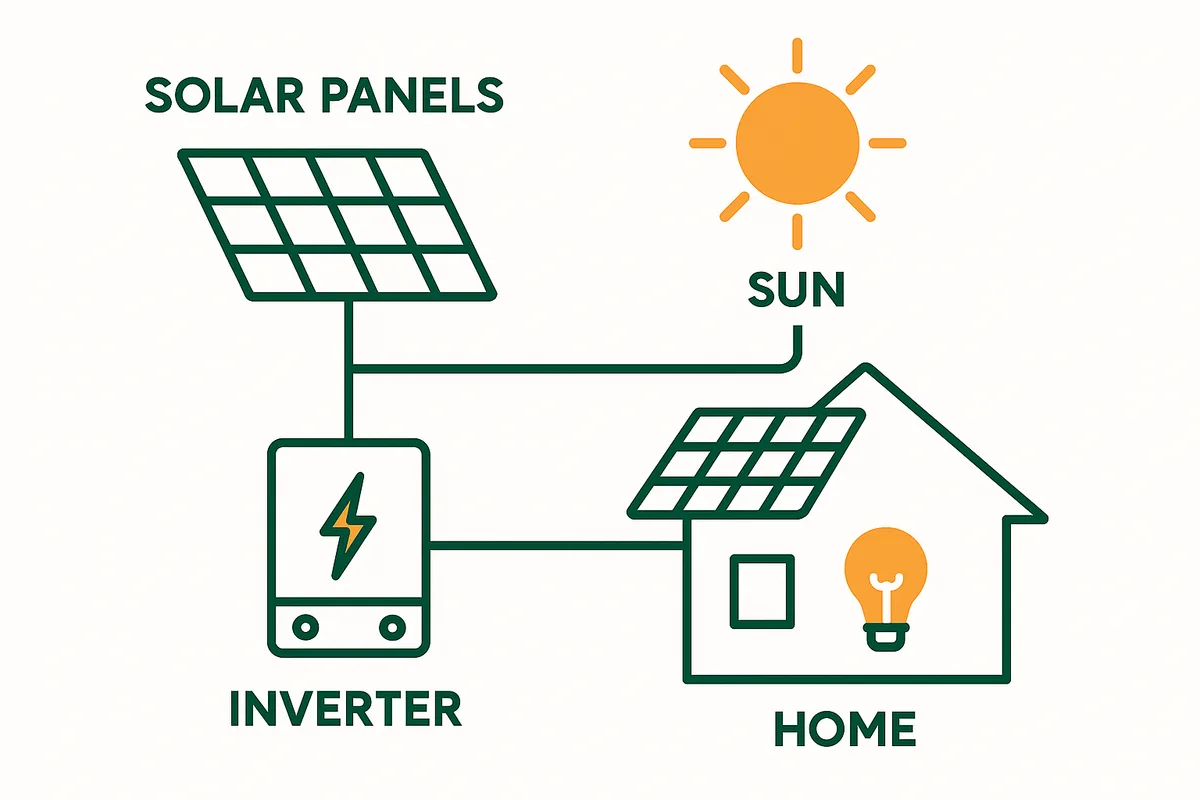
The recycling process for crystalline silicon panels:
1. Collection: Panels are removed from the roof by a qualified installer or taken to a WEEE-compliant recycling facility.
2. Frame removal: The aluminium frame is mechanically separated. It is sent directly to aluminium recycling (no processing needed — it is pure aluminium).
3. Glass separation: The front glass is separated from the cell layer. It is crushed and recycled into new glass products (often as glass wool insulation or new glass sheets).
4. Thermal processing: The remaining cell/encapsulant sandwich is heated to 500°C to burn off the EVA encapsulant and backsheet. This leaves bare silicon cells.
5. Chemical processing: Silicon cells are chemically etched to remove the anti-reflective coating and metal contacts. The pure silicon is recovered for reuse.
6. Metal recovery: Copper, silver, tin, and (in older panels) lead are recovered from the contacts and wiring.
Recovery rates: - Glass: 95%+ recovery - Aluminium: 100% recovery - Silicon: 85–95% recovery - Copper/silver: 90%+ recovery
Source: PV Cycle (European PV recycling scheme); Veolia solar panel recycling data.
Ready to see what solar could save you?
Get free, no-obligation quotes from MCS-certified installers in your area.
Get Free Quotes
UK Recycling: WEEE Scheme
In the UK, solar panels are classified as Waste Electrical and Electronic Equipment (WEEE). This means:
- Producers (manufacturers/importers) are responsible for the cost of recycling panels they sell in the UK
- Consumers can return end-of-life panels to WEEE-compliant recycling centres, usually free of charge
- Installers who remove old panels must dispose of them through WEEE-approved channels
How to recycle your solar panels: 1. Contact your local council — most Household Waste Recycling Centres (HWRCs) accept solar panels under WEEE 2. Contact your installer — many offer removal and recycling as part of replacement services 3. Contact the panel manufacturer — many have take-back programmes 4. Use a specialist recycler — companies like Veolia and PV Cycle handle solar panel recycling
Cost: Typically free at HWRCs or through producer take-back. Commercial recycling services may charge £5–£15 per panel for collection and processing.
Source: Environment Agency WEEE guidance; UK Government WEEE Regulations 2013.
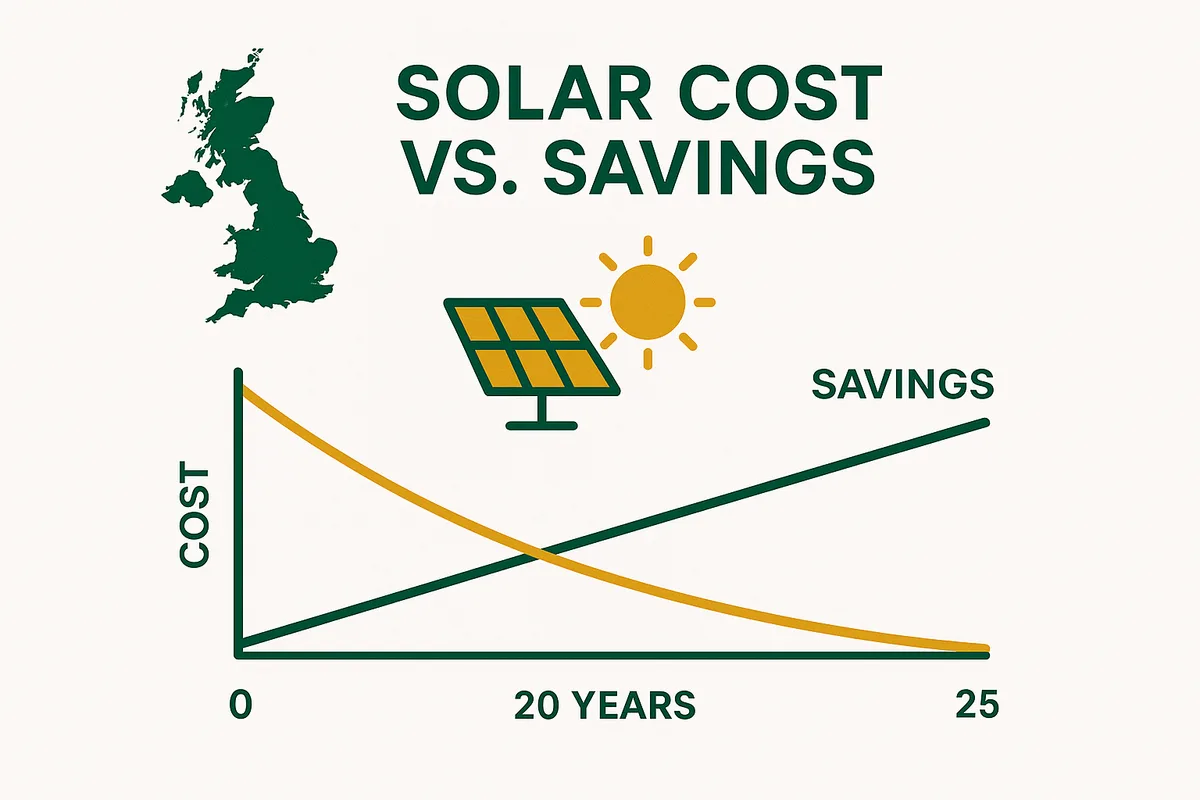
The Environmental Balance: Manufacturing vs Lifetime Generation
A common concern is whether the energy used to make a panel exceeds the energy it generates. The answer is emphatically no:
Energy payback time: - Energy to manufacture a panel: ~1,500–2,500 kWh - Energy generated in year 1: ~400 kWh per panel - Energy payback: 3.5–6 years - Remaining clean energy: 19–21 years of net-positive generation
Carbon payback: - Manufacturing carbon footprint: ~400–500 kg CO2 per panel - Annual carbon offset: ~150 kg CO2 per panel - Carbon payback: 2.5–3.5 years - Remaining carbon benefit: 21–22 years of net-zero generation
Over their lifetime, solar panels generate 6–10 times more energy than was used to manufacture them. The environmental case is overwhelmingly positive.
Source: IRENA lifecycle assessment; Fraunhofer ISE environmental impact study.
Frequently Asked Questions
Related guides
Related: Home Heating Systems
Solar panels are most powerful when combined with an efficient heating system. Heat pumps use solar-generated electricity to heat your home at 300-400% efficiency — making them the ideal partner for solar.
A heat pump converts 1kWh of electricity into 3-4kWh of heat.
From our sister site Home Heat Pump Guide
You might also like

Ready to see what solar could save you?
Get free, no-obligation quotes from MCS-certified installers in your area.
Get Free QuotesFree, no obligation. Takes 2 minutes.