Solar Panels for a Semi-Detached House
See what fits your property
Roof shape, pitch and available space decide what is actually installable. Get a recommendation and an installed price for your specific property.
Check My PropertyFree, no obligation. Takes about 2 minutes.
Can you put solar panels on a semi-detached house?
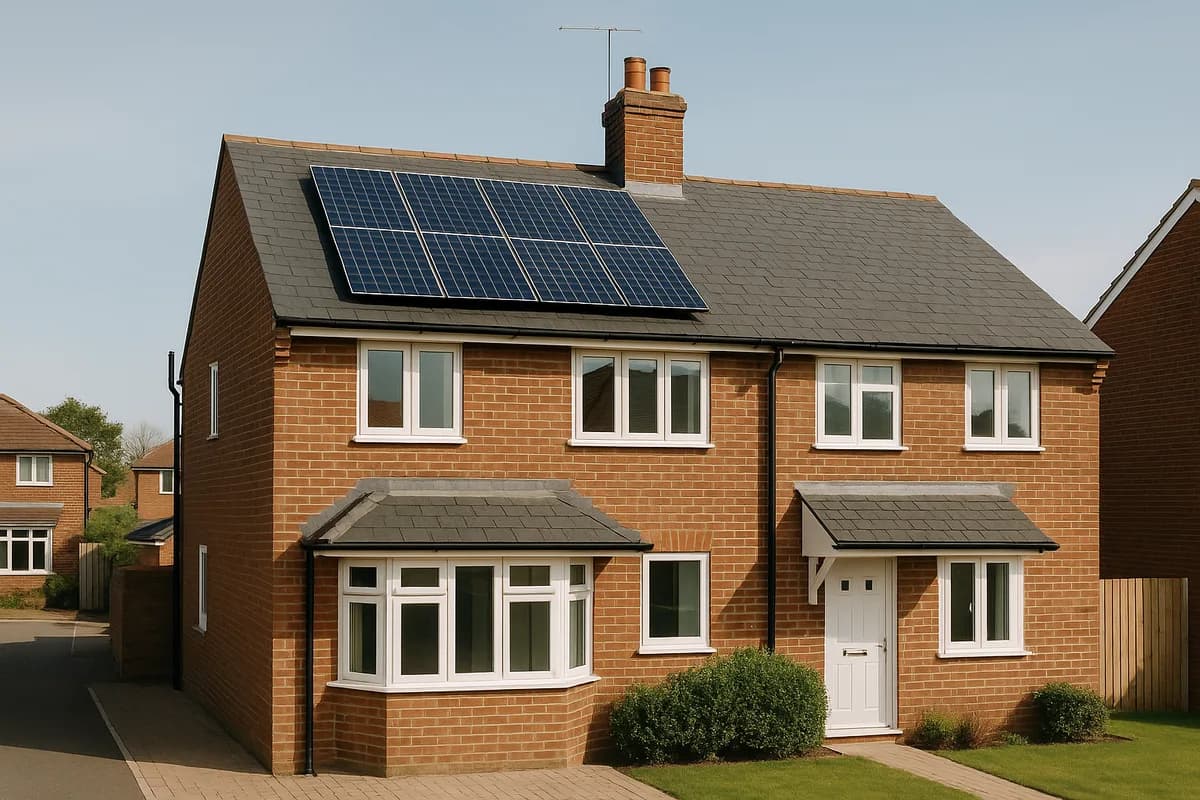
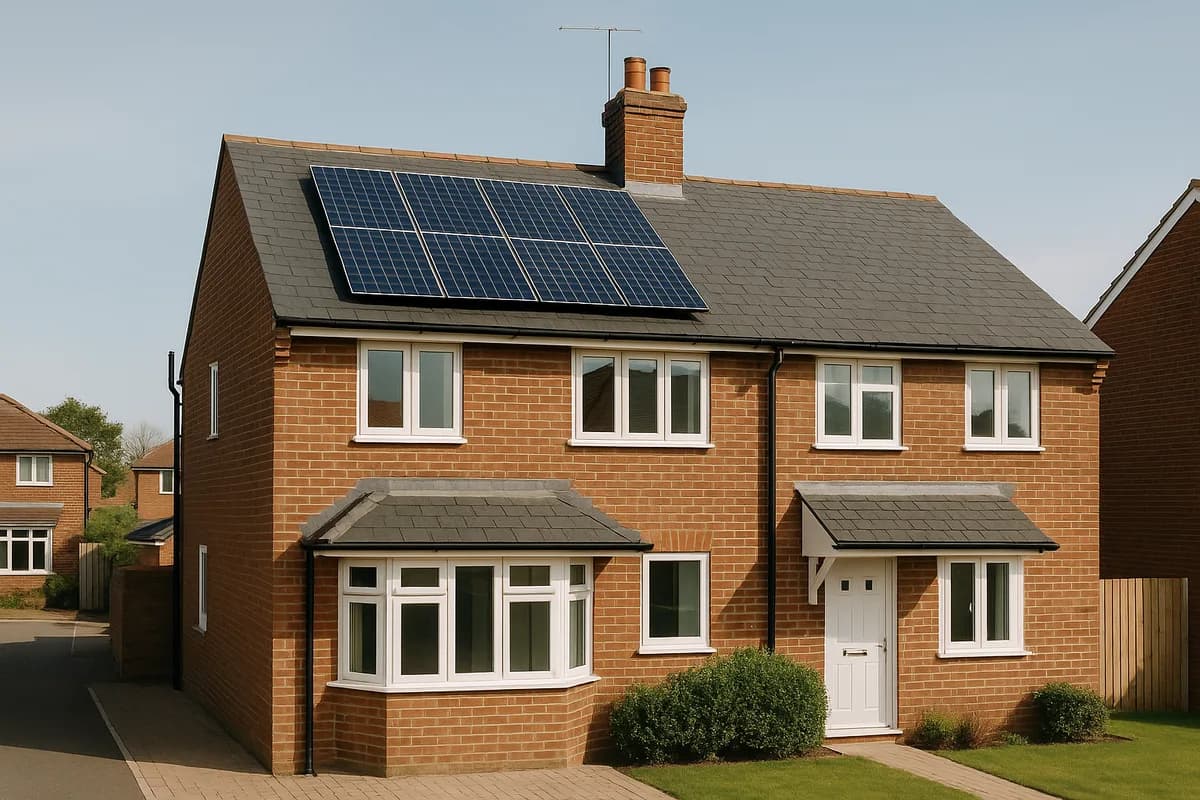
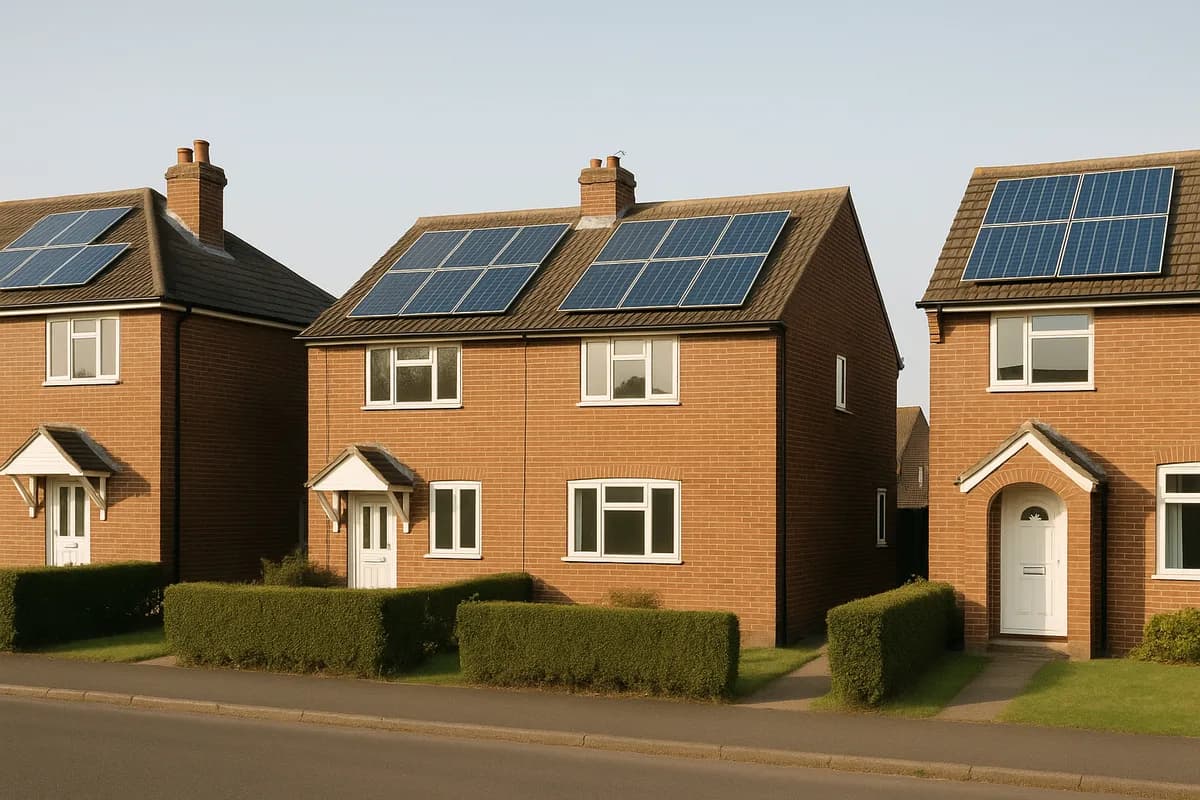
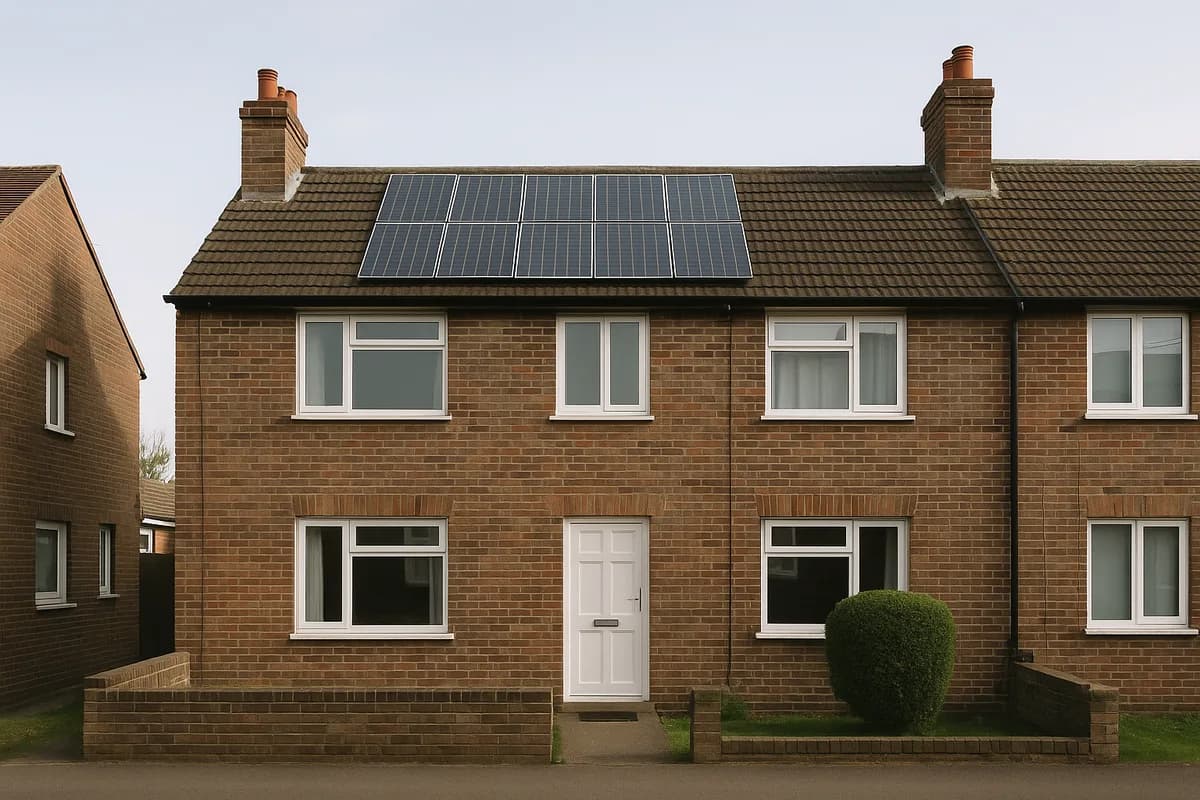
Semi-detached houses are well-suited for solar panels. A typical semi can fit 8–12 panels (3–5kW) on one roof slope. Cost: £4,500–£9,000. Annual savings: £550–£900. Payback: 8–11 years. The main consideration is which roof slope faces south — semis typically have two slopes, and the direction determines output.
System Sizing for Semi-Detached Houses
Semi-detached homes are the most common house type in the UK, accounting for roughly 30% of all homes. They offer a good balance of roof space and affordability.
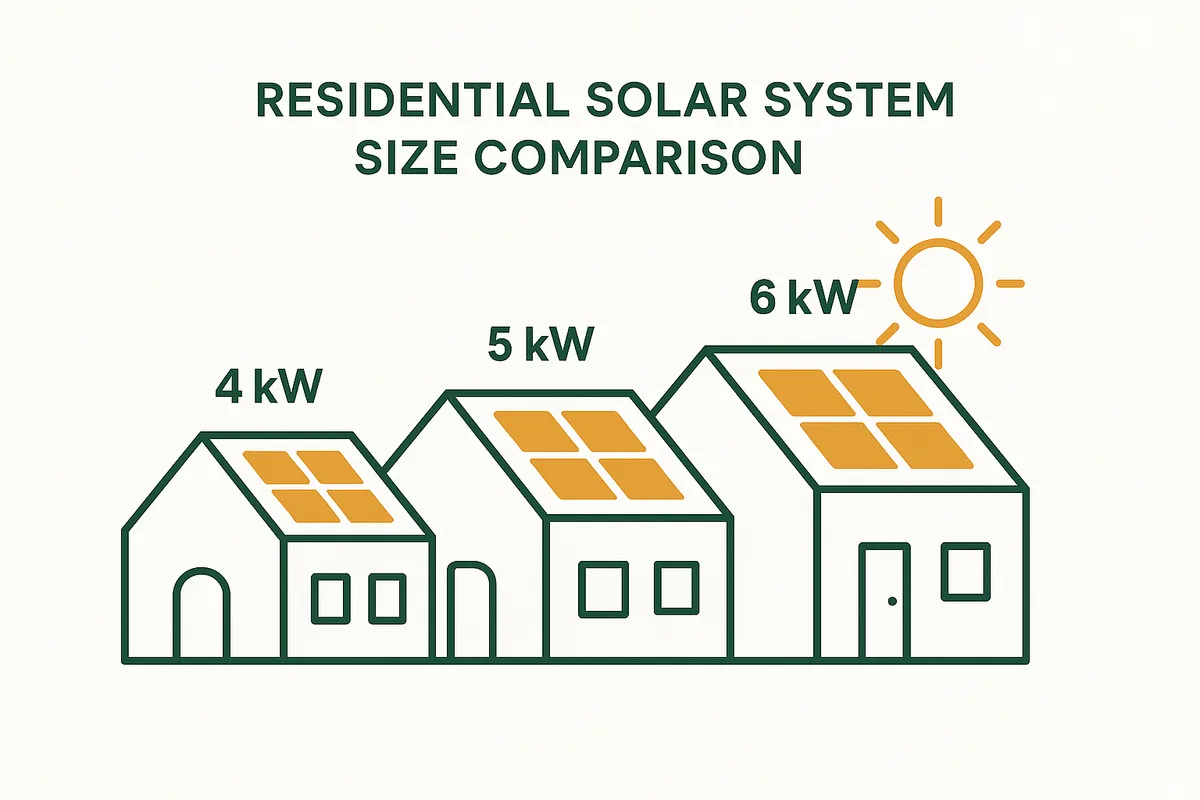
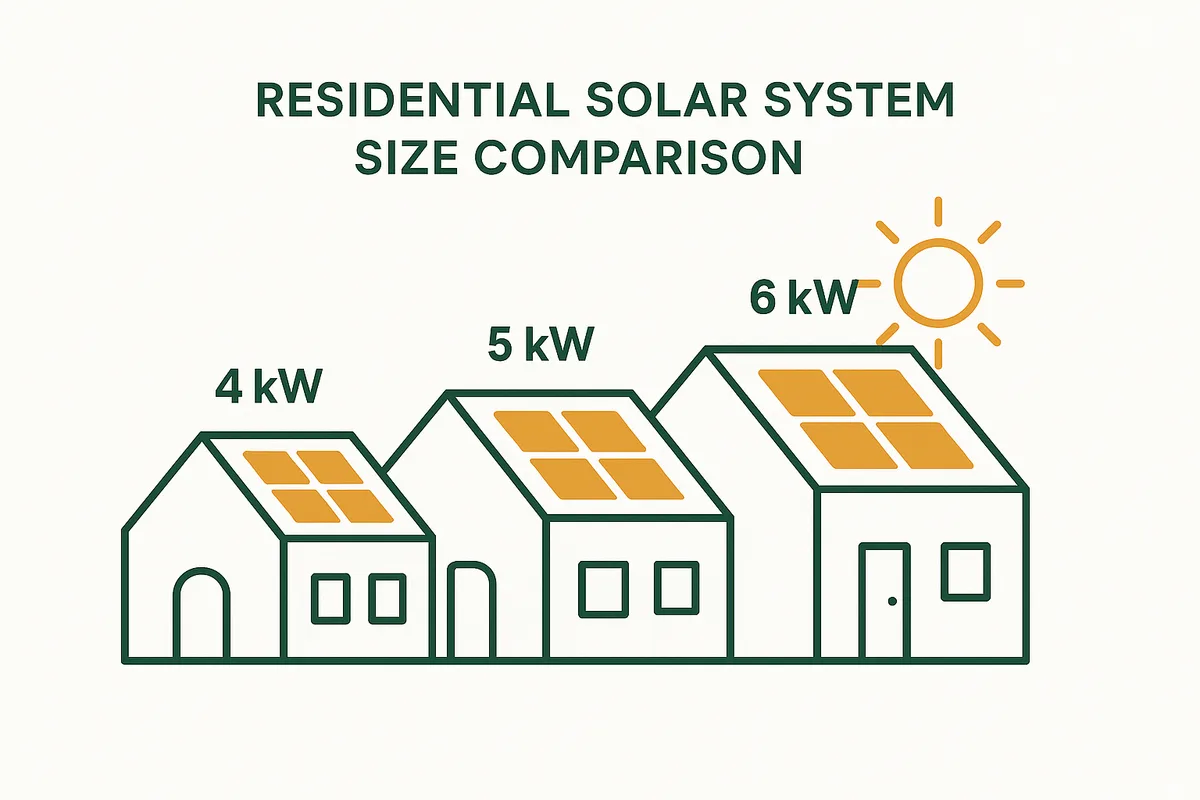
Typical semi-detached roof capacity: - Usable roof space (one slope): 15–22 m² - Panel capacity: 8–12 panels (3.2–5kW) - If both slopes are usable: 16–24 panels (6.4–10kW)
Recommended system sizes:
| House Type | System Size | Panels | Cost | Annual Savings |
|---|---|---|---|---|
| 2-bed semi | 3kW | 8 | £4,500–£6,000 | £450–£550 |
| 3-bed semi | 4kW | 10 | £5,500–£8,000 | £580–£750 |
| 4-bed semi | 4–5kW | 10–13 | £5,500–£9,000 | £580–£900 |
Most semis can fit a 4kW system comfortably on one south-facing slope. This is the sweet spot for cost vs savings.
Source: MCS installer data; typical UK semi-detached dimensions.
Semi-Detached Specific Considerations
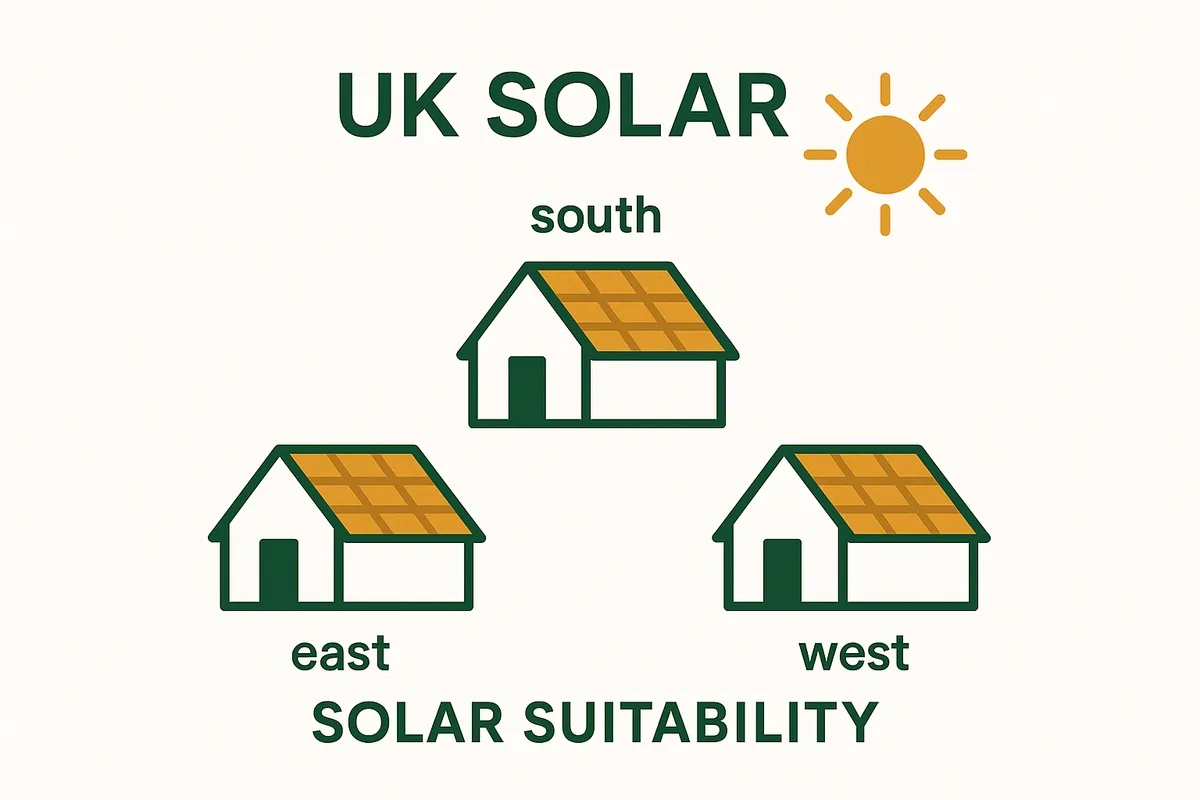
- Roof direction — the key question is which slope faces south (or south-east/south-west). If your rear slope faces south, install there. If your front faces south, that works too (permitted development in most areas).
- Shared party wall — panels mount on your roof rafters, not the shared wall. No party wall agreement is needed. But inform your neighbour about scaffolding if it rests against the party line.
- Chimney shading — semis often have a chimney on the party wall which can shade panels on one side. Micro-inverters mitigate this.
- Similar roof to neighbours — if your neighbour already has solar, you know your roof works. If they do not, you are likely the first — which is fine.
- Scaffolding access — semis usually have access on one side but not the other (party wall side). The installer will erect scaffolding on the accessible side.
- Loft space — semis typically have straightforward loft access for cable routing from roof to inverter.
See what fits your property
Roof shape, pitch and available space decide what is actually installable. Get a recommendation and an installed price for your specific property.
Check My Property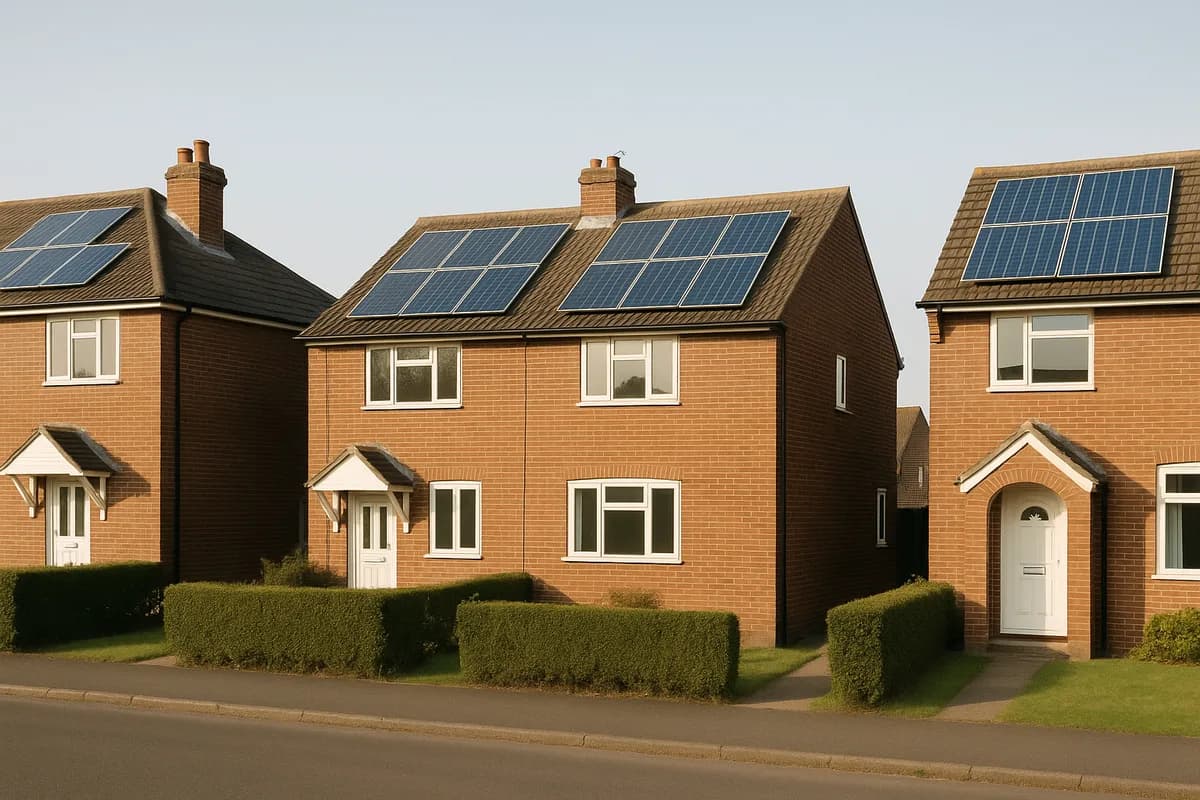
Financial Returns for Semi-Detached Homes
Semis deliver strong solar returns because they have enough roof space for a meaningful system without the high costs of very large detached installations:
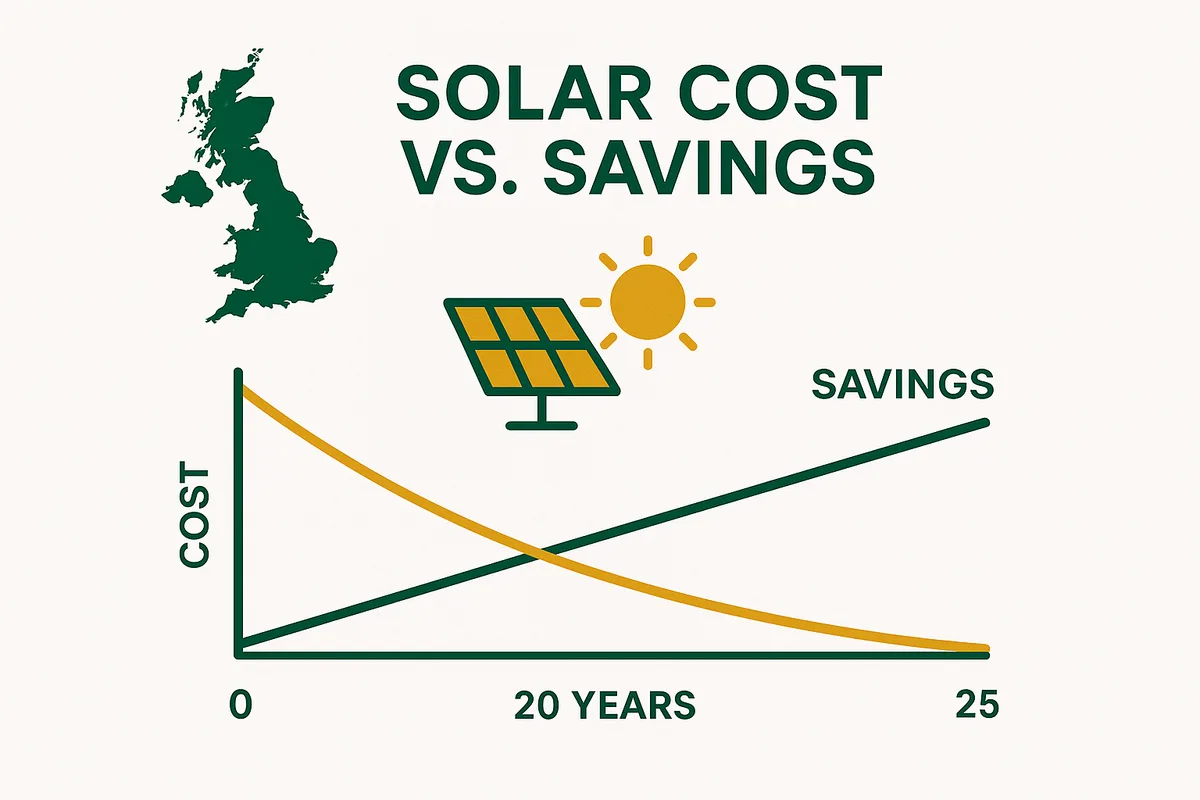
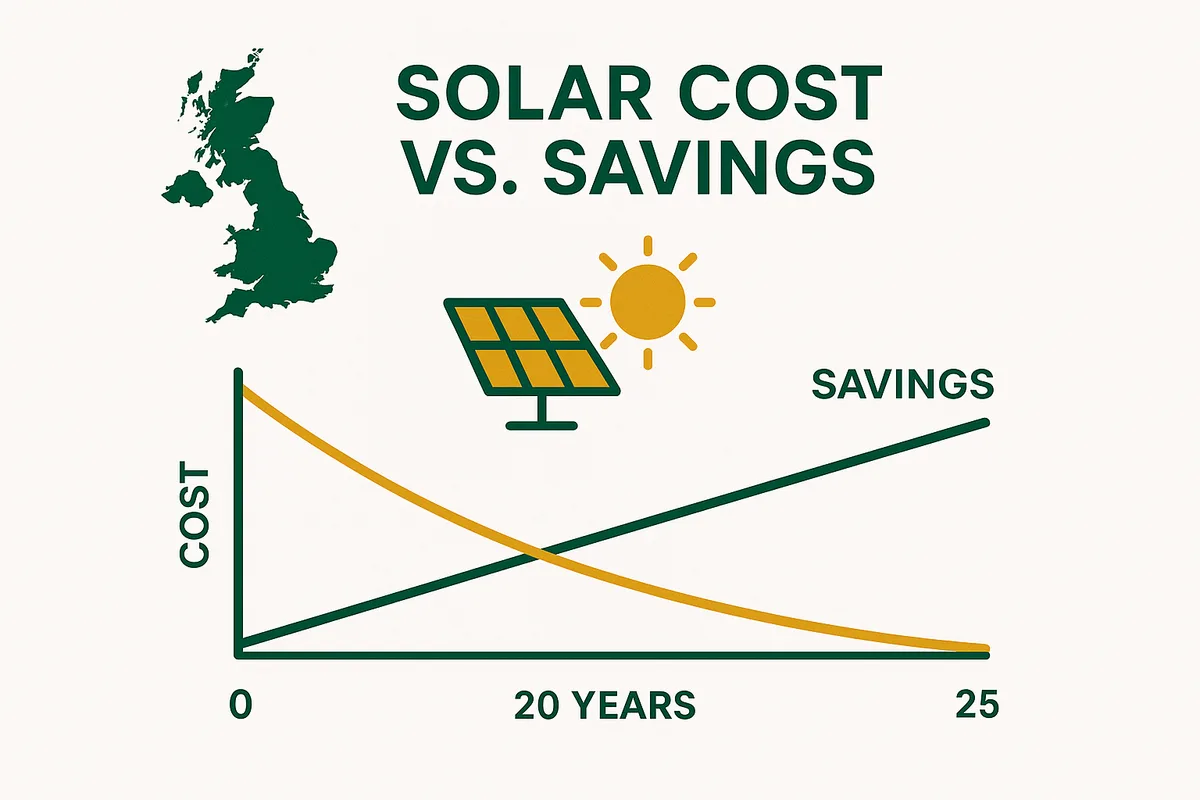
4kW system on a 3-bed semi (south-facing, no battery): - Installation cost: £6,750 (average) - Annual savings: £580 - Payback: 11.6 years - 25-year net saving: £7,750 - ROI: 115%
4kW system + 10kWh battery: - Total cost: £11,750 - Annual savings: £820 - Payback: 14 years - 25-year net saving: £5,750 (after battery replacement) - ROI: 49%
Panels alone deliver the strongest ROI. The battery improves daily convenience (evening self-consumption) but extends the payback.
Source: Ofgem price cap July-September 2026; Energy Saving Trust.
East-West Split on a Semi
If your semi does not have a south-facing slope, consider an east-west split:
- Install panels on both the front and rear roof slopes
- Combined output: approximately 85% of south-facing
- Benefit: generation spread across more of the day
- More panels total = potentially more kWh despite lower per-panel output
Example: 12 panels (6 east + 6 west) at 85% = equivalent to 10 south-facing panels. You generate a similar annual total with a flatter daily output curve that better matches consumption.
With micro-inverters, each panel operates independently — east panels do not affect west panels.
Source: MCS system design guidance.
Frequently Asked Questions
Related guides
Related: Home Heating Systems
Solar panels are most powerful when combined with an efficient heating system. Heat pumps use solar-generated electricity to heat your home at 300-400% efficiency — making them the ideal partner for solar.
Heat pumps use electricity at 300-400% efficiency, making them ideal partners for solar.
From our sister site Home Heat Pump Guide
You might also like
See what fits your property
Roof shape, pitch and available space decide what is actually installable. Get a recommendation and an installed price for your specific property.
Check My PropertyFree, no obligation. Takes about 2 minutes.