How Many Solar Panels Does a 4-Bedroom House Need?
Find the right system size for your roof
Panel count depends on your electricity use, roof space and direction — not on a rule of thumb. Get a recommended size and what it should cost.
Size My SystemFree calculator. No contact details required to see your result.
How many solar panels does a 4-bedroom house need?
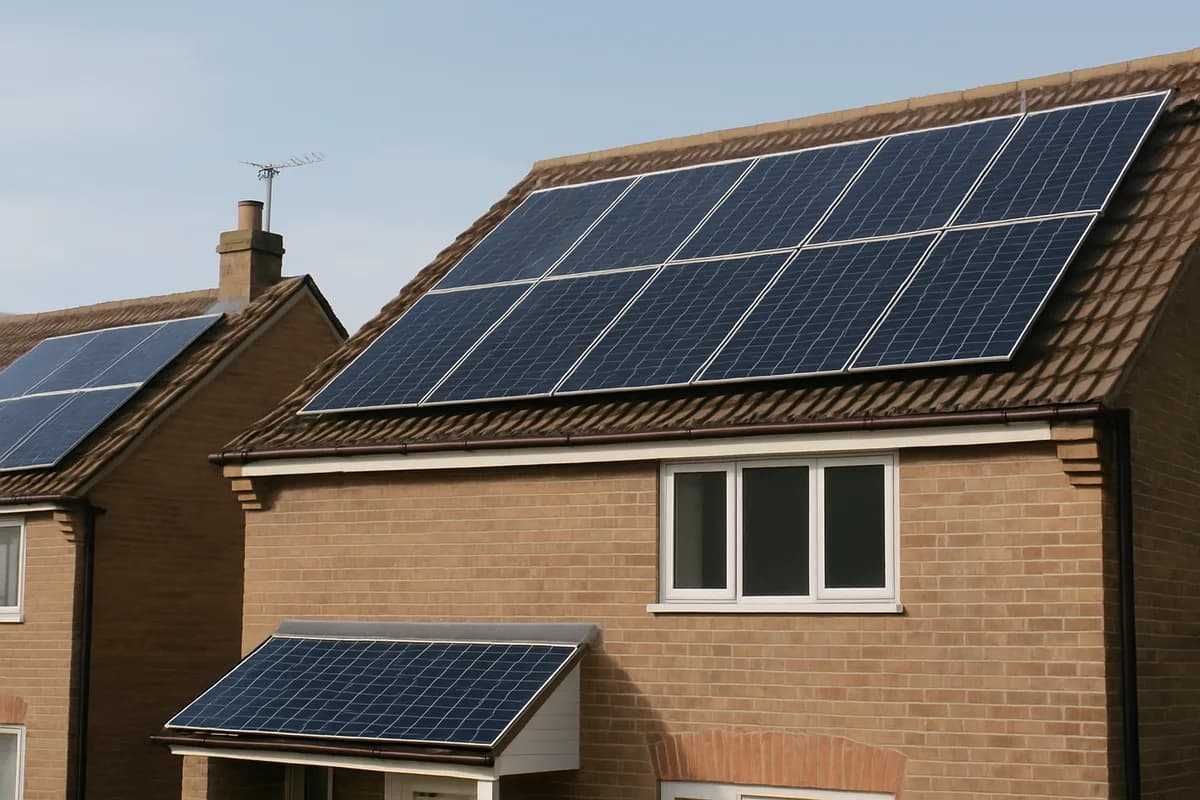
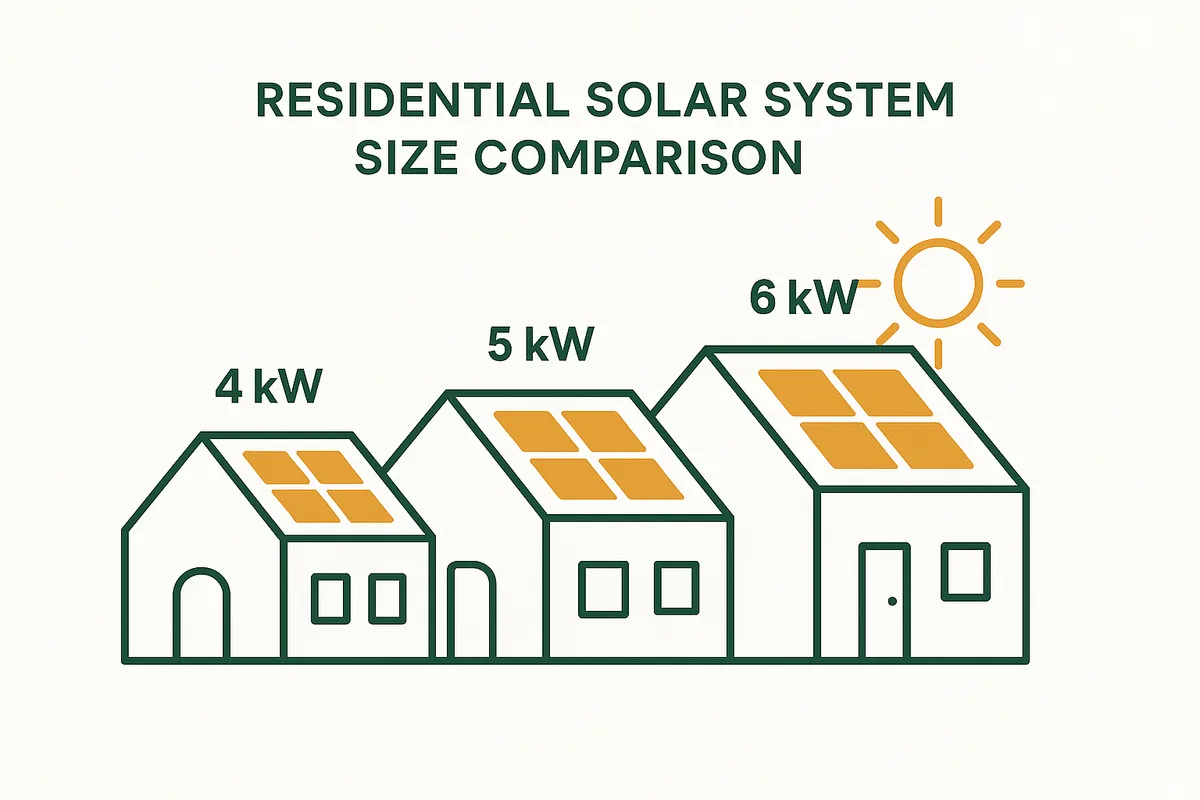
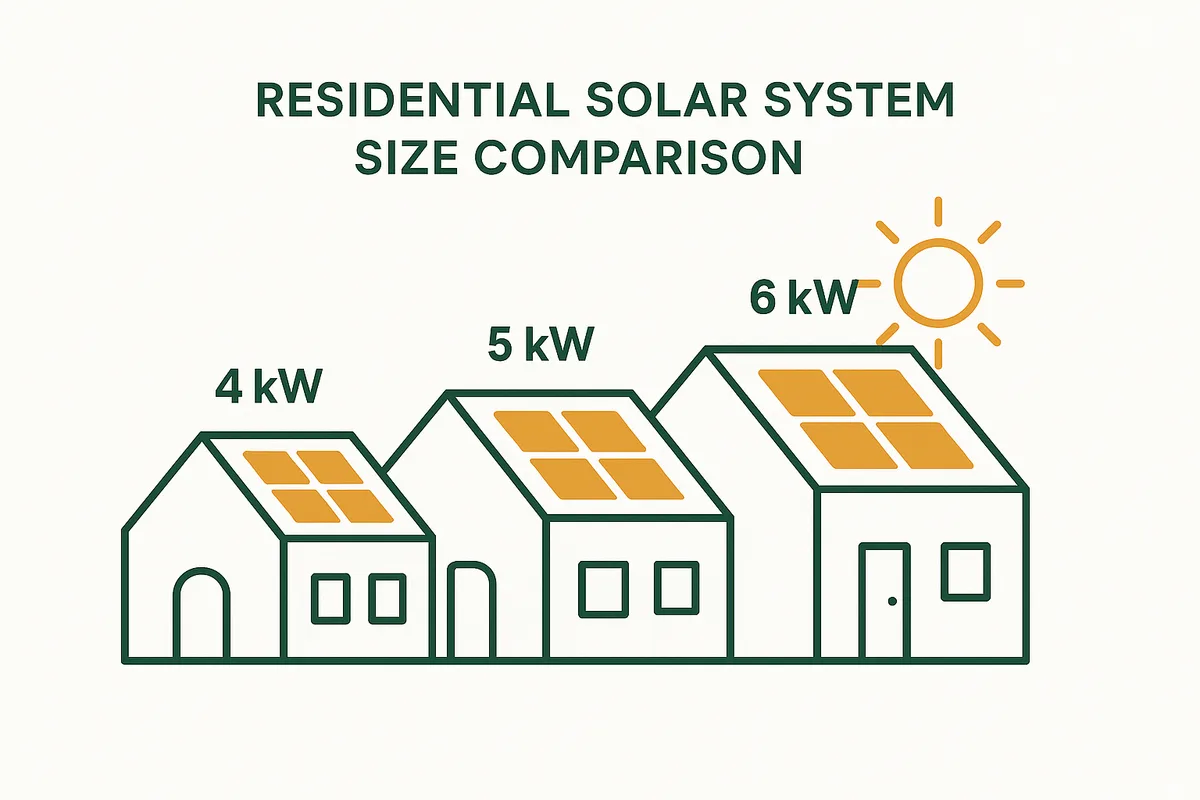
Most 4-bedroom UK houses fit 10 to 16 panels, which is roughly 4.0 to 6.4 kWp at 400 W per panel. At the DESNZ 2025/26 median installed cost that is about £7,120 for 10 panels and £10,860 for 16, and it generates roughly 3,880 to 6,210 kWh a year on an unshaded south-facing roof. But bedroom count does not determine how much electricity you use — your bill does. Divide your annual kWh by 970 to get the kWp you need, then divide by your panel wattage to get the panel count. VAT is 0% on qualifying installations until 31 March 2027.
Why Bedroom Count Is the Wrong Starting Point
Almost every page answering this question tells you a 4-bed house uses a particular number of kilowatt-hours. Be careful with those figures. Bedrooms tell you about roof area and household size, not about consumption — and consumption is what actually sets the system size.
Two four-bedroom houses on the same street can differ by a factor of three. One has two retired occupants, gas heating and no car. The other has a family of five, an electric vehicle on the drive and a heat pump. Same bedrooms. Completely different systems.
So start with the only number that is actually yours: the annual kWh figure on your electricity bill or in your online account. Then:
1. Divide your annual kWh by 970 — that gives the kWp that would generate roughly your annual consumption. 2. Divide that kWp by your panel wattage in kW (a 400 W panel is 0.4) — that gives the panel count.
Worked example: 4,000 kWh ÷ 970 = 4.1 kWp. 4.1 ÷ 0.4 = about 10 panels.
That calculation is what our solar panel calculator does with your postcode and consumption, and it is a far better guide than any bedroom rule of thumb.
One important caveat before you scale it up. Generating as much as you consume over a year is not the same as covering your usage. Solar generates in summer daytime; households consume most in winter evenings. Matching annual totals still leaves you buying grid electricity, which is what the self-consumption assumptions below are about.
What Each System Size Costs and Produces
All costs below come from DESNZ solar PV cost data, derived from the MCS Installation Database, on a Declared Net Capacity basis for 2025/26. DESNZ reports two separate bands and this table uses the correct one for each system: £1,780.25 per kW for systems up to 4 kW, and £1,696.97 per kW for 4–10 kW.
| Panels | System size | Installed cost (DESNZ median) | Annual generation | Roof space |
|---|---|---|---|---|
| 10 | 4.0 kWp | ~£7,120 | ~3,880 kWh | ~19-22 m² |
| 12 | 4.8 kWp | ~£8,150 | ~4,660 kWh | ~24–28 m² |
| 13 | 5.2 kWp | ~£8,820 | ~5,040 kWh | ~25-29 m² |
| 16 | 6.4 kWp | ~£10,860 | ~6,210 kWh | ~30-36 m² |
Assumes 400 W panels, and 970 kWh per kWp per year — the UK average for a south-facing, unshaded, roughly 35° roof, derived from PVGIS. Regionally that swings from about 830 kWh/kWp in northern Scotland to about 1,080 in south-west England, so treat these as central estimates rather than forecasts.
Roof space assumes a typical panel of about 1.9 m² plus roughly 18% for edge setbacks and access.
Source: DESNZ, Solar photovoltaic (PV) cost data, released 28 May 2026, Open Government Licence v3.0. Full 13-year series on our UK Solar Price Observatory.
Bigger Systems Genuinely Cost Less Per kW
This is one of the few places where the published data settles an argument that is usually hand-waved.
| DESNZ band | 2025/26 median cost | What it covers |
|---|---|---|
| 0–4 kW | £1,780.25 per kW | 10 panels at 400 W and below |
| 4–10 kW | £1,696.97 per kW | 11 panels and up |
That is £83 per kW less, about 4.7%, for the larger band. The reason is straightforward: scaffolding, the DNO application, the inverter, the survey and the labour day do not double when the panel count does.
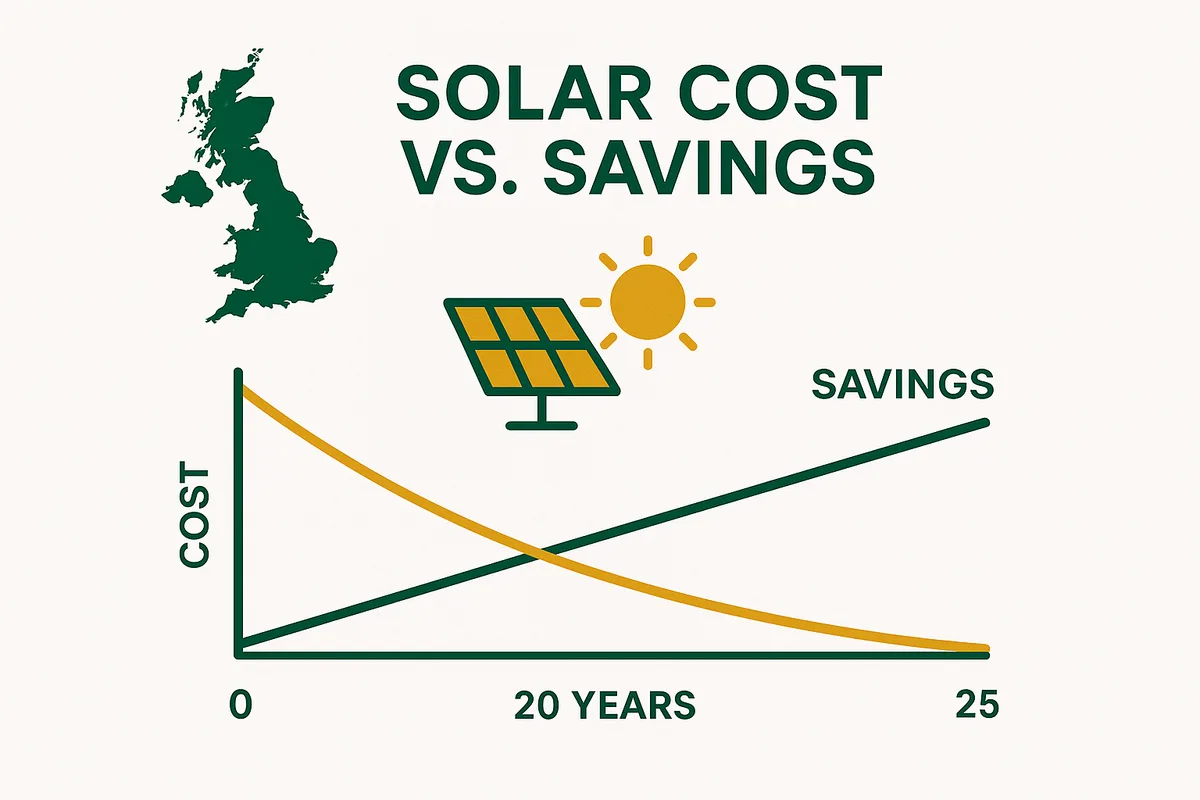
So the honest version of "go as big as your roof allows" is: the per-kW rate falls, but the value of each extra unit generated falls too. Once your array generates more than you use, the extra units are exported at your SEG rate rather than displacing electricity you would have bought at 26.11p. That is a large difference, and it is why the payback figures below barely improve as the system grows.
We are not extrapolating a marginal cost per additional panel. DESNZ publishes band averages, not the incremental cost of panel eleven. For that number, compare your own quotes.
Savings and Payback, With the Arithmetic Shown
Find the right system size for your roof
Panel count depends on your electricity use, roof space and direction — not on a rule of thumb. Get a recommended size and what it should cost.
Size My SystemSavings come from two different things at two very different rates. Electricity you use yourself avoids buying at the price cap, currently 26.11p per kWh. Electricity you export earns your Smart Export Guarantee rate, which varies enormously by supplier.
The table below assumes 50% self-consumption without a battery, and shows both a conservative 4.5p fixed SEG tariff and Outgoing Octopus at 12p.
| Panels | Annual benefit (SEG 4.5p) | Annual benefit (SEG 12p) | Payback at 4.5p | Payback at 12p |
|---|---|---|---|---|
| 10 | £594 | £739 | ~12.0 yrs | ~9.6 yrs |
| 12 | £713 | £888 | — | — |
| 13 | £771 | £960 | ~11.4 yrs | ~9.2 yrs |
| 16 | £950 | £1,183 | ~11.4 yrs | ~9.2 yrs |
Read the 50% assumption carefully, because it flatters the larger systems. A household can only use so much electricity during daylight. As the array grows relative to your consumption, the share you use yourself falls and the share you export rises. A 16-panel system on a home that uses 4,000 kWh will self-consume well under 50%, so its real benefit sits below the figure in this table. The 10-panel row is the most reliable, because 4 kWp is closest to typical annual consumption.
This is exactly why your own kWh figure matters more than your bedroom count — and why the export tariff you choose can be worth more than the difference between two quotes.
What these payback figures exclude: panel degradation of roughly 0.4–0.5% a year, any future movement in electricity prices, one inverter replacement somewhere around year 10–15, and maintenance. We do not publish a 25-year return for this system for the same reason we do not publish one for any other: it requires compounding four unknowable assumptions and presenting the result as though it were precise.
Will 10 to 16 Panels Fit a 4-Bed Roof?
Usually, but the shape of the roof matters more than the size of the house.
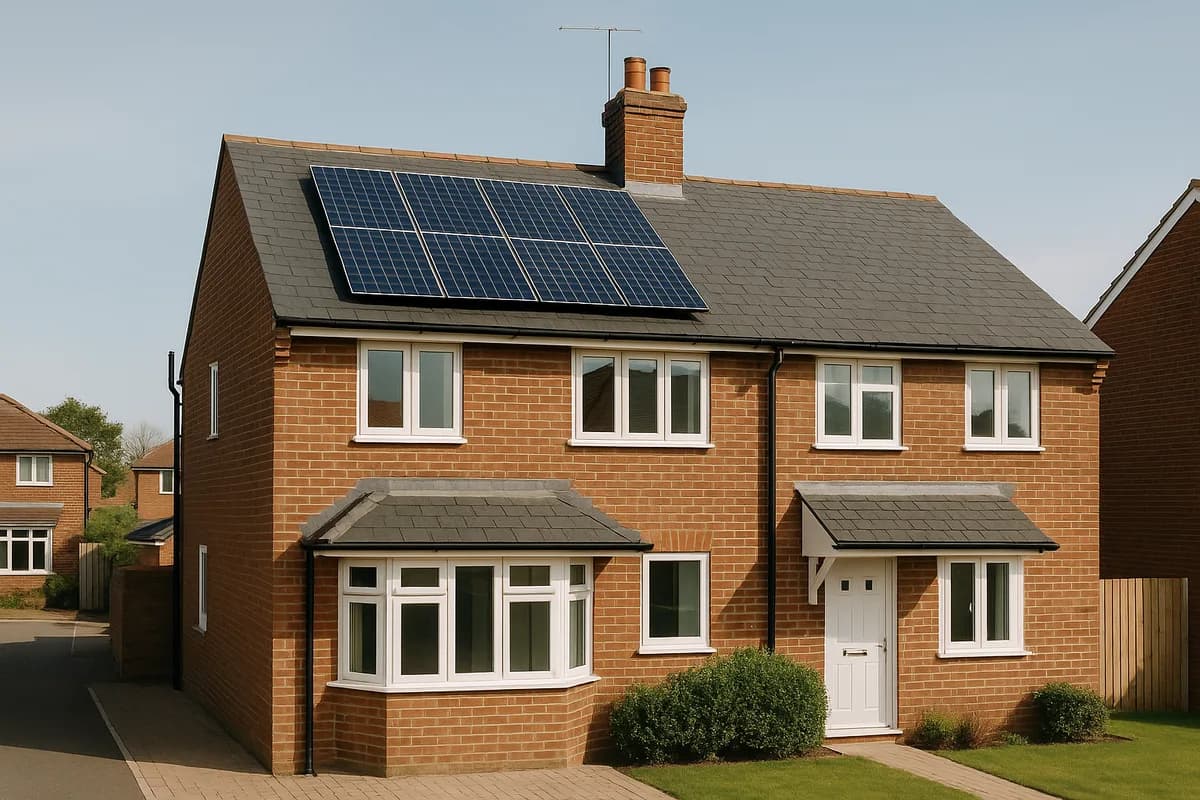
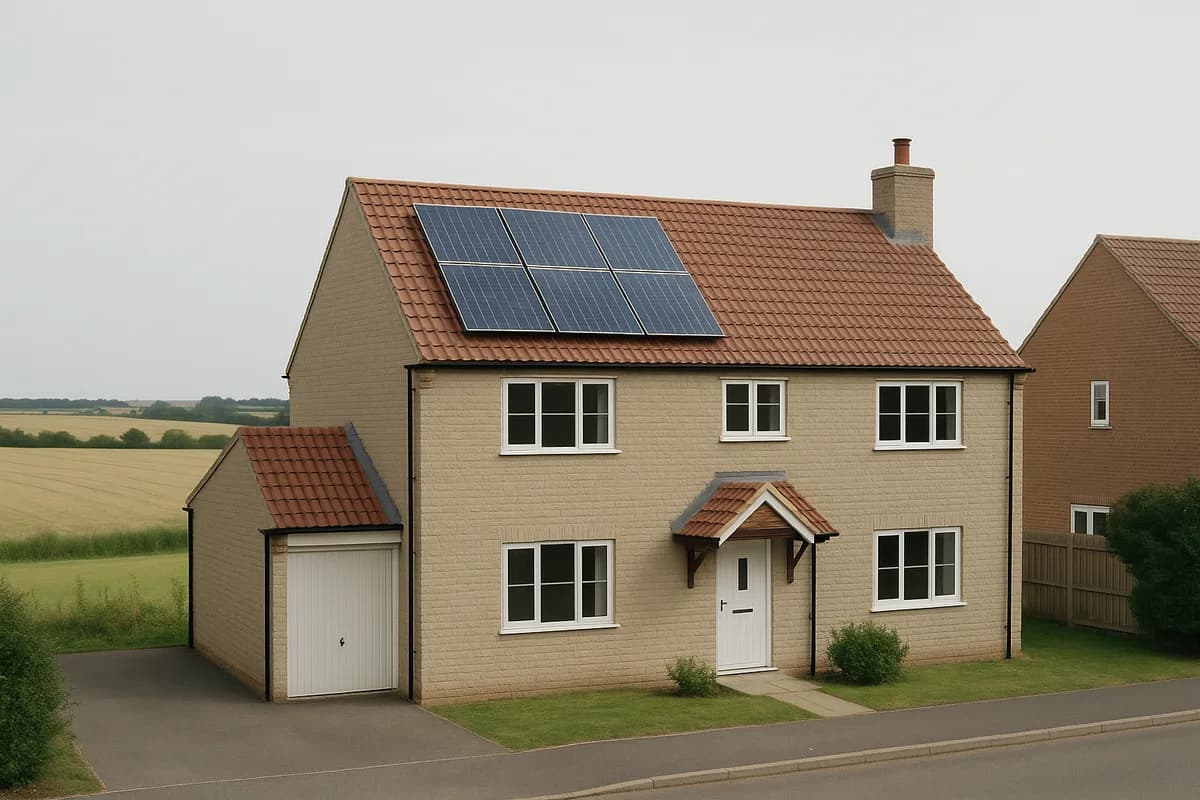
- Detached 4-bed — typically the easiest. Often enough unbroken south or south-west slope for 13–16 panels.
- 4-bed semi — usually fine for 10–13 on one pitch, depending on chimney position.
- 4-bed end-of-terrace — often works; mid-terrace 4-beds frequently do not have a single slope long enough for more than 8–10.
- Hipped roofs lose usable area at the corners, which can cost you two or three panels against an equivalent gable roof.
East–west installations split the array across two slopes. They typically generate around 15–20% less over the year than an equivalent south-facing array, but spread generation across morning and evening — which often *raises* self-consumption and can suit a working household better than the headline number suggests.
Check orientation and shading with our roof suitability checker before you speak to an installer. Panels last 25–30 years, so if the roof covering is near the end of its life, deal with that first — removing and refitting an array later is a real and avoidable cost.
When a Battery Changes the Answer for a 4-Bed
Larger households are exactly where batteries make the most difference, because a bigger array on a 4-bed roof usually exports more surplus than a smaller one on a 2-bed.
A battery raises self-consumption from around 50% to around 80%, which moves those units from your export rate to the 26.11p you would otherwise pay. It also costs several thousand pounds, so it improves absolute savings while lengthening payback.
A battery is more likely to pay on a 4-bed when: the house is empty during the day and busy in the evening; you have an EV or a heat pump; you can get a time-of-use import tariff; or your export rate is poor.
It is less likely to pay when: someone is home during the day already; you have a strong export tariff such as Outgoing Octopus, which narrows the gap between using a unit and selling it; or the same money would buy more panels.
We do not publish a battery cost figure here. DESNZ publishes solar PV costs, not battery costs, and we have no equivalent dataset for storage. Use your quotes.
Checking a Quote for a 4-Bed System
- Confirm panel wattage and count — "13 panels" is anywhere from 4.9 to 5.9 kWp depending on wattage
- Check the quoted kWp equals wattage × panel count ÷ 1,000
- Compare price per kW against the right DESNZ band: £1,780.25/kW up to 4 kW, £1,696.97/kW for 4–10 kW
- Ask which annual generation figure they used, and whether it reflects your orientation and shading rather than a national average
- Check the generation estimate against your own consumption — a system generating far more than you use is exporting, not saving
- Confirm VAT is 0% — qualifying residential installations are zero-rated until 31 March 2027
- Confirm MCS certification, or an equivalent accredited scheme, since export tariffs depend on it
- Check whether scaffolding, the DNO application and any consumer-unit work are included or extra
- Get the inverter make, model and rating in writing, and whether it is battery-ready
Paste a quote into our quote checker to see how its price per kW sits against the published DESNZ distribution, or get quotes if you are starting from scratch. If you want the detail on the most common single size, our 10-panel system guide works through 4 kWp line by line.
Methodology and Limitations
| Input | Value | Source | Basis |
|---|---|---|---|
| Installed cost, up to 4 kW | £1,780.25/kW | DESNZ Solar PV cost data, 28 May 2026 | Median, 0–4 kW band, 2025/26, Declared Net Capacity |
| Installed cost, 4–10 kW | £1,696.97/kW | DESNZ Solar PV cost data, 28 May 2026 | Median, 4–10 kW band, 2025/26, Declared Net Capacity |
| Annual yield | 970 kWh/kWp | PVGIS-derived regional averages | South-facing, unshaded, ~35°, UK average |
| Electricity rate | 26.11p/kWh | Ofgem price cap | GB average, Direct Debit, 1 Jul–30 Sep 2026, includes 5% VAT |
| Export rate | 4.5p and 12p/kWh | Market observation of published SEG tariffs | Not a regulated rate — Ofgem sets no minimum |
| Self-consumption | 50% without a battery | Planning assumption | NOT a measurement — see the caveat above |
| VAT | 0% | HMRC energy-saving materials notice | Qualifying residential installations, to 31 March 2027 |
What we deliberately do not state. We do not give an annual electricity consumption figure for "a 4-bed house". Bedroom count is a weak predictor of consumption, and we could not verify a current official typical-consumption value against a primary source at the time of writing. Your own bill is both more accurate and easier to find.
Where these numbers stop being reliable. The DESNZ figures are national medians of MCS-certified work in England, Scotland and Wales — Northern Ireland is not in the dataset, and DESNZ reports national figures as a median but regional figures as a mean, so the two are never comparable. The yield figure moves by roughly ±15% by region before orientation and shading. The electricity rate changes quarterly and everything derived from it changes with it. And the self-consumption assumption moves the savings figure more than any other input on this page.
Our full workings are at how we calculate solar savings. Assumptions verified 8 August 2026; next review when Ofgem sets the October cap.
Frequently Asked Questions
Related guides
Related: Home Heating Systems
Solar panels are most powerful when combined with an efficient heating system. Heat pumps use solar-generated electricity to heat your home at 300-400% efficiency — making them the ideal partner for solar.
Heat pump installation typically takes 2-3 days and is best planned alongside solar.
From our sister site Home Heat Pump Guide
You might also like
Find the right system size for your roof
Panel count depends on your electricity use, roof space and direction — not on a rule of thumb. Get a recommended size and what it should cost.
Size My SystemFree calculator. No contact details required to see your result.