Solar Panels for a Bungalow
See what fits your property
Roof shape, pitch and available space decide what is actually installable. Get a recommendation and an installed price for your specific property.
Check My PropertyFree, no obligation. Takes about 2 minutes.
Are bungalows good for solar panels?
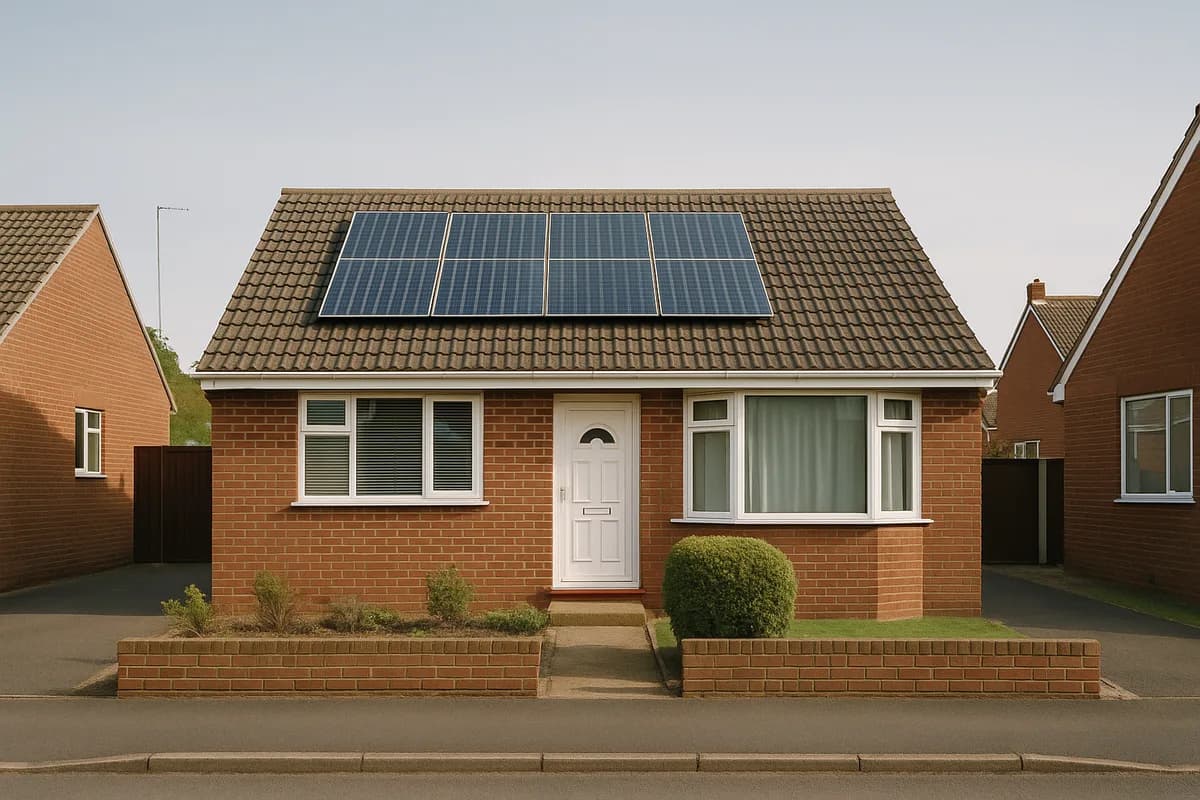
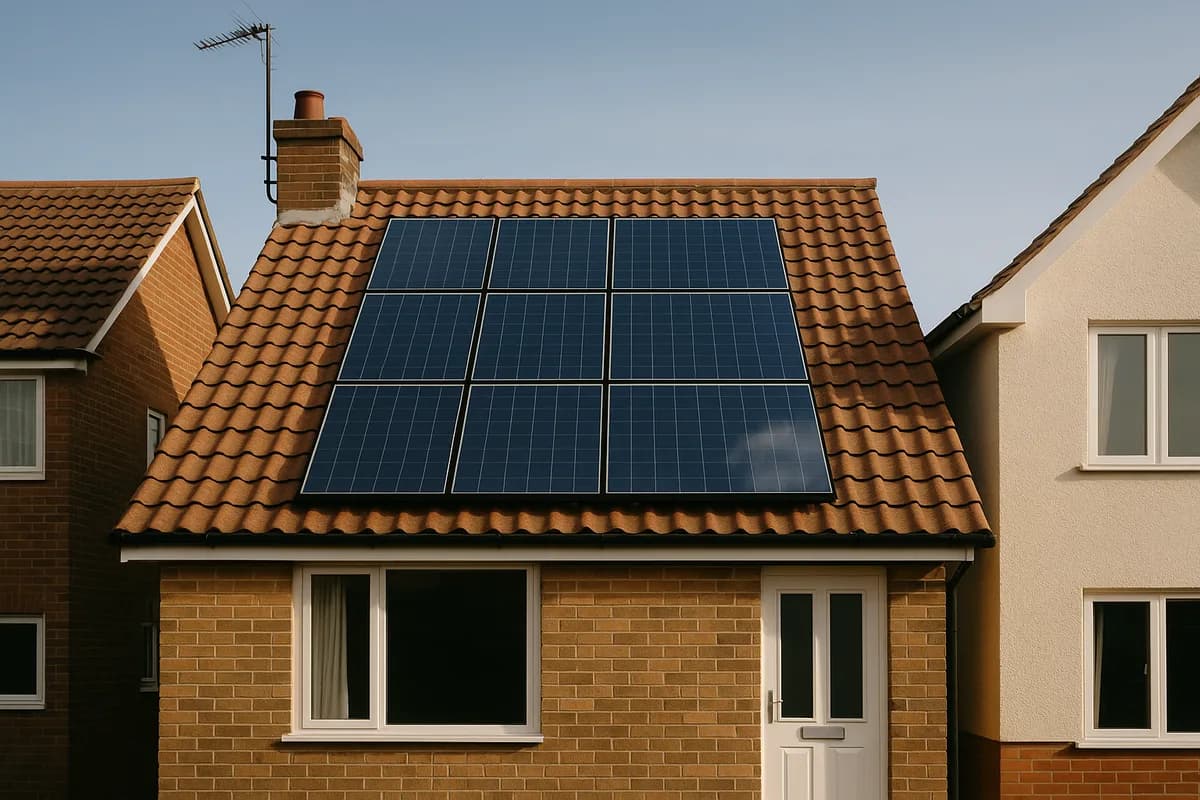
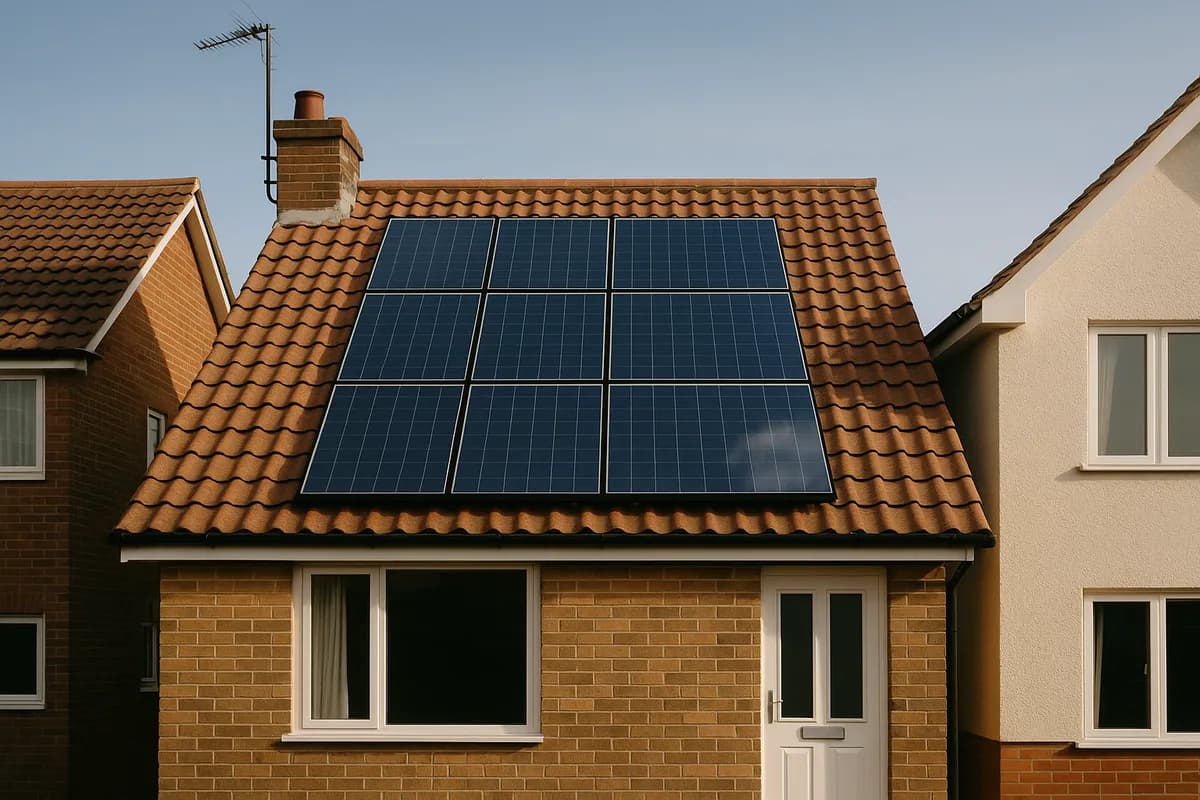
Bungalows are excellent candidates for solar panels. They typically have large, accessible roof areas with good sun exposure (no upper storeys creating self-shading). A typical bungalow can fit a 3–5kW system (8–13 panels), costing £4,500–£9,000 and saving £600–£950 per year. The lower roof height also makes installation, cleaning, and maintenance easier and cheaper.
Why Bungalows Are Ideal for Solar
- Large unbroken roof area — bungalows often have a larger roof footprint relative to floor area than two-storey houses, meaning more space for panels
- No self-shading — no upper storey or dormer windows to cast shadows on the panels
- Lower roof height — safer and cheaper installation, easier maintenance and cleaning
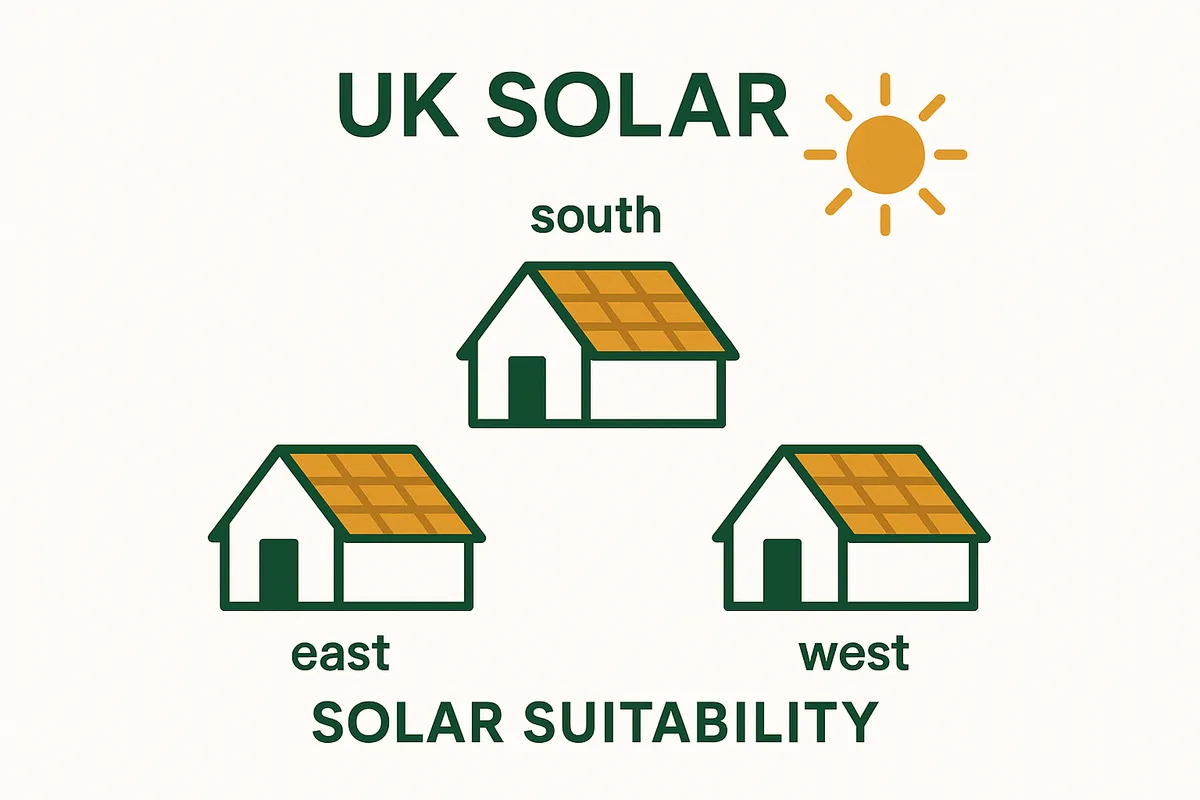
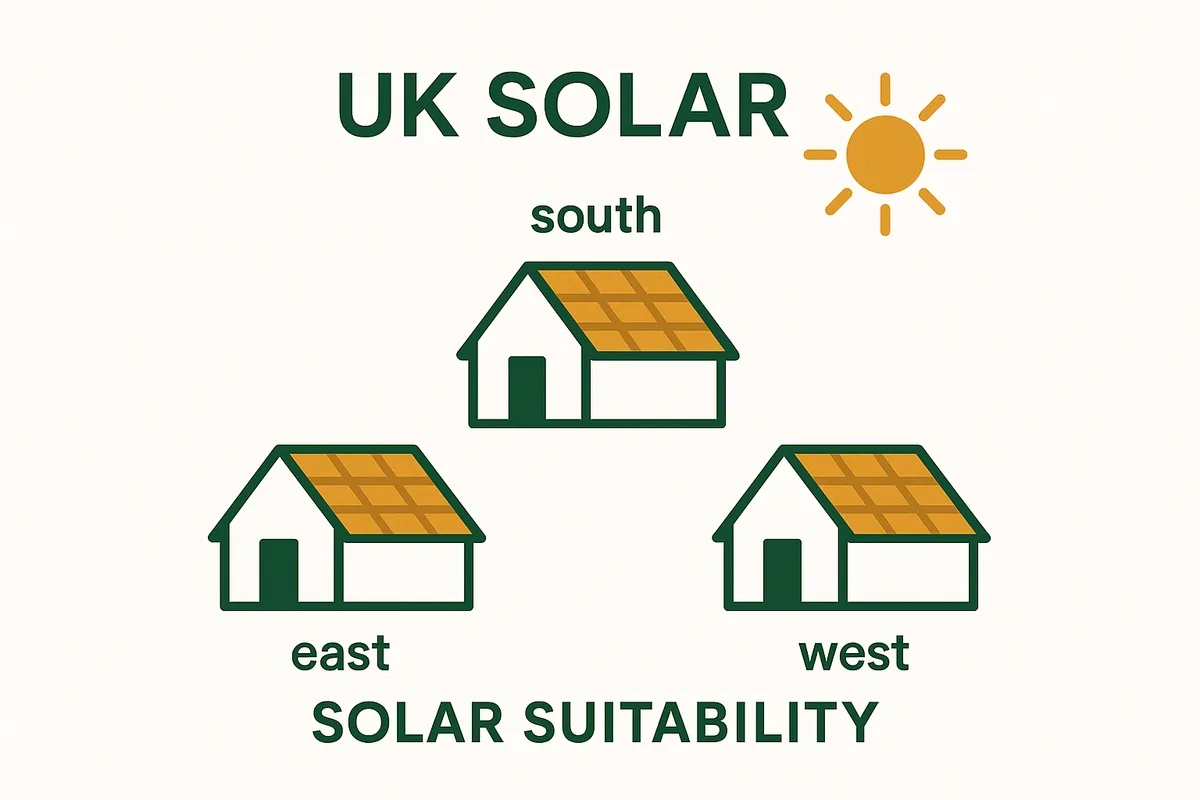
- Often south-facing — many bungalow estates were designed with living rooms (and therefore the main roof slope) facing south for natural light
- Typically owner-occupied — bungalow owners are often retirees who stay in their homes long-term, maximising the 25-year return on solar
- Higher energy use — bungalows can be less thermally efficient than modern two-storey homes (more roof area relative to volume = more heat loss), so the electricity savings from solar are proportionally more valuable
Costs and System Sizes for Bungalows
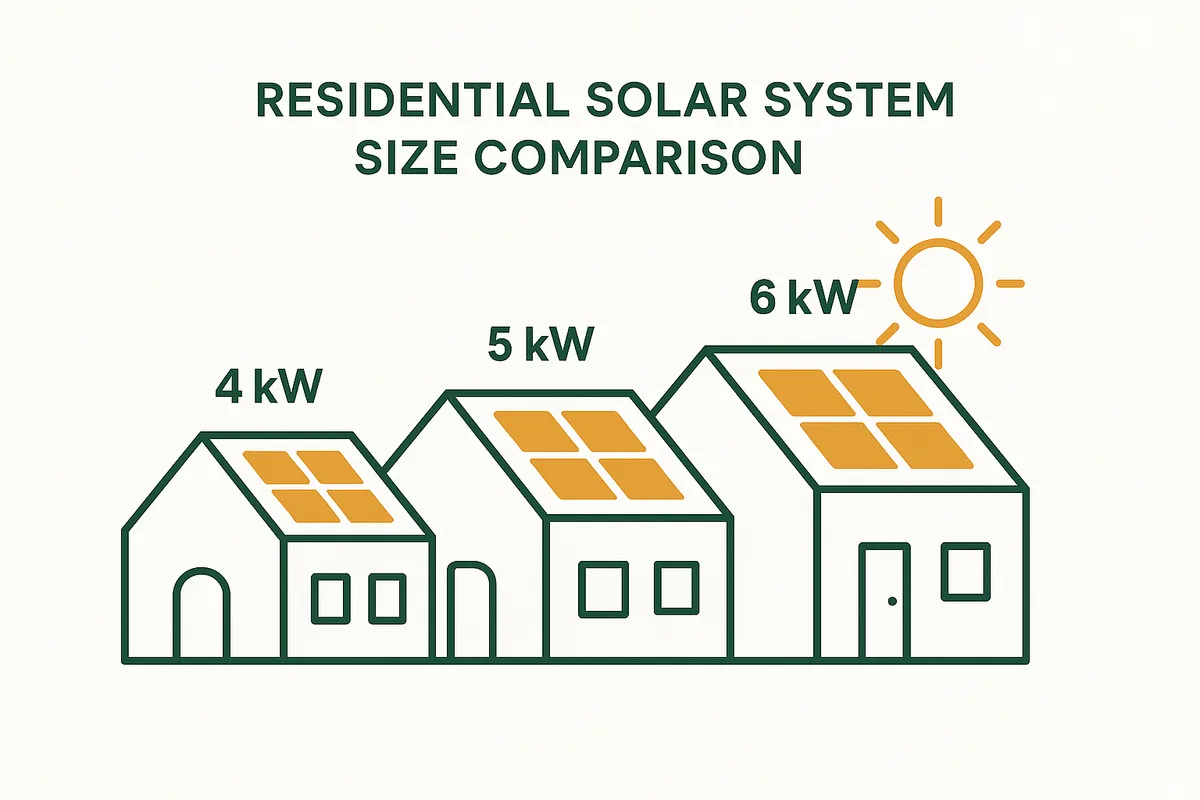
Bungalow roof space typically accommodates:
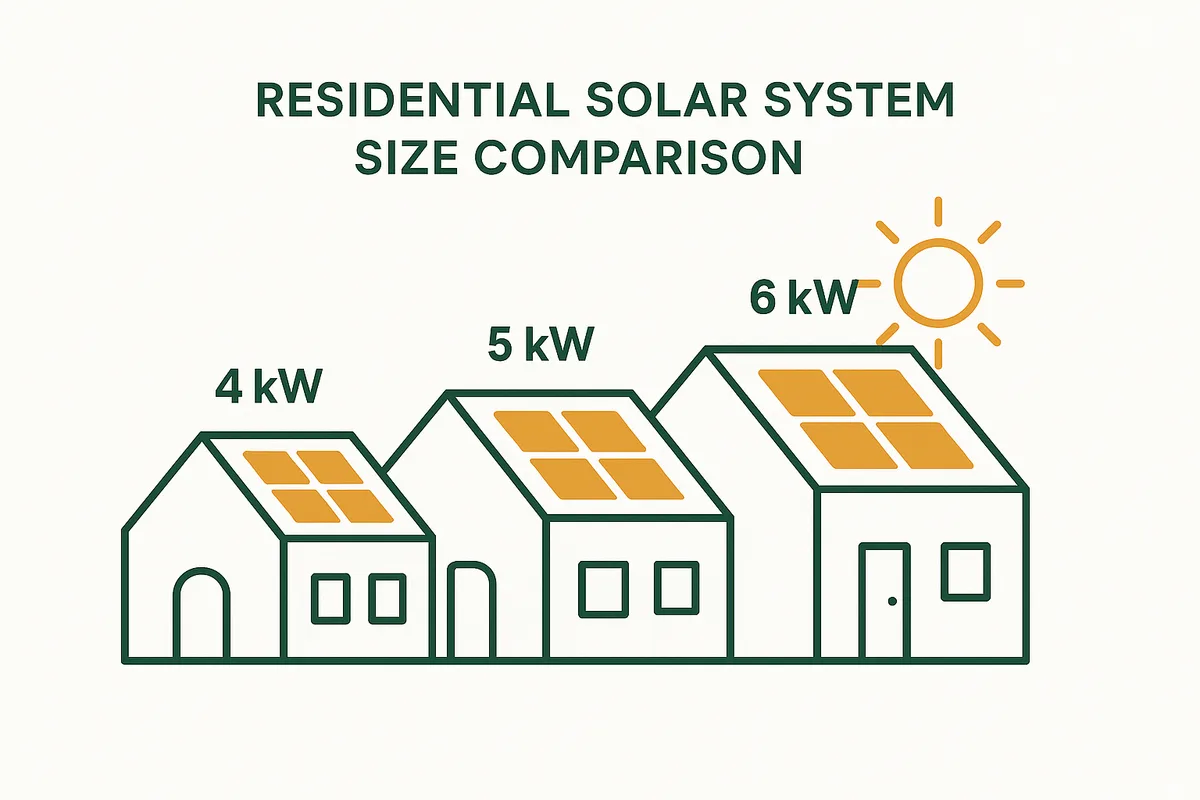
Small bungalow (1–2 bed): - System size: 2–3kW (5–8 panels) - Cost: £3,500–£6,000 - Annual generation: 1,900–3,000 kWh - Annual savings: £350–£550 - Payback: 9–12 years
Medium bungalow (2–3 bed): - System size: 3–4kW (8–10 panels) - Cost: £4,500–£8,000 - Annual generation: 2,800–4,000 kWh - Annual savings: £500–£750 - Payback: 8–11 years
Large bungalow (3–4 bed): - System size: 4–5kW (10–13 panels) - Cost: £5,500–£9,000 - Annual generation: 3,800–5,000 kWh - Annual savings: £700–£950 - Payback: 8–10 years
Bungalow installations often cost slightly less than two-storey homes because scaffolding may not be needed (or is simpler), and roof access is easier.
Source: MCS installer pricing 2026; PVGIS UK yield data.
Bungalow-Specific Considerations
See what fits your property
Roof shape, pitch and available space decide what is actually installable. Get a recommendation and an installed price for your specific property.
Check My PropertyRoof structure: Older bungalows (1950s–1970s) may have lighter roof structures than modern homes. Your installer will assess whether the roof can support the additional weight (approximately 20kg per panel). Most can, but a structural check is prudent for pre-1960s bungalows.
Roof pitch: Many bungalows have a steeper pitch than typical houses (often 35–45 degrees). This is actually close to the optimal angle for UK solar (30–40 degrees), so you may get above-average output per panel.
Hip roofs: Some bungalows have hip roofs (sloping on all four sides) rather than gable ends. Hip roofs offer less usable area per slope because panels cannot extend to the edges. An installer will assess how many panels your specific roof shape accommodates.
Loft conversion plans: If you are considering a loft conversion, plan solar at the same time. A loft conversion will change the roof structure and available panel space. It is cheaper and more efficient to coordinate both projects.
Ground-mounted alternative: Bungalows with large gardens may benefit from ground-mounted panels as an alternative or supplement to roof panels. Ground-mounted systems allow optimal angle and direction regardless of roof orientation.
Source: MCS installation standards; UK building regulations.
Solar Panels and Bungalow Energy Efficiency
Bungalows tend to have higher heating costs per square metre than two-storey homes because they have a larger roof-to-floor ratio (more heat escapes through the roof). This makes bungalows excellent candidates for a combined approach:
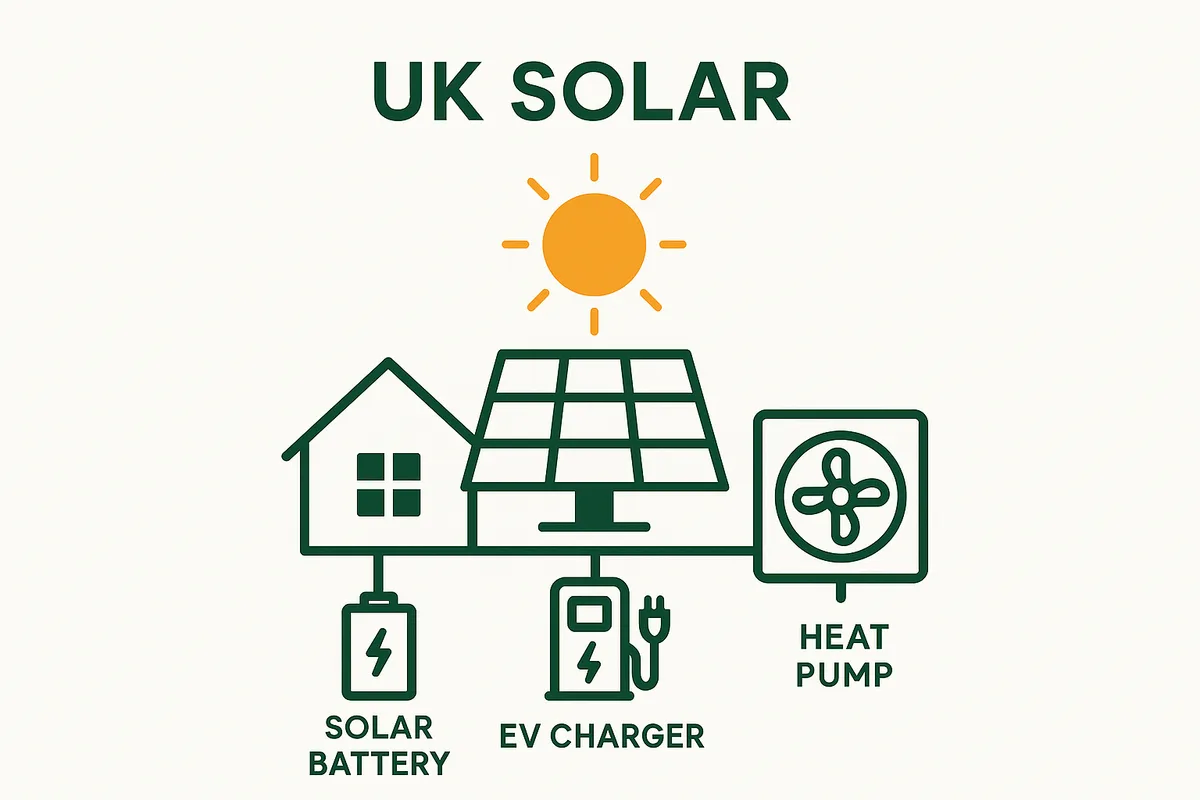
1. Insulate the loft first — if your loft insulation is less than 270mm, top it up before or alongside solar installation. Cost: £300–£600. Savings: £100–£200/year on heating. 2. Install solar panels — reduces electricity costs by £500–£950/year. 3. Consider a solar battery — bungalow occupants (often retirees) tend to be home during the day, which means higher daytime self-consumption even without a battery. But a battery still maximises savings for evening use. 4. Look at air source heat pumps — combining solar with an ASHP can virtually eliminate energy bills for a bungalow. The solar panels power the heat pump, which provides heating and hot water.
Source: Energy Saving Trust insulation guidance.
Maintenance Advantage
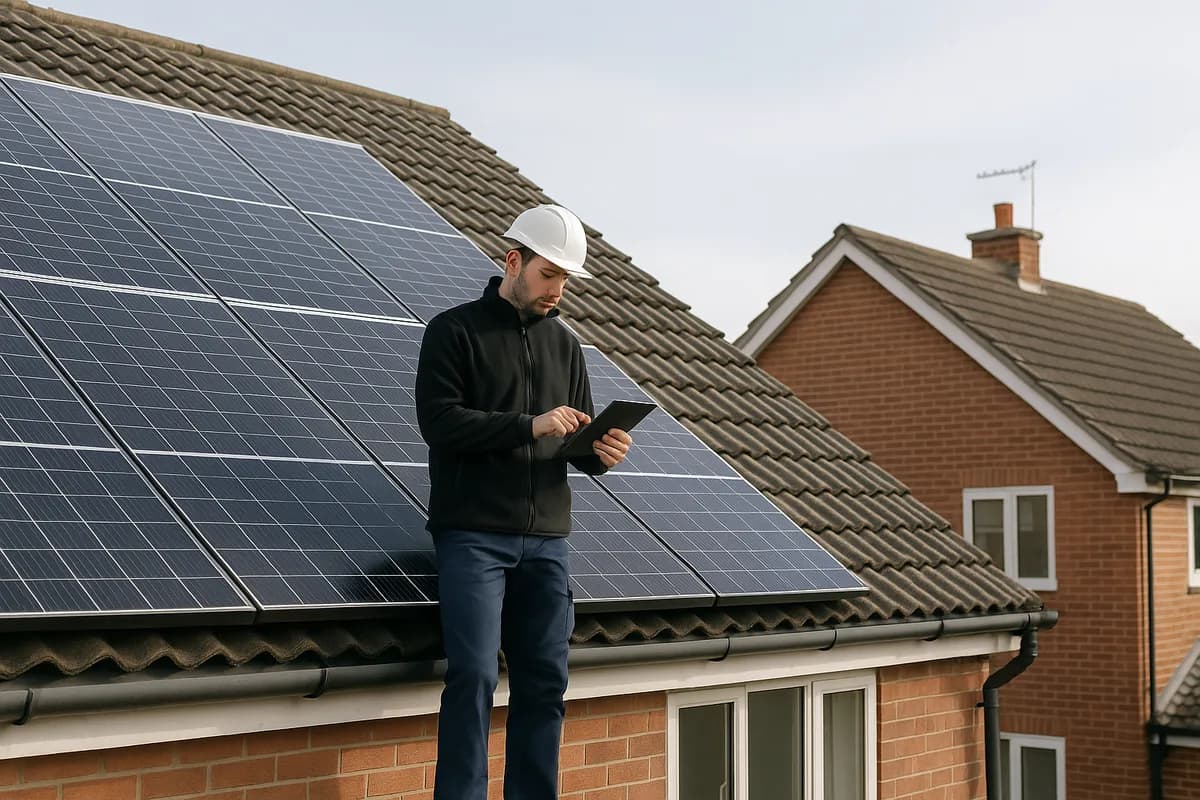
One significant advantage of bungalow solar is easier maintenance:
- Cleaning: Lower roofs can sometimes be cleaned from the ground with a long-handled brush, avoiding the need for professionals or ladders
- Visual inspection: You can inspect panels from ground level more easily, spotting issues like bird droppings, damage, or moss earlier
- Bird proofing: Easier and cheaper to install due to lower roof access — typically £200–£400 vs £300–£600 for two-storey homes
- Inverter replacement: If the inverter is in the loft (common in bungalows), access is straightforward
This lower maintenance cost improves the overall financial return on bungalow solar installations.
Frequently Asked Questions
Related guides
Related: Home Heating Systems
Solar panels are most powerful when combined with an efficient heating system. Heat pumps use solar-generated electricity to heat your home at 300-400% efficiency — making them the ideal partner for solar.
Heat pump installation typically takes 2-3 days and is best planned alongside solar.
From our sister site Home Heat Pump Guide
You might also like
See what fits your property
Roof shape, pitch and available space decide what is actually installable. Get a recommendation and an installed price for your specific property.
Check My PropertyFree, no obligation. Takes about 2 minutes.