Monocrystalline vs Polycrystalline: Which Is Better?
Ready to see what solar could save you?
Get free, no-obligation quotes from MCS-certified installers in your area.
Get Free QuotesFree, no obligation. Takes 2 minutes.
Is monocrystalline or polycrystalline better?
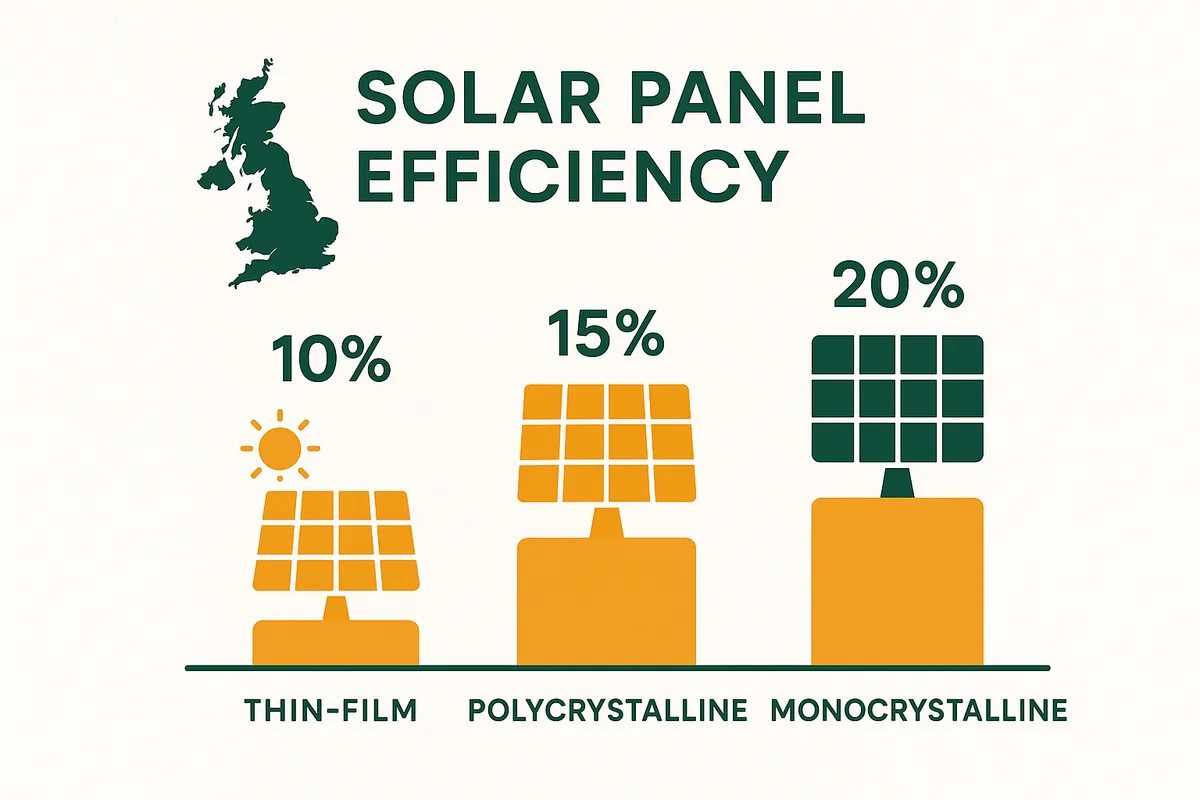
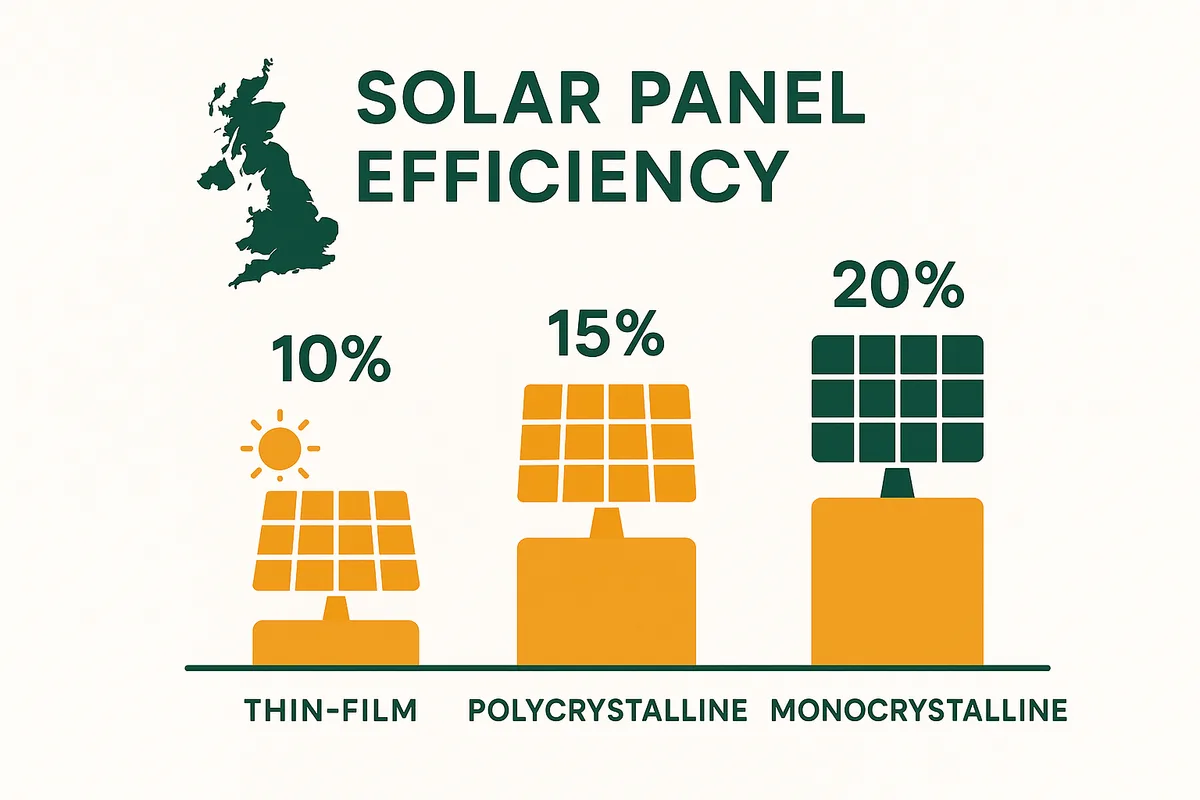
Monocrystalline panels are better than polycrystalline for most UK homes. They are more efficient (20–22% vs 15–17%), perform better in low light (ideal for UK weather), degrade slower (0.3% vs 0.5% per year), and the price difference has nearly closed (under £50 per panel). In 2026, most UK installers only offer monocrystalline as standard. Polycrystalline is now largely obsolete for residential use.
Head-to-Head Comparison
| Feature | Monocrystalline | Polycrystalline |
|---|---|---|
| Efficiency | 20–22% | 15–17% |
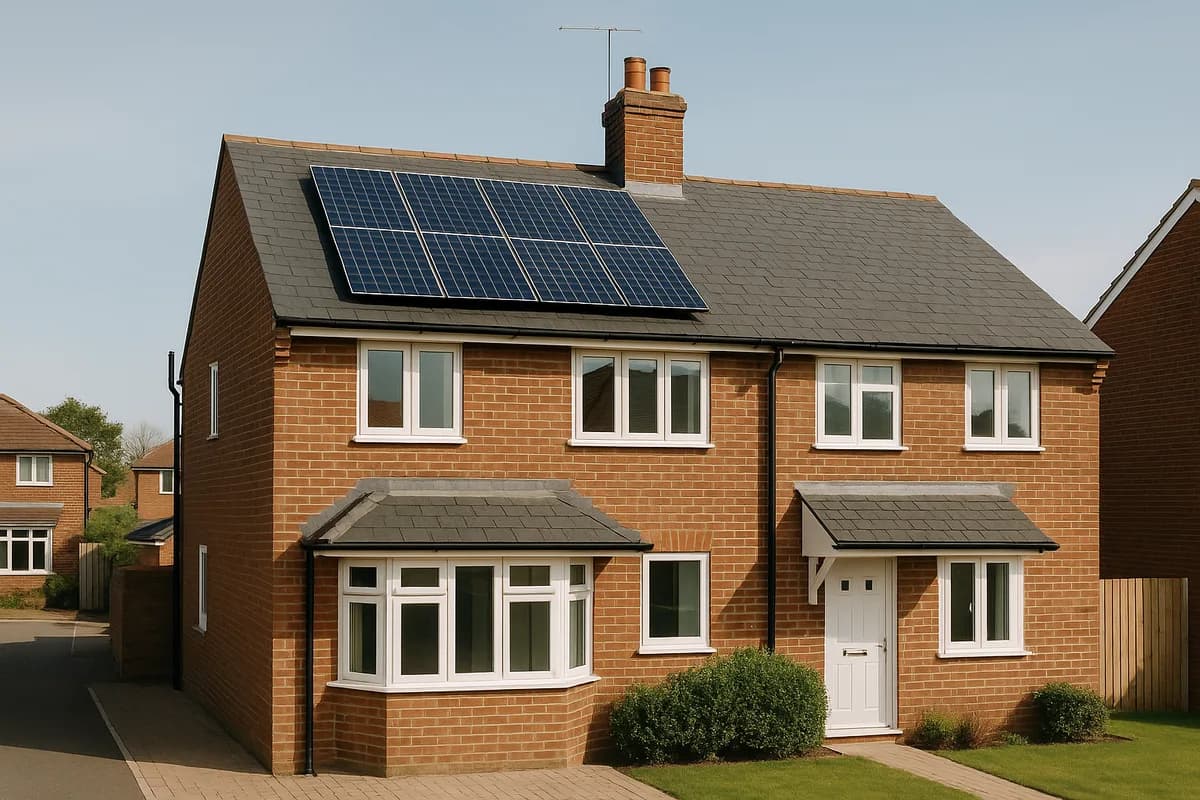
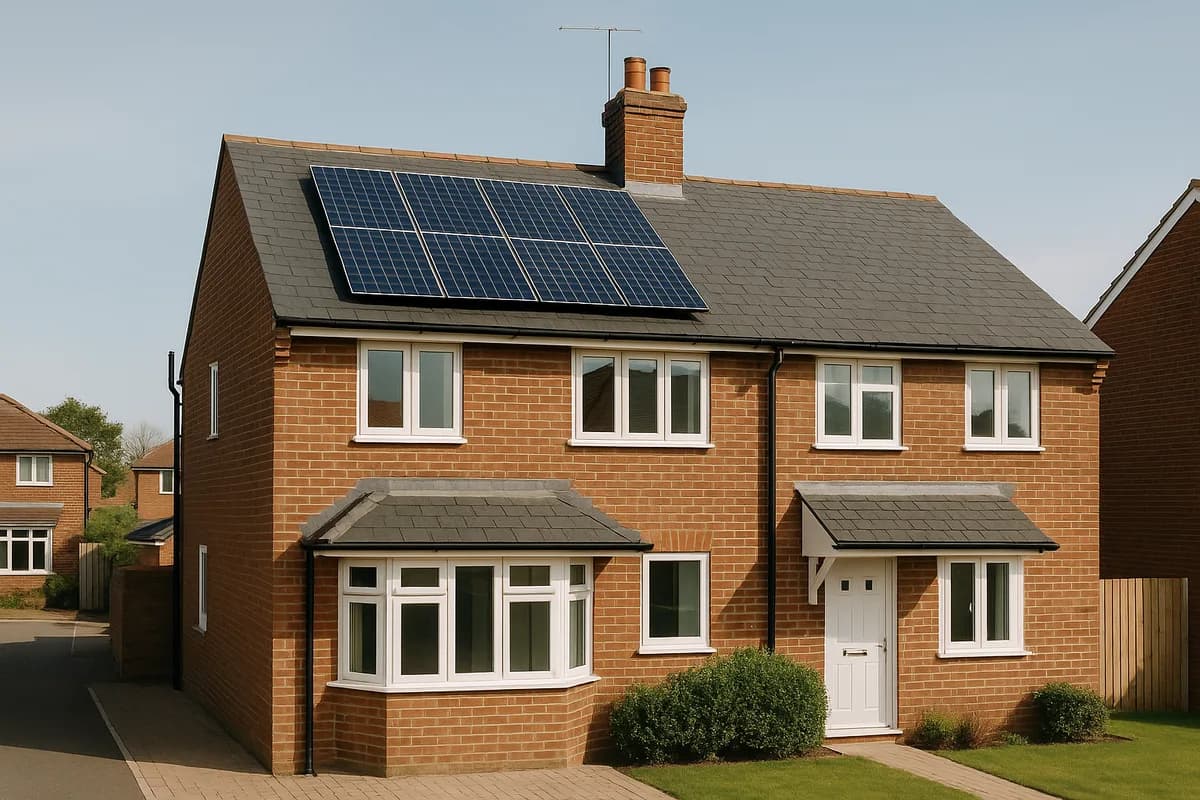
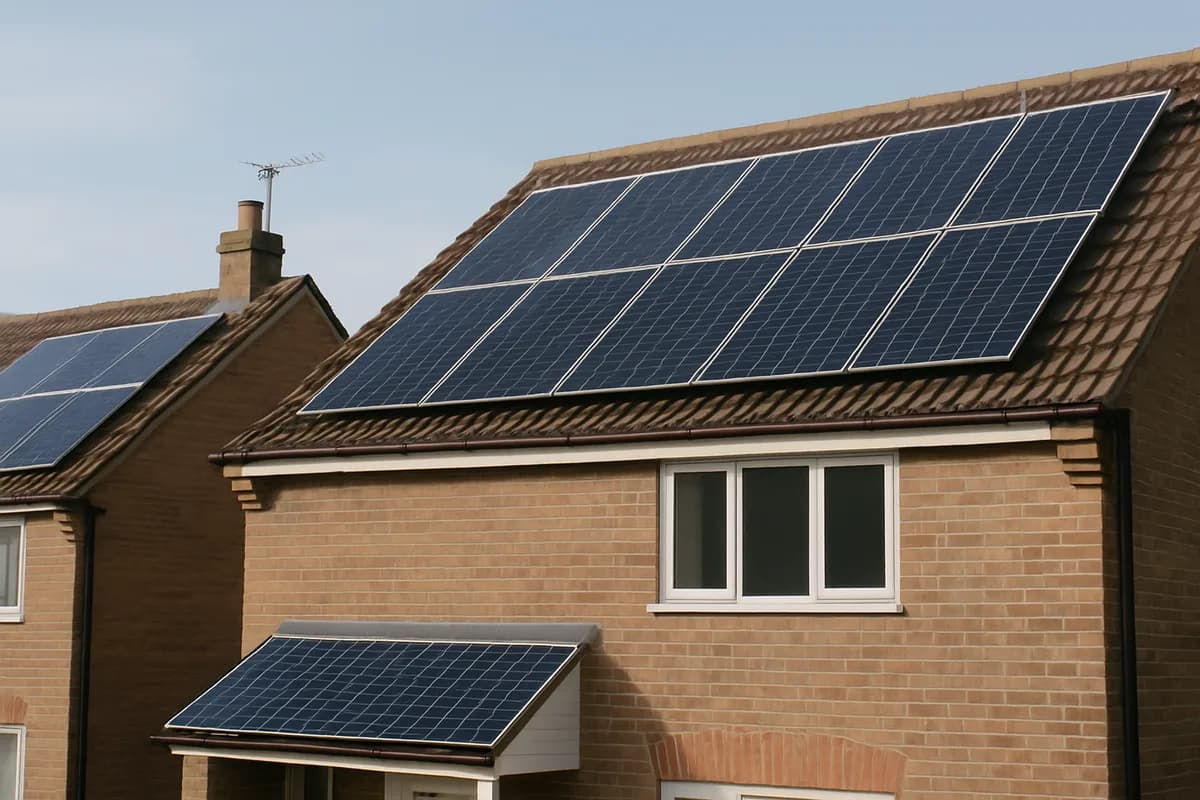
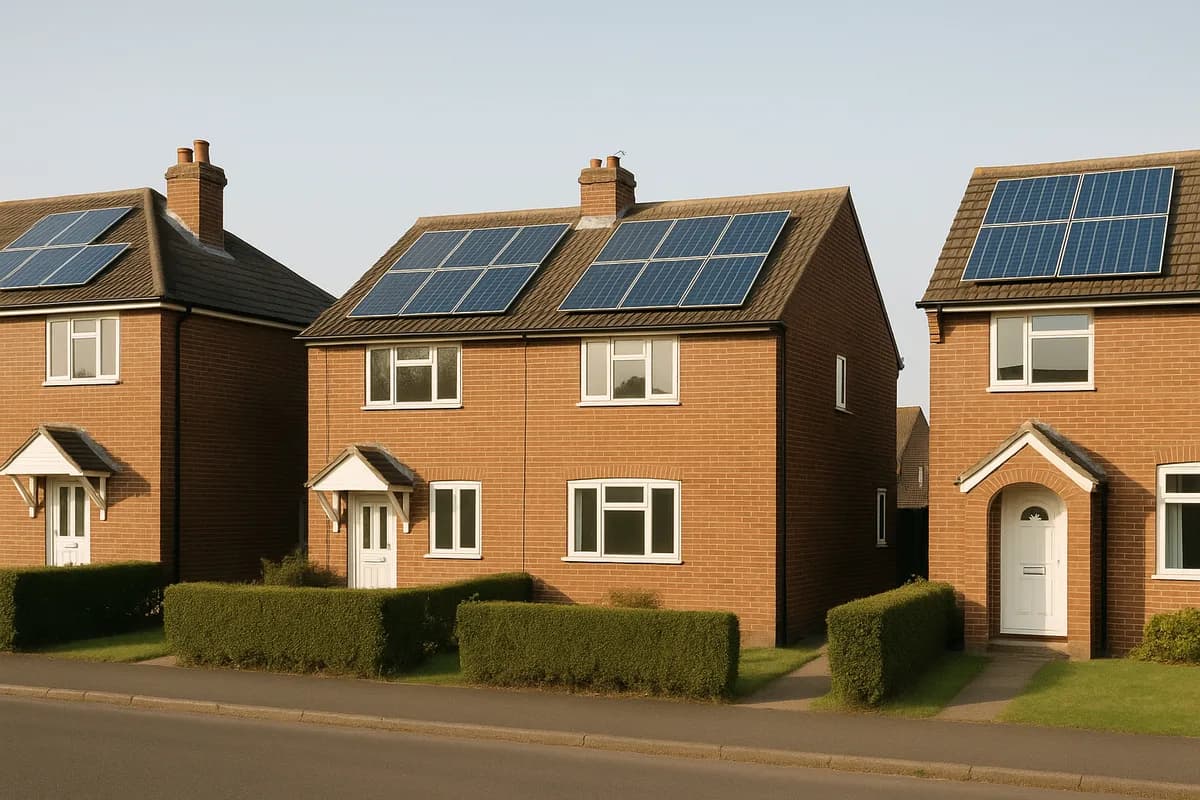
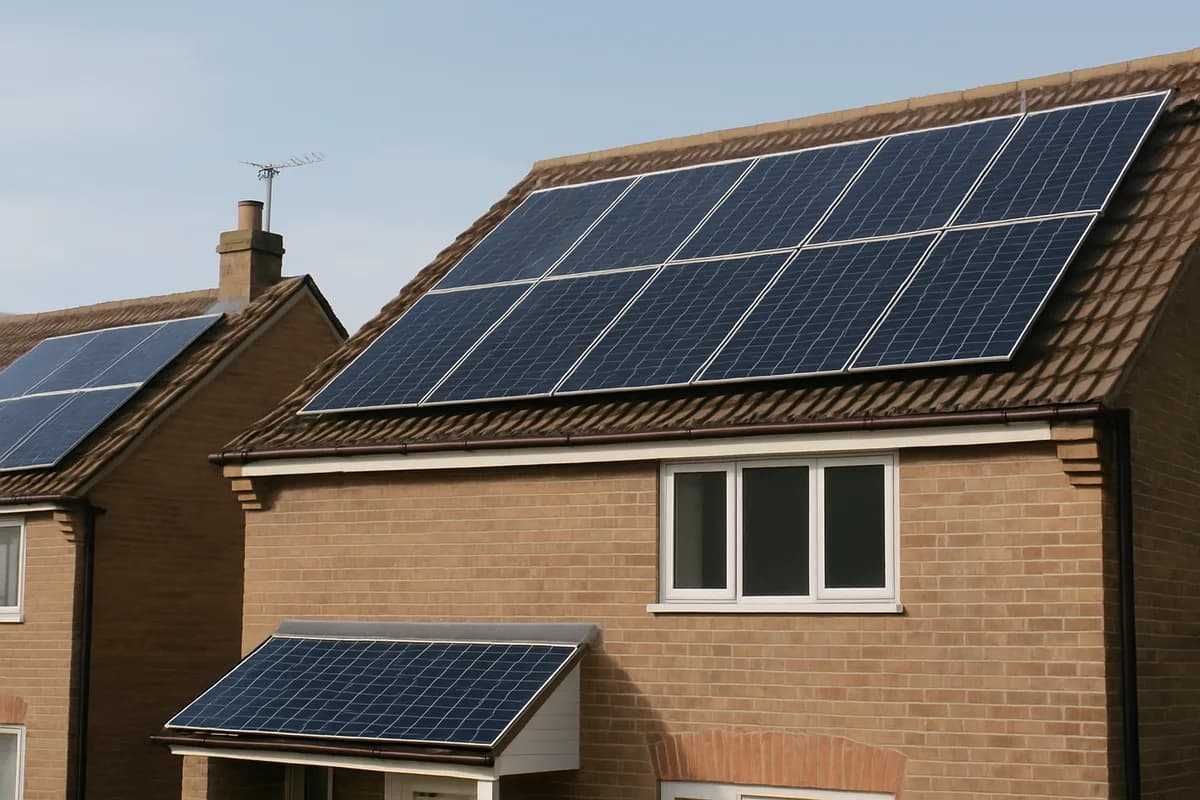
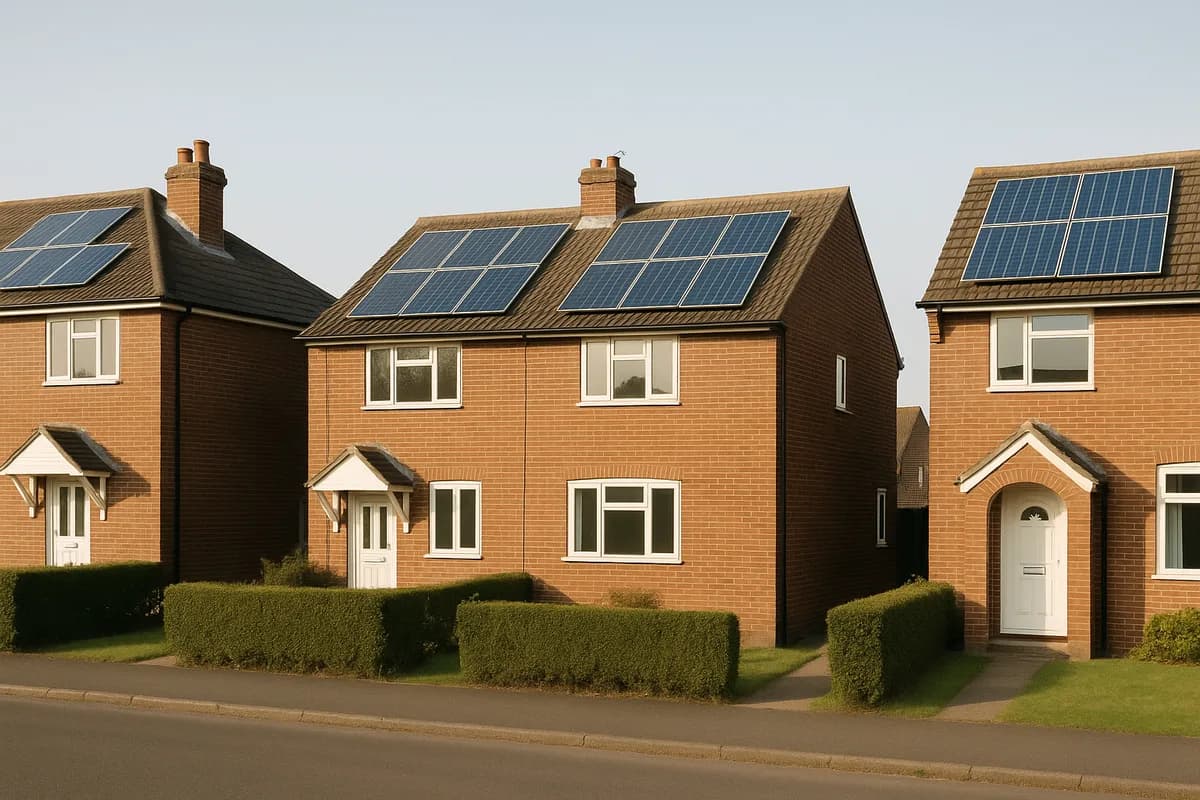
| Appearance | Uniform dark black | Speckled blue |
| Low-light performance | Better | Worse |
| Degradation rate | 0.3–0.4%/year | 0.5–0.7%/year |
| Output after 25 years | 85–90% | 80–83% |
| Cost per panel (400W) | £200–£350 | £150–£250 |
| Cost per watt | ~£0.50–0.88 | ~£0.43–0.71 |
| Roof space needed (4kW) | ~17 m² | ~22 m² |
| Typical warranty | 25 years | 25 years |
| Temperature coefficient | –0.35%/°C | –0.40%/°C |
| UK market share (2026) | ~95% | ~5% |
The efficiency gap is significant: For the same 4kW system, monocrystalline needs 17m² of roof space vs 22m² for polycrystalline. On small UK roofs, this difference determines whether you fit 10 or 8 panels.
The price gap has nearly closed: In 2026, mono costs only £30–£50 more per panel than poly. This premium is recovered within 2 years through higher output.
Source: Panel manufacturer specifications; UK distributor pricing.
Why Monocrystalline Wins
- More power per panel — 400–425W vs 340–370W. Fewer panels needed for the same output.
- Better in UK weather — monocrystalline captures more diffused light (cloudy conditions) than polycrystalline. Critical for UK climate.
- Smaller roof footprint — fit 4kW in 17m² vs 22m². On limited UK roofs, mono fits more capacity.
- Slower degradation — retains 85–90% output at 25 years vs 80–83%. More lifetime electricity generated.
- Sleeker appearance — uniform dark surface vs blue speckled. All-black mono panels are visually unobtrusive.
- Market standard — 95% of UK residential installations use mono. Installers default to mono. Poly is being phased out.
- Price gap closed — the historic cost advantage of poly has nearly disappeared. The small remaining premium pays back in months through higher output.
When Polycrystalline MIGHT Still Make Sense
Ready to see what solar could save you?
Get free, no-obligation quotes from MCS-certified installers in your area.
Get Free QuotesVery few situations favour polycrystalline in 2026:
- Very large roofs where space is unlimited (e.g., agricultural buildings) — poly's lower per-panel cost saves money when you can simply install more panels
- Budget-constrained projects where saving £300–£500 across a 10-panel system is critical
- Replacing existing poly panels — matching the existing aesthetic (blue) if adding to an older system
In all other cases: choose monocrystalline. The marginal cost saving of poly is not worth the efficiency, lifespan, and low-light performance sacrifices.
Most UK MCS installers no longer stock polycrystalline. If your installer quotes poly, ask why — it may indicate they are using old or clearance stock.
Source: UK installer product catalogues; manufacturer production data.
The Technology Behind Each Type
Monocrystalline: - Made from a SINGLE silicon crystal grown using the Czochralski process - Uniform crystal structure = consistent electron flow = higher efficiency - Cut into thin wafers and assembled into cells - Dark, uniform colour comes from the single-crystal structure - Manufacturing: more energy-intensive but produces more efficient cells
Polycrystalline: - Made from MULTIPLE silicon crystals melted together in a mould - Irregular crystal boundaries = less efficient electron flow - Visible crystal grain pattern creates the speckled blue appearance - Manufacturing: simpler and cheaper, but lower-quality cells - The multiple crystal boundaries create 'recombination zones' where electrons lose energy
Why the efficiency difference exists: In monocrystalline, electrons flow freely through the uniform crystal. In polycrystalline, electrons encounter grain boundaries (where different crystals meet), losing energy at each boundary. This fundamental physics difference cannot be designed away — mono will always be more efficient than poly.
Source: Solar cell physics; NREL photovoltaic fundamentals.
Financial Impact: Mono vs Poly Over 25 Years
4kW system comparison over 25 years:
| Metric | Monocrystalline | Polycrystalline |
|---|---|---|
| System cost | £6,750 | £6,250 |
| Panels needed | 10 × 400W | 12 × 340W |
| Year 1 output | 4,000 kWh | 4,000 kWh |
| Year 25 output | 3,560 kWh (89%) | 3,300 kWh (83%) |
| 25-year total output | 95,000 kWh | 90,000 kWh |
| 25-year savings | £14,500 | £13,700 |
| Net profit | £7,750 | £7,450 |
| ROI | 115% | 119% |
Interesting finding: The ROI percentage is actually similar because poly costs less upfront. But mono generates £800 MORE in total electricity over 25 years. The higher absolute savings make mono the better choice — especially on limited roof space where you cannot fit 12 poly panels.
The definitive answer for UK homes: choose monocrystalline. It is the industry standard, delivers higher lifetime output, and the price difference has become negligible.
Source: LCOE calculations; degradation data from NREL.
Frequently Asked Questions
Related guides
You might also like
Ready to see what solar could save you?
Get free, no-obligation quotes from MCS-certified installers in your area.
Get Free QuotesFree, no obligation. Takes 2 minutes.