Solar Panel Removal Cost UK: Remove, Refit & Disposal
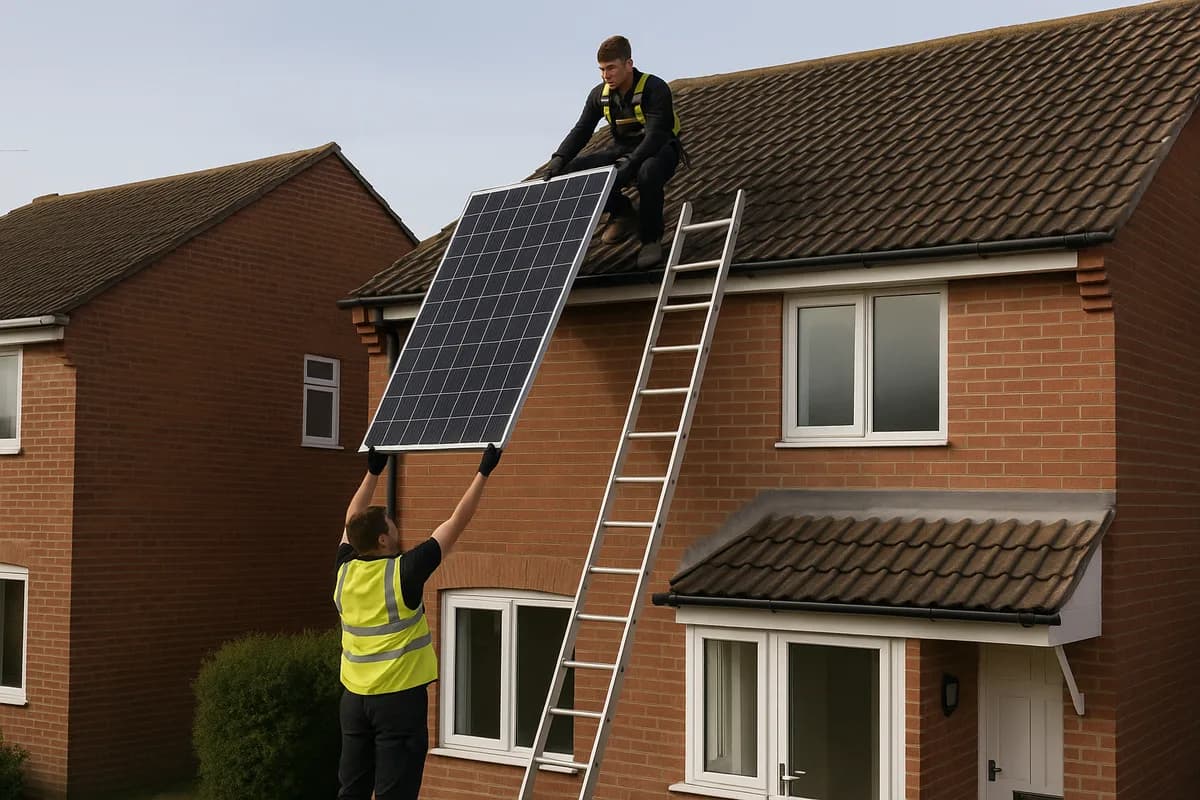
Need the panels taken off and put back?
Most removals are for roof work — and refitting is usually the larger half of the job. Get a remove-and-refit price from MCS-certified installers near you.
Get a Remove & Refit PriceFree, no obligation. One scaffold, one visit — usually cheaper.
How much does it cost to remove solar panels?
Solar panel removal costs £500–£1,500 for a typical UK residential system, depending on system size, roof access, and whether scaffolding is needed. Common reasons for removal: roof repairs or re-roofing, panel replacement/upgrade, moving house (rarely worthwhile), and end-of-life recycling. In most cases, panels are temporarily removed and reinstalled rather than permanently removed.
Removal Costs Breakdown
Typical removal costs:
| Service | Cost |
|---|---|
| Scaffolding (if needed) | £200–£500 |
| Electrical disconnection | £100–£200 |
| Panel removal from roof | £200–£600 |
| Mounting system removal | £100–£300 |
| Roof tile replacement/repair | £100–£300 |
| Total removal only | £500–£1,500 |
If reinstalling after roof work:
| Service | Cost |
|---|---|
| Removal (as above) | £500–£1,500 |
| Storage during roof work | £0–£200 |
| Reinstallation | £400–£1,000 |
| System recommissioning | £100–£200 |
| Total remove + reinstall | £1,000–£2,900 |
Important: Many roofers and solar companies offer a combined remove/reinstall service at a bundled rate. Getting quotes from companies that do both reduces cost and coordination hassle.
Source: UK solar installer removal pricing.
When Solar Panels Need Removing
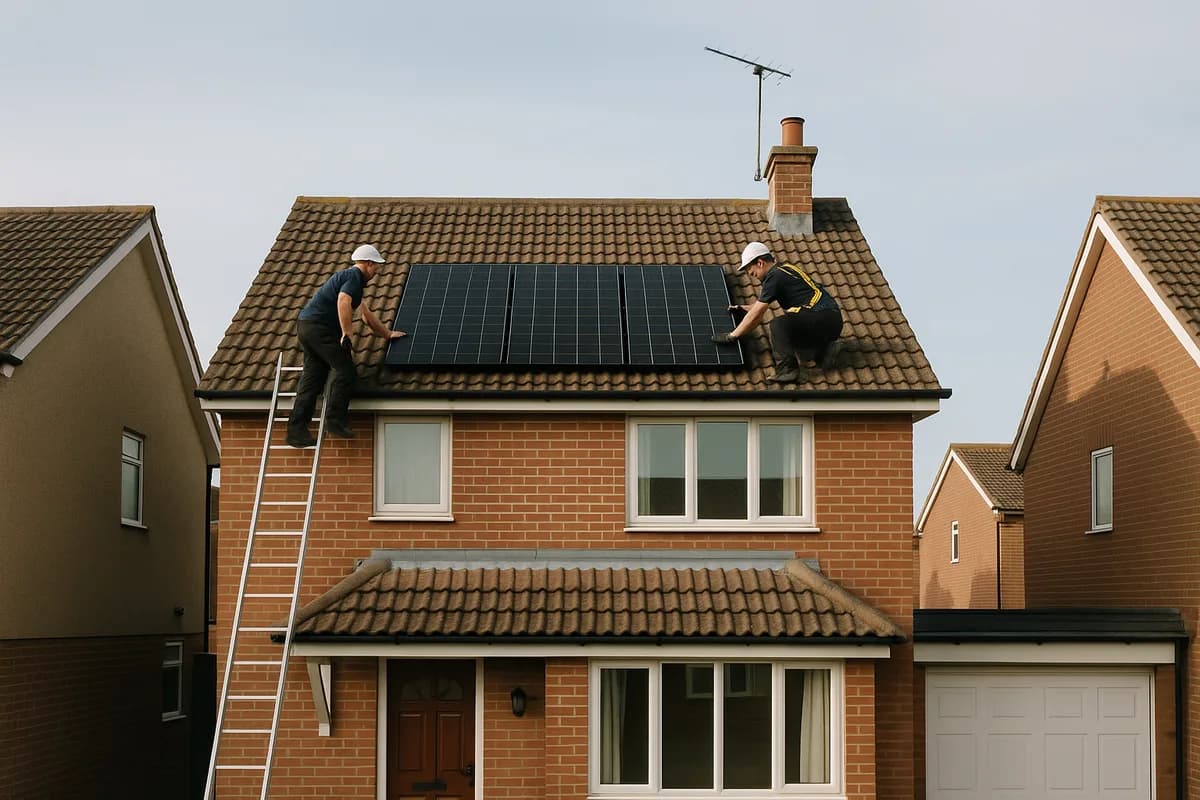
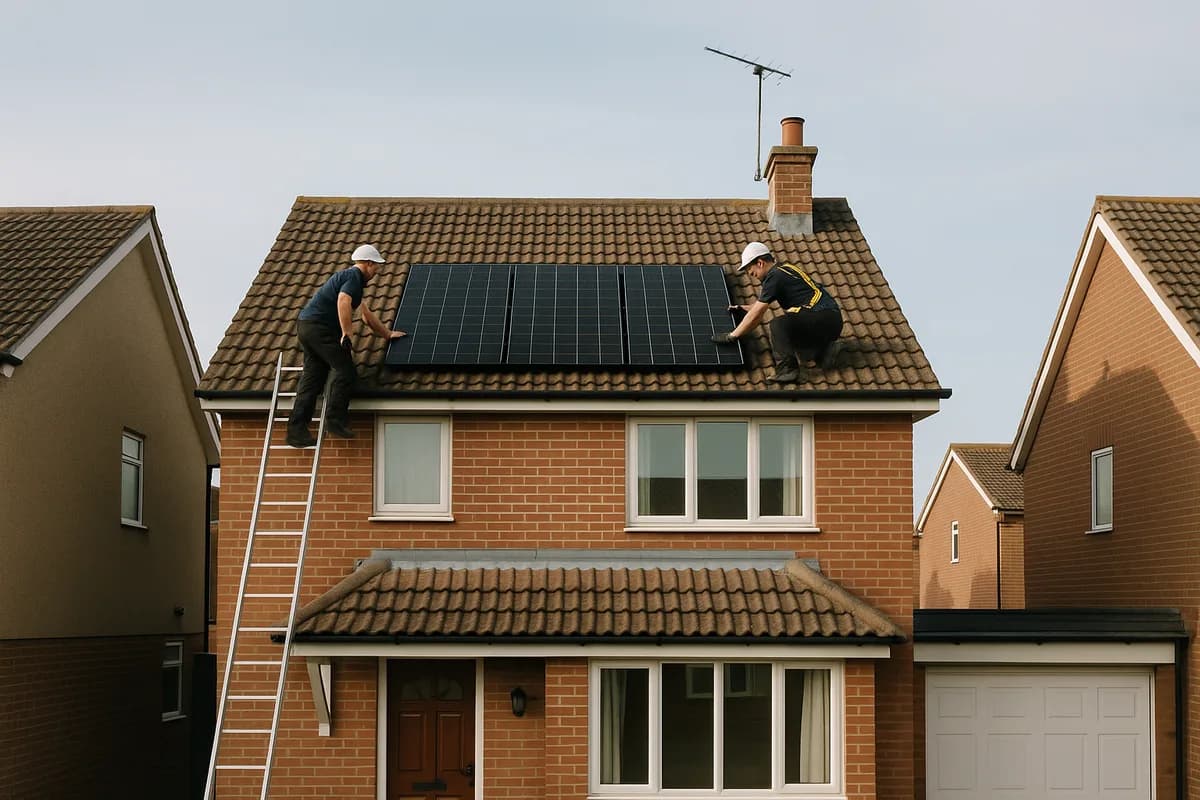
- Roof re-roofing or repair — the most common reason. Panels must be removed to access and replace tiles underneath. They are reinstalled after the roof work.
- Panel replacement/upgrade — replacing old low-wattage panels (250W) with modern high-wattage panels (400W+) to increase output without adding more roof area.
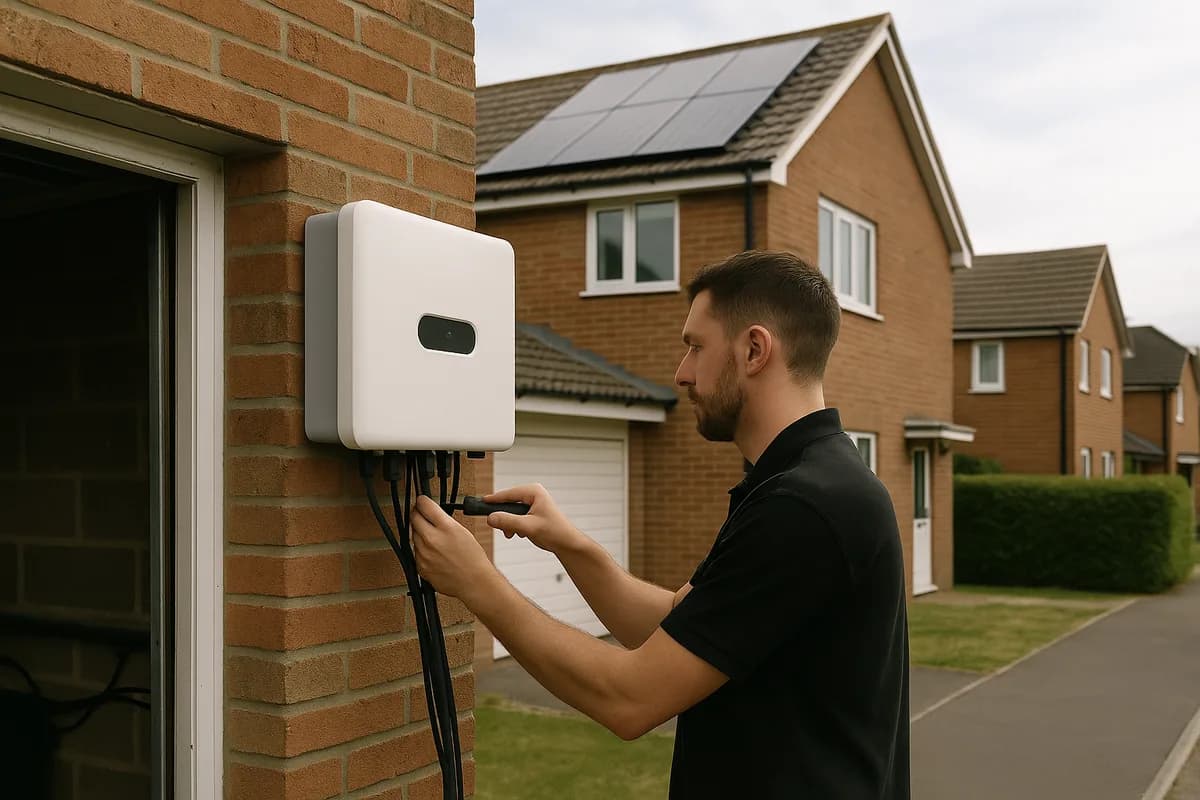
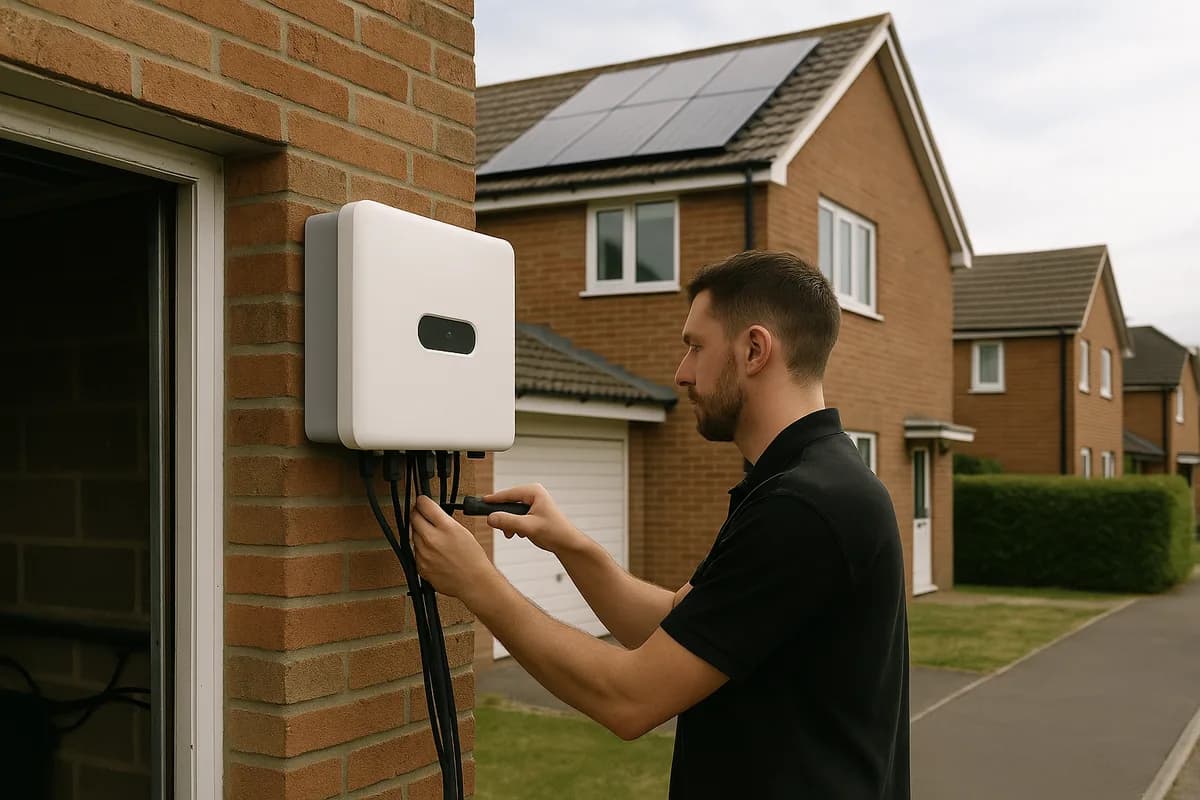
- Inverter replacement — usually does not require panel removal (inverter is on the wall), but some wiring may need re-routing.
- System decommissioning — removing panels permanently because the system is at end of life (25–30+ years), the property is being demolished, or the homeowner no longer wants solar.
- Moving house — removing panels to take to a new property. Almost always not cost-effective (removal + transport + reinstallation costs £2,000–£5,000, exceeding the value of used panels).
- Storm damage repair — removing damaged panels for replacement under warranty or insurance.
The Removal Process
Step 1: Electrical disconnection - The system must be electrically isolated before any physical removal - DC isolator switched off, inverter disconnected - IMPORTANT: Panels still produce DC voltage whenever light hits them — even disconnected from the inverter, the DC circuit is live during daylight. Only a qualified electrician should handle this.
Step 2: Scaffolding erection - Same scaffolding requirements as installation - Required for safe roof access
Step 3: Panel removal - Panels unclipped from mounting rails - Lowered carefully from roof (each weighs 20kg) - DC wiring disconnected at panel level
Step 4: Mounting system removal (if permanent) - Rails removed from hooks - Roof hooks unbolted from rafters - Tiles repositioned to cover hook holes - Sealant applied to any penetration points
Step 5: Roof repair - Any damaged tiles replaced - Hook penetration points sealed - Roof inspected for water tightness
Time: 4–8 hours for removal of a typical 10–16 panel system.
Source: MCS decommissioning guidance.
Should You Remove Solar Panels When Moving House?
Almost never. The maths:
- Removal cost: £500–£1,500
- Transport: £100–£300
- Reinstallation at new property: £1,500–£3,000 (new mounting, new wiring, new MCS certification)
- Total cost to move panels: £2,100–£4,800
- Value of used panels: £500–£1,500 (10-year-old panels have limited resale value)
Leave them. Moving panels costs £2,100–£4,800 and they are worth £500–£1,500 second-hand, so the move loses money on its own terms. On top of that, UK research associates solar with a higher sale price (3.5–7.1% depending on method, a market average rather than a figure for your home).
The only exception: brand new panels (<2 years old) on a property you are selling below market value. In this rare case, the panels' current value may exceed what they add to a discounted sale.
Source: Asproudis et al. (2024), Energy Economics 137, 107768; MCS certification rules (non-transferable to new address).
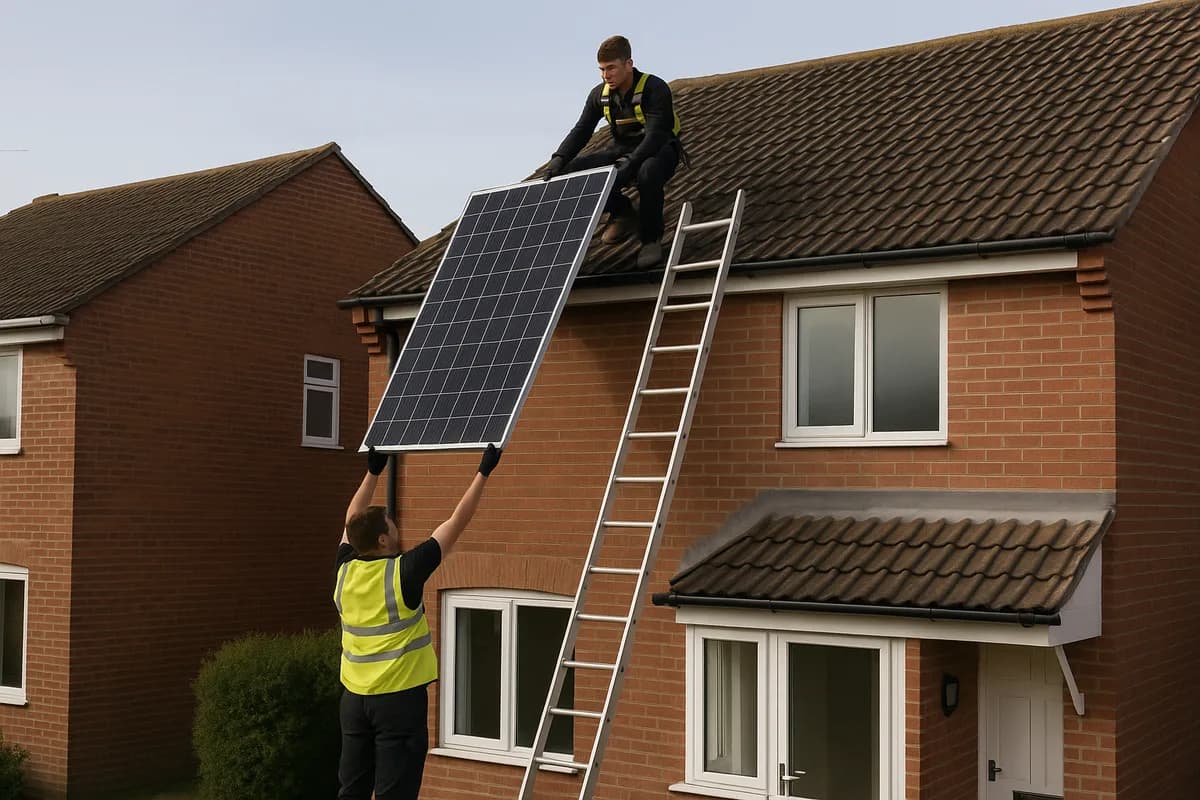
Need the panels taken off and put back?
Most removals are for roof work — and refitting is usually the larger half of the job. Get a remove-and-refit price from MCS-certified installers near you.
Get a Remove & Refit Price
Removal vs Remove-and-Refit: Which Do You Actually Need?
Most homeowners searching for removal costs do not actually want the panels gone. They want them temporarily lifted so work can happen underneath — almost always roof repair or a full re-roof.
The two jobs are priced very differently, so be explicit when you ask for quotes:
Remove and refit (temporary) — panels come off, are stored on site or in a van, roof work happens, panels go back on the same mounting positions. You keep the system and the electrical recommissioning is straightforward.
Permanent removal — panels, mounting rails, roof anchors, cabling, inverter and any battery all come out, roof penetrations are made good, and the system is decommissioned with the network operator. This is what you need for end-of-life, or if you are removing a system you do not want.
If you ask a roofer for 'solar panel removal' when you mean 'remove and refit', you can receive a quote that excludes reinstallation entirely — and reinstallation is typically the larger half of the job.
Who Can Legally Remove Solar Panels?
Removal itself is not a restricted activity — but the electrical work around it is, and getting this wrong is where homeowners run into trouble.
A roofer alone is not usually enough. Disconnecting a PV array involves DC isolation, an inverter, and a grid connection. That work should be done by a competent electrician — in practice, an MCS-certified solar installer.
Use an MCS-certified installer when you intend to refit. MCS certification matters at the point of reinstallation because Smart Export Guarantee payments depend on the installation remaining a certified installation. Verify any installer free at mcscertified.com before you sign.
Tell your DNO if the system is being permanently decommissioned. Your original installation was notified to the Distribution Network Operator under G98 or G99. If the array is coming out for good, that notification should be updated. A temporary remove-and-refit to the same specification does not normally require a fresh application, but ask your installer to confirm for your specific case.
Scaffolding is the hidden cost. It is required for almost all pitched-roof work, it is priced per week, and it is the single item most likely to make two quotes differ. If roof work is happening anyway, share one scaffold across both jobs — that saving alone is often several hundred pounds.
What Happens to the Panels Afterwards: UK Disposal Law
This is the part most guides skip, and it is the part with an actual legal answer.
Solar PV panels are regulated electrical waste in the UK. They are explicitly listed in the WEEE (Waste Electrical and Electronic Equipment) Regulations under Category 14: PV panels (solar panels). Government guidance states that, because panels are of a generic size and design, they must be reported as household (B2C) regardless of where they are installed — wording that covers domestic roofs, commercial premises and solar farms alike.
What this means for you as a homeowner:
- Panels must not go in general waste or a mixed skip.
- Because they are classed as household WEEE, the producer compliance scheme system finances their collection and treatment — you should not be paying a large premium simply to dispose of them lawfully.
- Your installer normally takes the panels away as part of the job. Ask them to confirm in writing that panels are going to a WEEE-authorised treatment facility, and ask for the waste transfer documentation.
- Local authority Household Waste Recycling Centres accept WEEE, but not all accept PV panels — phone ahead rather than turning up with a van.
- Panels in working order are usually worth more reused than recycled, and there is a genuine second-hand market for functioning modules.
Source: GOV.UK, 'Electrical and electronic equipment (EEE) covered by the WEEE Regulations' — Category 14: PV panels (solar panels).
If Your System Is on the Legacy Feed-in Tariff
If your system was commissioned before the Feed-in Tariff closed to new applicants in 2019, you may still be receiving FiT generation and export payments — and those payments are typically worth far more than anything available today.
Contact your FiT licensee (the supplier who pays you) before any work starts, not after. Removal, relocation, or changes to the installed capacity can affect your registration, and the rules differ depending on whether the panels return to the same property in the same configuration.
A straightforward remove-and-refit to the same roof at the same capacity is the lowest-risk scenario. Moving the array to a different property, changing its size, or leaving it uninstalled for an extended period are the situations that need explicit confirmation in writing first. Do not rely on your roofer or installer to know your specific tariff terms — ask the licensee.
How We Compiled These Cost Ranges
Transparency matters more than a confident-sounding number.
The ranges on this page are indicative planning figures for a typical UK domestic system on a standard two-storey pitched roof. They are structured to show you the components of the price rather than a single headline figure, because the components are what actually vary between quotes.
What moves the price most, in order:
1. Scaffolding — driven by access, storeys and hire duration, not by system size 2. Whether the job is removal only or removal plus refit 3. System size and panel count 4. Roof covering — slate and clay are slower and more breakage-prone than concrete tile 5. Whether a battery and its associated protective devices are also being disconnected
These are not quotes. Roof access, local labour rates and regional pricing vary widely across the UK. Get three written quotes that itemise scaffolding separately, and check each against the components above. If a quote is a single undifferentiated number, ask for it broken down before you compare it with anything else.
Frequently Asked Questions
Related guides
You might also like
Need the panels taken off and put back?
Most removals are for roof work — and refitting is usually the larger half of the job. Get a remove-and-refit price from MCS-certified installers near you.
Get a Remove & Refit PriceFree, no obligation. One scaffold, one visit — usually cheaper.