Ground-Mounted Solar Panels UK: Cost & Rules
What would this actually cost at your home?
Installed prices vary widely by roof, access and region. Get an installed price for your property from MCS-certified installers.
Get an Installed PriceFree, no obligation. Takes about 2 minutes.
How much do ground-mounted solar panels cost?
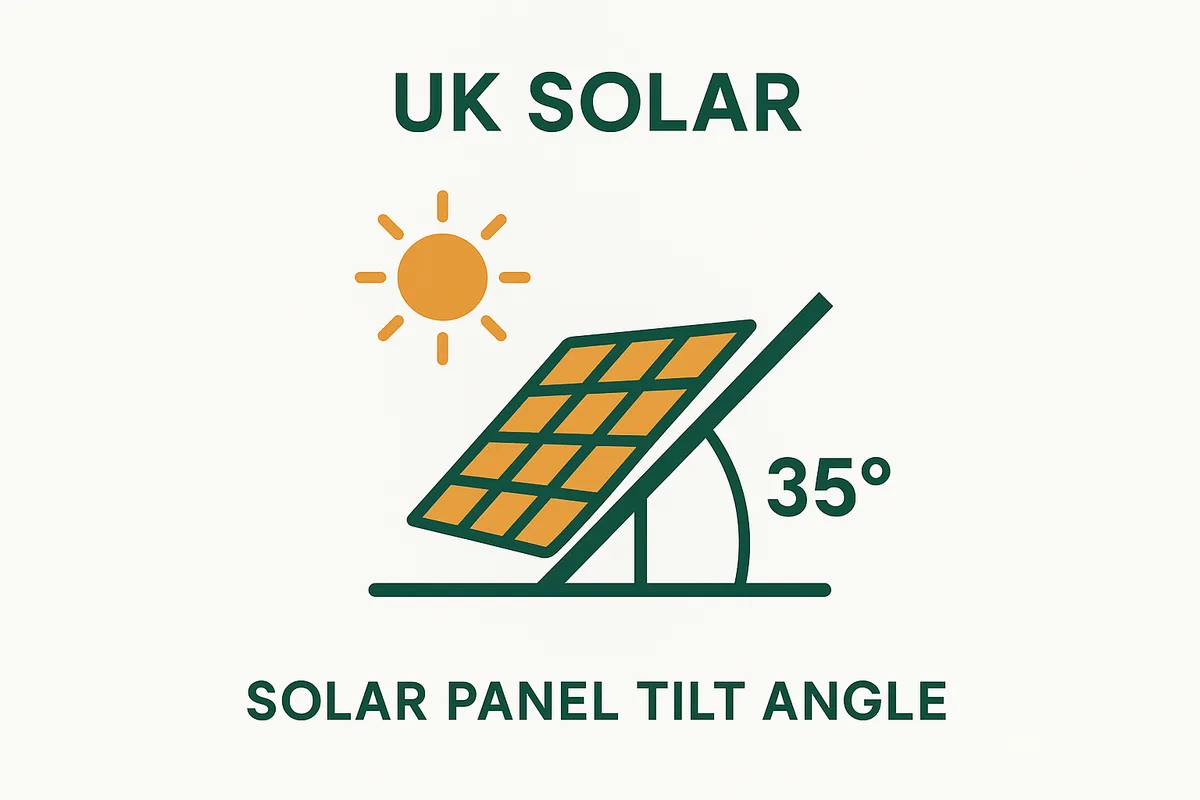
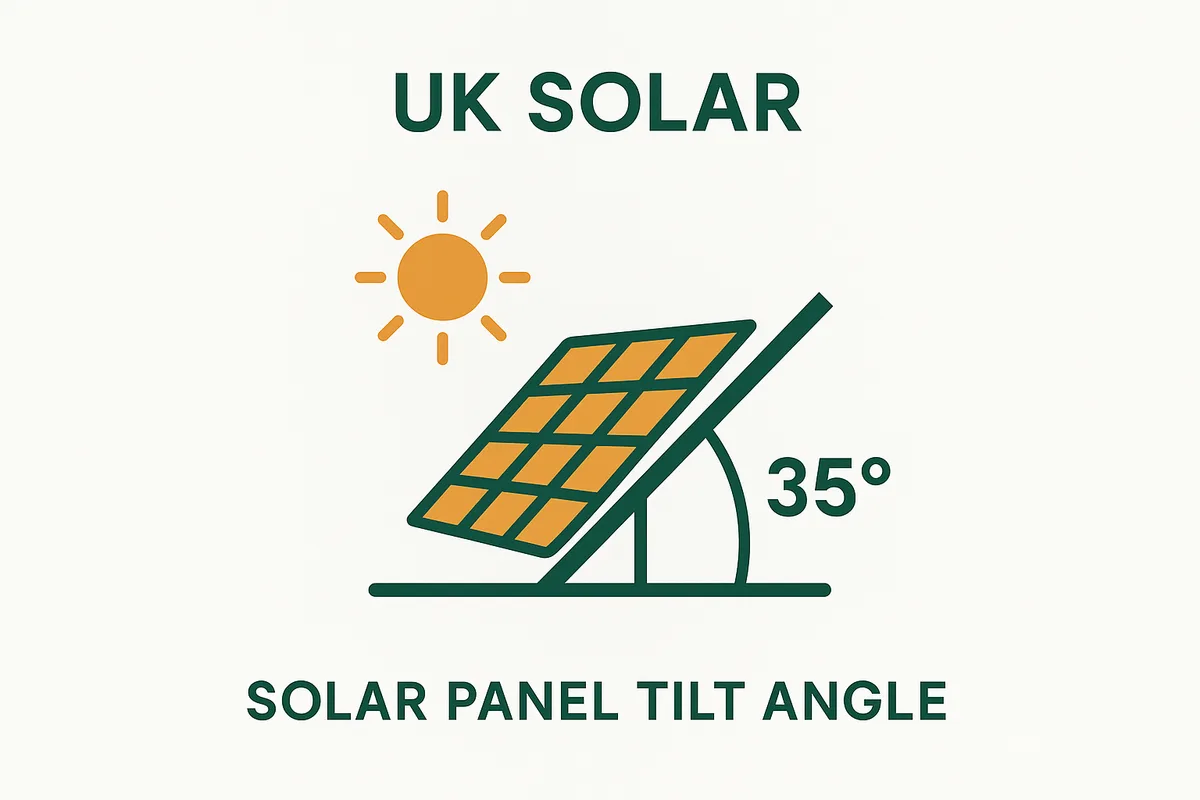
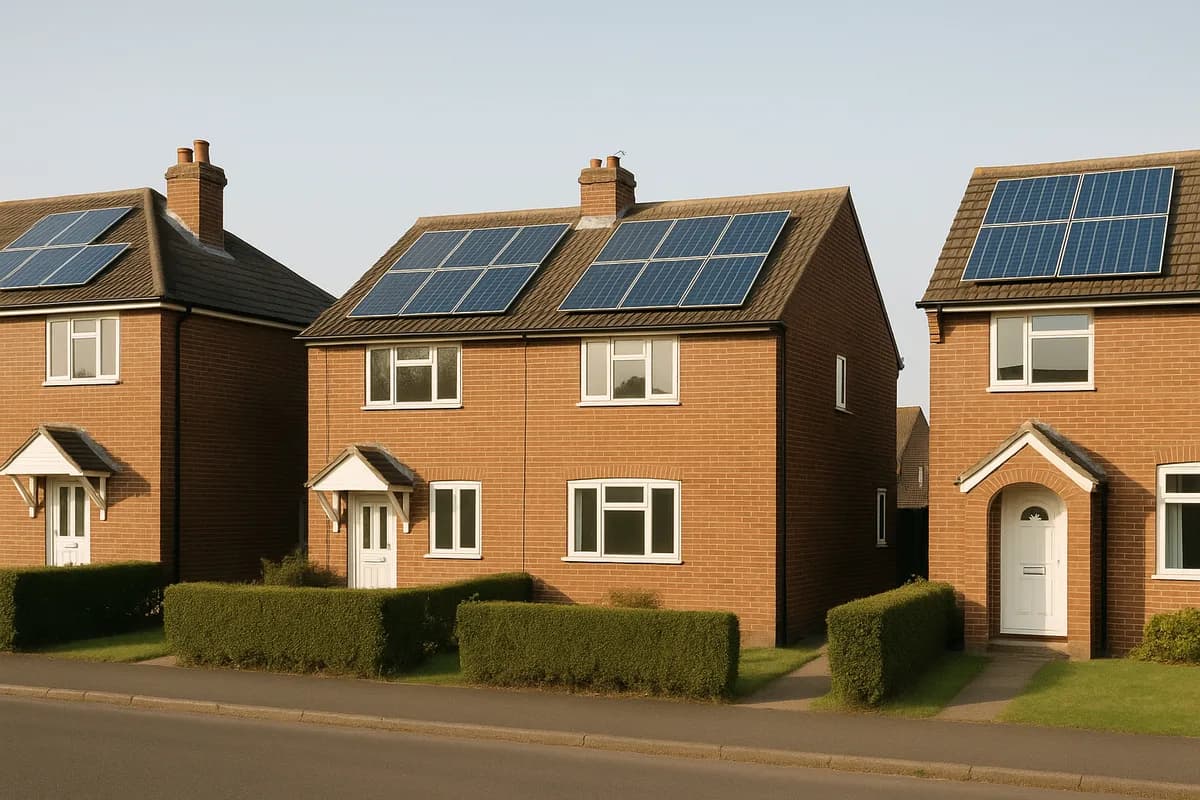
Ground-mounted solar panels are installed on frames in your garden rather than on the roof. They cost 10–15% more than roof-mounted systems (£6,000–£10,000 for 4kW) but allow optimal south-facing orientation and 35-degree tilt regardless of your roof direction. Planning permission is not needed if the array is under 9m², under 4m tall, and at least 5m from your boundary.
Ground-Mounted vs Roof-Mounted: Cost Comparison
4kW system cost comparison:
| Installation Type | Cost | Annual Output | Annual Savings | Payback |
|---|---|---|---|---|
| Roof (south-facing) | £5,500–£8,000 | 4,000 kWh | £700–£900 | 8–10 yrs |
| Ground (south-facing) | £6,000–£10,000 | 4,200 kWh | £730–£950 | 8–11 yrs |
| Roof (east/west) | £5,500–£8,000 | 3,300 kWh | £570–£740 | 9–12 yrs |
| Ground (optimal) | £6,000–£10,000 | 4,200 kWh | £730–£950 | 8–11 yrs |
Where ground-mounted costs more: - Mounting frame: £500–£1,500 (concrete foundations + steel/aluminium frame) - Trenching: £200–£600 (burying cables from panels to the house) - Labour: additional time for frame assembly and groundwork
Where ground-mounted saves: - No scaffolding needed: saves £200–£500 - Easier access = faster installation: saves £100–£200 labour
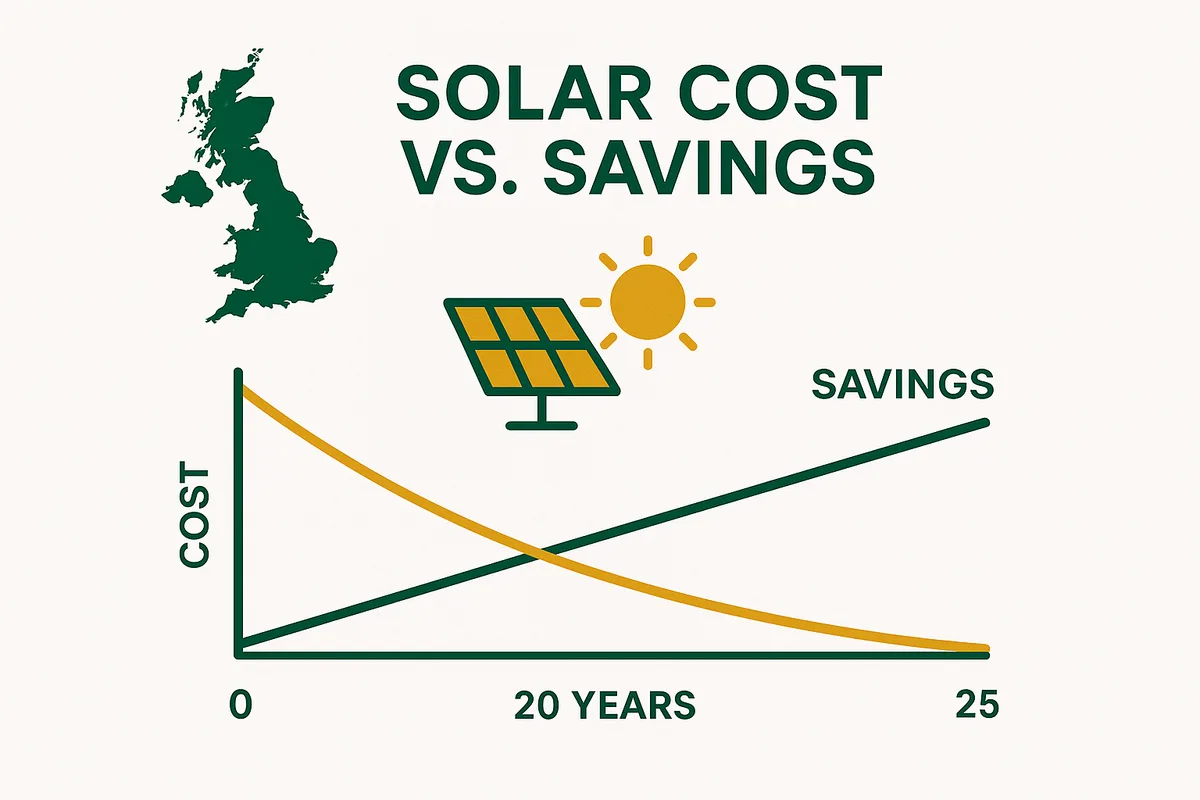
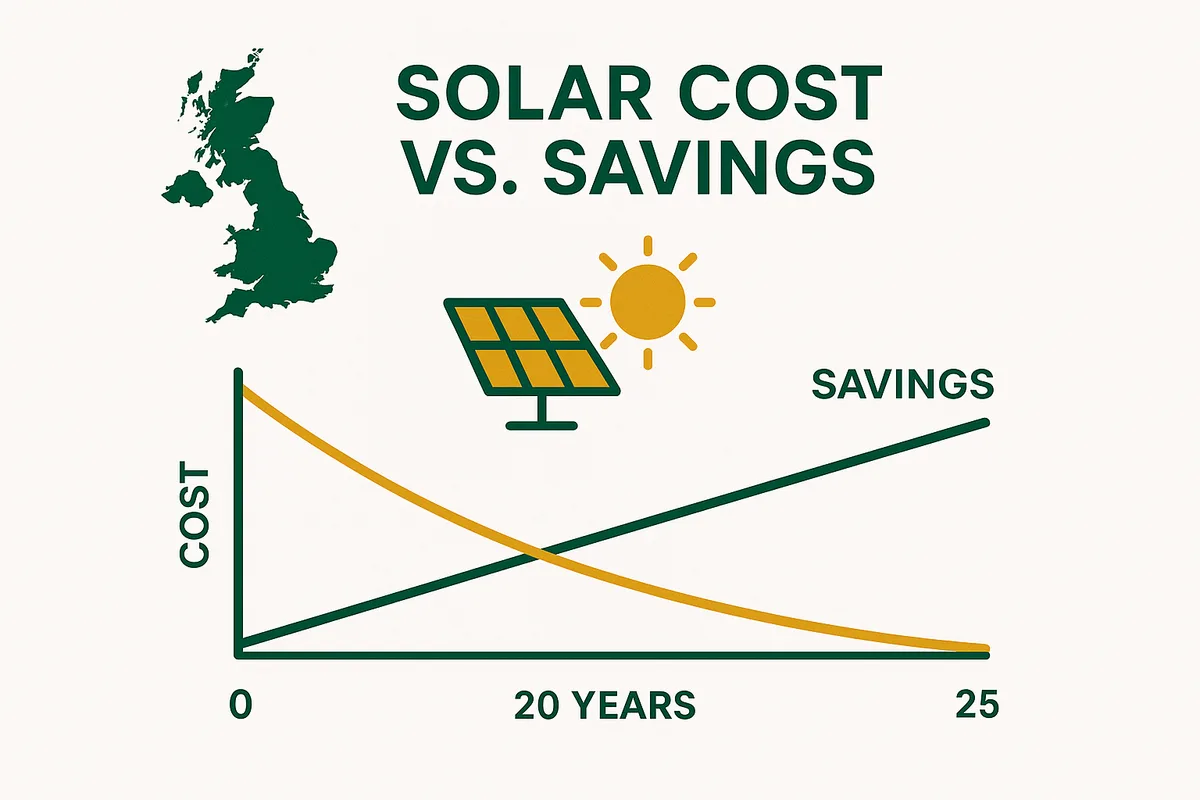
Net premium: approximately 10–15% more than roof-mounted.
However, if your roof faces east/west or north, ground-mounted panels at optimal orientation produce 20–45% more electricity — easily justifying the premium.
Source: MCS installer pricing 2026.
Planning Permission for Ground-Mounted Solar
Ground-mounted solar is permitted development (no planning needed) if ALL of these apply:
- Array area: Under 9 square metres (fits approximately 5 panels)
- Height: Under 4 metres at the highest point
- Distance from boundary: At least 5 metres from any property boundary
- Not in front of the house: Must not be forward of the principal elevation
- Not a listed building: Listed property grounds require listed building consent
- Not in a conservation area: Additional restrictions may apply
- Only one array: Permitted development allows one standalone solar installation
If your array exceeds 9m² (more than 5 panels): You need planning permission. Most councils approve larger ground arrays, especially in rural areas, but you must apply.
Practical limit without planning: 5 panels = approximately 2kW. For a full 4kW+ system, you will likely need to apply for planning permission.
Source: Town and Country Planning (General Permitted Development) Order; Planning Portal.
What would this actually cost at your home?
Installed prices vary widely by roof, access and region. Get an installed price for your property from MCS-certified installers.
Get an Installed PriceWhen Ground-Mounted Solar Makes Sense
- Your roof faces north — ground-mounting bypasses the roof entirely and achieves optimal orientation
- Your roof is unsuitable — structural issues, asbestos, listed building restrictions, or heavy shading
- You have a large garden — space for a frame without losing significant usable garden
- You want easy maintenance — ground-level panels are far easier to clean, inspect, and service
- You are planning a new build — incorporating ground-mounted solar into landscaping design
- Agricultural property — large open areas ideal for solar, often with relaxed planning
- You want to keep your roof appearance unchanged — no visible panels from the street
When Ground-Mounted Solar Does NOT Make Sense
- Small garden — you lose valuable outdoor space
- Shaded garden — if your garden is shaded by trees or buildings, ground-mounting gains nothing
- Suitable south-facing roof available — roof-mounting is cheaper and uses no garden space
- Budget is tight — the 10–15% premium may push your payback beyond comfort
- Planning restrictions — conservation areas or tight boundaries may prevent ground arrays
- Pets or children — panels at ground level are accessible, unlike roof panels
Installation Process
Ground-mounted installation differs from roof-mounted:
1. Site survey — installer assesses garden orientation, shading, soil type, and cable route to house 2. Foundation work — concrete pads or ground screws installed (1 day) 3. Frame assembly — steel or aluminium mounting frame constructed on foundations (half day) 4. Panel mounting — panels secured to frame (same as roof mounting) 5. Cable trenching — DC cables buried underground from panels to inverter location in house (0.5–1 day) 6. Electrical connection — inverter mounted inside, connected to consumer unit (same as roof system) 7. Testing and commissioning — standard testing and MCS certification
Total installation time: 2–3 days (vs 1–2 days for roof-mounted)
Source: MCS installation standards for ground-mounted PV.
Frequently Asked Questions
Related guides
You might also like
What would this actually cost at your home?
Installed prices vary widely by roof, access and region. Get an installed price for your property from MCS-certified installers.
Get an Installed PriceFree, no obligation. Takes about 2 minutes.