Solar Panels UK 2026: The Complete Guide
Ready to see what solar could save you?
Get free, no-obligation quotes from MCS-certified installers in your area.
Get Free QuotesFree, no obligation. Takes 2 minutes.
Are solar panels worth it in 2026?
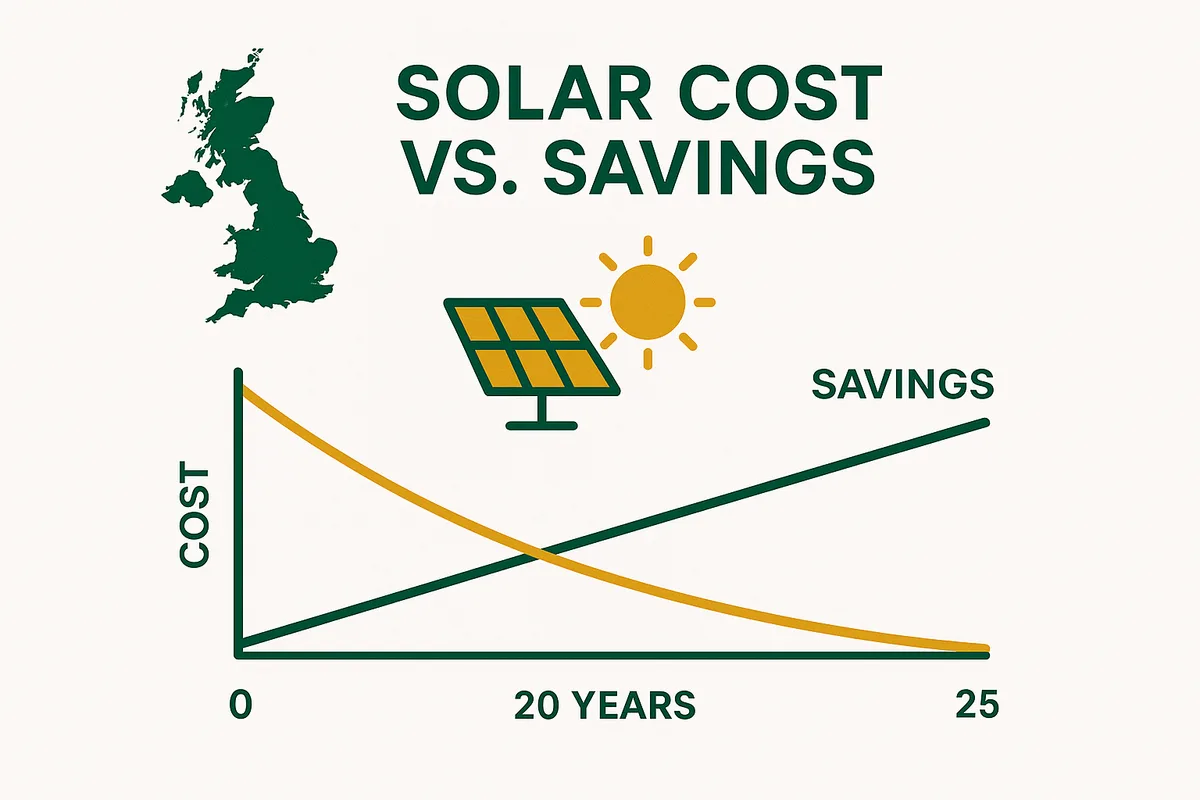
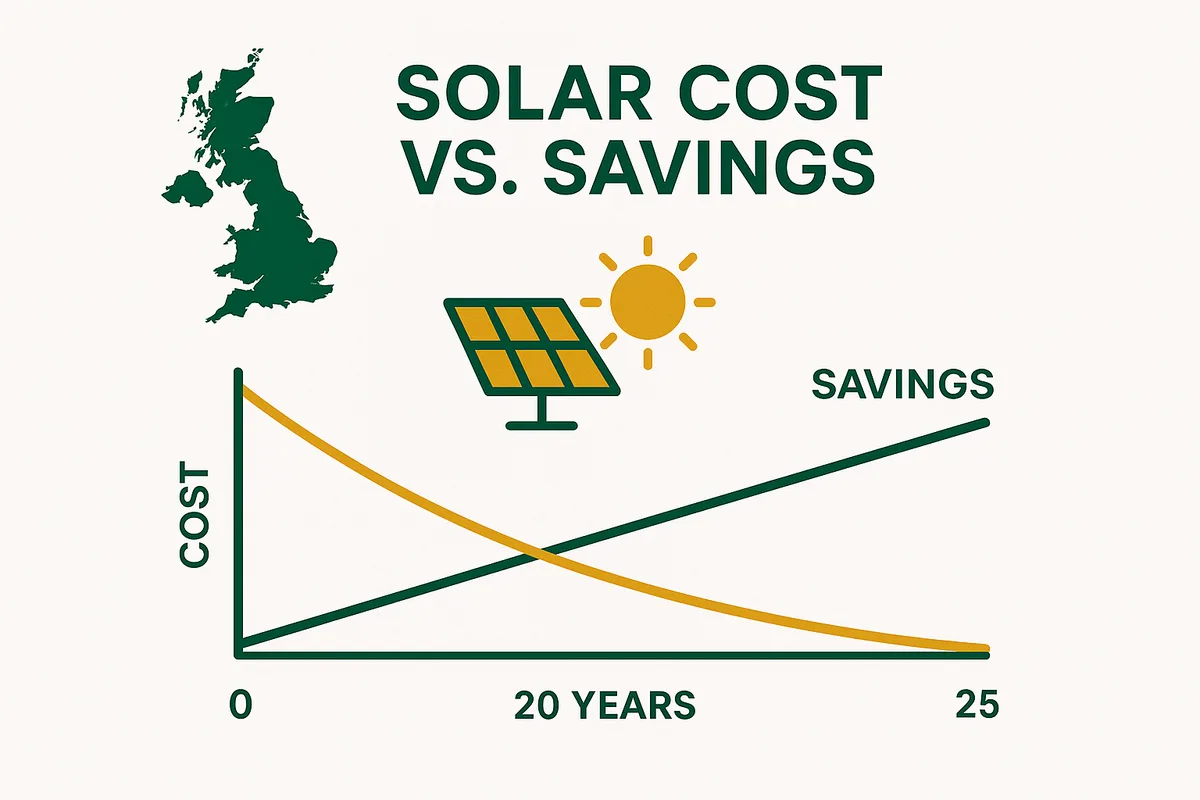
In 2026, UK solar panels cost £5,000–£8,000 for a typical 4kW system at 0% VAT, generate 3,800–4,200 kWh/year, and save £700–£900 annually. Payback: 8–12 years. With electricity at 26.11p/kWh, 0% VAT confirmed until March 2027, and the Smart Export Guarantee paying 4–15p/kWh for surplus, the financial case is the strongest it has ever been. Panel efficiency has reached 20–23% and prices have stabilised after a decade of dramatic falls.
2026 Solar Panel Costs
Current UK pricing (Q1 2026, 0% VAT):
| System Size | Panels | Cost | Annual Savings | Payback |
|---|---|---|---|---|
| 3kW | 8 | £4,500–£6,500 | £436 | 11–15 yrs |
| 4kW | 10 | £5,500–£8,000 | £580 | 10–14 yrs |
| 5kW | 13 | £6,500–£9,500 | £726 | 9–13 yrs |
| 6kW | 16 | £8,000–£11,000 | £870 | 9–13 yrs |
| + 10kWh battery | — | +£4,000–£6,000 | +£240 | +17 yrs (standalone) |
Price trend: Panel prices dropped 90% between 2010 and 2023, then stabilised. 2026 prices are similar to 2024–2025. No significant further drops are expected — manufacturing costs are near the floor for silicon technology.
VAT: 0% on residential installations until at least March 2027. This saves £1,000–£1,600 vs the standard 20% rate.
Source: MCS installer pricing Q1 2026; HMRC VAT guidance.
Why 2026 Is a Good Year to Install
- 0% VAT confirmed until March 2027 — saves £1,000–£1,600. May revert to 5% or 20% after this date.
- Electricity prices remain high — 26.11p/kWh (Ofgem price cap, July-September 2026). Higher prices = faster solar payback.
- Panel technology is mature — 20–23% efficiency panels are the standard. Reliable, proven, 25-year warranties.
- Battery prices falling — lithium battery costs continue to drop. Adding a battery is more affordable than ever.
- Smart tariffs available — Octopus Flux, Go, and Agile let you maximise the value of solar + battery.
- BUS grant available — £7,500 toward a heat pump if you combine with solar.
- No benefit to waiting — panel prices have stabilised. Every month you delay costs £50–£90 in lost savings.
- 1.3 million UK homes already have solar — the technology is proven, mainstream, and risk-free.
2026 Technology: What Has Changed
Ready to see what solar could save you?
Get free, no-obligation quotes from MCS-certified installers in your area.
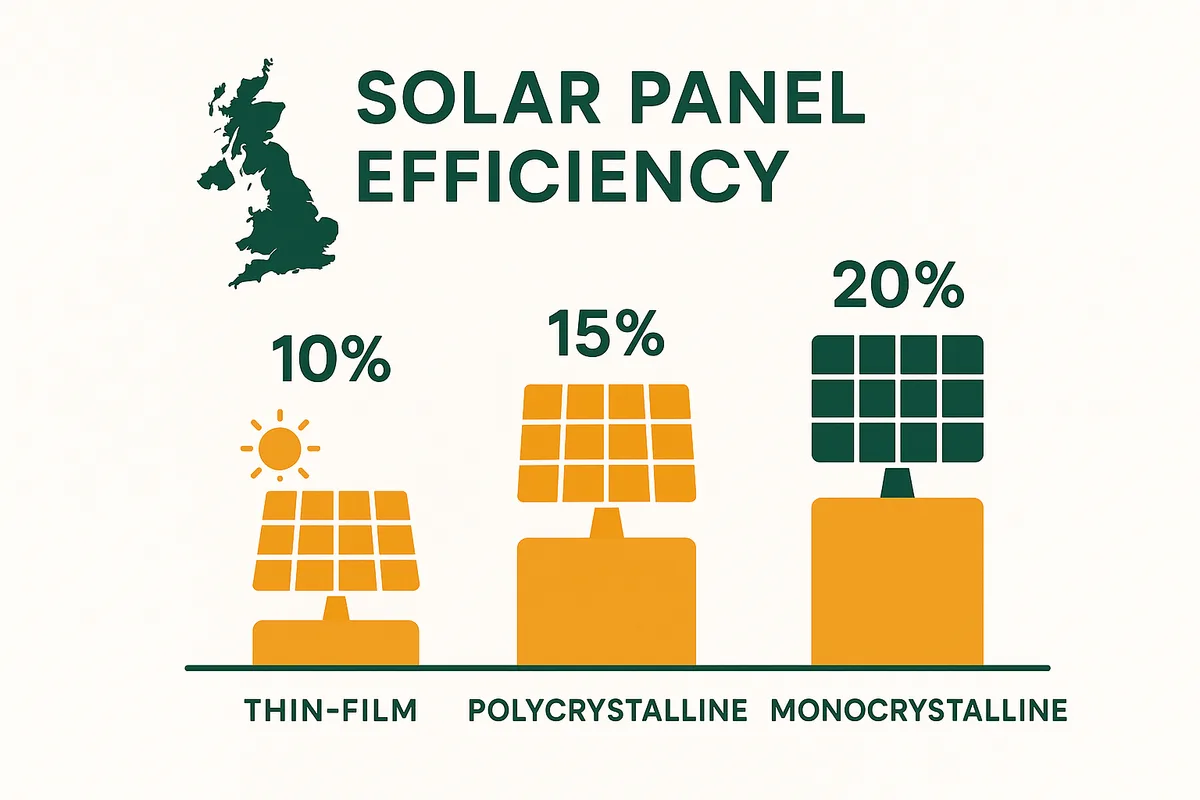
Get Free QuotesPanels: - Standard residential efficiency: 20–22% (was 15–17% five years ago) - Typical panel wattage: 400–425W (was 250–300W five years ago) - Dominant technology: PERC monocrystalline (TOPCon and HJT emerging) - Warranty: 25 years product + 25 years performance is now standard
Inverters: - Hybrid inverters (solar + battery ready) are now the default recommendation - GivEnergy has become the UK market leader for hybrid systems - Micro-inverters (Enphase) growing in popularity for complex roofs - WiFi monitoring is standard on all inverters
Batteries: - LFP (lithium iron phosphate) has replaced NMC as the standard chemistry - 10kWh batteries cost £4,000–£6,000 (was £8,000–£10,000 in 2020) - GivEnergy and Fox ESS dominate the UK battery market - Tesla Powerwall 3 is available but at a premium price point
Smart integration: - Time-of-use tariffs (Octopus Flux/Go) are mainstream - Solar + battery + smart tariff is the standard recommendation for maximum savings - EV charger integration (Zappi, Ohme) is growing - Heat pump + solar is increasingly common for whole-home decarbonisation
Source: Solar Energy UK market report; manufacturer product launches.
What Financial Support Is Available in 2026
For everyone: - 0% VAT on solar installation (until at least March 2027) - Smart Export Guarantee: 4–15p/kWh for surplus electricity - 0% interest finance from some installers
For low-income households: - ECO4 scheme (free solar/insulation for qualifying benefit recipients) - Local authority fuel poverty schemes (varies by area)
For heat pump combos: - Boiler Upgrade Scheme: £7,500 toward a heat pump
For businesses: - 100% first-year capital allowances (full expensing) - 20% VAT recovery for VAT-registered businesses
What does NOT exist: - No general government grant for solar panels for most homeowners - The Feed-in Tariff closed in 2019 — SEG replaced it but pays less - No 'free solar panels' scheme for standard homeowners
Source: Ofgem; HMRC; BEIS; BUS grant terms.
The Bottom Line for 2026
Should you install solar panels in 2026? For most UK homeowners with a suitable roof: yes, decisively.
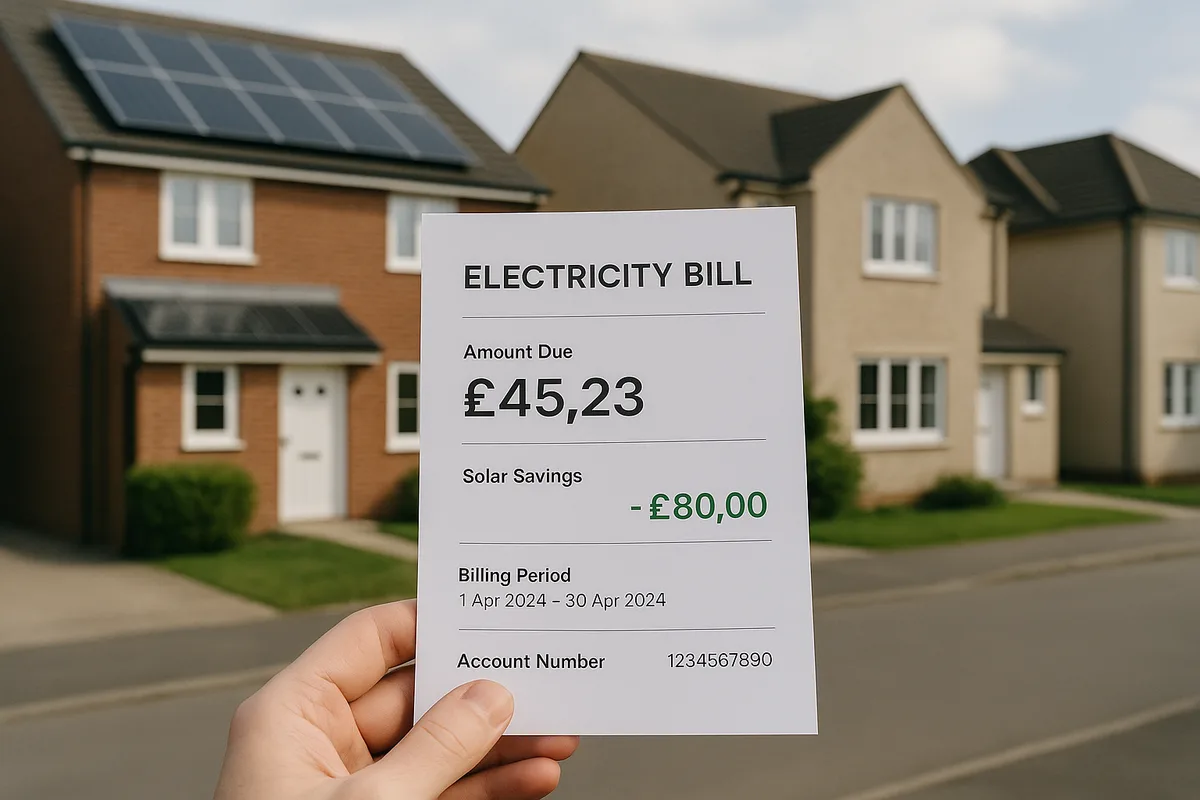
The combination of: - Mature, reliable technology (25-year warranties) - High electricity prices (26.11p/kWh) - 0% VAT (saving £1,000–£1,600) - SEG export income (£80–£300/year) - Strong ROI (100–400% over 25 years) - Falling battery prices - Smart tariff availability
...makes 2026 one of the best years to install solar in the UK. There is no significant reason to wait: - Prices have stabilised (no more dramatic drops) - Every month you delay costs £50–£90 in lost savings - 0% VAT may not continue after March 2027 - Electricity prices may remain high or rise further
The only question is system size and whether to add a battery — not whether to go solar at all.
Source: Energy Saving Trust; Ofgem; MCS; Solar Energy UK.
Frequently Asked Questions
Related guides
Related: Home Heating Systems
Solar panels are most powerful when combined with an efficient heating system. Heat pumps use solar-generated electricity to heat your home at 300-400% efficiency — making them the ideal partner for solar.
A heat pump converts 1kWh of electricity into 3-4kWh of heat.
From our sister site Home Heat Pump Guide
You might also like

Ready to see what solar could save you?
Get free, no-obligation quotes from MCS-certified installers in your area.
Get Free QuotesFree, no obligation. Takes 2 minutes.