Summer Solar Output UK: What to Expect
Find the right system size for your roof
Panel count depends on your electricity use, roof space and direction — not on a rule of thumb. Get a recommended size and what it should cost.
Size My SystemFree calculator. No contact details required to see your result.
How much do solar panels produce in summer?
UK solar panels produce their maximum output in summer. A 4kW system generates 450–520 kWh per month in June/July — compared to 80–120 kWh in December. Summer months (April–September) contribute 60–70% of annual generation. Peak daily output on a clear June day: 22–25 kWh. This is the period when solar savings are highest and excess generation can charge batteries, heat water, or earn maximum SEG income.
Summer vs Winter: Monthly Output
4kW system monthly output (south-facing, UK Midlands):
| Month | Output (kWh) | Daily Avg | vs June Peak |
|---|---|---|---|
| January | 100 | 3.2 | 19% |
| February | 150 | 5.4 | 29% |
| March | 300 | 9.7 | 58% |
| April | 420 | 14.0 | 81% |
| May | 500 | 16.1 | 96% |
| June | 520 | 17.3 | 100% |
| July | 500 | 16.1 | 96% |
| August | 450 | 14.5 | 87% |
| September | 350 | 11.7 | 67% |
| October | 220 | 7.1 | 42% |
| November | 120 | 4.0 | 23% |
| December | 80 | 2.6 | 15% |
| Annual | 3,710 | 10.2 | — |
Summer total (Apr–Sep): 2,740 kWh = 74% of annual output Winter total (Oct–Mar): 970 kWh = 26% of annual output
Summer generates nearly 3x more than winter. This is the season that drives solar's financial case.
Source: PVGIS UK Midlands monthly irradiance.
Daily Summer Output Pattern
Typical 4kW system on a clear June day (UK):
| Time | Output (W) | % of Peak |
|---|---|---|
| 5:00 | 100 | 3% |
| 6:00 | 400 | 11% |
| 7:00 | 1,200 | 33% |
| 8:00 | 2,200 | 61% |
| 9:00 | 3,000 | 83% |
| 10:00 | 3,400 | 94% |
| 11:00 | 3,600 | 100% |
| 12:00 (noon) | 3,600 | 100% |
| 13:00 | 3,500 | 97% |
| 14:00 | 3,200 | 89% |
| 15:00 | 2,800 | 78% |
| 16:00 | 2,200 | 61% |
| 17:00 | 1,500 | 42% |
| 18:00 | 800 | 22% |
| 19:00 | 300 | 8% |
| 20:00 | 50 | 1% |
Total clear day: 22–25 kWh Partly cloudy day: 14–18 kWh Overcast day: 5–10 kWh
Even overcast summer days produce more than clear winter days — because the days are so much longer (16+ hours vs 8 hours of daylight).
Source: PVGIS hourly simulation; inverter monitoring data.
Find the right system size for your roof
Panel count depends on your electricity use, roof space and direction — not on a rule of thumb. Get a recommended size and what it should cost.
Size My System
Maximising Summer Solar Value
How to get the most from your panels in summer:
- Run heavy appliances during solar hours (10am–3pm) — washing machine, dishwasher, tumble dryer. Use delay timers if you are out.
- Charge your EV during the day — a Zappi charger automatically uses surplus solar. Summer surplus easily adds 40–60 miles of range per day.
- Heat your hot water — a solar diverter (iBoost+/Eddi) routes surplus to your immersion heater. Free hot water for 5–6 months.
- Export at the best rate — if exporting, ensure you are on the best SEG tariff. Octopus Flux pays more for peak-time export (16:00–19:00).
- Top up your battery early — on clear days, your battery is full by mid-morning. The remaining surplus exports or charges your EV.
- Clean your panels before summer — April is the ideal time for a clean. Remove winter dirt/pollen for maximum output.
- Monitor daily output — your monitoring app shows whether panels are performing as expected. A sudden drop indicates an issue.
Summer Surplus: What Happens to Excess Generation
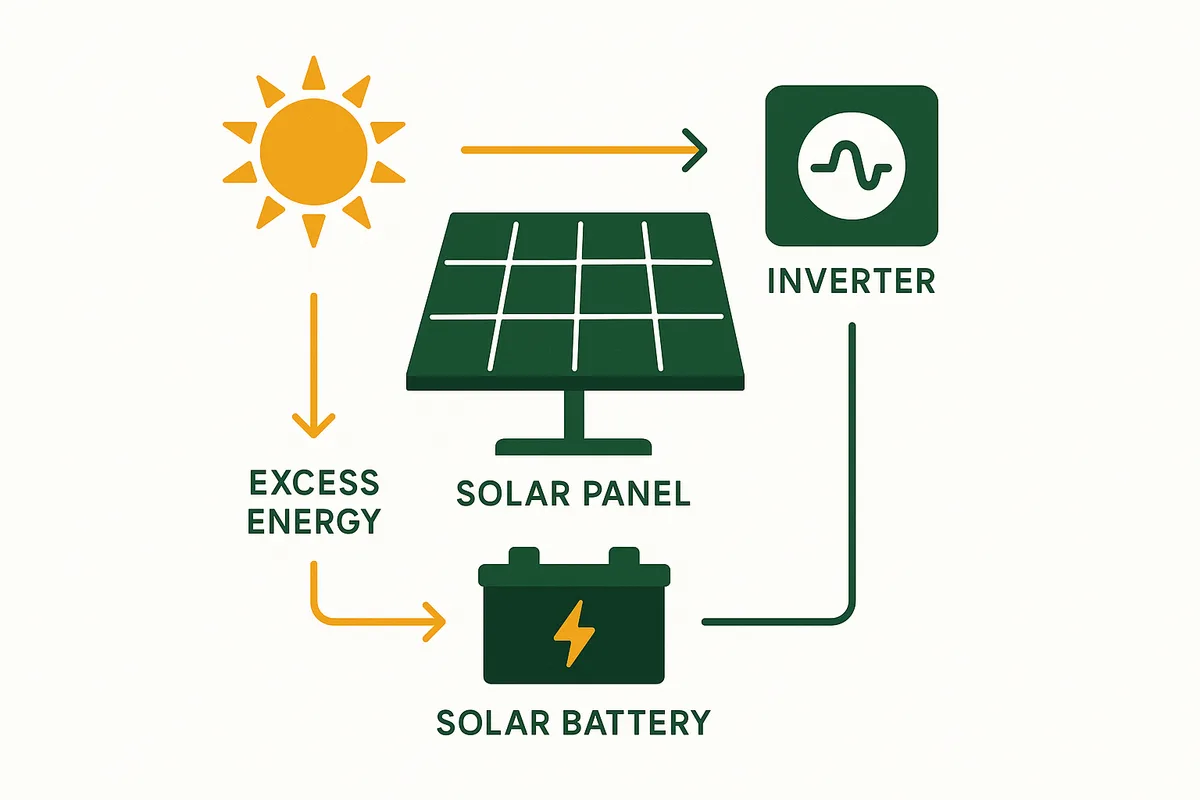
In summer, a 4kW system often generates more than your home needs during the day:
Typical summer day energy flow: - Generated: 18 kWh - Home consumption: 8 kWh (during daylight hours) - Surplus: 10 kWh
Where the surplus goes (in priority order): 1. Battery charging (if installed): stores 10kWh for evening use 2. Hot water heating (if diverter installed): heats cylinder from surplus 3. EV charging (if smart charger installed): adds 30–35 miles of range 4. Grid export: earns SEG income (4–15p/kWh)
Without battery, diverter, or EV charger: Most surplus exports at 4.5p/kWh — good but not as valuable as self-consumption at 26.11p.
Summer is when batteries earn their keep: A 10kWh battery captures £2–£3 of surplus per day that would otherwise export at low value. Over 180 summer days, that is £360–£540 of extra value.
Source: Self-consumption modelling; SEG rates.
Frequently Asked Questions
Related guides
Related: Home Heating Systems
Solar panels are most powerful when combined with an efficient heating system. Heat pumps use solar-generated electricity to heat your home at 300-400% efficiency — making them the ideal partner for solar.
Heat pumps use electricity at 300-400% efficiency, making them ideal partners for solar.
From our sister site Home Heat Pump Guide
You might also like
Find the right system size for your roof
Panel count depends on your electricity use, roof space and direction — not on a rule of thumb. Get a recommended size and what it should cost.
Size My SystemFree calculator. No contact details required to see your result.