kWp to kWh: What the Difference Means
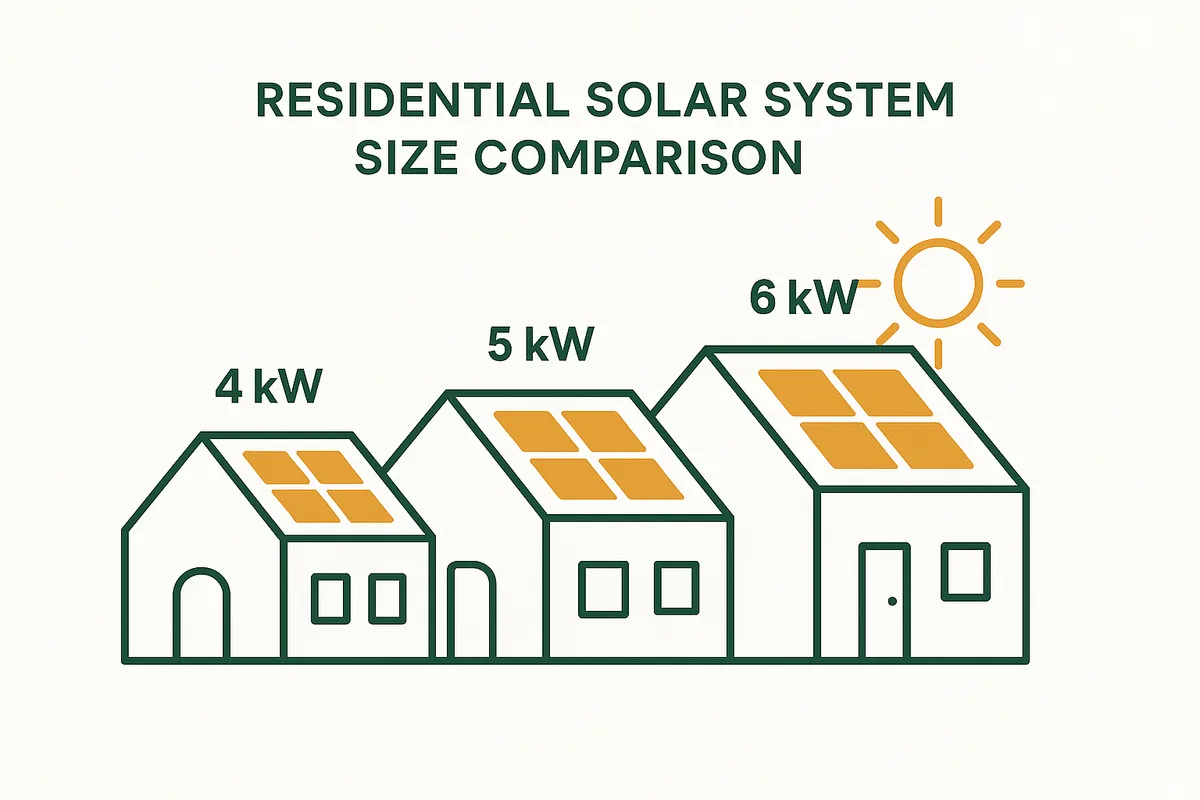
Find the right system size for your roof
Panel count depends on your electricity use, roof space and direction — not on a rule of thumb. Get a recommended size and what it should cost.
Size My SystemFree calculator. No contact details required to see your result.
What is the difference between kWp and kWh?
kWp (kilowatt peak) is the maximum power a solar panel can produce under ideal lab conditions. kWh (kilowatt hour) is the actual electricity generated over time. In the UK, each 1 kWp of solar generates approximately 950–1,050 kWh per year. So a 4 kWp system generates ~4,000 kWh annually. The simple conversion: multiply your system's kWp by 1,000 to estimate annual kWh output in the UK.
kWp Explained: Panel Capacity
kWp = kilowatt peak = maximum capacity
kWp is measured under Standard Test Conditions (STC): - Irradiance: 1,000 W/m² (bright midday sun) - Cell temperature: 25°C - Air mass: 1.5 (standard atmospheric conditions)
These conditions rarely occur simultaneously in the real UK — actual output is always lower than kWp rating. Think of kWp like a car's top speed: a car rated at 150 mph rarely does 150 mph, but the rating lets you compare cars.
kWp is used to: - Compare panels (a 425W panel is more powerful than a 375W panel) - Size systems (a 4kWp system = 10 × 400W panels) - Quote prices (installers price per kWp: £1,300–£1,800/kWp in the UK) - Determine grid connection requirements (G98 under 3.68kWp, G99 above)
Source: IEC 61215 Standard Test Conditions definition.
kWh Explained: Actual Energy
kWh = kilowatt hour = actual electricity generated or consumed
1 kWh = 1,000 watts for 1 hour. It is the standard unit on your electricity bill.
What uses 1 kWh? - Running a 2kW kettle for 30 minutes - Running a 100W laptop for 10 hours - Running a 10W LED bulb for 100 hours - Driving an EV approximately 3.5 miles
What generates 1 kWh from solar? - A 1kW panel in full sunshine for 1 hour - OR a 2kW panel in half-sunshine for 1 hour - OR a 500W panel in full sunshine for 2 hours
kWh is what matters for your bill: - You PAY for grid electricity in kWh (26.11p per kWh) - You EARN SEG income in kWh (4–15p per kWh exported) - You SAVE money based on kWh self-consumed
Source: Ofgem billing; energy measurement standards.
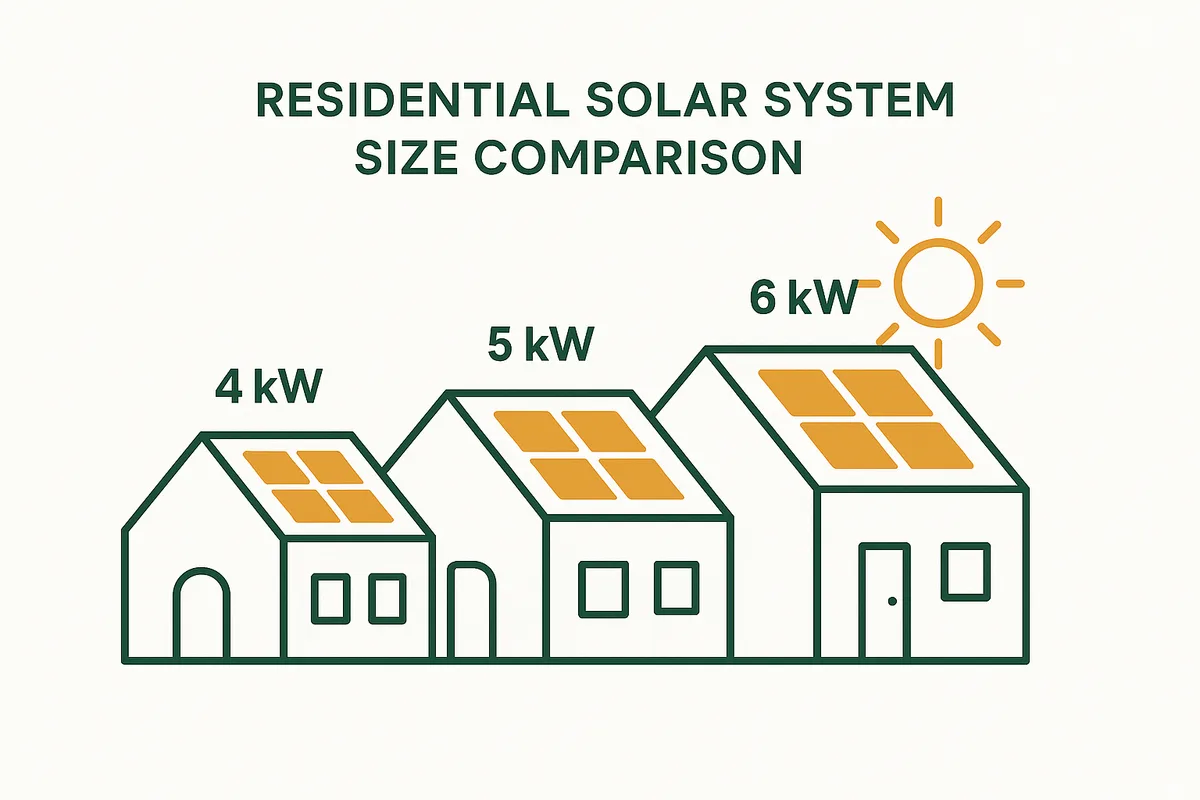
Find the right system size for your roof
Panel count depends on your electricity use, roof space and direction — not on a rule of thumb. Get a recommended size and what it should cost.
Size My SystemThe UK Conversion: kWp to Annual kWh
In the UK, each 1 kWp generates approximately 950–1,050 kWh per year (south-facing, 35° tilt).
Quick conversion table:
| System Size (kWp) | Annual Output (kWh) | Daily Average (kWh) |
|---|---|---|
| 1 kWp | 950–1,050 | 2.6–2.9 |
| 2 kWp | 1,900–2,100 | 5.2–5.8 |
| 3 kWp | 2,850–3,150 | 7.8–8.6 |
| 4 kWp | 3,800–4,200 | 10.4–11.5 |
| 5 kWp | 4,750–5,250 | 13.0–14.4 |
| 6 kWp | 5,700–6,300 | 15.6–17.3 |
| 8 kWp | 7,600–8,400 | 20.8–23.0 |
| 10 kWp | 9,500–10,500 | 26.0–28.8 |
Rule of thumb: multiply kWp by 1,000 for annual kWh.
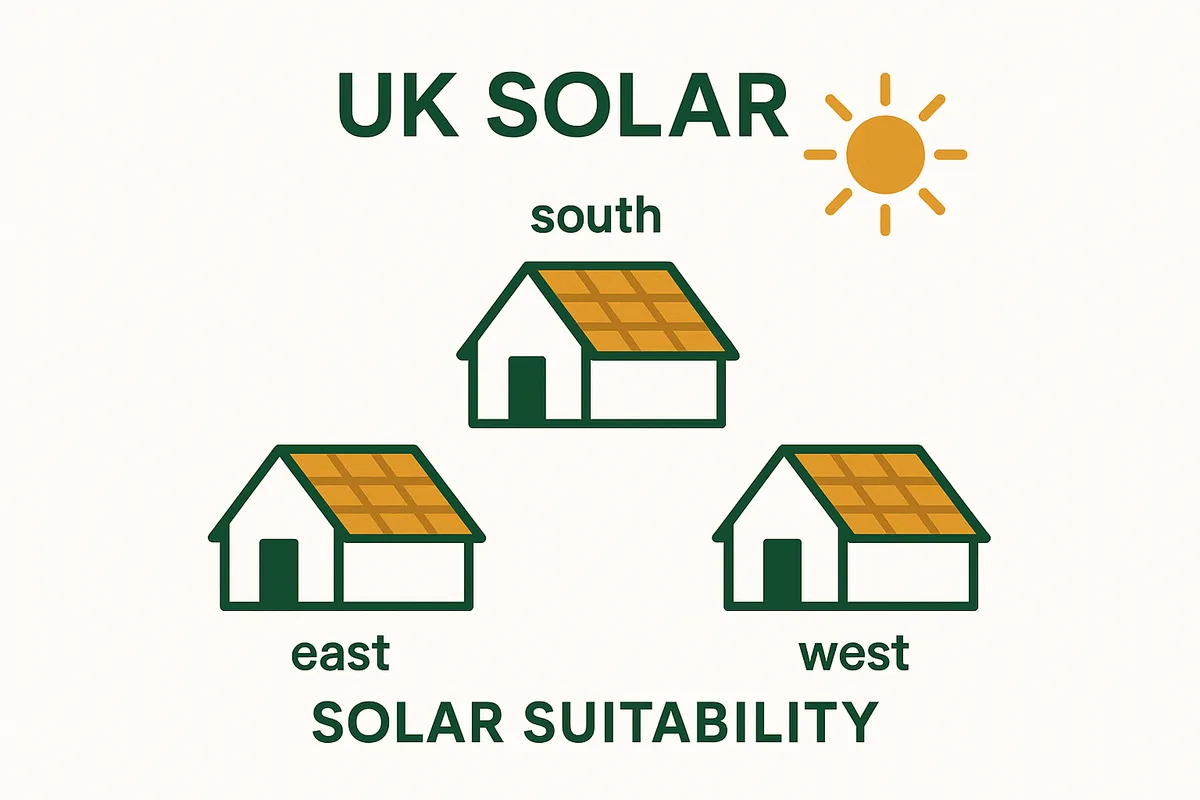
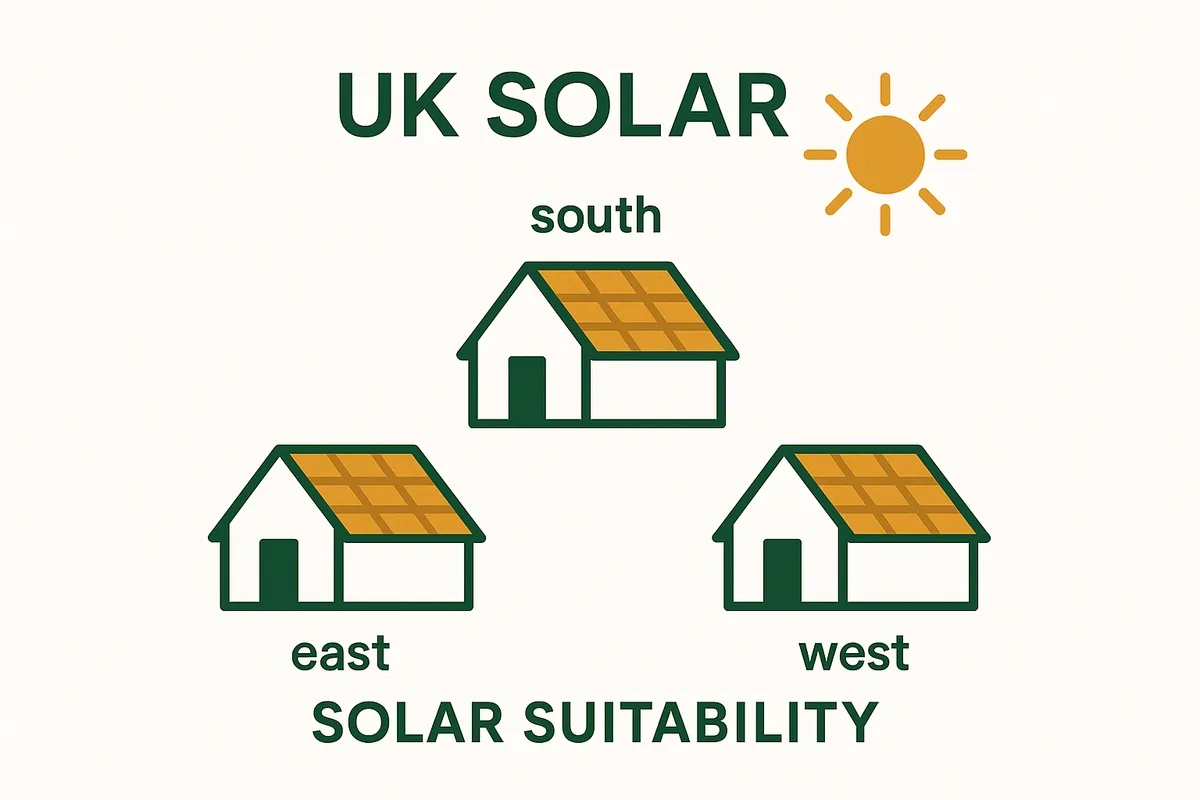
Factors that adjust this: - East/west facing: multiply by 0.85 (15% less) - North facing: multiply by 0.58 (42% less) - Location: southern England ×1.05, northern Scotland ×0.88 - Shading: reduce by 10–30% depending on severity
Source: PVGIS UK yield data by location and orientation.
Why kWp Is Always Higher Than Real Output
Your panels rarely produce their full kWp rating because:
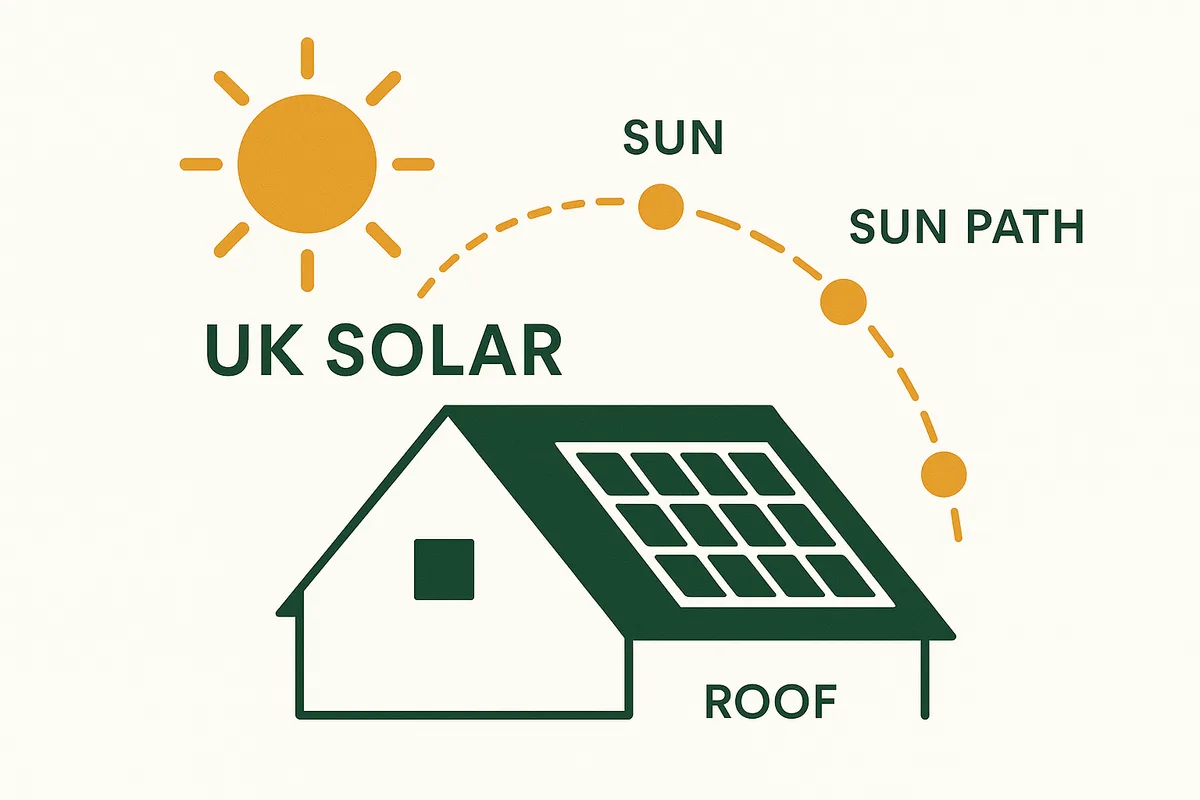
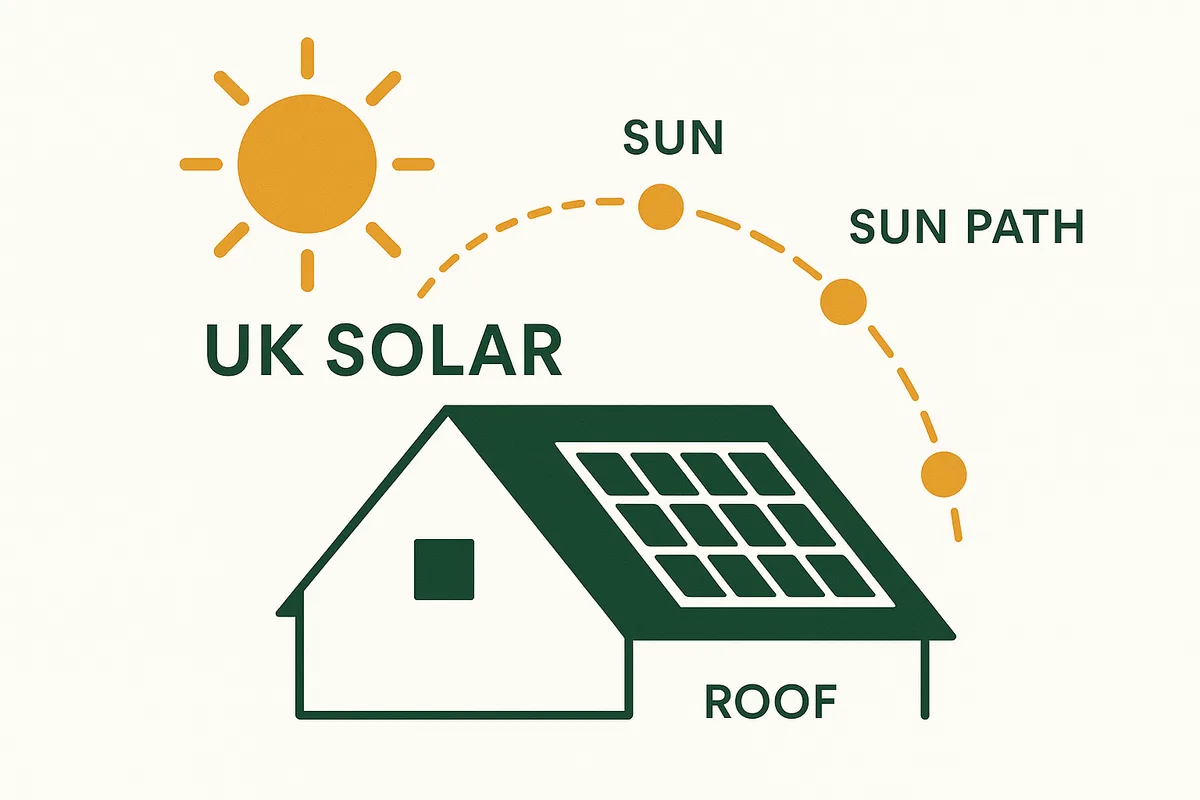
1. UK irradiance is lower than STC — STC assumes 1,000 W/m² constant. UK average is ~100–150 W/m² (annual mean). Panels only hit 1,000 W/m² on the brightest summer days around midday.
2. Temperature losses — STC assumes 25°C. On hot summer days, panels exceed 25°C and lose ~0.4% per degree. On cold winter days, panels are MORE efficient but receive less light.
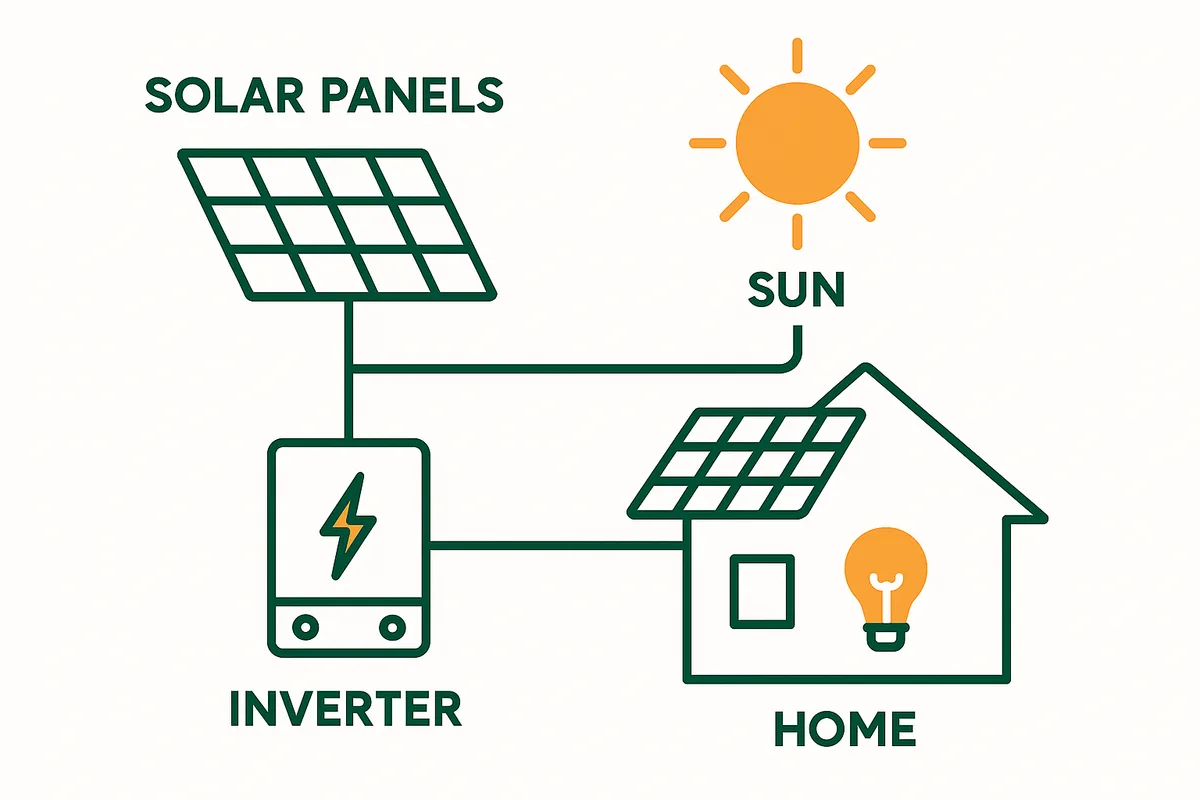
3. Inverter losses — 2–4% of DC power is lost in the DC-to-AC conversion.
4. Cable losses — 1–2% lost in wiring between panels and inverter.
5. Soiling — 2–5% lost to dust, pollen, bird droppings over time.
6. Night time — 0% output for 8–16 hours per day.
7. Seasonal variation — December daylight: 7–8 hours. June daylight: 16–17 hours.
Combined, these factors mean UK panels produce approximately 10–11% of their kWp rating as average output (950–1,050 kWh per kWp per year ÷ 8,760 hours per year ≈ 11% average capacity factor).
Source: PVGIS capacity factor data; system loss calculations.
Frequently Asked Questions
Related guides
You might also like
Find the right system size for your roof
Panel count depends on your electricity use, roof space and direction — not on a rule of thumb. Get a recommended size and what it should cost.
Size My SystemFree calculator. No contact details required to see your result.