10 Solar Panel Mistakes to Avoid

Ready to see what solar could save you?
Get free, no-obligation quotes from MCS-certified installers in your area.
Get Free QuotesFree, no obligation. Takes 2 minutes.
What mistakes should I avoid with solar panels?
The 10 most common solar panel mistakes are: (1) choosing the cheapest quote, (2) undersizing the system, (3) skipping a site survey, (4) not getting MCS certification, (5) ignoring the inverter choice, (6) not registering for SEG, (7) not notifying your insurer, (8) pressure-buying from door-to-door salespeople, (9) ignoring self-consumption optimisation, and (10) waiting for prices to drop further. Each mistake costs £500–£5,000+ over the system's lifetime.
Mistake 1: Choosing the Cheapest Quote
The mistake: Selecting the lowest-priced quote without comparing component quality, warranty coverage, or installer track record.
Why it costs you: Budget panels degrade faster, cheap inverters fail sooner, and installers with no track record may not honour warranties. A £1,000 saving on installation can cost £5,000+ over 25 years through: lower output (cheap panels), earlier inverter replacement (cheap inverter), and no warranty recourse (installer gone out of business).
The fix: Compare quotes on TOTAL VALUE: panel efficiency, inverter brand, warranty coverage (product + performance + workmanship), installer reviews, and Insurance-Backed Guarantee. The cheapest quote is rarely the best value.
Mistake 2: Undersizing the System
The mistake: Installing a 3kW system when your roof could fit 5kW — because it is cheaper upfront.
Why it costs you: Each additional panel costs only £200–£350 but generates £50–£100/year in savings. That is a 3–6 year payback per extra panel — faster than the base system. Once scaffolding is up and the electrician is on-site, adding 3 more panels adds minimal extra cost.
The fix: Install the largest system your roof and budget allow. More panels = more savings. You will never regret having too much solar — you WILL regret not installing enough.
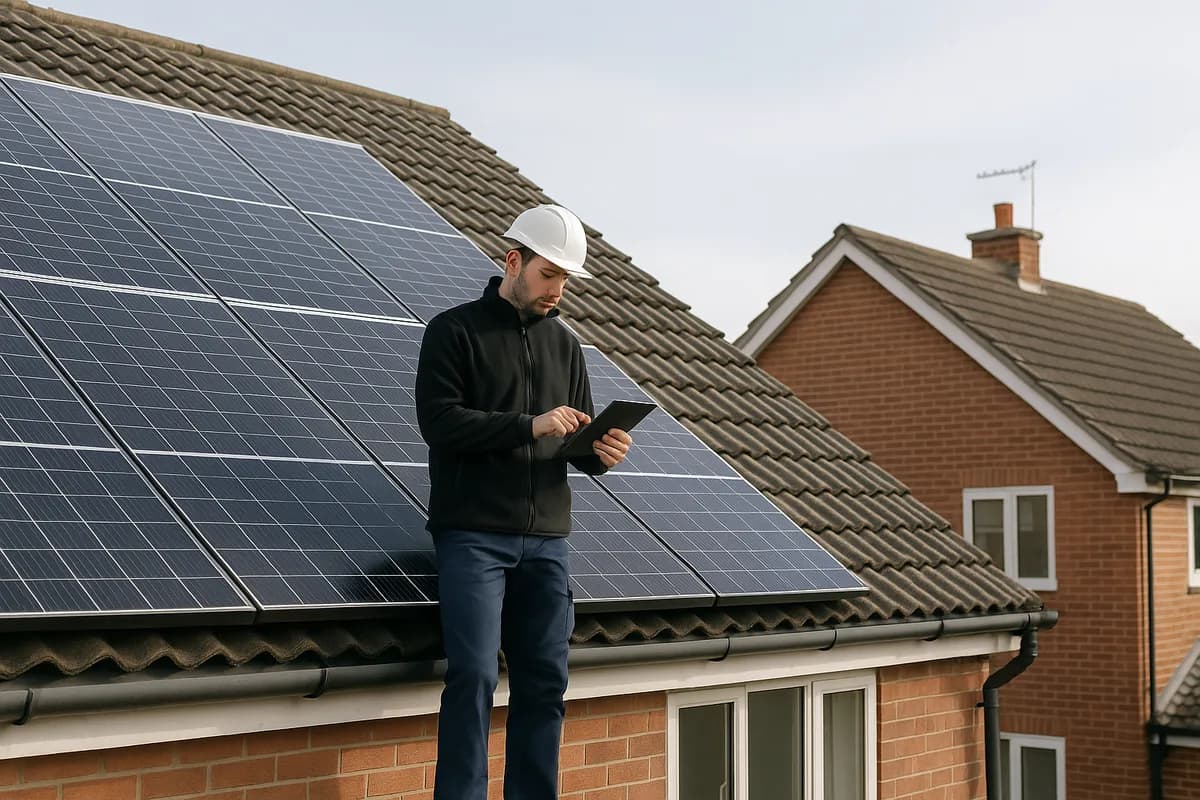
Mistake 3: Skipping the Site Survey
The mistake: Accepting a quote based only on Google Earth satellite imagery without a physical site survey.
Why it costs you: Desktop assessments miss: roof structural issues, hidden shading (trees, chimneys not visible from satellite), incorrect roof dimensions, consumer unit limitations, and cable routing challenges. These can cause delays, cost overruns, or underperformance.
The fix: Never accept a quote without a free site survey. If an installer will not visit, find one who will. The survey is your quality assurance — it is free, takes 30–60 minutes, and catches problems before they become expensive.
Mistake 4: Not Getting MCS Certification
The mistake: Using a non-MCS-certified installer to save money — or doing a DIY installation.
Why it costs you: SEG payments require MCS or a scheme accredited as equivalent, so without recognised certification you cannot claim export income at all. You also lose government scheme eligibility and the quality assurance certification provides. The money 'saved' is wiped out many times over.
The fix: ALWAYS use an MCS-certified installer. Verify at mcscertified.com before signing. No exceptions.
Mistake 5: Ignoring the Inverter Choice
The mistake: Focusing only on panel brand and ignoring the inverter — or accepting whatever the installer's cheapest option is.
Why it costs you: The inverter is the component most likely to fail (10–15 year lifespan). A cheap inverter with a 5-year warranty means paying £800–£1,500 for replacement out of pocket at year 6. A hybrid inverter costs slightly more but enables battery addition without future rewiring.
The fix: Choose a reputable inverter brand (GivEnergy, Fronius, SolarEdge, Enphase). If you might ever want a battery, specify a hybrid inverter now — it costs £200–£400 more but saves £1,000–£1,500 in future retrofit costs. Extend the warranty to at least 10 years.

Ready to see what solar could save you?
Get free, no-obligation quotes from MCS-certified installers in your area.
Get Free QuotesMistake 6: Not Registering for SEG
The mistake: Installing panels but never registering for the Smart Export Guarantee.
Why it costs you: You export electricity for free — receiving nothing for surplus solar that could earn £80–£300/year. Left unregistered for the life of the system, that is a substantial amount of income forgone.
The fix: Register for SEG with the best-paying supplier immediately after installation. You need: MCS certificate, smart meter, and 5 minutes to complete the registration. Compare rates — they range from 4p to 15p/kWh.
Mistake 7: Not Notifying Your Insurer
The mistake: Installing panels without telling your home insurer.
Why it costs you: Non-disclosure can void your entire buildings insurance policy — not just for solar claims, but for ALL claims (fire, storm, flood, anything). If your insurer discovers undisclosed solar panels during a claim, they can reject the entire claim.
The fix: Call your insurer before or immediately after installation. It takes 5 minutes. Most charge no additional premium. Get confirmation in writing.
Mistake 8: Buying from Door-to-Door Salespeople
The mistake: Signing a contract with a salesperson who knocks on your door and offers a 'today-only' deal.
Why it costs you: Door-to-door solar sales are the #1 source of complaints to Trading Standards and Citizens Advice. Common issues: inflated prices (£10,000–£15,000 for a system worth £6,000), pressure tactics, misleading savings claims, and substandard installation.
The fix: Never sign on the doorstep. Always get 3+ quotes from companies you have researched. You have 14 days to cancel any contract signed at home (Consumer Contracts Regulations 2013). Legitimate installers do not cold-call.
Mistake 9: Not Optimising Self-Consumption
The mistake: Installing panels but continuing to run dishwashers, washing machines, and other high-energy appliances in the evening instead of during the day.
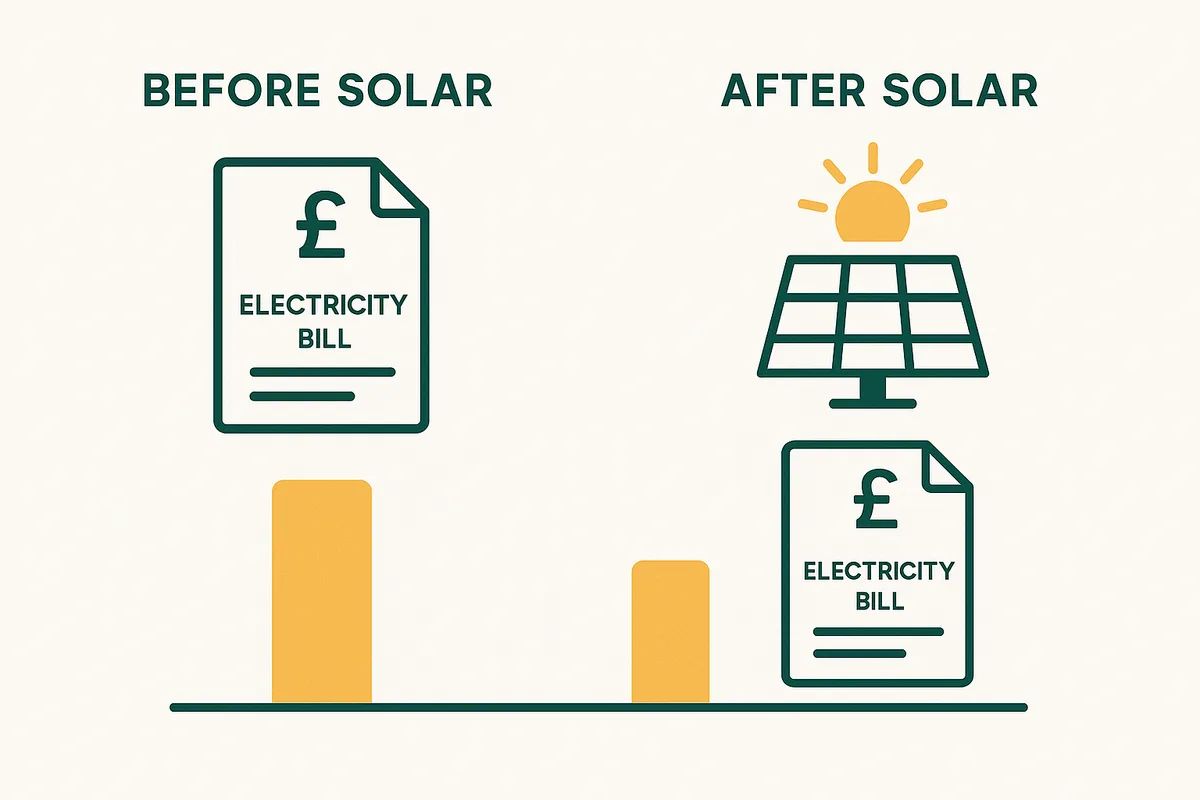
Why it costs you: Every kWh you use directly saves 26.11p. Every kWh you export earns only 4.5p. By running appliances at night instead of during solar hours, you are choosing 4.5p value instead of 26.11p value — a 5x difference.
The fix: Shift heavy appliance usage to 10am–3pm when solar generation peaks. Use delay timers on your dishwasher and washing machine. Consider a solar diverter for hot water (£200–£400). A battery automates this entirely.
Mistake 10: Waiting for Prices to Drop
The mistake: Delaying installation because 'prices might come down next year.'
Why it costs you: Panel prices have stabilised since 2023. Any future drops will be small (1–3%/year). Meanwhile, every month you wait costs £50–£90 in lost savings. Waiting 2 years for a 5% price drop saves £300 but loses £1,200 in missed generation.
The fix: Install now. The best time to install solar was 5 years ago. The second best time is today. Every month of delay is money lost that you can never recover.
Source: All data from Ofgem, MCS, Energy Saving Trust, and industry analysis.
Frequently Asked Questions
Related guides
You might also like
Ready to see what solar could save you?
Get free, no-obligation quotes from MCS-certified installers in your area.
Get Free QuotesFree, no obligation. Takes 2 minutes.