Best Solar Panel Angle for the UK
Ready to see what solar could save you?
Get free, no-obligation quotes from MCS-certified installers in your area.
Get Free QuotesFree, no obligation. Takes 2 minutes.
What is the best angle for solar panels in the UK?
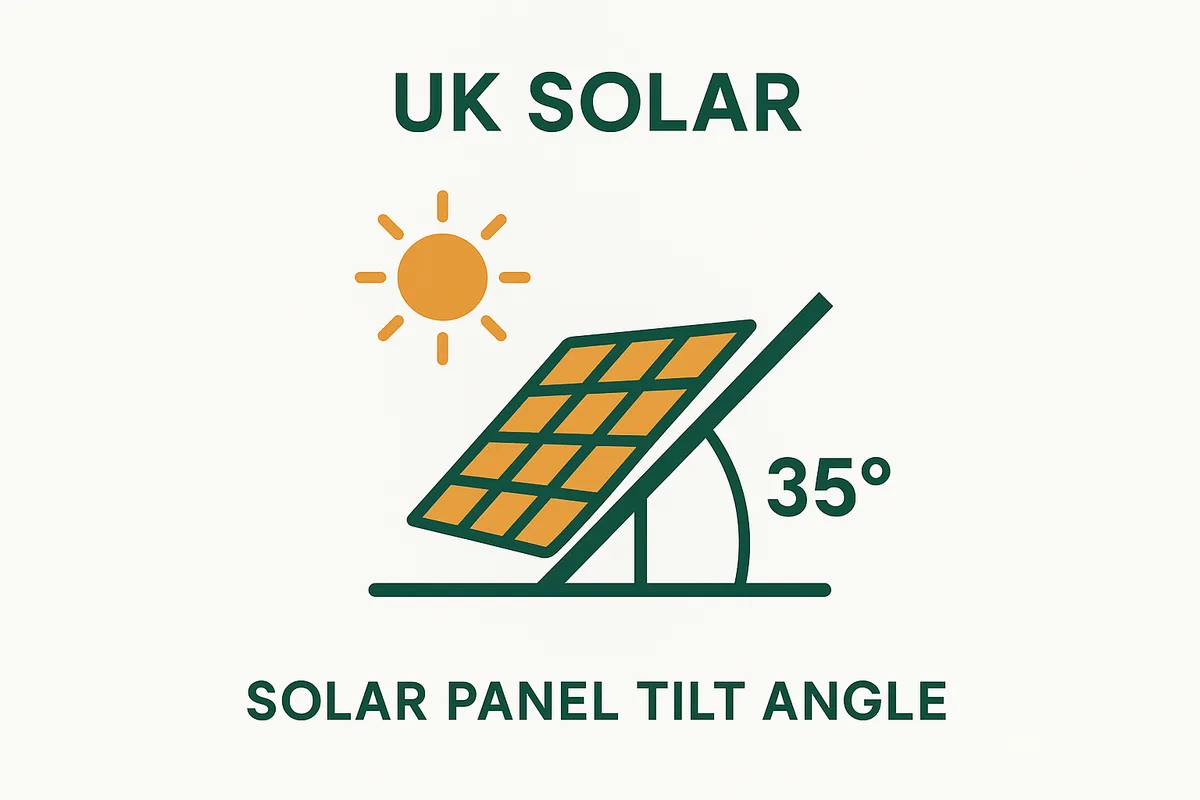
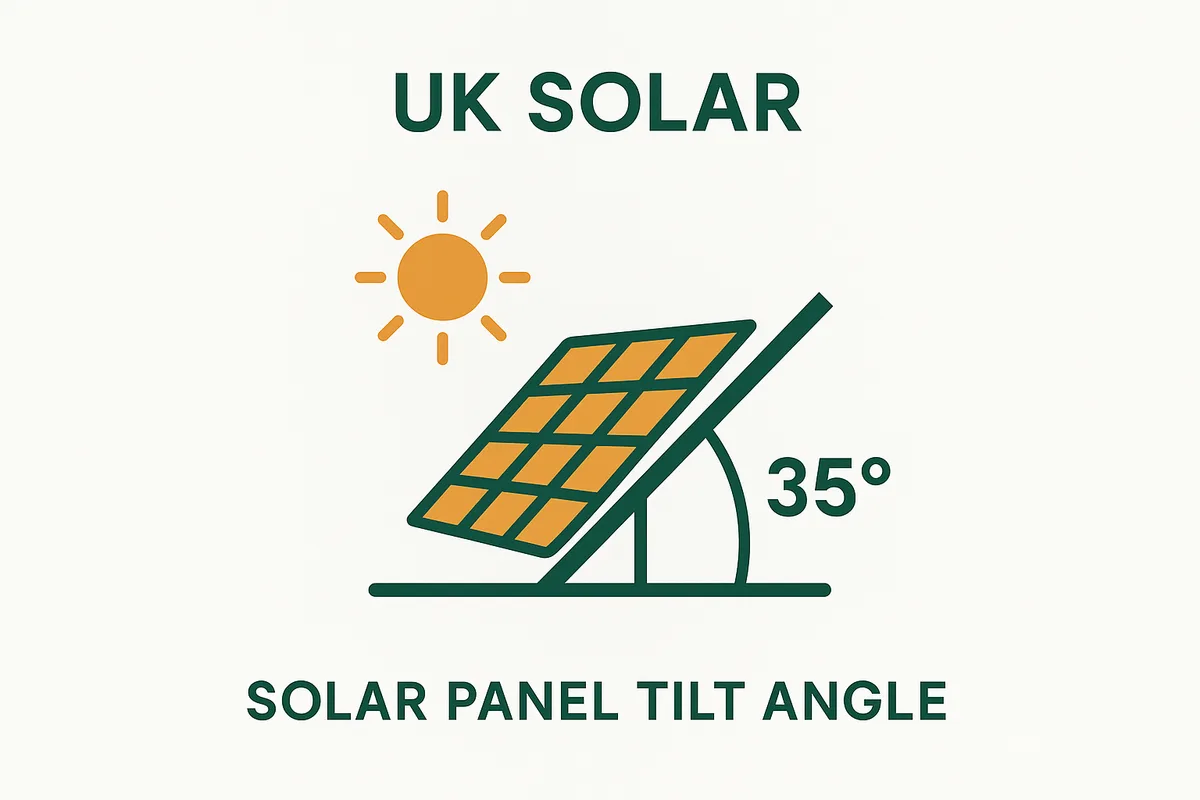
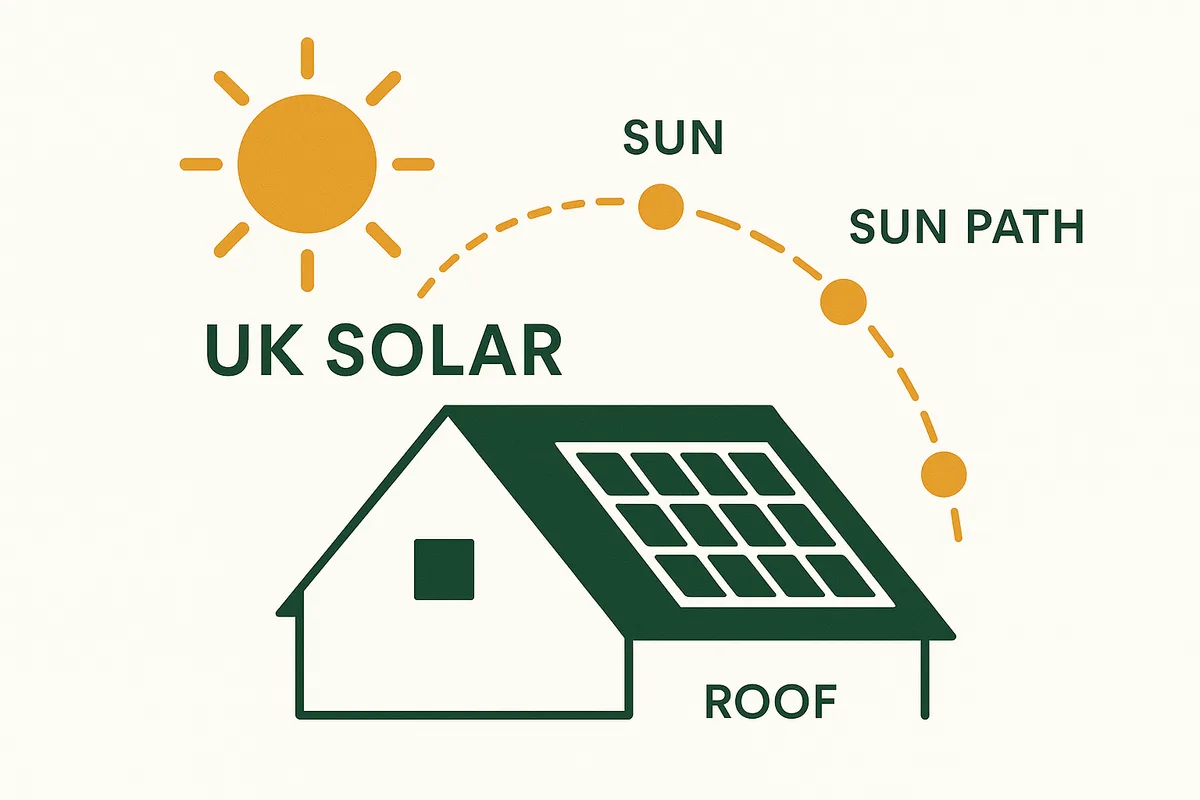
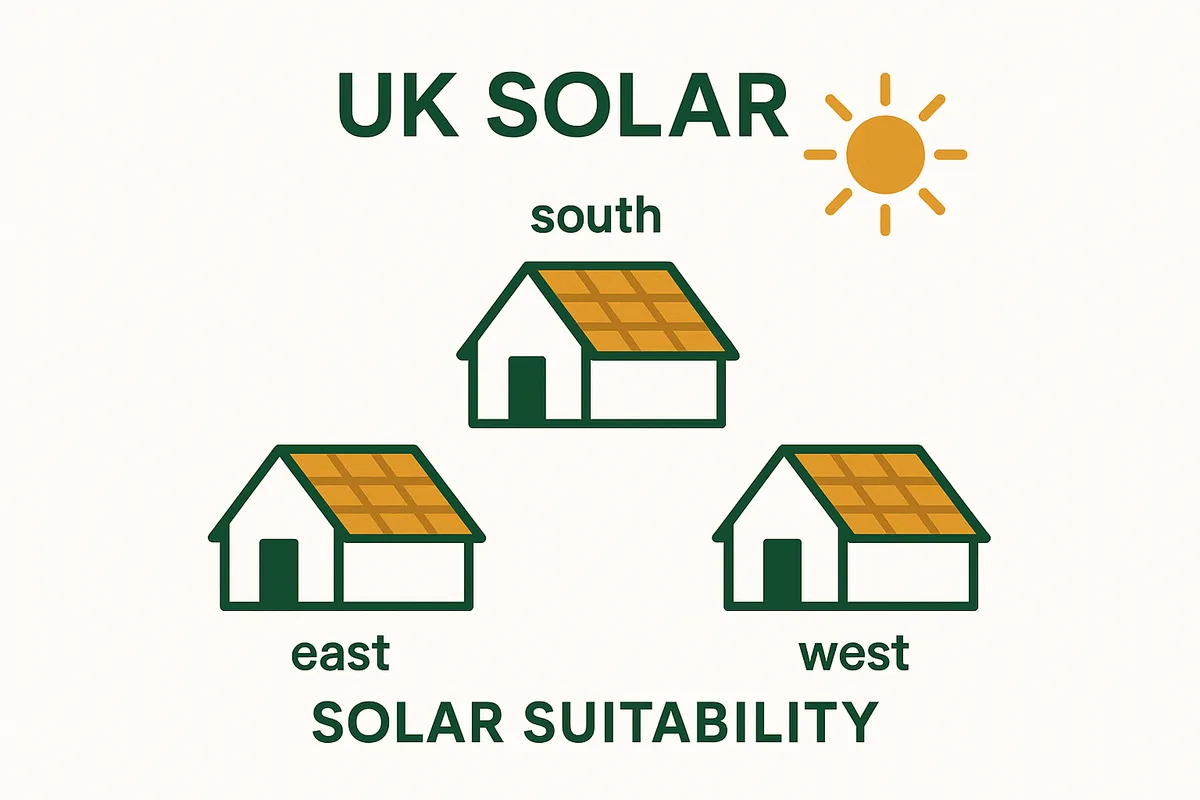
The optimal tilt angle for solar panels in the UK is 30–40 degrees from horizontal, with 35 degrees being ideal. This angle maximises annual energy generation by balancing summer and winter sun positions. Most UK roof pitches fall between 25° and 45° — all of which are within 5% of optimal output. Even a flat roof (0°) with tilted frames produces 85–90% of the maximum.
Output by Tilt Angle (South-Facing, UK Average)
Relative annual output by tilt angle:
| Tilt Angle | Output vs Optimal | Notes |
|---|---|---|
| 0° (flat) | 87% | Flat roofs — panels use angled frames |
| 10° | 92% | Very shallow pitch |
| 15° | 94% | Low-pitch roofs |
| 20° | 96% | Common bungalow pitch |
| 25° | 98% | Modern house pitch |
| 30° | 99% | Near-optimal |
| 35° | 100% | Optimal for UK |
| 40° | 99% | Near-optimal |
| 45° | 97% | Steep Victorian pitch |
| 50° | 94% | Very steep |
| 60° | 88% | Wall-mounted (extreme) |
| 90° (vertical) | 68% | Wall-mounted |
Key takeaway: Any angle between 20° and 50° delivers 94–100% of optimal output. The difference between a 25° roof and a 35° roof is only 2% — virtually negligible. Do not stress about your exact roof pitch.
Source: PVGIS tilt optimisation data for UK latitudes (51–56°N).
Why 35 Degrees Is Optimal for the UK
The optimal tilt angle roughly equals your latitude minus 10–15 degrees:
- London (51.5°N): Optimal tilt = 36–41° → simplified to 35°
- Manchester (53.5°N): Optimal tilt = 38–43° → simplified to 37°
- Edinburgh (56°N): Optimal tilt = 41–46° → simplified to 40°
In practice, the difference between 35° and 40° is less than 1% of annual output. Using 35° as the UK standard is a reasonable simplification.
Why not steeper or shallower?
- Steeper (50°+): Better for winter (captures low sun angle) but worse for summer (reflects high sun). Net annual loss.
- Shallower (20°–): Better for summer (captures high sun angle) but worse for winter. Also accumulates dirt and water more easily. Net annual loss.
- 35°: The Goldilocks angle — captures the most total sunlight across all seasons.
Source: PVGIS irradiance modelling; NASA surface solar energy database.
Ready to see what solar could save you?
Get free, no-obligation quotes from MCS-certified installers in your area.
Get Free QuotesSeasonal Optimisation vs Annual Optimisation
You could adjust tilt angle seasonally for maximum output:
Summer optimal: ~15–20° (sun is high in the sky) Winter optimal: ~60–65° (sun is low) Annual optimal: ~35° (compromise)
Should you adjust seasonally? No — for fixed residential systems, the cost and effort of adjustable mounts far outweighs the 5–8% gain. Adjustable mounts are used on some ground-mounted commercial systems but are impractical for roof installations.
Exception: Some ground-mounted systems use seasonally adjustable frames. Adjust twice per year (spring and autumn) for a 5–8% annual output increase. Cost of adjustable frame: £200–£400 more than fixed.
Source: Solar tracking and tilt optimisation research.
Your Roof Pitch Is Probably Fine
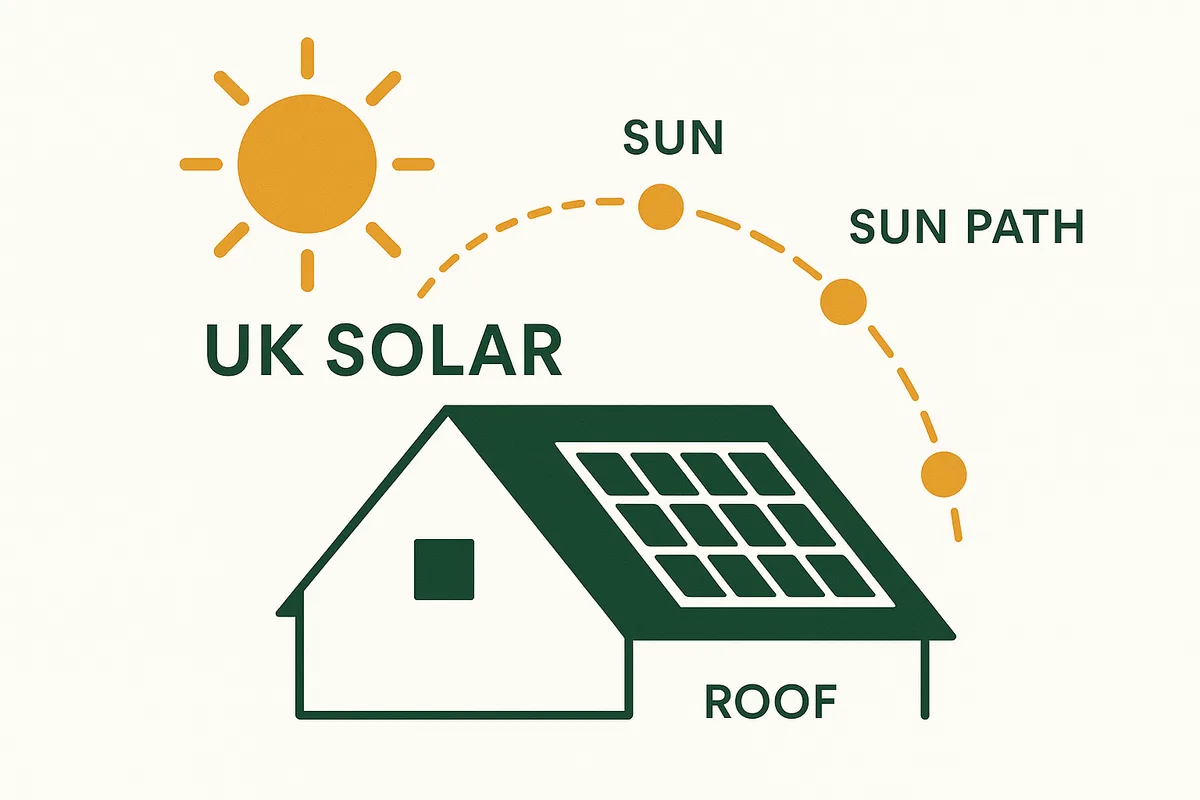
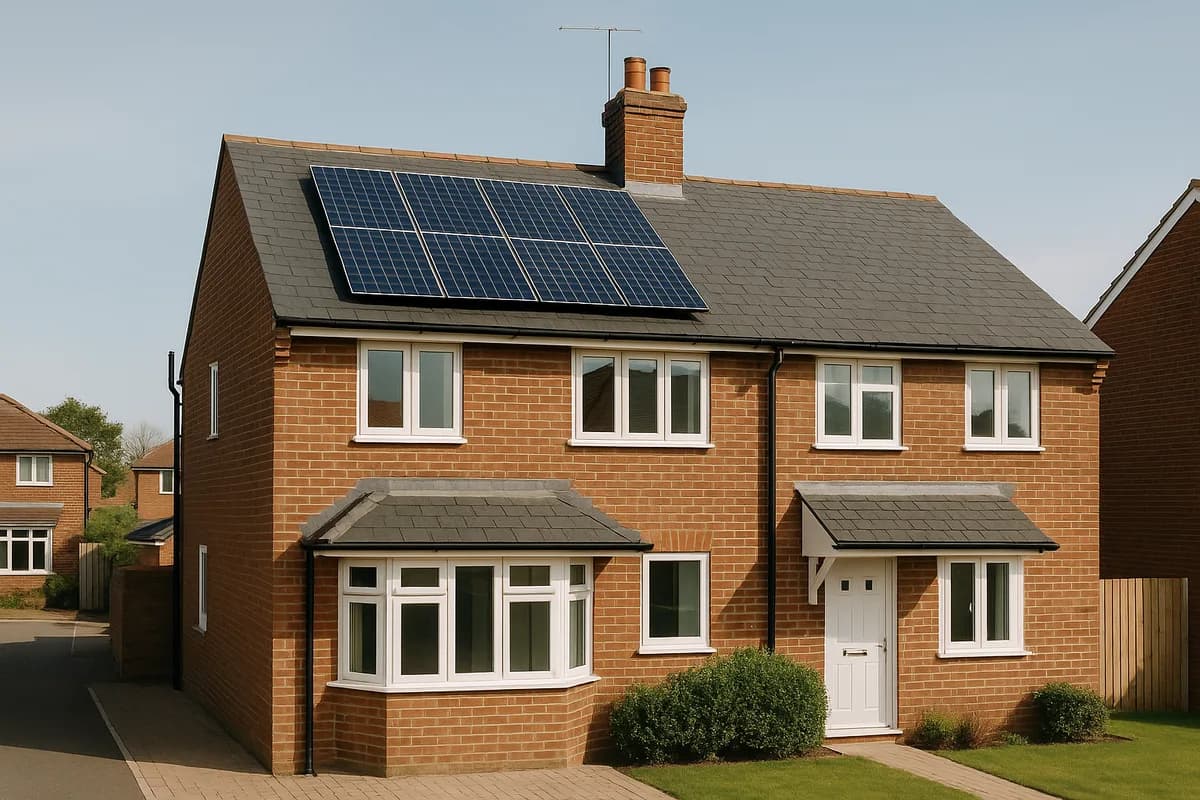
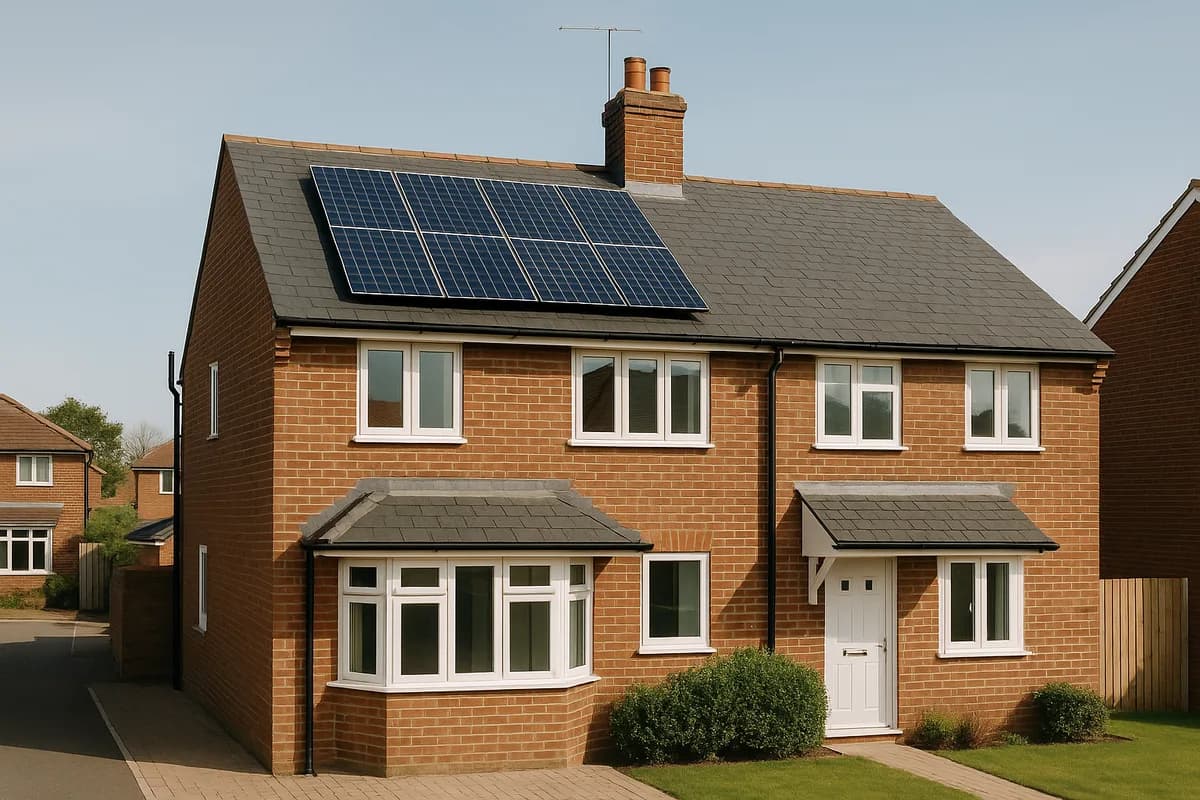
Most UK homes have roof pitches between 25° and 45°:
- Modern houses (1990s+): Typically 30–35° — near-optimal
- Victorian/Edwardian houses: Typically 35–45° — near-optimal to slightly steep
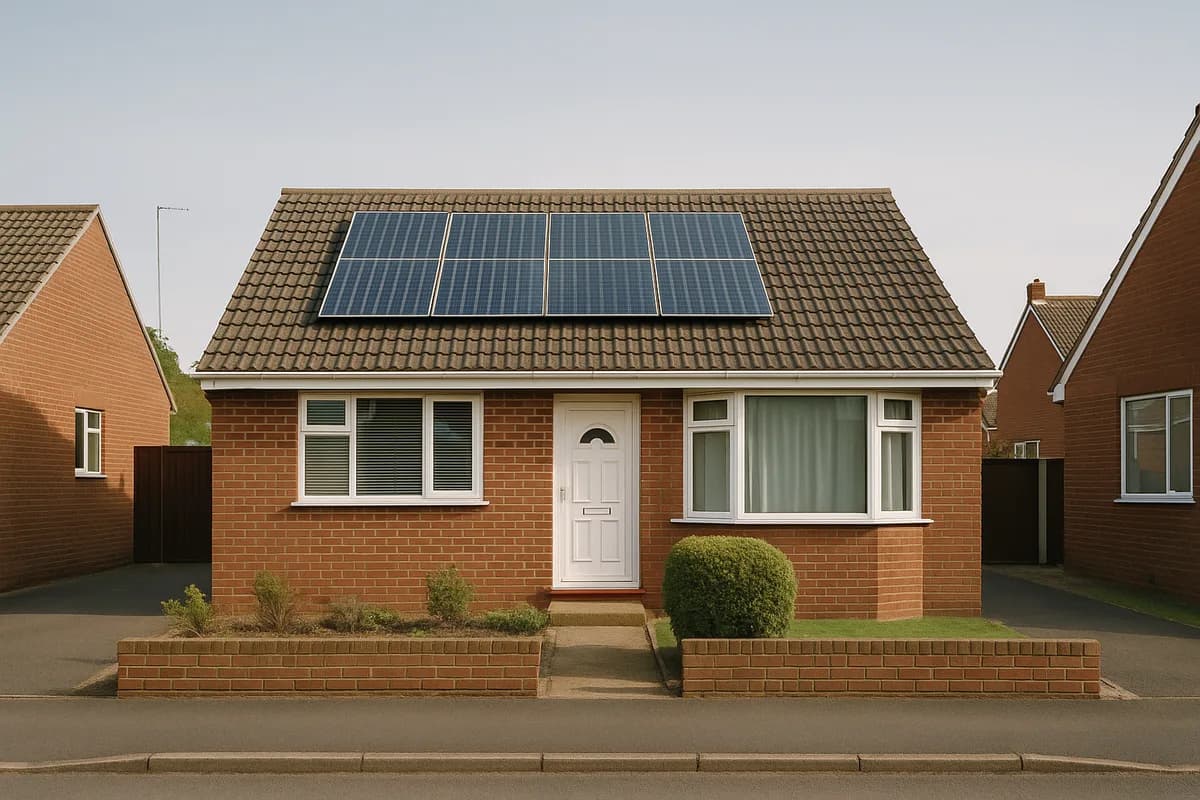
- Bungalows: Typically 30–40° — near-optimal
- 1960s–1980s houses: Typically 25–35° — near-optimal
- Flat roofs: 0° — use 25–30° mounting frames
If your roof is between 20° and 50° and faces roughly south, you are within 6% of the theoretical maximum. This is well within the margin of error for savings estimates.
Do not let pitch stop you. The difference between a 'perfect' 35° roof and a 'suboptimal' 25° roof is approximately £25/year on a 4kW system. Over 25 years, that is £625 — far less than the £14,000+ in total savings.
Source: UK building standards; MCS installer survey data.
Flat Roof Mounting Angles
For flat roofs, panels are mounted on angled frames. The recommended frame angle is 20–30° (not the full 35°) because:
- 25–30° frames balance output with wind resistance and self-shading between rows
- 35° frames would require wider spacing between rows (more roof area used) to prevent one row shading the next
- The output difference between 25° and 35° on a flat roof is only 2–3% — not worth the extra space sacrifice
Installer rule of thumb for flat roofs: use 25° frames and space rows at 1.5x the panel height apart. This maximises total kWh per m² of flat roof space.
Source: MCS flat roof design standards.
Frequently Asked Questions
Related guides
You might also like
Ready to see what solar could save you?
Get free, no-obligation quotes from MCS-certified installers in your area.
Get Free QuotesFree, no obligation. Takes 2 minutes.