Solar Panels for a Detached House
See what fits your property
Roof shape, pitch and available space decide what is actually installable. Get a recommendation and an installed price for your specific property.
Check My PropertyFree, no obligation. Takes about 2 minutes.
Are detached houses good for solar panels?
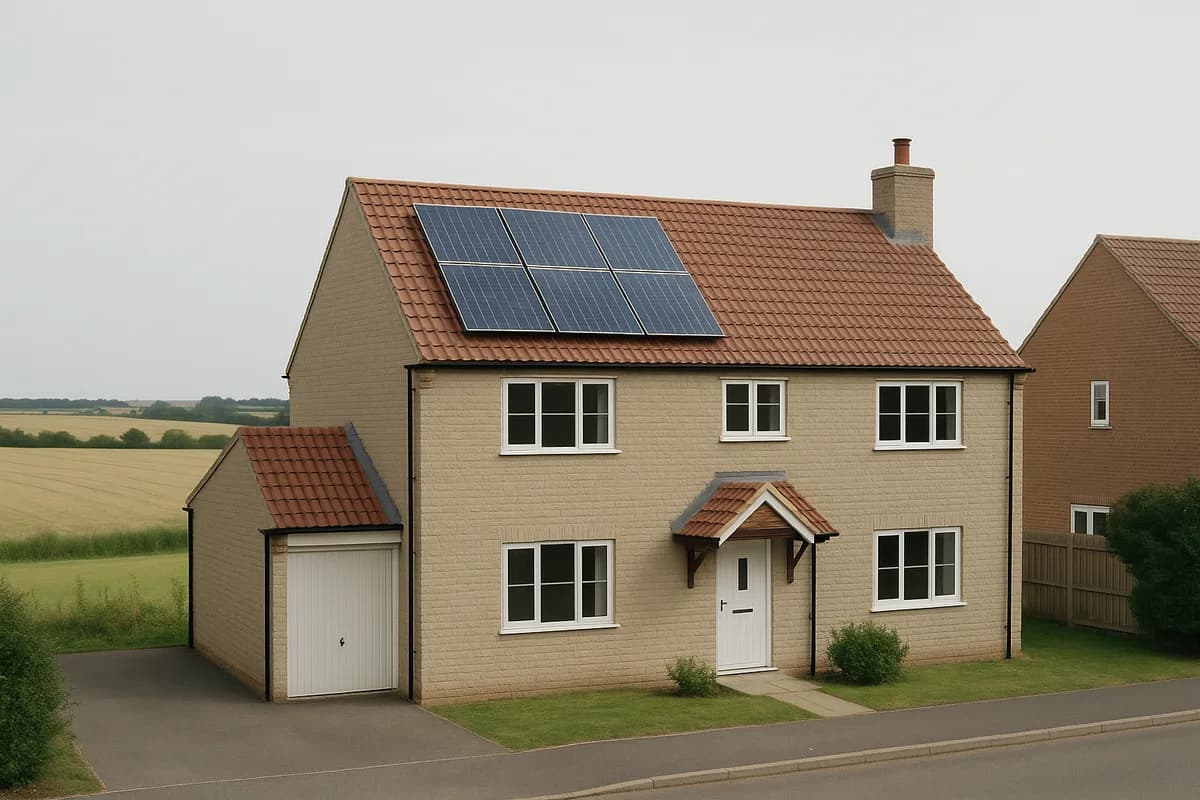
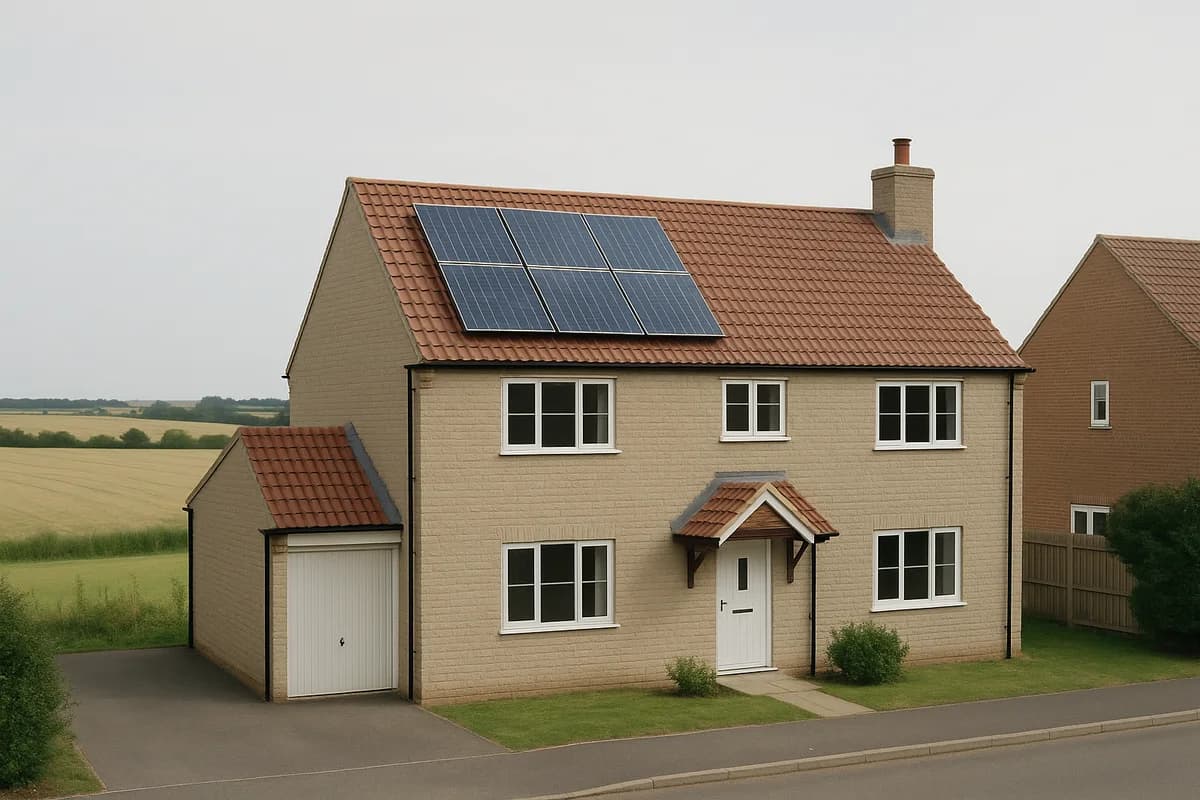
Detached houses are the best house type for solar panels. They offer the most roof space (25–50 m²), no neighbour shading, access from all sides for scaffolding, and room for 4–8kW+ systems. Cost: £5,500–£14,000 depending on system size. Annual savings: £700–£1,350. Payback: 8–11 years. Detached homes also have the most space for ground-mounted alternatives and future additions (battery, EV charger, heat pump).
Why Detached Houses Are Best for Solar
- Maximum roof space — 25–50 m² usable = 14–30 panels capacity. No shared party wall limits.
- No neighbour shading — freestanding position means no adjacent buildings casting shadows on your roof.
- 360° scaffolding access — installers can access all sides, making installation faster and cheaper.
- Multiple roof slopes — gable roofs offer two slopes; hip roofs offer four. More options for panel placement.
- Garage potential — many detached homes have a garage with additional roof space for more panels.
- Garden space — room for ground-mounted panels if roof is unsuitable.
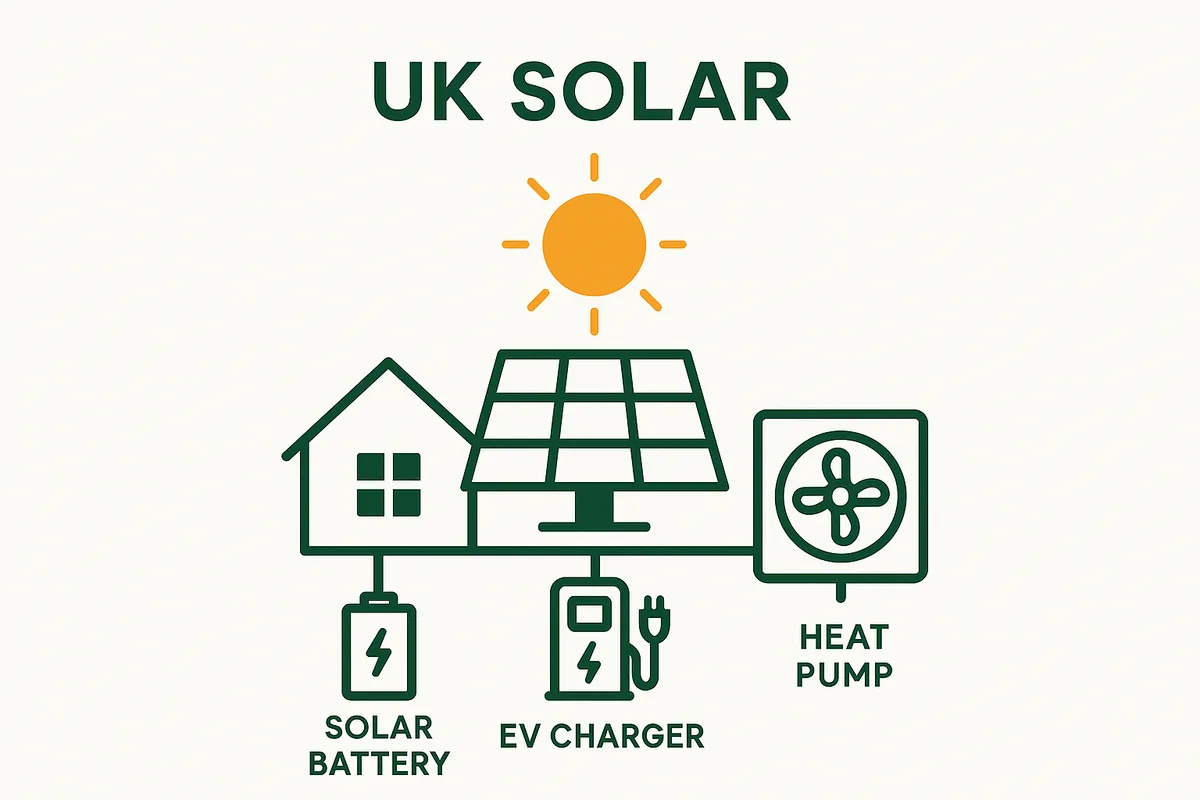
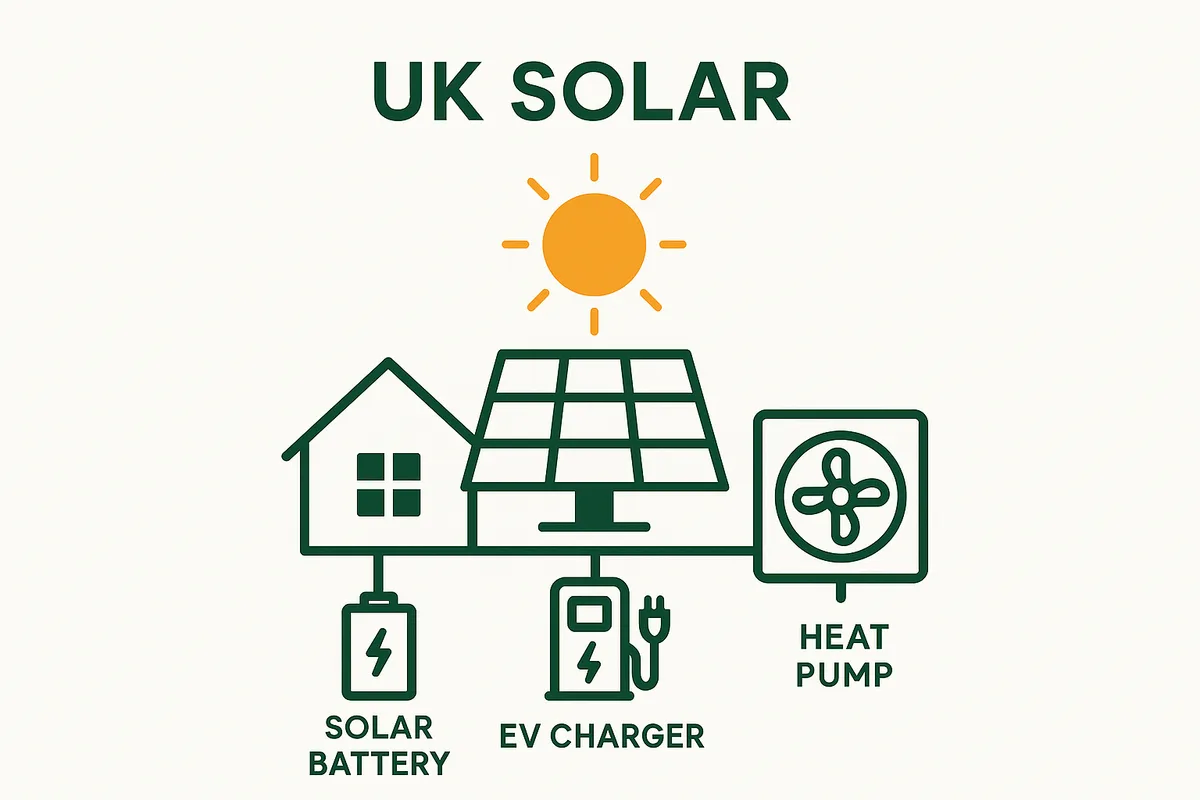
- Future-proof — space for battery (garage/utility), EV charger (driveway), and heat pump (garden).
- Highest property value — solar adds the most absolute value to higher-value detached properties.
System Sizing for Detached Houses
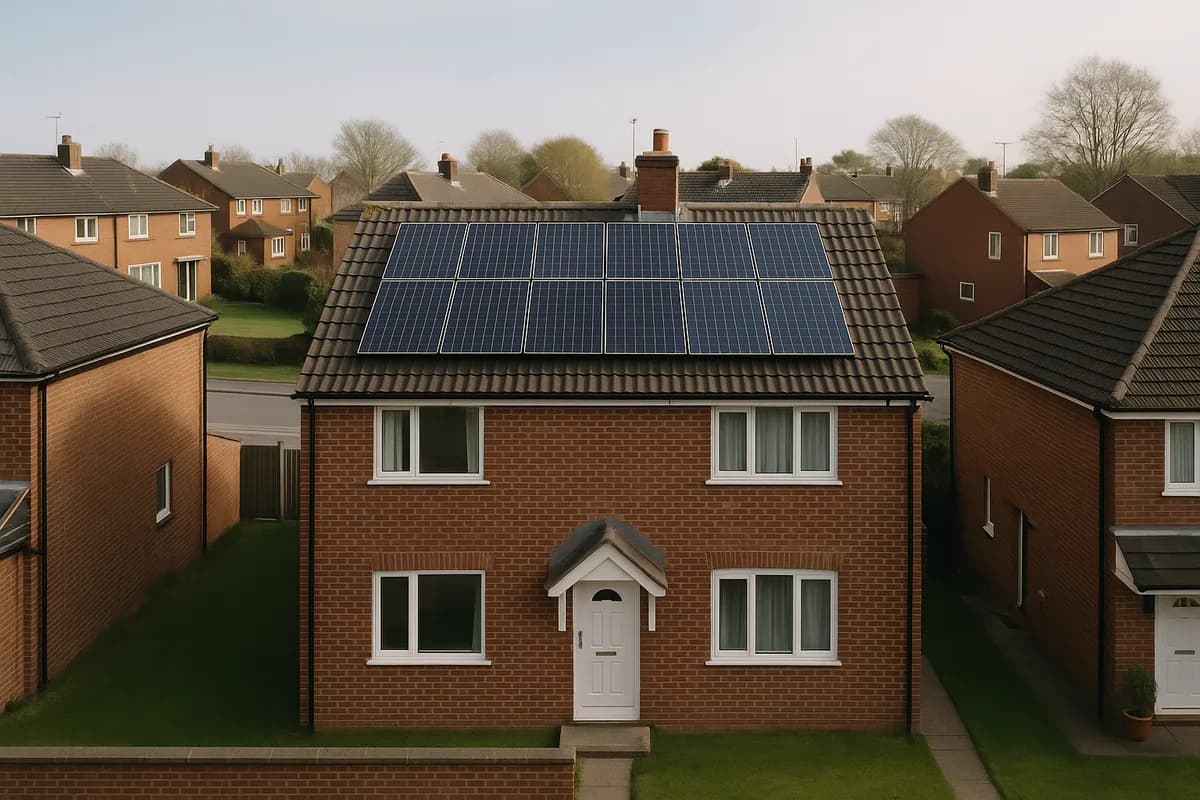
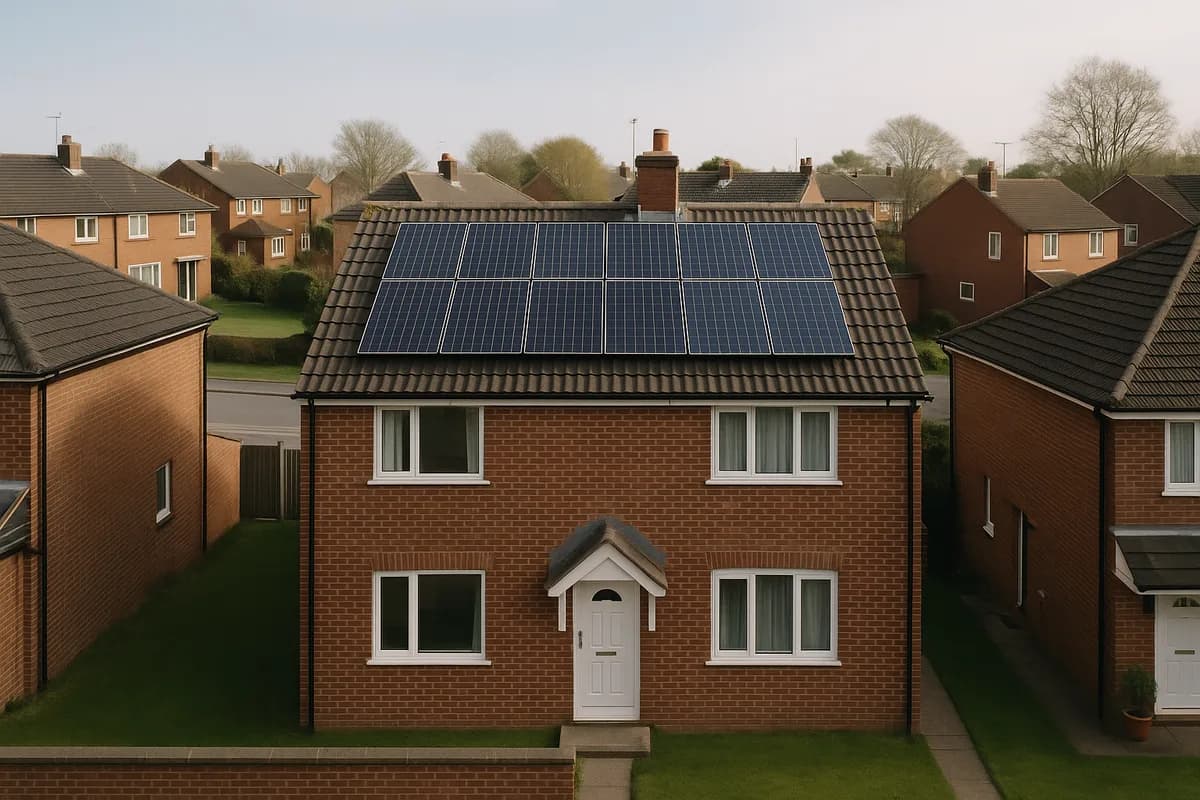
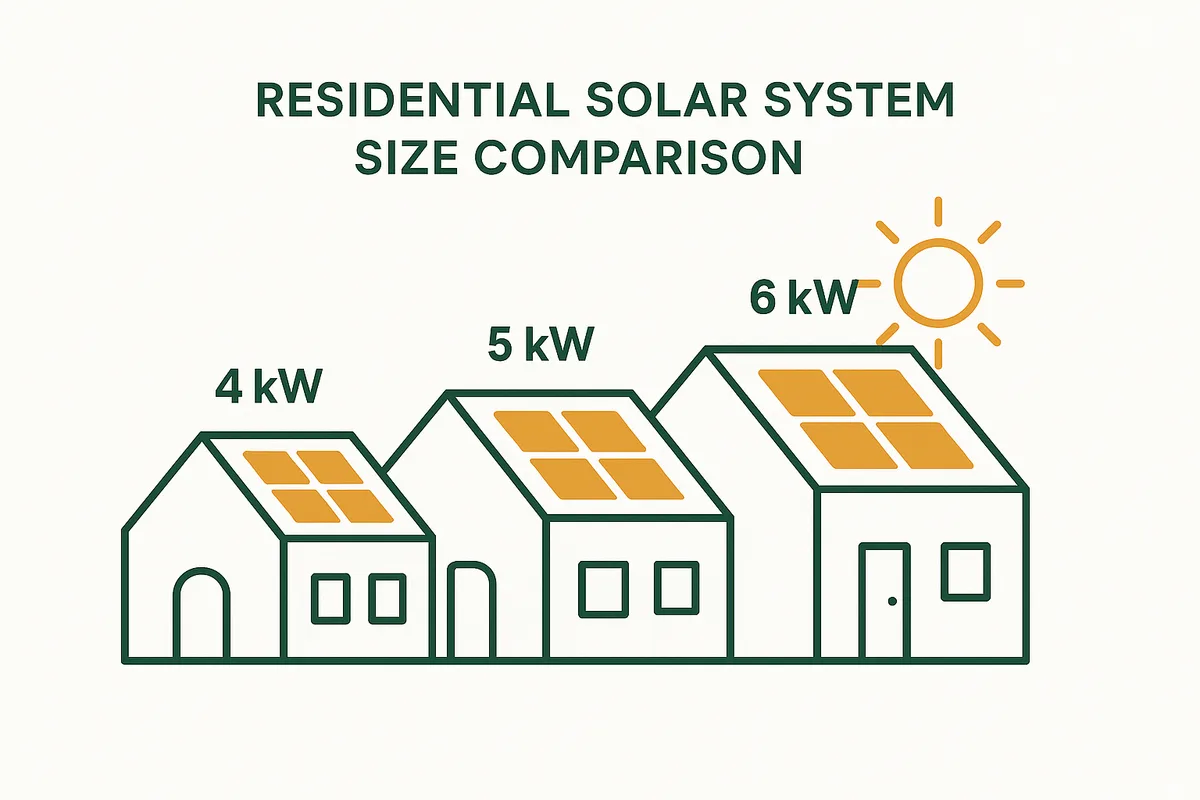
Detached homes have the luxury of choice — you can install as much as your budget allows:
3-bed detached: - Recommended: 4–5kW (10–13 panels) - Cost: £5,500–£9,500 - Annual savings: £700–£950
4-bed detached: - Recommended: 5–6kW (13–16 panels) - Cost: £6,500–£11,000 - Annual savings: £850–£1,150
5+ bed detached: - Recommended: 6–8kW (16–20 panels) - Cost: £8,000–£14,000 - Annual savings: £1,000–£1,350
With EV + heat pump: - Recommended: 8–10kW (20–25 panels) - Cost: £10,000–£17,000 - Annual savings: £1,500–£2,200 (all energy sources)
The detached advantage: Roof space is rarely the constraint. Budget and electricity consumption are the real decision factors.
Source: MCS installer data; PVGIS UK yields.
See what fits your property
Roof shape, pitch and available space decide what is actually installable. Get a recommendation and an installed price for your specific property.
Check My Property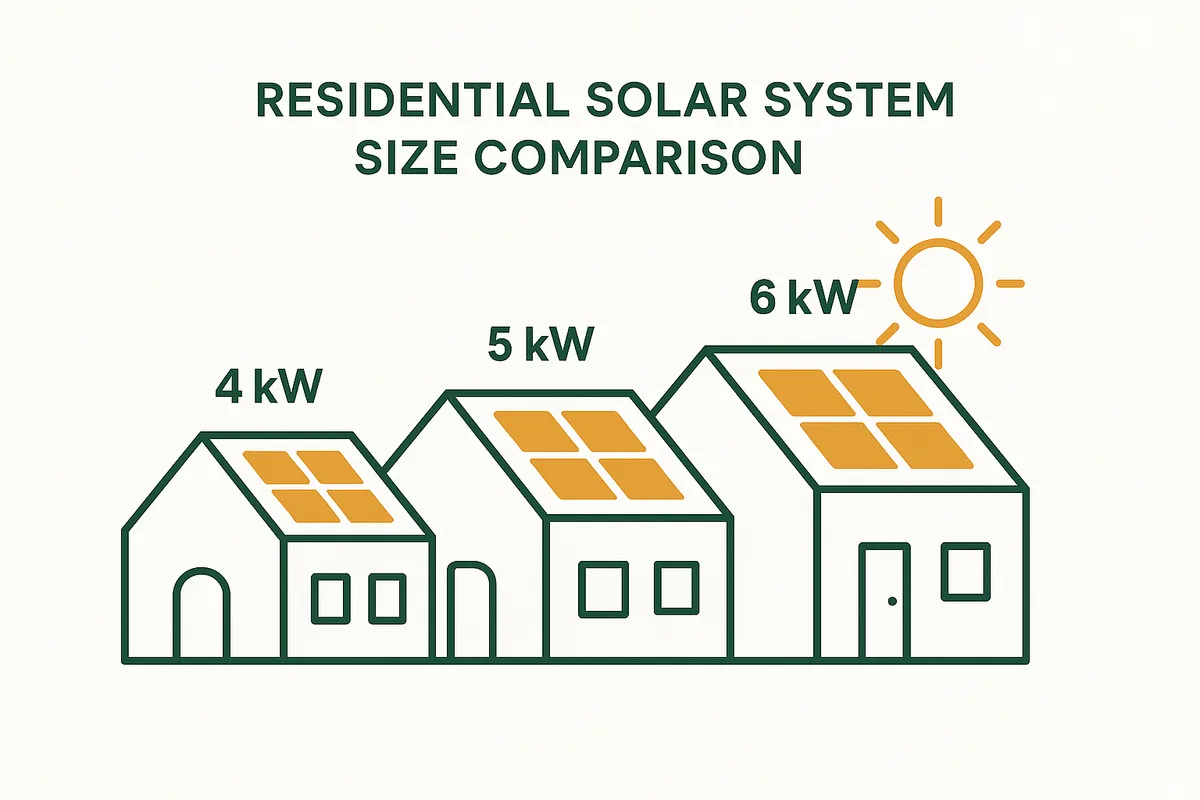
Maximising a Detached Home Solar System
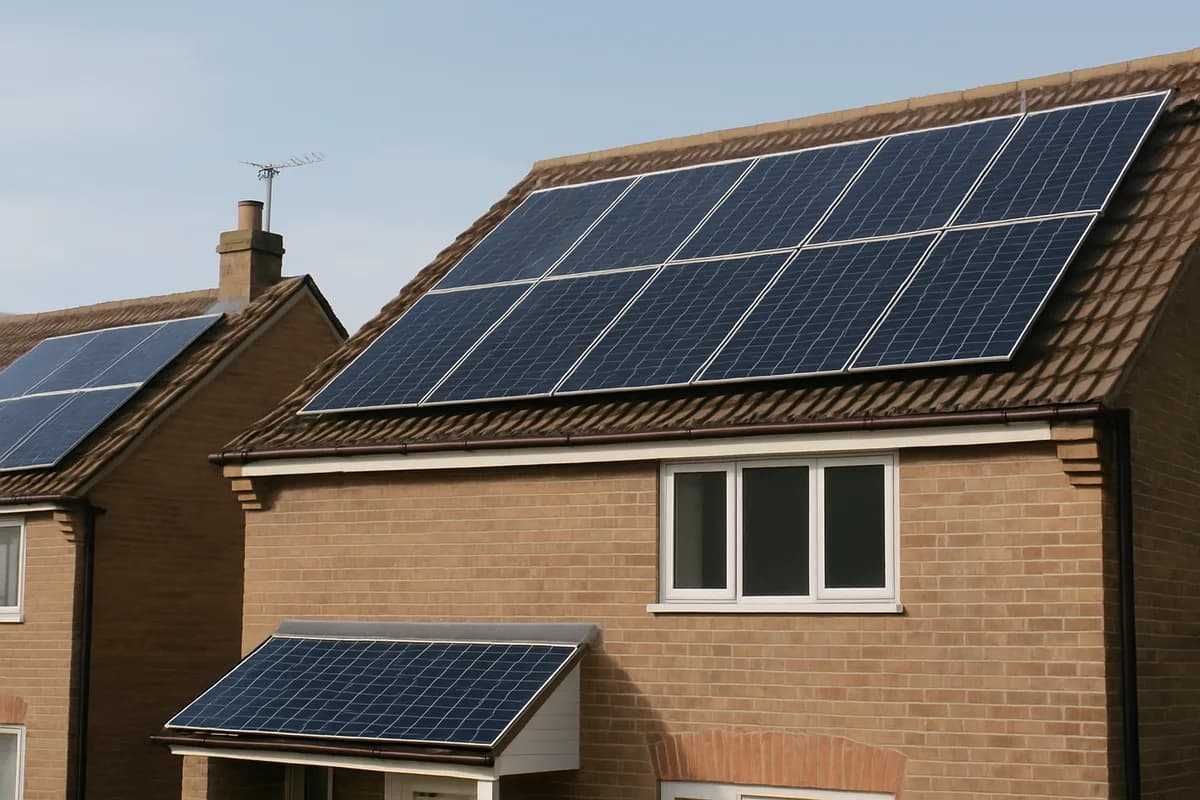
Use both roof slopes: If your south slope is full, add panels to east and west slopes. East-west splits produce 85% of south-facing output but let you install many more panels total.
Use the garage roof: A detached garage can add 4–8 panels (1.5–3kW) at minimal additional cost. Cable from garage to house runs underground.
Consider ground-mounted panels: Large gardens can host 4–20 panels on optimal south-facing frames. Useful if your roof faces north or has heavy shading.
Install a large battery: With a bigger system, a 10–13kWh battery captures more surplus for evening use. Self-consumption can reach 85%+.
Add an EV charger (Zappi): A detached home with a driveway is perfectly positioned for solar EV charging.
Plan for a heat pump: Detached homes are the easiest to retrofit with an air source heat pump. Size your solar for the combined electrical load.
Source: MCS system design guidance.
Installation on a Detached Home: What to Expect
Detached home installations are typically the simplest and fastest:
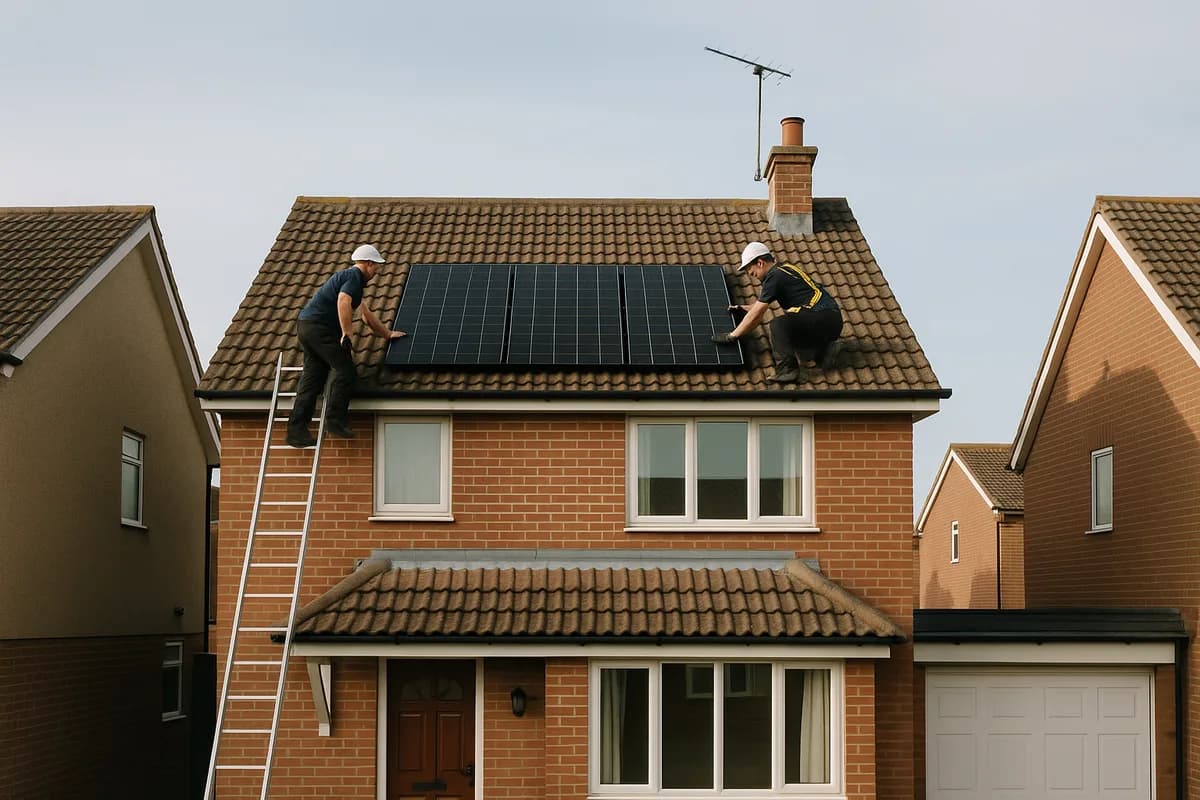
Day 1: - Scaffolding erected (all sides accessible = quick setup) - Roof hooks and mounting rails installed - Panels mounted and wired
Day 2: - Inverter and battery installed (garage or utility room) - AC connection to consumer unit - System testing and commissioning - Monitoring setup
Day 2–3: - Scaffolding removed - Site cleaned
Total duration: 1.5–2.5 days for panels; add 0.5 days for battery installation.
Detached home advantages: - Easier scaffolding (no party wall or restricted access issues) - More options for inverter/battery location (garage, utility room) - Cable routing usually simpler (direct from roof to consumer unit)
Source: MCS installation process.
Frequently Asked Questions
Related guides
Related: Home Heating Systems
Solar panels are most powerful when combined with an efficient heating system. Heat pumps use solar-generated electricity to heat your home at 300-400% efficiency — making them the ideal partner for solar.
Learn more about how air source heat pumps work alongside solar panels.
Heat pumps use electricity at 300-400% efficiency, making them ideal partners for solar.
From our sister site Home Heat Pump Guide
You might also like
See what fits your property
Roof shape, pitch and available space decide what is actually installable. Get a recommendation and an installed price for your specific property.
Check My PropertyFree, no obligation. Takes about 2 minutes.