Solar Panel Environmental Impact: The Full Lifecycle
Ready to see what solar could save you?
Get free, no-obligation quotes from MCS-certified installers in your area.
Get Free QuotesFree, no obligation. Takes 2 minutes.
Are solar panels good for the environment?
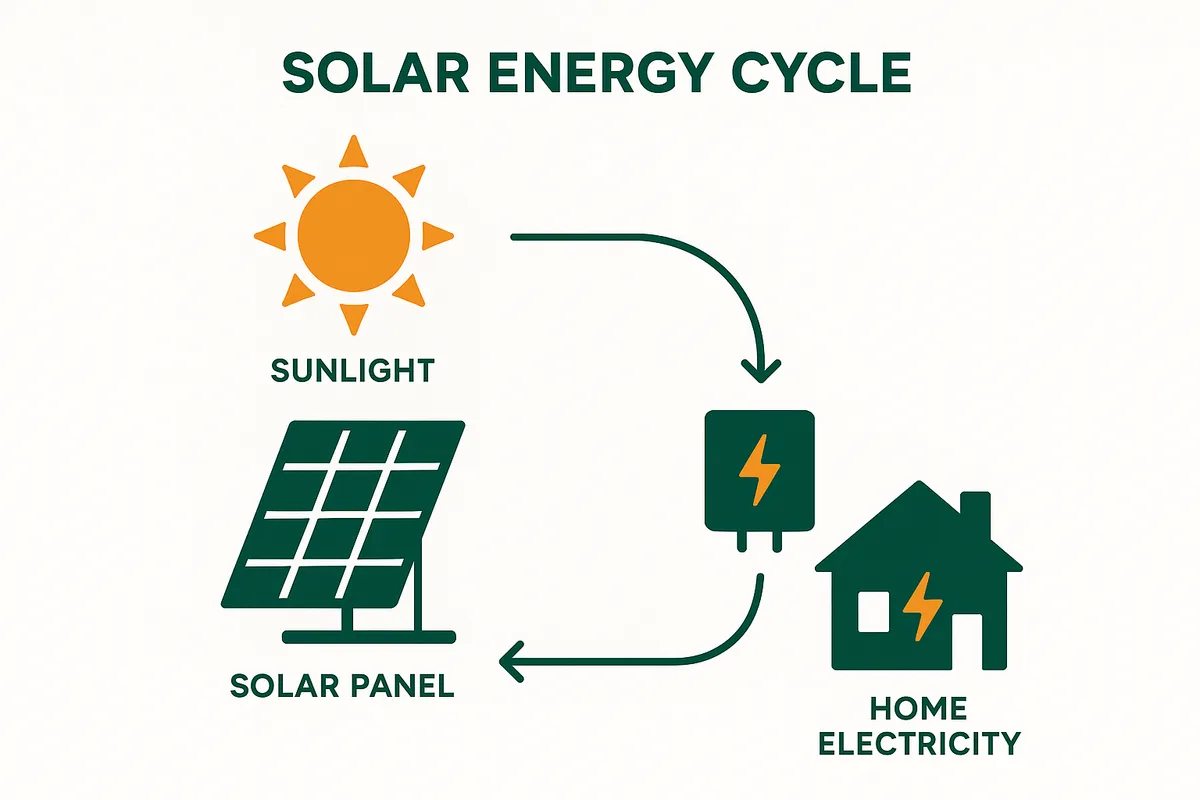
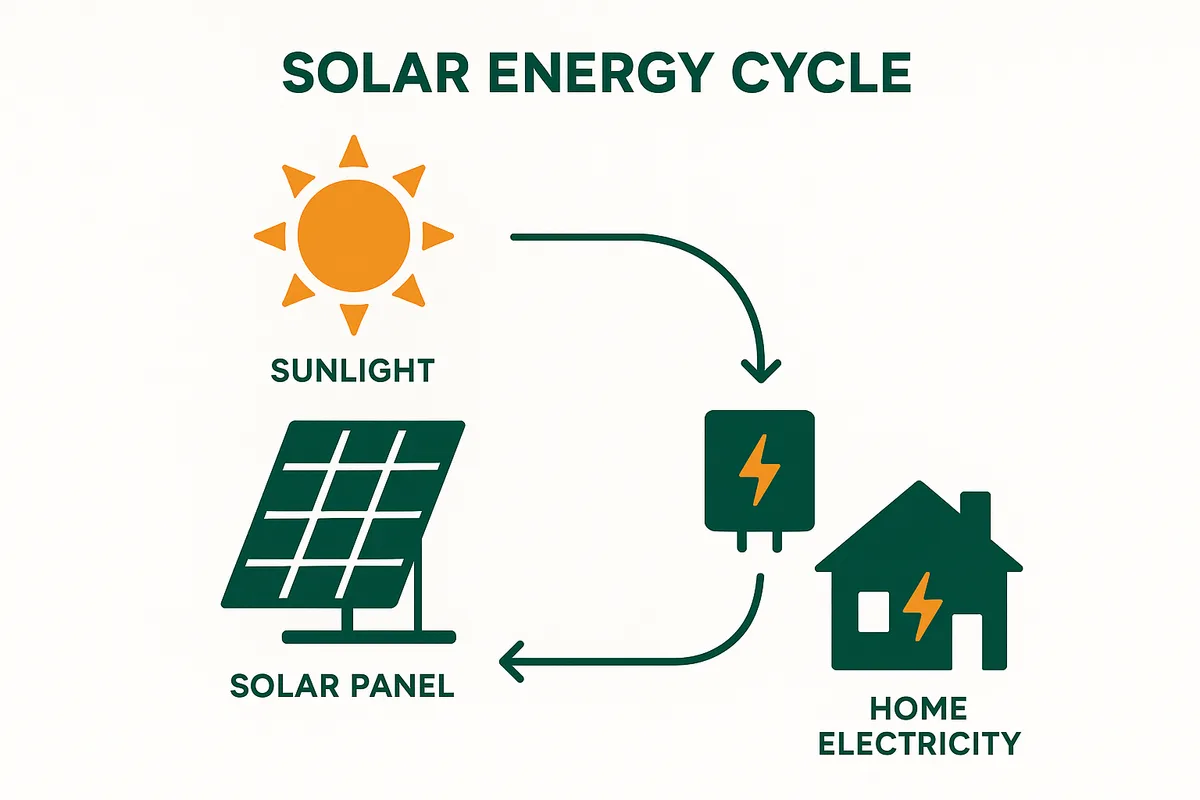
Solar panels have an overwhelmingly positive environmental impact. A typical 4kW UK system prevents 13.5–18 tonnes of CO2 over 25 years (net, after subtracting manufacturing emissions of 4.5 tonnes). The energy payback is 3–6 years — after which every kWh is genuinely carbon-free. At end of life, 95% of panel materials are recyclable. The environmental case for solar is clear and evidence-based.
The Three Phases of Environmental Impact
Phase 1: Manufacturing (Negative, but Small)
Manufacturing carbon footprint per panel: 400–500 kg CO2 4kW system total: 4,000–5,000 kg CO2 (4–5 tonnes)
Where the manufacturing impact comes from: - Silicon purification (energy-intensive): 60% of footprint - Panel assembly and lamination: 15% - Frame (aluminium smelting): 10% - Transport (typically China to UK): 10% - Other materials and processes: 5%
Manufacturing is improving: - Chinese solar factories increasingly use renewable energy - Panel efficiency improvements mean less material per watt - Thinner silicon wafers reduce raw material needs - Manufacturing carbon per panel has halved in the past 10 years
Source: IRENA lifecycle assessment 2023; Fraunhofer ISE data.
Phase 2: Operation (Positive, for 25+ Years)
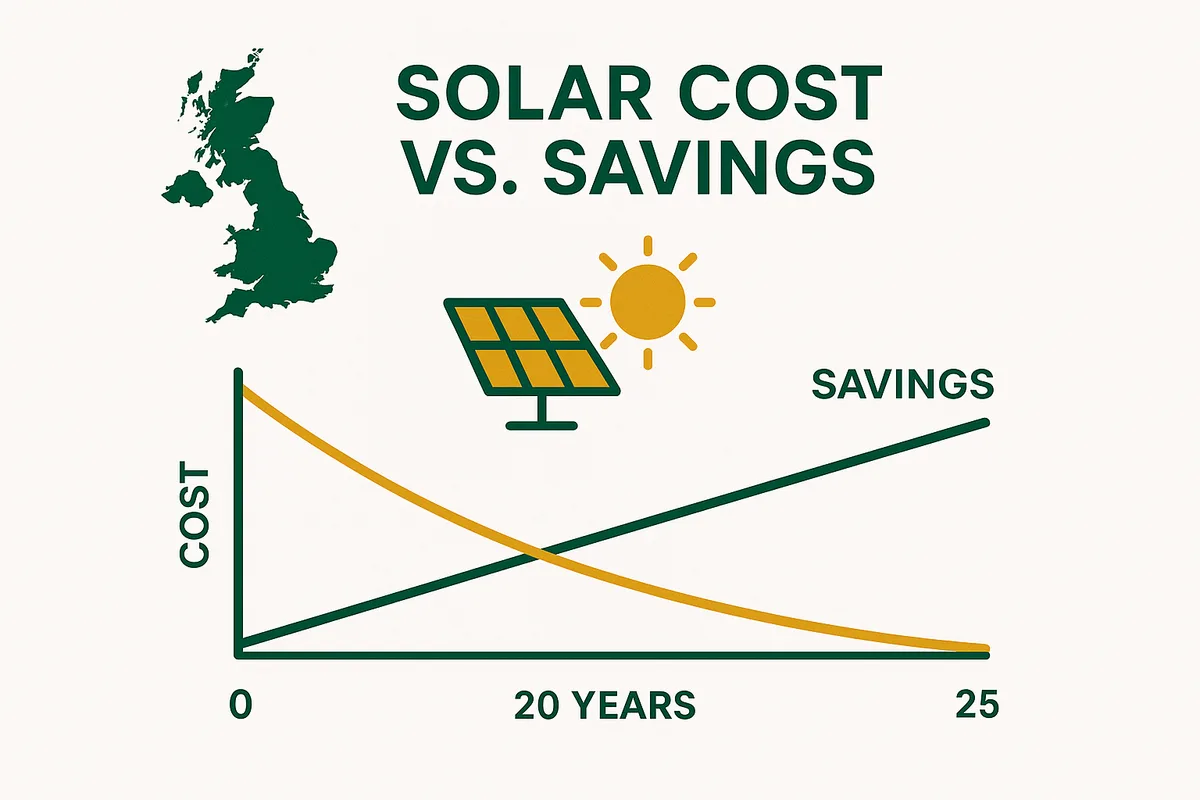
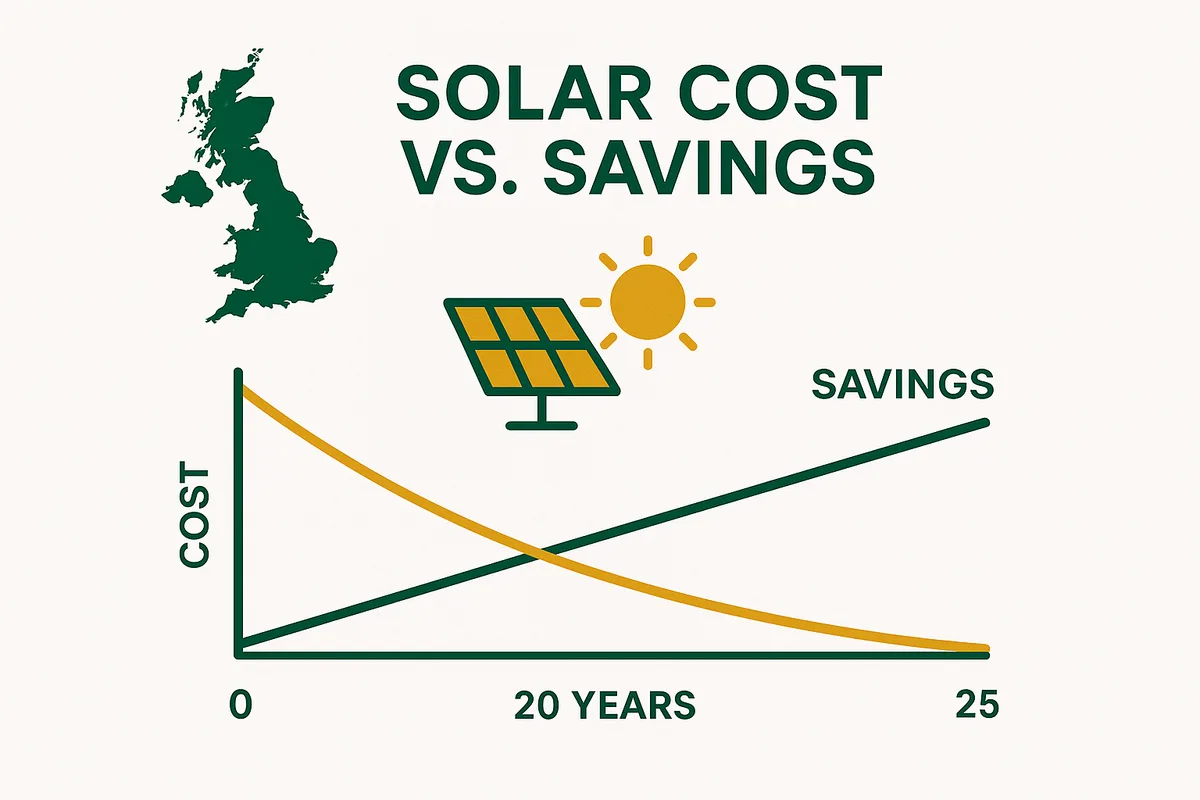
Annual CO2 avoided by a 4kW UK system: ~720 kg (0.72 tonnes)
Every kWh of solar electricity displaces a kWh of grid electricity. The UK grid in 2026 produces approximately 180g CO2 per kWh (and falling as more renewables come online).
25-year operational impact: - Total clean generation: ~95,000 kWh - CO2 avoided (at declining grid carbon): ~14,000 kg (14 tonnes) - Net impact (generation minus manufacturing): ~9–10 tonnes CO2 prevented
The operational phase is where solar's environmental benefit is earned — every day of generation adds to the positive impact.
Source: BEIS UK grid carbon intensity; PVGIS generation data.
Ready to see what solar could save you?
Get free, no-obligation quotes from MCS-certified installers in your area.
Get Free QuotesPhase 3: End of Life (Recyclable)
Panel recyclability: 95% by weight
Materials recovered: - Glass (75% by weight): recycled into new glass products or insulation - Aluminium frame (10%): fully recyclable, high scrap value - Silicon cells (5%): recoverable for reuse in new cells or electronics - Copper wiring (1%): fully recyclable - Plastics (encapsulant, backsheet): energy recovery or recycling into lower-grade products
UK recycling infrastructure: - Solar panels are classified as WEEE (Waste Electrical and Electronic Equipment) - Producers are responsible for recycling costs - Consumers can return to local recycling centres or manufacturer take-back programmes - Specialist recyclers (Veolia, PV Cycle) handle solar-specific processing
Current limitations: - The volume of panels reaching end-of-life is still small (most UK panels are under 15 years old) - Recycling capacity is scaling up in anticipation of volumes increasing after 2035 - The encapsulant (EVA plastic) is currently the hardest component to recycle — technology is improving
Source: IRENA End-of-Life Management; WEEE Directive requirements.
Broader Environmental Benefits
- Air quality — solar displaces fossil fuel combustion, reducing NOx, SOx, and particulate matter that cause respiratory disease
- Water use — solar PV uses no water during operation (unlike coal, gas, and nuclear which use cooling water). Manufacturing uses some water but far less per kWh than fossil fuel lifecycle water consumption.
- Land use — rooftop solar uses no additional land. Ground-mounted solar uses land but can coexist with agriculture (agrivoltaics) or rewilding.
- Biodiversity — ground-mounted solar farms can increase biodiversity when designed with wildflower meadows between rows (growing practice in UK solar farms)
- Energy security — domestic solar reduces dependence on imported gas, improving national energy security and reducing geopolitical risk
- Fuel poverty — lower electricity costs from solar reduce the number of households in fuel poverty
The Honest Assessment
Solar panels are not perfectly zero-impact — nothing is. Manufacturing uses energy, materials, and creates some emissions. Transport adds a carbon cost. End-of-life recycling is not yet 100% efficient.
But the lifecycle evidence is clear:
- Carbon: Net positive within 3–6 years. 25-year benefit: 9–14 tonnes CO2 prevented per system.
- Energy: Net positive within 3–6 years. 25-year benefit: 6–10x more energy generated than consumed in manufacturing.
- Materials: 95% recyclable. No hazardous waste from standard panels.
- Comparison: Solar lifecycle emissions are 20–50x lower than gas and 40–80x lower than coal per kWh.
Solar is one of the most environmentally beneficial technologies available to individual homeowners. The evidence is not ambiguous — it is overwhelmingly positive.
Source: IPCC lifecycle emission comparison; IRENA; Fraunhofer ISE.
Frequently Asked Questions
Related guides
You might also like
Ready to see what solar could save you?
Get free, no-obligation quotes from MCS-certified installers in your area.
Get Free QuotesFree, no obligation. Takes 2 minutes.