Solar Panel Size Guide: Dimensions & Roof Space
Find the right system size for your roof
Panel count depends on your electricity use, roof space and direction — not on a rule of thumb. Get a recommended size and what it should cost.
Size My SystemFree calculator. No contact details required to see your result.
How big is a solar panel?
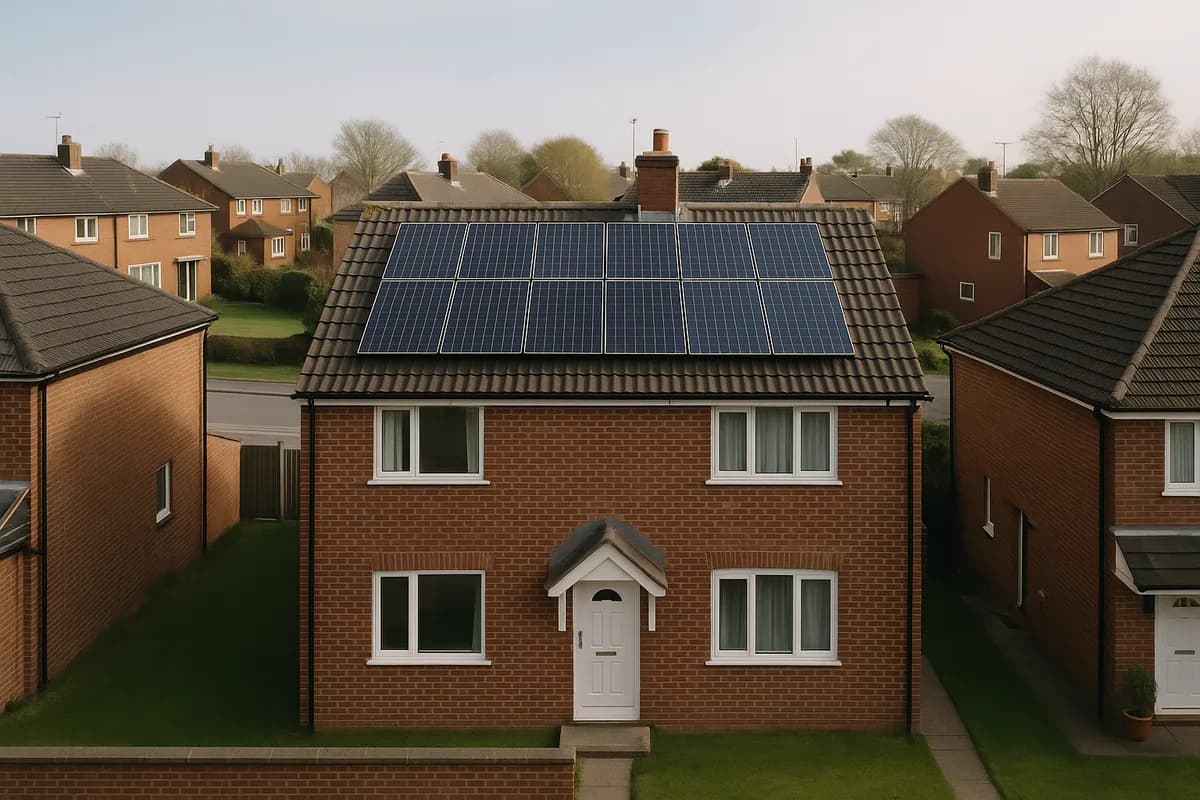
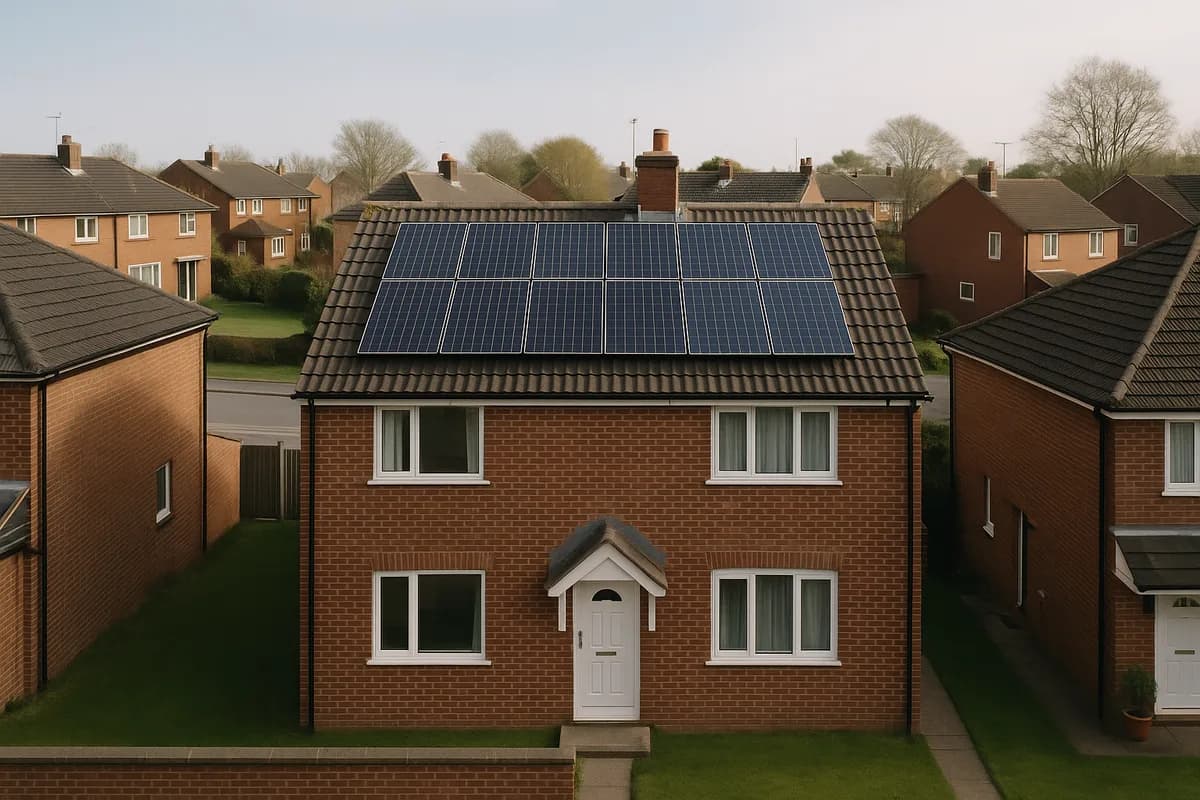
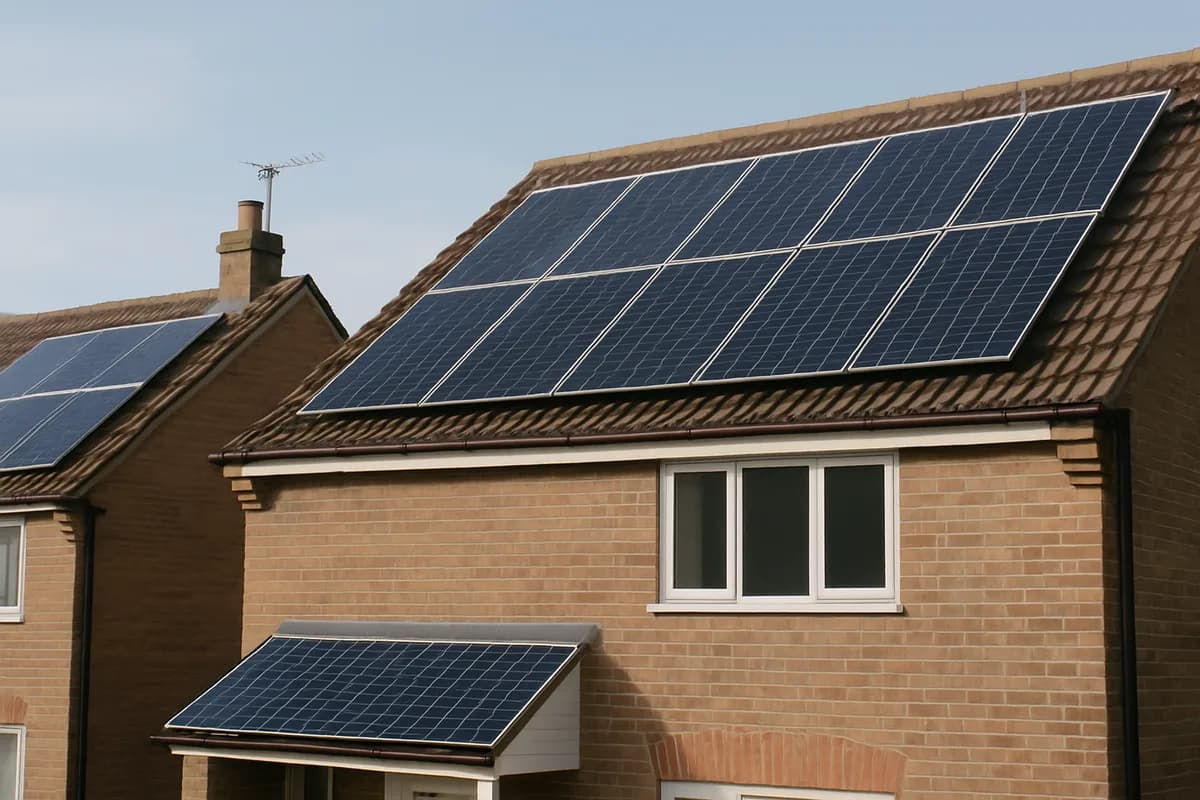
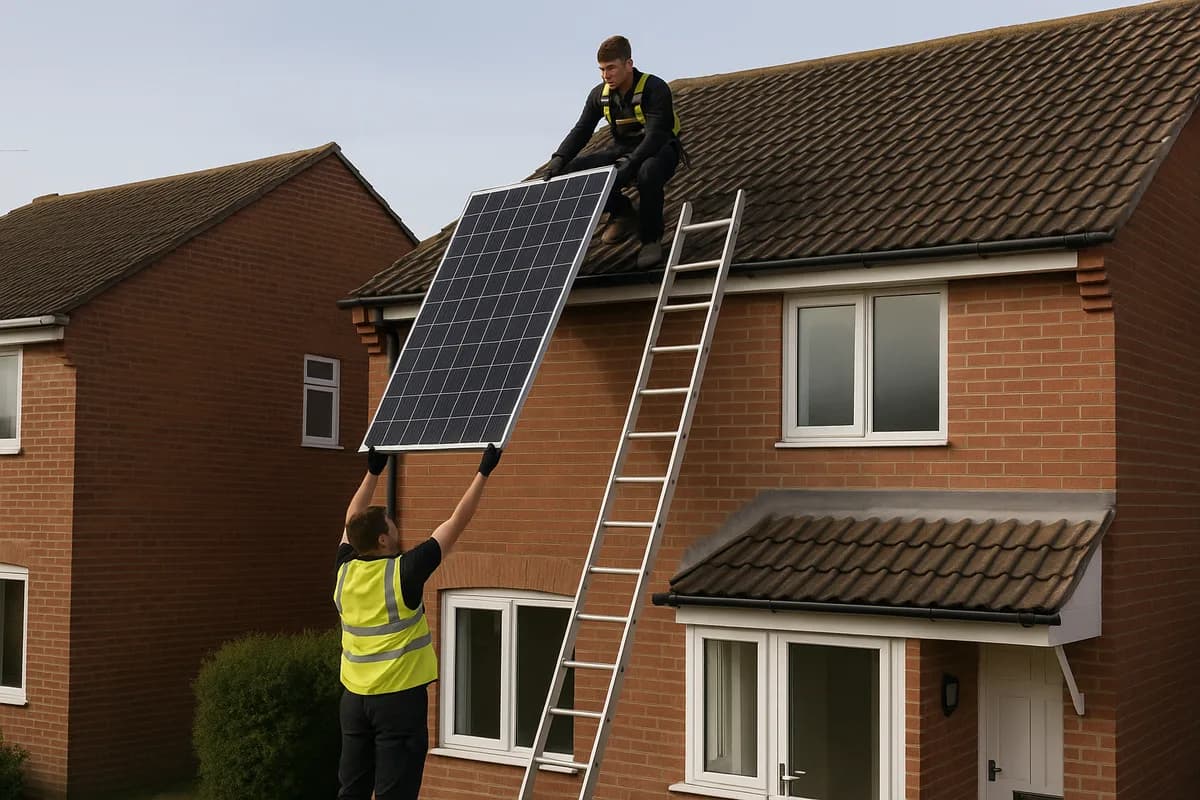
A standard UK residential solar panel measures approximately 1,722mm × 1,134mm × 35mm (1.7m × 1.1m) and weighs 20–22kg. Each panel covers approximately 1.7–1.95m² of roof space. A 10-panel 4kW system needs approximately 17–20m² of roof space. Panel sizes vary slightly by manufacturer, but most residential panels fall within these dimensions. Your installer measures exact usable roof space during the site survey.
Standard Panel Dimensions by Wattage
2026 residential panel sizes:
| Wattage | Dimensions (mm) | Area (m²) | Weight (kg) | Cells |
|---|---|---|---|---|
| 370W | 1,755 × 1,038 | 1.82 | 19 | 60 |
| 385W | 1,722 × 1,134 | 1.95 | 20 | 66 |
| 400W | 1,722 × 1,134 | 1.95 | 21 | 66 |
| 410W | 1,722 × 1,134 | 1.95 | 21 | 66 |
| 425W | 1,762 × 1,134 | 2.00 | 22 | 66 |
| 440W | 2,094 × 1,038 | 2.17 | 25 | 72 |
| 500W+ | 2,278 × 1,134 | 2.58 | 28 | 72+ |
Key points: - Most UK residential installations use 60-cell or 66-cell panels (1.7m × 1.0–1.1m) - 72-cell panels (2.1m+ long) are primarily for commercial installations - The trend is toward higher wattage in the same physical size (more efficient cells) - Frame depth is consistently 30–35mm across all manufacturers
Source: Panel manufacturer specification sheets (JA Solar, Trina, Longi, Canadian Solar).
How Many Panels Fit on Your Roof?
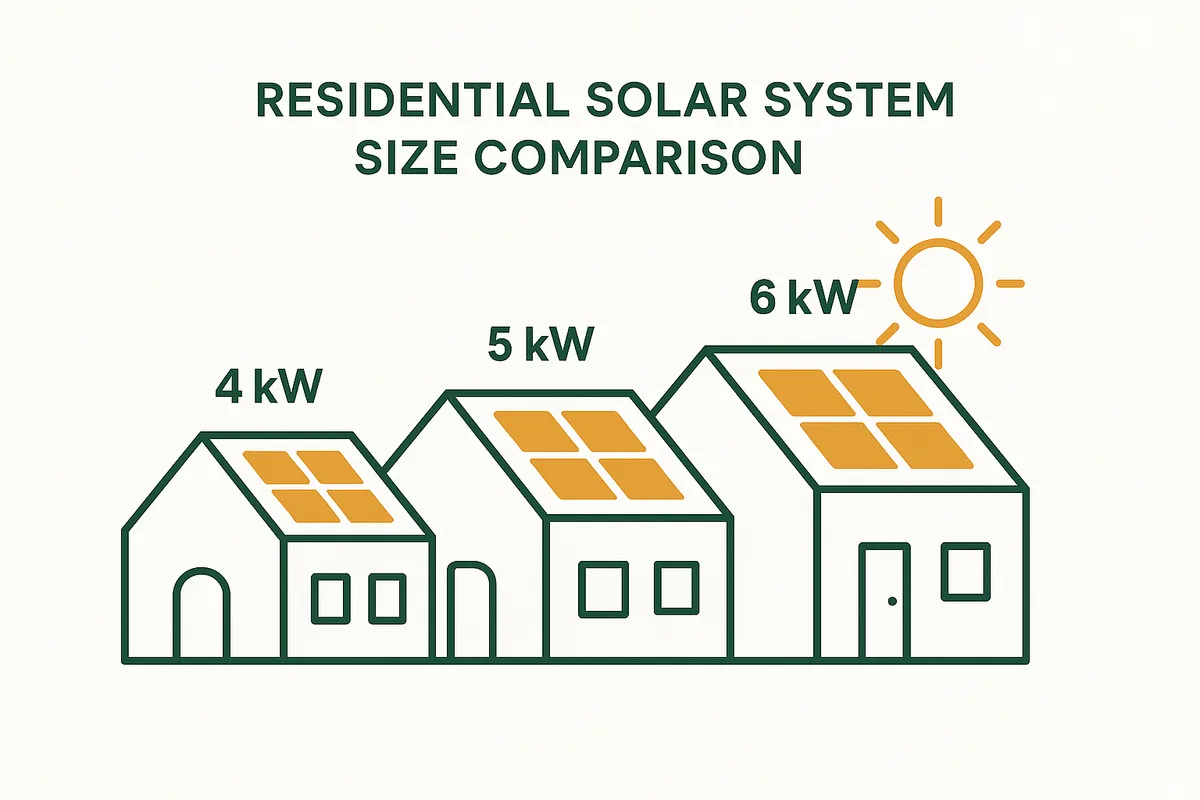
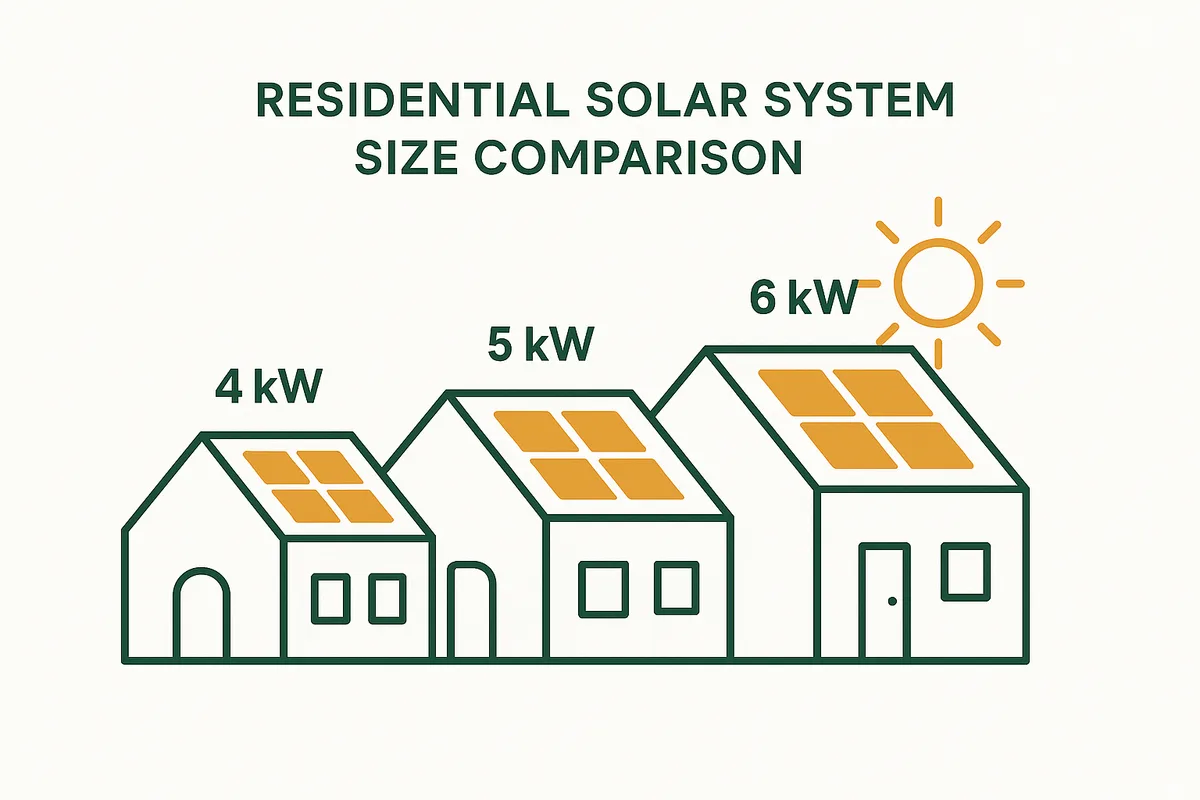
Quick calculation: 1. Estimate your usable roof area (one slope, in m²) 2. Divide by 2.0 (m² per panel including spacing) 3. Result = approximate number of panels
Example: - 3-bed semi, south-facing slope: ~18m² - 18 ÷ 2.0 = 9 panels (~3.6kW)
Typical roof capacities:
| House Type | Usable Roof (one slope) | Panels | System Size |
|---|---|---|---|
| 2-bed terrace | 10–15m² | 5–7 | 2–2.8kW |
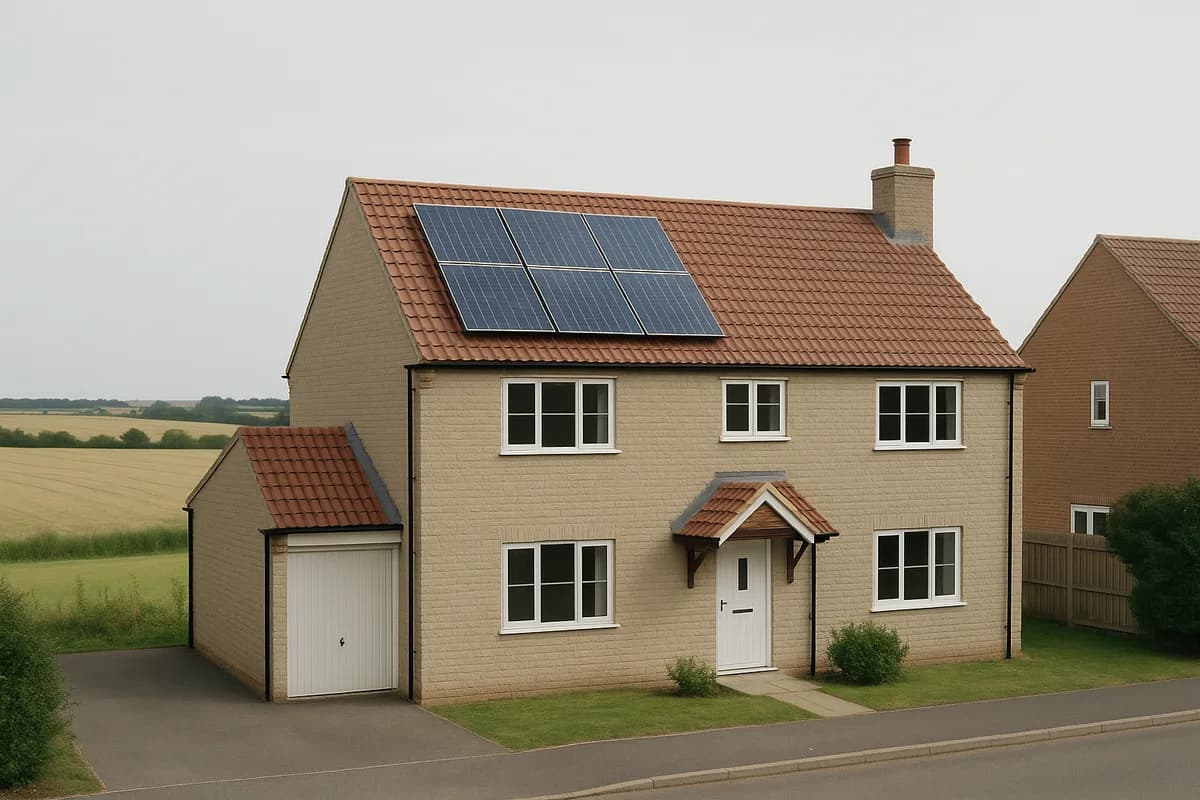
| 3-bed semi | 15–22m² | 7–11 | 2.8–4.4kW |
| 3-bed detached | 18–28m² | 9–14 | 3.6–5.6kW |
| 4-bed detached | 25–40m² | 12–20 | 4.8–8kW |
| 5-bed detached | 30–50m² | 15–25 | 6–10kW |
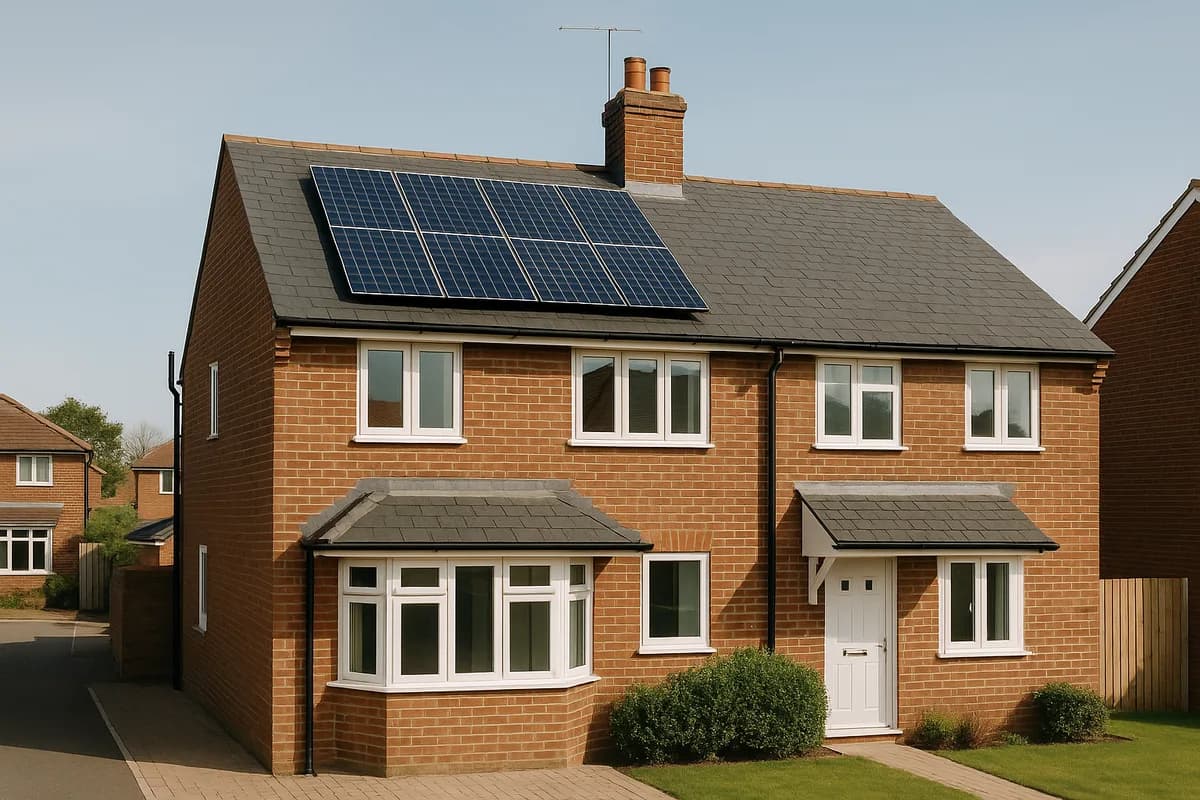
Factors that reduce usable area: - Dormer windows - Chimneys (and their shadows) - Skylights/roof windows - Vent pipes - Hip roof edges (panels cannot extend to the angled edge) - Building regulations setback from roof edge (150mm minimum)
Your installer measures exact dimensions during the site survey — these are rough guides.
Source: Standard UK roof dimensions; MCS panel spacing guidelines.
Find the right system size for your roof
Panel count depends on your electricity use, roof space and direction — not on a rule of thumb. Get a recommended size and what it should cost.
Size My System
Portrait vs Landscape Orientation
Panels can be mounted in two orientations:
Portrait (vertical — most common): - Panel stands tall: 1.7m high × 1.1m wide - Fits better on narrower roofs - Standard mounting rail layout - Works well with most string inverter configurations
Landscape (horizontal): - Panel lies flat: 1.1m high × 1.7m wide - Fits better on wider, shallower roofs - Can fit more panels on low-pitch roofs - May require different mounting rail spacing
Which is better? In terms of output: identical — orientation does not affect generation. Choose based on which fits more panels on your specific roof shape. Your installer will optimise the layout.
Mixing orientations: Possible but not recommended with a string inverter (voltage mismatch). With micro-inverters, mixing portrait and landscape is fine — each panel is independent.
Source: MCS installation design guidance.
Spacing and Edge Setbacks
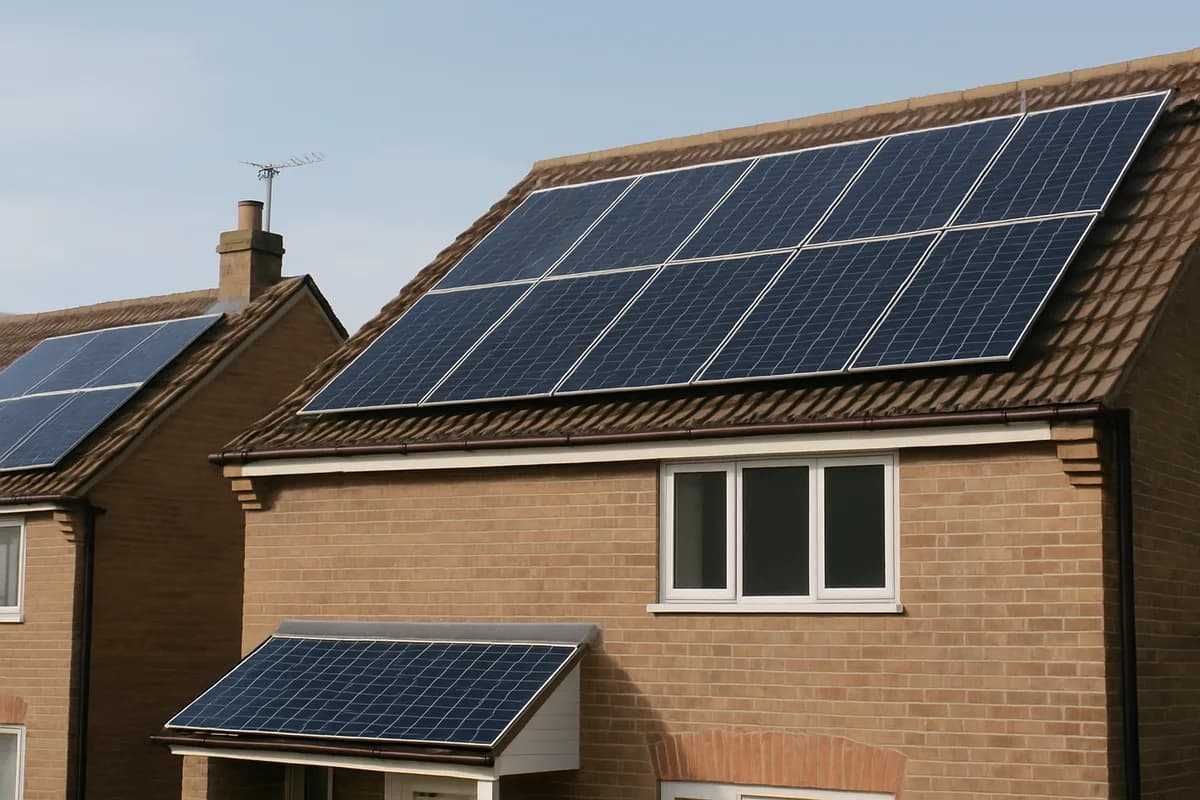
Between panels: 20–30mm gap between adjacent panels for clamp clearance and thermal expansion.
From roof edges: 150mm minimum setback from all edges (ridge, eaves, verge, hips) for wind loading compliance and safe access.
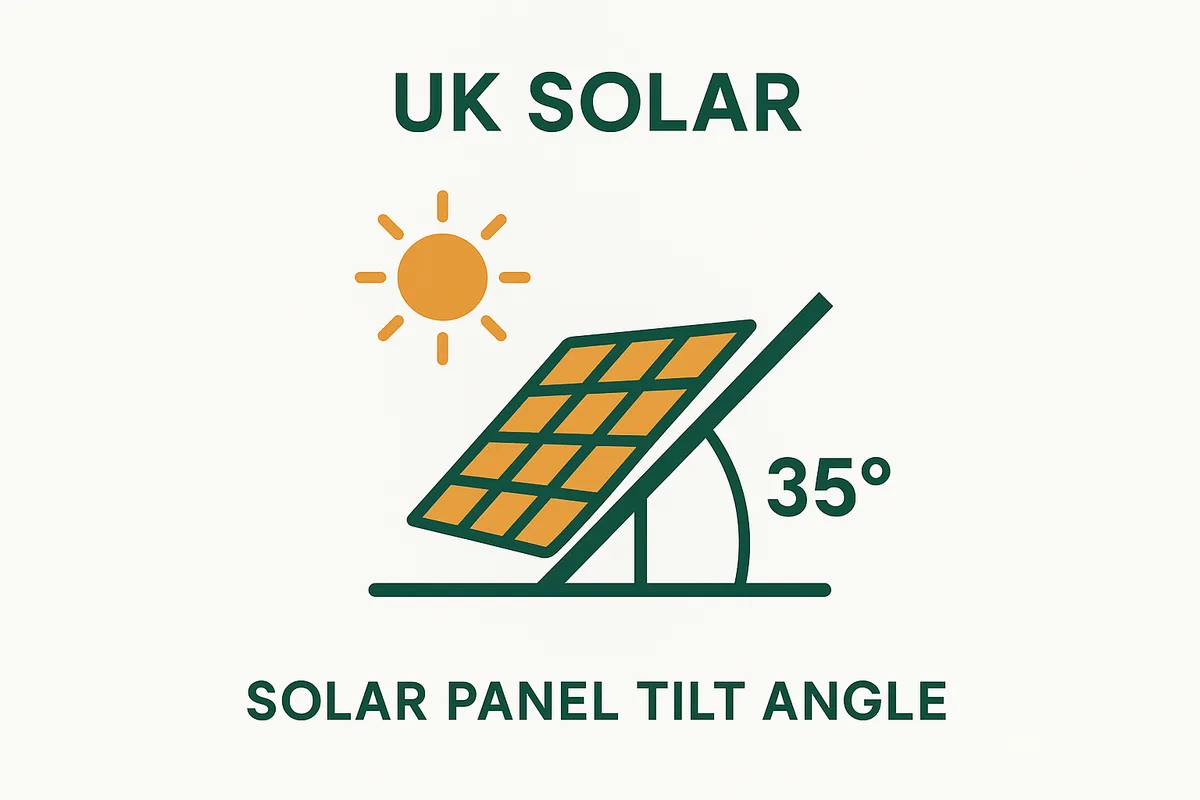
Between rows (flat roof): Rows must be spaced to prevent one row shading the next. Rule of thumb: 1.5× panel height in spacing. For a 1.7m panel at 25° tilt: ~1.1m between rows. This means flat roof systems use more area per panel than pitched roof systems.
From chimneys: Leave adequate clearance (300mm+) to avoid shading and allow rain runoff.
From skylights/roof windows: Panels cannot cover skylights. Leave 300mm+ clearance for access and fire regulations.
Source: MCS panel spacing and edge setback requirements.
Frequently Asked Questions
Related guides
You might also like
Find the right system size for your roof
Panel count depends on your electricity use, roof space and direction — not on a rule of thumb. Get a recommended size and what it should cost.
Size My SystemFree calculator. No contact details required to see your result.